
Ferry across
Take the short ferry from Tha Tien pier near Wat Pho.
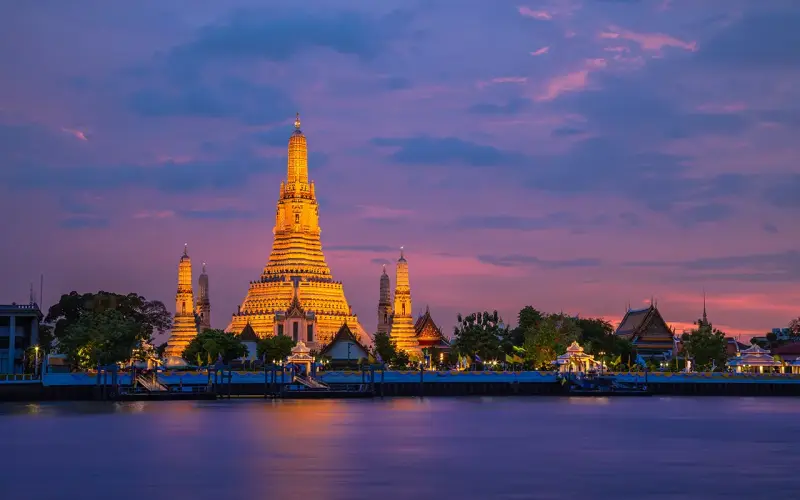
Wat Arun, the Temple of Dawn, stands on the Thonburi bank of the Chao Phraya facing Wat Pho, its central prang covered in coloured porcelain and seashells and completed in 1851. Foreign visitors pay about 200 baht, and Thai citizens enter free. Travel guides list hours of 8:00 to 18:00, with last entry around 17:30. An hour is enough, often combined with a river ferry.
Wat Arun, the Temple of Dawn, is a Buddhist temple on the west bank of the Chao Phraya River at 158 Wang Doem Road, Bangkok Yai, Bangkok, Thailand. It is known for its tall central prang covered in porcelain and seashells, facing Wat Pho and the Grand Palace across the water. Foreign visitors pay about 200 baht, and it suits anyone exploring Bangkok's riverside temples.
Its full name is Wat Arun Ratchawararam, after Aruna, a Hindu deity often shown as the rays of the rising sun. A temple existed here in the Ayutthaya period, called Wat Bang Makok and later Wat Makok. After the fall of Ayutthaya, King Taksin made nearby Thonburi his capital and renamed the temple Wat Chaeng. It held the Emerald Buddha until 1785, when King Rama I moved the image across the river to Wat Phra Kaew.
King Rama II restored the temple and planned to raise the main tower to 70 metres. The great central prang was completed in 1851 under King Rama III. Major restorations followed under King Chulalongkorn, in 1980 and from 2013 to 2017.
The central prang is a Khmer-style tower that represents Mount Meru, the centre of the universe in Hindu and Buddhist cosmology. Published heights vary from about 67 to 86 metres. A seven-pronged trident, often called the Trident of Shiva, crowns the top, and four statues of the god Indra riding the elephant Erawan sit above the second terrace. Four smaller prangs at the corners are dedicated to the wind god Phra Phai.
Every surface is covered in pieces of porcelain and seashells, much of it once used as ballast on trading ships from China, arranged into flowers and patterns. Steep steps climb to the upper terraces, with views across the river.
Two yaksha guardian figures from the Ramakien, the Thai version of the Ramayana, stand at the gateway to the ordination hall. Inside, the main Buddha image is said to have been designed by Rama II, the altar is of red, grey and white marble, and the murals date from the reign of King Chulalongkorn. Six Chinese-style pavilions of green granite line the riverfront. During the annual Kathina ceremony, the king may travel to the temple by royal barge procession to present robes to the monks.
We check practical details such as entry rules, seasons and costs against official government and tourism sources.
Take the short ferry from Tha Tien pier near Wat Pho.
Visit late afternoon, then watch the lit prang from the east bank.
Look closely at the coloured porcelain on the prang.
Steep steps on the prang; grounds are mostly level.
None
Water, hat
Cover shoulders and knees (wraps for rent near the entrance)
Revealing clothing, climbing restricted areas
Ticket office, wrap rental, stalls
Parking is limited; boats are easiest.
MRT Blue Line to Sanam Chai, walk to Tha Tien pier near Wat Pho and cross on the ferry (a few minutes); Chao Phraya Express boats also stop at Wat Arun pier.
158 Wang Doem Road, on the west bank of the Chao Phraya in Bangkok Yai.
No special events on record for Wat Arun (Temple of Dawn).
Early morning for soft light and fewer people; the prang looks best from the opposite bank at sunset and lit after dark, from restaurants near Tha Tien.
Weekdays.
November to February.
Prices and how to get tickets.
The Temple of Dawn on the Chao Phraya.
Foreign visitors about 200 baht (raised from 100 baht in 2024); Thai citizens free; last entry around 5:30 PM
Others of this kind you opened on this device, so you can get back to them quickly.
No questions yet about Wat Arun (Temple of Dawn). Ask the community or our travel team, and the answer will show here once it is published.
Our team answers questions here
Hotels closest to Wat Arun (Temple of Dawn), nearest first, so you spend less time on the road and more time there.
Bangkok
3.5 km from Wat Arun
 10 photos

Find your kind of trip: 22 travel themes, from Shopping Malls, Temple, Heritage.
More along the Chao Phraya.
Bangkok
Wat Pho, officially Wat Phra Chetuphon, is a royal Buddhist temple on Sanam Chai Road in the Phra Nakhon district of Bangkok, Thailand, just south of the Grand...
Bangkok
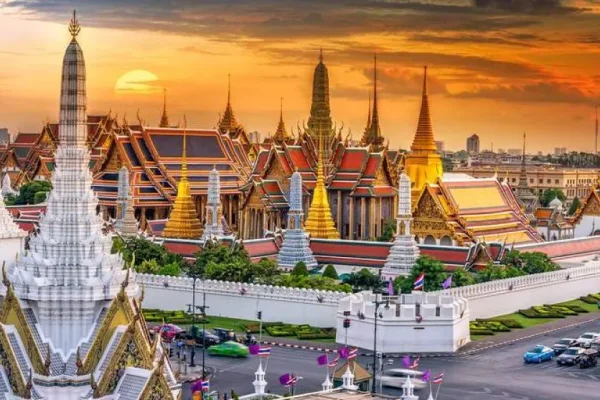
The Grand Palace is the former royal residence of the kings of Siam on Na Phra Lan Road in the Phra Nakhon district of Bangkok, Thailand, built from 1782. Its w...
Bangkok
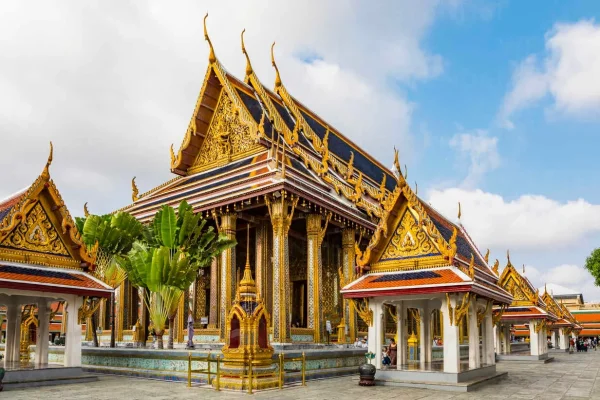
Wat Phra Kaew stands inside the walls of the Grand Palace on Rattanakosin Island, the historic centre of Bangkok beside the Chao Phraya River. Its official name...
Bangkok
Wat Suthat Thepwararam stands in the Phra Nakhon district of old Bangkok, a short distance from the Grand Palace and the City Hall. It is a first-class royal te...
Bangkok
The Giant Swing, Sao Chingcha in Thai, is a 21.15-metre red teak frame in the Phra Nakhon district of Bangkok's old town, standing in front of Wat Suthat and cl...
Bangkok
Democracy Monument stands in a large traffic circle on Ratchadamnoen Klang Avenue, where it meets Dinso Road in the Phra Nakhon district of Bangkok. It lies rou...
Bangkok
Loha Prasat stands within Wat Ratchanatdaram, a royal Buddhist temple at the corner of Ratchadamnoen Klang Avenue and Maha Chai Road in the Phra Nakhon district...
Bangkok
Wat Mangkon Kamalawat stands on Charoen Krung Road in Bangkok's Chinatown, between Soi Charoen Krung 19 and 21, in Pom Prap Sattru Phai district. It is also kno...
Bangkok
The Bangkok Art and Culture Centre (BACC) is a free public arts centre at 939 Rama I Road in Pathum Wan, central Bangkok, Thailand, opposite MBK Center and link...
Tell us where and when you want to go, and local travel experts send you offers for your trip.
What to know about Wat Arun.
Prices & payment
Foreign visitors pay about 200 baht, raised from 100 baht in 2024. Thai citizens enter free.
General
Published heights for the central prang range from about 67 to 86 metres. It is one of the tallest religious structures on the Bangkok riverfront.
The name comes from Aruna, a Hindu deity often shown as the rays of the rising sun.
Yes, steep steps lead to the upper terraces of the central prang. Take care, as the steps are narrow.
The prangs are covered in pieces of Chinese porcelain and seashells, much of it once used as ship ballast.
Yes, the Emerald Buddha was kept at the temple until 1785, when King Rama I moved it to Wat Phra Kaew.
Wat Arun (Temple of Dawn) is in Bangkok, Thailand. The street address and directions are under How to get there on this page.
Photography: Allowed. Bags: No restrictions.
Explore the area on this page lists 4 places around Wat Arun (Temple of Dawn), among them Tha Tien pier (cross-river ferry) and Wat Pho.
Stay & facilities
Cover your shoulders and knees, and avoid sleeveless tops, short shorts and short skirts. Wraps can be rented near the entrance.
Getting there
Take the MRT Blue Line to Sanam Chai, walk to Tha Tien pier and take the short cross-river ferry. Chao Phraya Express boats also stop at the Wat Arun pier.
Timing & weather
Early morning is cooler and quieter. For photos of the prang at sunset, watch from the opposite bank near Tha Tien.
The temple opens daily from about 8 am to 6 pm, with last entry around 5:30 pm.
Most visitors spend 1 hour at Wat Arun (Temple of Dawn).
Families & accessibility
Not allowed.
We use necessary cookies to make this site work. With your permission we would also like to remember your preferences, measure how the site is used, and show relevant ads and partner offers. You can change your mind at any time under "Cookie settings" on our Privacy policy page.

 Umrah packages from Dhaka