


Canberra travel guide
Australia's planned capital of lakes, galleries and bush hills
Canberra is Australia's capital, worth a visit for its national museums, galleries and Parliament, with bush hills for walking close to the center. Autumn and spring are the most comfortable. Two or three days cover the main institutions.
Canberra is the capital of Australia and the largest city in the Australian Capital Territory. It lies about 150 km inland from the east coast, close to the Brindabella Ranges at the edge of the Australian Alps, and with an estimated 484,630 people in June 2025 it is the country's largest inland city.
The Ngunnawal, Ngunawal and Ngambri peoples have lived here for up to 21,000 years, and the city's name comes from the Ngunnawal language. The Canberry, or Nganbra, clan lived along Sullivan's Creek, and the Pialligo clan near where the airport now stands.
The capital was a compromise. After federation neither Sydney nor Melbourne would accept the other as the seat of government, so a new city was built between them. The American architects Walter Burley Griffin and Marion Mahony Griffin won the international design competition in 1911, and Canberra remains the only entirely planned city in Australia. It was named on 12 March 1913 on Kurrajong Hill, now Capital Hill.
Parliament arrived on 9 May 1927, sitting in the building now called Old Parliament House. The present Parliament House opened on the same date in 1988, and the territory gained full self-government at the end of that year.
For visitors the draw is the concentration of national collections around the lake, set against bush-covered hills that come right into the suburbs.
Explore Canberra by theme
Find your kind of trip: 14 travel themes, each with the packages in Canberra.
Canberra at a glance
The essentials first-time visitors ask about, in one place.
Explore more of Australia
Pick a place by travel style: cities, heritage.
 SydneyAustralia's harbor city
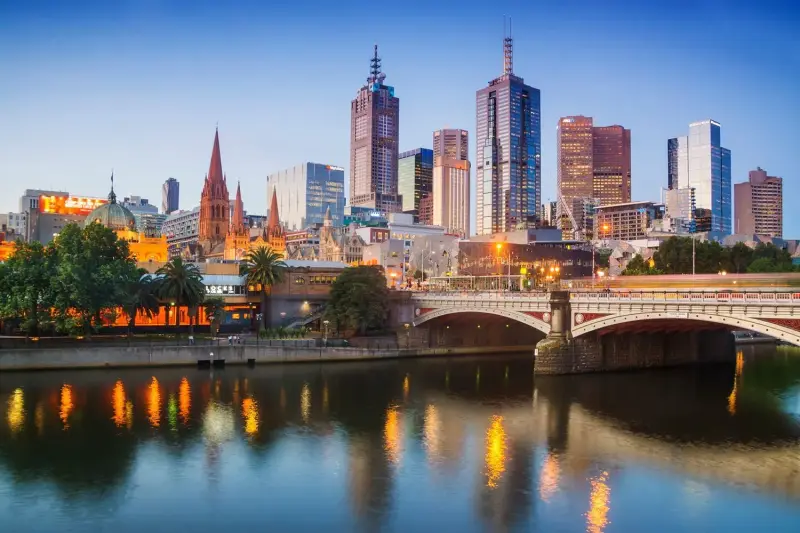 MelbourneAustralia's laneway capital
 HobartTasmania's harbor capital under kunanyi
 Gold CoastPoint breaks, high-rises and Gondwana rainforest
 BrisbaneQueensland's subtropical river capital
 AdelaideA planned city inside a ring of parks
 PerthWestern Australia's sunny capital
 DarwinAustralia's tropical northern capital
Nothing in that category yet.
Top things to do in Canberra
National institutions around Lake Burley Griffin, with lookouts, nature reserves and vineyards close to town.
No things to do in Canberra are listed yet. Browse all things to do
Best time to visit Canberra
Month by month, so you can pick the weather and the crowds you want.
Highs of 21C to 25C and the driest months of the year.
Highs of 12C to 17C and frosty nights near freezing.
Warming days and Floriade's flower beds by the lake.
Highs in the high 20s, with the Multicultural Festival in February.
Pack a warm layer even in spring and autumn, as nights drop to single figures.
Plan your trip
Practical answers before you go. Pick a topic.
Getting there
Canberra Airport, the Sydney train and interstate coaches
Canberra Airport handles domestic flights from Sydney, Melbourne, Brisbane, Perth and other cities. Overland, most people come from Sydney by car, train or coach.
- Canberra Airport (CBR)
- North Canberra, near the old Pialligo clan lands
- Canberra railway station
- Kingston, for trains from Sydney
- Jolimont Centre
- Interstate coach terminal in the city
- Federal Highway
- Main road link to Sydney
- The Airport Express minibus connects with regional and interstate coaches at the West Row bus station.
Where to stay
City center, Kingston or near the Parliamentary Triangle
Base yourself near the light rail in the center, or south of the lake for a short walk to the national institutions.
- City center
- Next to City Interchange and the light rail
- Kingston
- Beside Canberra railway station
- Parliamentary Triangle
- Walking distance to the national collections
- Staying on the light rail line makes evenings in the center easy without a car.
Getting around
Light rail, ACTION buses and walking
The city is spread out, built around open space rather than a dense core. Light rail runs north from the center, and buses cover the rest. For the hills and the wider territory, a car helps.
- Light rail
- North from the center
- ACTION buses
- Citywide, including route R3 to the airport
- Car
- Useful for the hills and the Brindabellas
- Many national institutions stand close together in the Parliamentary Triangle, so walk between them.
Know before you go
What makes Canberra worth the trip, and what catches visitors out.
Why travelers love it
- The Australian War Memorial, at the northern end of Anzac Parade.
- The National Gallery of Australia, with the National Portrait Gallery nearby.
- Questacon, the hands-on science center.
- Mount Ainslie, the hill Griffin used to frame his city plan.
- The National Carillon, a bell tower by Lake Burley Griffin.
Good to know
- Canberra is spread out; distances between suburbs are longer than they look on a map.
- Summer can turn very hot; plan galleries for the middle of the day.
- The city averages about 100 clear days a year.
Trip fit
BookingMentor editorial ratings out of 5, based on a first-time visitor's experience.
Weather in Canberra, month by month
Canberra has warm summers, cold frosty winters and fairly even rainfall across the year.
Climate figures are 1991 to 2010 averages for Canberra Airport Comparison (Bureau of Meteorology, via Wikipedia).
Packages in Demand
A Journey to Remember
Tours, activities and day trips in and around this destination, with the details you need before booking.
No packages in Canberra are listed yet. Browse all packages
Create Your Custom-Made Trip to Canberra
Traveling to Canberra? Chat with a Local Travel Specialist in Canberra Who Can Help Organize Your Trip.
START HERE
Our Travel Experts are Recommended by



How the Griffins drew the city
The Griffins' entry beat 136 other valid designs. Their land axis runs from Capital Hill north across the lake and along Anzac Parade, set so that from the hill the War Memorial stands directly at the foot of Mount Ainslie. At the axis's southwestern end, about 52 km away, rises Bimberi Peak, the highest mountain in the ACT.
The view from Mount Ainslie back over the parade and the lake to Parliament House shows the design more clearly than any map.
Government House, the official residence of the Governor-General, is also in Canberra.
Floriade, Enlighten and a lake at the center
Lake Burley Griffin is the center of both the city plan and its public life. Most of Canberra's big festivals take place on or beside it.
Around the lake. The lake is the setting for the Captain James Cook Memorial. The National Carillon also stands by the water.
Floriade takes over Commonwealth Park each spring with massed flower beds.
Enlighten projects light onto the national buildings at night, and Skyfire is the city's big fireworks display.
The National Multicultural Festival fills the center each February with food stalls and performances.
The Canberra Balloon Spectacular lifts off from the Patrick White Lawns, beside the National Library, each March.
Summernats draws car enthusiasts from across the country, and the Royal Canberra Show brings the farming year to town.
Black Mountain, Red Hill and the lake loop
Bush begins inside the city limits, on hills written into the plan as landmarks. Black Mountain was one of the two heights the Griffins used to set out the city's geometry. It is also an important Aboriginal site, so stay on marked tracks and treat it with the respect you would give any place of significance.
The Griffins gave Mount Ainslie, Black Mountain and Red Hill spiritual values and meant to cover each in flowers of a single primary color. World War I and planning disputes ended the idea.
On the flat, the bridge-to-bridge loop of about 5 km follows the lake shore across the Commonwealth Avenue and Kings Avenue bridges and takes about an hour on foot. Walking the city's hills and shores is a reminder that the planned capital was laid over a much older landscape.
Travelers are asking
No questions yet about Canberra. Ask the community or our travel team, and the answer will show here once it is published.
Our travel desk answers questions about Canberra
How we research our Canberra travel guide
Climate figures come from the Bureau of Meteorology, city facts follow published records, and airport services are rechecked when they change.
Last updated . Spotted something out of date? Tell us.
We check practical details such as entry rules, seasons and costs against official government and tourism sources.

Before You Go...
Discover Trips & Info
A Travel Network Connection Travelers and locals
Incredible Event & Festival, Don't Miss!
Most Popular Event & Festival of Canberra
Festivals and events in this destination, with dates, venues and ticket details where available.
No upcoming festivals or events in Canberra are listed right now. Browse all events
Memorable Experiences
Where to Go (& NOT Go) In Canberra!
Roaming the World one Adventure at a Time: Travel Tales, Tips, and Inspiration for wanderlusters.

Subscriber
Popular car hire destinations
Explore more options to hire a car for cheap
Frequently Asked Questions (FAQs)
Quick answers to the questions travelers ask most before visiting Canberra.
Getting there
Canberra Airport (CBR) is about 8 km from the center. ACTION bus route R3 serves the terminal, and the Canberra Airport Express minibus runs to the city during the day.
Only a few, and they change often. Fiji Airways flies to Nadi until 5 February 2027, and Qatar Airways plans to resume daily flights to Doha via Melbourne in December 2026. Most international visitors connect through Sydney or Melbourne.
At City Interchange and Alinga Street station in the center, the hub of the network.
General
The drive takes about three hours on the Federal Highway. Trains from Sydney stop at Canberra station in Kingston, and Murrays, FlixBus and Greyhound Australia run express coaches to the Jolimont Centre.
Yes. The line opened in April 2019 and links the city center with Gungahlin in the north. An extension to Commonwealth Park is expected in early 2028.
Rarely in the city itself, though frost is common in winter and higher ground nearby gets snow most years. The coldest night on record, in July 1971, fell to minus 10°C.
January highs average about 29°C, but heatwaves push well beyond that; the record is 44°C, set on 4 January 2020.
A public holiday on the second Monday in March marking the naming of the city.
Canberra Stadium and Manuka Oval host the city's main matches, and the Australian Institute of Sport is also based here.
The city is spread out, built around open space rather than a dense core. Light rail runs north from the center, and buses cover the rest. For the hills and the wider territory, a car helps.
Timing & weather
Each spring, in Commonwealth Park beside the lake. It is the largest flower festival in the Southern Hemisphere.
The lake was formed by damming the Molonglo River, and the work was finished in 1964 after about four years.
The best time to visit Canberra is Mar to Apr, Oct to Nov. Mild days between the summer heat and winter frosts.
- Autumn: March - April (Highs of 21C to 25C and the driest months of the year)
- Winter: May - September (Highs of 12C to 17C and frosty nights near freezing)
- Spring: October - November (Warming days and Floriade's flower beds by the lake)
- Summer: December - February (Highs in the high 20s, with the Multicultural Festival in February)
Visa & documents
Everyone except New Zealand citizens needs a visa or electronic authority. Passport holders of the EU and some other European countries can apply for a free eVisitor (subclass 651); citizens of the US, Canada, Japan, the UK and others use the Australian ETA app (subclass 601). Others apply for a Visitor visa (subclass 600).
Health & safety
Australia is safe for visitors. The real hazards are natural: rips at beaches, heat, bushfires, floods, and crocodiles in the north. Swim between the red and yellow flags on patrolled beaches, carry plenty of water on outback drives, obey crocodile warning signs, and call 000 in an emergency.
