
Standard visit
A centuries-old Vaishnav ashram in the Mithamain haor, ringed by hijal trees that local legend says were once demons, with two ponds and simple guest rooms.
A Vaishnav ashram wrapped in hijal trees deep in the Mithamain haor, best combined with a haor trip and a respectful overnight stay.
Dillir Akhra is a Vaishnav ashram on the edge of the Kishoreganj haor country, and its setting does most of the talking. Old hijal trees, a wetland species that stands in floodwater for months, crowd around the compound, and in the rainy season the land around it turns to open water.
Two stories explain the place. In the first, a saint meditating here was harassed by demons and, using a mantra from his teacher, turned them into the hijal trees that still stand around the akhra. In the second, a boat carrying gold coins sank in the river nearby; the saint made the coins rise to the surface, and Emperor Jahangir, hearing of it, granted him land. That royal grant from Delhi is said to be why the place is called Dillir Akhra, "the akhra of Delhi" (Bangladesh Post, 2019).
The compound has a temple, a performance hall for devotional drama, a kitchen and rooms for resident Vaishnav monks. A memorial to the founding saint stands in the grounds, along with a Mughal-period structure that has been deteriorating for lack of conservation. The resident community is vegetarian, and visitors who arrive respectfully are generally received with hospitality.
Most visitors come during the monsoon, when the hijal trees stand in water and the haor stretches to the horizon. The dry months are calmer and the trees cast deep shade over the paths, which suits a slower visit. Either way, treat it as a working religious community first and a beauty spot second.
Checked against trusted sources:
Bangladesh PostBanglapediaKishoreganj district portal
A centuries-old Vaishnav ashram in the Mithamain haor, ringed by hijal trees that local legend says were once demons, with two ponds and simple guest rooms.
Guided tours and experiences that include Dillir Akhra (দিল্লির আখড়া). See tours
Getting here involves rural roads and, in the wet season, boats; inside, ground is uneven and there are no ramps, so it is unsuitable for wheelchair users.
Not confirmed yet. Please check with the venue before you visit.
Mosquito repellent, torch, cash donation, rain gear in monsoon
Modest, loose clothing; easy-to-remove shoes
Not confirmed yet. Please check with the venue before you visit.
Guest house Kitchen Rest house
Travel to Mithamain upazila, which the all-weather haor road links with Itna and Austagram, then ask locally for transport to Katkhal union. In the monsoon the final stretch can be by boat.
Not confirmed yet. Please check with the venue before you visit.
No special events on record for Dillir Akhra (দিল্লির আখড়া).
Afternoon, staying for evening prayers
Not confirmed yet. Please check with the venue before you visit.
June to September for the flooded haor; November to February for dry paths
Others of this kind you opened on this device, so you can get back to them quickly.
No questions yet about Dillir Akhra (দিল্লির আখড়া). Ask the community or our travel team, and the answer will show here once it is published.
Our team answers questions here
Find your kind of trip: 34 travel themes, from Heritage, Mosque (Islam), Lakes & Haors.
 Heritage
Mosque (Islam)
 Lakes & Haors
 Landmarks
 Palaces
Museums
 Hills
 Forests
 Waterfalls
 Monument
National Parks
 Beaches
 Entertainment Parks
 Bridges & Barrages
Islands
 Wildlife (Zoo)
 Forts
Kids Zone
 Parks
Art Galleries
 Libraries
 Education
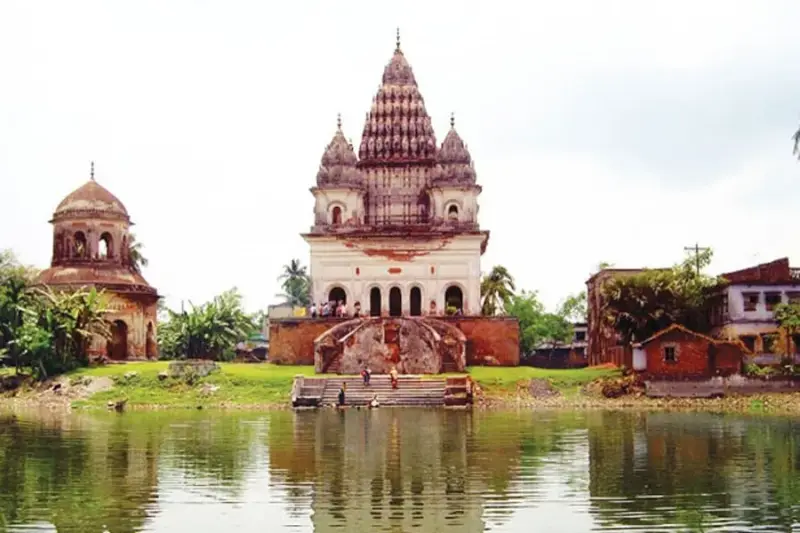 Temple
UNESCO World Heritage
Church (Christianity)
 Theme Parks
 Botanical Gardens
Statue
Floating Market
 Mountains
Shopping Malls
Weekend Market
 Caves
Theaters
More sights and places to visit in Bangladesh, nearest first.
Kishoreganj
Chandrabati Mandir is a small place with a big name attached. The poet Chandrabati, who lived in the 16th century in what is now Kishoreganj, is widely describe...
Kishoreganj
Most travelers cross the Meghna at Bhairab without stopping, on the way between Dhaka and Sylhet. Locals do the opposite: in the late afternoon, families walk d...
Kishoreganj
Egarasindur Fort is a place you read before you see. Nothing stands upright any more; what you walk over are mounds, scattered brick and potsherds in a village...
Kishoreganj
Austagram is less a single sight than a landscape that changes completely with the seasons. In the monsoon the haor, a bowl-shaped floodplain typical of northea...
Kishoreganj
Most small Mughal mosques in Bangladesh have to be dated by guesswork. Sadi Mosque does not: a Persian tablet above the central mihrab records that it was built...
Kishoreganj
What sets this mosque apart is not the prayer hall but the way in. Visitors pass through a small gatehouse whose roof copies the two-sloped, curved shape of a B...
Kishoreganj
For 363 days a year Sholakia is a walled, grassy field on the edge of Kishoreganj town where boys play cricket and the Eidgah mosque keeps its daily prayers. On...
Kishoreganj
Most zamindar houses in Bangladesh are shells: roofless halls, trees in the windows, a caretaker if you are lucky. Gangatia is different because someone still l...
Kishoreganj
Pagla Mosque is not old and not architecturally grand, yet it may be the most talked-about mosque in Bangladesh. The reason is its donation boxes. Every few mon...
Tell us where and when you want to go, and local travel experts send you offers for your trip.
General
Yes. The ashram has a guest house and has hosted overnight visitors; ask on arrival and offer a donation.
No. The community is vegetarian; do not bring non-vegetarian food onto the grounds.
Hijal (Barringtonia acutangula) is a flood-tolerant tree typical of Bangladesh's haors, able to stand in water for months.
Yes, two ponds sit within the grounds and make a quiet place to spend the afternoon.
The trees and grounds are fine to photograph; ask before photographing the shrine interior or the monks.
Yes. Women visit freely; modest dress is expected of everyone.
It helps if you plan to stay the night or arrive with a group, but we found no published contact number.
Dillir Akhra (দিল্লির আখড়া) is in Kishoreganj, Bangladesh. The street address and directions are under How to get there on this page.
Yes. Use "Ask a question" under "Travelers are asking" on this page. The bookingMentor team answers it, and the answer then appears on the page for other travellers too.
Prices & payment
We found no fee. A donation to the ashram is customary if you are fed or stay.
Families & accessibility
Yes, with supervision near the ponds and, in the wet season, on boats.
Health & safety
Haor water can turn rough in storms. Use boats with life jackets and avoid traveling after dark in the monsoon.
Getting there
You can reach Dillir Akhra (দিল্লির আখড়া) by car. The route is described under How to get there on this page.
Timing & weather
Plan about 2 hours (120 minutes) at Dillir Akhra (দিল্লির আখড়া). Typical visit: About 2 hours, or overnight.
The best months to visit Dillir Akhra (দিল্লির আখড়া) are June to September. The best days and times of day are covered under When to visit on this page.
We use necessary cookies to make this site work. With your permission we would also like to remember your preferences, measure how the site is used, and show relevant ads and partner offers. You can change your mind at any time under "Cookie settings" on our Privacy policy page.

 Get the bookingMentor app