


Gangneung travel guide
East Sea beaches, Joseon scholars and a coffee coast
Gangneung is the main city on Korea's east coast, worth a visit for its sandy beaches, the lagoon at Gyeongpo, Joseon heritage and its cafe culture. The fast train makes it an easy break from Seoul. Allow two or three days, one of them on the coast south toward Jeongdongjin.
Gangneung is the largest city on Korea's northeast coast and the economic center of the Yeongdong region, the strip of Gangwon Province east of the Taebaek Mountains. The range rises behind it and the East Sea, also called the Sea of Japan, lies in front. Forest covers about 80% of its land.
People have lived here since the time of the Yemaek. Goguryeo, Silla and Goryeo each ruled the area under different names, and in 1423, under King Sejong, it became Gangneung. The modern city was formed in 1995 when Gangneung merged with neighboring Myeongju.
The coast here is long and sandy, with about 20 beaches inside city limits. Because the sea moderates the weather, winters are milder and summers cooler than in most of the country.
Gangneung is also a scholar's town. Two of the best-known figures of the Joseon era, the artist Shin Saimdang and her son, the scholar Yi I, were born here, and the city counts 136 listed cultural properties.
In 2018 it hosted every ice event of the Winter Olympics, and in 2024 the Winter Youth Olympics returned to the same arenas. Its oldest celebration is far older: Gangneung Danoje, which UNESCO recognized in 2005.
Explore Gangneung by theme
Find your kind of trip: 13 travel themes, each with the packages in Gangneung.
Gangneung at a glance
The essentials first-time visitors ask about, in one place.
Explore more of South Korea
Pick a place by travel style: beaches, cities, heritage, islands.
 SeoulPalaces and K-culture
 GyeongjuThe ancient royal capital of Silla
 BoryeongKorea's mud festival coast
 JeonjuKorea's hanok and bibimbap city
 BusanKorea's harbor city of beaches and hills
 Jeju CityCapital of Korea's volcanic island
Nothing in that category yet.
Top things to do in Gangneung
Beaches and a lagoon along the shore, Joseon houses and shrines inland, and forest trails in the hills behind.
No things to do in Gangneung are listed yet. Browse all things to do
Best time to visit Gangneung
Month by month, so you can pick the weather and the crowds you want.
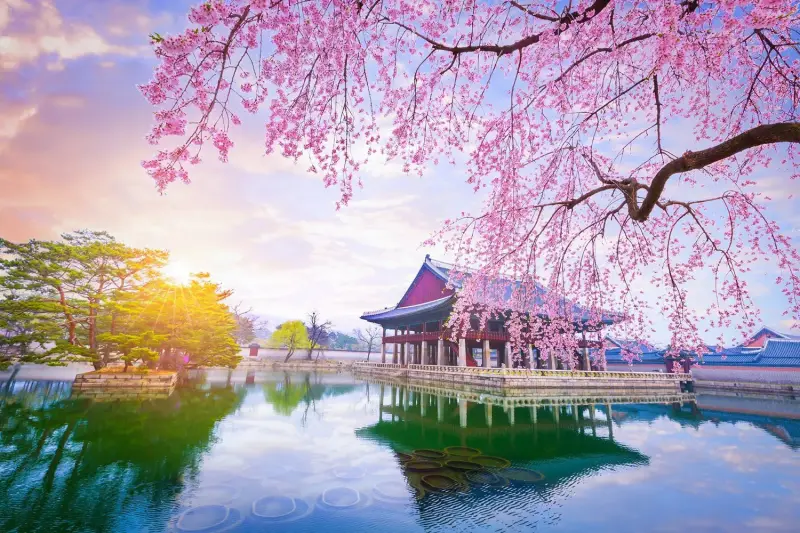
Cherry trees bloom around Gyeongpo Lake for the city's blossom festival.
Beach season, but also the wettest stretch, with 230 to 290 mm of rain a month.
Mild for Korea, with daytime highs of 5 to 8C by the sea.
Danoje follows the lunar calendar, so its dates move each year; check the city's festival page before you book.
Plan your trip
Practical answers before you go. Pick a topic.
Getting there
KTX on the Gyeonggang Line and express buses
The quickest way in is the KTX. The Gyeonggang Line opened in December 2017 ahead of the Winter Olympics, and Gangneung Station reopened as its terminus the same month. The fastest trains reach Cheongnyangni in Seoul in 114 minutes, and they also stop at Jinbu for Pyeongchang. Slower Mugunghwa trains use the old Yeongdong Line from Yeongju. By road, the Gangneung Intercity Bus Terminal is the largest in the province and runs six express routes.
- KTX
- Seoul (Cheongnyangni) in as little as 114 minutes
- Mugunghwa
- Yeongdong Line south and west to Yeongju
- Express buses
- Six routes from the city's main terminal
- Yangyang airport
- Shuttle bus from Yangyang Bus Terminal
- Gangneung Station has a tourist information center that can book tours and taxis for visitors (+82-33-642-8692).
Where to stay
Downtown near the station, Gyeongpo or Anmok
Decide between town and sea. Downtown puts you near the station, markets and Joseon sites, while the beach districts give you sea views and quieter evenings outside the summer peak.
- Downtown
- Near Gangneung Station and the old town sights
- Gyeongpo
- Between the beach and the lagoon, about the busiest area in summer
- Anmok
- Cafes and a white sand beach on the coffee street
- Jeongdongjin
- Sunrise views on the coast south of the city
- Jumunjin
- Fishing port in the north
- Book well ahead for New Year's Eve if you want to stay near Jeongdongjin for the first sunrise.
Getting around
City buses, taxis and a foreign-language tour taxi
Sights are spread along the coast, so you will need wheels. City buses cover three areas of the city, and taxis are plentiful, with 589 licensed. For a guided day, the city runs a tour taxi with a driver who speaks your language, booked online at en.gangwontaxi.com or through a tourist information center.
- Tour taxi
- 60,000 won for three hours; admission, tolls and parking extra
- Transit cards
- T-money or Cashbee for buses and taxis
- On foot
- Wolhwa Street runs 2.6 km from Gangneung Station along an old rail line
- Extra hours on the tour taxi are charged at 20,000 won an hour after four hours; ask how the third to fourth hour is billed when you book.
Know before you go
What makes Gangneung worth the trip, and what catches visitors out.
Why travelers love it
- Gyeongpodae, a Goryeo-period pavilion above the north shore of Gyeongpo Lake.
- Anmok's coffee street, where cafes line the beachfront.
- Jumunjin Port, where you can buy raw fish straight from the boats.
- Seongyojang, a Joseon manor house listed as folklore heritage.
- Solhyang Arboretum, a garden devoted to pine trees in Gujeong-myeon.
Good to know
- Rain peaks from July to September, right in the middle of beach season.
- Gyeongpo Lake has shrunk since the early 20th century because of development around it.
- Downtown and the beaches are far apart, so plan your days by area.
- Gangneung sits in Gangwon State, the province's current official name, so you will see both terms on signs and websites.
Trip fit
BookingMentor editorial ratings out of 5, based on a first-time visitor's experience.
Weather in Gangneung, month by month
Gangneung's seaside setting keeps it a little warmer in winter and cooler in summer than inland Korea, but late summer is very wet.
Climate figures are 1991 to 2020 normals for Gangneung (Korea Meteorological Administration, via Wikipedia).
Packages in Demand
A Journey to Remember
Tours, activities and day trips in and around this destination, with the details you need before booking.
No packages in Gangneung are listed yet. Browse all packages
Create Your Custom-Made Trip to Gangneung
Traveling to Gangneung? Chat with a Local Travel Specialist in Gangneung Who Can Help Organize Your Trip.

Our Travel Experts are Recommended by



Black bamboo and the dragon dream room
Ojukheon takes its name from the black bamboo that grows around it. Choi Eung-hyeon built the house in the late 15th century, and it passed through his family to Shin Myeong-hwa, father of Shin Saimdang. It was named a Treasure in 1963 as one of the oldest residential buildings in Korea and appears on the back of the 5,000-won note. The room where her son Yi I was born is called Mongnyongsil, the dragon dream room, after a dream his mother had the night before.
Munseongsa shrine holds Yi I's portrait, and an old plum tree in the garden, planted in the 15th century, is thought to be one Saimdang painted. The Yulgok Memorial Hall on the same grounds shows works by the family.
Imyeonggwan's main gate, from an official inn of the Goryeo period, is the only national treasure in the city.
Seawater tofu and the Anmok cafe strip
Chodang dubu is set with seawater instead of the usual bittern. Mulhoe, a cold soup of raw fish, is best found at Jumunjin, an east coast port where about 350 boats work waters in which cold and warm currents meet. Squid, sand lance and pollack come off the boats, and buyers can deal directly with the crews.
Cafes began to gather along Anmok Beach in the 1990s, and Park I-choo, who founded Bohemian Park I-choo Coffee, is credited with helping start the trend. Many now have sea views.
Lagoon, sunrise cliffs and wishing stones
Gyeongpo Lake is the second-largest lagoon on the east coast. A promenade of about 4 km circles past sculptures, and ducks, cormorants, egrets and migrating swans feed on the water.
Jeongdong Simgok Badabuchae-gil runs 2.86 km between Jeongdongjin and Simgok Port along a coastal terrace that formed about 23 million years ago. It is a designated natural monument, named for its fan shape opening toward the sea.
Nochusan Mojeongtap-gil, in Wangsan-myeon, is a trail lined with about 3,000 small stone towers, where walkers add a stone and make a wish.
Travelers are asking
No questions yet about Gangneung. Ask the community or our travel team, and the answer will show here once it is published.
Our travel desk answers questions about Gangneung
How we research our Gangneung travel guide
Festival dates and the city's taxi and transit details are rechecked against Gangneung City's English site when they change. Climate and history follow the Korea Meteorological Administration and published city records.
Last updated . Spotted something out of date? Tell us.
Checked against trusted sources:
Gangneung CityVisit Gangneung

Before You Go...
Discover Trips & Info
A Travel Network Connection Travelers and locals
Incredible Event & Festival, Don't Miss!
Most Popular Event & Festival of Gangneung
Festivals and events in this destination, with dates, venues and ticket details where available.
No upcoming festivals or events in Gangneung are listed right now. Browse all events
Memorable Experiences
Where to Go (& NOT Go) In Gangneung!
Roaming the World one Adventure at a Time: Travel Tales, Tips, and Inspiration for wanderlusters.

Subscriber
Popular car hire destinations
Explore more options to hire a car for cheap
Frequently Asked Questions (FAQs)
Quick answers to the questions travelers ask most before visiting Gangneung.
Visa & documents
Entry rules depend on your passport and can change. Check the Korean government's official immigration and visa websites before you travel instead of relying on third-party sites.
General
The festival grew out of old harvest and farming rites and is held at Namdaecheon Danojang in Noam-dong. Its highlight is the Gwanno mask dance. The festival has been a national intangible heritage item since 1967.
Gulsansa was founded by the monk Beomil in 851 and is now a designated historic site. Little of the temple stands today, so expect ruins rather than working halls.
It is billed as the railway station closest to the sea anywhere in the world. Electric rail bikes run from the station to Moraesigye, the Hourglass Park.
Sights are spread along the coast, so you will need wheels. City buses cover three areas of the city, and taxis are plentiful, with 589 licensed. For a guided day, the city runs a tour taxi with a driver who speaks your language, booked online at en.gangwontaxi.com or through a tourist information center.
Getting there
About two and a half hours by road. The Donghae Expressway runs from Incheon toward the city, and National Route 7 follows the coast south to Busan.
Yangyang International Airport (YNY), to the north in Yangyang County. Gangneung's own airport handed its passenger flights to Yangyang in 2002 and closed. A shuttle bus links the airport with Yangyang Bus Terminal.
Yes. Passenger ferries to the island leave from the Gangneung Port Passenger Terminal.
In Hyangho-ri, Jumunjin-eup, by Hyangho Beach. The stop appeared in a photo in a BTS album booklet and now draws fans from around the world.
The quickest way in is the KTX. The Gyeonggang Line opened in December 2017 ahead of the Winter Olympics, and Gangneung Station reopened as its terminus the same month. The fastest trains reach Cheongnyangni in Seoul in 114 minutes, and they also stop at Jinbu for Pyeongchang.
Prices & payment
It helps. A T-money or Cashbee card costs 2,500 won at convenience stores and is topped up in 1,000-won steps. It works on buses, trains and taxis, and gives free or cheaper bus transfers, which cash fares do not.
The meter starts at 2,800 won for the first 2 km. A 45% surcharge applies in Jumunjin, Gangdong-myeon and Okgye.
Timing & weather
Every October. It has been held since 2009 and brings roasters and cafe owners to Anmok.
The best time to visit Gangneung is May to Jun and Oct. Warm, clear days before and after the summer rains.
- Spring: April (Cherry trees bloom around Gyeongpo Lake for the city's blossom festival)
- Summer: July - September (Beach season, but also the wettest stretch, with 230 to 290 mm of rain a month)
- Winter: December - February (Mild for Korea, with daytime highs of 5 to 8C by the sea)
Health & safety
Crime in South Korea is low. Tensions with North Korea rarely affect visitors.
