
Standard visit
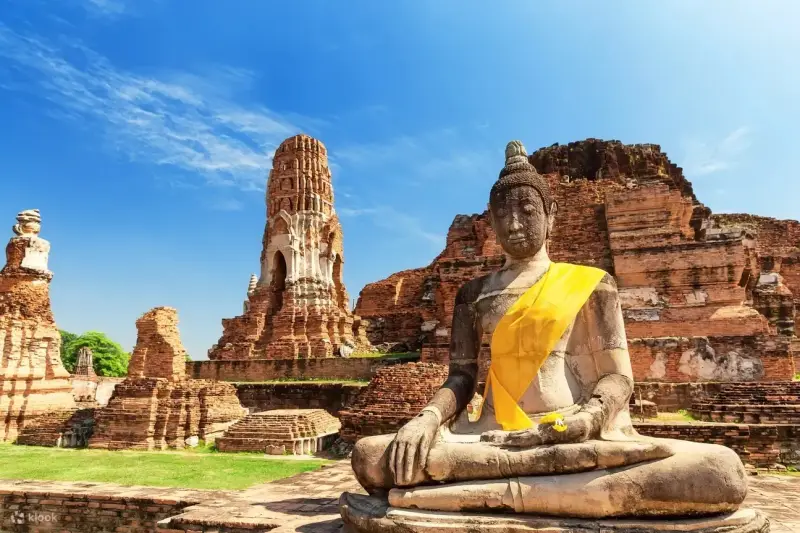
A 15th-century Nan temple with a tall prang-based chedi ringed by elephants and a large early Sukhothai-style bronze Buddha in its wihan.
A quiet old-town temple whose tiered chedi blends Khmer and Sukhothai design, with a revered bronze Buddha next door.
If Wat Phumin is the temple everyone photographs in Nan, Wat Suan Tarn is the one that rewards a slower look. Its chedi mixes building traditions in a way you rarely see on one structure: a Khmer-style prang base stacked in tiers, topped by a lotus-bud spire in the Sukhothai manner. The temple is usually quiet unless a festival is on, which makes it a pleasant stop in the old town.
The name means "sugar palm garden," after the trees that once covered the grounds. Tradition dates the temple to 1456, a few years after King Tilokaraj of Chiang Mai took Nan, and local accounts credit him with commissioning the main Buddha image. The spire you see today came from a 1914 restoration, while the base below it is original 15th-century work, as Thai Holiday Guide notes.
Walk the full circuit around the base. Elephant supports line every side, and large false niches break up the lower tiers. Going round slowly lets you see where the three diminishing tiers hand over to the slimmer spire, the clearest sign of two eras meeting.
In the wihan next to the chedi sits Phra Chao Thong Thip, a seated bronze in the earth-touching pose, cast in early Sukhothai style. It is the temple's most revered image, and its scale is easier to appreciate once you are standing at its base.
The temple pairs well with a stretch of the Nan City Wall and Tham Pha Tup Forest Park for a half-day outing. Morning is the best time: the sun lights the chedi tiers directly and the heat has not yet built up.
Checked against trusted sources:
Thai Holiday Guide, Wat Suan Tarn
A 15th-century Nan temple with a tall prang-based chedi ringed by elephants and a large early Sukhothai-style bronze Buddha in its wihan.
Guided tours and experiences that include Wat Suan Tarn. See tours
The temple grounds are flat around the chedi base, but there is a raised chedi platform and steps into the wihan, so some areas need assistance for wheelchair users.
Not confirmed yet. Please check with the venue before you visit.
Water and a hat for the open chedi platform
Shoulders and knees covered; shoes off in the wihan
Not confirmed yet. Please check with the venue before you visit.
Not confirmed yet. Please check with the venue before you visit.
Drive or ride to Maha Yot Road in Nai Wiang subdistrict, a short trip north-east of central Nan. Songthaew and tuk-tuk drivers know it as วัดสวนตาล.
Not confirmed yet. Please check with the venue before you visit.
No special events on record for Wat Suan Tarn.
Morning, when sun hits the chedi tiers
Weekdays outside festivals
November to February
Others of this kind you opened on this device, so you can get back to them quickly.
No questions yet about Wat Suan Tarn. Ask the community or our travel team, and the answer will show here once it is published.
Our team answers questions here
No hotels within 15 km of Wat Suan Tarn are listed with us yet. Browse stays across the wider area instead.
Search hotels in NanNo restaurants within 15 km of Wat Suan Tarn are listed with us yet. Browse places to eat across the wider area instead.
Search restaurants in NanFind your kind of trip: 45 travel themes, from Temple, Landmarks, Heritage.
 Temple
Landmarks
Heritage
Parks
Museums
Beaches
Waterfalls
 National Parks
Markets
Islands
Mountains
 Entertainment Parks
Caves
Art Galleries
Wildlife (Zoo)
Floating Market
Garden
Shopping Malls
Forests
Church (Christianity)
 Beaches
Education
Monument
Weekend Market
Palaces
Bridges & Barrages
Kids Zone
Mosque (Islam)
Theme Parks
Botanical Gardens
Lakes & Haors
UNESCO World Heritage Site
Cliffs
 Nightlife Districts
Theme Parks
 UNESCO World Heritage
Forts
Hills
Libraries
Monastery (Buddhism)
Parks
Statue
Temple (Hinduism)
Theaters
Walkway
More sights and places to visit in Thailand, nearest first.
Nan
Nan's city wall is easy to miss. What survives is a brick stretch along Mahawong Road near Wat Mongkol, blending into the streetscape at the edge of the old tow...
Nan
Opposite the former Ho Kham palace, now the National Museum of Nan, a row of stucco elephants seems to hold a chedi on their backs. This is Wat Phrathat Chang K...
Nan
Before it held display cases, this two-story building on Pha Kong Road was the Ho Kham, home and office of the princes who governed Nan as a semi-independent st...
Nan
Wat Phumin is the image most people carry home from Nan: a man leaning in to whisper to a woman, painted on a temple wall in the 1800s. The hall around that pai...
Nan
Most temples in Nan old town wear weathered teak and faded murals. Wat Sri Phanton went the other way: its viharn and ubosot are covered in gold from roofline t...
Nan
Hong Chao Fong Kham is a rare chance in Nan to walk through a noble family's home rather than a temple or a museum hall. It belonged to a family of Nan's old no...
Nan
Almost every chedi in Nan is round. The one at Wat Phayawat is square, and that single fact makes this small temple in Du Tai one of the more interesting stops...
Nan
From the bridges of Nan town you can see a gold point on a low hill to the east. That is the chedi of Wat Phra That Chae Haeng, the province's most visited pilg...
Nan
Anyone who has stood in front of the history murals at Wat Ming Muang in central Nan has already seen Surdet Karalesen's best-known work. Wildside Art Gallery,...
Tell us where and when you want to go, and local travel experts send you offers for your trip.
General
Yes. A full circuit of the base is the best way to see the stepped tiers and the decoration on each side.
The wihan standing right next to the chedi.
Yes, for a different reason. Wat Phumin is known for its murals, while Wat Suan Tarn is about its unusual chedi and its bronze Buddha.
No. The site is compact and easy to explore on your own, though a local guide can explain the chedi's mixed styles.
It is usually quiet outside festival dates, so you can often have the chedi platform to yourself.
Photos of the chedi and grounds are fine. Inside the wihan, be discreet and avoid photographing people at prayer.
It sits in Nai Wiang, the central subdistrict of Nan city, a short ride from the main old-town temples.
The temple office number is listed in the information panel on this page.
วัดสวนตาล. Songthaew, tuk-tuk and Grab drivers will recognize it.
Yes, entry to Wat Suan Tarn is free.
Wat Suan Tarn is in Nan, Thailand. The street address and directions are under How to get there on this page.
Prices & payment
No ticket is sold; the temple is open to visitors free of charge.
Timing & weather
Wat Suan Tarn is open Monday – Sunday: 6:00 AM – 6:00 PM.
Plan about 0.7 hours (40 minutes) at Wat Suan Tarn. Typical visit: 30-45 minutes.
Getting there
You can reach Wat Suan Tarn by car. The route is described under How to get there on this page.
We use necessary cookies to make this site work. With your permission we would also like to remember your preferences, measure how the site is used, and show relevant ads and partner offers. You can change your mind at any time under "Cookie settings" on our Privacy policy page.

 Plan your trip with AI