


Venue
Not confirmed yet. Please check with the organiser before you go.

Christmas Day guide
This guide is for anyone travelling over the festive season, whether for church services, family meals or city lights. Western churches keep 25 December, while churches on the Julian calendar celebrate on 7 January. Flights in the days before Christmas and the homeward rush in early January fill quickly, so book transport, rooms and a restaurant table early.
Christmas marks the birth of Jesus for Western churches and many Eastern ones, and it has become the biggest holiday of the year across much of the world. Plenty of people who never set foot in a church keep it too, as a time for family meals, presents and a tree strung with lights.
Few holidays have travelled so far from their religious roots, or collected so many local habits on the way. The same day can mean a candlelit Mass in Bethlehem, a market square in Bavaria or a hotel buffet in Doha.
That variety is what makes it worth planning a trip around. Spend the season somewhere new and you see how a familiar feast looks through another country's eyes.
Not confirmed yet. Please check with the organiser before you go.
Hotels near the venue fill up around the event dates.
Churches welcome visitors at Christmas, believers or not, but these are services, so behave as at any act of worship. Midnight Mass and the morning services on the 25th are the busiest of the year, so arrive in good time if you want a seat.
Shops, museums and plenty of restaurants close for the day across the Western world. Get what you need a day or two ahead, or first thing on the 24th: medicines, snacks, water and any cash you might want.
If your hotel does not serve meals, book a restaurant that is open, and confirm a few days before. Supermarkets on the 24th are packed, so go early. Museums and attractions publish holiday hours in advance. Check them before planning a day around a visit and again in the days that follow.
A real tree, candles and an open fire are part of the charm of a rented cabin or apartment at Christmas. They are also the commonest causes of house fires over the holiday.
The main cities where the festival is celebrated.
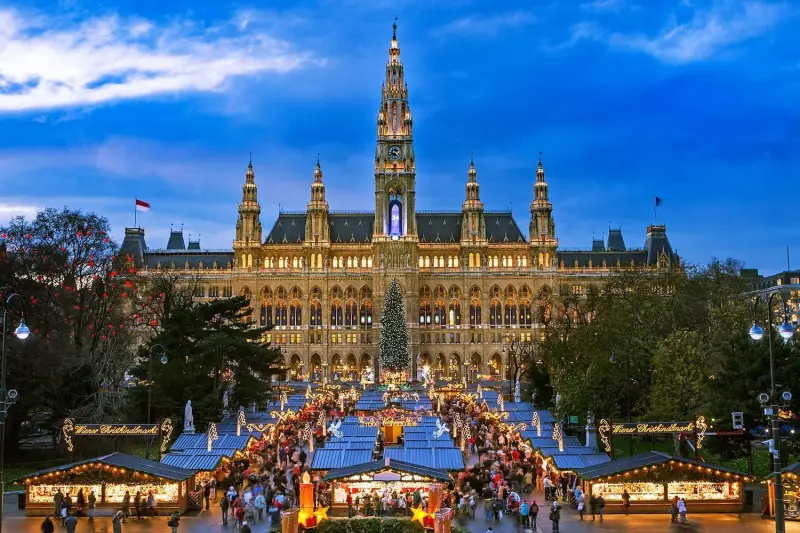
Most German and Austrian markets shut at lunchtime or early afternoon on Christmas Eve, and shops follow.
In Germany, Poland and much of central Europe this is the main night, with dinner and presents. In Italy and Poland the meal is meatless, often fish.
Churches fill for the night service, many with people who rarely come at other times. Some now hold it earlier in the evening.
Morning services are followed by the family lunch, which runs well into the afternoon. Museums, shops and many restaurants close, and public transport runs a reduced service.
A public holiday in Britain, Ireland, Germany, Austria and much of Europe, and the start of the winter sales in many countries.
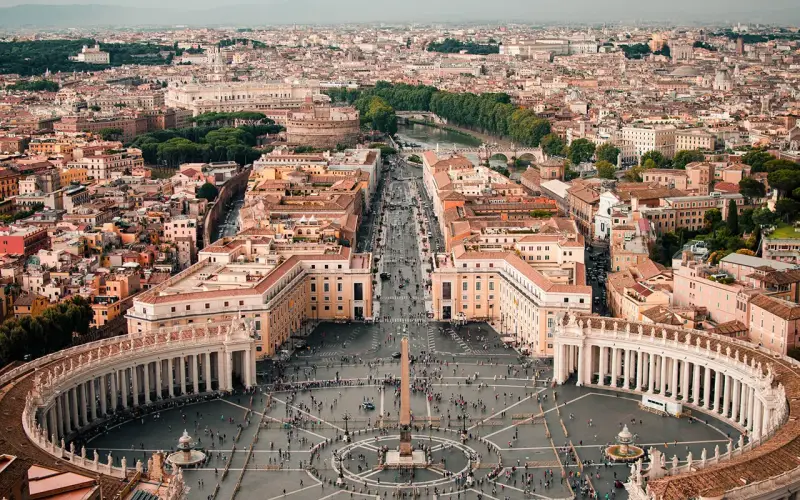
St Peter's and other major churches expect covered shoulders and knees; at the Vatican, guards turn people away at the door.
Arrive early, as seats go well before the start. Phones on silent, no flash, and wait for the end of the service to take photos.
If you are invited to a family meal, bring something small for the table, such as wine, chocolates or flowers.
Christmas travel rewards the early. Flights from about 20 to 24 December, and the homeward rush around 2 January, are among the most crowded of the year, and fares climb to match. Book in autumn and you choose. Book in mid-December and you take what is left.
Decide early which part of the season you are travelling for. If it is markets and lights, the first three weeks of December give you more than the holiday itself, with lower prices and shorter queues. If it is the day, with a church service, a long lunch and a walk through quiet streets, pick a hotel that serves a proper Christmas meal, and reserve the table when you book the room. Festive dinners sell out well before the rooms do.
Plenty of travellers carry the trip on into January. A second week somewhere else is easy to tack on, but buy both legs together. Seats on the return around 2 January go fast, and leaving it late can mean the most expensive ticket of your year.
The Gospel story behind the day is simple. Mary and Joseph travelled from Nazareth to Bethlehem, where Jesus was born in a stable and laid in a manger. Angels announced the birth to shepherds, and the Magi followed a star with gifts of gold and frankincense. Believers see in it the incarnation: God taking on a human life.
Nobody knows the real date. The first surviving text to put the birth on that date is the Chronograph of 354, in a passage composed in Rome around 336.
Most of the customs are much younger than the feast. Evergreen branches, garlands and wreaths decorated homes long before Christianity. German Lutherans began bringing whole trees indoors in the 16th century, well before glass baubles existed. The table changes with the border. Britain and North America roast a turkey, Italy and Poland serve fish on Christmas Eve, and the markets of Germany and Austria pour mulled wine all month.
Check timetables before the 25th, not on it. In much of Europe and North America, trains, buses and metros run reduced services on Christmas Day, and some lines stop altogether. Arrange airport transfers in advance and do not count on hailing a ride late on Christmas Eve.
The destination shapes the trip. Bethlehem, in the West Bank, draws pilgrims to the place tradition gives for the Nativity. Finnish Lapland, up in the Arctic Circle, builds a whole snowbound fantasy around the season and makes the obvious choice for families with young children. New York goes all out on lights. Amsterdam starts dressing its streets in early December, so a weekend there before the holiday works as well as the day itself.
Qatar and the UAE mark Christmas too. Their hotels and malls put up decorations and serve Christmas dinners for expatriate residents, a welcome option if you are working in the Gulf or passing through on a long layover.
Fly into Rome Fiumicino; the Leonardo Express train reaches Termini in about half an hour, and metro line A runs on to Ottaviano, a short walk from St Peter's.
Nuremberg, Dresden and Vienna are all on fast rail lines; a rail pass or advance tickets let you see two or three markets in one trip.
High-speed TGV trains from Paris take under two hours, and the station is a walk from the old town.
Gulf connections are the easiest way to Europe over the holidays: see Bangkok to Dubai flights. Book early, as seats from 20 to 24 December go fast.
Market towns fill on December weekends, so book midweek if you can and stay inside the old town, where the stalls are a walk away.
In Rome, rooms near the Vatican go first for Christmas week; a hotel near a metro line A station is a good alternative.
Rome
December in central Europe is cold and often grey, with temperatures around freezing in Nuremberg, Dresden and Vienna and snow possible. Rome is milder but can be wet.
Others of this kind you opened on this device, so you can get back to them quickly.
No questions yet about Christmas Day. Ask the community or our travel team, and the answer will show here once it is published.
Our team answers questions here
Festivals held in the same weeks, if you want to plan more than one.
Cultural Events, Arts Festivals, Winter Festivals
Lyon, France
1 photo
Party Events, Cultural Events, National Day
Global Event
18 photos
Cultural Events, Religious Festivals
Piraeus, Greece
Tell us where and when you want to go, and local travel experts send you offers for your trip.
Timing & weather
The church in Rome was keeping the feast on that date by 336, under the emperor Constantine. Some historians think the choice was meant to draw people away from established pagan festivals at the same time of year, though nobody can prove it.
In the church calendar Christmastide runs from the 25th to Epiphany on 6 January, the feast of the Magi. For many families the holiday is not over until that date.
General
No. Churches on the Julian calendar celebrate on 7 January, and the Armenian church keeps 6 January. In Lebanon both 25 December and 6 January are official holidays, the second for its Armenian community.
It is the Greek letter chi, the first letter of Christ's name in Greek. Xmas is simply a written shorthand for Christmas, not a modern attempt to take Christ out of the holiday.
It joins Christ and Mass, meaning the Mass of Christ: the church service held to celebrate his birth. The name points straight back to the services that are still the centre of the day for believers.
The church season of preparation for Christmas. It opens four Sundays before the 25th, so its first day moves around from year to year, and many towns switch on their lights at about the same time.
Fruit and nuts. German Lutherans who brought trees indoors in the 16th century hung them with food, long before glitter and shop-bought ornaments took over. Evergreen branches and wreaths had decorated homes for centuries before that.
A Christian saint whose feast falls on 6 December, three weeks before Christmas. The custom of giving presents at Christmas owes something to his feast, and Santa Claus takes his name from him.
Older pictures show him in purple, green or blue. Red suits were already common by the early 1900s, and Coca-Cola's adverts from 1931 fixed the look worldwide. The modern Santa is largely an American creation.
We use necessary cookies to make this site work. With your permission we would also like to remember your preferences, measure how the site is used, and show relevant ads and partner offers. You can change your mind at any time under "Cookie settings" on our Privacy policy page.

 Get the bookingMentor app