


Cable car up, walk the ridge
Ride the enclosed cable car to the Tower 14 area, walk west toward Tower 6 and take the toboggan or chairlift down.

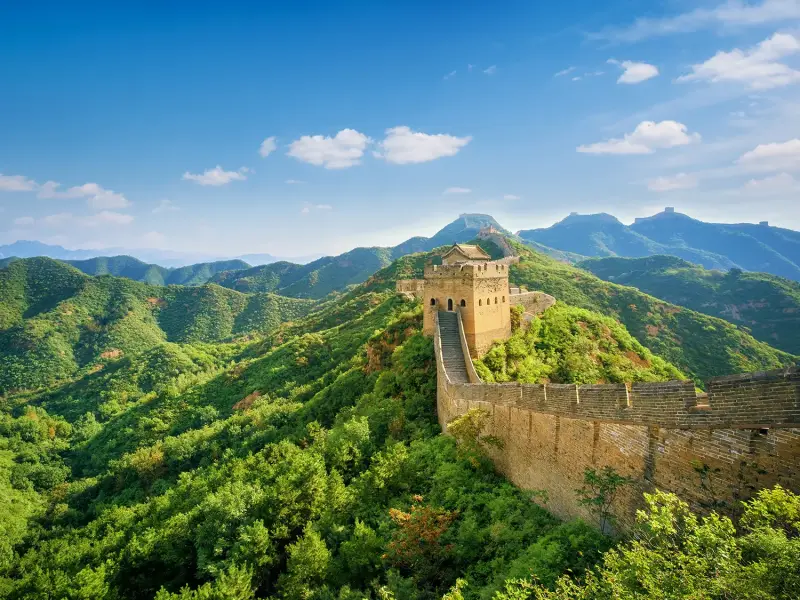
Mutianyu is the restored Ming stretch of the Great Wall in Beijing's Huairou District, steeper and quieter than Badaling and well suited to a day out from the capital. Entry costs ¥45, with the shuttle bus ¥15 and the cable car ¥140 return. In peak season gates open at 7:30 AM; three to four hours on the wall is typical.
Of the stretches open around Beijing, this page covers Mutianyu, a good pick for families and first-time visitors who want a cable car and English signage.
The Great Wall was never one continuous wall. After Qin Shi Huang unified China in 221 BC, his government linked several older state walls against raiders from the northern steppe, and the Han later repaired and extended the line as frontiers moved.
The walls most visitors see belong to the Ming dynasty (1368 to 1644), which rebuilt the defenses in brick and stone after Mongol forces threatened Beijing. The Ming line runs from Shanhaiguan on the Bohai Sea to Jiayuguan in Gansu, with garrisons and beacon towers that passed warnings by signal fire.
Badaling was restored in the late 1950s and was the first section opened to the public in the People's Republic. Juyongguan, a fortified pass south of it, holds the Cloud Platform, built between 1342 and 1345 under the Yuan, with Buddhist texts carved in six scripts. Jinshanling, further north-east near Chengde, follows steep ridges for about 11 km with 67 watchtowers, some decorated with brick reliefs.
Mutianyu has 22 watchtowers, among them Zhengguan Pass, Dajiaolou and Yingfeidaoyang, and the wilder Jiankou stretch climbs away to the west. Cable cars, a chairlift and a toboggan run serve the slope. The restored walkway is about 2.25 km of steps and slopes with no level stretch. Vegetation covers more than 96 percent of the area, which explains the strong October color, and from late June to the end of August the section opens for evening visits.
Checked against trusted sources:
Beijing Municipal Government
Ride the enclosed cable car to the Tower 14 area, walk west toward Tower 6 and take the toboggan or chairlift down.
Steps climb from the valley to the wall in about 40 minutes. Fit walkers can continue east past Tower 20 for the steepest, emptiest stretch.
From late June to the end of August the wall is lit after sunset and the cable car runs into the evening.
The wall is a sequence of steep steps and slopes. The cable car reaches the wall, but the walkway itself is not wheelchair accessible.
No minimum age. The walkway is a run of steep steps and slopes with no level path, so a child carrier works better than a pushchair; the cable car takes young children up to the wall itself.
Passport (the one used to book), water, snacks, sun hat, sunscreen, a light jacket for the wind on the ridge
Trainers or walking shoes with grip; layers in spring and autumn
Writing on or damaging the wall, climbing outside the restored section, drones, littering
Visitor centre, restaurants and cafés at the foot of the hill, restrooms, souvenir shops, car park
Mutianyu is about 70 km north-east of central Beijing, roughly 1.5 hours by car via the Jingcheng Expressway. Parking is at the visitor centre, where the shuttle bus continues up the valley.
Take Beijing subway Line 15 or the suburban railway toward Huairou, then a local bus or taxi to Mutianyu. Seasonal direct tourist buses also run from central Beijing; check the latest timetables before traveling.
The Great Wall runs across northern China. The Mutianyu section described here is in Huairou District, about 70 km north-east of Beijing city centre, and is one of the easiest restored sections to reach from the capital.
Summer night openings (late June to the end of August) light the wall after sunset. Autumn colour in October is a popular photography season.
Arrive at opening time to have the wall nearly to yourself before tour buses arrive around mid-morning.
Weekdays are much quieter. Avoid Chinese public holidays, especially the 1–7 October Golden Week and early May, when crowds are very heavy.
April–May and September–October bring clear skies and comfortable temperatures. Summer is hot and humid; winter is cold and windy but very quiet, sometimes with snow on the wall.
Others of this kind you opened on this device, so you can get back to them quickly.
Yes. Tickets are real-name, sold up to 15 days ahead, and each passport can hold one ticket per day. Carry the same passport you booked with.
They are run by different companies with separate tickets. The cable car goes to the Tower 14 area; the chairlift up and toboggan down serve Tower 6.
Mutianyu is restored but usually less crowded than Badaling, with green hills on both sides and lifts for those who don't want to climb.
Our team answers questions here
No hotels within 15 km of Great Wall of China are listed with us yet. Browse stays across the wider area instead.
Search hotels in ChinaNo restaurants within 15 km of Great Wall of China are listed with us yet. Browse places to eat across the wider area instead.
Search restaurants in ChinaFind your kind of trip: 20 travel themes, from UNESCO World Heritage, Entertainment Parks, Heritage.
More sights in Huairou and the hills north of Beijing.
 Most Visited
Beijing
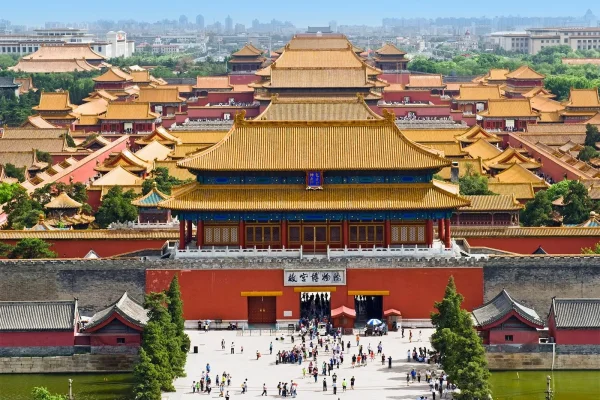
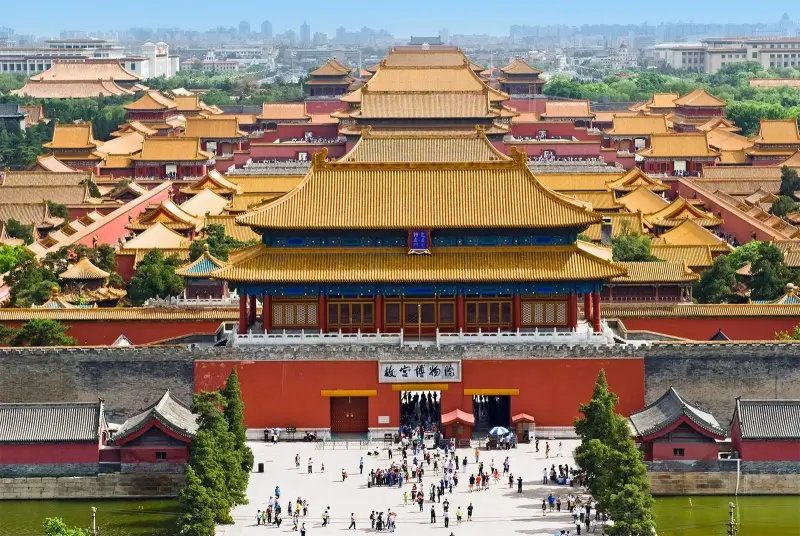
The Forbidden City lies on Beijing's north-south axis and today houses the Palace Museum. The Yongle Emperor of the Ming dynasty, who moved the capital from Nan...

Beijing
The Temple of Heaven, Tiantan, lies in Dongcheng District in the south of central Beijing. It was built between 1406 and 1420 under the Yongle Emperor of the Mi...
Shanghai
Yuyuan covers about 2 hectares in Huangpu District, next to the City God Temple. The garden was created by Pan Yunduan, a Ming dynasty official, who began it in...

Hangzhou
West Lake, Xi Hu, has the city of Hangzhou in Zhejiang Province along its eastern shore. The lake was originally a lagoon of the Qiantang River that was cut off...
Shenzhen
Wutong Mountain is the highest peak in Shenzhen, China, rising to 943.7 meters on the border of Luohu and Yantian districts. It sits inside Wutongshan National...
Shenzhen
Fairy Lake Botanical Garden, called Xianhu in Chinese, is a 546-hectare botanical garden in Liantang, Luohu District, Shenzhen, China, between Wutong Mountain a...
Shenzhen
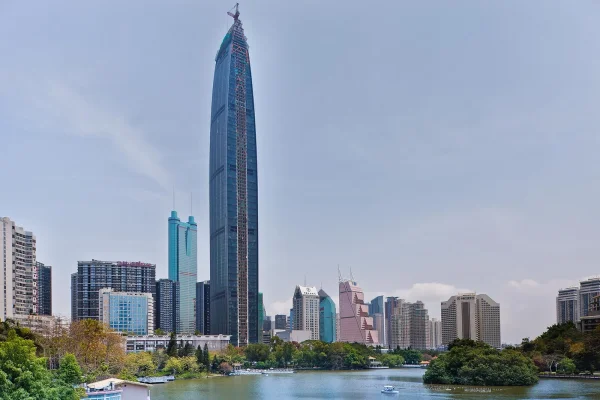
KK100, also called Kingkey 100, is a skyscraper at 5016 Shennan East Road in Luohu District, Shenzhen, with offices, a luxury hotel and a shopping mall at its b...
Shenzhen
Happy Valley Shenzhen is a theme park of 350,000 square meters in Overseas Chinese Town, Nanshan District, Shenzhen, China. It has nine themed zones, roller coa...
Shenzhen
Overseas Chinese Town (OCT) is a district in Nanshan, western Shenzhen, built around theme parks and contemporary art spaces. From Shahe farm to development zon...
Tell us where and when you want to go, and local travel experts send you offers for your trip.
Answers based on the official Mutianyu Great Wall information.
Timing & weather
A survey published in 2012 by China's National Cultural Heritage Administration measured all known wall sections built by different dynasties at about 21,196 kilometres. The Ming dynasty walls alone account for about 8,850 kilometres of that total.
Construction took place over many centuries. The earliest walls date to the 7th century BC, the Qin dynasty linked several in the 3rd century BC, and the Ming dynasty, which ruled from the 14th to the 17th century, built most of the brick sections visitors see near Beijing today.
Mutianyu opens at 7:30 every day and closes at 18:00 on weekdays and 18:30 at weekends. Last entry is 30 minutes before closing, and ticket sales stop an hour before.
April to May and September to October bring clear skies and comfortable temperatures. Summer is hot and humid, and winter is cold and windy but very quiet, sometimes with snow on the wall.
General
It depends on your plans. Badaling has the easiest transport links but the biggest crowds. Mutianyu is well restored, has cable cars and suits families. Jinshanling is steeper and wilder and appeals to keen walkers. All three can be visited as a day trip from Beijing.
Badaling, the busiest section, has operated with a daily cap of 65,000 visitors since 2019, and advance booking is recommended in peak periods. Other sections may also require advance reservations on holidays, so check before you go and bring your passport for identity checks.
No. Drones are not allowed at Mutianyu, though personal photography is welcome.
Great Wall of China is in China. The street address and directions are under How to get there on this page.
Explore the area on this page lists 5 places around Great Wall of China, among them Mutianyu Visitor Centre and shuttle and Huairou town.
Yes. Use "Ask a question" under "Travelers are asking" on this page. The bookingMentor team answers it, and the answer then appears on the page for other travelers too.
Prices & payment
There is no single ticket. Each section, such as Badaling, Mutianyu or Jinshanling, charges its own entry fee, and cable cars, chairlifts and shuttle buses cost extra. Prices also vary by season. Check the official ticketing page for the section you choose before you travel.
Children under 1.2 m tall enter free. Bring documents for any free or reduced entry, as they are checked at the gate.
Getting there
Take Beijing subway Line 15 or the suburban railway towards Huairou, then a local bus or taxi for the last stretch. Seasonal direct tourist buses also run from central Beijing; check current timetables before you travel.
Express Bus 916 from Dongzhimen to Huairoubeidajie, then bus H23, H3 or H71 to the Mutianyujingqu stop.
Beijing Capital International Airport (PEK) is the airport for Great Wall of China, about 39 km away in a straight line.
We use necessary cookies to make this site work. With your permission we would also like to remember your preferences, measure how the site is used, and show relevant ads and partner offers. You can change your mind at any time under "Cookie settings" on our Privacy policy page.





 Plan your trip with AI