

Unawatuna Beach's double reef cuts wave intensity more than most Sri Lankan beaches, making it genuinely one of the safer swimming spots on the south coast, though rip currents still occur and Sri Lanka's lifesaving authorities have documented drownings there. Dalawella and Mihiripenna offer calmer, shallow, reef-protected lagoons better suited to families. Visit November through April; the May-to-September monsoon brings rough seas that local guesthouses themselves warn guests away from.
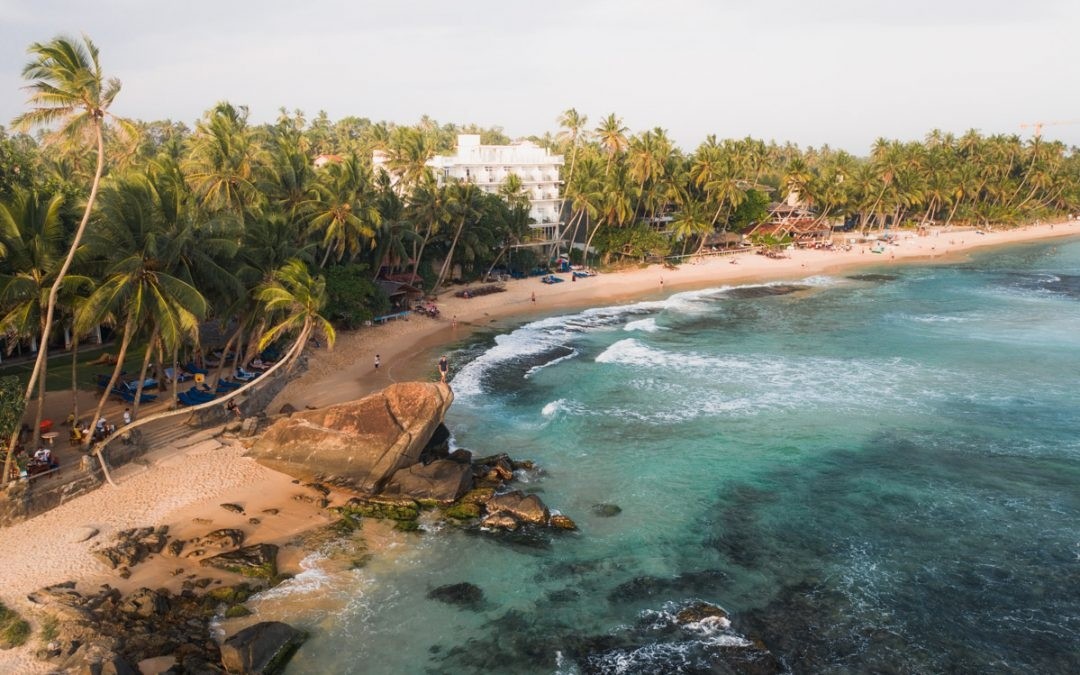
Unawatuna's main beach curves in a roughly 1-kilometer arc protected by a double reef system, a real structural feature that softens incoming waves more effectively than the open coastline found at most other south coast towns. That's the reason Unawatuna gets recommended for swimming and beginners more than nearby Hikkaduwa or Mirissa. It's not a guarantee. Rip currents still form here, strong enough that Sri Lanka's own Sunday Times has reported drowning cases at this specific beach, and the water depth drops to 10-15 meters not far from shore.
This guide covers all 6 beaches in the Unawatuna area with real distances and reef conditions, plus the safety information most travel guides skip entirely: what a rip current actually feels like, what to do if you're caught in one, and why the season you visit in matters more than which specific beach you pick.
Swimming Safety: What Every Guide Skips
Rip Currents are Real Here, Not a Generic Warning:
Sri Lanka's Sunday Times has reported drownings specifically at Unawatuna alongside Mount Lavinia, Bentota, and Hikkaduwa, most caused by rip currents that form even when the surface looks calm. A rip current pulls a swimmer away from shore. It doesn't pull anyone under, and the instinct to swim straight back against it is exactly what exhausts people into panic. Sri Lanka Lifesaving Association officials specifically cite this pattern: swimmers get caught, fight the current directly, and drown from exhaustion. The current itself rarely does the damage; the panic does.
If you're caught in one: don't swim toward shore. Swim parallel to the beach until you feel the pull ease, then angle back in. Floating on your back conserves energy if you're tired, and raising an arm to signal for help costs nothing. Cross-hatched, square wave patterns on the surface signal genuinely dangerous conditions, worth staying out of the water entirely if you see them.
Season matters as much as technique. November through April is Sri Lanka's south coast dry season, with calm seas and the conditions every beach on this list is actually recommended for. May through September brings the southwest monsoon, and locals interviewed by visiting travelers describe the sea as too rough for swimming during this window, a detail worth confirming with your guesthouse directly; good weather alone doesn't mean safe water.
Unawatuna Beach:
Unawatuna Beach curves in a roughly 1-kilometer arc, and its double reef system reduces wave intensity enough that it's regularly cited as one of the safer swimming beaches in Sri Lanka, gentle enough near shore for children and weak swimmers even though depths drop to 10-15 meters further out. The beach stays genuinely busy during peak season (December through March), lined with guesthouses, restaurants, and sunbed rental stands that mostly come free with a drink purchase. Snorkeling reaches the offshore reef directly from the sand, and Galle Fort, a UNESCO World Heritage Site, sits about 10 minutes and 4 kilometers away by tuk-tuk.
Dalawella Beach:
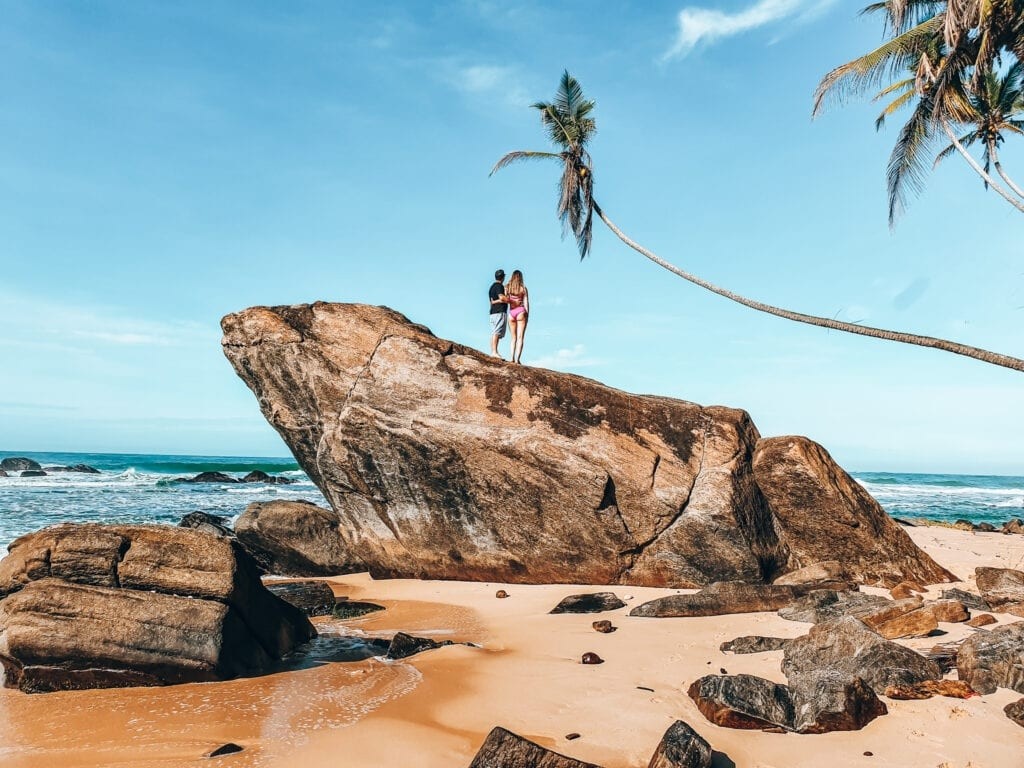
Dalawella's calling card is the coconut palm rope swing photographed constantly across Instagram, positioned over a shallow lagoon protected by an offshore reef that keeps the water genuinely calm. That reef protection makes Dalawella one of the better beginner-swimmer options on this list, considerably gentler than Unawatuna's more open bay. The nearby rock formation known as Ship Rock adds a second photo stop, and the beach runs quieter overall despite sitting just a short ride from Unawatuna's busier center.
Mihiripenna Beach:
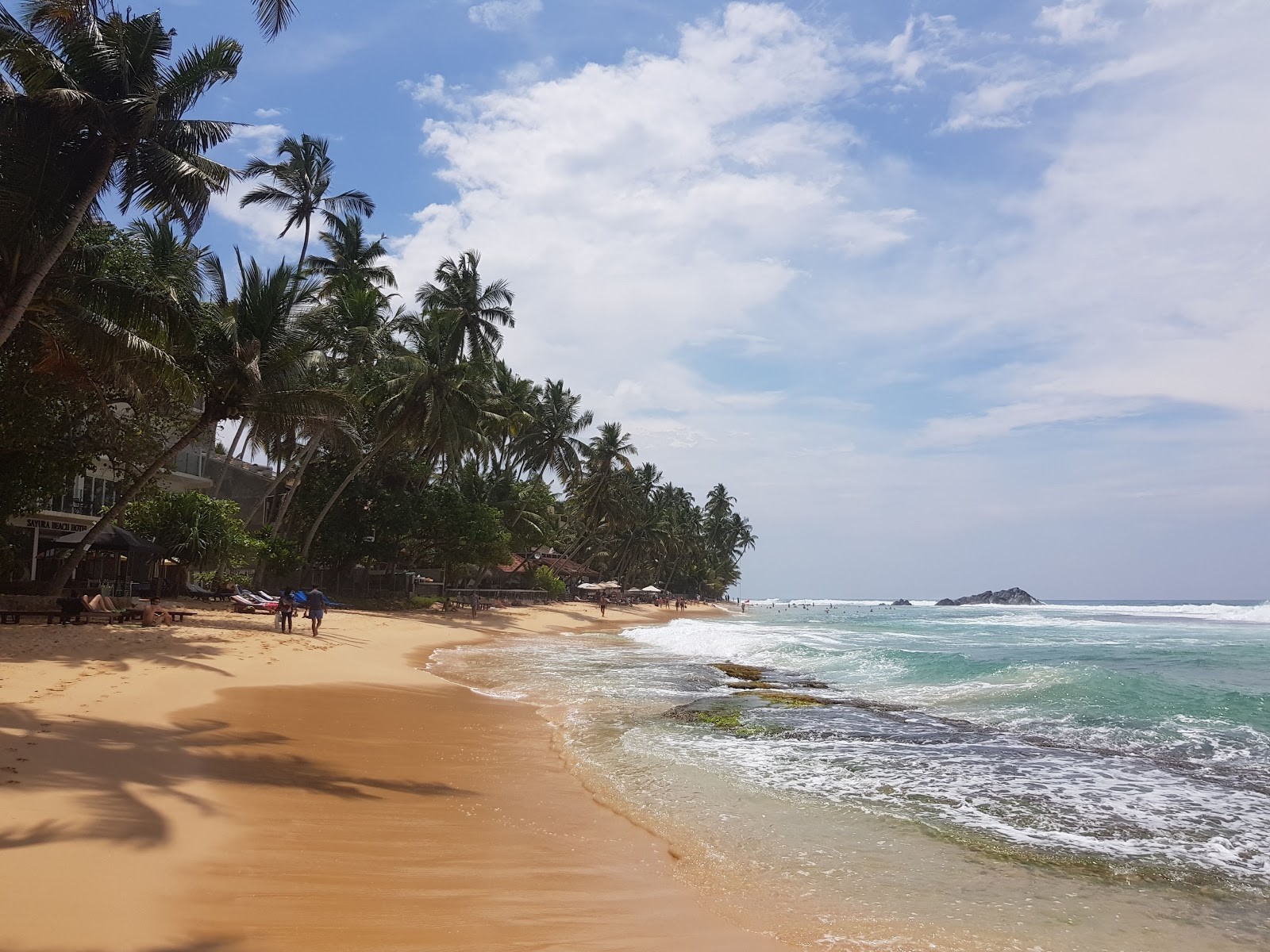
Mihiripenna sits close enough to Unawatuna for an easy day trip and stays consistently quieter, another reef-protected stretch with a shallow lagoon suited to families and cautious swimmers. Local cafes along the sand serve fresh seafood, a genuine draw beyond the beach itself, and the same reef protection that calms the water here also supports enough coral and fish life for casual snorkeling close to shore.
Jungle Beach:
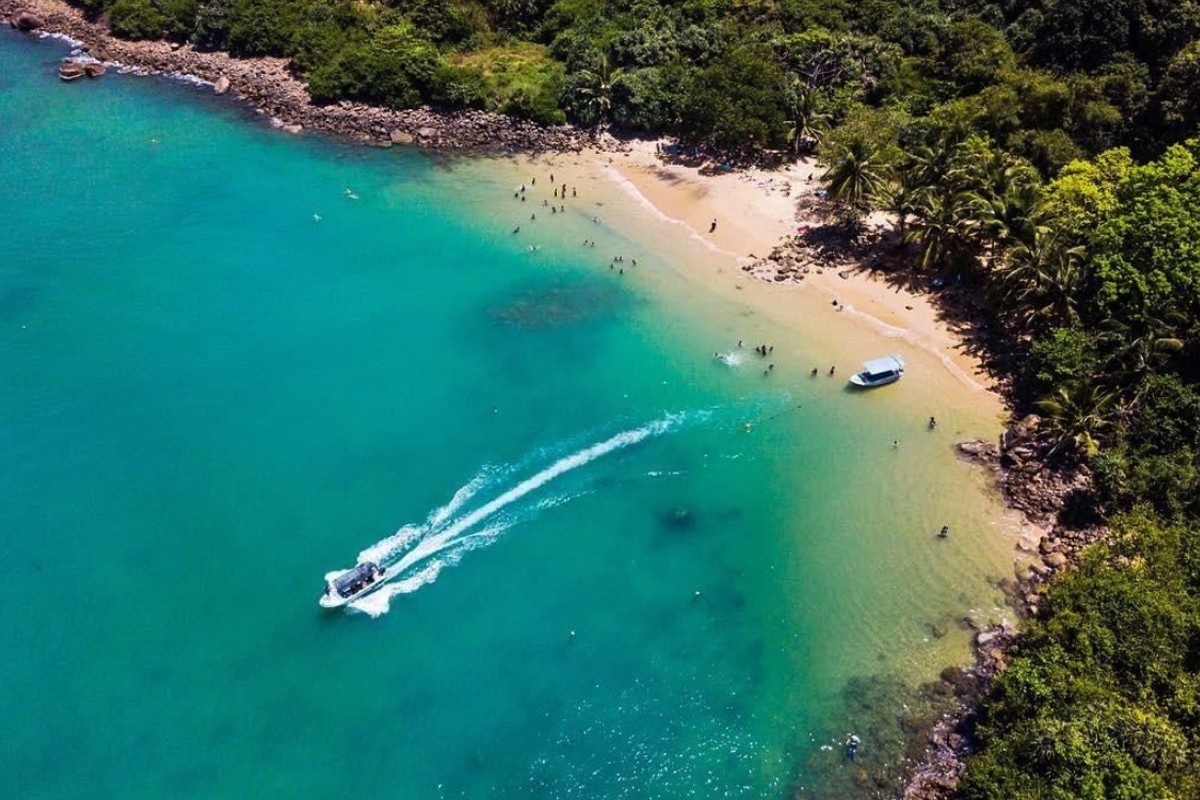
Jungle Beach sits inside Rumassala Sanctuary, reached by a hilly 2-kilometer walking trail through jungle terrain, or by tuk-tuk for around Rs 400 (roughly $1.30) via a side road off the main highway. The offshore reef here has degraded more than at the other beaches on this list, worth knowing if snorkeling quality is the priority, though the beach itself stays genuinely quieter and more secluded than anywhere else nearby. A beachside cafe runs DJ-driven parties on Wednesday nights during high season, a detail that surprises visitors expecting total isolation.
Koggala Beach:
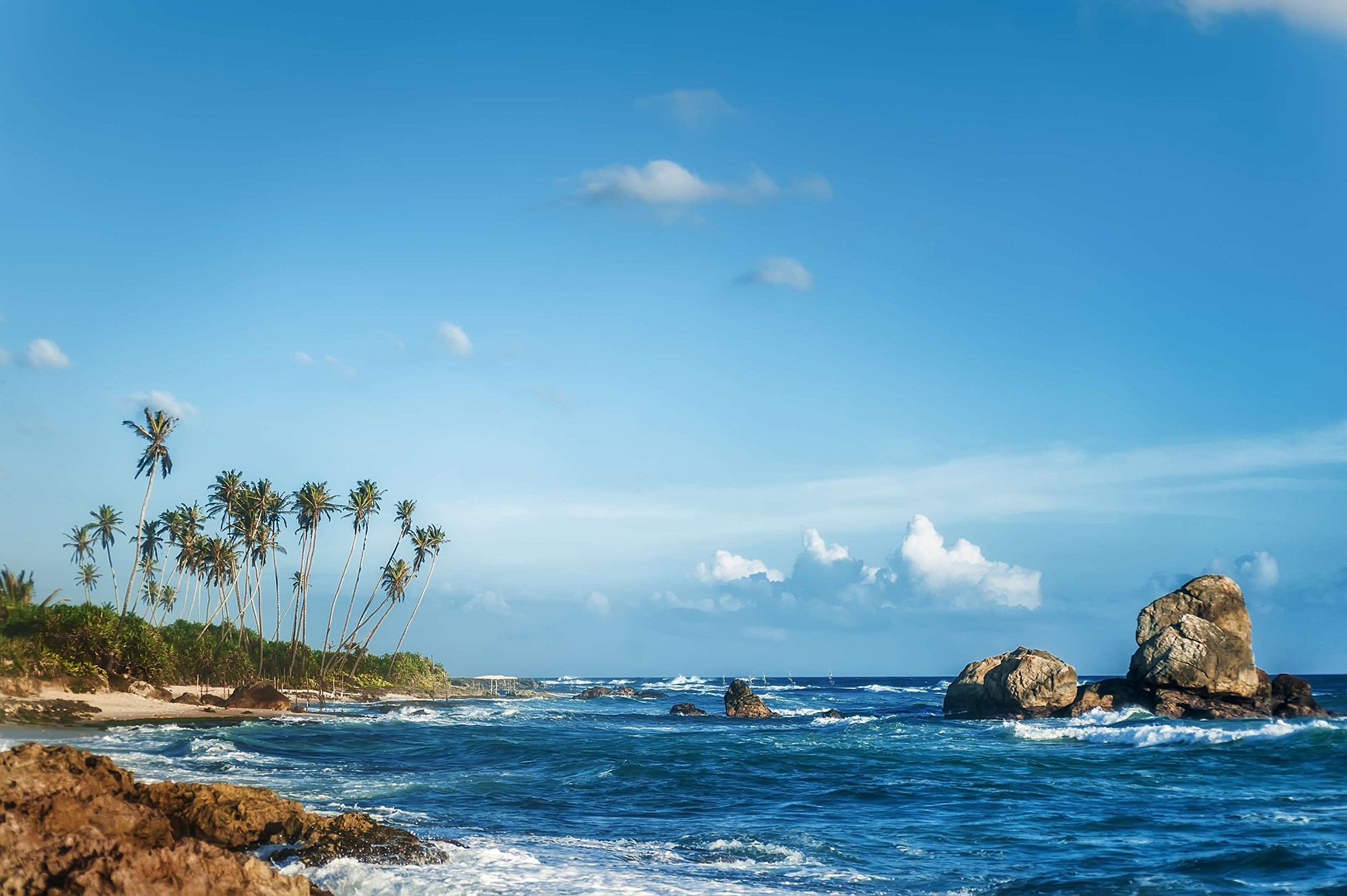
Koggala runs longer and less crowded than the beaches directly around Unawatuna, with waves suited to beginner and intermediate surfers, not the calmer swimming conditions found at Dalawella or Mihiripenna. The adjacent Koggala Lake adds a genuinely different activity: boat tours through mangroves to Cinnamon Island, with regular sightings of birdlife and crocodiles. The traditional stilt fishermen along this stretch of coast, balanced on cross-shaped wooden poles planted in the shallows, remain one of the most photographed sights on Sri Lanka's south coast, though most now pose for tips, not actively fishing.
Rumassala South Beach:
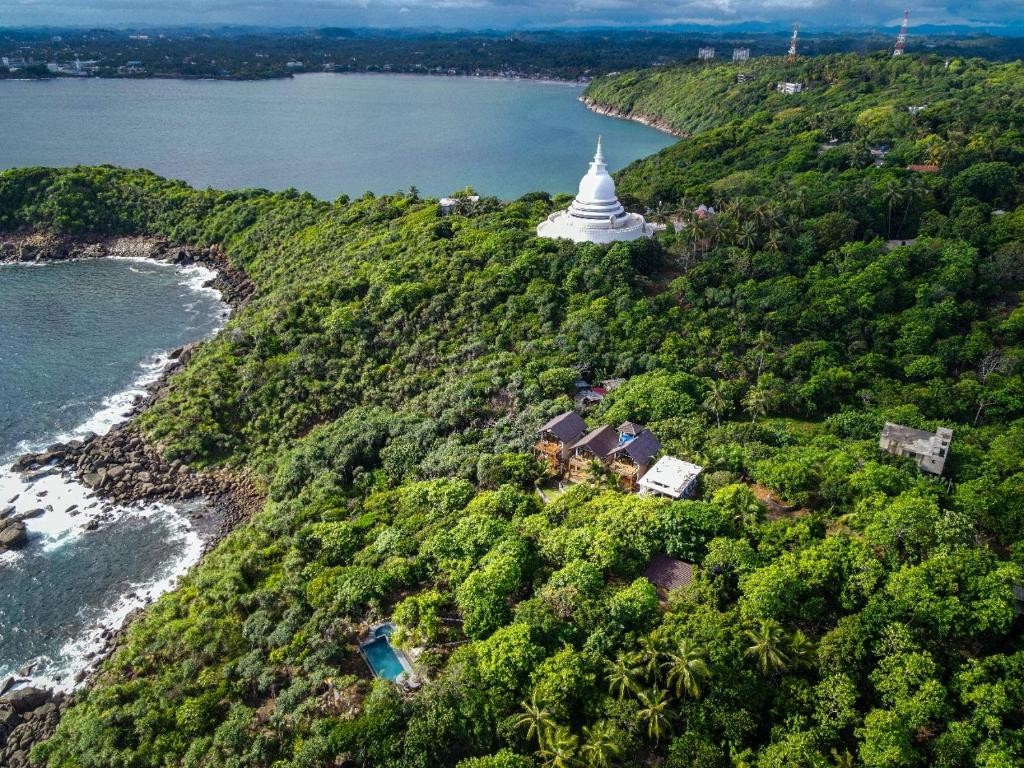
Rumassala South Beach sits at the base of Rumassala Hill, a rock formation with genuine mythological weight: local legend from the Ramayana holds it as a fragment of the Himalayas dropped by Hanuman. The Japanese Peace Pagoda, a working Buddhist stupa built on the hill above, adds a hiking and viewpoint stop beyond the beach itself, and offshore coral supports snorkeling similar to Unawatuna's main beach. It stays quieter than the more central beaches simply due to the short additional walk required to reach it.
Things to Do in Unawatuna:
Unawatuna works as a base for more than swimming. Here's what actually fills a few days beyond the 6 beaches above.
Ride the Dalawella palm tree swing
The swing itself operates out of a lakeside guesthouse right on Dalawella Beach and costs around 500 LKR (roughly $2.75) for 3-5 swings. It's genuinely busy by mid-morning once the Instagram crowd arrives, so sunrise or sunset both give a real shot at photos without a queue.
Take a surf lesson at Bona Vista Bay
Bona Vista, a small beach between Unawatuna and Galle, runs genuinely beginner-friendly waves with several surf schools offering instruction and board rental. Lessons run roughly 2,000-3,000 LKR ($11-16) an hour and board rental 300-500 LKR ($1.65-2.75) an hour. Anyone chasing serious waves is better served heading further to Hikkaduwa, Weligama, or Arugam Bay, all considered stronger surf destinations than Unawatuna itself.
Watch sunset from the Japanese Peace Pagoda
Built by Japanese Mahayana Buddhist monks above Jungle Beach on Rumassala Hill, the pagoda looks out over Galle Bay and the fort in the distance. It's a working religious site, so modest dress and quiet, respectful behavior are expected, not optional. Late afternoon gives the clearest light for the view down to the coastline.
Day trip to Galle Fort
Galle Fort, a UNESCO World Heritage Site built by the Dutch starting in 1663, sits about 10-15 minutes from Unawatuna by tuk-tuk. The fort's narrow streets hold the Galle Lighthouse, the Dutch Reformed Church, and the original outer ramparts, and a half-day is enough to walk the full perimeter and stop for coffee along the way.
Visit the sea turtle hatchery in Habaraduwa
Several nonprofit hatcheries along this stretch of coast, including ones in Habaraduwa and nearby Mahamodara, buy turtle eggs directly from poachers specifically to protect them, then release the hatched turtles into the ocean, sometimes with visitors present for the release. Entrance fees vary noticeably by hatchery and have climbed over time, roughly 500 LKR at some, closer to 1,000-2,000 LKR at others, so confirm the current rate before visiting.
Watch the stilt fishermen near Koggala
Traditional stilt fishing, balancing on a pole planted in the shallows to fish without wading, survives along this stretch of coast, though the 2004 tsunami damaged much of the shoreline and reduced how often it's practiced for real. Many of the men on the poles today pose for tips, not actively fish, worth knowing before paying. A small tip, often requested around 500 LKR ($2.75) per person, buys a few minutes and a photo.
How to Get to Unawatuna:
The coastal train from Colombo Fort to Galle is the classic route, and it's worth knowing what you're signing up for: departures run every 1-2 hours, cost around 240-280 LKR ($1.40-1.54), and take 2.5-3 hours, but the carriages fill standing-room-only during peak times, with some travelers packed shoulder to shoulder for over an hour before a seat opens up. Get off at Galle station, then take a local bus or tuk-tuk the final stretch into Unawatuna for around 320-400 LKR ($1.70-2.20).
Local buses run cheaper if less comfortable: from Hikkaduwa, Galle, or Mirissa directly to Unawatuna runs around 50 LKR ($0.30) per person. From Colombo's Bastian Mawatha bus station, a local bus costs around 100 LKR ($0.55), departs every 20 minutes, and takes roughly 3.5 hours with a change in Galle. A more comfortable air-conditioned direct bus also runs from Colombo's Maharagama bus station, about 15 kilometers south of the city center, departing every 15 minutes for around 400 LKR ($2.20).
By air, the nearest airport is Colombo's Bandaranaike International (CMB), about 137 kilometers away, with the smaller domestic Ratmalana Airport (RML) closer at roughly 99 kilometers. Either way, plan on a 2.5-3 hour road transfer from the airport to Unawatuna.
Where to Stay in Unawatuna:
Unawatuna's popularity means real choice across every price range, though rates run higher here than in less-visited parts of Sri Lanka. Book a couple of weeks ahead for peak season (December through March).
Boutique and upscale
Sergeant House
A small colonial-style boutique guesthouse with a pool, a garden, and a menu mixing Thai, Sri Lankan, and Western dishes. It sits secluded and quiet, with an Ayurvedic spa on-site, yet stays a short walk from Unawatuna's restaurant strip.
Araliya Beach Resort & Spa
The largest, most upscale hotel directly on Unawatuna Beach, with sea-view rooms, a fitness center, and both a year-round outdoor pool and a separate rooftop pool, a genuine full resort, not a smaller boutique property.
Cantaloupe Levels
Set above the coastline with views stretching toward the bay of Galle, a genuine step up in scale and elevation from most of Unawatuna's smaller boutique guesthouses.
Why House
A boutique villa hotel set inside a 3-acre walled garden, considerably more secluded and green than anything sitting directly on the beach strip.
Mid-range
Ocean Crest Hotel
A newer build with a seafront pool, located directly by the water.
Kingfisher Hotel
Beachfront in the center of town, with the ocean directly outside and a private balcony in every room. No pool, but the location makes up for it.
Gloria Grand Unawatuna Hotel
Close to the beach but set back from Unawatuna's busiest street, a genuine advantage for anyone who wants quieter nights without sacrificing beach access.
Hotel Flower Garden
Built around its pool and garden setting, consistently one of the more popular mid-range picks in town in the $60-120 range.
Agnus Unawatuna
A rooftop infinity pool with ocean views, less than a kilometer from the Japanese Peace Pagoda, a genuinely short walk to one of the area's best sunset viewpoints.
Green Escape Unawatuna
A garden setting with a shared lounge, terrace, and outdoor pool, air-conditioned rooms throughout, a 4-star option priced below the beachfront resorts.
Budget
Thaproban Beach House
Steps from the sand, with private bathrooms, air conditioning, and a beachfront restaurant serving fresh seafood each evening.
Damith Guest House
Set on the hillside away from the busiest tourist strip, with a swimming pool, a genuine rarity at this price point in the Unawatuna area. It's about a 30-minute walk to the beach, or 10 minutes by tuk-tuk, with both the beach and Galle roughly equidistant.
Mr Funk's Hostel
A private room here has run around 2,600 LKR ($15) a night, just outside the main town with a garden setting and group dinners most evenings, a genuinely social option for solo travelers. It sits a 5-minute walk further out than the busiest strip, a fair trade for the atmosphere and price.
Asantha Guest House
Among the cheapest rooms in Unawatuna, with rates recorded as low as $17 a night, a genuinely no-frills 2-star option for travelers prioritizing price above every other factor.
Peacock Guesthouse
A straightforward budget guesthouse in the $20-40 range, without the pool or spa extras of the pricier options nearby, a solid pick for a simple, clean room.
Paradise Garden
Large, comfortable rooms set in a genuine garden environment, a real step up in space compared to a typical budget room at this price point.
Best time to visit Unawatuna:
November through April is Sri Lanka's south coast dry season, calm seas, minimal rain, and the safest swimming conditions of the year, with February through April marking the absolute peak, both for weather and for crowds. Book accommodation at least 2 weeks ahead if you're visiting during these peak months, since Unawatuna's popularity means rooms fill fast even outside the top-tier hotels.
May through September brings the southwest monsoon: rougher seas, more rain, and a real increase in swimming risk that local guesthouses themselves warn guests about. Most travelers who've stayed 3-5 days, the length regularly recommended as the right amount of time to properly see Unawatuna's beaches, prices in a shoulder-season buffer, arriving in early November or leaving by late April, to catch good weather without the February-April crowd peak.
A Detailed 3-Day Itinerary:
3-5 days is the commonly recommended stay length here. This 3-day version covers the essentials, broken into morning, afternoon, and evening blocks so you can slot in exactly what fits; extend it to 5 days with the optional stop below.
Day 1: Arrive and settle into Unawatuna Beach
Arrival and first swim:
Arrive by train or bus and check into your accommodation. Once settled, head straight to Unawatuna Beach for an orientation swim in a calmer stretch near the sunbeds; the water stays gentler behind the reef than it looks from the sand.
Explore the main strip:
Walk the length of the beach road, get a feel for the restaurants and shops, and grab a fresh king coconut from a street vendor (around 50-100 LKR). If you brought snorkel gear, the water off the beach's calmer eastern end supports enough coral and fish to make a first attempt worthwhile.
Sunset walk and dinner:
Walk west toward the small hillside pagoda and Buddha statue above the beach for a low-effort sunset view over the bay. Dinner at a local roti shop or Skinny Tom's Deli sets the tone for the trip; both sit right along the main beach road, and a full local meal runs a fraction of what the beachfront restaurants charge.
Day 2: Dalawella and Mihiripenna
Dalawella at first light:
Head to Dalawella early, before the rope swing line builds and the lagoon crowds in. The swing costs around 500 LKR ($2.75-3) for 3-5 turns. The reef-protected lagoon here often has turtles swimming close enough to see without a snorkel, and the slightly deeper water just beyond it usually has more.
Wijaya Rock and Mihiripenna:
Climb the rock formation beside the leaning palm tree at Dalawella for a sunset-worthy viewpoint back over the bay and a good vantage point for spotting turtles below. Continue to quieter Mihiripenna for a slower pace and a seafood lunch at one of the beachside cafes.
Back to Unawatuna:
Return to Unawatuna for the evening. A tuk-tuk between Dalawella and Unawatuna runs around 200-300 LKR ($1-2) each way, cheap enough to do the round trip without much planning.
Day 3: Jungle Beach, the Peace Pagoda, and Galle Fort
Jungle Beach before the heat:
Start with the hike or short tuk-tuk ride to Jungle Beach (around 400 LKR / $2.25 each way by tuk-tuk) before the midday heat sets in. The quieter of its 2 coves is worth seeking out for real solitude, and the water stays clear enough for casual snorkeling around the rocky edges.
Peace Pagoda, then Galle Fort:
Stop at the Japanese Peace Pagoda on Rumassala Hill on the way back for the view over Galle Bay; modest dress is expected since it's a working religious site. From there, continue into Galle Fort itself for the afternoon, walking the ramparts and the old Dutch colonial streets built starting in 1663.
Final dinner:
Head back to Unawatuna for a final evening, or stay in Galle for dinner before the last tuk-tuk back. Either way, a beachside seafood dinner with drinks runs roughly 3,000-5,000 LKR ($10-17) per person at Unawatuna's beachfront restaurants.
Optional day 4-5: Koggala and Habaraduwa
If you've got 5 days on hand, not just 3, use the extra time on a morning stop to watch the stilt fishermen near Koggala, followed by a boat tour on Koggala Lake out to Cinnamon Island for mangroves and birdlife. In the afternoon, visit a sea turtle hatchery in Habaraduwa or Mahamodara, timed if possible around a hatchling release. Close the trip with a quiet final evening at Rumassala South Beach, genuinely less crowded than anywhere else on this list.





{{item.get_author.first_name}} {{item.get_author.last_name}}
Level 7
5 Photos
36 Reviews
{{item.comment_txt}}
{{item_reply.get_author.first_name}} {{item_reply.get_author.last_name}}
@ {{item_reply.reply_to}}, {{item_reply.reply_txt}}