
 Umrah packages
Bangkok's most important historical sites are the Grand Palace, Wat Phra Kaew with the Emerald Buddha, Wat Pho, Wat Arun, the Old City of Rattanakosin, Chinatown, the Golden Mount, the Bangkok National Museum and the Dusit Palace grounds, with the ruined former capital of Ayutthaya an easy day trip to the north. Almost all of them sit within a few kilometres of each other along the Chao Phraya River, which means two well-planned days cover the essentials.
You will find the bigger picture in our guide to the best things to do in Thailand.
Bangkok is a young capital by Asian standards. King Rama I founded it in 1782, fifteen years after the Burmese destroyed Ayutthaya, and much of what you see in the Old City was built to recreate the lost capital's grandeur. This guide follows that story site by site, with 2026 entry prices, hours, dress rules and the honest caveats. If you want modern sights too, see our full list of the best tourist attractions in Bangkok.
How this guide was updated: we kept the sites from the original list that stand up to checking, merged two entries that described the same temple, replaced one temple we could not verify with Wat Pho, and moved a temple that is actually in Chiang Rai into a separate note. Entry fees and hours were checked in October 2026 against current sources; Thai sites change prices with little notice, so confirm on arrival.
- Bangkok founded: 1782
- Wat Pho's Buddha: 46 m
- Grand Palace ticket: 500 THB
- To see the essentials: 2 days
Bangkok historical sites at a glance: comparison table
Each name links to its full entry. Prices are for foreign visitors as of October 2026.
| # | Site | Known for | Entry |
|---|---|---|---|
| 01 | The Grand Palace | 1782 | 500 THB for foreign visitors (2026), includes Wat Phra Kaew |
| 02 | Wat Phra Kaew, the Temple of the Emerald Buddha | Murals | Included in the 500 THB Grand Palace ticket |
| 03 | Wat Pho, the Temple of the Reclining Buddha | Oldest school | 300 THB (2026) |
| 04 | Rattanakosin, Bangkok's Old City | Canals | Free to walk; individual sites charge |
| 05 | Wat Arun, the Temple of Dawn | Porcelain | 200 THB (2026) |
| 06 | Chinatown (Yaowarat) | Night | Free; Wat Traimit 100 THB (2026) |
| 07 | Wat Saket and the Golden Mount | Quiet | Small entry fee for the summit |
| 08 | Bangkok National Museum | Front Palace | 200 THB for foreign visitors |
| 09 | Dusit Palace area | Check status | Varies by building; check before going |
| 10 | Ayutthaya Historical Park (day trip) | Ruins | About 50 THB per major temple; combined passes available |
At these prices the big three, the Grand Palace with Wat Phra Kaew, Wat Pho and Wat Arun, cost 1,000 THB per foreign adult. The Grand Palace opens at 8:30 and its last entry is usually 15:30, so put it first in the day. It can also close at short notice for royal ceremonies.
10 top temples and landmarks in Bangkok: full guide
The Grand Palace
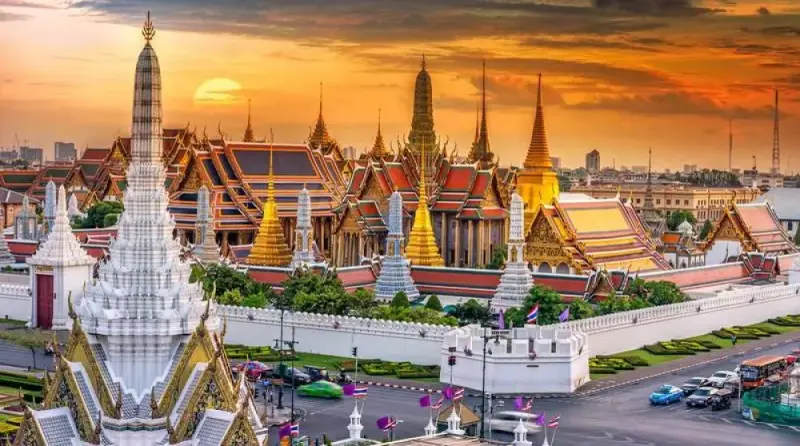
Start with the top sight in the city and the heart of Thailand's royal history. King Rama I founded the Grand Palace in 1782, the year he moved the capital across the river from Thonburi and established the Chakri dynasty that still reigns. For 150 years it was the home of the Thai kings and the seat of government. The current king lives elsewhere, but the palace is still used for royal ceremonies and state receptions, which is why parts can close at short notice.
The complex is divided into an Outer Court, which held government offices and today contains the Temple of the Emerald Buddha, a Middle Court with the main throne halls, and an Inner Court once reserved for the king's wives and daughters, closed to the public. The building most visitors photograph is the Chakri Maha Prasat Throne Hall, built under King Rama V in the 1870s, with a European-style body and Thai spired roofs on top. Your ticket also covers the Queen Sirikit Museum of Textiles, which displays royal costumes and Thai silk. (An older version of this article listed the Golden Mount, Ratchadamnoen Avenue and a "water show" as parts of the palace; they are not, and the Golden Mount has its own entry below.)
A strict dress code applies: shoulders and knees covered, no see-through tops, no ripped trousers. Wraps can be borrowed or bought at the gate if you arrive underdressed. Ignore anyone outside claiming the palace is "closed today" and offering a tuk-tuk tour instead; it is one of Bangkok's oldest scams.
- Where: Na Phra Lan Road, Rattanakosin (Old City)
- Entry (as of 2026): 500 THB for foreign visitors (2026), includes Wat Phra Kaew
- Hours / best time: Daily 8:30 to 15:30; arrive at opening
- Getting there: Chao Phraya Express Boat to Tha Chang pier, or MRT Sanam Chai and a short walk
Enter at 8:30; tour groups arrive from about 9:30 and the courtyards heat up fast.
Wat Phra Kaew, the Temple of the Emerald Buddha

Inside the palace walls stands Wat Phra Kaew, the royal temple, the holiest in the country and famous for its murals. Unlike most temples it has no resident monks. Its main hall (ubosot) houses the Emerald Buddha, a small seated figure about 66 cm tall, carved from green jade or jasper. The king, or a royal representative, changes its gold costume three times a year at the turn of the hot, rainy and cool seasons. Photography inside the hall is not allowed.

The statue's journey is part of Thai history. Accounts say it was revealed in 1434 when lightning struck a chedi in Chiang Rai, after which it was kept in Lampang and Chiang Mai, then taken to Luang Prabang and Vientiane in Laos. General Chakri, later King Rama I, brought it back in 1779, and it was moved to the new temple in Bangkok in 1784. (The older text credited a "King Nhan Tham" and gave dates that contradicted each other; those have been corrected.)
Around the ubosot you will see the golden Phra Si Rattana Chedi, the Phra Mondop library, a model of Angkor Wat built under King Rama IV, and the cloister galleries painted with 178 scenes of the Ramakien, the Thai version of the Ramayana. Older versions of this guide called the temple a UNESCO site; it is not on the World Heritage list.
- Where: Outer Court of the Grand Palace
- Entry (as of 2026): Included in the 500 THB Grand Palace ticket
- Hours / best time: Same hours as the palace
- Getting there: Same entrance as the Grand Palace
Walk the Ramakien murals clockwise; they tell the story in order.
Wat Pho, the Temple of the Reclining Buddha
Home of the Reclining Buddha, the best-known Thai massage school and what is often called the country's oldest school of learning, Wat Pho is older than Bangkok itself: a temple stood here in the Ayutthaya period, and King Rama I rebuilt it as a royal temple after founding the capital. Its star is the Reclining Buddha, 46 metres long and 15 metres high, covered in gold leaf, with 5-metre feet inlaid in mother-of-pearl showing the auspicious signs of the Buddha. It represents the Buddha entering final nirvana.
The rest of the compound is just as rewarding and much calmer: more than a thousand Buddha images, four great chedis honouring the first four Chakri kings, and walls of inscriptions on medicine, history and literature, which led to Wat Pho being called Thailand's first public university. It is also the home of a well-known traditional Thai massage school, and a massage at the on-site pavilions is a popular break between sights.
This entry replaces "Suan Dusita Rajaramangala Bodhi-Viharaya", listed in an older version of this guide. We could not confirm that temple or its history (the text attributed it to a 10th-century king of Lanna), so it has been removed.
- Where: Sanam Chai Road, just south of the Grand Palace
- Entry (as of 2026): 300 THB (2026)
- Hours / best time: Daily, about 8:00 to 18:30
- Getting there: MRT Sanam Chai, or Tha Tien pier on the river
Visit after the Grand Palace; it stays open later and feels cooler in the afternoon.
Rattanakosin, Bangkok's Old City

The Old City is best seen on foot, along its canals. Rattanakosin is the island formed by the Chao Phraya River and the canals dug when Bangkok was founded in 1782, and it holds most of the city's royal and religious monuments. The older version of this article dated the buildings here to the Ayutthaya period and called the district a UNESCO site merged with Chinatown; neither is correct. The Old City dates from the late 18th century onward and is not on the World Heritage list.
Beyond the Grand Palace and Wat Pho, look for Sanam Luang, the royal field used for ceremonies; the Giant Swing and Wat Suthat with its fine murals; the Democracy Monument on Ratchadamnoen Avenue; Phra Sumen Fort and the riverside park at the northern tip; and the old shophouse streets around Tha Tien and Tha Chang piers. Khao San Road, the backpacker street, sits just north and is livelier at night than in daytime.
Walking between sights is easy in the morning. By midday the heat makes short tuk-tuk or taxi hops worthwhile. Agree the fare before you get in, or use a ride-hailing app.
- Where: Rattanakosin Island, Phra Nakhon district
- Entry (as of 2026): Free to walk; individual sites charge
- Hours / best time: Early morning or late afternoon
- Getting there: MRT Sanam Chai or Sam Yot; river boats to Tha Chang
Start at Phra Sumen Fort at 7:00 and walk south along the river towards the palace.
Wat Arun, the Temple of Dawn

Bangkok's riverside icon, Wat Arun, stands in Thonburi on the west bank opposite Wat Pho, its prang clad in porcelain. A temple existed here in the Ayutthaya era, and King Taksin made it his royal temple after he founded his capital at Thonburi in 1767; it held the Emerald Buddha before the move across the river. The tall central prang, built up mainly under Kings Rama II and Rama III, is decorated with broken Chinese porcelain and seashells arranged as flowers, and steep steps let visitors climb its lower terraces.
The older version of this guide called Wat Arun "Bangkok's oldest temple" and said its name honours the Hindu god Aruna; the name does come from Aruna, the god of dawn, but several Bangkok temples have older roots, so we have dropped the "oldest" label. Most sources give the main prang a height of around 70 to 80 metres.
The famous view of Wat Arun is from across the river at sunset, from riverside cafés and rooftop bars in Tha Tien. Visit the temple itself in the morning and come back to the east bank for the evening view.
- Where: Thonburi, west bank of the Chao Phraya
- Entry (as of 2026): 200 THB (2026)
- Hours / best time: Daily, about 8:00 to 18:00
- Getting there: Cross-river ferry from Tha Tien pier, a few minutes
Rent a Thai costume near the gate only if you want photos; it is not required.
Chinatown (Yaowarat)

Come for the street food, the Chinese-Thai heritage and the night scene. Bangkok's Chinatown grew from 1782, when the Chinese merchant community was moved from the site chosen for the Grand Palace to the area around Sampheng. Yaowarat Road itself was built later, under King Rama V. Today the district is lined with gold shops, herbal medicine stores, shrines and old shophouses, and after dark the main road becomes one of the best street-food strips in Asia.
Wat Traimit houses the Golden Buddha, a seated figure of solid gold weighing about 5.5 tonnes, found by accident in the 1950s when its plaster covering cracked during a move. Wat Mangkon Kamalawat (Leng Noei Yi) is the most important Chinese Buddhist temple in the city and the centre of Chinese New Year celebrations. The Yaowarat Chinatown Heritage Center inside Wat Traimit tells the story of the community.
Chinese New Year 2027 falls on 6 February, when Yaowarat closes to traffic for parades, lion dances and food stalls. It is also the most crowded day of the year in the district.
- Where: Yaowarat and Charoen Krung roads, Samphanthawong
- Entry (as of 2026): Free; Wat Traimit 100 THB (2026)
- Hours / best time: After 18:00 for food; mornings for temples
- Getting there: MRT Wat Mangkon station
Eat at stalls with a queue of locals, and carry small notes.
Wat Saket and the Golden Mount
For a quiet climb and a city view, head to the Golden Mount, an artificial hill crowned by a gilded chedi, built in the 19th century after an earlier attempt at a huge chedi collapsed on the soft ground. It belongs to Wat Saket, an older temple that was restored under King Rama I. Around 300 steps spiral up past trees, bells and small waterfalls to a terrace with one of the best free-standing views over the Old City.
It is a good way to see how Rattanakosin fits together: the Grand Palace spires to the west, the river beyond and the modern skyline to the east. In November the temple fair (one of the oldest in Bangkok) fills the grounds with stalls and lights.
The climb is gentle but warm. Bring water and go early or near closing time for softer light.
- Where: Off Boriphat Road, near Ratchadamnoen Avenue
- Entry (as of 2026): Small entry fee for the summit
- Hours / best time: Morning or late afternoon
- Getting there: Short walk from Phan Fa Lilat pier on the Saen Saep canal boat
Ring the line of bells on the way up for good luck, as Thai visitors do.
Bangkok National Museum
No place gives better context for the temples than the Bangkok National Museum, which occupies the former Wang Na, the Front Palace of the deputy king, built in the 1780s. It holds the country's largest collection of Thai art and archaeology, from prehistoric Ban Chiang pottery through Dvaravati, Srivijaya, Sukhothai, Ayutthaya and Bangkok periods, plus royal funeral chariots and the beautiful Buddhaisawan Chapel with its early murals.
If you see one museum in Bangkok, make it this one; it explains the temples you visit in the rest of this guide. Volunteer-led tours in English run on some mornings, so ask at the entrance.
The museum closes on Mondays, Tuesdays and public holidays, which trips up many visitors. Allow two to three hours.
- Where: Na Phra That Road, next to Sanam Luang
- Entry (as of 2026): 200 THB for foreign visitors
- Hours / best time: Wednesday to Sunday, 9:00 to 16:00
- Getting there: Walk from the Grand Palace or Tha Chang pier
Pair it with the Grand Palace on a Wednesday to Sunday.
Dusit Palace area

Check the status of each building before you go, because this European-style quarter has had long closures. King Chulalongkorn (Rama V) built the Dusit Palace grounds from 1897 to 1901 after travelling in Europe, creating wide avenues and gardens in a style quite different from the Grand Palace. Its landmarks are the Ananta Samakhom Throne Hall, an Italian Renaissance-style domed marble hall that served as the first seat of Thailand's parliament after 1932, and Vimanmek Mansion, described as the world's largest golden teak building.
Visitors should know that Vimanmek Mansion closed for restoration in 2016 and several buildings have had long closures since; reports on what is open in 2026 conflict. Check the Bureau of the Royal Household or ask your hotel before going. The broad Royal Plaza with the equestrian statue of King Rama V and the Ratchadamnoen Nok avenue can be seen from outside at any time.
Even with the buildings closed, the area is worth a short stop to see Bangkok's turn-of-the-century European face.
- Where: Dusit district, north of the Old City
- Entry (as of 2026): Varies by building; check before going
- Hours / best time: Check opening status before travelling
- Getting there: Express boat to Thewet pier, then taxi or a long walk
Confirm opening the day before; do not build a whole day around it.
Ayutthaya Historical Park (day trip)
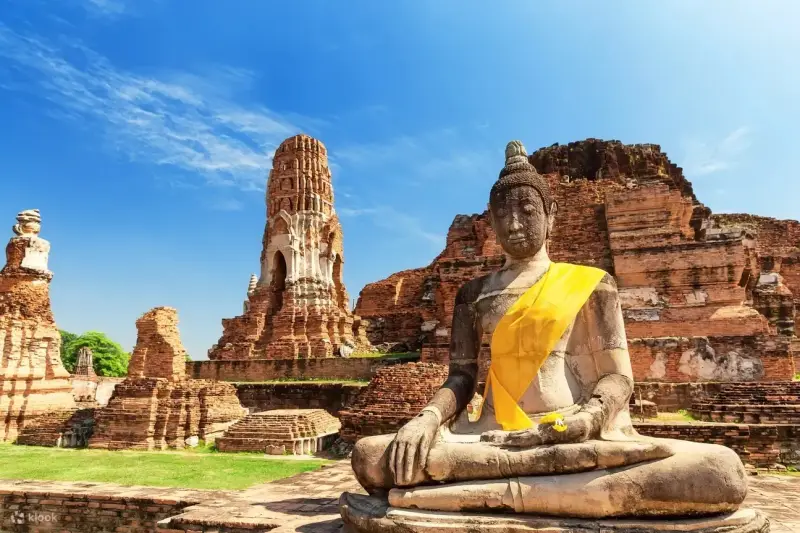
A UNESCO-listed old capital of ruins, Ayutthaya was the seat of Siam's kings from about 1350 until the Burmese army sacked it in 1767, and in its prime it was one of the largest trading cities in Asia. Its ruins, inscribed by UNESCO in 1991, are the best place near Bangkok to understand the kingdom that came before it. Bangkok's founders deliberately modelled the new capital on Ayutthaya's layout.
Wat Mahathat has the famous Buddha head caught in the roots of a banyan tree. Wat Phra Si Sanphet, with its three bell-shaped chedis, stood inside the old royal palace. Wat Chaiwatthanaram on the riverbank is the most photogenic at sunset, and Wat Yai Chai Mongkhon has a large reclining Buddha and rows of saffron-draped images. The Chao Sam Phraya National Museum holds gold treasures found in the crypts.
There is no single park ticket: the main temples charge individually, most about 50 THB, and the older figure of 220 THB in this guide referred to a combined pass. Rent a bicycle or hire a tuk-tuk by the hour; the sites are spread out.
- Where: Ayutthaya, about 80 km north of Bangkok
- Entry (as of 2026): About 50 THB per major temple; combined passes available
- Hours / best time: November to February; start early
- Getting there: Train from Krung Thep Aphiwat or Hua Lamphong, minivan, or a private driver
Be at Wat Mahathat by 8:00 to photograph the Buddha head before crowds.
 Get the bookingMentor app
Temple etiquette and dress code in Bangkok

Every site in this guide is either a working temple or a royal property, and staff enforce the rules. Cover shoulders and knees; at the Grand Palace this is checked at the gate, and leggings, ripped jeans and see-through tops are turned away. Remove your shoes before entering any ordination hall or viharn, and step over the raised threshold without treading on it. Sit with your feet tucked behind you, never pointing at a Buddha image or a monk. Women should not touch monks or hand objects to them directly.
Photography rules vary. It is banned inside the Emerald Buddha hall and allowed in most other halls, but always without flash, and never climb on statues for a picture. Speak quietly inside halls where people are praying.
Two habits make a temple day easier. Carry a light scarf or a pair of loose long trousers in your day bag so you can cover up at every gate without going back to the hotel, and wear slip-on shoes, since they come off at almost every hall. Keep your bag in front of you in crowded courtyards, and give monks space on boats and in queues.
2-day historical Bangkok itinerary
This plan follows the sites in geographic order so you spend more time inside temples and less in traffic. Day one stays on foot and on the river; day two adds Ayutthaya.
Two days of royal and ancient Bangkok
| Time | Day 1: Old City and the river | Day 2: Ayutthaya and Dusit |
|---|---|---|
| Morning | Grand Palace and Wat Phra Kaew from 8:30 (allow 2 to 3 hours) | Early train or driver to Ayutthaya (about 1.5 hours); Wat Mahathat, Wat Phra Si Sanphet |
| Midday | Lunch near Tha Chang or Tha Tien pier; Bangkok National Museum (Wed to Sun) | Lunch by the river in Ayutthaya; Chao Sam Phraya National Museum |
| Afternoon | Wat Pho and a massage; ferry to Wat Arun | Return to Bangkok; Golden Mount, or Dusit if open |
| Evening | Sunset view of Wat Arun from Tha Tien, then dinner in Chinatown | Walk the Old City lanes or Khao San Road; riverside dinner |
If the Grand Palace is closed for a ceremony on Day 1, swap the morning with Wat Pho and come back on Day 2 before leaving for Ayutthaya.
Best time to visit Bangkok for sightseeing
Tour Bangkok's temples between November and February: it is the dry, relatively cool season, with sunny days that are still hot at midday. March to May is the hottest period, when outdoor sightseeing is draining after 11:00. The rainy season runs roughly from May or June to October, with heavy afternoon downpours but fewer crowds and lower hotel rates. The older version of this guide recommended the rainy season as the best time and suggested dressing in layers for falling temperatures; Bangkok rarely gets cold, so pack light, breathable clothes that still cover shoulders and knees.
Whatever the month, start early. The Grand Palace opens at 8:30 and the heat and tour groups build quickly. Songkran (mid-April) and Chinese New Year bring colourful street celebrations but also closures and crowds around the Old City.
Keep at least one flexible day in any season: the Grand Palace can close at short notice for royal ceremonies, so check its official schedule the evening before you plan to go.
 Exclusive holiday package offers
How to get around Bangkok's historic district
The river is the easiest route. Chao Phraya Express Boats stop at Tha Chang (Grand Palace), Tha Tien (Wat Pho, ferry to Wat Arun) and Thewet (Dusit), and the cross-river ferry to Wat Arun takes only a few minutes. The MRT Blue Line now reaches the Old City at Sanam Chai and Sam Yot stations, and Wat Mangkon station serves Chinatown, which makes these areas reachable from the modern centre without sitting in traffic.
The BTS Skytrain does not reach Rattanakosin; connect to the river at Saphan Taksin station. Bangkok taxis are metered, so ask the driver to use the meter (the old advice in this article to negotiate fares is outdated). Ride-hailing apps work well. Tuk-tuks are fun for short hops but agree the price first, and decline any driver who offers a cheap tour that includes "gem shop" stops.
BTS gates do not yet take contactless bank cards, while the MRT Blue Line does, so carry small notes or a stored-value card for the Skytrain.
Where to stay for Bangkok's historical sites
If temples are your priority, stay in or near the Old City: guesthouses and boutique hotels around Tha Tien, Phra Athit and Banglamphu put the Grand Palace and Wat Pho within walking distance. The riverside hotels along Charoen Krung and the Thonburi bank give easy boat access plus views of Wat Arun. Sukhumvit, Siam and Silom are better for shopping and nightlife but add 30 to 60 minutes each way to the historic sights in daytime traffic. Our Bangkok neighbourhoods guide compares the areas in detail, and you can check current rates on our Bangkok page.
For most first-time visitors, Banglamphu and the streets around Khao San Road give the best balance: budget guesthouses and mid-range hotels, food stalls late into the night, and an easy walk or short river-boat ride to the Grand Palace. Travellers who want quieter, more upmarket rooms close to the sights should look at the small boutique hotels near Tha Tien, where Wat Pho is on the doorstep and Wat Arun is a short ferry ride away. If you prefer the Chinatown food scene, a hotel near MRT Wat Mangkon puts you one stop from the Old City at Sam Yot. Rooms in the Old City are limited, so book early for the November to February peak.
Bangkok sightseeing budget and money-saving tips
The entry fees in this guide add up: covering the Grand Palace, Wat Pho, Wat Arun and the National Museum costs about 1,200 THB per person at 2026 prices, before Ayutthaya. Many smaller temples are free or ask for a donation. Carry cash for temple tickets and ferries; the Grand Palace accepts cards, but Wat Pho and Wat Arun have been cash only.
- Use the orange-flag boat. The standard Chao Phraya Express boat costs far less than the tourist boat and stops at the same historic piers.
- Take the train to Ayutthaya. Ordinary trains are very cheap. A private driver costs more but saves time if you are three or four people.
- Eat where office workers eat. Shophouse restaurants around Tha Tien and in Chinatown serve noodle and rice dishes at local prices.
- Avoid the "closed today" scam. Friendly strangers near the palace who say it is closed and suggest a tuk-tuk tour are steering you to commission shops. Walk to the official gate.
- Bring your own cover-up. A light scarf and long trousers save you the cost of buying wraps at each gate.
Planning a trip to Bangkok? Read our Bangkok travel guide, compare hotels in Bangkok or search flights.
 AI trip planner







{{item.get_author.first_name}} {{item.get_author.last_name}}
{{item.comment_txt}}
{{item_reply.get_author.first_name}} {{item_reply.get_author.last_name}}
@ {{item_reply.reply_to}}, {{item_reply.reply_txt}}