

Dubai refunds 85% of its 5% VAT, with a minimum spend of just AED 250 (about $68), one of the lowest thresholds anywhere. Hong Kong charges no VAT at all, so its sticker prices are already tax-free. Tokyo's duty-free liquor runs roughly 20% cheaper than London's, while London beats Tokyo on cosmetics and fragrance by a similar margin. None of these numbers show up in most "best shopping cities" lists, which tend to describe malls and brands without saying what anything actually costs.
This guide ranks 15 cities for 2026, but the honest answer to "which city is best" depends entirely on what you're buying. A handbag shopper, an electronics shopper, and a street-market bargain hunter should not end up in the same city. The category breakdown below comes first; the full city-by-city profiles follow for anyone planning a specific trip.
Which City is Actually Best for You?
There's no single best shopping city in the world, only a best city for what you're specifically buying. Designer fashion and leather goods point to Paris or Milan. Electronics and gold point to Dubai or Hong Kong, both with minimal or zero tax. Street markets and budget bargains point to Bangkok or Istanbul. Skincare and K-fashion point to Seoul. Picking a city based on general reputation rather than category usually means overpaying in your actual category of interest.
Home base of most major design houses; selection and tailoring depth neither Dubai nor NYC fully match.
No VAT, no sales tax on most goods. Dubai is close behind at 5% VAT with an 85% refund.
Deep selection, competitive pricing, and (in Hong Kong's case) no tax added at checkout.
Chatuchak alone has thousands of stalls; bargaining is expected and genuinely moves prices.
Myeongdong's density of skincare brands and price competition is unmatched elsewhere.
Flea markets and indie designers at prices well below London or Paris equivalents.
Is Duty-Free Shopping Actually Cheaper?
Sometimes, and the answer changes completely by product category. Alcohol and tobacco see the largest, most reliable duty-free savings since these are the most heavily taxed items in regular retail. Perfume and cosmetics savings are often smaller than advertised, since brands like Chanel maintain tightly controlled pricing worldwide. Luxury fashion rarely discounts at all in duty-free; a Chanel bag costs roughly the same whether bought in an airport or a flagship store.
The most overlooked fact about duty-free: it removes the destination country's VAT or sales tax, not the origin country's. Buying duty-free in Edinburgh removes UK tax, but your home country's customs allowance still applies when you land, and exceeding it can trigger duty on arrival.
Which City has the Best Tax Refund for Tourists?
Hong Kong technically wins by having nothing to refund, since it charges no VAT or general sales tax on most retail goods, so the sticker price is the final price. Among cities that do charge VAT, the UAE (Dubai) offers the most accessible refund system: a 5% VAT rate, an AED 250 minimum spend (about $68), and an 85% refund rate processed digitally through Planet Tax Free kiosks at the airport.
The EU's higher VAT rate (20-22%) means a larger absolute refund per purchase even though the process takes more paperwork than Dubai's fully digital system. For a $2,000 purchase, Paris's refund nets more cash back than Dubai's despite Dubai's friendlier minimum spend and faster process.
All 15 cities, Ranked and Profiled:Each profile includes what to buy, when to go, and the tax detail that actually matters
01 — Best for gold, electronics, and mega mallsDubai:

Dubai's main retail advantage isn't dramatic discounts, it's a low 5% VAT combined with one of the most accessible tourist refund systems anywhere. Spend just AED 250 (about $68) at a participating store, and you can recover 85% of the VAT paid through the fully digital Planet Tax Free system at the airport, after a small AED 4.80 per-tag processing fee.
The Dubai Mall alone holds over 1,200 stores, an aquarium, and an indoor ice rink. The Dubai Shopping Festival runs roughly December 5 to January 11 each year, with discounts of 25-75% across fashion, electronics, and home goods, plus nightly drone shows at Bluewaters and The Beach.
- Dubai Mall — luxury brands, aquarium, dining
- Mall of the Emirates — indoor ski resort
- Ibn Battuta Mall — themed, affordable shopping
- Dubai Outlet Mall — discounted branded goods
- Dec 5 - Jan 11 — Dubai Shopping Festival
- Jun-Aug — summer sales and promotions
- Weekdays are less crowded than weekends
02 — Best for haute couture and leather goodsParis:

Paris remains the headquarters city for Chanel, Dior, and Louis Vuitton, and that proximity to design houses shows up in selection depth that other cities can't fully replicate. Galeries Lafayette Haussmann and Le Bon Marché anchor the department store scene, while the Champs-Élysées and Rue Saint-Honoré cover flagship luxury and boutique shopping respectively.
France's VAT runs 20%, and non-EU tourists can reclaim a meaningful portion after completing a tax-free form at checkout and validating it at the airport before leaving the EU. Brands like Hermès and Polène run genuinely cheaper here than abroad before the VAT refund is even applied, since you're buying at the source rather than paying an import markup.
- Galeries Lafayette Haussmann — legendary department store
- Le Bon Marché — designer labels
- Champs-Élysées — flagship stores
- Rue Saint-Honoré — luxury boutique street
- La Vallée Village — outlet shopping near Paris
- Jan-Feb — winter soldes, major discounts
- Jun-Jul — summer soldes
- Spring/autumn for pleasant shopping weather
- Weekday mornings for fewer crowds
03 — Best for electronics, skincare, and anime cultureTokyo:

Tokyo splits cleanly by district: Ginza for luxury, Akihabara for electronics and anime, Shibuya and Harajuku for streetwear and youth fashion. The city's reputation for helpful, English-capable staff (particularly at Isetan in Shinjuku) makes it an easier first-time shopping destination than its scale might suggest.
January brings Fukubukuro, "lucky bags," where stores sell surprise bundles worth more than the bag's price, a uniquely Japanese New Year tradition with no real equivalent elsewhere. Tokyo's duty-free liquor pricing runs roughly 20% cheaper than London's on the same route, making it a strong stop for spirits specifically.
- Ginza — luxury district, premium brands
- Shibuya — youth fashion, streetwear, sneakers
- Harajuku — creative fashion, boutiques
- Akihabara — electronics, gaming, anime
- Shinjuku — department stores, lifestyle retail
- January — New Year sales, Fukubukuro lucky bags
- Jul-Aug — summer clearance sales
- December — holiday promotions
- Weekday mornings are quieter than weekends
04 — Best for tax-free luxury and electronicsHong Kong:

Hong Kong charges no VAT and no general sales tax on most retail goods, which is the single biggest practical advantage it holds over Paris, Milan, or London. Harbour City and the IFC Mall cover premium international brands, while Mong Kok and Temple Street Night Market cover the bargaining side of the city's retail identity.
Because there's no tax to begin with, there's also no refund process to navigate, no minimum spend threshold, no airport kiosk queue. The sticker price is the final price, which makes budgeting noticeably simpler than in VAT countries.
- Harbour City — one of the largest malls, luxury brands
- IFC Mall — premium shopping, waterfront views
- Causeway Bay — fashion and lifestyle stores
- Mong Kok — street markets, affordable shopping
- Temple Street Night Market — bargains, souvenirs
- Oct-Dec — cooler weather, festive sales
- Jan-Feb — post-holiday discounts
- Evening hours for street markets
- Weekdays for less crowded malls
05 — Best for heritage department storesLondon:

Harrods and Selfridges anchor a department store tradition that predates most other cities' luxury retail entirely, and Oxford Street, Bond Street, and Covent Garden each cover a distinct shopping register from high-street to high-luxury. London's duty-free cosmetics and fragrance pricing runs competitively against most of Asia, often 18-20% cheaper than Tokyo on the same products.
VAT sits at 20%, but post-Brexit rules have meaningfully limited tax-free shopping for tourists compared to the pre-2021 system; the in-store tax-free shopping that EU visitors once enjoyed broadly no longer applies the same way, so it's worth confirming current retailer-specific policy before counting on a refund.
- Harrods — legendary luxury store, Knightsbridge
- Selfridges — fashion, beauty, designer labels
- Oxford Street — high-street shopping avenue
- Bond Street — luxury designer district
- Covent Garden — boutiques, beauty, gifts
- Westfield London — modern mall, global brands
- Late Dec-Jan — winter sales, post-holiday
- Jun-Jul — summer sales
- Weekday mornings for lighter crowds
- November for festive shopping atmosphere
06 — Best for department stores and streetwearNew York City:

Fifth Avenue and Macy's Herald Square cover the traditional flagship-and-department-store experience, while SoHo carries the city's streetwear and boutique culture. Woodbury Common Premium Outlets, about an hour outside the city, is one of the most-visited outlet destinations in the US for discounted luxury.
The US runs on sales tax rather than VAT, and there's no general tourist tax refund system the way there is in the EU, UAE, or much of Asia. Sales tax varies by state and even by city, and the displayed price almost never includes it, so the checkout total runs higher than the sticker price.
- Fifth Avenue — luxury flagship stores
- Macy's Herald Square — iconic department store
- SoHo — fashion, streetwear, boutiques
- Hudson Yards — modern luxury retail and dining
- Woodbury Common — discounted luxury outlets
- Nov-Jan — holiday shopping, winter sales
- Jul-Aug — summer clearance sales
- Weekday mornings for fewer crowds
- Black Friday season for strong deals
07 — Best for designer houses and Italian tailoringMilan:

The Quadrilatero della Moda is Milan's fashion quadrilateral, home to Prada, Versace, and Armani flagship stores within a few walkable blocks. Galleria Vittorio Emanuele II adds a historic, elegant shopping arcade to the mix, and the Serravalle Designer Outlet outside the city covers discounted designer stock for visitors willing to make the drive.
Italy's VAT runs 22%, among the higher rates in Europe, but also among the larger refunds once the paperwork clears. Italian leather goods specifically benchmark well against equivalent products bought abroad, since you're closer to where the materials and craftsmanship originate.
- Quadrilatero della Moda — luxury fashion district
- Galleria Vittorio Emanuele II — historic arcade
- Corso Vittorio Emanuele II — mainstream fashion
- 10 Corso Como — concept store, fashion, art
- Serravalle Designer Outlet — discounted luxury
- Jan-Feb — winter sales, strong discounts
- Jul-Aug — summer sales
- September — fashion season atmosphere
- Weekday mornings for fewer crowds
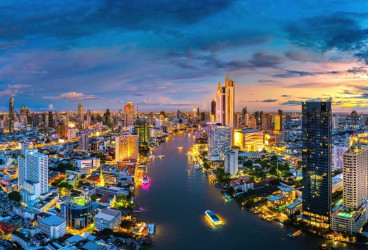
08 — Best for street markets and budget bargainsBangkok:

Chatuchak Weekend Market alone holds thousands of stalls across a sprawling open-air site, and bargaining here genuinely moves prices, often by 30-50% off the initial asking number. MBK Center covers a similar budget spirit indoors, while Siam Paragon and CentralWorld sit at the other end with full luxury retail.
Thailand's VAT is 7%, refundable to tourists at participating stores once a minimum spend threshold is met. The bigger draw for most visitors isn't the tax refund though, it's the sheer price floor: clothing, accessories, and souvenirs here run a fraction of equivalent items in Singapore or Hong Kong.
- MBK Center — budget mall, clothes, electronics
- Siam Paragon — luxury, international brands
- CentralWorld — one of SE Asia's largest malls
- Chatuchak Weekend Market — thousands of stalls
- Pratunam Market — wholesale fashion
- Asiatique The Riverfront — night market, dining
- Nov-Feb — cool season, best for walking markets
- Jun-Aug — mid-year mall sales
- Evenings for night markets
- Weekends for full Chatuchak experience
09 — Best for organized malls and electronicsSingapore:

Orchard Road functions as the city's main retail spine, with ION Orchard covering premium fashion and VivoCity covering broader lifestyle retail. Mustafa Centre, open 24 hours, is one of the few genuinely round-the-clock shopping destinations anywhere, popular for electronics and everyday goods at competitive prices.
Singapore's GST sits at 9%, with a refund scheme available to tourists spending at least SGD 100 (roughly $74) per receipt at participating stores, processed through automated airport kiosks that move faster than most manual refund counters elsewhere.
- Orchard Road — main shopping boulevard
- ION Orchard — luxury mall, premium fashion
- Marina Bay Sands — waterfront luxury shopping
- VivoCity — one of the largest lifestyle malls
- Bugis Street Market — budget fashion, souvenirs
- Mustafa Centre — 24-hour electronics hub
- Jun-Aug — Great Singapore Sale
- Dec-Jan — festive shopping season
- Weekdays for less crowd on Orchard Road
- Evenings for Bugis Street Market
10 — Best for bazaars, leather, and carpetsIstanbul:

The Grand Bazaar has operated continuously since 1461 and now holds more than 4,000 shops, making it one of the largest and oldest covered markets anywhere. The Spice Bazaar covers a smaller, more sensory shopping experience, while Istinye Park and Zorlu Center cover the city's modern luxury mall side for visitors who want both registers in one trip.
Turkey offers a VAT refund for tourists on eligible purchases, processed through a tax-free invoice requested at checkout and validated at the airport. Leather jackets, Turkish carpets, and gold jewelry are the categories where Istanbul's pricing most clearly beats Western European equivalents.
- Grand Bazaar — oldest, largest covered market
- Spice Bazaar — spices, sweets, teas
- Istinye Park — luxury mall, international brands
- Istiklal Avenue — fashion and lifestyle street
- Zorlu Center — high-end mall, luxury brands
- Mall of Istanbul — large modern complex
- Mar-May — pleasant weather, fewer crowds
- Sep-Nov — ideal shopping season
- Early mornings for bazaars
- Weekdays for malls
11 — Best for K-beauty and K-fashionSeoul:

Myeongdong's density of skincare and cosmetics brands within a few walkable blocks is genuinely unmatched by any other shopping district covered in this guide. Gangnam covers luxury and flagship fashion, Dongdaemun runs night shopping markets that stay open into the early morning, and COEX Mall is one of Asia's largest underground retail complexes.
Seoul's tax sits around 10%, refundable to tourists through forms requested at checkout and processed at airport or city refund kiosks. Beauty product pricing here, particularly on Korean-brand skincare, consistently beats what the same products cost once exported to Western markets.
- Myeongdong — beauty and cosmetics paradise
- Dongdaemun Design Plaza — night shopping, fashion
- Gangnam District — luxury, flagship stores
- Hongdae Street — youth fashion, indie brands
- COEX Mall — one of Asia's largest underground malls
- Namdaemun Market — budget goods, souvenirs
- Mar-May — spring fashion season
- Sep-Nov — best shopping weather
- Jan-Feb — winter sales
- Evenings for Dongdaemun night shopping
12 — Best for boutiques and designBarcelona:

Passeig de Gràcia runs roughly a mile and showcases both Hermès-level luxury and the city's distinctive Modernist architecture along the same stretch. El Born adds a trendier, boutique-driven alternative, while La Roca Village outside the city covers outlet shopping for discounted designer stock.
Spain's VAT sits at 21%, refundable to non-EU tourists through the standard EU tax-free shopping process. Barcelona's appeal leans more toward independent and artistic retail than pure luxury volume, making it a better fit for shoppers drawn to design and craft over flagship brand-name shopping.
- Passeig de Gràcia — luxury street, iconic architecture
- La Rambla — souvenirs, street shops, local crafts
- El Corte Inglés — major international department store
- La Roca Village — outlet shopping near the city
- El Born District — boutique fashion, handmade goods
- Diagonal Mar — modern mall, global retail brands
- Jan-Feb — winter sales, strong discounts
- Jul-Aug — summer sales
- Spring/autumn for comfortable walking weather
- Weekday mornings for less crowded streets
13 — Best for celebrity-style fashion and outletsLos Angeles:

Rodeo Drive carries the city's most concentrated luxury retail, while Melrose Avenue covers streetwear and a more boutique-driven scene. Citadel Outlets covers the discount end, and The Grove blends shopping with an entertainment-district atmosphere distinct from a standard mall.
Like New York, Los Angeles runs on sales tax with no tourist VAT refund mechanism, and displayed prices exclude tax until checkout. The city's retail identity leans heavily on celebrity and entertainment-industry association rather than any specific tax advantage.
- Rodeo Drive — world-famous luxury shopping street
- The Grove — outdoor shopping and entertainment
- Westfield Century City — modern luxury mall
- Melrose Avenue — streetwear, boutique shopping
- Citadel Outlets — discounted luxury brands
- Santa Monica Place — beachside fashion shopping
- Nov-Jan — holiday sales, major discounts
- Jul-Aug — summer clearance sales
- Weekdays for easier access to Rodeo Drive
- Evenings for The Grove entertainment shopping
14 — Best for vintage and independent designBerlin:

KaDeWe remains one of Europe's largest department stores, but Berlin's real identity sits in Mauerpark Flea Market and the independent designer scene around Hackescher Markt. The city runs noticeably more affordable than Paris or Milan for comparable categories, a reputation that's held even as Berlin's broader cost of living has crept up.
Germany's VAT runs 19%, refundable to non-EU tourists through the standard process. Vintage clothing, indie designer pieces, and German skincare brands are where Berlin's value proposition is clearest relative to its Western European neighbors.
- Kurfürstendamm — main luxury shopping boulevard
- KaDeWe — iconic department store, one of Europe's largest
- Alexanderplatz — malls and high-street brands
- Hackescher Markt — boutiques, independent fashion
- Mauerpark Flea Market — vintage, second-hand items
- Mall of Berlin — large modern mall
- Jan-Feb — winter sales, strong discounts
- Jun-Jul — summer sale season
- Spring/early autumn for flea markets
- Weekends for flea markets, weekdays for malls
15 — Best for boutiques and canal-side shoppingAmsterdam:

De Negen Straatjes, the "Nine Streets," packs independent boutiques and unique fashion into a compact, walkable canal-side area, a sharp contrast to the high-street volume of nearby Kalverstraat. PC Hooftstraat covers the luxury end for visitors who want both registers without leaving the city center.
The Netherlands' VAT sits at 21%, refundable for non-EU visitors through the standard EU process. Amsterdam's shopping identity leans toward minimalism and design over volume luxury, making it a closer match to Berlin's independent spirit than to Paris's flagship-brand density.
- De Negen Straatjes — "Nine Streets," boutique fashion
- Kalverstraat — main high-street shopping street
- PC Hooftstraat — luxury designer labels
- Magna Plaza — historic mall, fashion, lifestyle
- Albert Cuyp Market — food, clothing, souvenirs
- Kalverpassage — indoor shopping arcade
- Jan-Feb — winter sales
- Jul-Aug — summer sale season
- Spring/autumn for comfortable walking weather
- Weekdays for quieter boutique shopping
Best Time of Year to Shop in Each Region:
Most of Europe and the US converge on two windows: January-February for winter clearance and June-July for summer clearance, with the US adding a November-January holiday season on top. Asia and the Middle East run their own distinct calendars that don't map onto the European pattern at all.
Frequently Asked Questions (FAQ's):
Q. What is the best city in the world for shopping?
It depends what you're buying. Paris and Milan lead for designer fashion and leather goods. Dubai and Hong Kong lead for electronics and gold, both tax-free or close to it. Bangkok and Istanbul lead for budget shopping and street markets. There's no single best city across every category, which is why most "best shopping city" rankings that name just one are oversimplifying.
Q. Is duty-free shopping actually cheaper?
Sometimes, and it depends heavily on the product. Heavily taxed items like alcohol and tobacco see the biggest duty-free savings, sometimes 20-80% depending on the route. Perfume and cosmetics savings are often smaller than advertised once compared against home-country prices. Luxury fashion brands rarely discount in duty-free at all, since most maintain fixed global pricing regardless of where you buy.
Q. Which city has the best VAT refund for tourists?
Hong Kong technically wins by having no VAT to refund in the first place, so prices are already tax-free. Among VAT countries, the UAE refunds 85% of its 5% VAT with a minimum spend of just AED 250 (about $68), one of the lowest thresholds globally. EU countries like France and Italy charge higher VAT (20% and 22%) but also refund a larger absolute amount once the paperwork is done.
Q. What's the best time of year for shopping sales in major cities?
Most European and US cities run two main sale windows: January-February for winter clearance and June-July for summer clearance, with November-December adding holiday discounts in the US. Dubai's Shopping Festival runs roughly early December through mid-January. Tokyo's New Year lucky bags (fukubukuro) are a January-specific event with no real equivalent elsewhere.
Q. Is Dubai actually cheaper for shopping than other cities?
Not dramatically, despite the marketing. Dubai's main advantage is 0% import duty and a low 5% VAT (versus 20%+ in much of Europe), which helps electronics and gold specifically. For general luxury fashion and clothing, prices run comparable to London or New York rather than meaningfully cheaper. The bigger draw for many shoppers is the climate-controlled, English-speaking shopping environment rather than guaranteed savings.
Shopping travel has evolved into something far bigger than buying products - it has become a way to experience the identity, culture, and lifestyle of a destination. From the futuristic malls of Dubai to the timeless elegance of Paris, from the vibrant street markets of Bangkok to the trend-setting fashion districts of Tokyo, each city in this guide offers a completely different retail world to explore.
What makes these destinations truly special is not just what you can buy, but how you experience shopping itself—luxury boutiques, local bazaars, designer streets, outlet villages, and cultural markets all shaping unforgettable travel memories. Whether you are chasing global fashion trends, hunting for bargains, or simply exploring iconic shopping streets, these cities prove that retail is now a core part of modern tourism.
As travel continues to evolve in 2026, these shopping capitals will remain at the center of global style, luxury, and consumer culture. Choosing the right city depends on your budget, taste, and travel goals—but one thing is certain: each destination on this list delivers a shopping experience worth traveling for.





{{item.get_author.first_name}} {{item.get_author.last_name}}
Level 7
5 Photos
36 Reviews
{{item.comment_txt}}
{{item_reply.get_author.first_name}} {{item_reply.get_author.last_name}}
@ {{item_reply.reply_to}}, {{item_reply.reply_txt}}