

Notre Dame reopened on December 7-8, 2024, five years after the April 2019 fire that nearly destroyed it, with a rebuilt 96-meter spire and a cleaned interior that draws 14 to 15 million visitors a year, more than its pre-fire record. The cathedral's nave costs nothing to enter, while a separate ticket gets you up the 422 steps of the bell towers, reopened in September 2025.
This guide covers Paris by district, since that's how the city actually divides for visitors: the Louvre and Right Bank landmarks, the restored Notre Dame and Île de la Cité, the Left Bank's slower pace, and a full day trip to Versailles. Every price and hour below comes from official sources, checked current for 2026.
Best Time to Visit Paris:
Paris runs a mild, temperate climate year-round, so the real tradeoff between seasons comes down to crowds and price, not whether the weather cooperates.
May, June, and September offer the strongest balance of mild weather, long daylight hours, and manageable crowds, which is why these months carry the highest hotel rates outside of the July-August peak.
Best Tourist Attractions to Visit for First Time Travelers:
These five cover the range: the Louvre and the grand Right Bank landmarks, the restored Notre Dame on Île de la Cité, the Left Bank's bohemian pace, Montmartre's hilltop village feel, and the Eiffel Tower's view over the whole city.
The Louvre and the Right Bank Landmarks:
The world's most-visited museum, with real free-entry rules most visitors don't know
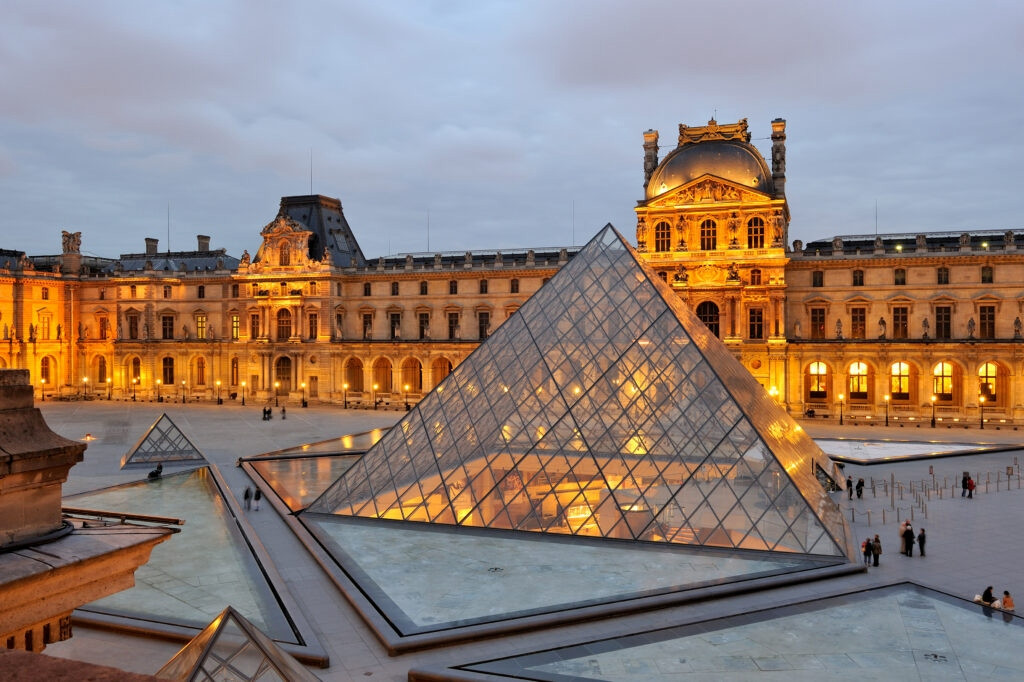
The Louvre sits on the Right Bank of the Seine, across from the Tuileries Garden, in a building that started as a 12th-century fortress before Napoleon donated the collection to the French people. The Mona Lisa draws the densest crowds, but the museum holds work by Caravaggio, Vermeer, and dozens of other major artists across galleries that would take days to see in full.
Entry is free for visitors under 18, for EU/EEA residents aged 18 to 25, and for everyone on July 14, Bastille Day. Outside those categories, standard admission applies, and timed-entry tickets sell out on busy days, especially weekends and the first Sunday of any month when several other museums also offer free entry.
Notre Dame and Île De La Cité, Fully Restored After the Fire:
Reopened December 2024, drawing more visitors than before the 2019 fire
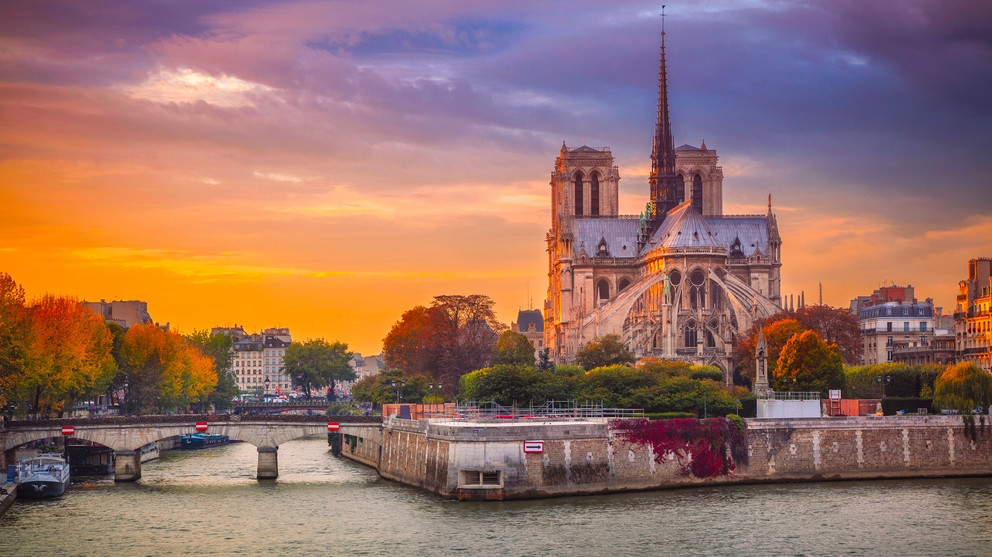
On April 15, 2019, fire tore through Notre Dame's roof and spire, and the cathedral stayed closed for five years of restoration. It reopened on December 7-8, 2024, with cleaned stonework, a rebuilt 96-meter spire matching the original Viollet-le-Duc design, and a redesigned visitor route that now moves clockwise through the nave. The cathedral now welcomes roughly 35,000 to 40,000 visitors a day, more than its pre-fire record of around 12 million annually.
Entry to the nave is free, with online reservations recommended (not mandatory) from April through October, when walk-in waits can run one to three hours. The Bell Towers reopened separately in September 2025, requiring a €16 ticket booked exclusively online for a 422-step climb to the chimera gallery. Sainte-Chapelle, a short walk away on the same island, holds some of the finest stained glass in France and charges its own separate entry fee.
The Left Bank, the Latin Quarter and a Slower Pace:
Cafes, bookshops, and the Luxembourg Gardens, away from the grand monuments
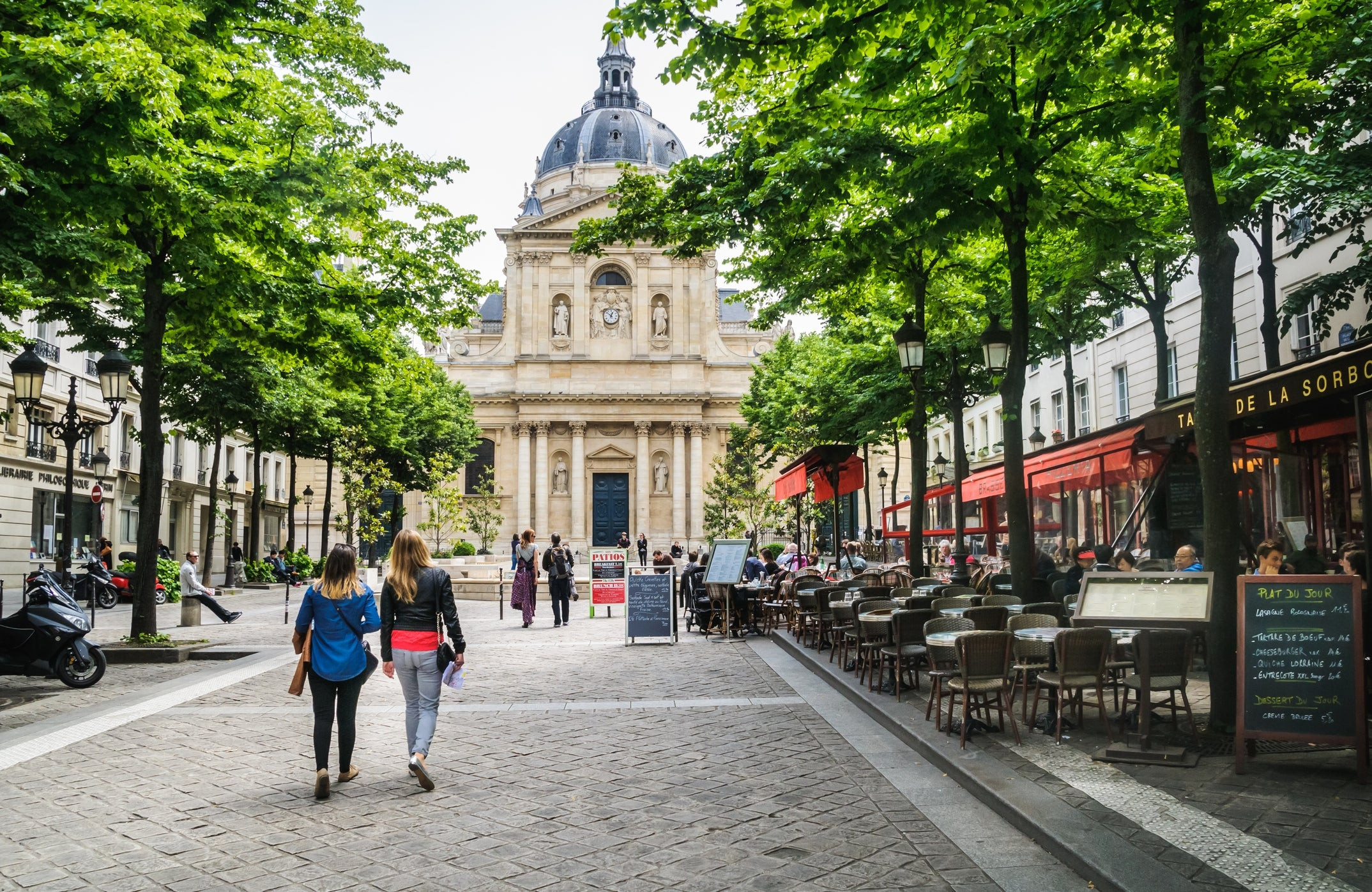
The Left Bank (Rive Gauche) runs a different rhythm than the Louvre side of the river, anchored by the Latin Quarter's narrow streets, the Sorbonne, and bookshops including the famous Shakespeare and Company. The Luxembourg Gardens give the area its green space, a formal French garden with a central pond where children still sail toy boats, much as they have for generations.
Saint-Germain-des-Prés, the Left Bank's most polished corner, holds historic cafes like Les Deux Magots and Café de Flore, once frequented by Sartre and Hemingway, now mostly filled with tourists paying a premium for the same coffee.
Montmartre, the Hilltop Village Inside the City:
Sacré-Cœur, the Moulin Rouge, and a working vineyard
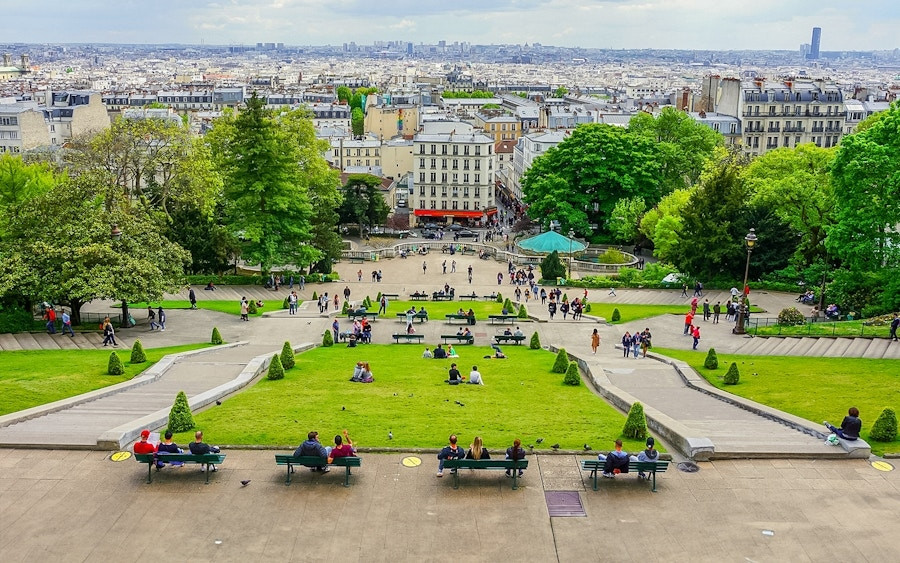
Montmartre sits on a hill in the 18th arrondissement, home to the white-domed Sacré-Cœur Basilica and the steps leading up to it, which give one of the best free panoramic views over the city. The district built its reputation as a haven for painters and bohemians in the late 1800s and early 1900s, and Place du Tertre still fills with portrait artists working in the open air.
Le Moulin Rouge, the cabaret made famous by its red windmill, sits at the foot of the hill on Boulevard de Clichy, and Clos Montmartre, a small working vineyard, produces a limited annual harvest auctioned off for charity each year.
The Eiffel Tower and Champ de Mars:
330 meters tall, still the tallest structure in Paris more than a century after it was built
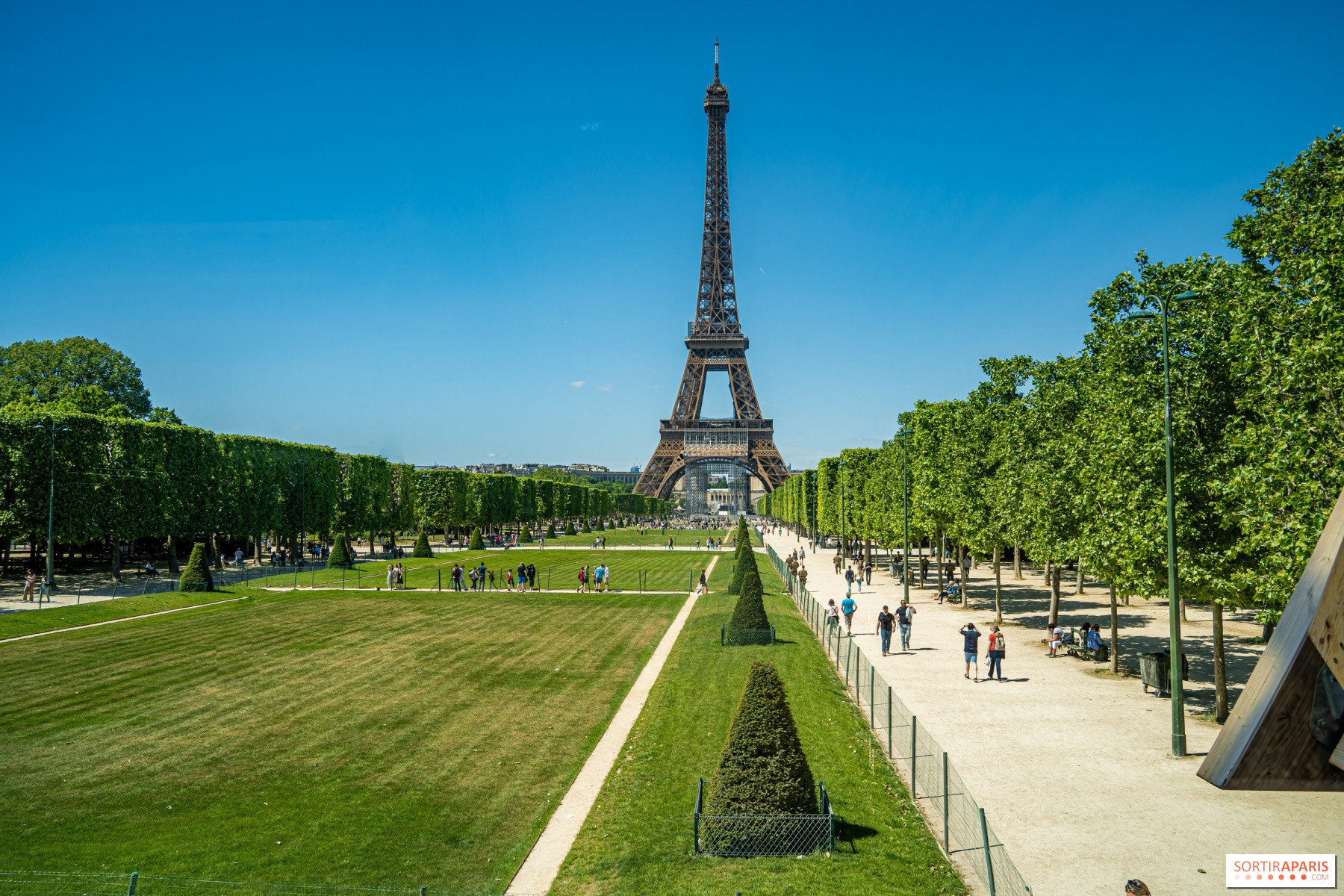
Gustave Eiffel's tower opened in 1889 for the World's Fair, built as a temporary structure that was almost torn down in 1909 before its usefulness as a radio antenna saved it. Three viewing levels sit at 57, 115, and 276 meters, with the summit reachable by lift only. The Champ de Mars, the long lawn stretching out from its base, gives the best free view of the full structure without a ticket.
Tickets are sold in tiers by level and by lift or stairs, and the official website releases them up to several months ahead, with same-day availability rare in peak season. The tower runs a nightly light show on the hour after dark, five minutes of sparkling lights visible from across the city.
Left Bank vs Right Bank: Which Suits Your Trip?
This is the real planning fork once a visitor moves past "Paris" to an actual neighborhood base, and the answer depends on pace as much as landmarks.
Versailles, a Full Day Outside the City:
The Château de Versailles sits about 12 miles west of Paris and deserves more than a rushed half-day, despite how often it gets squeezed into one.
Château de Versailles, 800 Hectares of Royal Excess:
357 mirrors, a 1.5-kilometer Grand Canal, and crowds that build fast after 10am
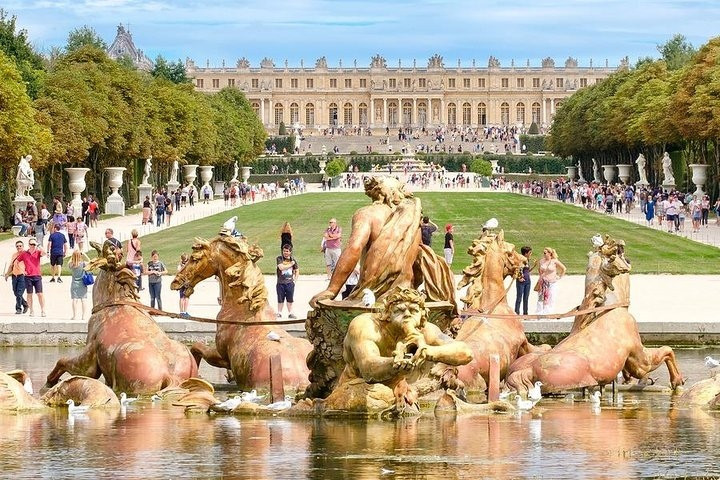
Louis XIV began transforming his father's hunting lodge into Versailles in 1661, and the project consumed the rest of his reign. The Hall of Mirrors, the palace's defining room, holds 357 mirrors facing 17 windows across a space 73 meters long, the site where the Treaty of Versailles ending World War I was signed in 1919. The full estate covers roughly 800 hectares (about 2,000 acres), including 93 hectares of formal gardens, the wider park, and the Grand Canal, a 1.5-kilometer cross-shaped waterway where rowboats are available seasonally.
The Trianon Estate, a 25 to 30-minute walk from the main palace, holds the Grand Trianon, Petit Trianon, and Marie Antoinette's Hamlet, a recreated rural village she used to escape the formality of court life. A "Little Train" connects the palace to the Trianon Estate for visitors who'd rather not walk the full distance.
Best Paris itineraries: 3, 5 & 7 Days:
Paris rewards a slower pace than most checklist itineraries allow. These three lengths build from the essentials up to a full week including Versailles.
⚡ 3-day itinerary, the essentials
🗓️ 5-day itinerary, adding the Left Bank and Versailles
🌟 7-day itinerary, the full circuit
Top 10 Best Things to Do in Paris:
Beyond the five districts and Versailles, these ten cover specific stops worth a dedicated visit, several genuinely free.
Sainte-Chapelle
Built in the 1240s on Île de la Cité, this royal chapel holds some of the most extraordinary stained glass in France across 15 windows depicting over 1,000 biblical scenes. Free entry on the first Sunday of the month and for visitors under 18 or EU residents 18-25.
Musée d'Orsay
Housed under a vast glass roof in a converted Belle Époque railway station, the museum holds one of the world's finest Impressionist collections, including major works by Monet, Manet, and Gauguin. Book tickets in advance through the official website.
Arènes de Lutèce
A Roman amphitheater built around the 1st century AD, used for gladiatorial contests and theater performances until the 5th century. Free to visit, genuinely uncrowded, and one of the best-preserved Roman ruins in the city.
Paris Catacombs
An underground tunnel network holding the remains of roughly 6 million people, transferred from overflowing Parisian cemeteries starting in 1786. Free entry for visitors under 18; an admission fee applies to everyone else. Not recommended for young children given the visible bones.
Tuileries Garden
Commissioned by Catherine de Medici in 1564, this garden sits between the Louvre and Place de la Concorde, abandoned for years after the French Revolution before becoming one of the city's most-used green spaces. Free entry, with cafes and a children's play area at the north end.
Jardin du Luxembourg
The Left Bank's main green space, centered on a formal pond where children still sail toy boats, surrounded by the Luxembourg Palace, now home to the French Senate. Free entry, a genuine local favorite as much as a tourist stop.
The Seine's banks
The river cuts through the heart of Paris, its banks lined with historic bridges and, on the Right Bank, the bouquinistes, independent booksellers who've operated from green riverside stalls for centuries. Free to walk, or take a boat cruise for a seated version of the same view.
Les Passages Couverts
A network of glass-roofed, mosaic-floored passageways built in the early 1800s, lined with cafes, bistros, and small theaters. Free to visit and a genuinely good option on a rainy day, since the entire route stays covered.
Le Marais and Place des Vosges
One of the few central districts spared major 19th-century redevelopment, Le Marais keeps its narrow medieval streets, independent boutiques, and falafel spots along Rue des Rosiers. Place des Vosges, built in 1605, is the oldest planned square in the city, ringed by arcaded brick townhouses. Free to walk, with entry fees only for specific museums like the Musée Picasso.
Champs-Élysées and Arc de Triomphe
The avenue runs from Place de la Concorde to the Arc de Triomphe, commissioned by Napoleon in 1806 to honor his armies and completed in 1836. Climbing the 284 steps to the viewing platform gives one of the better skyline views in the city, with the Eiffel Tower directly in line down the avenue. The Champs-Élysées itself is free to walk; the Arc de Triomphe charges an entry fee for the platform.
Where to Stay in Paris:
Neighborhood matters more than hotel brand in Paris, since it decides how far you walk each day. These five cover the main tradeoffs between location, price, and pace.
Le Marais
Central and walkable to Notre Dame, the Louvre, and the Seine, with narrow streets and a concentration of boutique hotels. Rooms book up early for a small footprint of a district, so reserve well ahead for peak months.
Saint-Germain-des-Prés
Left Bank elegance near the Luxembourg Gardens, with historic cafes, bookshops, and easy access to the Musée d'Orsay. Rooms run more expensive than most districts, reflecting the location and the area's long-standing reputation.
Montmartre
Hillside streets around Sacré-Cœur with generally lower rates than central districts, though some streets sit far from the nearest Metro stop. Steep, cobbled inclines make this a harder base for visitors with mobility concerns or heavy luggage.
Champs-Élysées and Golden Triangle
Paris's luxury hotel corridor, close to the Arc de Triomphe and upscale shopping, with direct Metro access to most major sights. Expect the highest room rates in the city outside of a handful of standalone luxury properties elsewhere.
Latin Quarter
Student-district energy near the Sorbonne, Luxembourg Gardens, and Notre Dame, with more mid-range hotels than the Marais and generally lower rates for a comparably central location. Narrow, lively streets stay noisier into the evening than some other districts.
Getting Around Paris:
Paris runs a dense, walkable core backed by one of Europe's most complete transit networks, so most visitors never need a car.
Metro and RER
A single Metro-Train-RER ticket costs €2.55 as of January 2026, loaded onto a Navigo Easy card (€2) or a phone via the official transit apps. Paper tickets have been phased out. A weekly Navigo pass runs roughly €30-32 and covers unlimited travel across the network, including Versailles.
Bus and tram
Bus and tram tickets are priced separately at €2.05 and don't transfer to Metro or RER tickets. Buses run a more scenic route than the underground Metro and are a genuinely good way to see the city while getting somewhere.
Walking
Central Paris covers a compact area, and most major sights in this guide sit within a 30-minute walk of each other. Walking is free, avoids transfers, and is often faster than the Metro for short hops between neighboring arrondissements.
Vélib bike share
Paris's public bike-share network costs around €5 for a day pass, with additional charges if a single ride runs past 30 minutes. Dedicated bike lanes cover most of the city center, making this a practical option for confident cyclists.
Taxi and rideshare
Taxis and Uber cost considerably more than public transit and run slower through central traffic. A flat-rate taxi from Charles de Gaulle Airport to central Paris costs roughly €56-65 depending on which bank of the Seine you're headed to.
Batobus river shuttle
A hop-on, hop-off boat service along the Seine, stopping near the Eiffel Tower, the Louvre, and Notre Dame. A day pass costs around €23, more expensive than the Metro but doubles as a sightseeing cruise.
Budget and Travel Cost for Paris, France:
Paris runs moderately expensive by European standards, cheaper than London or Zurich but pricier than Rome, Lisbon, or Prague. What you spend depends far more on accommodation choice and dining habits than on the free sights themselves.
A few costs to plan around regardless of style: the city's tourist tax adds up to roughly €15 per night at top-tier hotels and less at budget properties, and the flat-rate airport rail ticket into central Paris costs €14 each way. Ordering coffee "au comptoir" at the bar and asking for a free "carafe d'eau" over bottled water are two of the simplest ways to trim the daily food bill.
Essential Paris travel tips for 2026
Book the Louvre, Notre Dame, and Versailles in advance
All three run timed entry during peak periods. Notre Dame reservations are optional but recommended April-October; the Louvre and Versailles often sell out same-day slots entirely.
Plan around first-Sunday free museum days
Several city museums, including Sainte-Chapelle for some visitor categories, offer free entry the first Sunday of the month. Crowds run heavier on these days, a real tradeoff against the savings.
Use the Metro over taxis
The Metro covers nearly every attraction in this guide directly. It's faster than driving through central Paris traffic and considerably cheaper than taxis for most routes.
Tap water is free at restaurants
Ask for "une carafe d'eau" to skip buying bottled water entirely. It's a genuine, accepted norm at French restaurants, not an unusual request.
Order the set lunch menu
Most restaurants offer a fixed-price lunch menu considerably cheaper than ordering à la carte, a genuine way to eat well in Paris without overspending.
Have an indoor backup plan
Paris sees rain across most months. Les Passages Couverts, the Louvre, and the Musée d'Orsay all work as full-day indoor alternatives if the weather turns.
Frequently Asked Questions (FAQ's):
Verified for June 2026.






{{item.get_author.first_name}} {{item.get_author.last_name}}
Level 7
5 Photos
36 Reviews
{{item.comment_txt}}
{{item_reply.get_author.first_name}} {{item_reply.get_author.last_name}}
@ {{item_reply.reply_to}}, {{item_reply.reply_txt}}