
 Umrah packages
The best backpacking destinations for budget travellers in 2026 are the places where your money buys real experiences as well as a bed: Nepal's Annapurna Circuit, Vietnam's Ha Giang Loop, Kyrgyzstan's mountain lakes, Albania's Accursed Mountains and Ecuador's Quilotoa Loop all let you trek, ride or hike for days on a modest daily budget. Others on this list, such as Tasmania's Overland Track or Canada's Vancouver Island, cost more but are worth saving for.
This guide groups 25 destinations by region and rates each by cost level, best season, time needed and who it suits, with the fixed fees we could confirm as of October 2026. It is about choosing where to go on a budget. If you want hut-to-hut trail details for long-distance hikes, our guide to the best backpacking trips around the world goes deeper on routes, and 15 best backpacking destinations covers country-wide trips.
How we rated cost: Cost levels compare the typical daily spend of an independent backpacker staying in hostels, guesthouses or huts and eating local food. Low ($) means one of the cheapest regions to travel in; Medium ($$) is typical for Southern Europe or South America; High ($$$) means North American, Australian or New Zealand prices. Daily prices change fast with exchange rates, so we name fixed fees only where an official or operator source confirmed them in October 2026.
The 25 destinations cover six regions, from the 5,416 m Thorong La pass in Nepal to Tasmania's Overland Track with its A$312 booking fee.
Budget backpacking destinations compared
The cheapest destinations on this list are in Asia, where the Annapurna Circuit, the Ha Giang Loop, Ella to Nuwara Eliya, Spiti Valley and Kyrgyzstan’s Ala-Kul and Song-Kul all rate low cost. In Europe, Albania’s Accursed Mountains and Georgia’s Kazbegi and Mestia are the best value. Shortlist by region, cost level and season, then read the full entries.
| # | Destination | Region | Cost level | Best time |
|---|---|---|---|---|
| 1 | Annapurna Circuit, Nepal | Asia | Low ($) | March–May, October–November |
| 2 | Ha Giang Loop, Vietnam | Asia | Low ($) | March–May, September–November |
| 3 | Ella to Nuwara Eliya, Sri Lanka | Asia | Low ($) | December–April |
| 4 | Flores and Komodo, Indonesia | Asia | Medium ($$) | April–November |
| 5 | Siargao and Palawan, Philippines | Asia | Medium ($$) | November–May |
| 6 | Spiti Valley, India | Asia | Low ($) | June–September |
| 7 | Ala-Kul and Song-Kul, Kyrgyzstan | Asia | Low ($) | June–September |
| 8 | Accursed Mountains, Albania | Europe | Low ($) | June–September |
| 9 | Kazbegi and Mestia, Georgia | Europe | Low ($) | June–September |
| 10 | Azores, Portugal | Europe | Medium ($$) | May–October |
| 11 | Kotor and Durmitor, Montenegro | Europe | Medium ($$) | May–June, September |
| 12 | Julian Alps, Slovenia | Europe | Medium ($$) | June–September |
| 13 | Choquequirao Trek, Peru | South America | Medium ($$) | May–September |
| 14 | Cocora Valley and Ciudad Perdida, Colombia | South America | Medium ($$) | December–March, June–August |
| 15 | Carretera Austral, Chile | South America | Medium ($$) | December–March |
| 16 | Quilotoa Loop, Ecuador | South America | Low ($) | June–September |
| 17 | Oaxaca and Chiapas, Mexico | North America | Low ($) | November–April |
| 18 | Vancouver Island, Canada | North America | High ($$$) | June–September |
| 19 | Pacific Northwest, USA | North America | High ($$$) | July–September |
| 20 | Atlas Mountains and Sahara, Morocco | Africa | Low ($) | March–May, September–November |
| 21 | Simien Mountains, Ethiopia | Africa | Low ($) | October–March |
| 22 | Avenue of the Baobabs and Tsingy, Madagascar | Africa | Medium ($$) | May–November |
| 23 | Te Araroa (South Island), New Zealand | Oceania | High ($$$) | November–April |
| 24 | Overland Track, Tasmania, Australia | Oceania | High ($$$) | October–May |
| 25 | Dana to Petra Trek, Jordan | Middle East | Medium ($$) | March–May, September–November |
25 best backpacking destinations for budget travellers
For value, no trek on this list beats Nepal’s Annapurna Circuit, where teahouses every few hours keep costs low. The 25 destinations below are grouped by region, from Asia, which has the lowest daily costs, through Europe, South America, North America, Africa and Oceania to the Dana to Petra Trek in Jordan.
Asia
Asia has the lowest daily costs on this list. Rooms in guesthouses and homestays are cheap, local food is excellent and public transport goes almost everywhere.
Annapurna Circuit, Nepal

For value, no trek on this list beats the Annapurna Circuit, which loops around the Annapurna massif for roughly 160 to 230 km, depending on how much of the new road sections you walk. It climbs from subtropical rice terraces through Manang to the 5,416 m Thorong La pass, then drops into the arid Mustang valley and the pilgrimage town of Muktinath. Teahouses every few hours mean you carry no tent or stove.
Costs stay low because rooms are cheap when you eat your meals at the same teahouse. The fixed cost is the Annapurna Conservation Area permit, about NPR 3,000 for most foreign visitors. The Nepal Tourism Board rule in force since 1 April 2023, still applied in October 2026, requires foreign trekkers to hire a licensed guide through a registered agency in national parks and conservation areas, which includes the Annapurna Conservation Area; the Everest (Khumbu) region has been the main exception in practice. Acclimatise in Manang for a day before crossing the pass.
Allow 12 to 18 days. First-time Himalayan trekkers do well here; sort the ACAP permit in Kathmandu or Pokhara and build in that rest day at Manang.
Ha Giang Loop, Vietnam

Asia's best budget road trip, the Ha Giang Loop is a motorbike circuit of about 350 km in Vietnam's far north, near the Chinese border. It crosses the Ma Pi Leng Pass above the Nho Que River and the Dong Van Karst Plateau, a UNESCO Global Geopark, with stops in Hmong and Dao villages.
Most backpackers either rent a bike or ride pillion with a local \"easy rider\", which is safer on steep, wet roads and avoids licence problems. Homestay beds and family dinners keep costs down. Check that your travel insurance covers motorbikes, and that your licence is valid in Vietnam; many policies refuse claims otherwise.
Three to five days covers the loop. It works for riders and first-time Asia travellers alike, but anyone without real motorcycle experience should sit behind an easy rider.
Ella to Nuwara Eliya, Sri Lanka

The best train ride in this guide crosses Sri Lanka's hill country, which links the tea town of Nuwara Eliya with Ella, a backpacker village in the hills. Between them runs one of Asia's most scenic train lines, through tea estates and cloud forest, with stations at Nanu Oya (for Nuwara Eliya) and Ella.
Around Ella, walk to Little Adam's Peak and Ella Rock and see the Nine Arches Bridge. From Nuwara Eliya, the Horton Plains walk to World's End starts before dawn. Cheap guesthouses, rice and curry and buses keep this an inexpensive leg of any Sri Lanka trip; see our guide to places to visit in Sri Lanka.
Slow travellers and hikers should give it four to six days. In high season, reserve train seats ahead, because the unreserved carriages fill fast.
Flores and Komodo, Indonesia

Wildlife and diving bring most people to Labuan Bajo on the western tip of Flores, the gateway to Komodo National Park, home of the Komodo dragon. Boat trips visit Padar's viewpoint, pink-sand beaches and manta ray sites. Overland, Flores has the three-coloured lakes of Kelimutu and traditional villages around Bajawa.
Boat tours and park fees make this medium cost, even when you sleep in hostels. Park fees and visitor quotas have changed several times; in 2026 a daily cap on visitor numbers was reported. Confirm current fees with your operator, and choose boats with life jackets and a radio.
Divers and snorkellers need seven to twelve days. Compare boat operators carefully and get the included park fees in writing.
Siargao and Palawan, Philippines

Siargao is the surf island of the Philippines, and with Palawan it makes the best island pairing in this guide. Its famous Cloud 9 reef break draws experienced surfers, while gentler beach breaks, palm-lined roads, rock pools at Magpupungko and the Sugba Lagoon suit everyone else. Palawan, further west, is the classic island-hopping province: El Nido's limestone lagoons and Coron's Second World War wrecks and Kayangan Lake.
Hostel beds and street food are cheap, but boat tours, domestic flights and environmental fees add up, which is why we rate the pair as medium cost. The dry season runs roughly November to May; typhoons are most likely from June to November and can cancel boats for days. Flying between the islands via Cebu or Manila saves long ferry legs.
Surfers and beach lovers should plan on ten days to two weeks, and shared island-hopping tours cost a fraction of a private boat.
Spiti Valley, India

The most remote stop in this guide, Spiti is a cold, high desert valley in Himachal Pradesh, on the border with Tibet. Clifftop Key Monastery, the thousand-year-old murals of Tabo, the fossil village of Langza and the crescent lake of Chandratal reward the long road in. Villages sit between about 3,500 and 4,500 m.
Homestays with home-cooked meals and shared jeeps keep daily costs among the lowest in this guide. The catch is access: the Kunzum Pass from Manali opens only in summer, and the Kinnaur route from Shimla is long. Coming in through Kinnaur gives your body time to adjust to the altitude. Mobile coverage is patchy and ATMs are few, so carry cash.
Adventurous overlanders need eight to twelve days. Go in through Kinnaur and leave over the Kunzum Pass so the altitude rises gradually.
Ala-Kul and Song-Kul, Kyrgyzstan
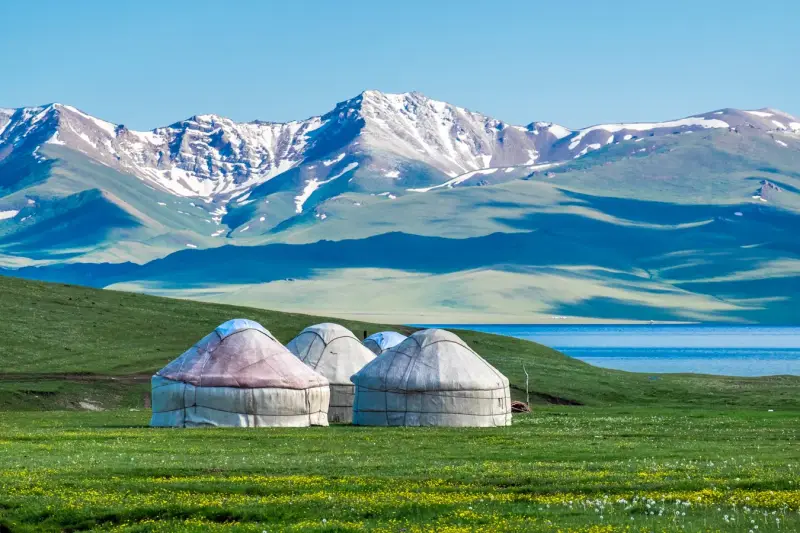
For yurt stays and nomad culture in the Tien Shan, Kyrgyzstan is one of the easiest places in Central Asia to backpack, and many nationalities can enter without a visa. Ala-Kul is a glacial lake above the town of Karakol, reached on a three-day trek that crosses a pass of about 3,900 m. Song-Kul is a wide alpine lake on a plateau where herding families pitch yurts from June to September and host travellers.
Yurt stays with meals, shared taxis and community-based tourism offices in Karakol and Kochkor keep this firmly in the low-cost bracket. Horse treks to Song-Kul are a classic way to arrive. Weather changes quickly in the mountains, and nights drop near freezing even in July, so pack a warm sleeping bag.
Trekkers and riders after solitude should allow a week to ten days, arranging yurts and horses through the community tourism offices.
Europe
Europe as a whole is not cheap, but the Balkans, the Caucasus and Portugal's islands offer real value, especially outside July and August.
Accursed Mountains, Albania

The cheapest Alps in Europe are in Albania. The Accursed Mountains (Bjeshkët e Nemuna), also called the Albanian Alps, are the most dramatic and least expensive high mountains in Europe. The classic route links the valleys of Valbona and Theth over a pass in a full-day hike, usually combined with the Lake Komani ferry through a narrow gorge.
Family guesthouses in both valleys serve big home-cooked dinners with the room, which is why budgets stay low. The longer Peaks of the Balkans trail continues into Montenegro and Kosovo for about a week. Trails are well marked in the main valleys, but snow can linger on the pass until June.
Four to seven days gives hikers Alpine scenery at Balkan prices. Arrive by the Komani ferry, which is a highlight in itself.
Kazbegi and Mestia, Georgia

Georgia's hospitality is famous across the Caucasus. Kazbegi (Stepantsminda) sits under Mount Kazbek, with the Gergeti Trinity Church on a ridge above town; it is a few hours' drive from Tbilisi on the Georgian Military Road. Mestia, in remote Svaneti, is known for medieval stone defence towers and the four-day Mestia to Ushguli trek.
Guesthouse rooms with breakfast, marshrutka minibuses and Georgian food keep costs low, and many nationalities can visit Georgia visa-free for long stays. The two regions are far apart, so allow travel days between them.
Hikers who care about food and culture should give it seven to ten days, riding marshrutkas out of Tbilisi and sleeping in family guesthouses.
Azores, Portugal

The Azores, Europe's best islands for hikers on a budget, are nine volcanic islands in the mid-Atlantic. São Miguel has the twin crater lakes of Sete Cidades and hot springs at Furnas; Pico has Portugal's highest mountain; Flores has waterfalls dropping straight into the sea. Whale watching runs much of the year.
Accommodation and car hire push costs to medium, but hostels, buses on São Miguel and cheap local food help. Weather changes fast, often several times a day, so plan flexible hiking days.
Nature lovers need one to two weeks. São Miguel makes the natural base, with one smaller island added on.
Kotor and Durmitor, Montenegro
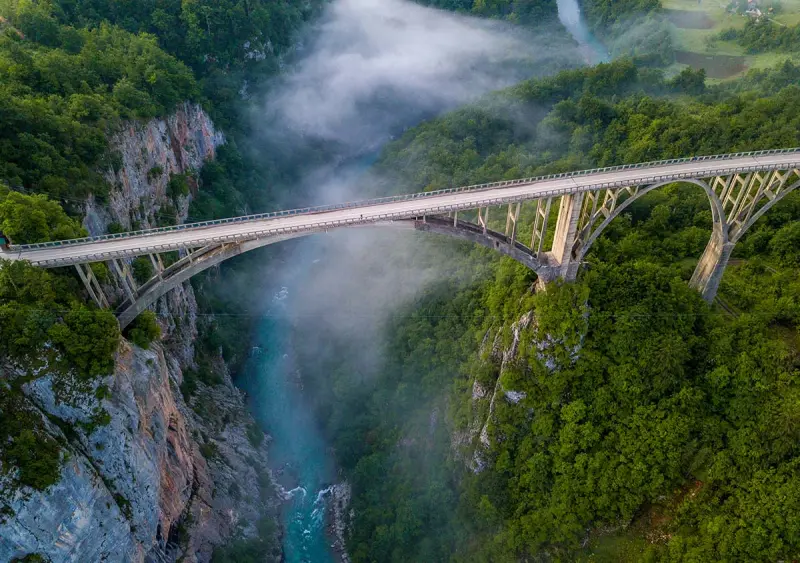
Montenegro pairs coast with mountains. Kotor is a walled medieval town at the end of a fjord-like bay on the Adriatic. Its fortress walls climb steeply above the rooftops, a hike of about an hour at dawn. Inland, Durmitor National Park offers Black Lake, Bobotov Kuk and the Tara River canyon.
Kotor is busy and pricier in July and August when cruise ships arrive, so shoulder months give better value. Žabljak, the base for Durmitor, has cheap guesthouses and campsites.
Five to eight days covers both halves. Do the Kotor walls at sunrise, ahead of the heat and the cruise passengers.
Julian Alps, Slovenia

Slovenia has the best-organised trails here. Its Julian Alps centre on Triglav National Park, around the 2,864 m Mount Triglav. Lake Bohinj, Lake Bled, the Soča valley and a dense network of mountain huts make it easy to plan hut-to-hut walking.
Hut beds and meals cost more than in the Balkans but less than in the Alps of Austria or Switzerland. Book huts ahead in high summer. Trains and buses from Ljubljana reach Bled and Bohinj.
Hut-to-hut hikers need five to seven days, and the huts for July and August fill early.
South America
South America sits mid-range on cost, with big savings in Ecuador, Peru and Bolivia and higher prices in Chile.
Choquequirao Trek, Peru

Far quieter than Machu Picchu, Choquequirao is an Inca site of similar scale but reached only on foot, so it sees a fraction of the visitors. The trek starts near Cachora, drops about 1,500 m into the Apurímac canyon and climbs back up the other side.
Independent trekkers can camp; many hire a guide and mules. It is very steep, so fitness matters more than distance.
Plan four or five days. It rewards fit trekkers who dislike crowds, provided they set off early enough to cross the canyon before midday.
Cocora Valley and Ciudad Perdida, Colombia

Colombia offers the best jungle trek on this list. The Cocora Valley near Salento is famous for wax palms, Colombia's national tree, which grow taller than any other palm. A loop hike takes most of a day. In the Sierra Nevada de Santa Marta, the Ciudad Perdida (Lost City) trek reaches terraces built by the Tayrona people centuries before Machu Picchu.
Ciudad Perdida can only be visited with licensed operators; operator listings for 2026 started at roughly US$770 to US$860 for a four-day trek. Cocora is cheap and easy to do independently.
Six to nine days covers the coffee region and the jungle trek. For Ciudad Perdida, book with a licensed operator in Santa Marta.
Carretera Austral, Chile

Patagonia's best road trip, the Carretera Austral (Route 7), runs about 1,200 km through northern Chilean Patagonia, from Puerto Montt to Villa O'Higgins, much of it on gravel. It passes the hanging glacier of Queulat National Park, the marble caves of Puerto Río Tranquilo on General Carrera Lake, Patagonia National Park and the old timber village of Caleta Tortel, built on boardwalks.
Chile is the most expensive country in South America, so the Carretera rates medium only if you camp and use the infrequent buses or hitchhike, which is common and widely accepted here. Ferries link several sections and need booking in summer. Distances are long, weather can close roads and services are thin, so this is a route for travellers with two weeks or more.
Two to four weeks is realistic, so it suits long-term travellers. Bring cash, as ATMs are rare between towns.
Quilotoa Loop, Ecuador

Nowhere in the Andes gives better value than the Quilotoa Loop, which links Andean villages in Cotopaxi province on a three to four day hike, finishing at the rim of Quilotoa, a volcanic crater filled with a green-blue lake. Most people walk from Sigchos via Isinliví and Chugchilán, crossing deep canyons and farmland where Kichwa families still work the fields by hand.
Village hostels typically include dinner and breakfast in the room price, and Ecuador uses the US dollar, so budgeting is simple and costs are among the lowest in South America. The crater rim sits at about 3,900 m, so spend a night or two in Quito or Latacunga first. Trails are not always signed; downloaded offline maps help.
Budget hikers need three or four days. Leave the big pack in Latacunga and walk with a day bag.
North America
North America ranges from cheap southern Mexico to expensive Canada and the US Pacific Northwest.
Oaxaca and Chiapas, Mexico

The best food on a budget is in Mexico's south. Oaxaca city is its food capital, known for its moles, tlayudas, chapulines and mezcal, with the Zapotec hilltop city of Monte Albán just outside town and the petrified waterfalls of Hierve el Agua a day trip away. Further east, Chiapas offers San Cristóbal de las Casas in the highlands, boat trips through the Sumidero Canyon and the jungle-wrapped Maya city of Palenque.
Market meals, family-run hostels and comfortable long-distance buses keep this region cheap by any standard. Overnight buses between Oaxaca, San Cristóbal and Palenque save a night's accommodation. Some rural roads in Chiapas see occasional blockades, so check locally before long road journeys.
Food lovers and culture travellers should allow ten days to two weeks, using ADO's overnight buses on the long legs.
Vancouver Island, Canada

Rainforest and coast meet on Vancouver Island, off Canada's west coast, which packs old-growth temperate rainforest, wild surf beaches around Tofino and Ucluelet, and whale and bear watching into one island. Victoria, the provincial capital, is the usual entry point by ferry. Hikers come for the 75 km West Coast Trail, which needs a reservation, and the shorter Juan de Fuca Marine Trail.
Canada is expensive, which puts this firmly in the high-cost group. Hostels in Victoria and Tofino, provincial park campsites, self-catering and shared rides keep a backpacker budget realistic. Summer is the driest season; much of the year the coast is wet.
Hikers and surfers need one to two weeks; provincial park campsites are the main money-saver.
Pacific Northwest, USA

For national parks, the US Pacific Northwest is hard to match: it combines three national parks within a few hours of Seattle: Mount Rainier with its wildflower meadows, Olympic with rainforest, glaciers and wild coast, and North Cascades. In Oregon, Mount Hood, the Columbia River Gorge waterfalls and Crater Lake extend the trip south. Seattle and Portland are the gateways.
Costs here are higher than almost anywhere else on this list. Camping, a shared hire car and an annual America the Beautiful pass for national park entry are the main ways to cut costs. Many high trails are snow-covered until July, and wildfire smoke can affect late summer.
Campers and road-trippers should plan ten days to two weeks. With several parks on the route, the America the Beautiful pass pays for itself.
Africa
Africa offers some of the most dramatic landscapes on this list, but security conditions change; check your government's travel advice before booking.
Atlas Mountains and Sahara, Morocco

Morocco gives the best mix of desert and mountain in this guide. The High Atlas is centred on Jebel Toubkal, at 4,167 m the highest peak in North Africa, usually climbed in two days from the village of Imlil with a night at the refuge. Across the mountains, the road through the Dades and Todra gorges leads to the Sahara dunes of Erg Chebbi near Merzouga, where desert camps host overnight camel treks.
Riad rooms, trains and buses, and cheap tagines make Morocco low cost. Desert tour quality varies widely; booking a camp directly in Merzouga is often better value than a three-day package from Marrakech. Avoid the desert in high summer.
First-time Africa travellers need seven to ten days. Contact desert camps in Merzouga directly.
Simien Mountains, Ethiopia

The most unusual wildlife on this list lives in the Simien Mountains National Park in northern Ethiopia, a UNESCO World Heritage Site of sheer escarpments and deep gorges. Gelada monkeys gather here in large troops, and you may also see the rare walia ibex and, with luck, the Ethiopian wolf. Multi-day treks start from the town of Debark.
An armed park scout is required for trekking, and guides, mules and camps are arranged locally at low cost. The Amhara region, where the park lies, has seen armed conflict since 2023, and many governments currently advise against travel there. Check your government's advice before planning this trip.
Wildlife lovers need four to seven days, but only once official travel advice allows the trip.
Avenue of the Baobabs and Tsingy, Madagascar

Madagascar's west is the most otherworldly corner of this guide. The Avenue of the Baobabs, a short drive from Morondava on Madagascar's west coast, is a dirt road lined with Grandidier's baobabs, some estimated to be hundreds of years old; sunset is the classic time to visit. North of Morondava, Tsingy de Bemaraha National Park, a UNESCO site, protects a forest of razor-sharp limestone pinnacles crossed by ladders and rope bridges.
Getting between the two takes a long day by 4x4 on rough tracks, and the Tsingy is generally accessible only in the dry season. Vehicle hire is the biggest cost, so share one with other travellers. Madagascar saw political upheaval in 2025; check current travel advice before booking.
Adventurous wildlife fans should allow ten days to two weeks and split the 4x4 with other travellers.
Oceania
Oceania is the most expensive region here, but huts, campsites and self-catering keep backpacking affordable.
Te Araroa (South Island), New Zealand

Te Araroa (\"the long path\"), the longest trail on this list, runs about 3,000 km from Cape Reinga to Bluff. The South Island half is the more scenic, crossing the Richmond Range, the high country around Arthur's Pass and the Southern Lakes near Wānaka and Queenstown.
Backcountry huts are cheap with an annual Department of Conservation hut pass, but food, gear and transport in New Zealand are expensive. Most people walk sections; a through-hike of the South Island takes two to three months.
Long-distance hikers without two or three months to spare can walk it in sections.
Overland Track, Tasmania, Australia

Australia's best hut walk, the Overland Track, is a six-day, roughly 65 km walk through Cradle Mountain-Lake St Clair National Park in Tasmania, past glacial lakes, alpine plateaus and rainforest, with side trips to Cradle Mountain and Mount Ossa, Tasmania's highest peak.
From 1 October to 31 May walkers must book, and only 34 independent walkers can start each day. For the 2026–27 season the booking fee is A$312 per adult, which covers park entry and the Cradle Mountain shuttle but not transport from Lake St Clair. Peak dates sold out within hours of bookings opening in July 2026.
Hut-to-hut hikers should book on the day reservations open.
Middle East and Central Asia
Jordan is the region's most trek-friendly country, with a marked national trail and well-organised local guides.
Dana to Petra Trek, Jordan

The best desert trek here, Dana to Petra, is the most popular section of the Jordan Trail, which runs the length of the country. It starts at the stone village of Dana in the Dana Biosphere Reserve, follows wadis and ridges through Bedouin grazing land and ends at Petra's Monastery, entering the ancient city by the back door. Most groups take four to five days.
Most hikers go with a local guide and supported camps, which push costs to medium, though independent walking with GPS tracks is possible for experienced trekkers. The Jordan Pass, sold online, bundles visa fees and Petra entry for many nationalities.
Desert trekkers finish by walking into Petra through its back entrance.
 Exclusive holiday package offers
How to budget a backpacking trip in 2026
Your daily spend depends far more on where you go than on how frugal you are. A week in Nepal, Kyrgyzstan, Albania or southern Mexico can cost less than two or three days in Tasmania or the Pacific Northwest, even if you sleep in hostels everywhere. Pick a low-cost region for long trips and save the expensive ones for shorter, focused visits.
Fixed fees are where budgets break. Park and trek permits (the Overland Track's A$312 booking, Nepal's conservation permit, Komodo's park entry of IDR 250,000 a day for foreign visitors as of October 2026), compulsory guides (Ciudad Perdida, the Simien Mountains) and boat tours (Palawan, Komodo) often cost more than a week of beds. Check them first, then fill in daily costs.
The biggest single saving is usually the flight. Travelling in shoulder season, flying into regional hubs (Kathmandu, Bangkok, Istanbul, Lisbon, Bogotá) and connecting overland cuts costs. Compare routes on our flights page before fixing dates, and remember visa rules depend on your passport; check each country's official visa portal.
Tips for backpacking on a budget
Travel in the April to May and September to October shoulder seasons for lower prices, eat where you sleep in teahouses, yurts and guesthouses, and book capped permits such as the Overland Track and Ciudad Perdida early. Buy insurance that covers altitude above 4,000 m and evacuation, and carry enough cash for remote areas with few ATMs.
- Travel in shoulder season. April–May and September–October bring lower prices and fewer crowds across Europe, Asia and North Africa.
- Eat where you sleep. Teahouses in Nepal, yurts in Kyrgyzstan and guesthouses in Albania and Ecuador include meals cheaply with the room.
- Book capped permits early. The Overland Track, West Coast Trail, Huayna Picchu and Ciudad Perdida have daily limits.
- Buy proper travel insurance. Check cover for altitude above 4,000 m, motorbikes and evacuation. Cheap policies often exclude trekking above a set height or riding without a valid licence, so read the exclusions as carefully as the price.
- Carry cash for remote areas. Spiti, the Carretera Austral, Simien and Song-Kul have few or no ATMs. Withdraw enough in the last large town, split cash between bags, and carry two cards from different networks in case one is declined.
- Check travel advice. Conditions in Ethiopia, Madagascar and parts of other countries change quickly. Read your own government's travel advice before booking and again before departure, because some insurers will not cover regions your government advises against visiting.
Planning a trip to Nepal? Read our Nepal travel guide, browse tours or search flights.
 AI trip planner








{{item.get_author.first_name}} {{item.get_author.last_name}}
{{item.comment_txt}}
{{item_reply.get_author.first_name}} {{item_reply.get_author.last_name}}
@ {{item_reply.reply_to}}, {{item_reply.reply_txt}}