
 Umrah packages
The cheapest cities to live and travel in for 2026 include Hanoi, Bangkok, Kuala Lumpur, Cebu, Medellín, Mexico City and Istanbul: places where a single person can cover daily costs (food, transport, utilities, going out) for well under what the same life costs in London, New York or Sydney, without giving up good food, safe neighbourhoods or a decent internet connection. This guide covers 15 of them across five continents (Europe, Asia, Africa, Oceania and Latin America), from Bari and Valencia to Hanoi, Bangkok and Medellín, with current cost figures, the best areas to rent and the downsides each city does not advertise.
Comparing other destinations? Start with our guide to moving abroad in 2026.
These are cities for staying a month or longer, which is a different question from where to spend a cheap week. If you want short-trip ideas, read our list of the cheapest countries to visit, and for multi-country routes see the budget backpacking countries guide. When you are ready to move, compare fares on our flight search.
How we chose and priced these 15 cities: Each city combines living costs well below those of major Western capitals with things that make a long stay work: a usable airport, a choice of rental areas, healthcare and an established community of foreign residents. Cost figures come from Numbeo's crowd-sourced data as last updated in late October 2026 and are given in local currency, because exchange rates move faster than the prices themselves. They are averages: your own spending depends on the area you rent in and how you eat. The cities are not ranked: each suits a different kind of traveler. For reference, the lowest monthly spending before rent among the EU cities is Valencia's, at about €730.
Why living costs differ so much between affordable cities
Rent is the number that separates a cheap city from an expensive one. In most of the cities below, a single person's monthly spending before rent sits in a similar band once converted, but rent varies enormously, from a few hundred dollars in Hanoi or Oaxaca to well over a thousand euros for a central flat in Valencia. That is why each card shows both figures. Exchange rates matter too: Cape Town, Istanbul and Medellín feel cheap mainly because their currencies have weakened against the dollar and the euro, which can reverse.
The second factor is how you live. Eating local food, using public transport and renting a month or more at a time can halve the cost of the same city compared with eating in tourist restaurants and booking nightly rooms. Visa rules decide how long you can stay, and they depend entirely on your passport, so check each country's official immigration portal or our visa section before you plan a long stay.
Quick comparison of the cheapest cities to live and travel in
The 15 cheapest cities to live and travel in for 2026 are Bari, Cape Town, Cebu, Hamilton, Hanoi, Heraklion, Istanbul, Kuala Lumpur, Medellín, Mexico City, Mumbai, Oaxaca City, Bangkok, Split and Valencia. Hanoi, Bangkok, Kuala Lumpur and Cebu have the lowest total costs. Monthly costs exclude rent and are for one person, in local currency, from Numbeo as of October 2026. Click a city to jump to its full card.
| # | City | Region | Monthly costs ex-rent | 1-bed rent | Best months |
|---|---|---|---|---|---|
| 1 | Bari, Italy | Europe | About €800 | About €580–800 a month | April to June, September to October |
| 2 | Cape Town, South Africa | Africa | About R11,900 | About R11,500–17,500 a month | November to March for summer; April and May for calmer weather |
| 3 | Cebu, Philippines | Asia | About ₱34,600 | About ₱20,700–31,000 a month | December to May, the drier months |
| 4 | Hamilton, New Zealand | Oceania | Not listed (meal About NZ$21.50) | About NZ$1,770–1,900 a month | December to March for summer |
| 5 | Hanoi, Vietnam | Asia | About ₫11.9 million | About ₫7.5–11.3 million a month | October to November, March to April |
| 6 | Heraklion, Greece | Europe | About €830 | About €460–600 a month | May to June, September to October |
| 7 | Istanbul, Türkiye | Europe and Asia | About ₺39,100 | About ₺31,700–49,300 a month | April to June, September to November |
| 8 | Kuala Lumpur, Malaysia | Asia | About RM2,400 | About RM1,460–2,800 a month | Year-round; drier spells around June to August |
| 9 | Medellín, Colombia | Latin America | About Col$2.64 million | About Col$2.05–3.86 million a month | December to March, June to August (drier spells) |
| 10 | Mexico City, Mexico | Latin America | About Mex$14,300 | About Mex$13,400–21,000 a month | October to May, the dry season |
| 11 | Mumbai, India | Asia | About ₹37,900 | About ₹35,300–59,800 a month | November to February |
| 12 | Oaxaca City, Mexico | Latin America | Not listed (meal About Mex$165) | About Mex$5,000–8,100 a month | October to April, the dry season |
| 13 | Bangkok, Thailand | Asia | About ฿23,500 | About ฿11,700–23,700 a month | November to February |
| 14 | Split, Croatia | Europe | About €815 | About €640–900 a month | May to June, September |
| 15 | Valencia, Spain | Europe | About €730 | About €970–1,300 a month | March to June, September to November |
The 15 cheapest cities to live and travel in 2026: full guide
The cities below span five continents, from Bari in southern Italy and Split in Croatia to Medellín, Oaxaca City and Cape Town. Each card covers what daily life costs and who the city suits best.
Bari, Italy: Southern Italy on a seaside budget
Our editor's pick for food lovers in Europe, Bari is the capital of Puglia and the most affordable big-city base on Italy's Adriatic coast. The old town, Bari Vecchia, is a tight grid of limestone lanes where women still roll orecchiette by hand at tables outside their front doors on Arco Basso, and where the Basilica di San Nicola holds the relics of Saint Nicholas, brought here from Myra in 1087. Daily life runs on Italian rhythms: long lunches, an evening passeggiata along the Lungomare Nazario Sauro, and a fish market on the old harbour where locals eat raw sea urchin and octopus standing up.
What makes Bari cheap compared with Rome, Milan or Florence is rent. As of October 2026, Numbeo lists a one-bedroom flat in the centre at around €800 a month and closer to €580 outside it, while a single person's monthly costs before rent sit near €800. A meal in a simple trattoria is about €15. The city is also a regional transport hub: trains run to Lecce, Polignano a Mare and Matera, and ferries leave for Albania, Montenegro and Greece. The trade-off is limited English outside tourist businesses and a slow bureaucracy if you plan to register as a resident.
Slow travelers who plan their days around food will be happiest here. The Murat district has walkable grid streets, and Madonnella has lower rents. Come from April to June or in September and October, and rent outside July and August, when holiday lets push prices up along the coast.
Cape Town, South Africa: Mountains, ocean and a weak-rand discount

For outdoor types, nowhere in Africa on this list beats it: Cape Town packs Table Mountain, two oceans, the Cape Winelands and a busy café and coworking scene into one city, and for anyone earning in dollars, euros or pounds the rand makes it far cheaper than its look suggests. The Atlantic Seaboard suburbs (Sea Point, Green Point) suit people who want a promenade run every morning; the City Bowl and Gardens put you near Kloof Street's restaurants; Observatory and Woodstock are cheaper and more creative.
As of October 2026, Numbeo puts a single person's monthly costs before rent at about R11,900, with a one-bedroom flat at roughly R17,500 in the centre and R11,500 further out. An inexpensive meal runs about R200. Days out are where the city shines: the Cape Point section of Table Mountain National Park, the penguin colony at Boulders Beach in Simon's Town, and the painted houses of Bo-Kaap, plus wine estates in Constantia and Stellenbosch. The honest caveat is safety and power. Petty crime is a real issue in parts of the city, so choose a secure building, use ride-hailing at night and ask locals which streets to avoid. Many long-stay renters also look for a flat with backup power.
Hikers, surfers and photographers get the most from Cape Town. November to March is summer; April and May bring calmer weather. Rent a car for the Cape Peninsula: public transport to the beaches and wine farms is thin.
Cebu, Philippines: Island life with a big-city airport
The beach pick in Asia, and the one for divers, combines Cebu City and its neighbour Mactan Island, giving you a full Philippine city (malls, hospitals, an international airport) with dive sites and waterfalls a few hours away. Remote workers tend to cluster around IT Park and Cebu Business Park, where coworking spaces, cafés and condos sit side by side, while Mactan is the choice for anyone who wants resorts and the sea close to home.
Numbeo's October 2026 data puts a single person's monthly costs before rent at about ₱34,600, a central one-bedroom at around ₱31,000 and one outside the centre at about ₱20,700. A cheap meal is roughly ₱250, and far less at a carinderia or the Larsian barbecue stalls near Fuente Osmeña. Weekend trips are the reason most people pick Cebu: canyoneering and swimming at Kawasan Falls in Badian, the sardine run off Moalboal, and ferries to Bohol. The catch is traffic, which turns short distances into long rides, and the typhoon season in the second half of the year.
It suits divers and remote workers who want a beach at weekends, ideally from December to May, the drier months. Live close to work: Cebu traffic eats hours.
Hamilton, New Zealand: A calmer, cheaper base than Auckland
Our quiet pick in Oceania sits along the Waikato River south of Auckland. Hamilton is the main city of the Waikato region, a practical, student-heavy place (the University of Waikato is here) with gardens, riverside walking and cycling trails, and it works well as a base for the central North Island. Hobbiton Movie Set near Matamata and the surf town of Raglan are both within easy day-trip range by car.
Be clear about what "cheap" means here. Hamilton is cheaper than Auckland and Wellington, though it is still expensive by global standards. As of October 2026, Numbeo lists a central one-bedroom at about NZ$1,900 a month and around NZ$1,770 outside the centre, with an inexpensive meal at a simple café near NZ$21.50. It earns its place on this list because New Zealand quality of life (clean air, low crowds, safe streets) comes at a lower price than the big cities. Hamilton Gardens, a set of themed gardens beside the river, is the city's best-known sight; check its website for current entry rules, which differ for local residents and visitors.
Students and nature lovers who want New Zealand without Auckland prices tend to settle in Hamilton East or the central city near the river. December to March is summer, and a car makes life here much easier.
Hanoi, Vietnam: Street food, lakes and very low daily costs

On value alone, Hanoi is the best on this list and one of the cheapest capital cities in Asia to live well in, with culture and food at every turn. Mornings start with pho or bun cha on a plastic stool, afternoons in one of the city's many cafés serving egg coffee, and evenings around Hoan Kiem Lake, which closes to traffic for walking streets at weekends. The Old Quarter is fun for a week; long-stayers usually move to Tay Ho (West Lake), which has quieter streets, international groceries and most of the expat community, or to Ba Dinh for a more local feel.
As of October 2026, Numbeo puts a single person's monthly costs before rent at around ₫11.9 million, with a central one-bedroom at about ₫11.3 million and one outside the centre near ₫7.5 million. A cheap restaurant meal costs about ₫52,500, and a monthly public transport pass ₫280,000. Ha Long Bay and Ninh Binh are classic weekend trips. Two real downsides: air quality is poor on many winter days, and the winter months are grey, cool and damp.
Food lovers on a tight budget should aim for October to November or March to April, and check the air quality index before booking a long winter stay.
Heraklion, Greece: Crete's capital at mainland-Greece prices
History lovers get island life and ancient sites together in Heraklion, the capital of Crete and a working city first, which keeps it cheaper than Santorini, Mykonos or even Chania. The Palace of Knossos, the great Minoan site, sits on the southern edge of town, and the Heraklion Archaeological Museum holds the finds from it. The Venetian harbour and its fortress, Koules, frame evening walks, and the city walls are still largely intact around the old centre, which is the place to live.
Numbeo's October 2026 data shows a central one-bedroom at about €594 a month and €461 outside the centre, with a single person's monthly costs before rent near €830. A simple taverna meal is around €11.50. Crete is big, so living here also means easy weekends at beaches and mountain villages, and good-value island wine. The trade-off is that summer brings cruise crowds and heat, and much of the island's tourism slows sharply in winter, when some beach businesses close.
May to June and September to October are the sweet spots. Long-term rents are easiest to find from October, after the summer season ends.
Istanbul, Türkiye: Two continents, one transit card

Few cities of its size, spread across Europe and Asia, offer as much history and food for the money. You can live on the Asian side in Kadıköy or Moda and commute to the European side by ferry across the Bosphorus for the price of a transit fare, which is one of the great daily trips anywhere. The historic peninsula holds Hagia Sophia, the Blue Mosque and Topkapı Palace, and the Grand Bazaar and the Spice Bazaar are minutes away on foot.
Inflation in Türkiye has been high for several years, so lira prices move fast. As of October 2026, Numbeo lists a single person's monthly costs before rent at about ₺39,100, a central one-bedroom at around ₺49,300 and about ₺31,700 outside the centre. A cheap meal is roughly ₺600 and a monthly transit pass about ₺3,300. Compare in your own currency on the day you plan, because lira figures date quickly. Neighbourhoods for long stays include Kadıköy, Moda, Cihangir and Beşiktaş. For first-time visitors our guide to Istanbul's top attractions covers the main sights.
Culture lovers and long-stay writers do well here, especially April to June and September to November. Price everything in your home currency: lira prices rise quickly.
Kuala Lumpur, Malaysia: A modern capital at mid-Asia prices
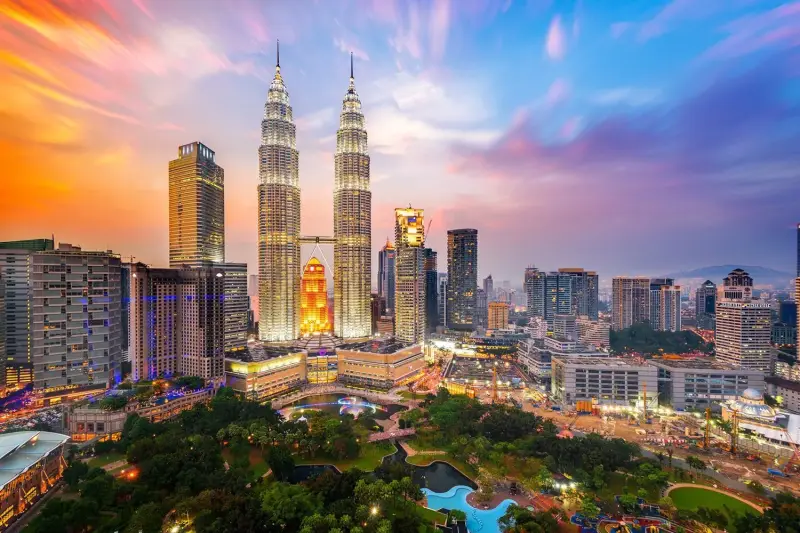
High-rise condos with pools and gyms for the price of a small flat in most Western cities make Kuala Lumpur our nomad pick in Asia, with food and transport as its strengths. Malay, Chinese and Indian food cultures share the same streets, so eating out is cheap and varied, from Jalan Alor's night stalls to banana-leaf rice in Brickfields. The Petronas Twin Towers and KLCC Park anchor the centre, and Batu Caves, with its 272 painted steps up to the Temple Cave, is a short train ride north.
As of October 2026, Numbeo lists a single person's monthly costs before rent at about RM2,400, a central one-bedroom near RM2,800 and around RM1,460 outside the centre. A cheap meal costs about RM20 and a monthly transport pass about RM50. English is widely spoken, the LRT and MRT lines are easy to use, and the airport is a hub for cheap flights across Southeast Asia. Malaysia also runs a digital nomad pass called DE Rantau; check the current rules on the official portal. The downsides are humidity, afternoon storms and districts built around cars, with few pavements.
Remote workers after modern comfort usually choose Mont Kiara, Bangsar or KLCC. The city works year-round, with drier spells around June to August. Pick a condo near an MRT or LRT station to avoid daily traffic.
Medellín, Colombia: The city of eternal spring
Climate is the draw. Medellín's nickname, the city of eternal spring, comes from its mild temperatures all year, and that alone pulls many long-stay visitors to Latin America's best coworking-and-coffee base. The city sits in the Aburrá Valley, and its metro is linked to Metrocable gondola lines that climb the hillsides, a project widely studied by city planners. Comuna 13, once one of the most troubled districts, is now known for its outdoor escalators and street-art tours, and coffee farms are within day-trip reach.
As of October 2026, Numbeo puts a single person's monthly costs before rent near Col$2.64 million, with a one-bedroom at about Col$3.86 million in the centre and Col$2.05 million outside it. A cheap meal is about Col$26,000. El Poblado and Laureles are the usual long-stay districts: Poblado for nightlife and coworking, Laureles for flat, walkable streets and lower rents. Colombia offers a digital nomad visa; rules depend on your passport, so confirm on the Cancillería portal. Caveats: petty theft and scams targeting foreigners are real, and dating-app robberies are a known risk, so keep phones out of sight and meet people in public places.
December to March and June to August are the drier spells. Laureles gives you most of Poblado's comfort at a lower rent.
Mexico City, Mexico: Museums, markets and taco stands at every corner

Our culture pick in Latin America is a huge capital, full of museums and food, that lives like a set of villages. Roma Norte and Condesa have tree-lined streets, parks and the city's densest café and coworking scene; Coyoacán, home to the Frida Kahlo Museum (Casa Azul), feels calmer and older. Chapultepec Park holds the National Museum of Anthropology, and street food (tacos al pastor, tlacoyos, tamales) keeps daily costs low wherever you live.
As of October 2026, Numbeo lists a single person's monthly costs before rent at about Mex$14,300, with a central one-bedroom near Mex$21,000 and one outside the centre around Mex$13,400. A cheap meal costs about Mex$200 and a monthly transit pass Mex$360. Several Numbeo users note these figures look low for the most popular districts, so treat Roma and Condesa rents as higher than the average. The city sits at high altitude, so expect to feel the climb for the first days, and the rainy season brings afternoon storms from roughly June to September. Our guide to cities of Mexico covers other bases across the country.
Creatives and food lovers fit in easily, and October to May, the dry season, is the time to come. Rents in Roma and Condesa run above the city average, so look one district over.
Mumbai, India: A megacity where street food is still cheap

India's financial capital is our big-city pick for business and food, and one of the most expensive places to rent in the country, yet daily life in Mumbai can still cost very little if you eat and travel like a local. Vada pav, pav bhaji and Irani café breakfasts cost a fraction of a restaurant meal, and the suburban trains move millions of people a day for low fares. Marine Drive at sunset, the Gateway of India and the cafés of Colaba and Bandra are the classic introductions.
As of October 2026, Numbeo lists a single person's monthly costs before rent at around ₹37,900, a central one-bedroom near ₹59,800 and about ₹35,300 outside the centre. A cheap meal is about ₹500 and a monthly transport pass ₹650. Rent is the big variable: the further north and east you go along the train lines, the lower it falls. The monsoon, from about June to September, brings heavy rain and flooding in low-lying areas, and the crowds take time to get used to.
Entrepreneurs and food lovers on long stays tend to pick Bandra or Andheri West, and November to February is the best season. Live near a station on the Western Line to make the most of cheap suburban trains.
Oaxaca City, Mexico: Markets, mezcal and a slower pace
Smaller, calmer and cheaper than Mexico City, Oaxaca is our craft pick for markets and art, and the country's best-known food region: seven moles, tlayudas, chapulines and mezcal from the surrounding valleys. The colonial centre is walkable, with the Templo de Santo Domingo at its heart, and Mercado 20 de Noviembre is where locals grill meat over coals in the smoke-filled "pasillo de humo". Monte Albán, the Zapotec hilltop city, overlooks the valley a short drive away.
Numbeo's Oaxaca data has fewer contributors, so treat it as a rough guide: as of October 2026 it lists a central one-bedroom at about Mex$8,100 a month, roughly Mex$5,000 outside the centre, and a cheap meal near Mex$165. Rent is the big saving compared with the capital. The trade-offs are a smaller job market, fewer international flights (many routes connect via Mexico City), and busy peak periods around Día de Muertos and the July Guelaguetza festival, when rents and room rates rise.
Artists and food travelers usually base themselves in Centro, Jalatlaco or Reforma, and the dry season runs from October to April. Book early for late October and July, the two festival peaks.
Bangkok, Thailand: Big-city comfort at Southeast Asian prices

As Asia's hub pick, Bangkok gives you one of the best food scenes anywhere, efficient BTS and MRT rail lines, good private hospitals and some of the cheapest flights in Asia, all for less than most capitals. Long-stayers often rent in condo towers along the Sukhumvit line (Ari, On Nut, Phra Khanong) and save the riverside temples, Wat Arun and the Grand Palace, for weekends. Street food and food courts keep meals cheap even if your rent is not.
As of October 2026, Numbeo puts a single person's monthly costs before rent at about ฿23,500, a central one-bedroom near ฿23,700 and around ฿11,700 outside the centre. A cheap meal is about ฿100 and a monthly transit pass around ฿1,180. Thailand's Destination Thailand Visa (DTV) is aimed at remote workers; check the latest conditions on the official Thai e-visa site before you apply. The downsides are heat, seasonal haze and traffic on roads away from the rail lines. For neighbourhood ideas see our guide to the best places to visit in Bangkok.
Digital nomads and food lovers should aim for November to February. Rent within walking distance of a BTS or MRT station and you will rarely need a taxi.
Split, Croatia: Living inside a Roman palace
History and islands meet on our coastal pick in Europe. Split grew inside and around Diocletian's Palace, the retirement residence of a Roman emperor, which UNESCO listed as World Heritage in 1979. People still live in apartments built into its walls, and the Riva promenade outside it is the city's living room. Ferries and catamarans connect Split with the islands of Brač, Hvar and Vis, and Krka National Park is within day-trip range.
As of October 2026, Numbeo lists a single person's monthly costs before rent at about €815, a central one-bedroom near €900 and about €640 outside the centre, with a cheap meal around €15. That makes Split cheaper than most Western European coastal cities outside the summer peak. Croatia runs a digital nomad residence permit for non-EU remote workers; the rules have changed in recent years, so check the Ministry of the Interior site for the current terms. The honest caveat: summer is crowded and expensive, and many owners prefer short holiday lets, so long rents are easiest to agree from October to May.
Slow travelers who want island-hopping on the doorstep look at Veli Varoš, Bačvice or Žnjan, and visit from May to June or in September. Autumn is the time to sign a long lease; spring rents are higher.
Valencia, Spain: Beach, bikes and the best paella in Spain
Families heading for Europe should start with Valencia, our family pick and a beach city that is Spain's third-largest and usually cheaper to live in than Madrid or Barcelona. Its best feature is the Turia Gardens, a park of about 9 km built in the old riverbed after the river was diverted, which gives you a car-free route for running and cycling right across the city. At one end stands the City of Arts and Sciences; beyond it are the city beaches at Malvarrosa. Paella was born in this region, and the rice fields of La Albufera are a short bus ride south.
As of October 2026, Numbeo lists a single person's monthly costs before rent at about €730, the lowest among the European cities here, though rent is higher: around €1,300 for a central one-bedroom and roughly €970 outside the centre. A cheap meal is about €17 and a monthly transit pass €35. Spain offers a visa for remote workers from outside the EU; check the official Spanish government portal for current income rules. Rents have risen fast in recent years, so expect competition for good flats.
Ruzafa, Benimaclet and El Cabanyal suit families and long-term expats, and March to June or September to November are the best months. Plan around Las Fallas in March, when the city is packed and loud for days.
How to choose an affordable city by budget and lifestyle
If the lowest total cost matters most, the Asian cities on this list win: Hanoi, Bangkok, Kuala Lumpur and Cebu combine cheap rent with very cheap everyday food, and their airports connect to the rest of the region for little money. Mumbai can be cheap day to day, but good central rentals are expensive, so it suits people with a job or business reason to be there.
If you want Europe, look at the split between rent and daily costs. Heraklion and Bari have the lowest rents of the European picks, Valencia has the lowest day-to-day spending but higher rent, and Split is affordable only outside summer. For Schengen-area cities (Bari, Heraklion, Split, Valencia), short visits are usually limited to 90 days in any 180-day period for visa-exempt visitors, so longer stays need a national visa or residence permit.
For nature on the doorstep, Cape Town and Hamilton stand out, though Hamilton is affordable only by New Zealand standards. For Latin America, Medellín offers the mildest climate, Mexico City the biggest cultural scene, and Oaxaca the lowest rent and the best food markets, at the cost of fewer direct flights.
Tips for living cheaply in a new city
To live cheaply in a new city, rent by the month (most rental platforms discount stays of 28 nights or more), budget in your home currency where the local one is volatile, eat at markets and set-lunch places where locals eat, and live within a short walk of a rail line.
- Rent by the month. Most holiday-rental platforms give large discounts for stays of 28 nights or more, and local landlords offer lower rents again once you are on the ground. Book a week first, then view flats in person.
- Budget in your home currency. In cities with volatile currencies (Istanbul, Cape Town, Medellín), local prices change often. Convert costs on the day you plan and keep a buffer for swings.
- Eat where locals eat. Markets, food courts and set-lunch menus cost a fraction of tourist restaurants in every city here, from Bangkok food courts to the Italian pranzo.
- Live near the rail line. In Bangkok, Kuala Lumpur, Mumbai and Mexico City, being a short walk from a station cuts both transport costs and time lost in traffic.
- Check your visa options early. Several of these countries run digital nomad or long-stay permits, but eligibility depends on your passport and income. Use the official government portal for current rules.
- Get long-stay health cover. Travel insurance often caps trip length. For stays of several months, look for a policy built for long-term travelers that covers the country you choose.
Planning a trip to Bangkok? Read our Bangkok travel guide, compare hotels in Bangkok or search flights.
 AI trip planner










{{item.get_author.first_name}} {{item.get_author.last_name}}
{{item.comment_txt}}
{{item_reply.get_author.first_name}} {{item_reply.get_author.last_name}}
@ {{item_reply.reply_to}}, {{item_reply.reply_txt}}