



Upper galleries
Follow the visitor route to the Byzantine mosaics.
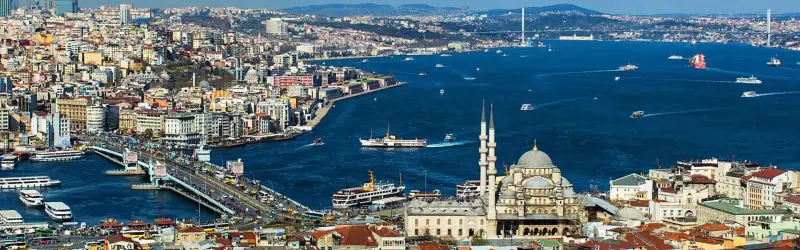
Hagia Sophia in Istanbul's Sultanahmet was built in 532 to 537 as Justinian's cathedral, later became a mosque and a museum, and since 2020 is a working mosque again. Foreign visitors use a separate upper-gallery route costing €25, with under-8s free; the Museum Pass is not accepted. With no official timetable, guides list 9:00 to 19:30. One to one and a half hours suits most visits.
The building stands in the Sultanahmet quarter of Fatih, on the historic peninsula between the Golden Horn and the Sea of Marmara. The Byzantine emperor Justinian I commissioned it, and it was built between 532 and 537 to designs by Isidore of Miletus and Anthemius of Tralles. For more than nine centuries it was the main church of Constantinople.
After the Ottoman conquest in 1453, Mehmed II converted it into a mosque, and minarets, a mihrab and other Islamic features were added. In 1935 the Turkish Republic turned it into a museum. In 2020 it returned to use as a mosque under the official name Hagia Sophia Grand Mosque.
The central dome rises about 55 metres and spans roughly 32.7 to 33.5 metres, carried on pendentives over a vast open interior lit by windows around its base. Large Ottoman calligraphy roundels hang below it.
The upper galleries hold Byzantine mosaics, including images of Christ, the Virgin Mary and emperors, and these are now the focus of the visitor route. Since 2024 foreign visitors follow a separate path through the galleries, while the ground floor prayer hall is reserved for worshippers.
Foreign visitors pay a fee for the gallery route, quoted in euros, and museum passes do not cover it; worshippers enter free for prayer. Tourists use a separate side entrance from worshippers. The route closes around Friday noon prayers, and opening hours vary, so arrive early in the morning to avoid long queues. Cover shoulders and knees, and women need a headscarf. Allow about an hour.
Two earlier churches stood on this site. The first was consecrated on 15 February 360 under Constantius II, and a second, built by Theodosius II, was inaugurated on 10 October 415. That one burned in the Nika riots of January 532, and Justinian began the present building the following month, on 23 February, inaugurating it on 27 December 537. The finished structure is about 82 metres long and 73 metres wide.
The dome has been rebuilt more than once. An earthquake in 558 brought down part of the vault, and Isidore the Younger raised a higher, ribbed dome that was rededicated in 562. Another earthquake in 989 collapsed the western arch, and the Armenian architect Trdat directed the repairs before the church reopened in 994.
The four minarets date from different reigns. Bayezid II added the slender northeast minaret, and the two heavier western ones, each about 60 metres tall, were designed by Mimar Sinan for Selim II, who also had Sinan reinforce the walls with buttresses. In the garden outside stand the tombs of Selim II, Murad III and Mehmed III, and Mahmud I added a library in 1739 and an ablution fountain in 1740. Between 1847 and 1849 the Swiss Italian Fossati brothers restored the building for Sultan Abdulmejid I and bound the dome with an iron chain.
Inside, look for the Deesis mosaic in the south gallery, the Imperial Gate (at seven metres the largest door, once reserved for the emperor), the Omphalion marble floor where emperors were crowned, and a ninth century runic inscription reading "Halvdan was here", scratched by a Scandinavian visitor.
We check practical details such as entry rules, seasons and costs against official government and tourism sources.
Follow the visitor route to the Byzantine mosaics.
The route closes around Friday prayers.
The Blue Mosque and Topkapı Palace are a short walk away.
Ramps on the gallery route are steep; ask staff about access.
No minimum age. The gallery route climbs steep ramps, so a baby carrier is easier than a pushchair.
Headscarf (women), passport
Cover shoulders and knees
Revealing clothing, loud behaviour, entering the prayer hall as a tourist during prayers
Security check, shoe bags, headscarf sales
Parking is difficult in Sultanahmet; use the tram.
T1 tram to Sultanahmet.
No special events on record for Hagia Sophia Grand Mosque (Ayasofya), Istanbul.
Opening time.
Weekdays except Friday midday.
November to March.
Prices and how to get tickets.
Byzantine mosaics on the visitor route.
Foreign visitors €25 for the upper-gallery route (since January 2024); under-8s free; prayer hall free for worshippers; Museum Pass not valid
Closed now · 9:00 AM - 7:30 PM · Last entry Ticket sales stop before closing
Others of this kind you opened on this device, so you can get back to them quickly.
No questions yet about Hagia Sophia Grand Mosque (Ayasofya), Istanbul. Ask the community or our travel team, and the answer will show here once it is published.
Our team answers questions here
Hotels closest to Hagia Sophia Grand Mosque (Ayasofya), Istanbul, nearest first, so you spend less time on the road and more time there.
Istanbul
2.7 km from Hagia Sophia Grand Mosque
Find your kind of trip: 11 travel themes, from Heritage, UNESCO World Heritage, Mosque (Islam).
More of Sultanahmet.

Istanbul
The Basilica Cistern lies under the Sultanahmet area of Istanbul, a short walk from Hagia Sophia. It was built in the 6th century under the Byzantine emperor Ju...
Istanbul
The Istanbul Archaeology Museums stand in the Eminönü quarter of Istanbul's historic peninsula, between Gülhane Park and the outer courtyard of Topkapı Palace....
Istanbul
The Sultan Ahmed Mosque stands in the Sultanahmet area of Istanbul's historic peninsula, facing Hagia Sophia across a park and bordering the old Hippodrome. Sul...
Istanbul
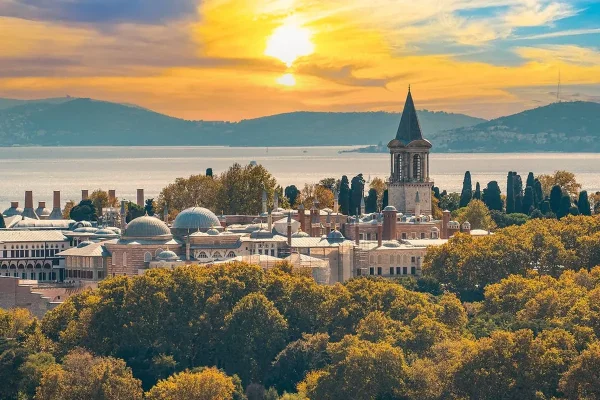
Topkapı Palace stands on Seraglio Point at the tip of Istanbul's historic peninsula, where the Golden Horn, the Bosphorus and the Sea of Marmara meet, just behi...

Istanbul
The Grand Bazaar, known in Turkish as the Kapalicarsi or covered market, lies in the Fatih district of Istanbul's historic peninsula, between the Beyazit and Nu...
Istanbul
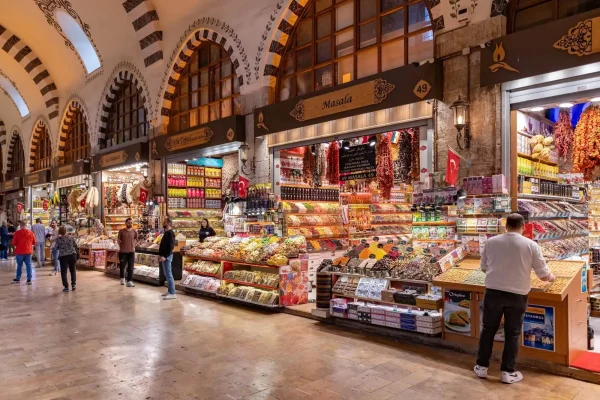
The Spice Bazaar, or Mısır Çarşısı, is the covered spice and sweet market of the New Mosque complex in Eminönü, in Istanbul's Fatih district. It stands between...

Istanbul
The Süleymaniye Mosque stands on the Third Hill of the historic peninsula of Istanbul, in the Fatih district, above the Golden Horn. It was commissioned by Sult...
Istanbul
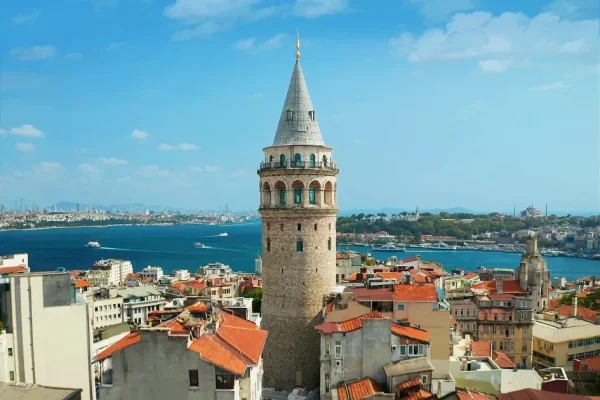
Galata Tower rises above the Galata neighbourhood in Istanbul's Beyoğlu district, on the northern side of the Golden Horn. The Genoese, who ran a trading colony...
 Most Visited
Turkey
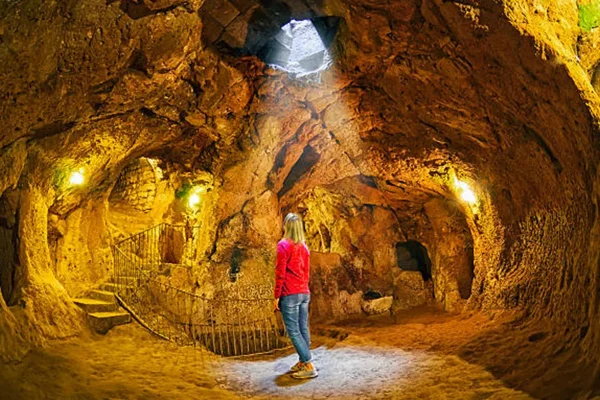
Derinkuyu Underground City is a multi-level refuge cut into soft volcanic rock beneath the town of Derinkuyu in Nevşehir Province, in the Cappadocia region of c...
Tell us where and when you want to go, and local travel experts send you offers for your trip.
What to know about Hagia Sophia.
Prices & payment
As of October 2026, istanbul.com reports a fee of 25 euros, about 29 US dollars, for foreign visitors using the upper gallery route. Entering the ground floor for prayer is free. Museum passes are not accepted.
Timing & weather
The visitor route closes during prayers, including from about 30 minutes before to 90 minutes after Friday noon prayer. No official timetable is published, so check prayer times and arrive early in the day.
It was built between 532 and 537 under Emperor Justinian I. It served as a cathedral, then a mosque from 1453, a museum from 1935, and again a mosque from 2020.
Most visitors spend 1–1.5 hours at Hagia Sophia Grand Mosque (Ayasofya), Istanbul.
The best months to visit Hagia Sophia Grand Mosque (Ayasofya), Istanbul are November to March. The best days and times of day are covered under When to visit on this page.
Stay & facilities
Everyone must cover shoulders and knees, and women must cover their hair. Headscarves and coverings are sold near the entrance. Gallery visitors keep their shoes on along the route.
General
Tourists enter on the south side, with the ticket booth opposite the Fountain of Ahmed III near Topkapı Palace's outer gate. The Imperial Gate on Sultanahmet Square is reserved for worshippers.
Yes, the Deesis mosaic is in the south upper gallery, which is on the visitor route for foreign tourists. It shows Christ flanked by the Virgin Mary and John the Baptist.
Yes, the dome was rebuilt after earthquakes. Part of it fell in 558 and Isidore the Younger raised a higher ribbed dome by 562; after a 989 earthquake, the architect Trdat repaired it again.
The tombs of Ottoman sultans Selim II, Murad III and Mehmed III stand in the grounds, along with princes of their families. Mustafa I was buried in the former baptistery.
It is a ninth century runic graffito in the upper gallery that reads "Halvdan was here". Scholars attribute it to a Scandinavian, probably a member of the emperor's Varangian Guard.
Hagia Sophia Grand Mosque (Ayasofya), Istanbul is in Istanbul, Turkey. The street address and directions are under How to get there on this page.
Booking
Hagia Sophia has four minarets, added by different sultans. Bayezid II built the northeast one, and Mimar Sinan designed the two tall western minarets, each about 60 metres high, for Selim II.
Getting there
You can reach Hagia Sophia Grand Mosque (Ayasofya), Istanbul by public transport or by car. Both routes are described under How to get there on this page.
Families & accessibility
Not allowed.
We use necessary cookies to make this site work. With your permission we would also like to remember your preferences, measure how the site is used, and show relevant ads and partner offers. You can change your mind at any time under "Cookie settings" on our Privacy policy page.


 Plan your trip with AI