

Hajj runs across 5-6 days, from 8 to 12 or 13 Dhul Hijjah: Mina on day 1, Arafah then an overnight stay at Muzdalifah on day 2, the stoning, sacrifice, hair-cutting, and Tawaf al-Ifadah on day 3 (Eid al-Adha), then repeated stoning at Mina on days 4-5. The 3 pillars agreed upon across Islamic schools are Ihram, Wuquf (standing) at Arafah, and Tawaf al-Ifadah. Muzdalifah is an overnight stay after sunset on the 9th, not a daytime one, a detail several guides online get backward.
Hajj traces back to Ibrahim (AS), commanded by Allah to leave his wife Hajar and infant son Isma'il (AS) in the barren valley of Makkah. When their water ran out and Isma'il cried from thirst, Hajar ran between the hills of Safa and Marwah searching for help, the origin of the Sa'i rite pilgrims still walk today. A spring broke through the ground where Isma'il struck it with his heel, the well of Zamzam, still flowing more than 4,000 years later. At that same site, Ibrahim and Isma'il later built the Kaaba by Allah's command, a structure that pre-Islamic Arabs eventually filled with idols before the Prophet Muhammad (peace be upon him) restored it to the worship of 1 God and performed the Hajj that Muslims follow today, in 632 CE.
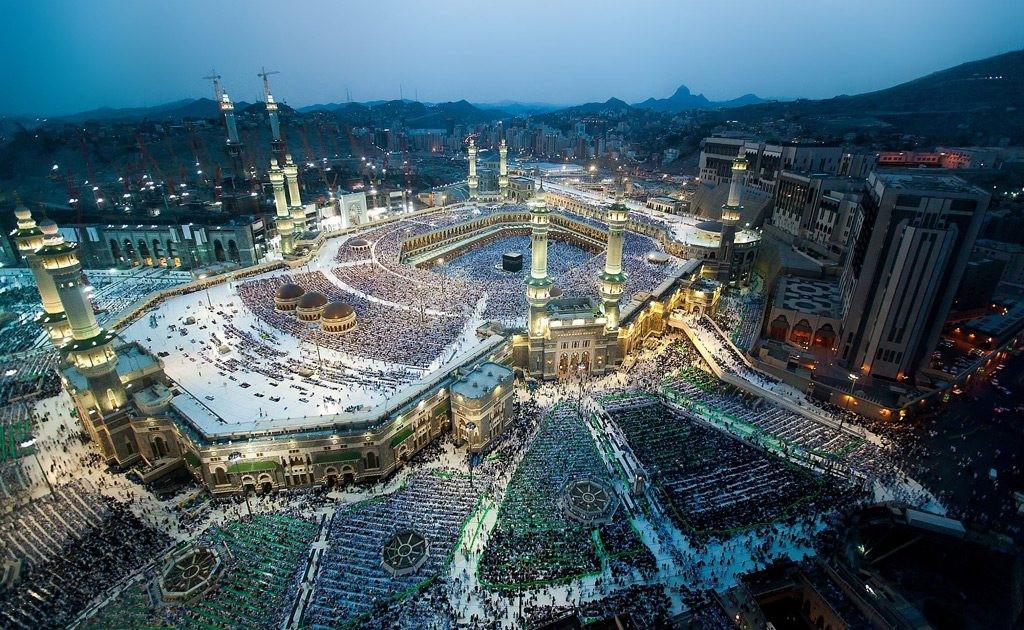
This guide covers that full ritual sequence in detail: the 3 pillars every school of Islamic jurisprudence agrees are obligatory, the 3 types of Hajj and how to choose between them, spiritual and physical preparation before departure, what's restricted during Ihram, the day-by-day timeline from Mina to Arafah to Muzdalifah and back, and the rules of Tawaf itself. Where a specific classification (wajib versus sunnah) differs between schools of jurisprudence, that's noted directly. It isn't presented as universal, and pilgrims following a different school, or wanting certainty on a specific point, should confirm details with a qualified scholar or their Hajj group's religious guide.
Hajj Rules in Brief:
A quick-reference summary before the full detail this guide covers section by section.
The Foroj (or Fard) Acts of Hajj:
- Ihram, entered with the intention for Hajj
- Wuquf at Arafah, standing on the plain between noon and sunset on 9 Dhul Hijjah
- Tawaf al-Ifadah, the 7 circuits around the Kaaba performed from 10 Dhul Hijjah onward
The Wajib Acts of Hajj:
- Sa'i, 7 passes between Safa and Marwah
- The overnight stay at Muzdalifah, after sunset on 9 Dhul Hijjah until dawn
- Stoning the Jamarat on each required day
- The sacrifice, for Tamattu and Qiran pilgrims specifically
- Shaving or trimming the hair before removing Ihram
- Tawaf al-Wada, for pilgrims living outside Makkah
Everything beyond these 9 acts falls under Sunnah (recommended, following the Prophet's own practice) or Mustahab (encouraged but neither required nor discouraged), rewarded but not required for a valid Hajj.
A Brief Overview of Umrah:
Umrah shares its core rituals with Hajj but differs in timing and scope. Hajj can only be performed during a specific window in Dhul Hijjah; Umrah can be performed at any other point in the Islamic calendar, and carries considerably fewer requirements.
The Foroj (or Fard) acts of Umrah:
- Ihram, entered with the intention for Umrah
- Tawaf, the 7 circuits around the Kaaba
The Wajib Acts of Umrah:
- Sa'i, 7 passes between Safa and Marwah
- Cutting the hair before exiting Ihram
Umrah has no Wuquf at Arafah, no stay at Muzdalifah, and no stoning at Mina, since those specific rites belong to Hajj alone. Umrah is highly recommended but, unlike Hajj, isn't obligatory once in a lifetime for every eligible Muslim.
Hajj Versus Umrah:
The difference comes down to timing and scope, not the underlying rituals themselves.
The Story of Hajj:
Every major rite of Hajj traces back to a specific moment in this history, not an abstract tradition invented later.
Ibrahim (AS) is remembered in Islamic tradition as Khalilullah, the friend of Allah, and his life included a series of trials that now anchor the rites of Hajj directly. Commanded by Allah to leave his wife Hajar and their infant son Isma'il (AS) alone in the empty valley of Makkah, Ibrahim departed, trusting the outcome to Allah. Their food and water ran out quickly, and with Isma'il crying from thirst, Hajar ran between the nearby hills of Safa and Marwah 7 times, searching the horizon for any sign of help. She returned to find Isma'il striking the ground with his heel, and water broke through the earth beneath him, the spring known as Zamzam, still flowing today more than 4,000 years later. Passing traders exchanged food and supplies for water from the spring, and the settlement around it grew into what would become Makkah.
At that same site, Ibrahim and Isma'il later built the Kaaba by Allah's direct command, a simple stone structure marking a place of worship for those who believed in 1 God. Ibrahim returned each year afterward to perform pilgrimage there, and Isma'il continued the practice once he received his own prophethood. Centuries later, the meaning behind the site was lost. Pagan Arab tribes took over the Kaaba and filled it with idols, and Makkah grew into a trading city built around that idol worship, while still observing Dhul Hijjah as a sacred month in which fighting was forbidden.
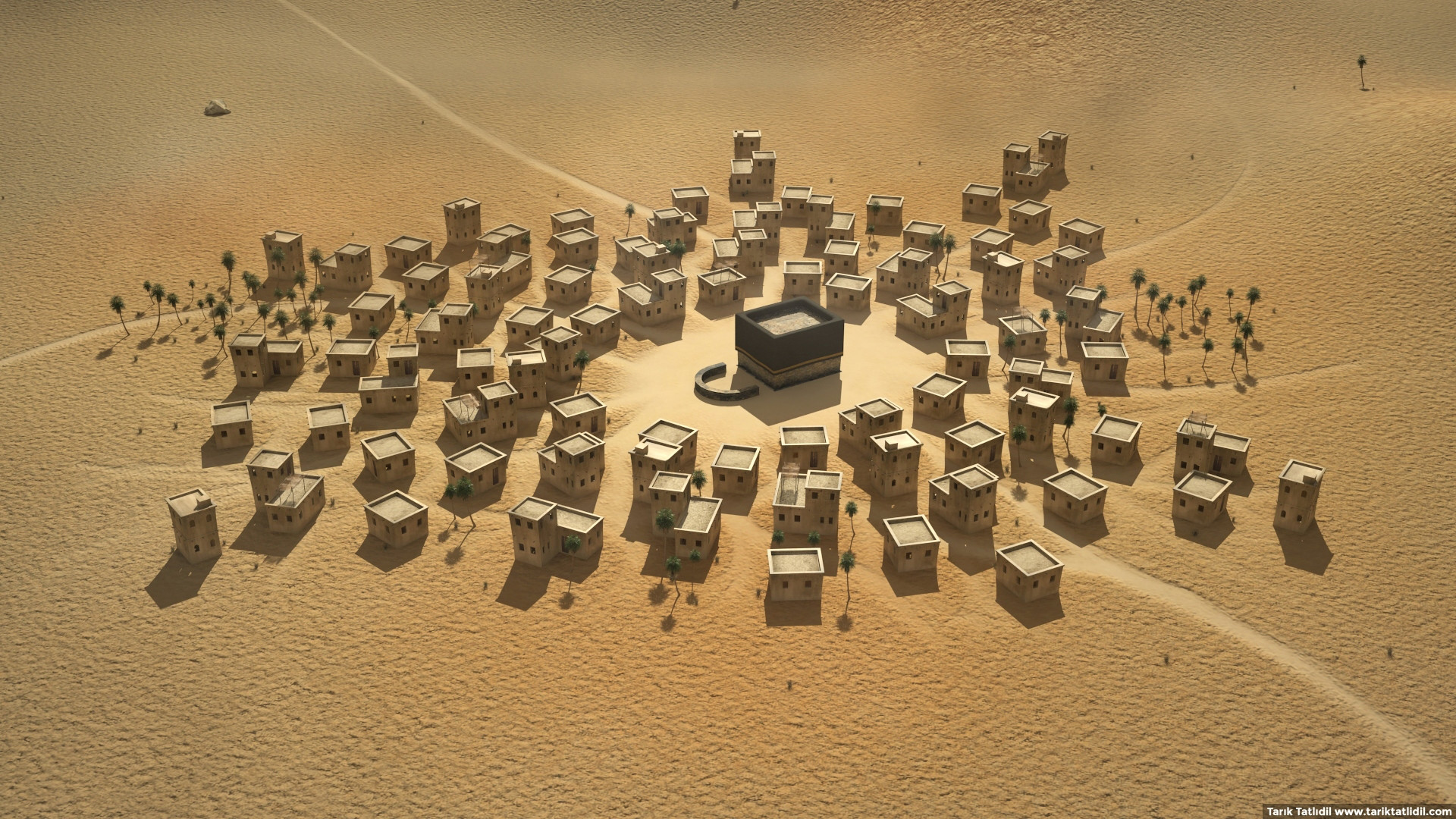
Muhammad (peace be upon him) was born into Makkah's Quraysh tribe and received Allah's revelation as the final prophet. Part of his mission was restoring the Kaaba to the worship of 1 God and reestablishing Hajj as Ibrahim had performed it. He completed that Hajj himself in 632 CE, shortly before his death, in what's known as the Farewell Pilgrimage, and the rites he performed that year, Sa'i between Safa and Marwah, the stay at Arafah, the stoning at Mina, are the same sequence Muslims follow today.
The Miqat: Where Ihram Begins:
The Miqat is a boundary surrounding Makkah, and no pilgrim intending Hajj or Umrah may cross it without first entering the state of Ihram. 5 named locations anchor this boundary in different directions.
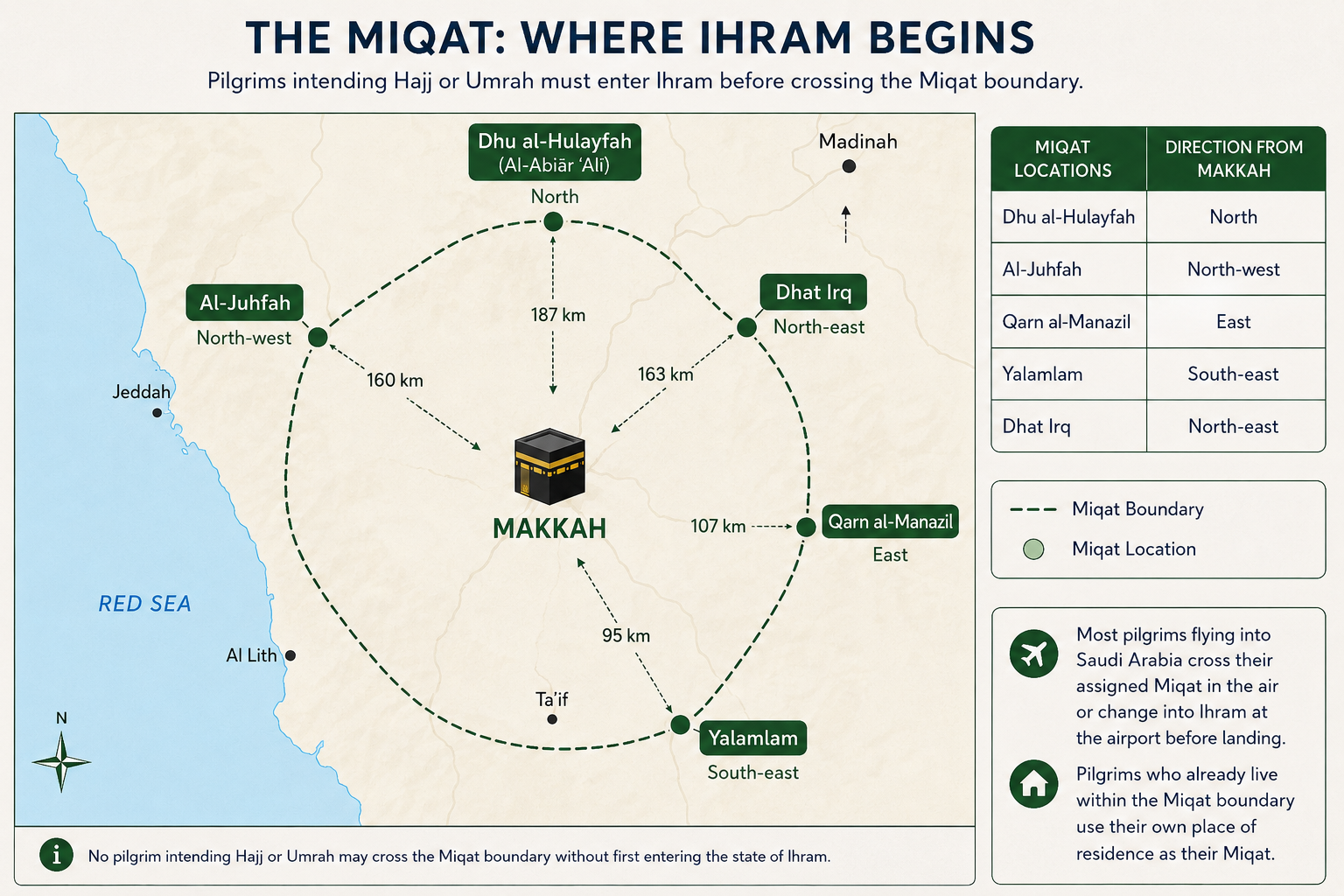
Most pilgrims flying into Saudi Arabia cross their assigned Miqat in the air or change into Ihram at the airport itself before landing, since airlines and Hajj operators generally coordinate the timing in advance. Pilgrims who already live within the Miqat boundary use their own place of residence as their Miqat instead.
Wearing Ihram, for Hajj and Umrah:
Ihram is both a physical garment and an internal state, and putting it on correctly follows a specific sequence, not just changing clothes at any point before Makkah.
Before Putting it On:
Most pilgrims trim their nails, cut their hair or mustache if needed, and take a shower before entering Ihram, since all 3 become restricted once the state begins. Bathing beforehand is Sunnah, following the practice of the Prophet Muhammad before he entered Makkah, though it isn't a requirement for Ihram to be valid.
The Clothing Itself:
Men wear 2 pieces of white, unstitched cloth: 1 wrapped around the waist covering the lower body, the other draped over the shoulders covering the upper body, with the head left uncovered. Women have no fixed color or fabric requirement, wearing any loose, modest clothing that meets standard Islamic dress guidelines, with the face left uncovered under ordinary circumstances. Sandals or open footwear are permitted for both men and women.
Making the intention and reciting Talbiyah:
Once dressed, the pilgrim states the niyyah (intention) specific to their chosen type of Hajj, covered in full in the next section, and begins reciting the Talbiyah immediately afterward. Some pilgrims add a short additional dua right after the intention, asking that the pilgrimage be free of any show or desire for reputation:
From this point until Tahallul, the pilgrim is in the state of Ihram in full, and every restriction covered in the next section applies immediately, not from some later point in the journey.
The 3 Types of Hajj and Their Intentions:
The 3 differ in whether Umrah gets combined with Hajj, and if so, how.
Hajj al-Ifrad:
The pilgrim enters Ihram with the intention for Hajj alone, no Umrah performed in the same trip. This type doesn't require an animal sacrifice, unlike the other 2, since no Umrah gets combined into the journey that would otherwise call for one. Ifrad suits pilgrims already living within or close to the Miqat boundary, residents of Saudi Arabia in particular, who can perform Umrah separately at any other point in the year without needing to combine it into the Hajj trip itself. A pilgrim performing Ifrad completes Tawaf al-Qudum on first arriving in Makkah, then Sa'i, and stays in the same, single Ihram through to Tahallul after Tawaf al-Ifadah.
Hajj al-Qiran:
The pilgrim combines the intention for both Umrah and Hajj under a single Ihram, worn continuously from the Miqat until Tahallul after Tawaf al-Ifadah, weeks later. This type requires an animal sacrifice, the dam, since Umrah gets folded directly into the Hajj journey, not performed as a separate trip. A Qiran pilgrim performs 1 Tawaf and 1 Sa'i covering both Umrah and Hajj together, not repeating either rite twice, and remains in Ihram for the entire period between arrival and 10 Dhul Hijjah, a considerably longer stretch under Ihram's restrictions than Ifrad or Tamattu require.
Hajj al-Tamattu:
The pilgrim performs Umrah first under an initial Ihram taken up at the Miqat, completing Tawaf, Sa'i, and hair-cutting, then exits Ihram completely and resumes normal clothing and daily life for the days in between. A fresh Ihram is taken up for Hajj alone, typically on 8 Dhul Hijjah, from wherever the pilgrim happens to be staying in Makkah, not the original Miqat, since that boundary was already crossed on the way in for Umrah. This is the most commonly performed type among pilgrims arriving from outside Saudi Arabia, since it lets the intense physical exertion of Umrah and Hajj happen as 2 separate, more manageable stages, not 1 continuous stretch under Ihram, and it also requires an animal sacrifice, the same dam required for Qiran.
The 3 Types Compared, Task by Task:
The core rites are the same across all 3 types. What changes is whether Umrah gets added, and if so, whether it's combined into the same Ihram or performed separately with its own Ihram and hair-cutting in between.
How to Prepare for Hajj:
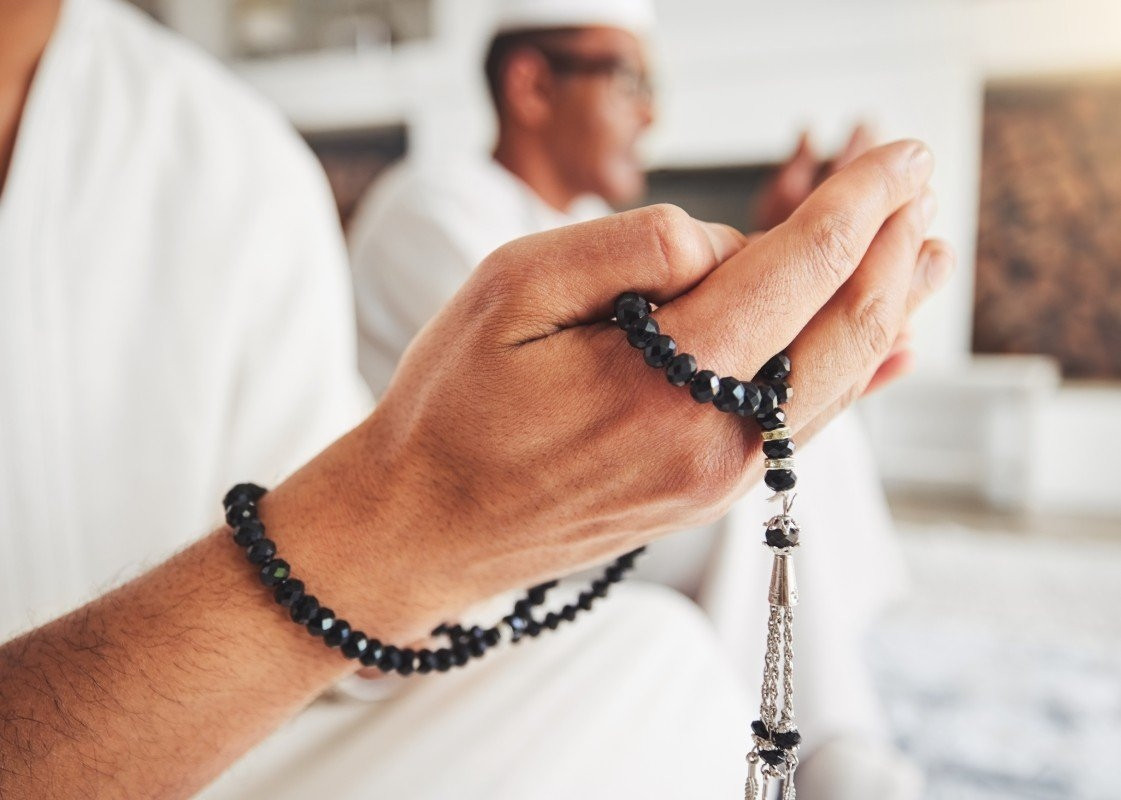
Hajj tests the body as much as the spirit, long days of walking in intense heat, dense crowds, and physical exhaustion layered on top of the rituals themselves. Preparing for both sides in the months before departure makes a genuine difference in how the journey actually feels.
Spiritual preparation:
- Practice restraint in speech before departure. Arguing and fighting are explicitly forbidden once in Ihram, and the habit is easier to build at home than to adopt suddenly under the stress of travel
- Read about the meaning behind each rite. Understanding qurbani's connection to Ibrahim (AS) and his willingness to sacrifice his son, and understanding Hajar's search for water between Safa and Marwah, turns the physical acts of Hajj into something felt, not just performed
- Read at least 1 page of Quran daily, with translation if the Arabic isn't yet understood, building a habit worth carrying past the trip itself
- Purify the intention behind the journey. The goal is seeking Allah alone, not status or obligation to family
- Seek forgiveness from anyone genuinely wronged and settle outstanding debts before leaving, aiming to return with a clean slate
Physical Preparation:
- Starting roughly 3 months before departure, increase a daily step count gradually, adding 1,000-2,000 steps above a normal baseline each month, to build the cardiovascular fitness the long walking distances actually require
- Sort Ihram clothing well ahead of time. Men wear 2 pieces of unstitched white cloth, plus footwear that leaves the ankles and the top of the foot exposed, open sandals, not closed shoes. Women may wear any modest clothing in any color, with no specific dress code beyond covering appropriately
- Buy a well-fitted pair of trekking sandals and wear them in regularly before departure, not straight out of the box, to prevent blisters across the tarmac and gravel distances covered daily
- Pack loose, breathable clothing and a durable, refillable water bottle, both more important than most packing lists suggest given Makkah's heat
- Bring unscented sunblock, genuinely important for anyone unable to cover their head while in Ihram, plus unscented moisturizer, petroleum jelly for rashes caused by constant walking, and unscented soap
- Don't worry about forgetting an item. Nearly everything on this list is available for purchase in Saudi Arabia itself
What's Prohibited During Ihram:
Once the intention for Ihram is made, a real set of restrictions applies until it's removed.
- Men: wearing stitched clothing or covering the head; sandals without stitched seams are permitted
- Women: covering the face with a niqab that touches the skin (the head must be covered, the face left open)
- Cutting or trimming hair, or cutting nails
- Using scented soap, perfume, or scented oil on the body or clothing
- Sexual relations, or discussing them explicitly with a spouse
- Hunting land animals, or assisting in a hunt
- Arguing, fighting, or using obscene language
- Killing insects unnecessarily, including lice, mosquitoes, or flies
The Day-by-Day Sequence:
This is the part most guides blur together or get out of order. Here's the actual sequence, corrected against the classical timing, mapped out visually below before the full day-by-day detail.
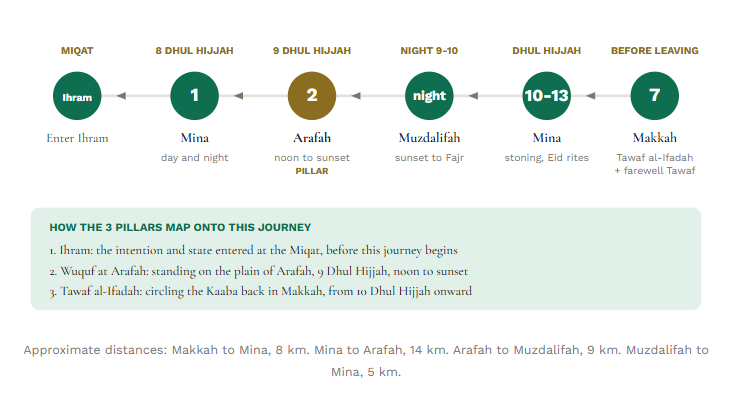
Yawm al-Tarwiyah, Departure to Mina:
Pilgrims performing Tamattu take up a fresh Ihram for Hajj specifically on this day, if they haven't already. Everyone travels to Mina, roughly 8 kilometers from Makkah, and spends the day and night there.
- All 5 daily prayers (Fajr, Dhuhr, Asr, Maghrib, Isha) are prayed shortened but not combined
- Pilgrims stay overnight in Mina in preparation for Arafah the next day
Yawm Arafah, the Central Pillar of Hajj:
Pilgrims travel from Mina to the plain of Arafah in the morning, roughly 14 kilometers further. Wuquf, the standing, runs from noon until sunset, the single most important obligation of the entire Hajj.
- Dhuhr and Asr are prayed combined and shortened, typically together as 1 call to prayer
- The hours are spent in dua, dhikr, and Quran recitation, not sightseeing or specific rituals
- After sunset, pilgrims depart for Muzdalifah without praying Maghrib at Arafah
Muzdalifah, an Overnight Stay:
This is the detail several guides get backward: the stay at Muzdalifah happens overnight, after leaving Arafah at sunset, not during the following day. Maghrib and Isha are prayed combined at Isha's time upon arrival.
- Pilgrims sleep in the open air; there are no tents or hotels at Muzdalifah
- Pebbles for the stoning rites are collected here (or in Mina, if preferred), roughly chickpea-sized
- Most pilgrims depart at or just before Fajr; the elderly, the ill, and mothers with young children may leave after midnight
Eid al-Adha, the busiest day of Hajj:
4 acts happen in sequence, though a hadith permits performing them in a different order if genuinely necessary for the pilgrim's circumstances.
- Rami: stone only the large Jamarah (Jamarat al-Aqabah) with 7 pebbles, saying "Allahu Akbar" with each throw. Pilgrims who are genuinely sick, elderly, or physically unable may appoint someone else to throw on their behalf, a narrower accommodation distinct from full Hajj badal, covered later in this guide
- Qurbani: the animal sacrifice, required for Tamattu and Qiran pilgrims, commonly arranged through a licensed voucher system, not witnessed in person
- Halq or Taqsir: men shave the head completely (considered more rewarded) or trim at least a fingertip's length from all over; women trim a fingertip's length from the ends of their hair only
- Tawaf al-Ifadah: 7 circuits around the Kaaba, followed by Sa'i for pilgrims who haven't already completed it
Completing 2 of the first 3 acts (stoning, sacrifice, hair-cutting) lifts most Ihram restrictions, known as Tahallul al-Asghar (the minor release). Marital relations remain restricted until Tawaf al-Ifadah is completed, which lifts every remaining restriction, Tahallul al-Akbar (the complete release).
Days of Tashreeq, stoning at Mina:
Pilgrims remain in Mina and stone all 3 Jamarat each day, in a fixed order, only after zawal (solar noon).
- Order: small (Jamarat al-Sughra) first, then middle (Jamarat al-Wusta), then large (Jamarat al-Aqabah) last
- 7 pebbles at each of the 3, 21 total per day
- The Takbeerat al-Tashreeq are recited aloud after every obligatory prayer, from Fajr on the 9th through Asr on the 13th
An Extra Day for those Who Stay:
Pilgrims may leave Mina on the 12th before sunset (called Nafr Awwal) or choose to stay through the 13th (Nafr Thani), stoning all 3 Jamarat once more that day in the same order.
Tawaf al-Wada, the Farewell Tawaf:
Every pilgrim living outside Makkah performs a final 7 circuits around the Kaaba before leaving the city. Menstruating women are excused from this specific requirement.
Tawaf: The Rules and the Sunnah Method:
Tawaf al-Qudum (the arrival Tawaf) applies to pilgrims performing Ifrad or Qiran on first reaching Makkah; Tamattu pilgrims complete their Umrah Tawaf instead upon arrival and don't perform a separate Tawaf al-Qudum.
The Requirements:
- Wudu (ablution) beforehand; menstruating women don't perform Tawaf until their bleeding ends
- Satar covered: for men, from the navel to the knees; for women, the entire body except the face, hands, and feet
- Performed outside the Hatim, the low semicircular wall on the north side of the Kaaba, which is considered part of the Kaaba itself
- Completed on foot where physically possible; those unable can be carried or use a wheelchair
- Started from the corner of the Black Stone (Hajar al-Aswad), moving counterclockwise
- 7 complete circuits, with a short prayer said afterward, commonly near the Station of Ibrahim
The Sunnah Method:
Facing the Black Stone at the start and pointing toward it (or kissing it directly, if the crowd allows) while saying "Bismillahi Allahu Akbar" is Sunnah, not a requirement. In the first 3 of the 7 circuits, men are recommended to walk at a brisk pace (Ramal); the remaining 4 circuits are walked at a normal pace. A pilgrim who can't reach the Black Stone at all, given how dense the crowds around it typically run, completes a fully valid Tawaf regardless, simply by pointing from a distance.
Visiting Madinah After Hajj:
Visiting Madinah isn't a pillar or a required act of Hajj itself, but the vast majority of pilgrims travel there afterward specifically to visit the Prophet's Mosque (Masjid an-Nabawi) and offer greetings at the grave of the Prophet Muhammad, peace be upon him. Some stay a single day; others stay up to 8 days aiming to pray a full cycle of all 5 daily prayers there, a practice many scholars encourage though it isn't obligatory. Praying inside Masjid an-Nabawi itself carries a reward equivalent to 1,000 prayers performed elsewhere, according to hadith.
Must-visit places in Madinah: The Top 10
Masjid an-Nabawi and Riyad al-Jannah:
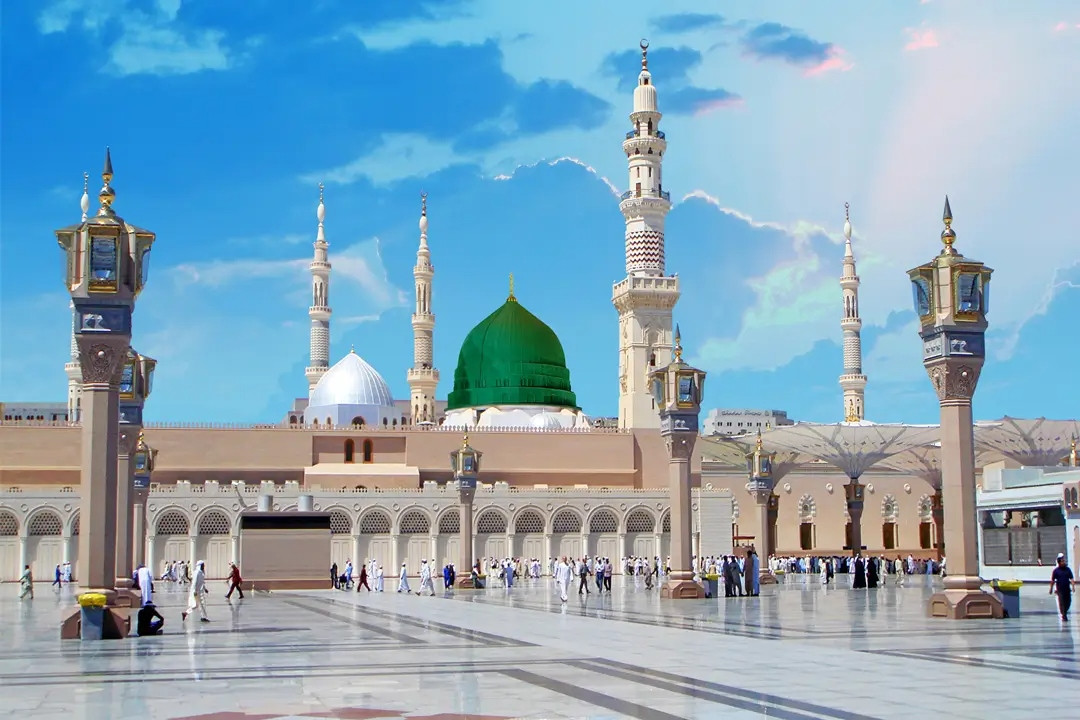
The Prophet's Mosque itself, and within it, Riyad al-Jannah (a section between the Prophet's former home and pulpit, described in hadith as "a garden from the gardens of Paradise"). Access to Riyad al-Jannah and the area facing the Prophet's grave requires a free booking through the Nusuk app in advance.
Highlights- Praying here carries a reward equivalent to 1,000 prayers performed elsewhere, according to hadith
- Men can visit and pay respects at the grave anytime; the mosque now stays open 24/7
- Women are taken to Riyad al-Jannah in organized groups by nationality, typically after Fajr or Dhuhr
Jannat al-Baqi:
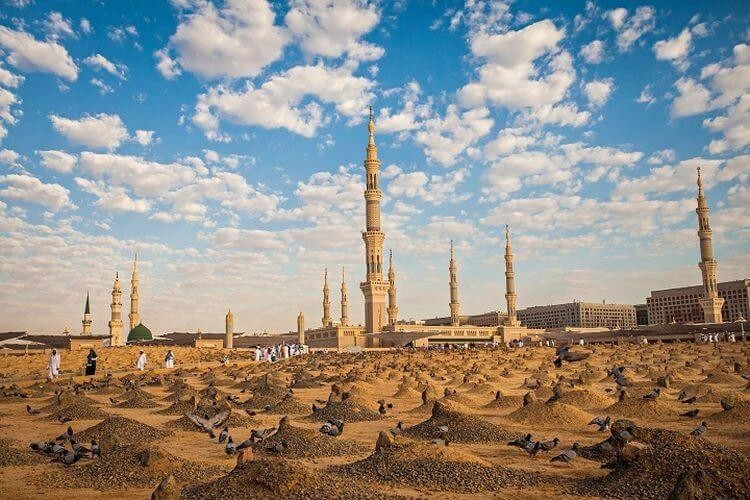
Madinah's largest cemetery, directly beside Masjid an-Nabawi, established shortly after the Prophet settled in the city. The Prophet's daughter Fatimah, his grandson Hasan, several of his wives, and thousands of companions from the earliest generation of Muslims are buried here, making it one of Islam's most significant burial grounds anywhere.
Highlights- The largest single burial ground connected to the Prophet's immediate family
- Public access is generally limited to viewing from the perimeter, not walking freely among the graves
- Best visited around Asr, since access windows can be limited and vary by day
Quba Mosque:
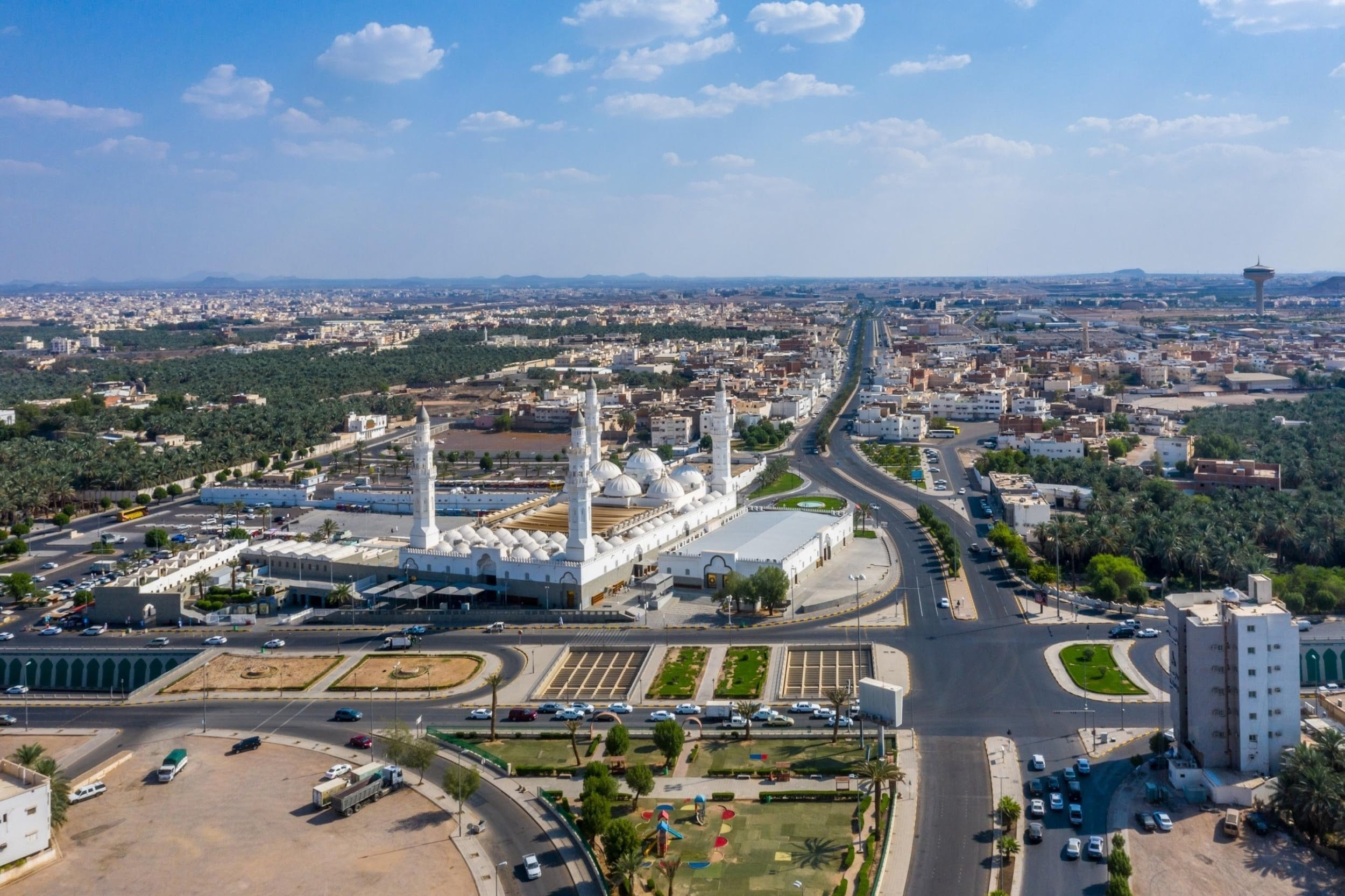
Built by the Prophet on his arrival in Madinah after the Hijrah, roughly 5 km from Masjid an-Nabawi, and widely regarded as the first mosque established in Islamic history. Hadith describe the Prophet visiting Quba nearly every Saturday specifically to pray, a practice many pilgrims try to follow during their own stay.
Highlights- Praying 2 rak'ah here carries a reward equivalent to performing a full Umrah, according to hadith
- One of the most visited sites in the city outside the Prophet's Mosque itself
- A shuttle of golf-cart style vehicles runs along Quba Road between the 2 mosques
Masjid al-Qiblatain:
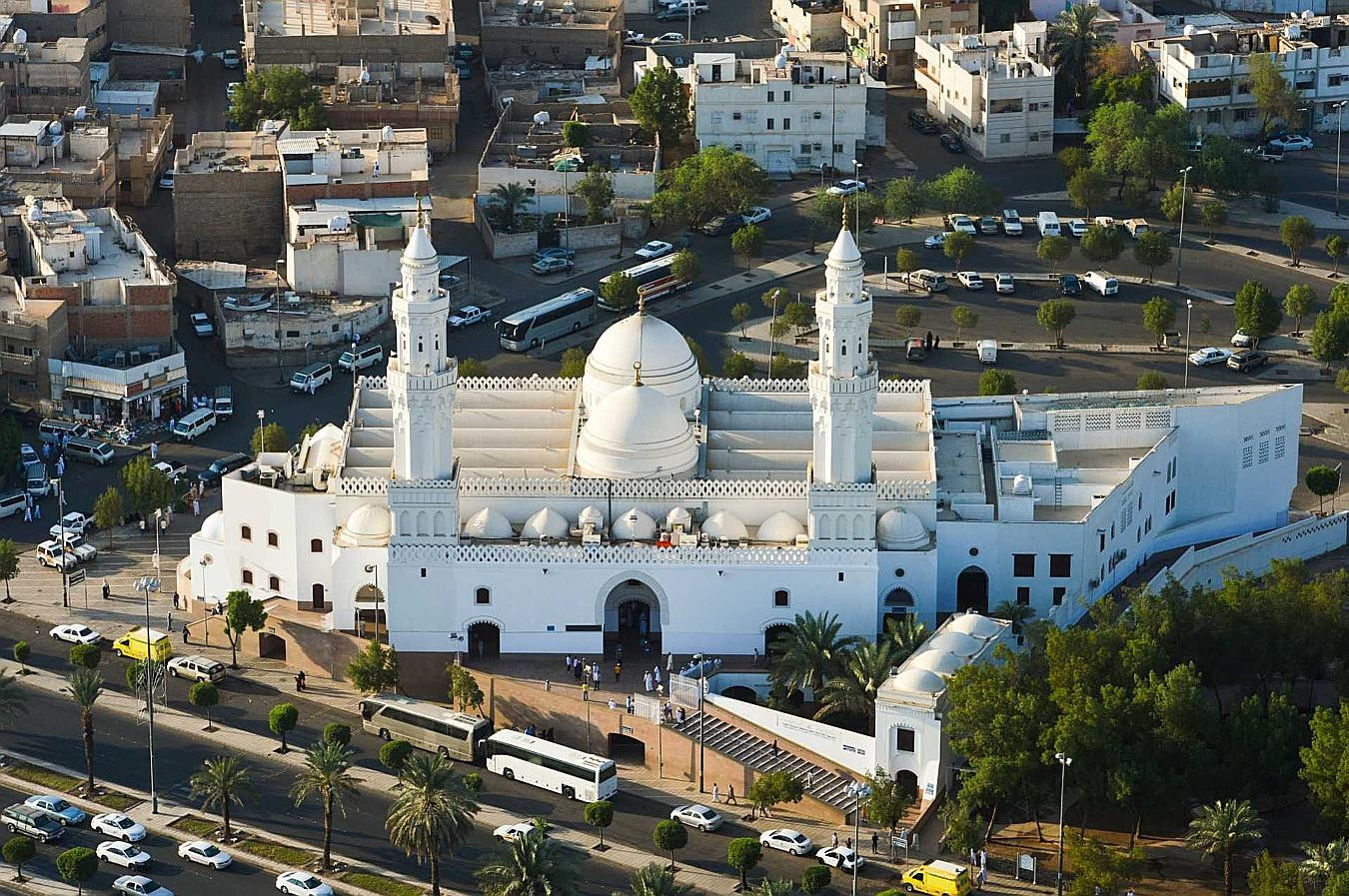
The Mosque of the 2 Qiblas, where the Prophet received revelation mid-prayer, during Dhuhr in the 2nd year after the Hijrah, instructing him to turn from facing Jerusalem toward the Kaaba in Makkah instead. The congregation reportedly turned direction together, mid-rak'ah, following his lead in real time.
Highlights- The only mosque in Madinah's history to have held 2 mihrabs at once
- The Jerusalem-facing mihrab has since been removed following the change
- Sits close to Quba and the Seven Mosques, easy to combine in 1 trip
Mount Uhud and the Martyrs' Cemetery:
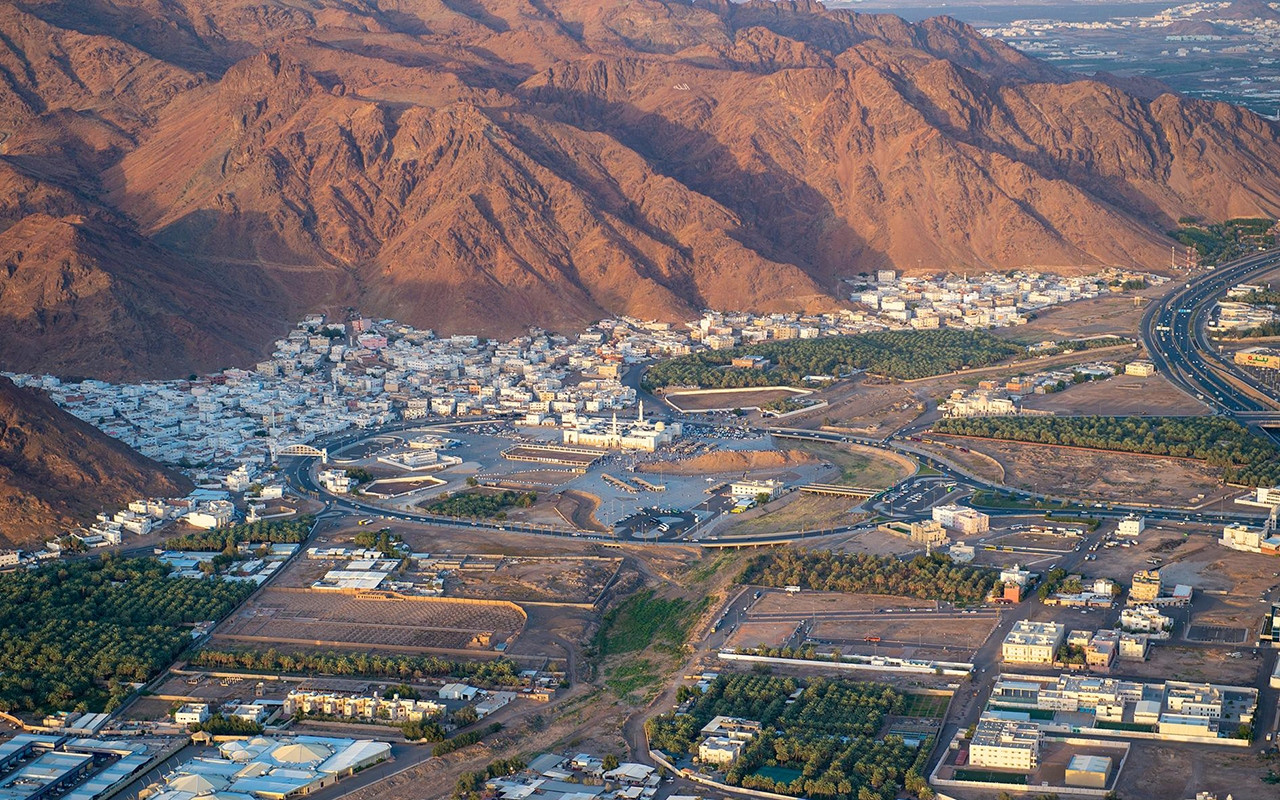
Roughly 5-6 km north of the city, where 70 companions were martyred in 625 CE, led by the Prophet's uncle, Hamza ibn Abdul Muttalib. The Prophet is reported to have said of the mountain itself, "This is a mountain that loves us and we love it," a hadith many pilgrims recall while visiting.
Highlights- The Prophet visited these graves regularly, calling them "the graves of our brothers"
- The site today functions as a quiet memorial, not a tourist stop
- Best visited in the afternoon once the day's heat eases
Masjid al-Ghamama:
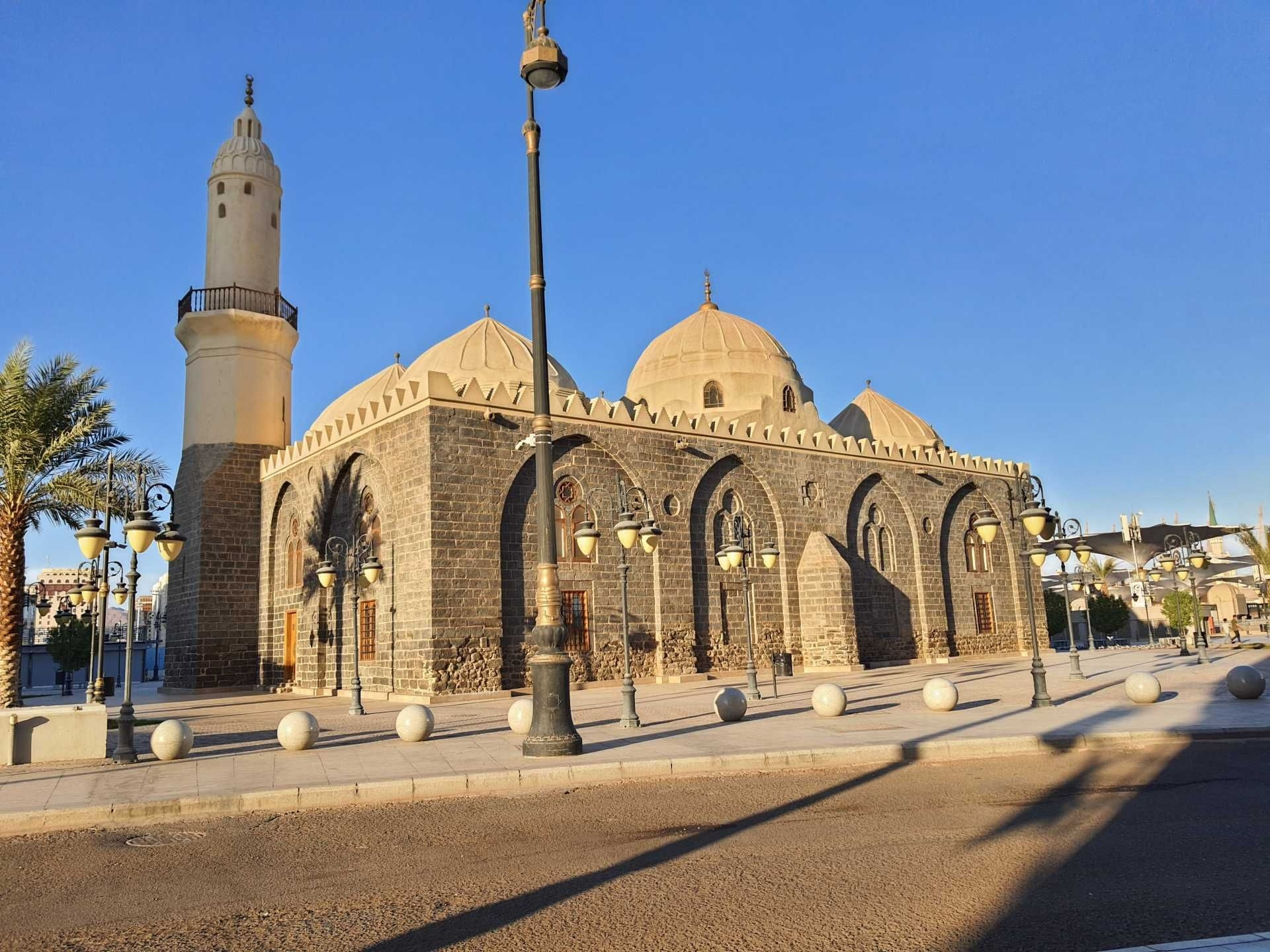
A small mosque near Masjid an-Nabawi marking where the Prophet prayed during his farewell pilgrimage, among the final acts of worship he performed publicly in the city before his death. Its modest size reflects its origin as a simple open prayer ground, not a grand structure built for the occasion.
Highlights- Al-Ghamama means "the cloud," named for the shade a cloud is said to have provided him there
- Close enough to Masjid an-Nabawi to reach on foot
- A quiet stop, easy to pair with Masjid Abu Bakr nearby
Masjid al-Jumu'ah:
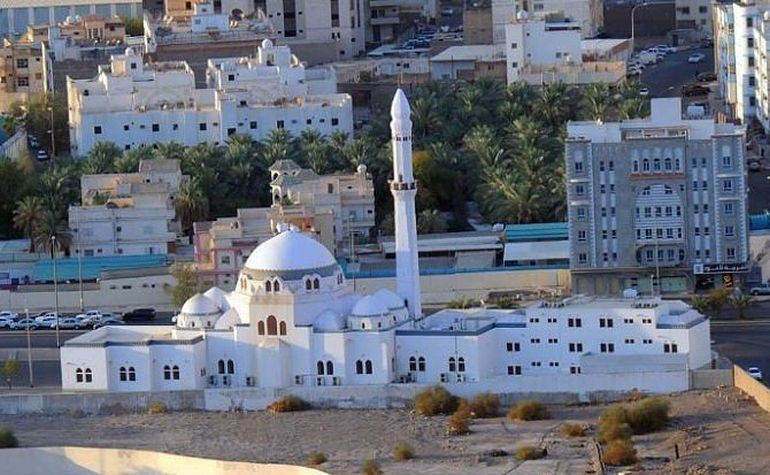
Sitting along the route between Quba and central Madinah, this mosque marks where the Prophet led the very first Jumu'ah (Friday) prayer in Islamic history, during his journey into the city after the Hijrah. The location sits in Wadi Ranuna, a valley the Prophet passed through with his companions on that same trip.
Highlights- Marks a specific moment during the Prophet's journey into Madinah after the Hijrah
- Sits directly on the way to Quba, convenient to visit in the same trip
The Seven Mosques:
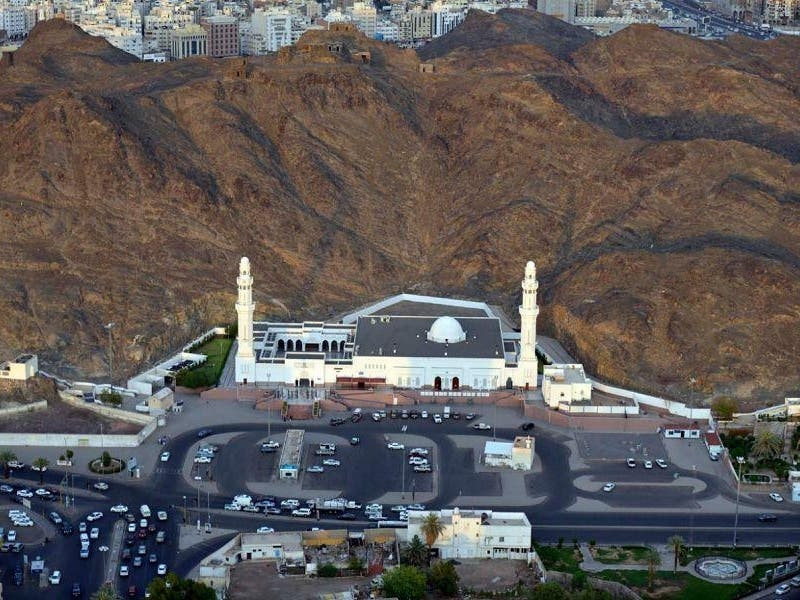
A cluster of small mosques marking the defensive positions Muslims held during the Battle of the Trench (al-Khandaq) in 627 CE, when a trench dug around Madinah held off a much larger allied force. Masjid al-Fath, the largest of the cluster, marks the spot associated with the Prophet's own prayers during the siege.
Highlights- Each mosque marks a specific position or moment from the battle
- Sit close enough to one another to visit together in a single stop
- Located near Mount Uhud, convenient to combine into 1 trip
Masjid Abu Bakr:
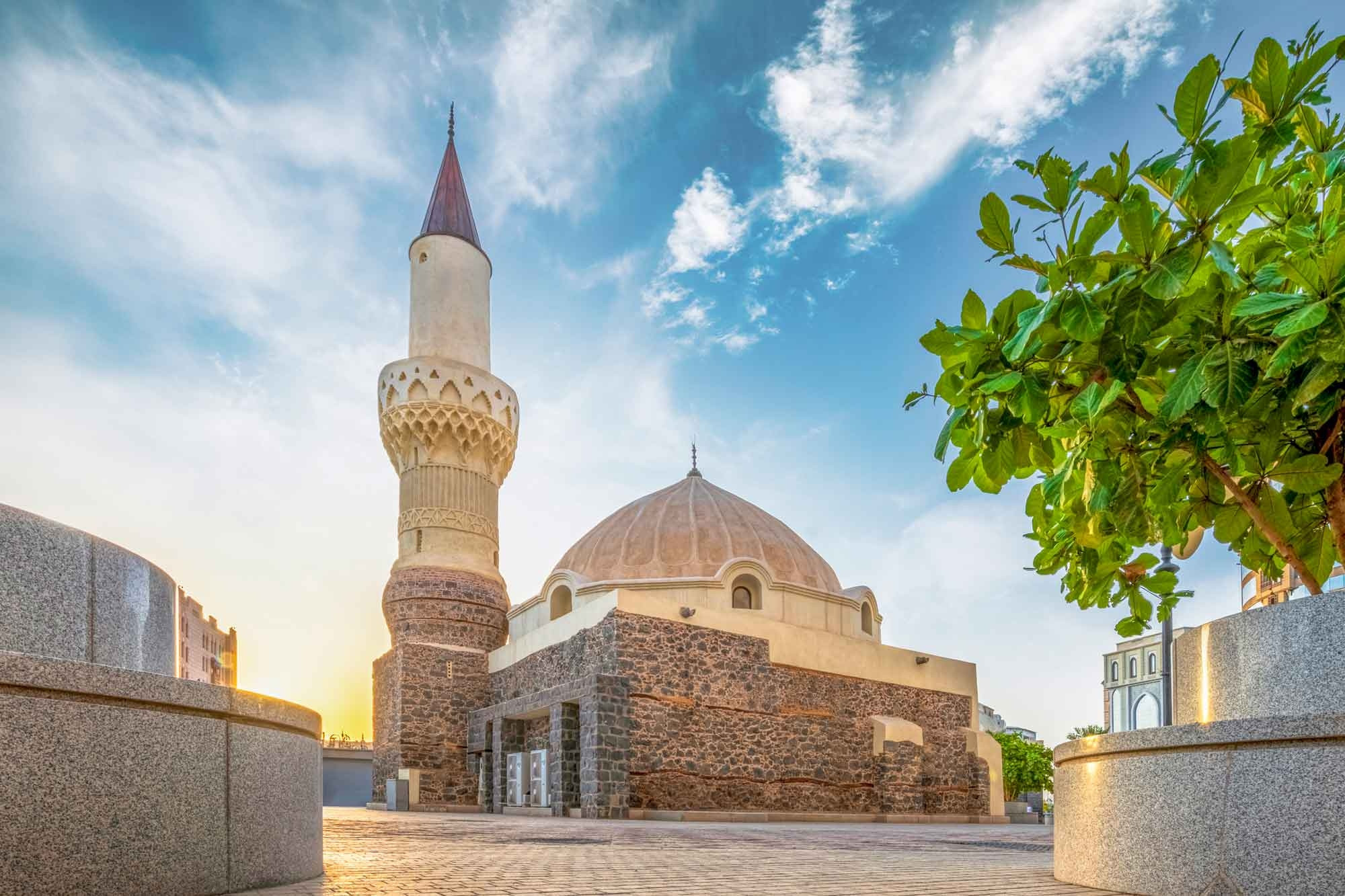
A small mosque near Masjid an-Nabawi, named for Abu Bakr (RA), the first caliph of Islam and the Prophet's closest companion. Its modest size and quiet setting reflect its origin as a local prayer space, not a monument, easy to combine with a visit to nearby Masjid al-Ghamama.
Highlights- Said to be where Abu Bakr (RA) led Eid prayers during his time as caliph
- A quiet, easily overlooked stop close to the Prophet's Mosque
Bab al-Salam:
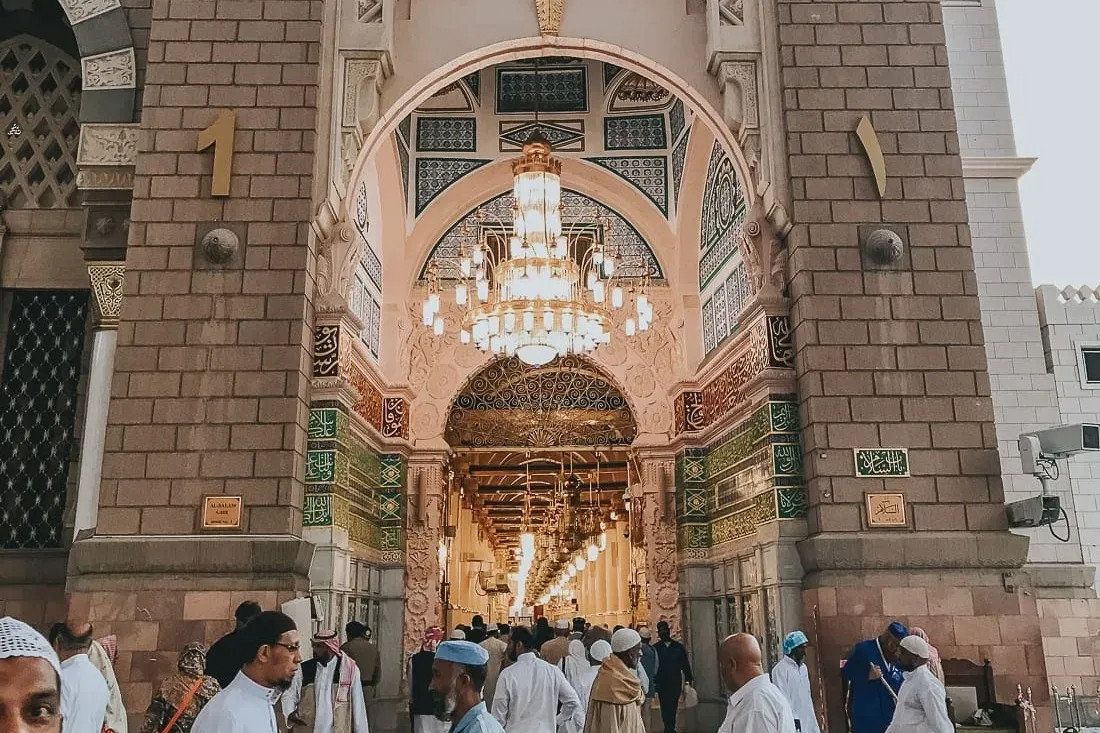
One of the main entrances into Masjid an-Nabawi itself, its name meaning "Gate of Peace," positioned along the mosque's southern side. Beyond its practical role as an entry point, the gate carries symbolic weight for many pilgrims, marking the literal threshold between the outside world and the Prophet's own mosque.
Highlights- Many pilgrims specifically use this gate when first entering the mosque
- Treated by many as the symbolic start of the visit, not just a doorway
A full Day Itinerary in Madinah:
A single, well-organized day can realistically cover all 10 sites above, provided transport is arranged in advance (a taxi, Careem, or Uber all work well in Madinah).
Masjid an-Nabawi, entering through Bab al-Salam
Pray Fajr in the Prophet's Mosque, entering through the Gate of Peace as many pilgrims do symbolically, then visit Riyad al-Jannah and the Prophet's grave if a Nusuk booking is confirmed for the morning slot.
Masjid al-Ghamama and Masjid Abu Bakr
Both sit close to Masjid an-Nabawi itself, an easy short walk before heading further out for the day's longer stops.
Masjid al-Jumu'ah, then Quba Mosque
Travel toward Quba, stopping first at Masjid al-Jumu'ah along the route, marking the first Friday prayer in Islamic history, then continue to Quba itself to pray 2 rak'ah in the calmer, more residential atmosphere there.
Masjid al-Qiblatain and the Seven Mosques
Both sit close to each other and to Quba, making this stretch efficient to cover in 1 trip before the midday heat sets in.
Return to Masjid an-Nabawi
Pray Dhuhr, rest, and have lunch nearby, avoiding travel during the hottest part of the day.
Mount Uhud and the Martyrs' Cemetery
Visit once the heat eases, spending time at the memorial reflecting on the companions buried there before heading back into the city.
Jannat al-Baqi
Visit the cemetery from the perimeter, ideally timed around Asr, since access windows can be limited and vary by day.
Masjid an-Nabawi
Close the day back at the Prophet's Mosque for Maghrib and Isha, the natural anchor point for every stage of the day.
Hajj on Behalf of Another Person:
Hajj badal, performing the pilgrimage on behalf of someone else, applies specifically to a person who died before fulfilling an obligatory Hajj they were financially able to perform, or someone permanently unable to perform it themselves due to serious illness or advanced age. The person acting as proxy must have already completed their own obligatory Hajj first, and enters Ihram with the explicit, spoken intention of performing Hajj specifically on behalf of the named individual.







{{item.get_author.first_name}} {{item.get_author.last_name}}
Level 7
5 Photos
36 Reviews
{{item.comment_txt}}
{{item_reply.get_author.first_name}} {{item_reply.get_author.last_name}}
@ {{item_reply.reply_to}}, {{item_reply.reply_txt}}