
 Umrah packages
Hiking in Qatar means walking across desert plateaus, limestone outcrops, dunes, mangrove shores and abandoned pearling villages. There are no mountains to climb. The country's highest point is only 103 metres above sea level, so the challenge here comes from heat, sun, soft sand and navigation. Altitude is not a factor. The best walks are on the west coast around Zekreet and Umm Bab, in the north around Al Zubarah and Al Khor, and in the southern dunes near Khor Al Adaid. This guide covers where to walk, how hard each area is, when it is safe to go and what to carry.
Most hikes in Qatar follow unmarked routes with no signage, which is why many visitors join a local hiking group for their first outing. If you want something steeper, see our guide to rock climbing in Qatar, and for beaches to finish a walk, our list of the best beaches in Qatar.
Hiking in Qatar at a glance
- Hiking season: November to March; October and April for early mornings only
- Highest point: Qurayn Abu al Bawl, 103 m, near the Saudi border
- Trail type: mostly unmarked desert, coastal and plateau routes
- Access: car needed for almost every route; 4x4 for many tracks
- Water: carry at least 3 litres per person; there are no refill points
- Navigation: offline maps and GPS tracks; phone signal can drop
- Entry: rules depend on your passport; check the official Qatar visa portal
- Easiest start: join a Doha hiking group for your first desert walk
Is Qatar good for hiking?
Qatar is good for a particular kind of hiking: flat to gently rolling walks of a few hours through wide-open desert and coastal landscapes. There are no forests or summits, but there is variety. In a single winter weekend you can walk among mushroom-shaped rocks at Zekreet, along the shore to Umm Bab, through the mangroves of Al Thakira and across the ruins of Al Zubarah, a UNESCO World Heritage Site.
The limits are clear. Summer is too hot for walking outdoors, shade is almost nonexistent, and nearly every route needs a car to reach the start. Some areas sit inside protected reserves, military zones or private land, so stay on established tracks and respect signs and fences.
Who does it suit? Walkers who enjoy space, silence and geology will find plenty to do between November and March, and so will photographers chasing low winter light on limestone and sand. Families with children can manage most coastal routes, because the ground is level and the car is rarely far away. Hikers who measure a good day in metres of climb will be disappointed: the whole country is low-lying, and even the longest routes here are tests of heat, navigation and water planning more than of fitness. Treat a Qatar hike as a half-day outing with a picnic, and pair it with a beach, a fort or a sunset viewpoint on the same drive.
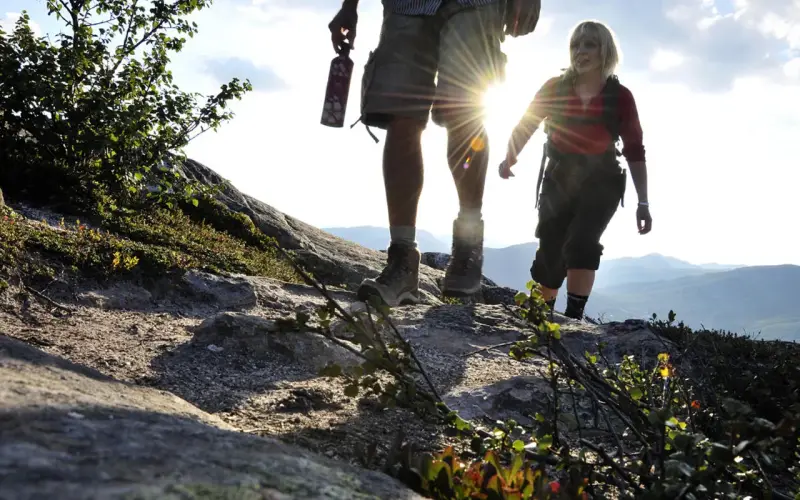
Best hiking places in Qatar
The six areas below come from the original version of this guide, updated with current access information. Distances and times vary with the route you pick, so treat the meta details as a guide and plan your own GPS track.
01. Umm Bab: coastal walks on the west coast
Umm Bab is a small town on Qatar's west coast in Al-Shahaniya municipality, south of the industrial city of Dukhan and roughly 85 km west of Doha. The shoreline around it has sandy coves, low limestone cliffs and patches of palm trees, and locals use it for weekend camping, swimming and barbecues. It works well for a relaxed coastal walk, following the beach and the cliff edge for a couple of hours, then cooling off in the sea.
Weekends in winter bring campers and 4x4 traffic, so go on a weekday morning for solitude. The sea here is calm and shallow, and stargazing after dark is excellent away from the city glow.
- Area: west coast, Al-Shahaniya municipality
- From Doha: about 1 hour 15 minutes by car
- Time needed: 2 to 4 hours walking; overnight if camping
- Difficulty: easy
02. Zekreet peninsula and Ras Abrouq

North of Dukhan, the Zekreet peninsula (also called the Ras Abrouq peninsula) is covered in limestone pillars, mesas and gypsum plateaus, sculpted by wind into mushroom shapes. It is the most rewarding place in Qatar for a walk with variety underfoot: you weave between formations, climb onto low plateaus for views over the bay, and finish on quiet beaches. Richard Serra's steel sculpture East-West/West-East and the Film City movie set are landmarks on the way.
Part of the area lies within the Al Reem Biosphere Reserve, a UNESCO-designated reserve, where wildlife such as gazelles and oryx are protected; you may see fenced enclosures. Keep a respectful distance from any animals and follow posted rules. A loop of a few hours between the formations is enough for most hikers; experienced walkers link it with the coast for a full day.
- Area: north of Dukhan, west coast
- From Doha: about 1 hour 15 minutes; 4x4 helpful on tracks
- Time needed: 2 to 6 hours
- Difficulty: easy to moderate; uneven ground
03. Qurayn Abu al Bawl and Abu Samra
Qurayn Abu al Bawl, in the far south-west near the Saudi border, is Qatar's highest point at 103 metres. It is a low hill rising from a plateau, and reaching the top is a short walk once you arrive. The appeal is the journey across empty country and the satisfaction of a "national high point", which draws hikers who collect them.
The nearby settlement of Abu Samra is Qatar's land border crossing with Saudi Arabia, which reopened in January 2021 after the end of the blockade. The area is remote and hot, with very little shade or support, so go in winter, travel in at least two vehicles if you leave the main road, and carry more water than you think you need. Respect any security restrictions near the border.
- Area: south-west Qatar, near the Saudi border
- From Doha: about 1.5 hours by car
- Time needed: half a day including the drive
- Difficulty: easy walking, remote location
04. Ash Shaqra, Sealine and the southern dunes
South of Al Wakrah, the open desert of Ash Shaqra gives way to the large dunes around Sealine near Mesaieed and, further south, Khor Al Adaid, the "Inland Sea", where the dunes meet a tidal inlet of the Gulf on the Saudi border. Khor Al Adaid is a protected area and one of Qatar's most striking landscapes.
Walking on dunes is hard work: soft sand doubles the effort of every step, and the ridges are steeper than they look. Short dune walks from Sealine at sunrise or sunset are the best introduction. Going deeper into the dunes requires a 4x4 with experienced drivers, as vehicles regularly get stuck, so most hikers reach the Inland Sea on an organised tour and walk from the camp.
- Area: south-east Qatar, Mesaieed to the Saudi border
- From Doha: about 1 hour to Sealine
- Time needed: 1 to 3 hours of walking
- Difficulty: moderate; soft sand
05. Fuwairit to Al Mafjar: the north-east coast
The north-east coast between Fuwairit and Al Mafjar, in Al Shamal municipality around 90 km north of Doha, mixes low dunes, rocky headlands and fishing villages. Fuwairit beach is the most important nesting site for endangered hawksbill turtles in Qatar, accounting for close to 30 percent of nests in the country.
Because of that, Fuwairit beach has been closed to the public to protect nesting and hatching, and authorities have treated it as a conservation area. Do not walk on the closed beach. You can still explore the wider coastline and villages nearby, but check the Ministry of Environment and Climate Change's current notices before you go, and keep away from any fenced nesting zones.
- Area: north-east coast, Al Shamal municipality
- From Doha: about 1 hour 15 minutes
- Time needed: 2 to 3 hours on open sections
- Difficulty: easy; access restrictions apply
06. Abu Samra to Al Mashrab: a long-distance desert route
Older lists describe a long walk across the southern and western interior between Abu Samra and the Al Mashrab area. This is not a marked trail. It is a multi-day crossing of open desert with no water, no shade and no services, and it is only suitable for experienced trekkers with vehicle support, GPS navigation and a clear plan agreed with local organisers.
Most visitors get far more from shorter routes that sample the same landscape, such as a day at Zekreet or Qurayn Abu al Bawl. If a long desert crossing interests you, join an established hiking club that runs supported treks in winter.
- Area: southern and western desert
- Support: 4x4 backup essential
- Time needed: several days
- Difficulty: hard; expert only
 Exclusive holiday package offers
Reaching the trailheads: 4x4 or ordinary car, and drive times from Doha
No public transport reaches Qatar's hiking areas, so every route above starts with a drive. The good news is that the main highways are fast and well surfaced: the Dukhan Highway runs west across the peninsula, Al Khor Coastal Road and the North Road run north, and the Salwa and Mesaieed roads run south. The hard part is the last few kilometres, where tarmac turns into sand, gravel or soft sabkha (salt flat).
| Area | Approx. road distance from central Doha | Typical drive | Vehicle |
|---|---|---|---|
| Zekreet and Ras Abrouq | About 80 km | About 1 hour | Ordinary car to Zekreet; 4x4 recommended on the tracks to the rock formations |
| Abu Samra and the south-west | About 95 to 100 km | About 1 to 1.5 hours | Ordinary car on the highway; 4x4 for desert tracks |
| Sealine and the southern dunes | South via Mesaieed | About 45 minutes to 1 hour to Sealine | Ordinary car to Sealine; 4x4 with an experienced driver for the dunes |
| Fuwairit and the north-east coast | About 100 to 115 km by the usual route | About 1.5 hours | Ordinary car on most of the route; sandy access in places |
A standard rental car is enough for the paved approaches and the short coastal walks. A 4x4 is the safer choice for the tracks to the Zekreet formations, the plateau around Qurayn Abu al Bawl and anything in the dunes, and it is essential for Khor Al Adaid. Driving in sand is a skill: lower tyre pressure, keep momentum, never go alone and carry a tow rope, a shovel and a compressor. If you have not done it before, book a guided 4x4 trip and do the walking from the vehicle.
Visitors can rent a car in Doha; whether your home licence is accepted on its own or needs an International Driving Permit depends on the country that issued it, so check with the rental company when booking. Fill the tank before leaving the highway, as fuel stations are scarce in the west and south, and download offline maps, since signal can drop near the trailheads.
Easy walks in Qatar for beginners and families
- Purple Island (Jazirat Bin Ghanim). A small island near Al Khor linked to the shore by a wooden walkway, with mangroves, low limestone hills and birdlife. The path is broken in places to let water flow to the mangroves, so wear shoes that can get wet. Kayaking through the channels is a popular add-on. It makes an easy morning walk and suits bird-watchers.
- Al Zubarah archaeological site. Once a thriving pearl-fishing and trading town, Al Zubarah is Qatar's largest heritage site and has been on the UNESCO World Heritage List since 2013. A walk around the restored fort and the excavated town gives a sense of 18th-century coastal life, which history lovers and families both enjoy.
- Al Thakira mangroves. The mangroves east of Al Khor have a waterside track and calm channels. Herons, flamingos in season and crabs on the mudflats make it a favourite with photographers at low tide, and slow walkers like it too.
- Doha Corniche and Aspire Park. Not wild hiking, but the 7 km Corniche and the paths of Aspire Park are good for conditioning walks in the cool evenings before a desert trip, especially if your stay is short.
An earlier version of this guide listed an "Al Maha Sanctuary Trail". We could not confirm a public trail by that name, so we have removed it.
Qatar hiking areas compared
Hiking in Qatar by area
| Area | Landscape | Difficulty | Drive from Doha |
|---|---|---|---|
| Umm Bab | beach and low cliffs | easy | about 1 hr 15 min |
| Zekreet peninsula | limestone formations | easy to moderate | about 1 hr 15 min |
| Qurayn Abu al Bawl | desert plateau, high point | easy, remote | about 1 hr 30 min |
| Sealine and southern dunes | sand dunes | moderate | about 1 hr |
| Fuwairit to Al Mafjar | coast and villages | easy, restricted | about 1 hr 15 min |
| Abu Samra to Al Mashrab | open desert | hard, expert only | varies |
Use the table to pair walks that share a road. Umm Bab and the Zekreet peninsula both lie off the Dukhan Highway on the west coast, so a winter day can start among the Zekreet rock formations at sunrise and end with a swim or a picnic on the Umm Bab shore. The north works the same way: Al Khor is roughly 50 km from Doha, so Purple Island and the Al Thakira mangroves fit into one morning, and Al Zubarah, about 105 km from Doha, can be added on the way back via the North Road. The south is a separate day: Sealine and the dunes need an early start and, beyond the beach, a 4x4 with a driver who knows the sand.
For a first desert walk, pick an "easy" coastal area within about an hour and a quarter of Doha. Save Qurayn Abu al Bawl for when you are comfortable driving remote tracks, and treat the Abu Samra to Al Mashrab crossing as a supported expedition that needs planning well in advance.
 Get the bookingMentor app
Best time for hiking in Qatar
The hiking season runs from November to March, when daytime temperatures are usually in the low to mid 20s °C and nights are cool. December to February are the most comfortable months. October and April can still be very warm by late morning, so start at dawn and finish by 10 am. From May to September heat and humidity make outdoor hiking dangerous; even short walks can cause heat exhaustion.
Plan around the weekend, which in Qatar falls on Friday and Saturday, when popular desert and beach areas fill with campers. Weekday mornings are the quietest. Check the forecast for strong shamal winds, which lift sand and cut visibility, and for the occasional winter rain, which can turn desert tracks muddy.
Desert hiking safety in qatar: Carry at least 3 litres of water per person for a half-day walk, plus electrolytes, sun protection and a hat. There are no shops or refill points on most routes.
Tell someone your route and return time, travel in a group, and download offline maps. Mobile coverage can drop in remote areas, and help is far away. Qatar's emergency number is 999.
Never drive into dunes alone. Travel with a second vehicle and a driver experienced in sand recovery.
Tips for hiking in Qatar
- Plan the route. Most routes are unmarked. Prepare a GPS track, mark your car's position and agree turnaround times.
- Wear the right shoes. Trail shoes with good grip suit rocky plateaus; gaiters keep sand out on dune walks. Break new shoes in first.
- Cover up from the sun. Long, light sleeves, a wide hat and sunglasses protect better than sunscreen alone in open desert.
- Respect wildlife and land. Stay out of fenced reserves, keep away from camels and nesting sites, and take every scrap of rubbish home.
- Join a group first. Doha has active hiking and outdoor groups that run winter walks. Your first outing with them teaches the local routes and conditions.
- Start early. Begin at sunrise and finish before the midday heat, even in winter, when the sun is still strong.
- Leave a trip plan. Tell someone in Doha where you are parking, your route and the time you expect to be back. Mobile coverage fades in the south and west, so agree what they should do if you have not called by then.
- Check the tide on coastal walks. Shoreline routes such as Umm Bab and Fuwairit change with the tide, and soft wet sand is tiring to cross. Look up the tide times the evening before and plan to walk the beach sections on a falling tide.
For more ideas, see our list of things to do in Qatar and our Qatar travel guide.
Planning a trip to Qatar? Read our Qatar travel guide, compare hotels in Qatar or search flights.












{{item.get_author.first_name}} {{item.get_author.last_name}}
{{item.comment_txt}}
{{item_reply.get_author.first_name}} {{item_reply.get_author.last_name}}
@ {{item_reply.reply_to}}, {{item_reply.reply_txt}}