
The historic landmarks in the USA most worth a visit include the Statue of Liberty and Ellis Island in New York Harbor, Independence Hall in Philadelphia, the National Mall in Washington DC and the USS Arizona Memorial at Pearl Harbor. Together they tell the country's story in physical form, from a copper statue that greeted immigrants to a sunken battleship that still leaks oil. This guide covers 27 of them, from colonial Virginia to the cliff dwellings of Colorado, with what each site actually is, how to visit it, which ones need advance tickets, and where the crowds and closures catch people out.
The list spans the whole country, so few travelers will see every stop on one trip. Use it to anchor an itinerary: the Northeast and Washington DC hold the densest cluster, Virginia's Historic Triangle fills a long weekend, and the western sites pair naturally with a US road trip. If you want a state-by-state view instead, our guide to 50 famous landmarks across the 50 states takes that angle.
How this list was put together: Each site was chosen for its role in a defining chapter of American history (colonial settlement, the Revolution, the Civil War, immigration, the Second World War, the space age) and for being open to visitors. Ticket rules and closures were checked against National Park Service and operator pages in October 2026. Fees and timed-entry systems change often, so confirm on the official site before you travel.
Quick comparison table of historic US landmarks
Where each landmark sits, and whether you need to book ahead, is set out below. Names link to the full entry below.
| # | Landmark | Location | Key date | Book ahead? |
|---|---|---|---|---|
| 1 | Statue of Liberty | New York, NY | 1886 | Pedestal and crown sell out |
| 2 | Ellis Island | New York Harbor | 1892 | Same ferry as the Statue |
| 3 | Independence Hall | Philadelphia, PA | 1753 | Timed tickets Mar to Dec |
| 4 | Washington Monument | Washington, DC | 1884 | Timed tickets |
| 5 | Lincoln Memorial | Washington, DC | 1922 | Open 24 hours |
| 6 | National Mall | Washington, DC | 1791 plan | No |
| 7 | The White House | Washington, DC | 1800 | Request months ahead |
| 8 | Smithsonian Institution | Washington, DC | 1846 | Some museums need passes |
| 9 | Mount Rushmore | Keystone, SD | 1941 | Parking fee only |
| 10 | Golden Gate Bridge | San Francisco, CA | 1937 | No |
| 11 | Alcatraz Island | San Francisco, CA | 1934 prison | Yes, weeks ahead |
| 12 | Empire State Building | New York, NY | 1931 | Timed entry |
| 13 | Grand Central Terminal | New York, NY | 1913 | No |
| 14 | The Alamo | San Antonio, TX | 1836 battle | Free church entry, reservation advised |
| 15 | Gettysburg | Gettysburg, PA | 1863 | No (park); museum ticketed |
| 16 | Hoover Dam | NV/AZ border | 1936 | Tours sold on site |
| 17 | USS Arizona Memorial | Honolulu, HI | 1962 | Yes, Recreation.gov |
| 18 | Kennedy Space Center | Merritt Island, FL | 1962 | Ticketed |
| 19 | Monticello | Charlottesville, VA | 1772 onward | Ticketed tours |
| 20 | Jamestown | Jamestown, VA | 1607 | Ticketed |
| 21 | Colonial Williamsburg | Williamsburg, VA | 1699 capital | Ticketed for buildings |
| 22 | Gateway Arch | St. Louis, MO | 1965 | Tram sells out |
| 23 | Boston Tea Party Ships | Boston, MA | 1773 event | Ticketed |
| 24 | Freedom Trail | Boston, MA | 1951 trail | No |
| 25 | Plymouth Rock | Plymouth, MA | 1620 | No |
| 26 | Mesa Verde | Southwest Colorado | c. 1200s | Ranger tours ticketed |
| 27 | Biltmore Estate | Asheville, NC | 1895 | Dated tickets |
27 essential historic landmarks in the USA: full guide
The 27 landmarks below run from the Statue of Liberty in New York Harbor to the cliff dwellings of Mesa Verde in Colorado. Each entry explains what the site is, how to reach it, whether you need timed or advance tickets and which closures catch visitors out, so you can shortlist the ones that fit your route.
Statue of Liberty, New York Harbor

France gave the statue to the United States to mark the centennial of independence, and it was dedicated on 28 October 1886. Frédéric-Auguste Bartholdi designed the copper figure and Gustave Eiffel engineered the iron skeleton inside it. From the ground to the tip of the torch, statue and pedestal together reach about 305 feet.
Statue City Cruises is the only authorised ferry, leaving from Battery Park in Manhattan and Liberty State Park in New Jersey; one ticket covers both Liberty Island and Ellis Island. Pedestal and crown access are limited and must be reserved in advance, and the crown climb is 162 narrow, steep steps with no elevator. Allow at least half a day for both islands, and expect airport-style security before boarding. Ticket sellers who approach you around Battery Park are not the official operator.
The statue is a UNESCO World Heritage Site and draws first-time visitors in huge numbers, so take the first ferry of the day on a weekday. With Ellis Island added, plan on 4 to 6 hours. Crown tickets for spring and summer dates go months ahead.
Ellis Island National Museum of Immigration
Between 1892 and 1954, Ellis Island was the main immigration station for the United States, processing millions of new arrivals. The restored main building now holds the National Museum of Immigration, with the vast Registry Room (the Great Hall) where inspectors once questioned families, plus exhibits on why people came and what happened to those turned away.
The ferry from the Statue of Liberty continues to Ellis Island, so most visitors do both in one day. The museum's family history centre lets you search passenger records, which is worth doing before you go if you think a relative arrived through New York. Head here first if you catch an early ferry, since the Great Hall is quieter before midday.
Entry is included in the Liberty ferry ticket, and 2 to 3 hours is enough for most people. Anyone tracing ancestry, and school-age children, get the most from it. Look up passenger records online before you go.
Independence Hall and the Liberty Bell, Philadelphia

The Declaration of Independence was debated and adopted here in 1776, and the US Constitution was drafted in the same Assembly Room in 1787. The red-brick Pennsylvania State House is a UNESCO World Heritage Site, and park rangers lead every tour through the courtroom and the Assembly Room.
Entry is by free timed tour. From March to December, and on some winter holiday weekends, you need a ticket reserved through Recreation.gov, which adds a $1 handling fee per ticket. The Liberty Bell sits across the street in its own centre and needs no timed ticket, only a security check. Walk two blocks to the National Constitution Center, or to Elfreth's Alley, one of the oldest continuously lived-in streets in the country.
The hall stands at 520 Chestnut Street, and the wider park deserves half a day. Reserve the earliest tour slot, then see the Liberty Bell before the queues build.
Washington Monument, Washington DC

The marble obelisk honouring George Washington rises more than 555 feet above the National Mall. Construction began in 1848, stalled for years around the Civil War, and finished in 1884; look closely and you can see the slight change in stone colour about a third of the way up where work resumed with marble from a different quarry.
An elevator carries visitors to the observation level, with windows on all four sides over the White House, the Capitol and the Lincoln Memorial. Entry requires a timed ticket. Advance tickets are released on Recreation.gov, typically 30 days ahead, and a limited number of same-day tickets are handed out on site from 8:45 am. The monument closes on 25 December and occasionally for maintenance or bad weather.
Book online 30 days out, or queue early for same-day tickets, which are handed out from 8:45 am.
Lincoln Memorial, Washington DC
Dedicated in 1922, the memorial is a Greek temple built around Daniel Chester French's seated statue of Abraham Lincoln. The walls carry the full text of the Gettysburg Address and his Second Inaugural Address. In August 1963 Martin Luther King Jr. gave his "I Have a Dream" speech from these steps, and the spot where he stood is engraved in the granite.
The memorial is open around the clock, which makes it the easiest major DC site to visit on a tight schedule. Come after dark when the statue is lit and the Reflecting Pool mirrors the Washington Monument; daytime brings tour groups and school buses. It is a long walk from the nearest Metro stations (Foggy Bottom or Smithsonian), so allow 20 minutes on foot or use a bikeshare dock.
Free with no ticket, it is a natural evening stop. Look for the engraved marker on the steps where Dr King stood.
National Mall, Washington DC

The Mall runs about two miles from the US Capitol to the Lincoln Memorial, with the Washington Monument at its centre and the Smithsonian museums along both sides. Beyond the headline monuments, it holds the World War II Memorial, the Vietnam Veterans Memorial wall with more than 58,000 names, the Korean War Veterans Memorial and the Martin Luther King Jr. Memorial on the Tidal Basin.
Walking the full loop with stops takes most of a day and more distance than people expect, so wear proper shoes and carry water in summer, when DC is hot and humid. The Capitol Visitor Center at the east end offers free guided tours of the Capitol, which can be booked online. Early spring brings the cherry blossoms around the Tidal Basin and the year's biggest crowds.
April to May and September to October are the comfortable months. Start at the Capitol in the morning and finish at the Lincoln Memorial at sunset.
The White House, Washington DC
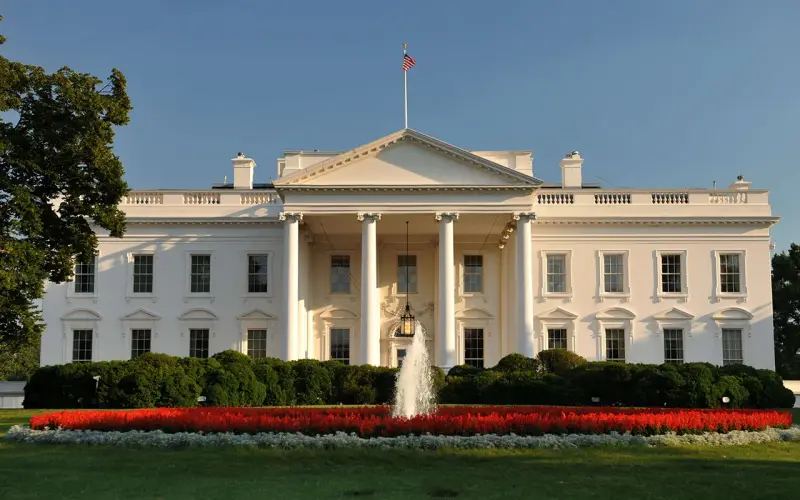
Every president since John Adams in 1800 has lived and worked at 1600 Pennsylvania Avenue NW. The building was burned by British troops in 1814 during the War of 1812 and rebuilt, and much of the interior was gutted and reconstructed under President Truman.
Public tours are free but limited. US citizens request them through their member of Congress, and foreign visitors are directed to request a tour through their country's embassy in Washington DC, usually months ahead; there is no walk-up option. If you cannot get a tour, the White House Visitor Center on Pennsylvania Avenue has exhibits on the building and its residents, and the classic photographs are from Lafayette Square to the north and the Ellipse to the south.
Start the tour request as soon as your dates are fixed, and travel light: security rules ban most bags.
Smithsonian Institution, Washington DC
Founded in 1846 with a bequest from British scientist James Smithson, the Smithsonian is the world's largest museum, education and research complex, with 21 museums and the National Zoo. Admission is free at every location except the Cooper Hewitt design museum in New York.
For history, the National Museum of American History holds the original Star-Spangled Banner that inspired the national anthem. The National Air and Space Museum has the 1903 Wright Flyer and the Apollo 11 command module, and the National Museum of African American History and Culture is one of the most moving museums in the country. A few locations, including the African American history museum and the National Zoo, use free timed passes at busy times, so check the Smithsonian website before you go.
Two to three hours per museum is a fair estimate, so pick two a day at most. On a rainy day the Smithsonian is the obvious plan.
Mount Rushmore National Memorial, South Dakota

Sculptor Gutzon Borglum and roughly 400 workers carved the 60-foot faces of George Washington, Thomas Jefferson, Theodore Roosevelt and Abraham Lincoln into the granite of the Black Hills between 1927 and 1941. The Lakota Sioux know the mountain as Six Grandfathers, and the site remains contested, which the park's own exhibits address.
There is no entrance fee, but the concession-run parking facility charges a fee, and federal park passes do not cover it. Walk the Presidential Trail for close views of the faces, and stay for the evening lighting programme in summer. Most visitors combine the memorial with Badlands National Park, Custer State Park and the Crazy Horse Memorial, all within a few hours' drive.
A car is essential, and Rapid City is the nearest airport; the season runs from May to September. Arrive early in the morning for soft light on the faces and an empty car park.
Golden Gate Bridge, San Francisco

When it opened in 1937, the Golden Gate Bridge had the longest main span of any suspension bridge in the world, a record it held until 1964 according to Britannica, linking San Francisco with Marin County across the strait. Its colour, International Orange, was chosen partly so the bridge stays visible in fog.
Walking or cycling across is free; drivers pay a toll heading south into the city, collected electronically, so check how your rental car company bills it. The best viewpoints are Battery Spencer on the Marin side, Fort Point beneath the southern end, and Crissy Field. Fog often covers the bridge in summer mornings, while September and October tend to be clearer.
The clearest months are September and October. Walkers do best crossing north to south, then catching a ferry back from Sausalito.
Alcatraz Island, San Francisco Bay
Alcatraz began as a military fort and then a military prison, and from 1934 to 1963 it was a maximum-security federal penitentiary holding inmates such as Al Capone. From 1969 to 1971 it was occupied by Native American activists, a protest still visible in graffiti on the water tower.
City Experiences is the only authorised ferry operator, departing from Pier 33, and tickets regularly sell out weeks ahead; the day tour, night tour and behind-the-scenes tour are sold separately. Note that the National Park Service closed the island from 26 October to 18 November 2026 to replace ferry dock pilings, with reopening expected shortly after if repairs finish on time. The cellhouse audio tour, narrated partly by former guards and inmates, is the highlight.
Allow 2.5 to 3 hours, and remember the island is part of the Golden Gate National Recreation Area. Buy only from the official operator; resellers charge far more, and the night tour sells out first.
Empire State Building, New York
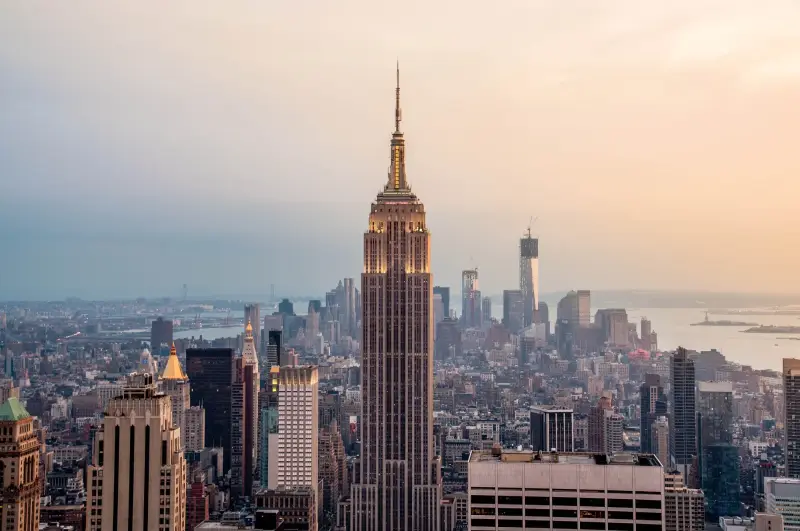
Built in little over a year and opened in 1931, the Empire State Building at 20 West 34th Street was the world's tallest building for nearly 40 years. Its construction during the Great Depression employed thousands of workers, and the Art Deco lobby, restored to its original look, is worth seeing even before you head up.
The open-air 86th-floor deck is the classic view, with the 102nd floor available on a higher ticket. Timed tickets cut the wait, but security and elevator queues can still be long in the afternoon. Sunset slots cost more and sell first. If you want the Empire State Building in your photos, a different observatory (Top of the Rock or Summit) gives you that angle.
Opening hour and late evening are the quiet times. Late evening has the extra reward of the city lights coming on.
Grand Central Terminal, New York
Opened in 1913, Grand Central is still a working commuter station and one of the finest Beaux-Arts buildings in the country. The Main Concourse ceiling shows a painted constellation map; a small dark patch left uncleaned during the 1990s restoration shows how grimy it had become.
Entry is free. Stand in the Whispering Gallery outside the Oyster Bar, where two people facing opposite corners can hear each other whisper. Avoid weekday rush hours (roughly 7 to 9 am and 5 to 7 pm) if you want photos of the concourse, and look for the opal-faced clock above the information booth, the station's classic meeting point.
The terminal is at 89 East 42nd Street, and mid-morning or weekends suit photographers. Combine it with the nearby Chrysler Building and the New York Public Library.
The Alamo, San Antonio

Founded as Mission San Antonio de Valero in the early 1700s, the Alamo became a fortress during the Texas Revolution. In 1836 its defenders, including Davy Crockett and Jim Bowie, held out for 13 days before Mexican forces under Santa Anna overran it. It is part of the San Antonio Missions UNESCO World Heritage Site.
Entry to the church is free, but the Alamo recommends reserving a timed entry, and guided and audio tours cost extra. The church is smaller than many visitors expect and sits in a busy downtown plaza, a few minutes' walk from the River Walk. For a fuller picture of Spanish colonial Texas, drive the Mission Trail to the four other missions in the national historical park.
Allow 1 to 2 hours for the church and plaza, and add Mission San José, the largest of the other missions.
Gettysburg National Military Park, Pennsylvania
Fought from 1 to 3 July 1863, Gettysburg was the bloodiest battle of the Civil War and the high point of the Confederate invasion of the North. Four months later Lincoln delivered the Gettysburg Address at the dedication of the Soldiers' National Cemetery here.
The battlefield itself is free to drive or walk. The Museum and Visitor Center charges for its film, museum and the Gettysburg Cyclorama, a huge 1880s circular painting of Pickett's Charge. A Licensed Battlefield Guide can ride in your car for a two-hour tour, which brings Little Round Top, the Wheatfield and the High Water Mark to life far better than a map. The town is about 90 minutes by car from Washington DC or Baltimore.
Book a Licensed Battlefield Guide if you can. Otherwise start with the Cyclorama, then drive the auto tour route.
Hoover Dam, Nevada and Arizona
Built between 1931 and 1936 on the Colorado River, Hoover Dam created Lake Mead and still supplies power across the Southwest. The concrete arch-gravity dam was the largest in the world when completed, and thousands of workers built it in brutal desert heat.
Visiting the top of the dam is free on foot, with a parking fee in the garage. The Bureau of Reclamation sells a short Powerplant Tour and a longer Dam Tour that goes inside the structure; buy them at the visitor centre, and arrive early in summer, when tours sell out and temperatures pass 40°C. Walk onto the Mike O'Callaghan–Pat Tillman Memorial Bridge for the best view of the dam face. Las Vegas is about 45 minutes away by car.
It makes an easy Las Vegas day trip. Expect a vehicle security inspection on the approach road.
USS Arizona Memorial, Pearl Harbor
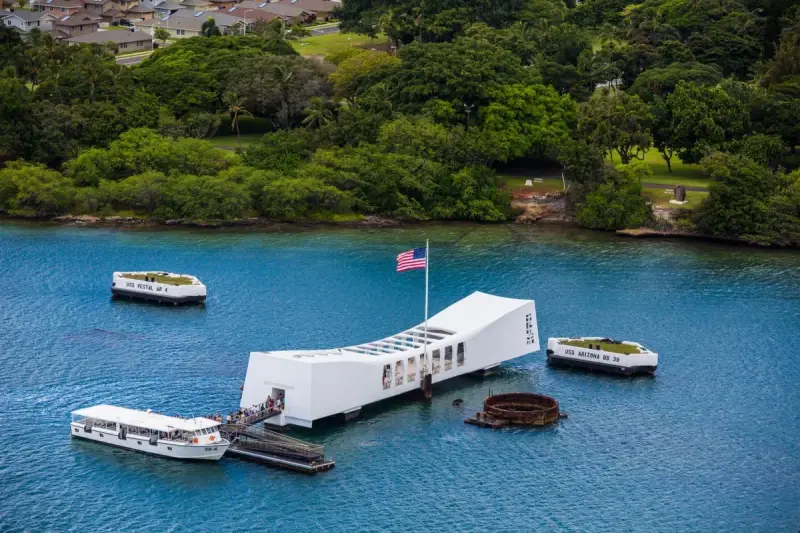
On 7 December 1941 Japanese aircraft attacked the US Pacific Fleet at Pearl Harbor, and the battleship USS Arizona exploded and sank with the loss of 1,177 crew. The white memorial, dedicated in 1962, spans the hull without touching it, and the names of all 1,177 men are carved on the marble wall of the shrine room. Oil still rises from the wreck.
The programme, which includes a film and a Navy boat ride to the memorial, is free, but reservations are made only on Recreation.gov with a $1 non-refundable fee per ticket. Tickets are released eight weeks ahead and the day before, and same-day walk-in tickets have ended. Bags are not allowed in the site, so use the paid bag storage or leave them in the car.
Set an alarm for the release time, because morning slots go first.
Kennedy Space Center Visitor Complex, Florida

NASA's main launch site since the 1960s sent the Apollo missions to the Moon and the Space Shuttle into orbit. The visitor complex on Merritt Island displays the retired shuttle Atlantis, a full Saturn V moon rocket in the Apollo/Saturn V Center, and the Gateway hall covering current commercial launches.
Admission is ticketed and the bus tour to the Saturn V is included; allow a full day. Check the launch schedule before you go, since some rocket launches are visible from the complex or nearby beaches. The site is about an hour's drive east of Orlando, which makes it an easy day trip from the theme parks.
Time your visit for a launch day if the schedule allows; children in particular remember it.
Monticello, Charlottesville

Thomas Jefferson designed and redesigned this neoclassical house on a Virginia hilltop over four decades, beginning in the 1770s. Monticello and the University of Virginia, which he also founded, together form a UNESCO World Heritage Site. The house appears on the back of the US nickel.
House tours are ticketed and timed, and the estate presents the lives of the hundreds of enslaved people who lived and worked on the plantation, including Sally Hemings, alongside Jefferson's own story. Walk the vegetable garden terrace for the view over the Piedmont. Charlottesville is about two and a half hours by car from Washington DC.
Half a day covers the house, Mulberry Row and the vegetable garden. Book the Slavery at Monticello tour alongside the house tour.
Jamestown, Virginia
In 1607 English colonists founded Jamestown on the James River, the first permanent English settlement in North America. Two separate sites tell the story. Historic Jamestowne is the original site, where archaeologists are still excavating the 1607 fort. Jamestown Settlement next door is a living-history museum with reconstructed ships, a Powhatan village and a colonial fort.
The two have separate tickets and operators, so decide which suits you: Historic Jamestowne for real archaeology, Jamestown Settlement for hands-on experiences with children. Both are on the Colonial Parkway, which links Jamestown, Williamsburg and Yorktown in a scenic drive.
Families with children usually prefer the Settlement and history readers the Jamestowne dig. Both fit a Historic Triangle weekend with Williamsburg and Yorktown.
Colonial Williamsburg, Virginia
Williamsburg was the capital of colonial Virginia from 1699, and its restored historic area, bankrolled from the 1920s by John D. Rockefeller Jr., is now the largest living-history museum in the United States. Costumed interpreters run trade shops such as the blacksmith and the printer, and the reconstructed Capitol and Governor's Palace host debates and reenactments.
Walking the streets is free, but you need a ticket to enter the buildings and join programmes. Allow at least a full day. Evening programmes and the colonial taverns are a good way to stretch the visit, and the College of William & Mary's Wren Building sits at the west end of Duke of Gloucester Street.
Give it 1 to 2 days. A multi-day ticket makes sense if you plan to add Jamestown and Yorktown.
Gateway Arch, St. Louis

Eero Saarinen's stainless-steel arch was completed in 1965 and, at 630 feet, is the tallest monument in the United States. It marks St. Louis as the starting point of westward expansion, the city where Lewis and Clark began their journey in 1804.
The museum under the arch is free and covers 200 years of westward history. Reaching the top means riding a tiny five-seat tram pod for about four minutes; tram tickets start at around $15 for adults according to the National Park Service, sell out often, and should be booked in advance on the official Gateway Arch website. The small windows at the top look down on the Mississippi and the Old Courthouse, where the Dred Scott case was first heard.
The museum is free; the tram pods are cramped, which matters if you dislike tight spaces. Road trippers on I-70 or I-55 should book a morning tram before tour groups arrive.
Boston Tea Party Ships and Museum
On 16 December 1773, colonists protesting British taxation dumped 342 chests of East India Company tea into Boston Harbor. The museum on the Congress Street Bridge recreates the night with actors, replica ships you can board, and a chance to throw a (tethered) crate of tea over the side.
Visits are by timed, guided tour, roughly an hour, and are ticketed. It is a short walk from South Station and works well before or after the Freedom Trail. The museum also displays the Robinson Half Chest, one of two tea chests believed to survive from the original event.
The ships are moored on Fort Point Channel. Children love the tea-throwing, so book a morning slot and walk the Freedom Trail afterwards.
Freedom Trail, Boston
A red-brick line in the pavement links 16 Revolutionary-era sites over about 2.5 miles, from Boston Common to the Bunker Hill Monument in Charlestown. Stops include the Massachusetts State House, Old South Meeting House, the site of the Boston Massacre, Paul Revere House, Old North Church and the USS Constitution.
Following the trail is free; a few sites, such as the Paul Revere House and Old South Meeting House, charge small admissions. Walk it in one long day or split it at Faneuil Hall for lunch. Guided tours with costumed guides run from Boston Common. Start early in summer, since the North End's narrow streets get crowded by afternoon.
Allow half a day to a full day. Finish at Bunker Hill and take the ferry back across the harbour.
Plymouth Rock, Massachusetts

Tradition holds that the Mayflower Pilgrims stepped ashore on this boulder in 1620, though no contemporary account mentions it. The rock, cracked and reduced over centuries by souvenir hunters, now sits under a granite portico at the water's edge in Pilgrim Memorial State Park.
Seeing the rock takes five minutes and many visitors find it underwhelming, so pair it with the Mayflower II, a full-size replica ship moored nearby, and Plimoth Patuxet Museums a few miles south, which recreates a 1627 English village and a Wampanoag homesite. Plymouth is about an hour by car from Boston.
The rock is on Water Street, free to see, and the Mayflower II makes the trip worthwhile. Manage expectations: the rock itself is modest.
Mesa Verde National Park, Colorado

Ancestral Pueblo people farmed the mesa tops for centuries and, in the 1200s, built the stone villages tucked into alcoves in the canyon walls. The park protects around 600 cliff dwellings, and Cliff Palace is the largest in North America. It was among the first places in the United States named a UNESCO World Heritage Site.
You can view many dwellings from overlooks, but entering Cliff Palace, Balcony House or Long House requires a ranger-guided tour ticket, sold in season (roughly spring to autumn) and usually booked through Recreation.gov. Balcony House involves a 32-foot ladder and a narrow crawl-through tunnel. The park sits at around 7,000 feet, so drink plenty of water and expect cool nights.
Cortez is the nearest town. Book ranger tours as soon as they open, especially if Mesa Verde is one stop on a Four Corners road trip.
Biltmore Estate, Asheville
George Vanderbilt opened his 250-room French Renaissance-style chateau in the Blue Ridge Mountains in 1895, and it remains the largest privately owned house in the United States. Frederick Law Olmsted, designer of Central Park, laid out the grounds and gardens, and the estate still belongs to Vanderbilt's descendants.
Admission is by dated ticket, which includes a self-guided house visit and the gardens; specialist guided tours cost extra. Prices rise around the Christmas season, when the house is decorated. Allow a full day to cover the house, gardens, conservatory and the winery in Antler Hill Village.
Spring brings the gardens into flower and the Christmas season brings the decorations. Buy tickets online in advance, since on-site prices can be higher.
 Plan your trip with AI
How to group US historic landmarks into one trip
The United States is too big to see these landmarks in a single loop, so plan by region. The Northeast Corridor is the easiest: New York (Statue of Liberty, Ellis Island, Empire State Building, Grand Central), Philadelphia (Independence Hall), and Washington DC (the National Mall cluster) are linked by Amtrak trains in a few hours each, and Boston's Freedom Trail and Tea Party museum sit at the northern end. A week covers all of them without a car.
Virginia's Historic Triangle (Jamestown, Williamsburg and Yorktown) is about three hours south of DC by car, and Monticello is a detour west via Charlottesville. Gettysburg fits as a day trip from DC or Baltimore. In the West, Mount Rushmore, Mesa Verde and Hoover Dam each anchor a separate road trip, while Alcatraz, the Golden Gate Bridge, Pearl Harbor and Kennedy Space Center pair with city or beach holidays. For more destinations rooted in history, see our guides to the best historical cities in the USA and the UNESCO World Heritage Sites in the USA.
Tips for visiting historic landmarks in the USA
Book the scarce tickets first. Recreation.gov handles timed entry for Independence Hall, the Washington Monument and the USS Arizona Memorial, while the Statue of Liberty and Alcatraz are sold only through their single authorised ferry operator. After that, plan around bag screening, park-pass coverage, summer heat and the ESTA or visa your passport needs.
- Use official booking sites. Recreation.gov handles timed tickets for Independence Hall, the Washington Monument and the USS Arizona Memorial. For the Statue of Liberty and Alcatraz, buy only from the single authorised ferry operator.
- Book the scarce tickets first. Statue of Liberty crown access, Alcatraz and Pearl Harbor slots sell out first. Lock these in before booking flights around them.
- Pack light for security. Most federal sites screen bags, and the USS Arizona Memorial bans them. A small clear bag speeds you through.
- Think about a park pass. The America the Beautiful pass covers entrance fees at many federal sites, but not concession charges such as Mount Rushmore parking or ferry tickets. Non-residents pay a higher price than residents from 2026.
- Plan for the weather. DC and Philadelphia are hot and humid in July and August, Hoover Dam is extreme in summer, and Mesa Verde tours run only in the warmer months.
- Sort entry documents early. Visitors need an ESTA or a visitor visa depending on their passport. Our visa service can help you check what applies.
Ready to plan? Compare flights to the USA and hotels near these landmarks, then build your route around the sites that need booking first. For a wider world list, see our top 100 most famous landmarks.
Planning a trip to United States? Read our United States travel guide, compare hotels in United States or search flights.









{{item.get_author.first_name}} {{item.get_author.last_name}}
{{item.comment_txt}}
{{item_reply.get_author.first_name}} {{item_reply.get_author.last_name}}
@ {{item_reply.reply_to}}, {{item_reply.reply_txt}}