

Bali earned Tripadvisor's Travelers' Choice award for the world's top honeymoon destination in 2026, and the reasoning is straightforward once you've spent a few days there. A couple can wake up in a private pool villa overlooking rice terraces in Ubud, drive an hour to a clifftop infinity pool in Uluwatu, and end the week on a boat to an island with no cars at all. Few destinations pack that much range into one honeymoon.
The planning gets harder once you start picking hotels and regions, since Bali isn't one destination so much as a dozen very different ones stitched together by an hour or two of driving. This guide breaks down what a trip actually costs in 2026, the visa process, named hotels by region, and a full itinerary, then covers the 16 places worth building a trip around.
Why Bali for a Honeymoon:What separates it from other Southeast Asia options
Bali runs on a tropical climate year round, so there's no real off-season in terms of temperature, only a dry season and a wetter one. The island is also small enough that a couple can genuinely cover jungle, cliffside coast, volcano, and a separate island chain inside a single ten-day trip, something that would take far more driving in most other honeymoon destinations. Compared to similarly priced alternatives like Thailand, Bali's draw is concentration: the variety sits closer together.
Tropical climate year round:
Average highs run 79-86°F (26-30°C) regardless of season. What changes is rainfall and humidity, not temperature.
Two official languages:
Bahasa Indonesia and Balinese. English is widely spoken in tourist areas and thins out the further north or inland you go.
Hindu island in a Muslim-majority country:
Bali is Indonesia's only Hindu-majority island, which shapes its temple culture, ceremonies, and the rhythm of daily life differently from the rest of the archipelago.
Currency: Indonesian Rupiah:
Cards work in hotels and larger restaurants. Smaller warungs and drivers run on cash, and ATMs give better rates than airport currency counters.
Visa and Entry Requirements:Straightforward for most nationalities, with a few steps to handle before you fly
Indonesia's Visa on Arrival (VOA) covers most travelers heading to Bali for tourism. Roughly 97 countries qualify, including the US, UK, Australia, Canada, and most of Europe and Asia.
Your passport needs at least 6 months of validity from your arrival date and 2 blank visa pages. A return or onward flight ticket is required, and immigration can ask to see it even if they usually don't.
What Actually Trips People Up at Immigration:
Showing up without a printed or saved copy of the e-VOA QR code causes more delays than anything else. Save it to your phone and take a screenshot as backup in case the airport wifi is slow. The extension process changed in mid-2025: you now need to visit the immigration office in person for a photo and fingerprint, which means budgeting a half-day if your trip runs past 30 days.
Weather and the Best Time to Go:Dry season wins for most itineraries, with one date worth checking first
The dry season runs April through October: sunny days, calm seas for island crossings, and Bali's peak tourist months. The wet season, November through March, brings short, heavy afternoon downpours rather than all-day rain, with temperatures barely changing from the dry season.
Nyepi: Check this Date Before Booking:
Nyepi, Bali's Hindu New Year Day of Silence, shuts the entire island down for 24 hours: no flights in or out, no driving, no leaving your hotel grounds. In 2026, Nyepi falls on March 29. Some couples enjoy the forced stillness as a one-day retreat; others find it disruptive mid-trip. Either way, know the date before you commit to travel dates in late March.
What a Bali Honeymoon Actually Costs:Real 2026 figures, not the stale $100-a-day estimate still floating around online
Bali prices climbed 25-40% in tourist zones since the pandemic years, which means older guides quoting $100-200 a day are no longer realistic for most travel styles. A genuinely comfortable mid-range trip runs higher than that, though Bali still delivers more for the price than comparable beach destinations.
$5,000 for 8-10 nights lands firmly in comfortable mid-range luxury: a four- or five-star Seminyak resort, a private Ubud jungle villa, and daily spa treatments.
Getting Around the Island:No trains, no real bus network, and traffic that's worse than it looks on a map
Bali has no railway and no honeymoon-practical bus system. Private drivers fill that gap and are the default way most couples get around, typically $30-50 for a full day covering multiple stops, booked through a hotel or a recommended local driver rather than negotiated cold on the street.
Ride-hailing apps (Grab and Gojek) work well for shorter hops within one area, Seminyak to Canggu, for instance, but get complicated for longer cross-island routes where a fixed-fare driver makes more sense. Scooters are everywhere and genuinely useful for short, low-traffic routes, but Bali's traffic has gotten heavier every year, and a scooter requires an international driving permit on top of your home license. Police checks have increased recently specifically targeting tourists riding without one.
A 10-day Itinerary:Three regions, one outer-island day trip, paced to avoid the overpacking mistake
The single most common complaint from couples who've done a Bali honeymoon is trying to cover too much. Bali moves slowly, traffic eats more time than the map suggests, and heat drains energy faster than expected. One major activity a day, two at most, holds up better than a packed schedule.
Ubud: jungle, rice terraces, and a slower pace:
Arrive, settle in, and spend the first days on Ubud's core sights: the Tegalalang Rice Terrace, a cooking class, the Campuhan Ridge Walk before the heat sets in. Save one day for nothing scheduled at all.
Transfer to the south coast:
The drive from Ubud to Uluwatu or Seminyak runs 1-1.5 hours depending on traffic. Book a private driver for this leg rather than trying to coordinate rideshare with luggage.
Uluwatu or Seminyak: cliffs or beach clubs:
Uluwatu suits couples who want clifftop infinity pools and a quieter, more dramatic coastline. Seminyak suits couples who want beachfront dining and an easier base for day trips, it's about an hour from both Ubud and Uluwatu.
Day trip to Nusa Penida:
A 30-minute fast boat from Sanur Harbour reaches Nusa Penida, known for cliffside viewpoints and clear water. Book the boat a day ahead in peak season; crossings can run rough, so travelers prone to seasickness should take something before boarding.
One slow day before departure:
Keep the last day light. A spa morning and a sunset dinner closes the trip better than a final rushed sightseeing stop before a flight.
For a longer 14-day version, add Sidemen or Amed for 2-3 quieter days between Ubud and the south coast, or extend the Nusa Penida day trip into an overnight on Nusa Lembongan.
South Bali: Ubud, Uluwatu, and the resort beltJungle villas, clifftop pools, and the island's biggest luxury concentration
01 · Best for jungle scenery and a slower paceUbud:
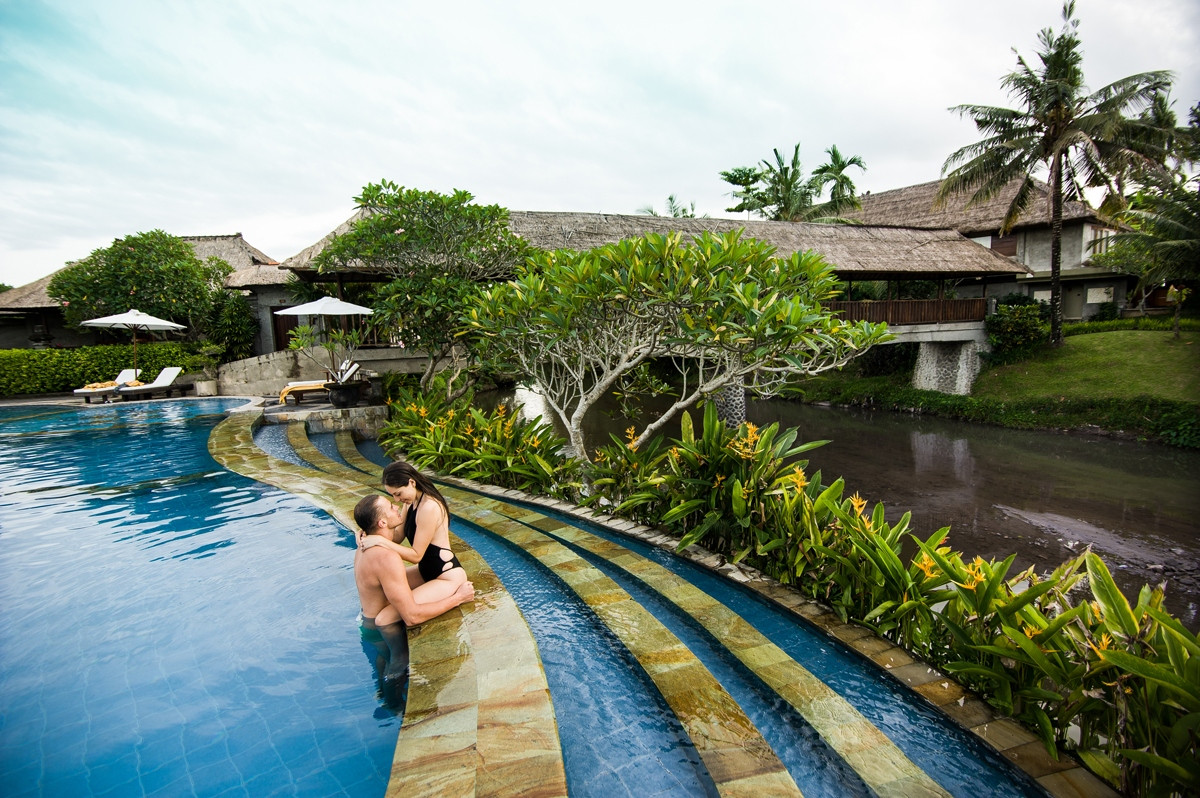
Ubud sits inland, surrounded by rice terraces and river valleys, and runs on a noticeably calmer rhythm than the coast. The Tegalalang Rice Terrace and the Campuhan Ridge Walk are both free and best done before 9am, while the area's spa culture (Balinese massage, flower baths, sound healing) gives the slow afternoons somewhere to go. Tirta Empul Temple's holy spring water ceremony draws both worshippers and curious visitors, and the Sacred Monkey Forest sits walkable from most central hotels.
02 · Best for clifftop luxury and a dramatic coastlineUluwatu:
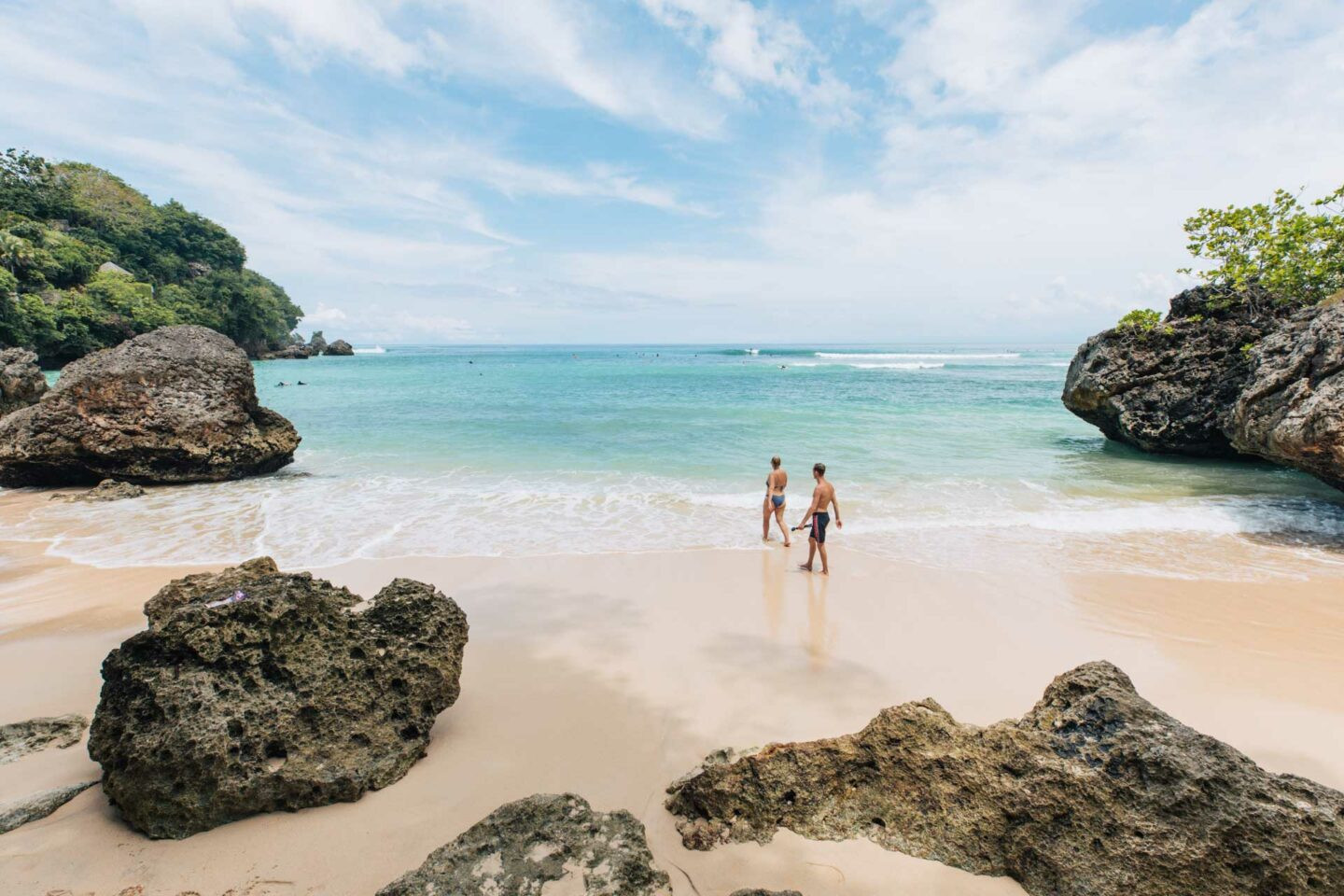
Uluwatu sits on the southern tip of Bali, where limestone cliffs drop straight into the Indian Ocean. Uluwatu Temple perches on one of those cliffs and hosts the Kecak Fire Dance at sunset, a chanting, fire-lit performance that's become one of the island's signature evening activities. Below the cliffs, Suluban Beach is reached by a narrow staircase carved into the rock, and world-class surf breaks (Uluwatu, Padang Padang, Bingin) draw a different crowd than the honeymoon resorts above them.
03 · Best for resort-only relaxation with zero logisticsNusa Dua:
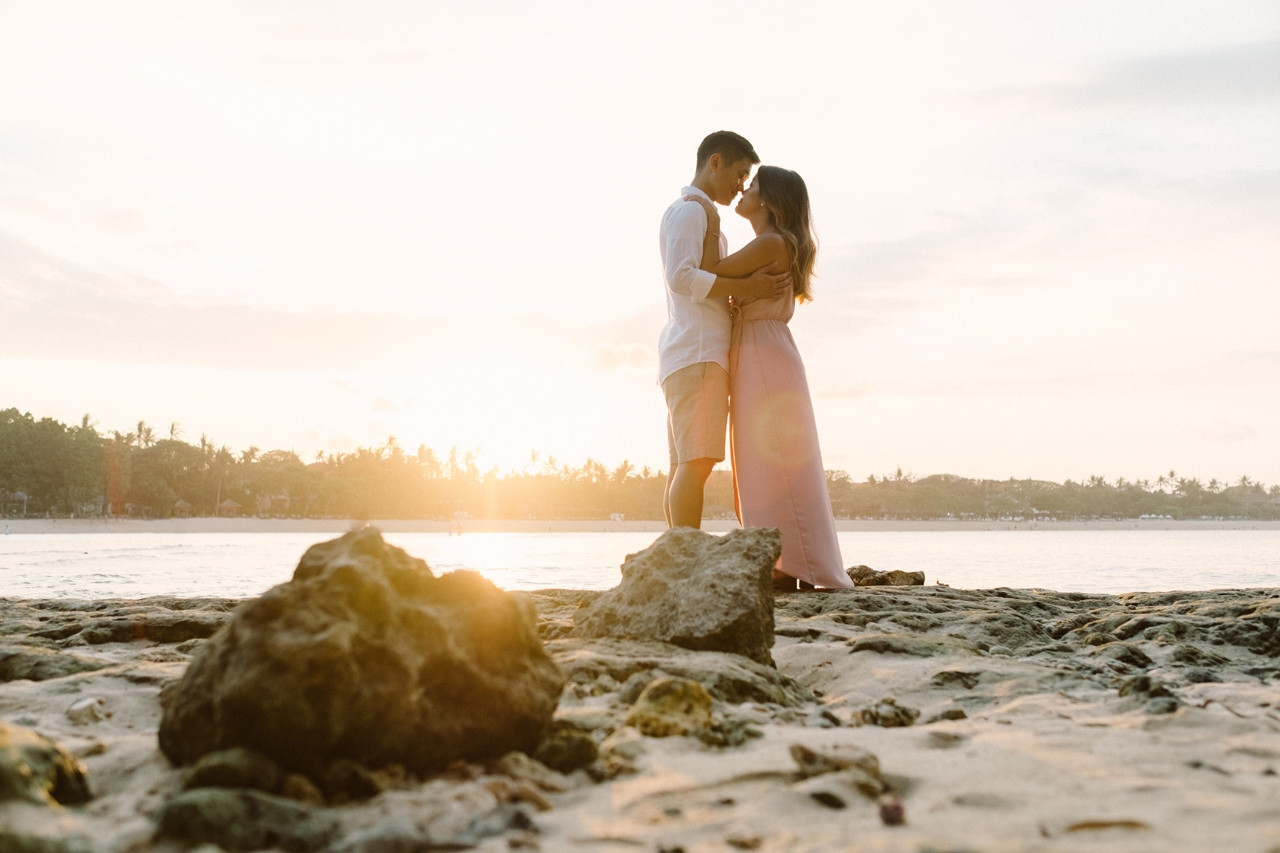
Nusa Dua is Bali's most planned, resort-dense district, wide white-sand beaches, calm water, and a stretch of international five-star properties built specifically for couples who'd rather not coordinate day trips. The Bali Collection mall and several golf courses sit within the development, and the area's protected reef makes for some of the calmest swimming on the island.
04 · Best for a beachfront seafood dinnerJimbaran Bay:
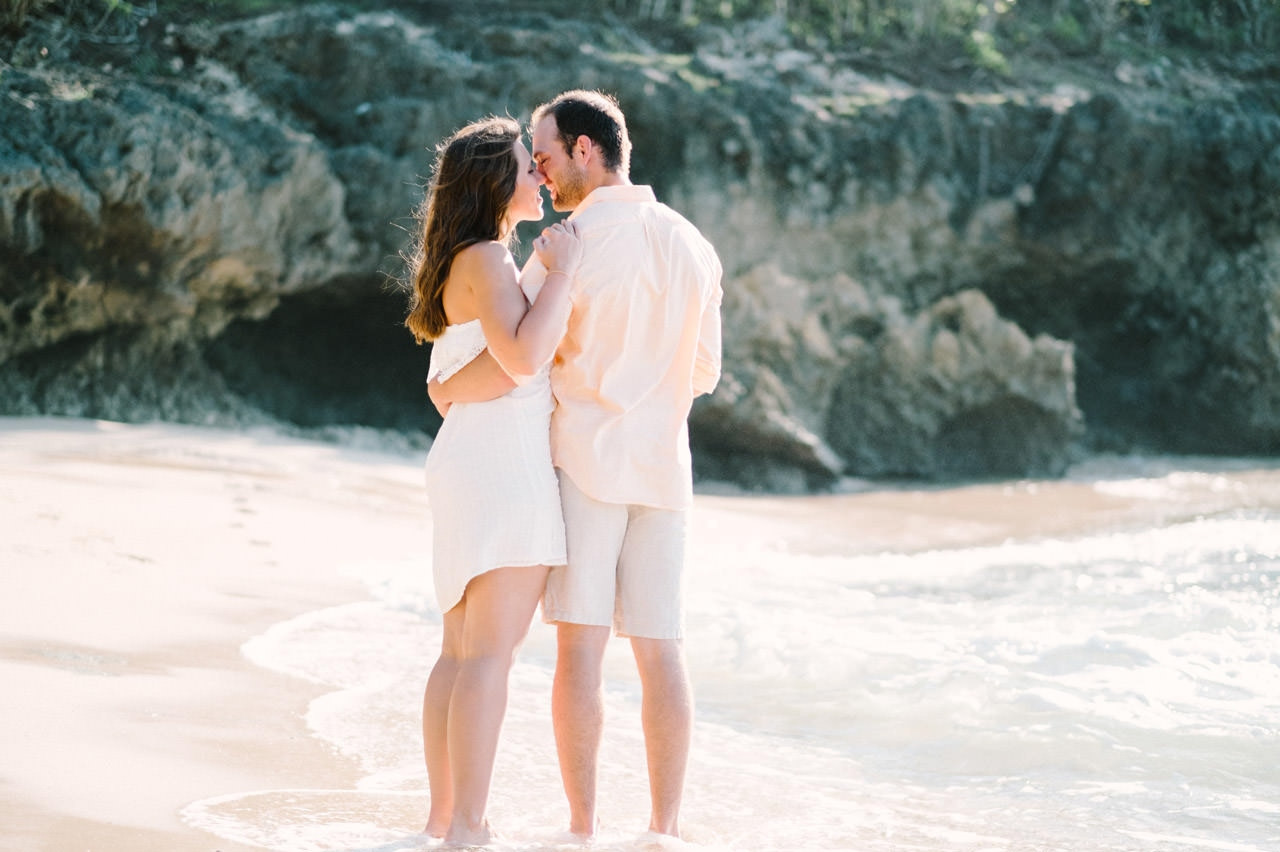
Jimbaran's stretch of beachfront seafood grills, tables set directly in the sand, is one of the most reliably romantic single evenings in Bali rather than a full base for a stay. Order by weight at one of the grill stalls, watch the sunset over the bay, and treat it as an evening trip from Uluwatu or Nusa Dua rather than its own multi-night stop.
The Trendy Coast: Seminyak and Canggu:Beach clubs, fine dining, and the easiest base for day trips
05 · Best for beachfront luxury and central locationSeminyak:

Seminyak runs the most consistently high-end stretch of Bali's coastline: beach clubs, fine dining, designer boutiques, and a sunset scene that draws a crowd every evening regardless of season. It's also the most central base on this list, 20 minutes to Canggu, an hour to Ubud or Uluwatu, which makes it workable as either a multi-night stay or the launch point for day trips elsewhere.
06 · Best for a surf-town vibe with quieter villas nearbyCanggu:
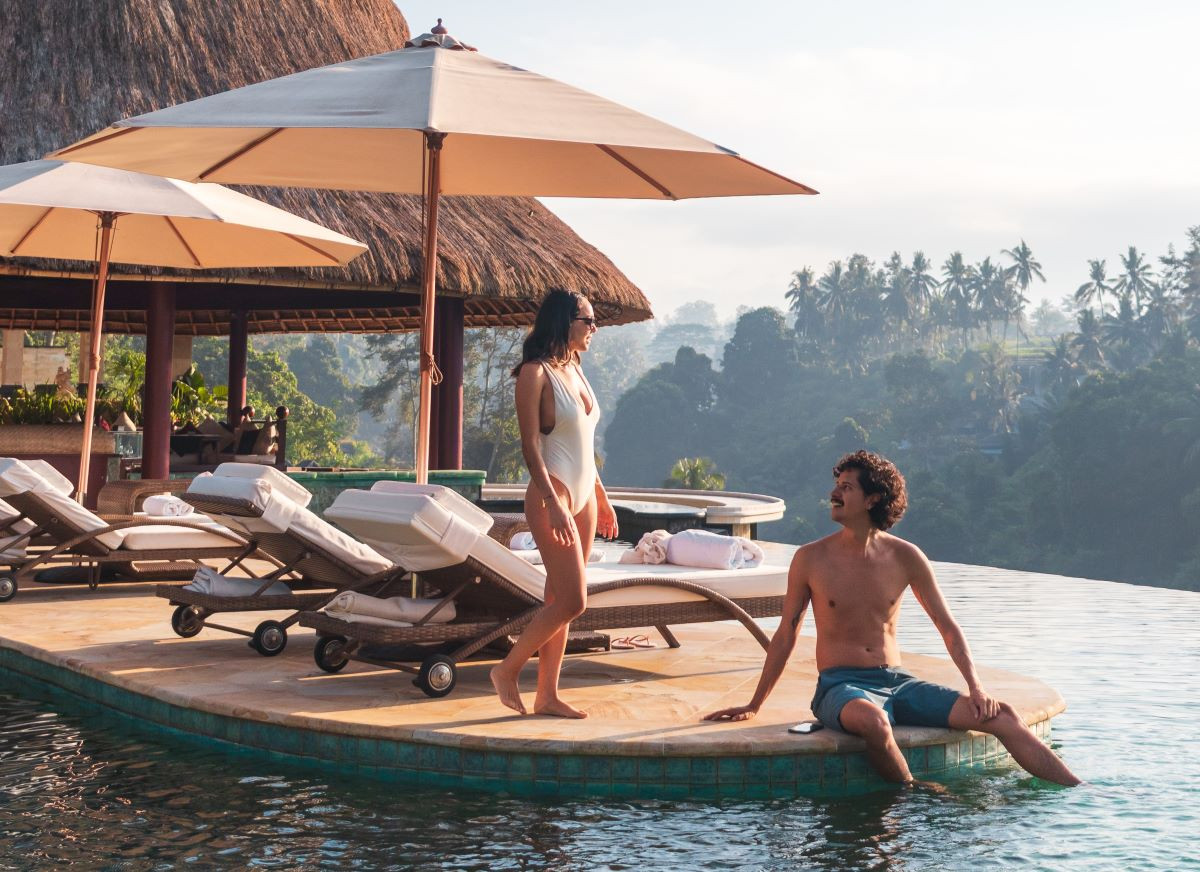
Canggu sits just up the coast from Seminyak with a younger, surf-and-cafe atmosphere, sunset bars, black-sand beaches, and a noticeably more laid-back pace despite the growing crowds. Couples who want Canggu's energy without staying directly in its busiest strip often base in nearby Pererenan instead, a quieter alternative with boutique villas overlooking rice fields, still a short ride from Canggu's restaurants.
Quieter Bali: Sidemen, Amed, and the North:Where to go if the south coast starts to feel crowded
07 · Best for rice terrace views without Ubud's crowdsSidemen Valley:
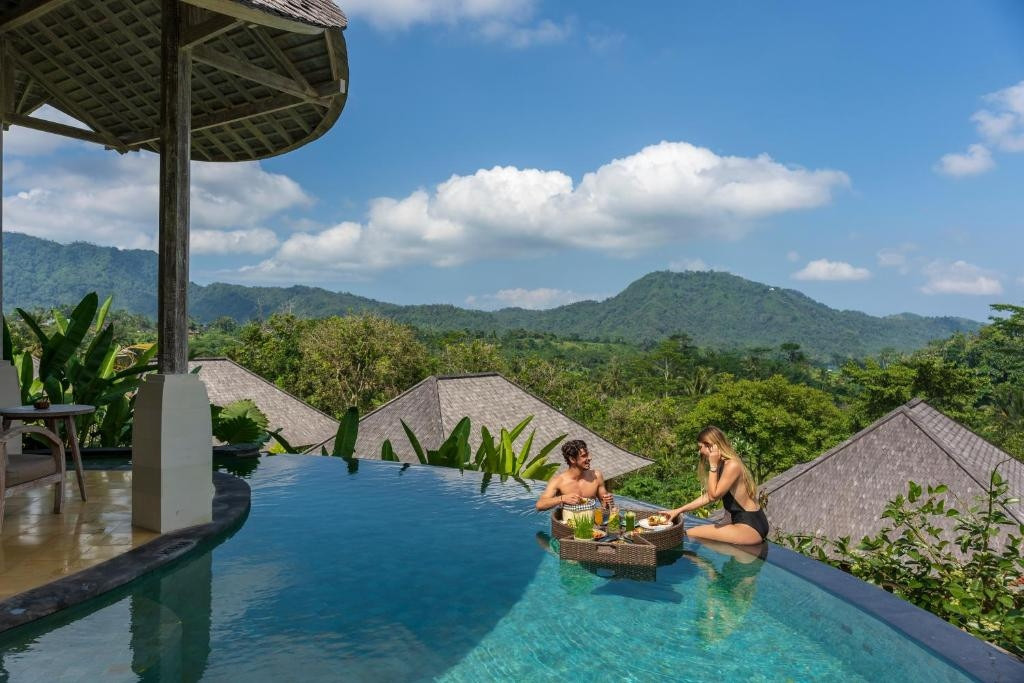
Sidemen sits in the foothills of Mount Agung, an hour or so from Ubud, with rice terraces that rival Tegalalang's but draw a fraction of the visitors. Besakih Temple, Bali's largest and most sacred temple complex, sits within reach, and the valley's guesthouses and boutique hotels run noticeably cheaper than equivalent properties closer to the coast.
08 · Best for diving and a genuinely slow paceAmed:
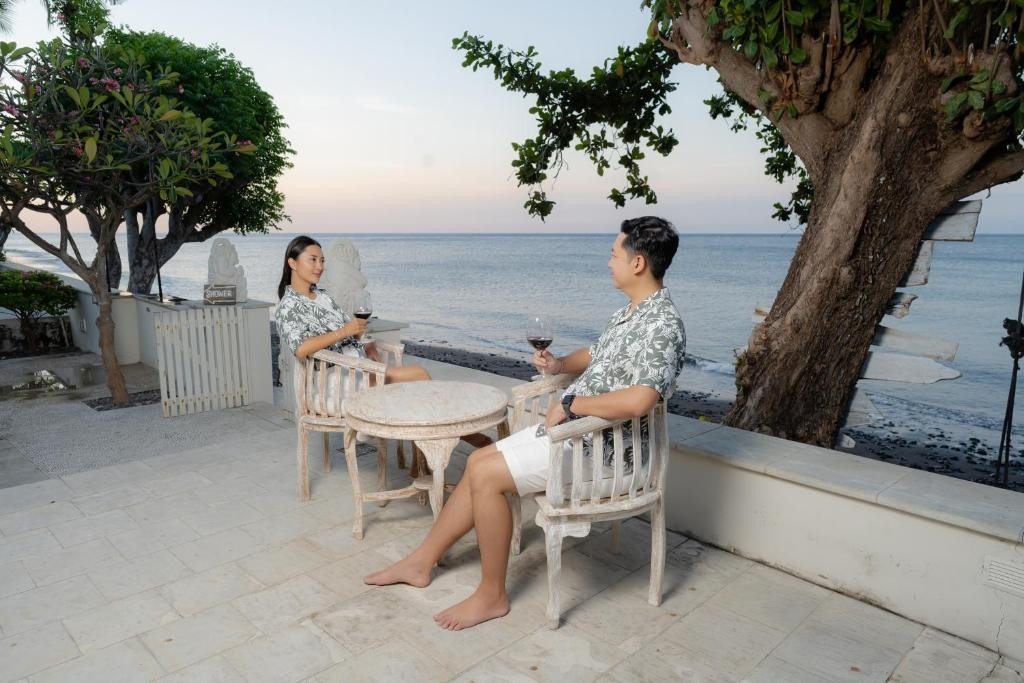
Amed runs along Bali's eastern coast, a string of fishing villages turned into one of the island's best diving bases, with the wreck of the USAT Liberty at nearby Tulamben drawing divers from across the region. The pace here is the real draw: no beach clubs, no nightlife strip, just black-sand coves and traditional salt farming continuing alongside the handful of dive shops and guesthouses.
09 · Best for dolphin watching and black-sand beachesLovina:
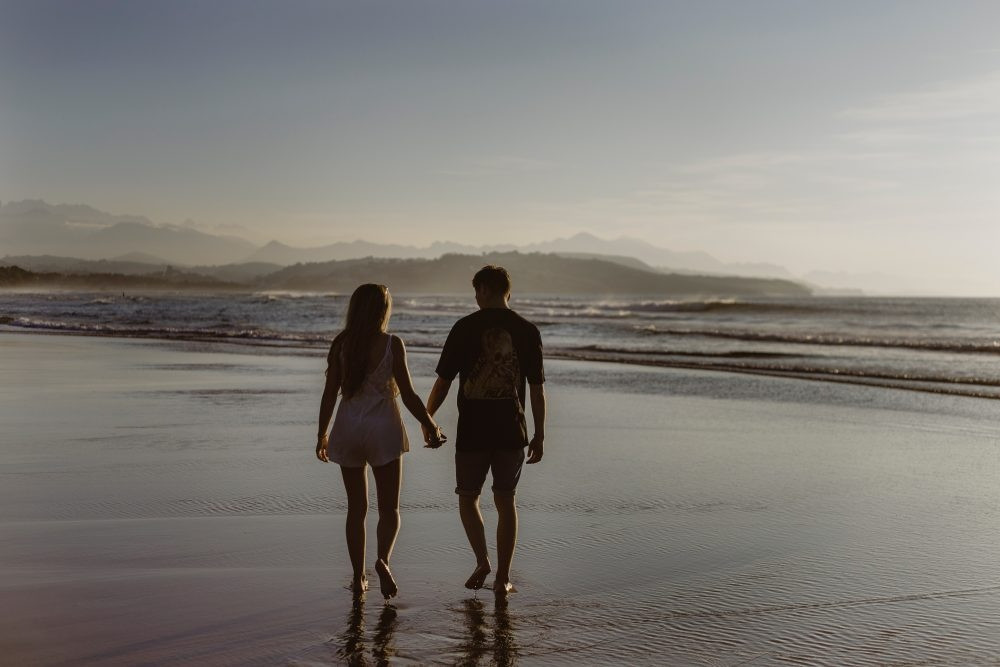
Lovina sits on Bali's north coast, calmer waters and black-sand beaches replacing the surf-driven south. Sunrise dolphin tours head out from the beach most mornings, a popular early activity, and the area's relative remoteness from the airport keeps it far quieter than anywhere in the south.
10 · The rice terrace photo everyone's seenTegalalang Rice Terrace:

Tegalalang's stepped rice fields, shaped over centuries using the traditional subak irrigation system, sit about 10 minutes north of central Ubud and draw crowds by mid-morning. Arrive before 8am to walk the terraces without a line of people in every photo, and expect small entrance donations requested at various points along the path.
11 · A sunrise hike, not a casual stopMount Batur:

Mount Batur is an active volcano standing 1,717 meters above the caldera lake Danau Batur, and the sunrise trek to its summit is one of Bali's most popular adventure activities for couples who want one genuinely physical day in the itinerary. Most routes start around 3-4am from the village of Toya Bungkah, take about two hours to the top, and end with a hot spring soak afterward. This is a real hike, not a casual viewpoint stop, so come prepared with proper shoes.
12 · A sea temple built on a rock formationTanah Lot:
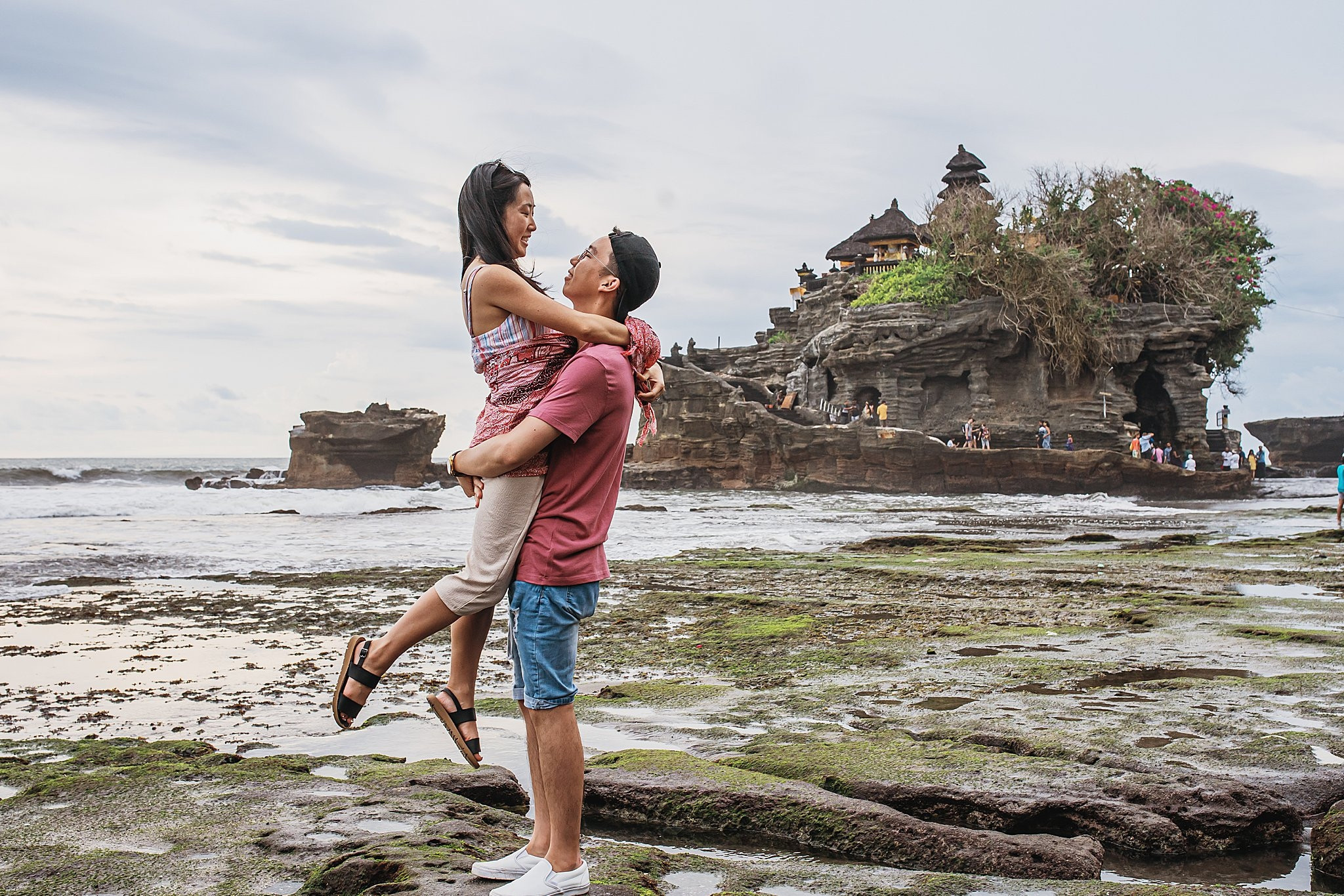
Tanah Lot means "land in the middle of the sea" in Balinese, and the 16th-century temple sitting atop its offshore rock is one of the island's most photographed sunset spots. The causeway connecting it to the mainland is only walkable at low tide, so check tide times before planning the visit, and expect a genuinely large crowd gathering for sunset specifically.
13 · A water temple that looks like it's floatingPura Ulun Danu Bratan:
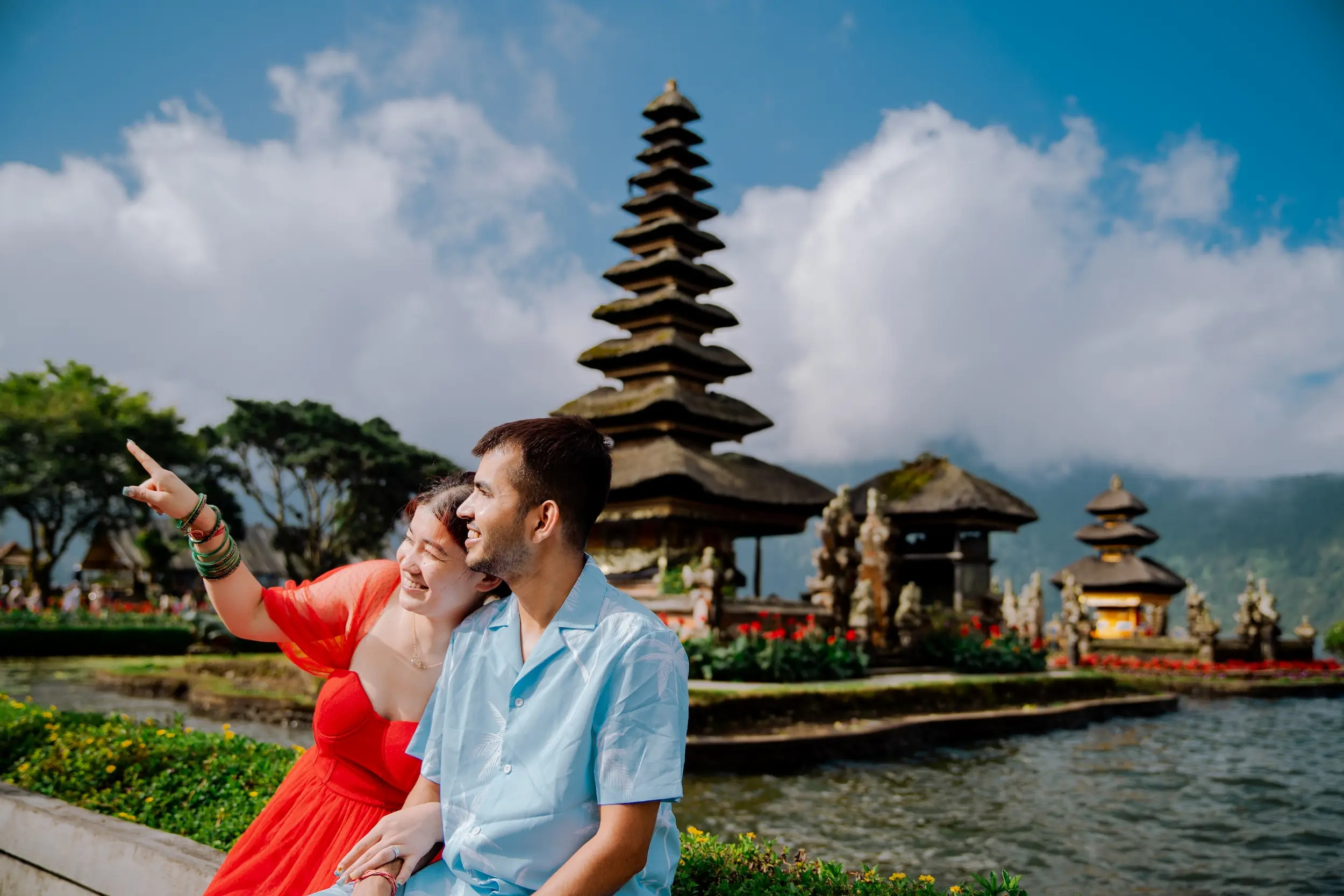
Built in the 17th century on the shores of Lake Bratan in the cooler central highlands, this water temple's multi-tiered shrines (11 tiers on the central one) seem to float on the lake when water levels run high. The mountain backdrop and noticeably cooler air make it a refreshing stop if you're coming from the heat of the coast.
Outer islands: Nusa Penida, Lembongan, and the GilisWhere to go if you want a genuinely different island in the same trip
14 · Cliffside viewpoints and the island's best day tripNusa Penida:
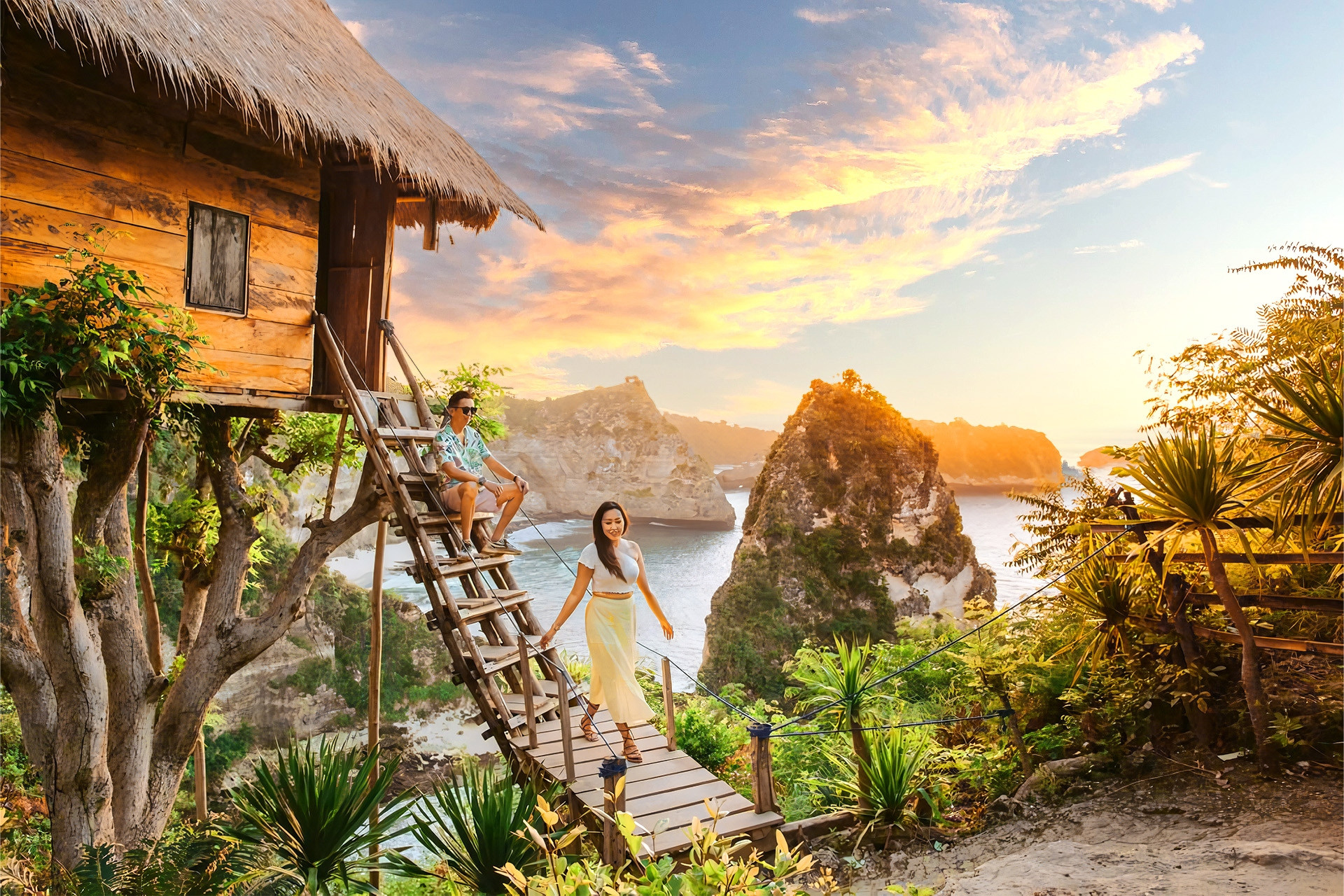
Nusa Penida's cliffside viewpoints (Kelingking Beach's T-rex-shaped headland is the most photographed) and clear water have made it the most popular single-day excursion from Bali. Accommodation options are thinner and rougher than Bali proper, which is why most couples treat it as a day trip from Sanur rather than a multi-night stay, though staying over removes the rushed feeling of a single-day visit.
15 · Smaller, calmer, and easier to stay overnightNusa Lembongan:
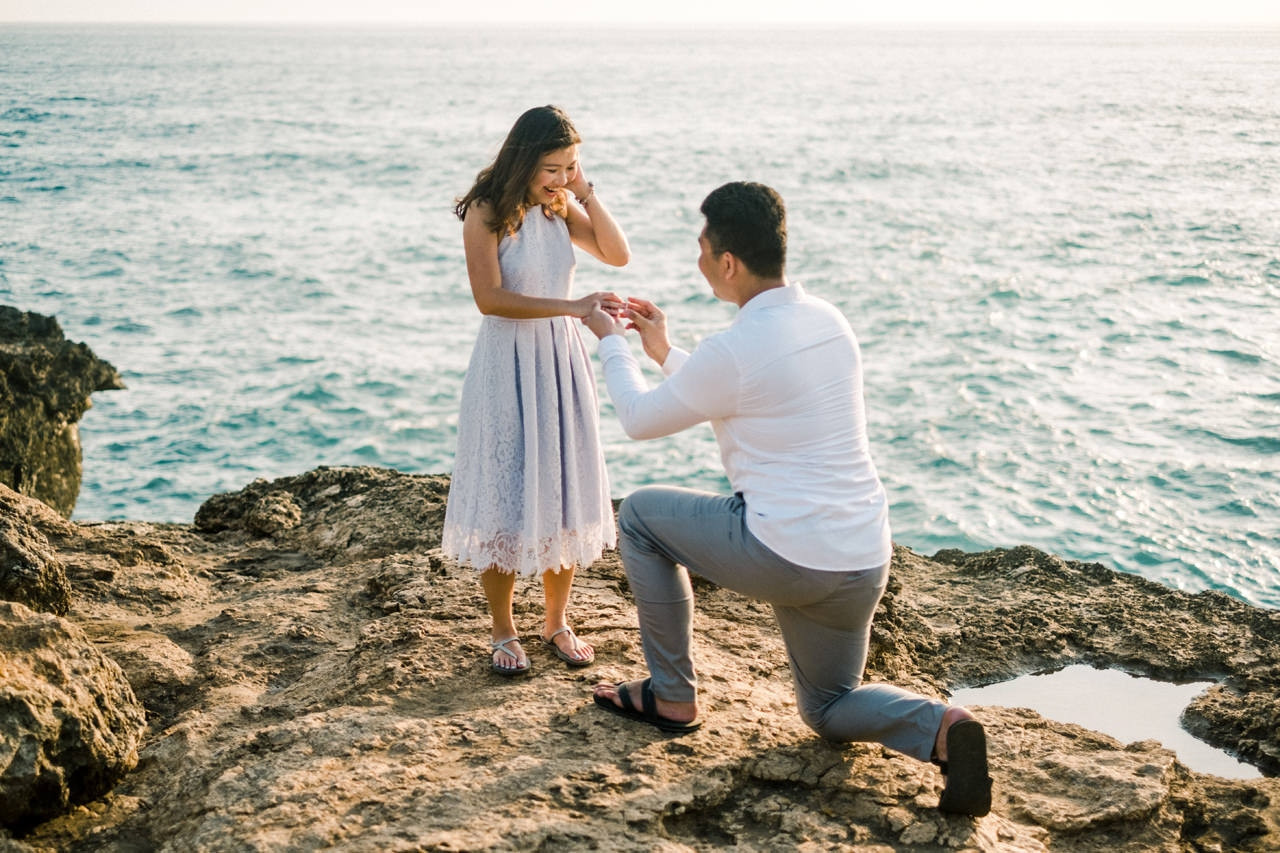
Nusa Lembongan, one of the three Nusa islands alongside Penida and Ceningan, runs about 8 square kilometers and has the most developed stay options of the three. Mangrove forests, seaweed farms, and beaches like Dream Beach and Jungut Batu cover the coastline, and a suspension bridge connects over to Nusa Ceningan for sunset views from Ceningan Ridge.
16 · No cars, no motorbikes, three different vibesGili Islands:
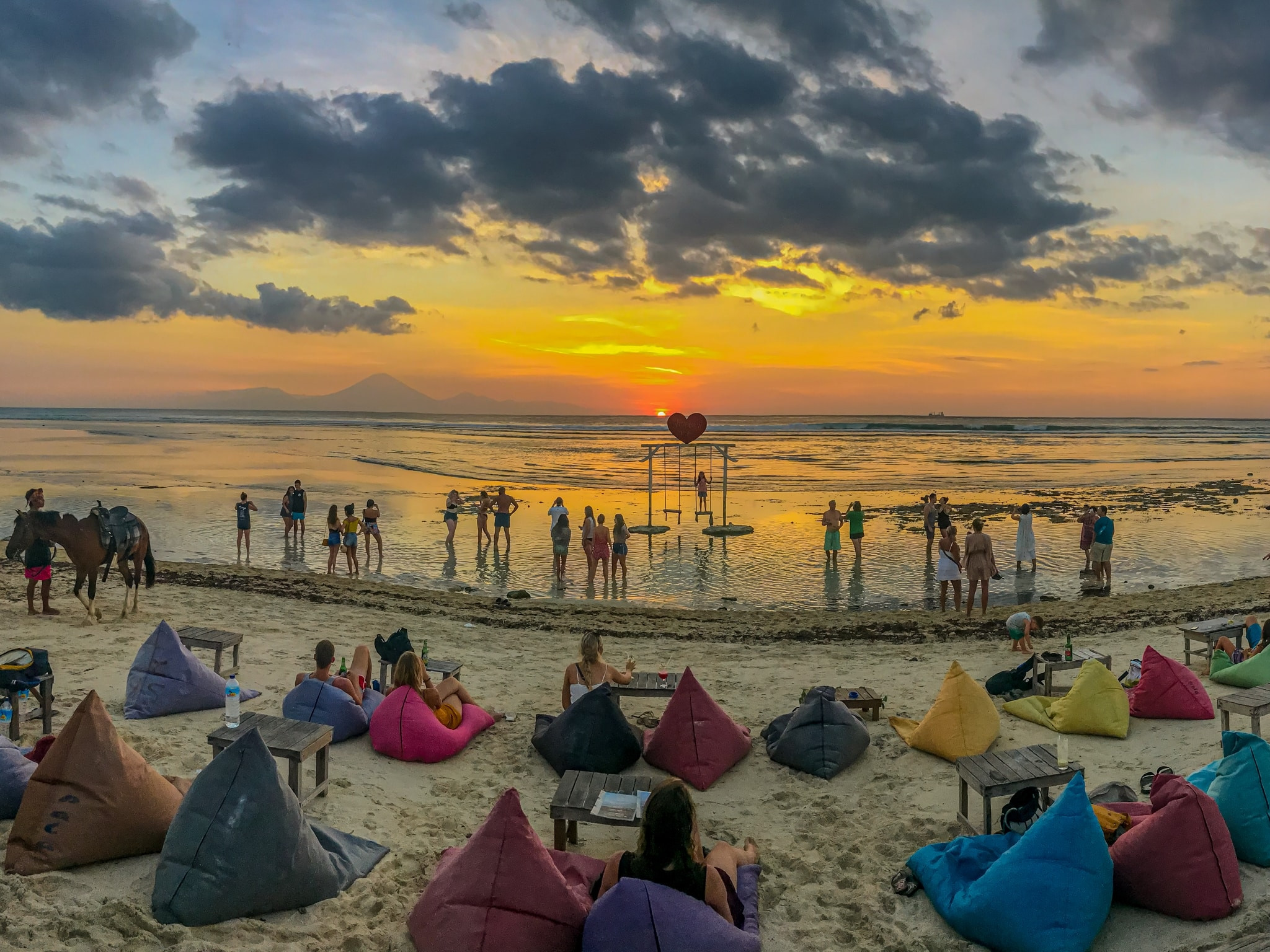
The three Gili Islands sit off Lombok, near Bali rather than part of it, and ban motorized vehicles entirely; getting around means walking, cycling, or riding a horse-drawn cidomo. Gili Trawangan runs the liveliest nightlife of the three, Gili Meno the quietest and most secluded, and Gili Air a middle ground between the two. Getting there involves a roughly two-hour drive plus an hour-long boat crossing that can run choppy, genuinely the least luxurious leg of a Bali honeymoon, but most couples who make the trip say the white sand and turtle sightings are worth the effort.
Frequently Asked Questions (FAQ's):The questions couples actually search before booking
Q. Do I need a visa for a Bali honeymoon?
Most nationalities, including the US, UK, Australia, and most of Europe, get a Visa on Arrival (VOA) for IDR 500,000, about $35, valid for 30 days and extendable once for another 30. Apply for the e-VOA online before flying to skip the airport queue, or pay at a counter on arrival. You'll also need to pay Bali's tourist levy of IDR 150,000, about $10, online before arrival.
Q. How much does a Bali honeymoon cost?
A comfortable 8-night Bali honeymoon for two runs $3,200 to $6,500 in 2026, including international flights, private pool villas, restaurant meals, and a private driver. Luxury trips at top properties like Capella Ubud or Amandari run $8,000 to $12,000 for 10 nights. Budget travelers can do a full week for under $1,500 outside flights using guesthouses and local warungs.
Q. What is the ideal length for a Bali honeymoon?
7 to 10 days is the most common length, enough for two or three regions without rushing. Three nights in Ubud, three in Uluwatu or Seminyak, and a day trip to Nusa Penida covers the highlights comfortably. Trips under 5 days usually mean picking one region only.
Q. What is the best time of year for a Bali honeymoon?
The dry season, April through October, offers the most reliable sunshine and calm seas for island day trips. July and August bring the biggest crowds and highest prices. Late September into October often gives dry-season weather with thinner crowds and rates around 25% lower than peak summer.
Q. Which region in Bali is best for honeymooners?
Ubud suits couples who want jungle scenery, rice terraces, and a slower pace. Uluwatu and Seminyak suit couples who want clifftop or beachfront luxury resorts and a livelier dining scene. Most honeymooners split their stay across two regions rather than picking just one.
Q. Can unmarried couples share a hotel room in Bali?
Yes. Hotels in Bali's tourist areas do not check marital status or ask for a marriage certificate, and unmarried couples share rooms routinely. This differs from some other parts of Indonesia, but isn't an issue in Bali's hospitality industry.
Q. Is Bali cash-based or can I use cards everywhere?
Hotels, larger restaurants, and shops in tourist areas accept cards, but smaller warungs, market stalls, and many drivers expect cash in Indonesian Rupiah. Withdraw cash from an ATM after clearing customs rather than exchanging at the airport arrivals hall, where rates run 8-12% worse than in town.
Q. What is Nyepi and does it affect a honeymoon trip?
Nyepi is Bali's Day of Silence, a Hindu New Year observance when the entire island shuts down for 24 hours: no flights, no driving, and guests are expected to stay inside their hotel. In 2026, Nyepi falls on March 29. Check the date before booking if traveling in March.
Q. How do I get around Bali during a honeymoon?
There's no train or honeymoon-friendly bus network. Most couples hire a private driver for full or half days, which runs $30-50 a day and covers point-to-point sightseeing. Ride-hailing apps like Grab and Gojek work well within a single area like Seminyak or Ubud. Renting a scooter requires an international driving permit and is genuinely risky given Bali's traffic.






{{item.get_author.first_name}} {{item.get_author.last_name}}
Level 7
5 Photos
36 Reviews
{{item.comment_txt}}
{{item_reply.get_author.first_name}} {{item_reply.get_author.last_name}}
@ {{item_reply.reply_to}}, {{item_reply.reply_txt}}