
At airport security almost anywhere in the world, you show your boarding pass and ID, put your bags through an X-ray or CT scanner, walk through a metal detector or body scanner, and collect your things. It is the one part of a trip where a small packing mistake can cost you a bottle of perfume, a pocket knife or half an hour in a search lane. What changes from country to country is the detail, and those details changed a lot in 2025 and 2026.
This guide explains everything you need to know about airport security as of October 2026: the liquids rules at US, UK and EU airports, the end of shoe removal at US checkpoints, REAL ID and the TSA's ConfirmID fee, the new power bank limits, and the border systems that now sit alongside security in Europe. It is written for international travelers, so where a rule depends on your passport or departure airport, we say so.
Airport security rules at a glance (October 2026)
- US liquids: 3-1-1 rule still applies (3.4 oz / 100 ml containers)
- UK and EU liquids: up to 2 litres at some CT-equipped airports, 100 ml elsewhere
- Shoes at US checkpoints: stay on since July 2025, unless an alarm needs checking
- US domestic ID: REAL ID or passport; US$45 ConfirmID fee without one
- Power banks: cabin bag only; over 100 Wh needs airline approval
- Arrive: about 2 hours before domestic, 3 hours before international flights
- Schengen borders: EES biometric registration fully live since 10 April 2026
- Exempt liquids: medicines, baby milk and baby food, declared at the belt
Why airport security rules differ between countries
Each country sets its own screening rules, based on international standards from ICAO and on the equipment its airports have installed. The United States follows the Transportation Security Administration (TSA). The UK follows the Department for Transport, and each EU state applies European Commission regulations through its own authorities. That is why a toiletry bag that passes in London can be stopped in Paris on the same trip.
The biggest driver of change is the computed tomography (CT) scanner. These machines build a 3D image of your bag, so at many airports you can now leave laptops inside, and at approved UK and EU airports you can also carry larger liquids. The catch is that approval is airport by airport. Your outbound and return airports, and every connection where you go through security again, can follow different rules.
Check each airport's own website a few days before flying, since a scanner upgrade or a temporary restriction can change what is allowed.
Liquids rules at airport security in 2026
The safest liquids rule for airport security in 2026 is the strictest one on your route: containers of 100 ml or less in one clear, resealable bag of about one litre, which works at every airport. In the United States that is the TSA's 3-1-1 rule, and medicines, baby formula and breast milk are allowed above the limit.
United States: the 3-1-1 rule
The TSA rule is still 3-1-1: liquids, gels, aerosols and pastes in containers of 3.4 ounces (100 ml) or less, all in one quart-sized clear bag, one bag per passenger. The limit applies to the size of the container, whatever the amount inside, so a half-empty 200 ml bottle will be taken. Larger bottles go in checked baggage.
Medicines, baby formula, breast milk and baby food are allowed in reasonable quantities above the limit. Take them out of your bag and tell the officer at the start of screening, because they may be tested separately. Some US airports now have CT scanners that let you keep a laptop in the bag, but the liquids limit has not been lifted with them. If you are planning a trip to see the famous landmarks of the United States, pack toiletries for the 3-1-1 rule on every domestic leg.
In short: 100 ml per container, one quart bag each, medicines and baby milk exempt, and laptops stay packed only in CT lanes.
United Kingdom: 2 litres at some airports, 100 ml at others
Several UK airports with approved CT scanners now accept liquid containers of up to 2 litres in hand luggage, and you no longer need to take them out of your bag. As of early 2026 these included Heathrow, Gatwick, Edinburgh and Birmingham. Other large airports, including Manchester, Stansted and Luton, were still applying the 100 ml rule at the same time, and the list keeps changing as scanners are approved.
Two traps catch travelers. First, the larger allowance applies only at the airport where you are screened: fly Heathrow to Paris with a 1-litre bottle, and you may lose it when you are screened again on the way home. Second, vacuum flasks must be empty, because the scanners cannot see through the double wall.
So the rule you face depends entirely on the airport: 2 litres where scanners are approved, 100 ml in a clear bag everywhere else, with your return airport's rule deciding what you can bring home.
European Union: airport by airport
The EU reimposed the 100 ml limit in 2024 while it reviewed the new scanners, then allowed approved C3-standard machines to screen containers of up to 2 litres again. Airports that have the approved equipment, and have chosen to use it, can apply the higher limit. Many large hubs still run the 100 ml rule, including airports in Paris, Madrid, Lisbon and Athens as of early 2026.
Some airports operate both kinds of lanes in the same terminal, so the rule can depend on which queue you join. If you want to carry full-size toiletries, check the airport's own security page for your departure date, and pack for 100 ml if it is unclear.
Duty-free liquids bought on the way out should stay sealed in the shop's bag until you reach your final airport.
Asia and the Middle East: rescreening at transfers
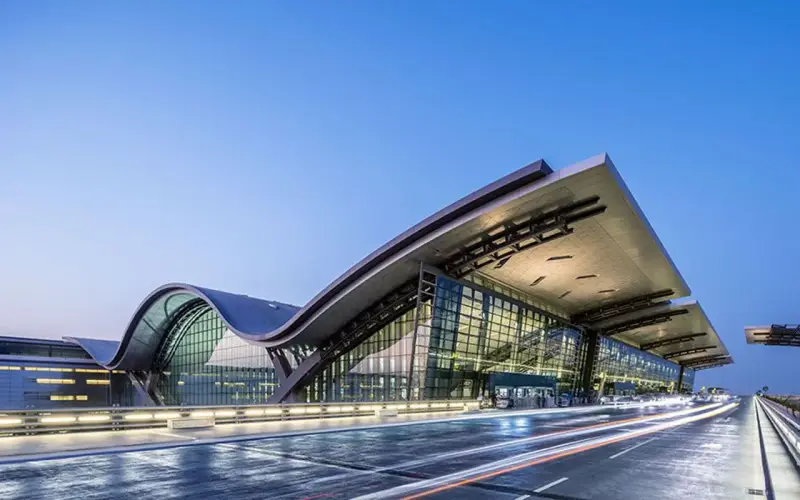
Most airports in Asia and the Middle East apply the 100 ml rule. Large transfer hubs such as Doha, Dubai, Singapore and Istanbul screen connecting passengers again, so liquids bought in duty-free at your first airport can be taken at the second unless they stay sealed in a tamper-evident bag (STEB) with the receipt inside. Some airports, including Singapore Changi, screen at the gate with no central checkpoint, so water bought airside may have to be finished before you board.
Many airports in South and Southeast Asia also run a second, random check at the gate, and some check checked bags for power banks and lighters after you drop them. If staff call your name to the baggage area, a battery is the usual reason.
The safe habit across the region is simple: keep spare batteries out of checked bags entirely.
Carry-on liquid limits by region (October 2026)
| Region | Container limit | Clear bag needed? | Laptop out? |
|---|---|---|---|
| United States | 3.4 oz / 100 ml | Yes, quart-sized | Yes, except CT lanes and PreCheck |
| UK, approved airports | 2 litres | No | No |
| UK, other airports | 100 ml | Yes | Usually yes |
| EU, C3 airports applying it | 2 litres | No | No |
| EU, other airports | 100 ml | Yes | Usually yes |
| Most of Asia and Middle East | 100 ml | Yes | Varies by airport |
Permitted and prohibited items in carry-on and checked bags
Prohibited-item lists are long, but a few categories cause nearly all the confiscations. Knives of any length, including small folding pocket knives, are banned from the cabin in most countries, along with scissors with long blades, tools, sporting bats and replica weapons. They can travel in checked luggage. Lighters and matches are usually limited to one per person, carried on your body, and are banned from checked bags.
Batteries work the other way round. Spare lithium batteries, power banks and e-cigarettes must go in the cabin, never in checked luggage, because a fire in the hold is far harder to fight. Since January 2026 a growing number of airlines, including the Lufthansa Group, have also banned using or charging power banks during the flight, and limit passengers to two. Power banks of 100 Wh or less (about 27,000 mAh) need no approval; between 100 and 160 Wh you need the airline's permission; above 160 Wh they cannot be carried at all.
Food is generally allowed through security as long as it is solid. Spreads, soups, yogurt, honey and sauces count as liquids. Customs rules at your destination are a separate question: Australia, New Zealand and the United States are strict about fresh fruit, meat and dairy, and undeclared food can bring a fine on arrival. For a fuller checklist of what to bring, see our complete travel packing list.
Documents you need at the security checkpoint
You need a boarding pass, on paper or on your phone, and a valid ID. The name on the ticket must match your ID exactly, including middle names where the booking includes them. For international flights the ID is your passport, and many countries require it to be valid for six months beyond your arrival date, so check the rule for your destination.
On US domestic flights, the TSA has enforced REAL ID since 7 May 2025. Adults need a REAL ID-compliant driving licence (marked with a star), a passport or another accepted ID. Since 1 February 2026, travelers aged 18 and over without one can pay a US$45 TSA ConfirmID fee to have their identity checked another way; the payment is valid for ten days, it does not guarantee you will be cleared, and the extra check takes time. Visas are a border question that security staff leave alone. The airline checks them at check-in, and rules depend on your passport. Check our visa pages or the official portal of your destination country well before you fly.
How long before your flight to arrive at the airport
Airlines generally advise arriving 2 hours before a domestic flight and 3 hours before an international one. Treat these as the minimum at peak times: early morning departure banks, Friday evenings, school holidays and the days around major festivals. Check-in and bag drop desks usually close 45 to 60 minutes before an international departure, and boarding gates often close 15 to 20 minutes before take-off.
Many airports publish live queue times on their websites or apps, and some, including several UK and US airports, let you book a free or paid security time slot. If you have only hand luggage and checked in online, you can go straight to security, which saves the most time.
Allow extra time if you need to drop a bag, are traveling with young children or need special assistance. At large hubs, the walk or shuttle train from security to a remote gate can take longer than expected, so check the gate number and walking time shown on airport screens as soon as you are through.
 Umrah packages from Dhaka
What happens at the security checkpoint, step by step
The security checkpoint follows five steps in almost the same order worldwide, starting with an ID and boarding pass check by an officer or automatic gate, then loading coats, belts, pocket contents, the liquids bag and large electronics into trays before the scanners. Knowing the order in advance means you can prepare while you wait in the queue.
The screening process in five steps
- Step 1, ID and boarding pass check: An officer or an automatic gate scans your boarding pass and checks your ID. At many US airports, TSA uses credential readers or facial comparison; you can ask for a manual check instead.
- Step 2, Loading the trays: Coats, belts and the contents of your pockets go in a tray. Take out the liquids bag and large electronics unless signs at a CT lane tell you to leave them in. Phones, keys and coins go in your bag or a small tray.
- Step 3, Body scanner or metal detector: You walk through an arch or stand in a millimetre-wave scanner with your arms raised. Tell the officer about implants, prosthetics or insulin pumps before you go through; in most countries you can ask to skip the scanner and have a pat-down.
- Step 4, Additional screening if needed: An alarm or a random selection leads to a pat-down, a hand search of your bag or an explosive trace swab of your hands or belongings. You can ask for a private room and a same-gender officer.
- Step 5, Collecting your belongings: Take everything to the repacking benches and keep the belt clear. Count your trays: phones, passports and laptops left behind are the most common lost items at checkpoints.
Shoes, belts and laptops: what to take off in 2026
In the United States, the TSA ended routine shoe removal on 8 July 2025. Passengers in standard lanes now keep their shoes on, although an officer can still ask you to remove them if an alarm needs resolving. Belts, jackets and heavy jewellery usually still come off in standard lanes. Outside the US, shoe rules vary: many European and Asian airports ask for boots and heavy shoes to go through the scanner, so wear footwear that is easy to slip off.
Laptops and tablets come out of the bag in standard lanes with older X-ray machines. At CT lanes, and for TSA PreCheck members, they usually stay inside. Follow the signs at the lane you are in, because neighbouring lanes in the same airport can use different machines.
Before reaching the belt, move coins, keys and your phone into your jacket or bag, and use as few trays as possible to keep the line moving.
Trusted traveler programmes and faster security lanes
TSA PreCheck gives members a dedicated lane at US airports where shoes, belts and light jackets stay on and laptops and compliant liquids stay in the bag. Global Entry, run by US Customs and Border Protection, speeds up arrival into the US for approved travelers and includes PreCheck. Both require an application, a fee and an interview or background check, and eligibility depends on your nationality.
Outside the US, many airports sell fast-track security as an add-on through the airport website or the airline, and business-class tickets and higher airline status often include it. Families with small children, passengers with reduced mobility and travelers with hidden disabilities can usually use assistance lanes; the sunflower lanyard scheme for hidden disabilities is recognised at many airports worldwide. Request assistance through your airline at least 48 hours before departure.
As of October 2026, TSA PreCheck costs about USD 78 for five years and Global Entry USD 120 for five years.
Security and border control on international trips
On an international departure you pass security and, in most countries, exit passport control. On arrival you go through immigration and then customs, where you declare goods above your allowance, large sums of cash above the national threshold, and restricted foods, plants and animal products. Declaring something and paying duty is always better than being caught; undeclared items can be confiscated and fined.
In the Schengen area, the EU Entry/Exit System (EES) became fully operational on 10 April 2026. Non-EU visitors on short stays now register fingerprints and a facial image at their first entry, which replaces passport stamps and can add time at the border on your first trip. The separate ETIAS travel authorisation for visa-exempt visitors is not yet in operation as of October 2026, and the EU has said it will announce the start date months in advance.
On connecting flights, expect to pass security again at many hubs, and in the US you always collect checked bags after immigration and recheck them, even when connecting onward. When a connection involves two separate tickets, allow several hours. If you are comparing routes, our guide to budget airlines explains which carriers sell through-tickets and which do not.
Special cases at security: children, medication, mobility aids and medical devices
Every major security authority has set procedures for travelers who cannot go through the standard checkpoint in the standard way. The rules below follow the common practice of the US TSA, the UK and EU authorities as of October 2026; the details vary by airport, so the safest move is always to tell the officer at the very start of screening.
What to expect in each situation
| Situation | At the checkpoint | Before you fly |
|---|---|---|
| Babies and young children | Children are screened with adapted procedures that make a pat-down less likely; pushchairs and car seats go through the X-ray if they fit; you carry infants through the scanner or metal detector | Fold the pushchair quickly and keep formula, breast milk and baby food in a separate bag for inspection |
| Liquid medicines and medical liquids | Allowed above the 100 ml limit in reasonable quantities; declare them and expect extra testing | Keep them in original packaging with a prescription or doctor's letter |
| Syringes, insulin and pumps | Needles are allowed with the medication they belong to; insulin pumps and glucose monitors should not go through the body scanner or X-ray unless the maker says they can | Carry the manufacturer's guidance card and ask for a pat-down or hand inspection |
| Wheelchairs and mobility aids | You can stay in your own wheelchair and be screened by pat-down; walking sticks and crutches are X-rayed | Book assistance with the airline at least 48 hours ahead |
| Implants, pacemakers and prosthetics | Tell the officer before screening; you can ask for a pat-down and skip the walk-through detector | Carry the device card or a medical letter |
| CPAP machines and portable oxygen | Screened separately from your bag, and on most airlines they do not count towards the cabin bag allowance | Check the airline's rules for portable oxygen concentrators and batteries |
| Hidden disabilities, autism, anxiety | Many airports recognise the Hidden Disabilities Sunflower lanyard and offer quieter lanes or extra time | In the US, request a TSA Cares passenger support specialist at least 72 hours before the flight, or call (855) 787-2227 |
Two habits prevent most problems. First, keep all medical items together in one clear bag at the top of your cabin bag, so they can be presented in seconds. Second, check the rules at your destination as well as your departure airport, because some medicines that are sold freely at home, including certain painkillers and ADHD medication, are controlled substances in other countries and need advance permission to carry.
Common airport security mistakes and how to avoid them
The mistakes that most often lead to bag searches and confiscations are forgetting that the return-leg airport may have a stricter liquids rule, packing a power bank in checked baggage, and carrying small tools such as multi-tools, bladed corkscrews or long-bladed nail scissors in hand luggage. Each is easy to avoid with a quick check before packing.
- Forgetting the return-leg rule. A 1-litre bottle allowed at your departure airport can be confiscated on the way home. Check both airports, plus any transfer airport where you are screened again.
- Checking in a power bank. Spare batteries and power banks belong in your cabin bag. Packed in a checked bag, they can lead to the bag being opened or offloaded.
- Small tools in hand luggage. Multi-tools, corkscrews with blades and nail scissors with long blades are common losses. Move them to checked luggage before you leave home.
- An overpacked cabin bag. Dense bags of cables and chargers are hard to read on X-ray and are often hand-searched. Pack electronics in one pouch near the top.
- Name mismatch. Book with the exact name in your passport. A missing middle name or a nickname can cause problems at check-in and security.
- Joking about threats. Comments about bombs or weapons are taken seriously everywhere and can lead to questioning, missed flights or arrest. Stay calm and follow instructions.
After security: lounges, gates and flight changes
Once you are through, find your gate first and check the walking time, because at large hubs it can be 15 minutes or more, sometimes with a train ride. Then relax: lounges are available through some credit cards, airline status or a day pass, and duty-free shops sell goods free of certain local taxes. Keep duty-free liquids sealed in the shop's bag with the receipt if you have another security check ahead.
If your flight is delayed or cancelled, your rights depend on where you fly. EU and UK rules (EU261 and its UK version) cover flights departing from those countries and flights arriving there on EU or UK airlines, with care such as meals during long delays and, in some cases, cash compensation. In the United States, the Department of Transportation requires airlines to refund passengers when a flight is cancelled or significantly changed and the passenger chooses not to travel. Turn on your airline's app notifications, and speak to the transfer desk or use the app to rebook; it is usually faster than a long queue. You can compare alternative routes on our flight search.
Planning a trip to United States? Read our United States travel guide, compare hotels in United States or search flights.








{{item.get_author.first_name}} {{item.get_author.last_name}}
{{item.comment_txt}}
{{item_reply.get_author.first_name}} {{item_reply.get_author.last_name}}
@ {{item_reply.reply_to}}, {{item_reply.reply_txt}}