
Hong Kong has more than twenty markets worth a traveler's time, and they fall into clear groups: evening bazaars in Kowloon, single-product streets around Mong Kok and Prince Edward, antique and dried-goods lanes in Sheung Wan, working wet markets, and a newer layer of design markets and outlet buildings. Entry is free everywhere, haggling is normal at open-air stalls, and almost every market sits within a short walk of an MTR station.
This guide is organised by what you want to buy and where it is, so you can plan a day by district and avoid crossing the harbour three times. For a closer look at the evening stalls of Temple Street and the Ladies' Market, read our separate guide to Hong Kong night markets and street markets; for hotels, transport and the rest of the city, start with our Hong Kong travel page.
How this list was built: Our travel desk grouped 22 markets by district and by what they sell, then checked locations, MTR access and published opening times against official Hong Kong tourism and government sources in October 2026. Stall hours vary by vendor and by season, so treat the times below as typical trading windows. Price bands are deliberately left out where they could not be confirmed.
The guide covers 22 markets across six districts. None charges entry (HK$0), and the earliest open at 7am.
Hong Kong markets compared at a glance
Hong Kong's markets split by district and time of day. Temple Street in Yau Ma Tei is an evening market, Flower Market Road and the Bird Garden in Prince Edward are best in the morning, and Apliu Street in Sham Shui Po suits an afternoon. Haggling is expected at Temple Street, the Ladies' Market and the Jade Market. Click a name to jump to its card.
| Market | District | Best for | Best time | Haggle? |
|---|---|---|---|---|
| Temple Street | Yau Ma Tei | Souvenirs, snacks, fortune tellers | Evening | Yes |
| Ladies' Market | Mong Kok | Clothes, bags, gifts | Afternoon to late | Yes |
| Fa Yuen Street | Mong Kok | Sneakers, sportswear | Afternoon | Rarely |
| Flower Market Road | Prince Edward | Flowers, plants | Morning | Sometimes |
| Goldfish Market | Mong Kok | Aquarium fish | Late morning | Rarely |
| Bird Garden | Prince Edward | Songbirds, cages | Early morning | Sometimes |
| Jade Market | Yau Ma Tei | Jade, pearls | Daytime | Yes |
| Shanghai Street | Yau Ma Tei | Kitchenware | Daytime | Rarely |
| Apliu Street | Sham Shui Po | Electronics, parts | Afternoon | Yes |
| Cat Street | Sheung Wan | Curios, antiques | Daytime | Yes |
| Ko Shing Street | Sheung Wan | Dried herbs, seafood | Morning | Rarely |
| PMQ | Central | Local design | Afternoon | No |
| Stanley Market | Southern district | Linen, art, gifts | Daytime | Sometimes |
| Chun Yeung Street | North Point | Fresh food, tram views | Morning | No |
| Lei Yue Mun | Kwun Tong | Live seafood | Evening | Yes |
Kowloon evening markets: Yau Ma Tei and Mong Kok
Temple Street Night Market
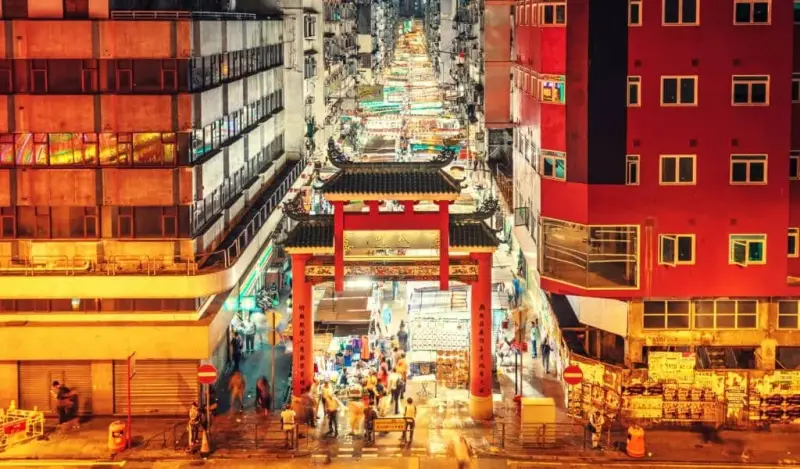
Temple Street takes its name from the Tin Hau temple complex in the middle of the strip, and the temple splits the market into two sections. Stalls start setting up in the afternoon and the street is at its liveliest between about 8pm and 11pm, when the dai pai dong tables fill and fortune tellers and occasional Cantonese opera singers work the stretch near the temple.
For shoppers, the goods are mostly inexpensive: phone accessories, men's clothing, novelty T-shirts, watches and small electronics. Buy for fun and price, and check items before paying. The real draw is the evening scene, so come hungry and treat shopping as a bonus. Our night market guide covers the food stalls in more detail.
- Area: Temple Street, Yau Ma Tei, Kowloon
- MTR: Yau Ma Tei or Jordan
- Best time: About 8pm to 11pm
- Buy: Souvenirs, casual clothes, snacks
This is the best evening market in the city and the natural choice for a first night in Hong Kong, with street food as much of a draw as the stalls. In daylight, the Jade Market and Shanghai Street are within walking distance, so all three fit together.
Ladies' Market (Tung Choi Street)
The Ladies' Market fills Tung Choi Street in Mong Kok with rows of covered stalls from early afternoon until late at night. Despite the name, it sells for everyone: T-shirts, bags, phone cases, toys, magnets and the usual Hong Kong souvenirs, plus a large share of goods that imitate famous brands.
Prices start high and drop quickly once you show interest, so walk the full length first and note which items repeat. Branded copies are cheap for a reason, and carrying counterfeit goods home can break customs rules in many countries. The streets around the market are among the most crowded in the city on weekend evenings; weekday afternoons are far easier.
- Area: Tung Choi Street, Mong Kok
- MTR: Mong Kok
- Best time: Weekday afternoon
- Buy: Gifts, bags, casual wear
Cheap gifts are the speciality here, and bargaining is expected. You can stock up on small presents in one stop; pay cash and keep small notes to make haggling smoother.
Fa Yuen Street (Sneakers Street)

The section of Fa Yuen Street just east of Mong Kok station is packed with sports shoe shops, which is why locals call it Sneakers Street. Big chains sit beside small independent stores that stock limited releases and Asia-only colourways, and the stretch is also good for running gear and basketball kit.
These are proper shops with price tags, so bargaining rarely works, although some stores offer a discount on two pairs. Compare a few windows before buying; the same model can be priced differently a few doors apart. Check that sizes match your home market (Asian sizing can run small) and keep the box and receipt.
- Area: Fa Yuen Street, Mong Kok
- MTR: Mong Kok
- Best time: Weekday afternoon
- Buy: Trainers, sportswear
Prices are fixed, and this is the street sneaker collectors head for first. Try shoes on in the late afternoon, when feet are at their largest.
 Exclusive holiday package offers
Single-subject markets around Prince Edward
Flower Market Road

Flower Market Road is a short street of wholesale and retail florists that supplies much of Kowloon. Shops spill buckets of roses, orchids, lilies and potted plants onto the pavement, and stock arrives early, so the selection is best in the morning.
The street becomes one of the busiest places in the city in the days before Lunar New Year, when families buy peach blossom, kumquat trees and narcissus for luck. Outside that week it is calm and pleasant. Travelers rarely buy plants to take home (most countries restrict importing them), but a bunch of flowers for a hotel room or a host is an easy purchase.
- Area: Flower Market Road, Prince Edward
- MTR: Prince Edward
- Best time: Weekday morning
- Buy: Cut flowers, orchids
The street is at its most photogenic in the morning, which makes it a favourite with photographers. Walk on to the Bird Garden at the eastern end.
Goldfish Market (Tung Choi Street North)

The northern end of Tung Choi Street is lined with aquarium shops that hang their fish in water-filled plastic bags across the shopfronts. Goldfish are linked with good fortune in Chinese tradition, and the street sells everything an aquarium keeper needs, from tropical fish and turtles to tanks, filters and food.
Even with no plan to buy, the walls of bagged fish are one of the best-known street images in Hong Kong. Ask before photographing a shopkeeper up close, and avoid tapping the bags. This is a working retail street, so keep to the edge of the pavement when shops are busy with customers.
- Area: Tung Choi Street North, Mong Kok
- MTR: Prince Edward or Mong Kok
- Best time: Late morning
- Buy: Aquarium items (browsing for most visitors)
Free to browse and easily the most unusual street in Mong Kok, it pairs well with the Flower Market and Bird Garden in one morning loop.
Yuen Po Street Bird Garden

The Bird Garden is a public garden run by the Leisure and Cultural Services Department, open daily from 7am to 8pm. It was built in Chinese style for the bird traders who used to work from a street in Mong Kok, and it remains a meeting point for owners who bring songbirds in carved wooden cages.
Stalls inside sell birds, cages, porcelain feeding cups and live insects. Mornings are the best time: that is when regulars hang their cages and chat while the birds sing. Many stalls close earlier than the garden gates, often in the late afternoon. Entry is free.
- Area: Yuen Po Street, Prince Edward
- MTR: Prince Edward
- Hours: 7am to 8pm daily (garden)
- Buy: Cages, porcelain bird cups
Of all the markets here, this is the most traditional and the quietest place for an early start. Arrive before 10am to see the regulars with their birds.
Jade Market
Jade hawkers have traded in Yau Ma Tei since the government gathered them on a site at Kansu Street in 1984. The market now runs from covered stalls on the edge of Yau Ma Tei, a few minutes from Temple Street, and the exact site has moved before, so check a current map before you go. Hundreds of small counters sell bangles, pendants, carved figures and freshwater pearls.
Quality ranges from cheap dyed stone to valuable jadeite, and most stalls do not give certificates. Buy pieces you like at a price you are happy with as decorative items, and go to an established jeweller with certification for anything expensive. Pearls are often better value than jade here. Stalls trade in the daytime and close well before Temple Street gets going.
- Area: Yau Ma Tei, near Kansu Street
- MTR: Yau Ma Tei or Jordan
- Best time: Late morning
- Buy: Jade pendants, pearls
For jade, this is where to haggle, and the small pieces make good gifts. Start well below the first price and walk away if the number does not move.
Shanghai Street kitchenware shops
Shanghai Street is one of the oldest streets in Kowloon, and its stretch through Yau Ma Tei is known for shops that equip restaurant kitchens. Carbon-steel woks, cleavers, bamboo steamers, wooden mooncake moulds and porcelain spoons are stacked from floor to ceiling, mostly at trade prices.
Prices are usually marked and fair, so haggling is unnecessary. Think about luggage before buying: a large wok travels badly and knives must go in checked baggage. A set of steamer baskets or mooncake moulds makes a practical gift that is hard to find outside Asia.
- Area: Shanghai Street, Yau Ma Tei
- MTR: Yau Ma Tei
- Best time: Daytime
- Buy: Woks, steamers, knives
Keen home cooks will find the best range in the city, at fixed prices. Pack knives in checked luggage only.
Sham Shui Po: electronics and craft streets
Apliu Street Flea Market

Apliu Street is the home of Hong Kong's electronics flea market. Pavement stalls sell cables, adapters, used phones, old cameras, radios, LED strips and boxes of spare parts, while the shops behind them carry tools and lighting. It is a favourite with hobbyists who repair things themselves.
Second-hand items come with no warranty, so test anything with a battery or plug before paying and check that chargers suit your home voltage and plug type. Haggling is normal at the stalls. Sham Shui Po is one of the city's older working-class districts, and the streets nearby are also good for cheap noodles and dim sum.
- Area: Apliu Street, Sham Shui Po
- MTR: Sham Shui Po
- Best time: Afternoon
- Buy: Cables, adapters, used tech
Gadget hunters and anyone needing spare parts, second-hand kit or a travel adapter should start here. Test every item at the stall.
Tai Yuen Street (Toy Street), Wan Chai
Across the harbour in Wan Chai, Tai Yuen Street is lined with small toy shops and stalls selling remote-control cars, figures, building sets and retro tin toys, alongside everyday market goods. Locals call it Toy Street, and collectors come for older stock that has vanished from malls.
The shops are small and packed, so plan a quick stop. Combine it with a tram ride along Johnston Road and the wet market stalls in the surrounding lanes. Check box condition carefully if you are buying a collectible.
- Area: Tai Yuen Street, Wan Chai
- MTR: Wan Chai
- Best time: Afternoon
- Buy: Toys, retro collectibles
Toy Street is the pick for families and collectors. Hop on a tram afterwards for an easy ride west to Central.
Hong Kong Island: antiques, dried goods and design
Cat Street (Upper Lascar Row)

Upper Lascar Row, better known as Cat Street, is a pedestrian lane of curio stalls and small antique shops just below Hollywood Road. Tables hold old coins, Mao-era badges and posters, snuff bottles, brass, carved seals and ceramics, much of it reproduction and priced accordingly.
Treat Cat Street as a place for fun finds and haggle freely. For serious antiques, the galleries on Hollywood Road above are the place to ask about provenance and export documents. The lane is a short walk from Man Mo Temple, PMQ and Tai Kwun, so it fits easily into a half-day walk in Sheung Wan and Central.
- Area: Upper Lascar Row, Sheung Wan
- MTR: Sheung Wan
- Best time: Late morning to afternoon
- Buy: Curios, posters, seals
Curio and antique hunters looking for unusual souvenirs do well on this lane. Ask for a written receipt describing any piece sold as a genuine antique.
Ko Shing Street and Des Voeux Road West
West of Sheung Wan station, Ko Shing Street is the centre of the wholesale trade in Chinese herbs, and nearby Des Voeux Road West is known for dried seafood. Shops sell ginseng, dried scallops, abalone, mushrooms, bird's nest and medicinal roots, often displayed in open sacks and glass jars.
These are trade streets with marked or weighed prices, and staff are busy, so be clear about what you want. Many countries restrict bringing in animal products such as dried seafood and bird's nest, so check your home customs rules before buying. Browsing alone gives a vivid view of the old trading economy of western Hong Kong Island.
- Area: Ko Shing Street, Sheung Wan
- MTR: Sheung Wan
- Best time: Morning
- Buy: Herbs, tea, dried mushrooms
This is local trade at its most traditional, and the dried goods make good food gifts. Choose sealed, labelled packs to make customs declarations easier.
Pottinger Street
Pottinger Street climbs from Queen's Road Central towards Hollywood Road on uneven granite slabs, which gives it the local name Stone Slab Street. Small stalls along the steps sell ribbons, buttons, costumes, party decorations and craft supplies.
It takes ten minutes to walk, so treat it as a stop on the way between Central and Sheung Wan. Wear shoes with grip, as the slabs are slippery after rain. The Central to Mid-Levels escalator runs nearby if you want to continue uphill to SoHo.
- Area: Pottinger Street, Central
- MTR: Central
- Best time: Daytime
- Buy: Costume pieces, craft items
It is the best street in Central for photos and only a quick stop. Continue up to PMQ and Cat Street.
Li Yuen Street East and West
Two narrow lanes between Queen's Road Central and Des Voeux Road Central hold tightly packed stalls selling scarves, handbags, inexpensive clothes, fabric and haberdashery. They are the most convenient open-air market for travelers staying on Hong Kong Island.
Stock overlaps with Kowloon markets, but prices are usually a little higher because of the location. Haggle politely. The lanes are covered by awnings, which makes them a decent stop on a rainy day.
- Area: Li Yuen Street, Central
- MTR: Central
- Best time: Lunchtime on weekdays is busiest
- Buy: Scarves, bags, fabric
As the best open-air market in Central for clothing, it is handy for last-minute gifts near Central offices and hotels.
PMQ (former Police Married Quarters)
PMQ occupies the former Police Married Quarters on Aberdeen Street, converted into studios and shops for local designers and opened in 2014. Its two blocks hold small brands selling jewellery, ceramics, clothing, stationery and homeware, plus cafés and exhibition space.
Prices are fixed and higher than at street markets, but the goods are made or designed in Hong Kong, which makes them better souvenirs than mass-produced trinkets. Weekend pop-up markets are held in the courtyard on some dates; check PMQ's event listings before you go.
- Area: Aberdeen Street, Central
- MTR: Central or Sheung Wan
- Best time: Afternoon
- Buy: Local design, jewellery
For local design at fixed prices, PMQ is the place to find original gifts. Pair it with Tai Kwun and Cat Street on the same walk.
Central Market
Central Market is a 1930s Bauhaus-style market building between Queen's Road Central and Des Voeux Road Central. After years of disuse it reopened in August 2021 following a revitalisation by the Urban Renewal Authority, and now holds food stalls, local brands and event space.
It works best as a cool, dry stop between shopping streets, with the restored staircases and open atrium worth a look. Tenants change regularly, so check the current line-up before making a special trip.
- Area: Des Voeux Road Central
- MTR: Central
- Best time: Lunch or a rainy afternoon
- Buy: Snacks, local brands
The best heritage building on this list, now revitalised, gives a break from the heat. The footbridge network connects it to the Mid-Levels escalator.
Stanley Market

Stanley Market sits in a seaside town on the south side of Hong Kong Island. Its covered lanes sell linen and silk clothing, Chinese paintings, children's clothes, home decor and souvenirs, at a slower pace than Kowloon. The waterfront promenade, Murray House and Stanley Main Beach are a short walk away.
Prices are a little higher than in Mong Kok, but the quality of linen and art is generally better and the setting is far calmer. City buses including routes 6, 6X and 260 run from the Exchange Square terminus in Central; the coastal ride over the hills is part of the appeal.
- Area: Stanley New Street, Stanley
- Getting there: Bus 6, 6X or 260 from Exchange Square, Central
- Best time: Weekday daytime
- Buy: Linen, art, souvenirs
Stanley is the most relaxed market in the guide, a seaside half-day trip in the Southern district. Sit on the upper deck on the right side for sea views on the way out.
Chun Yeung Street Market, North Point
Chun Yeung Street is a wet market with a tram line running straight through it. Stalls sell fish, meat, fruit, vegetables and dried goods on both sides, and shoppers step aside as the trams ring their bells and roll slowly down the middle of the street towards the North Point terminus.
This is a working neighbourhood market, so come to look, buy fruit and eat at the nearby restaurants; souvenir shopping belongs elsewhere. The easiest way to see it is from the upper deck of an eastbound tram bound for North Point. Mornings are busiest and best.
- Area: Chun Yeung Street, North Point
- Getting there: Eastbound tram to North Point
- Best time: Morning
- Buy: Fruit, snacks
As wet markets go, this one gives the best view of local life, and street photographers love it. Shoot from the tram and keep off the tracks.
Kowloon City Market
Kowloon City Market is a large municipal market building in a district long known for Thai and Chiu Chow food. The lower floors hold fresh produce, meat and fish stalls that local cooks rate highly, and the cooked food centre upstairs serves cheap local meals.
Go in the morning for the full market and stay for lunch upstairs. Kowloon City is now served by Sung Wong Toi station on the MTR Tuen Ma line, and the streets around the market are full of Thai grocers and bakeries.
- Area: Kowloon City
- MTR: Sung Wong Toi
- Best time: Morning
- Buy: Fruit, snacks, a cooked lunch
Food lovers get an authentic local morning here, away from tourist crowds, with the cooked food centre upstairs.
Seafood, outlets and furniture
Lei Yue Mun seafood bazaar
Lei Yue Mun is an old fishing village on the eastern edge of Victoria Harbour where tanks of live fish, prawns, crabs and shellfish line a narrow lane. The custom is to choose seafood from a stall and have one of the neighbouring restaurants cook it for a separate charge.
Agree on the weight, the price per catty and the cooking fee before anything is killed, and get the numbers written down. From Yau Tong MTR station the walk takes roughly 10 to 15 minutes. Arrive before sunset to see the lighthouse and harbour view.
- Area: Lei Yue Mun, Kwun Tong
- MTR: Yau Tong, then a 10 to 15 minute walk
- Best time: Early evening
- Buy: Live seafood to be cooked
Come in the evening for the best seafood dinner in Kwun Tong, ideally with a group. Confirm all prices in writing before you order.
Citygate Outlets, Tung Chung
Citygate is an outlet mall next to Tung Chung MTR station on Lantau, close to the airport. International sports, fashion and outdoor brands sell past-season stock at discounted prices, and the mall has a supermarket and food court.
It fits neatly into a day at the Ngong Ping 360 cable car, whose lower station is next door, or into the last afternoon before an evening flight. Prices are fixed. Check that the size and fit are right before buying, since returns are hard after you fly home.
- Area: Tung Chung, Lantau Island
- MTR: Tung Chung
- Best time: Weekday
- Buy: Outlet fashion, sportswear
Being on Lantau, this outlet mall is the best place to shop before a flight. Leave bags in a locker and ride the cable car first.
Horizon Plaza, Ap Lei Chau
Horizon Plaza is a converted industrial tower on Ap Lei Chau filled with furniture showrooms, homeware stores, rug dealers and designer outlets. Expats furnishing apartments come here, and visitors hunt for discounted designer clothes and children's items.
Take the MTR South Island line to Lei Tung or Ap Lei Chau and continue by taxi or bus. Start at the top floor and work down. Several furniture stores arrange international shipping, so ask about costs before committing to a large piece.
- Area: Ap Lei Chau
- MTR: South Island line, then taxi
- Best time: Weekday
- Buy: Homeware, designer outlet goods
This outlet tower is the best stop for homeware, and suits design lovers with luggage space or a shipping budget.
How to plan a market day in Hong Kong by district
Group markets by MTR line and you can see six or seven in a day. A Kowloon day works well with an early start at the Bird Garden, then Flower Market Road and the Goldfish Market, a late lunch in Sham Shui Po with time on Apliu Street, the Jade Market and Shanghai Street in the afternoon, and Temple Street for dinner.
A Hong Kong Island day starts at Chun Yeung Street by tram, moves to Central for Li Yuen Street, Pottinger Street and Central Market, climbs through PMQ to Cat Street and the dried-goods shops of Sheung Wan, and ends with an afternoon bus to Stanley. Lei Yue Mun, Citygate and Horizon Plaza each need a dedicated half day. Temple Street stalls start setting up from about 2pm, so arriving at dusk gives the best of the market and dinner. Pick a hotel near Mong Kok or Yau Ma Tei if markets are your main interest; the evening markets are then a short walk from your door.
What to buy at Hong Kong markets and where to find it
Jade and pearls come from the Jade Market, and serious jewellery from certified shops. Kitchen tools are a Shanghai Street speciality. Cables, adapters and spare parts are cheapest on Apliu Street. Linen and paintings are better quality in Stanley than in Kowloon. Locally designed goods are found at PMQ, and dried mushrooms and teas in Sheung Wan, where staff will vacuum-pack purchases on request at many shops.
Hong Kong charges no sales tax, but that does not make everything cheaper than at home. Check prices for branded electronics online before you go, and expect market clothing to be cheap and cheerful in quality.
For electronics, take Exit A2 or C2 at Sham Shui Po station for Apliu Street, where stalls sell new and second-hand gear, cables and components. Computer hardware and video games are across Cheung Sha Wan Road in the Golden Shopping Arcade. On Temple Street (Exit C of Yau Ma Tei station, about a minute away), the stalls lean towards jeans, T-shirts, shoes, watches, phone accessories and second-hand curios, and prices are open to negotiation. Test anything electrical at the stall, and ask whether a charger or plug suits the voltage at home.
Tips for shopping at Hong Kong markets
- Carry cash. Street stalls work mostly in Hong Kong dollars cash. Some accept Octopus or mobile payments, but small notes make haggling easier.
- Haggle at stalls only. Bargain at open-air stalls; shops with marked prices, PMQ and outlets are fixed. Smile, start low and be ready to walk away.
- Use an Octopus card. The stored-value Octopus card covers MTR, buses, trams and Star Ferry, which makes hopping between market districts quick.
- Know customs rules. Counterfeits, plants, animal products and some foods are restricted in many countries. Check your home rules before buying.
- Plan for weather. Summer is hot and wet, and typhoon signals can close outdoor stalls. October to December is the most comfortable season for market walks.
- Watch your bag. Hong Kong is safe, but crowded markets attract pickpockets. Wear your bag in front at Temple Street and the Ladies' Market.
Need flights into Hong Kong International Airport? Compare options on our flight page, and check entry requirements for your passport on the Hong Kong Immigration Department website or through our visa section.
Planning a trip to Hong Kong? Read our Hong Kong travel guide or search flights.






{{item.get_author.first_name}} {{item.get_author.last_name}}
{{item.comment_txt}}
{{item_reply.get_author.first_name}} {{item_reply.get_author.last_name}}
@ {{item_reply.reply_to}}, {{item_reply.reply_txt}}