

EU, EEA, and Swiss citizens can move to Malta freely and just register with Identity Malta after 3 months. Non-EU citizens choose between the Nomad Residence Permit (EUR 3,500/month in foreign remote income, up to 4 years), the Malta Permanent Residence Programme (EUR 500,000+ in assets, a real 12-month process despite the official 4-6 month estimate), or several smaller routes. A genuinely underrated hidden cost: Malta's ARMS utility system defaults new tenants to an expensive "Domestic" electricity tariff unless a specific form gets filed.
Malta splits into 2 completely different relocation experiences depending on your passport, and most guides blur the 2 together. An EU, EEA, or Swiss citizen can move to Malta with essentially no barrier at all, just register with Identity Malta once they've settled in past the 3-month mark. Everyone else chooses between a genuinely complex set of programs: a Nomad Residence Permit for remote workers, a Permanent Residence Programme built around real estate investment, a retirement-specific route, and a startup visa, each with its own income thresholds, processing realities, and limits on what it actually grants.
The other thing most guides skip: Malta's utility billing system. New tenants get defaulted to a considerably more expensive electricity tariff unless a specific registration form gets filed, a genuine, avoidable cost that catches a real share of new arrivals every year. This guide covers the actual visa paths by citizenship, real rental and utility costs, the country's iGaming-driven job market, and a practical plan for the first weeks after landing.
Why Choose Malta?
6 factors drive most relocation decisions to Malta, and they hold up against real scrutiny, not just Mediterranean-postcard appeal.
None of this makes Malta effortless. Rent has climbed fast over the past few years, groceries run higher than most newcomers expect since much of the food is imported, and the non-EU visa landscape is genuinely more fragmented than a single "digital nomad visa" framing suggests. The rest of this guide covers both sides honestly.
Quick Summary: Moving to Malta:
Do EU citizens need a visa?
No. Free movement applies; just register with Identity Malta after 3 months in the country.
What's the route for remote workers?
The Nomad Residence Permit: EUR 3,500/month in foreign income, 1 year, renewable up to 4 years total.
What's the investment-based residency route?
The MPRP: EUR 500,000+ in assets plus a qualifying property, real processing time close to 12 months.
Does the MPRP let me work?
No. A separate Employment Licence, sponsored by a Maltese employer, is still required.
What's the biggest overlooked cost?
The ARMS electricity tariff, defaulting new tenants to a pricier rate unless a specific form gets filed.
What industry hires the most foreign professionals?
iGaming, Malta's largest licensing hub for online gambling in Europe.
Visa & Residency Options:
EU, EEA, and Swiss Citizens:
Citizens of any EU, EEA, or Swiss country can live and work in Malta without a visa, the single biggest structural advantage Malta offers over the non-EU routes covered below. The only formal requirement is registering for an e-Residence Document with Identity Malta once residency passes the 3-month mark, a straightforward administrative step, not a genuine barrier to entry.
The Nomad Residence Permit:
Malta's Nomad Residence Permit targets remote employees, freelancers, and company shareholders whose income comes from outside Malta entirely, whether working for a foreign employer or serving foreign clients directly. Applicants need at least EUR 3,500 a month in qualifying income, private health insurance, and citizenship in a non-EU/EEA/Swiss country, the visa being specifically built for third-country nationals. EU citizens wouldn't need it at all.
The real limitation: this permit doesn't grant access to Malta's social benefits system and doesn't lead directly to permanent residency or citizenship on its own. Holders who want to stay longer-term generally need to transition into the MPRP or a standard employment-based route. Time spent on the Nomad Residence Permit can, however, count toward the residency period required for Malta's citizenship-by-naturalization track, a genuinely useful detail for anyone planning a longer horizon from the start.
The Malta Permanent Residence Programme (MPRP):
The MPRP requires demonstrating ownership of assets worth at least EUR 500,000 (including EUR 150,000 in liquid financial assets) or EUR 650,000 (including EUR 75,000 in liquid assets), alongside a qualifying property: a purchase from EUR 375,000 (EUR 220,000 in Gozo or the south of Malta) or a rental from EUR 14,000 a year (EUR 9,600 in Gozo or the south). A EUR 2,000 mandatory philanthropic donation and a staged administration fee, starting near EUR 15,000, round out the requirements.
The timeline gap most guides don't mention: official government references cite a 4-6 month processing time, but the realistic full timeline from submission to receiving the actual residence card commonly runs closer to 12 months in 2026. To bridge that gap, applicants can request a 1-year Temporary Residence Permit at submission, letting the family live in Malta legally while the full application processes. The MPRP also doesn't automatically include work rights or any special tax status; a separate Employment Licence, sponsored by a Maltese employer, is still required to work, and standard Maltese tax rules apply regardless of MPRP status.
The Global Residence Programme (GRP):
The GRP suits non-EU individuals seeking Maltese tax residency specifically, not the MPRP's broader permanent residence status. It requires the same qualifying property structure as the MPRP (purchase from EUR 275,000, or EUR 220,000 in Gozo/south Malta; rental from EUR 9,600 a year, or EUR 8,750 in Gozo/south Malta) and taxes foreign-source income remitted into Malta at a flat 15%, with an annual minimum tax of EUR 7,500 for the main applicant and EUR 500 per dependent.
The Malta Retirement Programme:
Open to both EU and non-EU nationals, this program requires a pension covering at least 75% of the applicant's total income, plus purchasing or renting a qualifying personal residence under the same property thresholds as the GRP. Applicants must average 90 days a year in Malta over a 5-year period and declare they don't spend more than 183 days in any single other jurisdiction, though there's no requirement to spend 183 days inside Malta itself.
What it doesn't do: the Malta Retirement Programme grants residency and a favorable pension tax structure, but it doesn't lead to Maltese citizenship on its own, a genuine distinction from the MPRP and GRP for anyone weighing these programs specifically for their long-term citizenship potential.
The Startup Residence Programme:
Available to startup founders, co-founders, and their core employees and families, provided they're non-EU nationals and register their venture in Malta with a minimum capital investment of EUR 25,000. This route suits founders building a genuine, ongoing company in Malta, not those seeking passive residency alone.
Taxes: Remittance Basis and the Flat-Rate Programs:
Malta taxes non-domiciled residents (most foreign nationals living there without being formally domiciled) on a remittance basis: Malta-sourced income and capital gains are taxable in full, while foreign-sourced income only becomes taxable if it's actually remitted into Malta, income or gains simply held abroad and never transferred in generally stay untaxed. Standard progressive income tax rates apply to Malta-sourced income and remitted foreign income outside the specific flat-rate programs, running up to 35% at the top bracket.
Cost of Living:
Rent dominates a Maltese budget more than almost any other line item, and location swings the number considerably more than a single national average suggests. Malta also runs noticeably cheaper than Germany or Austria but pricier than Spain or Portugal, worth knowing if comparing it against other Mediterranean or EU relocation options directly.
Combined, a single person in central Malta typically spends EUR 2,000-3,000 a month including rent; a couple without children EUR 3,000-4,500; a family of 4 EUR 4,000-7,000 depending on schooling choices and location. Moving to Gozo or Malta's southern towns can cut the overall budget by 25-35%, largely driven by lower rent, and groceries specifically run a little higher than mainland Europe given how much of Malta's food is imported.
Hidden Costs: The ARMS Tariff Trap and More:
1. The ARMS "Domestic" Tariff Trap:
ARMS, Malta's centralized utility billing authority, applies a cheaper Residential tariff to primary homes with registered occupants and a considerably pricier Domestic tariff to properties with no one registered. Many landlords never file the required Form H to register their tenants, leaving new arrivals billed at the higher rate without realizing it. Checking the first bill for "Residential" versus "Domestic" and asking the landlord to file Form H if needed can save EUR 20-50 a month, sometimes more during summer's heavy air-conditioning months.
2. Mandatory Rental Contract Registration:
Malta requires rental contracts to be formally registered, a roughly EUR 80 fee that's easy to overlook when budgeting move-in costs, alongside the standard 1-2 month deposit most landlords request.
3. Summer Electricity Spikes:
Malta's progressive electricity tariff structure means costs rise sharply with heavier consumption, and air conditioning running through Malta's hot summer months (June-September) can push a 2-bedroom apartment's bill toward EUR 200 in August alone, well above the EUR 80-180 range typical the rest of the year.
4. Imported Groceries:
As an island nation, Malta imports the large majority of its food, and grocery costs run noticeably higher than mainland Europe as a result, a real adjustment for newcomers budgeting based on a mainland European reference point.
5. Rental Market Speed:
Malta's rental market moves fast, with good apartments at fair prices commonly taken within 24-48 hours of listing. Coming prepared with references and proof of income ready to submit immediately makes a genuine difference in a competitive market. Researching from abroad and applying later often means missing out.
Work & Career Opportunities:
English as an official language gives Malta a real structural advantage for foreign professionals that few other EU countries can match, and a handful of specific industries drive the bulk of foreign hiring.
iGaming: Malta's Largest Employer of Foreign Professionals:
- Game/Software Development: EUR 35,000-70,000/year
- Compliance and AML: EUR 30,000-55,000/year
- Customer Support/Operations: EUR 20,000-32,000/year
Financial Services and Fintech:
- Fund Administration: EUR 28,000-50,000/year
- Compliance/Regulatory roles: EUR 30,000-55,000/year
- Blockchain/Fintech Development: EUR 35,000-65,000/year
Aviation and Maritime:
- Aircraft Registration/Leasing: EUR 30,000-55,000/year
- Maritime Services: EUR 25,000-45,000/year
Where and How to Find and Get a job in Malta:
Malta's entire workforce numbers around 291,000 people, genuinely small compared to most European job markets, which means the structured graduate recruitment programs common in larger economies largely don't exist here. Relationships and direct approaches matter more than application-portal volume as a result, and LinkedIn functions as the primary professional network specifically for Malta's iGaming, fintech, and financial services communities, the sectors doing the bulk of international hiring.
Direct company career pages carry real weight too, particularly for iGaming and hospitality groups, which both hire in bulk and often seasonally. Facebook groups are a genuinely significant channel as well, with industry-specific groups (expat-focused and iGaming-focused ones especially) functioning as real, active job boards in their own right, alongside groups for part-time and temporary work.
General job boards
iGaming-specific job boards
Where to Live: Malta and Gozo by Area:
Malta is small enough that most areas sit 10-30 minutes from each other, but the price difference between the most expensive and cheapest equivalent apartment isn't marginal, it can run EUR 600-800 a month for a comparable unit.
Sliema & St Julian's:
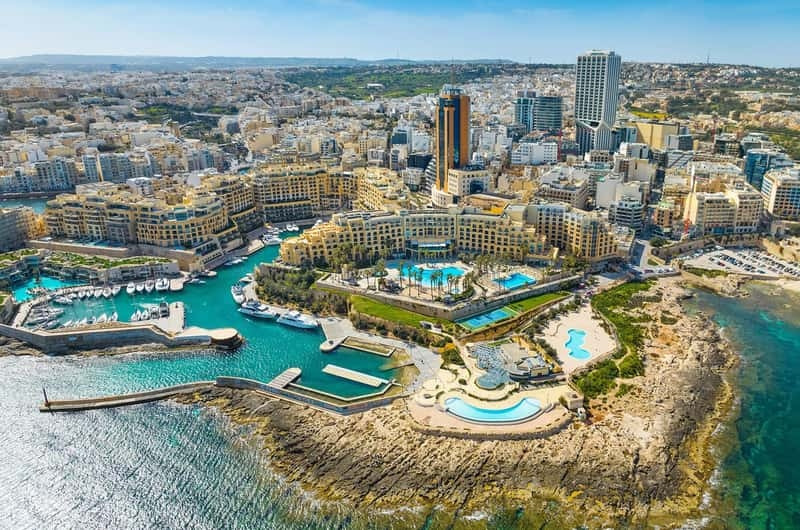
Malta's premium coastal towns, home to the seafront promenade, the bulk of the island's nightlife, and the highest concentration of international restaurants and offices. The "walkability tax" here is real: paying a premium to walk to the seafront, workplaces, and restaurants. Depending on Malta's bus network or a car costs less but takes longer.
Anyone prioritizing walkability, nightlife, and proximity to Malta's main business district over cost.
None; these are Malta's most expensive residential areas.
- 1-bedroom apartments run EUR 1,100-1,600/month, among the highest in Malta
- The seafront promenade connects both towns for an easy waterfront walk or run
- Deepest concentration of international dining and nightlife on the island
Gzira, Msida & Ta' Xbiex:
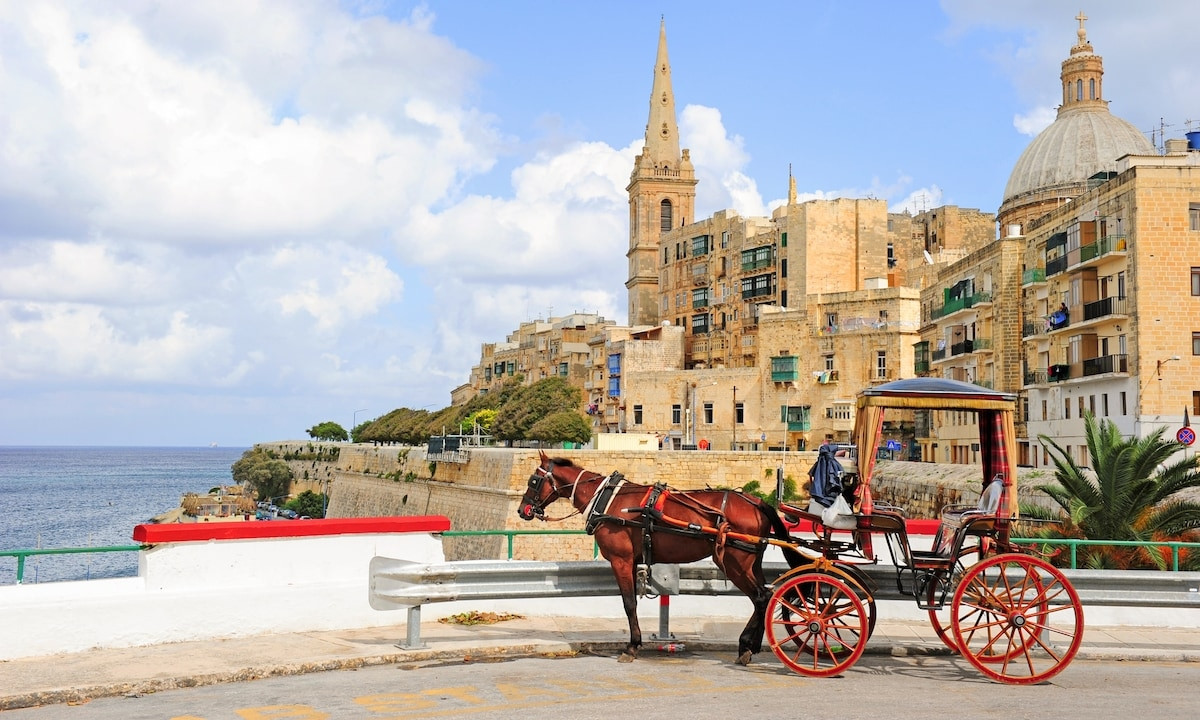
Sitting just 10-20 minutes on foot from Sliema, this stretch has quietly become one of the best-value corridors on the island, with a genuinely strong food scene along the Gzira seafront that rivals its pricier neighbors at a noticeably lower rent.
New arrivals wanting Sliema's convenience without Sliema's premium, a genuine sweet spot for most first apartments.
Noticeably cheaper than Sliema/St Julian's for comparable space, often by several hundred euros a month.
- 1-bedroom apartments run EUR 750-1,050/month, EUR 350-500 below Sliema equivalents
- Gzira's seafront food strip has become a genuine dining destination in its own right
- Close enough to Sliema and St Julian's to walk for work or nightlife regularly
Valletta:
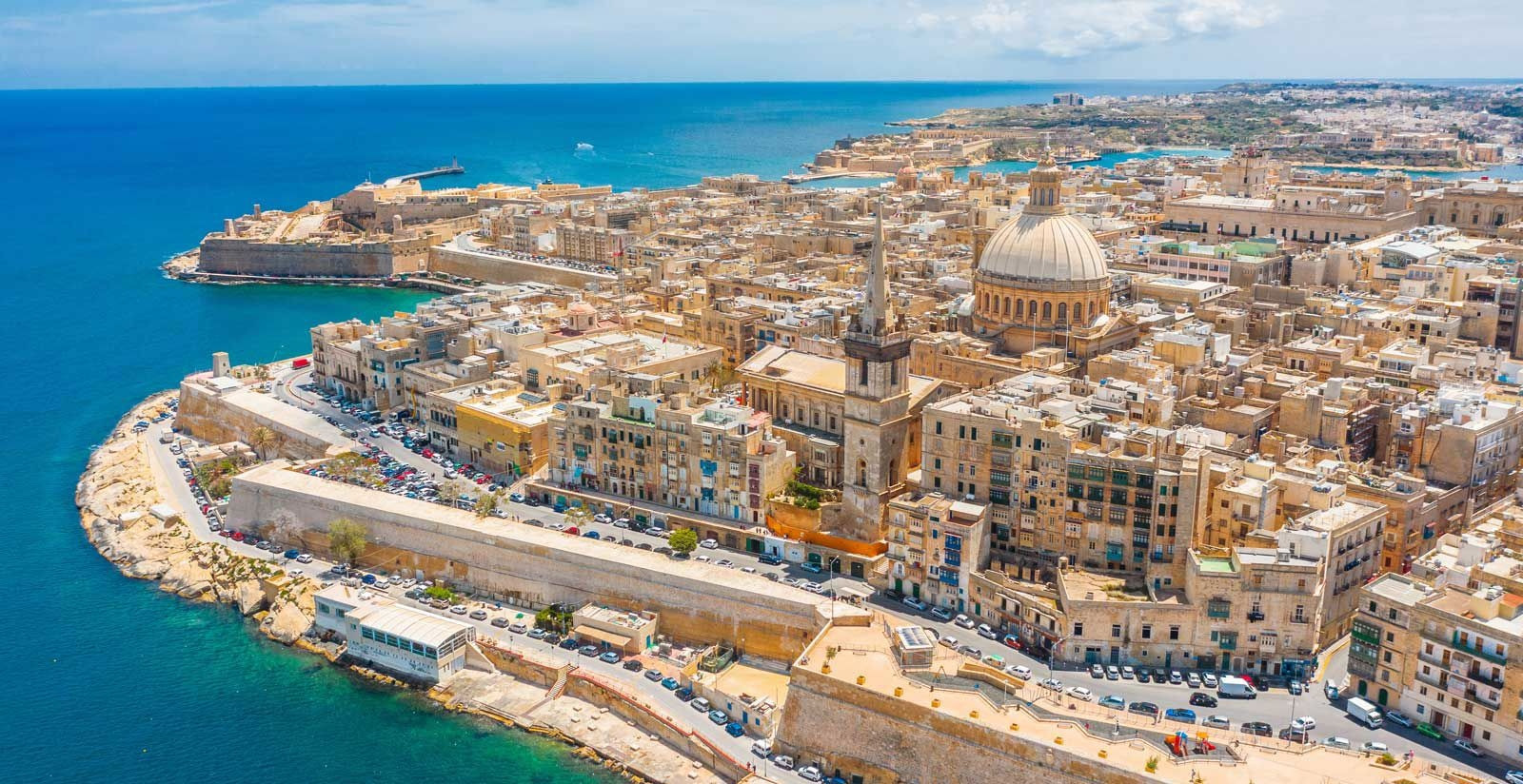
Malta's capital and a UNESCO World Heritage city, Valletta pairs genuine historic architecture with a smaller, quieter residential population than its size might suggest, since much of the city's daytime activity is government and tourism-driven, not residential.
Anyone wanting to live inside a genuinely historic city center, with government and cultural institutions close at hand.
Comparable to Sliema and St Julian's; among the pricier options on the island.
- A UNESCO World Heritage site with genuine 16th-century fortified architecture
- Malta's seat of government and a real cultural and museum concentration
- Smaller residential population than its size suggests, genuinely quieter after office hours
Birkirkara, Mosta & St Paul's Bay:
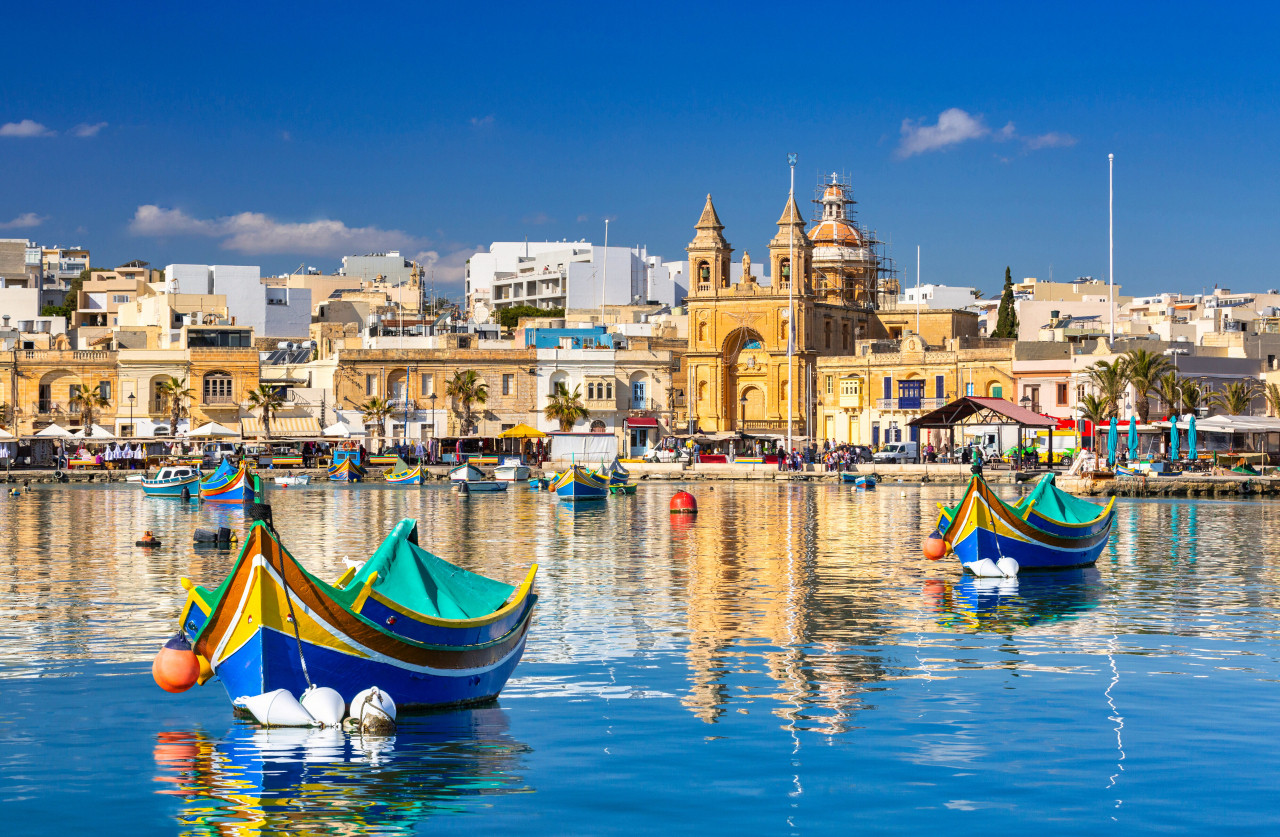
Central and northern towns offering considerably more affordable rent than the coastal premium areas, with St Paul's Bay and Bugibba specifically running among the cheapest options for anyone still wanting a coastal setting.
Families and budget-conscious expats wanting more space for the money, at the cost of walkability to the main business districts.
Among the more affordable options on mainland Malta while still coastal in St Paul's Bay's case.
- 1-bedroom apartments run EUR 550-900/month depending on the specific town
- St Paul's Bay and Bugibba offer coastal living at a considerably lower price point
- A real trade-off in commute time and walkability versus Sliema or St Julian's
Gozo:
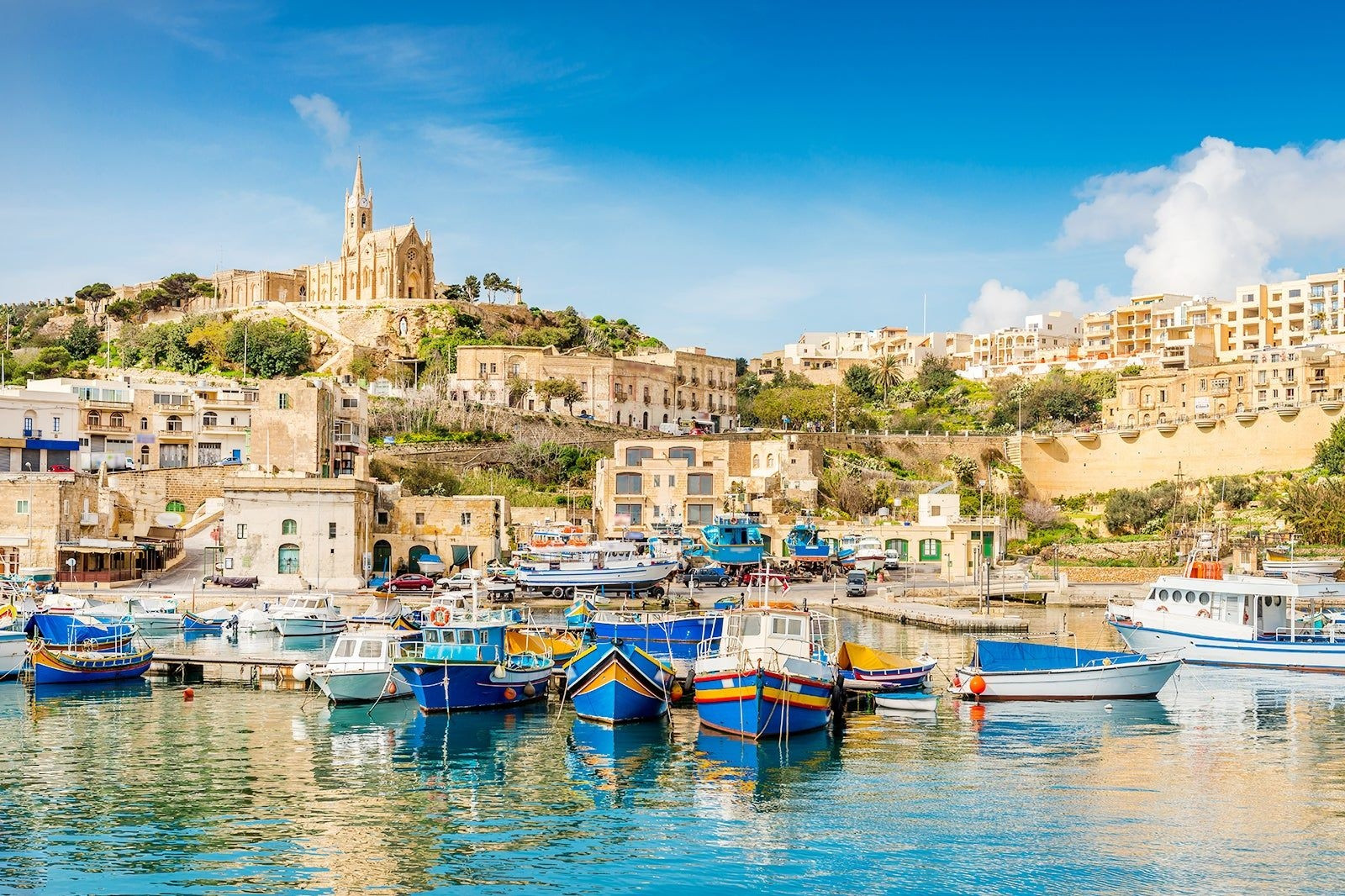
Malta's smaller sister island offers a genuinely slower, quieter pace of life, with the lowest rents in the archipelago and a real rural, small-town character distinct from mainland Malta's busier coastal towns.
Remote workers and retirees prioritizing quiet and value over proximity to Malta's job market and nightlife.
The lowest cost of living in the archipelago, often 25-35% below mainland Malta's coastal towns.
- 2-bedroom apartments run EUR 600-1,200/month, among the cheapest in the country
- A genuinely slower pace and stronger sense of local, small-town community
- Requires a ferry crossing to mainland Malta, a real factor for anyone commuting regularly
Healthcare & Education:
Free for EU Citizens, Private Insurance for Most Others:
EU/EEA citizens holding a Maltese e-Residence Document can access Malta's public healthcare system free at the point of use, centered on Mater Dei, the country's main public hospital. Most non-EU visa categories require proof of private health insurance as part of the application itself, since access to the public system isn't automatic for third-country nationals.
Healthcare coverage
- Free at point of use for EU/EEA citizens with a Maltese e-ID
- Non-EU residents generally need private health insurance
- Mater Dei Hospital is the main public facility
- Private clinics widely available, popular even among EU-covered residents
Typical costs
- Private insurance (non-EU): EUR 600-2,000/year per adult
- GP private consultation: EUR 25-40
- Specialist private consultation: EUR 60-120
- Public system: free for covered EU/EEA residents
Education for Expat Families:
Malta's international schools cluster around the main expat residential areas, teaching in English as standard given the language's official status nationally. Public schools are free and bilingual (Maltese and English), a genuinely accessible option compared to countries where public education runs in a language most expat families don't speak.
Lifestyle & Culture:
A genuinely bilingual, EU-integrated daily life
English's official status means daily life, business, and most government interactions happen comfortably in English, a real structural advantage over most EU relocation destinations. Malta's Catholic heritage still shapes public life meaningfully, Sunday remains a genuinely quieter day nationally, and the country's small size means social and professional circles overlap more than in a larger country, a real advantage for building a network quickly.
What works well
- English fluency removes the language barrier most EU relocations involve
- A well-established, sizable expat community, particularly British and increasingly international
- Genuine EU and Schengen access from a single small, easy-to-navigate base
What genuinely takes adjustment
- The island's small size means less anonymity and a genuinely tight social/professional overlap
- Rent has risen fast in recent years, a real budgeting shock for anyone using older cost data
- Traffic and parking in Sliema/St Julian's run genuinely difficult during peak hours
Getting started: Your First 90 Days:
Malta's small size means most administrative steps move quickly once started, but sequencing still matters, particularly around utility registration and the rental contract itself.
Preparation:
- Confirm which visa or residency route applies to your citizenship and situation
- Arrange private health insurance if applying under a non-EU route
- Save enough for 2-4 months of rent upfront, covering deposit, first month, and contract registration
- Book short-term accommodation for the first 2-4 weeks. Don't commit to a lease from abroad
First 2 weeks:
- Start apartment viewing immediately; good listings move within 24-48 hours
- Register your rental contract, a mandatory step with a roughly EUR 80 fee
- File Form H with ARMS to secure the cheaper Residential utility tariff
- Register with Identity Malta for an e-Residence Document (EU citizens) or begin your specific non-EU visa process
Settling in:
- Open a Maltese bank account once your residence documentation is in hand
- Arrange private health insurance if not already sorted, or confirm public system access if EU-covered
- Check your first ARMS bill specifically for "Residential" versus "Domestic" tariff status
- Non-EU workers: confirm employer sponsorship progress for the Single Permit or Employment Licence
Building routine:
- Review your first full utility bill against the summer-spike expectations covered above
- Join local expat and professional community groups, genuinely useful given Malta's small, connected scale
- Reassess your neighborhood choice once you understand real commute times and lifestyle fit firsthand
Essential Resources & Contacts:
Government and Immigration:
Identity Malta handles e-Residence Document registration for EU citizens and general residency matters; Residency Malta Agency administers the MPRP, GRP, Nomad Residence Permit, and other investment-based programs specifically.
Employment:
Jobsplus, Malta's public employment service, issues Employment Licences for non-EU workers; Identità handles the Single Permit process for non-EU nationals working and residing in Malta simultaneously.
Utilities and Housing:
ARMS Ltd handles all electricity and water billing nationally; Form H (change in occupancy) is the specific form needed to secure the cheaper Residential tariff. Property portals and expat Facebook groups are the standard starting points for apartment hunting.






{{item.get_author.first_name}} {{item.get_author.last_name}}
Level 7
5 Photos
36 Reviews
{{item.comment_txt}}
{{item_reply.get_author.first_name}} {{item_reply.get_author.last_name}}
@ {{item_reply.reply_to}}, {{item_reply.reply_txt}}