
Bali's top sights fall into four groups: sea and mountain temples such as Tanah Lot and Besakih, the green interior around Ubud and Tegallalang, the volcanic highlands of Kintamani, and the coast between Jimbaran and Seminyak where most visitors eat, swim and go out. A first trip of seven to ten days can cover all four if you base yourself in two areas and avoid moving hotels every night. This guide takes the island's headline attractions one by one, explains how long each needs, how to reach it and what catches first-timers out, and ends with the practical side: weather, entry rules, where to stay and what to eat.
If you are planning around a specific theme, we have separate guides for Ubud's attractions, a Bali honeymoon and Bali at night. This page is the island-wide overview that ties them together.
Bali essentials at a glance (as of October 2026)
The dry season, April to September, is the time to come, and April, May, June and September are calmer than July and August. Seven to 10 days covers the island highlights; 4 days is enough for the south plus one Ubud day. You land at I Gusti Ngurah Rai International Airport (DPS), just south of Kuta, usually via Singapore, Kuala Lumpur, Doha, Dubai, Bangkok or Jakarta. Entry rules depend on your passport, and many nationalities can buy a 30-day visa on arrival or e-VOA (IDR 500,000), extendable once. Every foreign visitor also pays a tourist levy of IDR 150,000 per entry through the official Love Bali website or app. Cards work in hotels and larger restaurants, but temples, markets and warungs want rupiah (IDR) in cash. People speak Balinese and Indonesian, with English common in tourist areas. To get around, hire a private driver by the day, use ride-hailing apps in the south, or ride a scooter if you hold the correct licence.
Best time to visit Bali for sightseeing
Bali has two seasons. The dry season runs from roughly April to September, with lower humidity, clear mornings and calm seas for boat trips. The wet season runs from about October to March, when showers usually arrive in heavy afternoon bursts and rarely last all day. Temperatures stay warm all year on the coast and drop noticeably in the highlands around Kintamani and Bedugul, where you will want a light jacket at dawn.
July and August are the busiest and most expensive months, because school holidays in Europe and Australia overlap with the best weather. Late December and early January are busy too. January and February are the wettest months, which can spoil volcano hikes and rice-terrace walks, though temples and museums are still worth seeing. For the best balance of weather, crowds and room rates, aim for May, June or September.
One date matters more than any season. On Nyepi, the Balinese Day of Silence, the whole island shuts down for 24 hours: no flights at the airport, no traffic, no lights after dark, and guests must stay inside their hotel grounds. Nyepi falls on 8 March 2027, with the noisy Ogoh-Ogoh parades on the evening before. It is a remarkable thing to witness, but plan arrivals and departures around it.

Top places to visit in Bali: the full guide
The eleven places below follow the order of the original list on this page. Each section covers the area, how long to allow, how to get there and who it suits. Driving times assume a private car from the Seminyak or Kuta area outside rush hour; south Bali traffic can double them in the late afternoon.
01. Tanah Lot: Bali's sea temple on a rock
Tanah Lot sits on a rocky outcrop just off the coast of Tabanan Regency, and at high tide the sea surrounds it completely. It is one of a chain of sea temples built to honour the guardian spirits of the ocean, and it remains an active place of worship. Only Balinese Hindus may climb into the temple itself; visitors watch from the shore, and at low tide you can walk across the sand to the base of the rock, where priests offer holy spring water and a blessing.
Sunset is the main event. The temple turns into a black silhouette against an orange sky, and the clifftop cafes on the mainland fill up an hour before. If you want a clear view, arrive around 4:30 pm, walk the coastal path north to the smaller Pura Batu Bolong (a shrine on a rock arch) and claim a spot before the tour buses arrive. Mornings are far quieter, with softer light and no queue at the car park.
The approach passes a long row of souvenir shops and a cultural park. Allow time for it, but do not let it eat into the hour before sunset. Shoes with grip help on the wet rocks at low tide.
The temple is in Beraban, Kediri, west of Canggu, about 45 to 75 minutes by car from Seminyak depending on traffic. Two hours on site is enough. Photographers and first-time visitors can pair it with Canggu or Jatiluwih.
02. Besakih Temple: the mother temple on Mount Agung

Pura Besakih climbs the southwestern slope of Mount Agung at about 1,000 metres above sea level, in Karangasem Regency. Balinese call it the mother temple. Sources count the complex differently, from 23 major temples to more than 80 when every shrine is included, but the centre is Pura Penataran Agung, with its terraced courtyards rising toward the volcano. The three main temples in the group honour the Hindu trinity of Shiva, Brahma and Vishnu. In 1963 an eruption of Agung killed around 1,700 people, and lava passed within metres of the complex, which many Balinese still regard as a sign of its sanctity.
Besakih is not a UNESCO World Heritage Site, and it is very much a working temple: with dozens of shrines each holding its own anniversary ceremony, there is a festival of some kind on many days of the year. You may find whole villages arriving in white and gold with towering offerings, which is the best reason to come.
Visit early in the morning, when Agung is most likely to be clear of cloud and the car park is quiet. A sarong and sash are required and are included or rented at the entrance. Unofficial "guides" have long been a complaint here; the site now runs a more organised ticket and shuttle system, but politely decline anyone who insists you must hire them to enter.
Besakih village, in Rendang district, is about 1 hour 15 minutes from Ubud and 2 hours or more from the south coast. Plan 2 to 3 hours on site, then drive down to the Sidemen valley for lunch.
03. Ubud Monkey Forest (Sacred Monkey Forest Sanctuary)

The Sacred Monkey Forest Sanctuary at the bottom of Jalan Monkey Forest is owned and managed by the village of Padangtegal, and the entry fees fund its upkeep. A 2023 count put the population of Balinese long-tailed macaques at about 1,260, split into several troops with their own territories. Paved paths run through the ravine past moss-covered statues, a banyan-root bridge and three temples, including Pura Dalem Agung Padangtegal.
The macaques are wild, quick and used to people. Remove sunglasses, earrings and hats, zip bags shut and keep food and plastic bottles out of sight. Do not stare at them or pull back if one climbs on you; stand still and staff will help. If you are bitten or scratched, go to the first-aid post and then a clinic, as rabies is present in Bali.
The forest is a short walk from central Ubud, so it fits easily into a morning before the heat. Our full Ubud attractions guide covers the town's museums, palace and ridge walk in more depth.
From Seminyak it is about 1 hour 15 minutes by car. Go at opening time and allow 1 to 1.5 hours. Families with older children enjoy it; anyone nervous around animals should skip it.
04. Tegallalang Rice Terraces
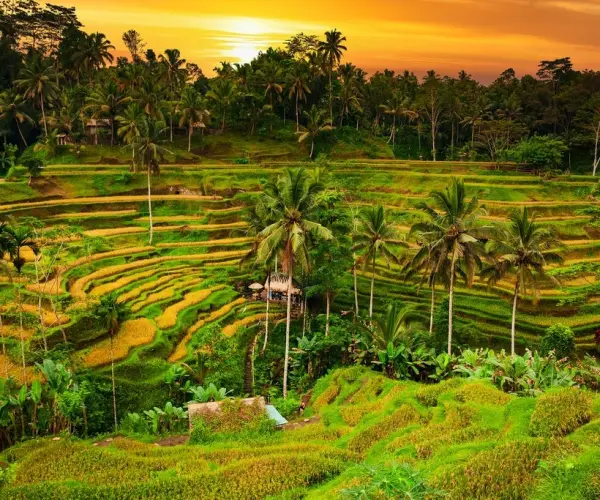
Tegallalang is a village about 20 to 30 minutes north of Ubud, and its terraces fall steeply into a palm-shaded valley right beside the main road, Jalan Raya Tegallalang. The fields are watered by the traditional subak system, the cooperative irrigation network that UNESCO recognised in 2012 as part of the Cultural Landscape of Bali Province. Rice is planted in cycles, so depending on the month you may see bright green shoots, golden crops or freshly flooded mud.
The viewpoint from the road is free, but walking down into the terraces passes through several farmers' donation points; carry small notes. The site has added giant swings, nests and cafes on the far slopes, which some love and others find distracting. For a quieter walk, go before 8 am, or visit Jatiluwih in Tabanan (larger, gentler terraces and part of the UNESCO site) or the Sidemen valley in the east.
Wear shoes you can get muddy, and stay on the paths: the terrace walls are farmers' work, and stepping on them causes damage.
Allow 1 to 2 hours. Sunrise photographers can combine it with the Tirta Empul water temple nearby.
05. Bali Safari and Marine Park
Bali Safari and Marine Park in Gianyar is a large theme park built around safari-style tram rides through enclosures arranged by region, with species from Indonesia, India and Africa. It adds animal presentations, an aquarium area, a small water park and fairground rides for children, plus restaurants where you can dine beside the enclosures. The park also runs a large indoor theatre that has staged the Bali Agung show, a theatrical retelling of Balinese legend.
Most visitors buy a package that includes the safari ride, shows and sometimes lunch or a night safari; compare the online options before you go, as gate prices are higher. It is a full day for families with young children and a long detour for anyone else. Animal-welfare standards at wildlife attractions vary widely across Bali, so if this matters to you, read recent independent reviews before booking and skip any activity involving riding or handling animals.
The park is on Jalan Prof. Dr. Ida Bagus Mantra in Serongga, about 30 to 40 minutes from Sanur along the coastal bypass. It works best for children aged 3 to 12; give it half a day or more.
06. Kintamani and Mount Batur
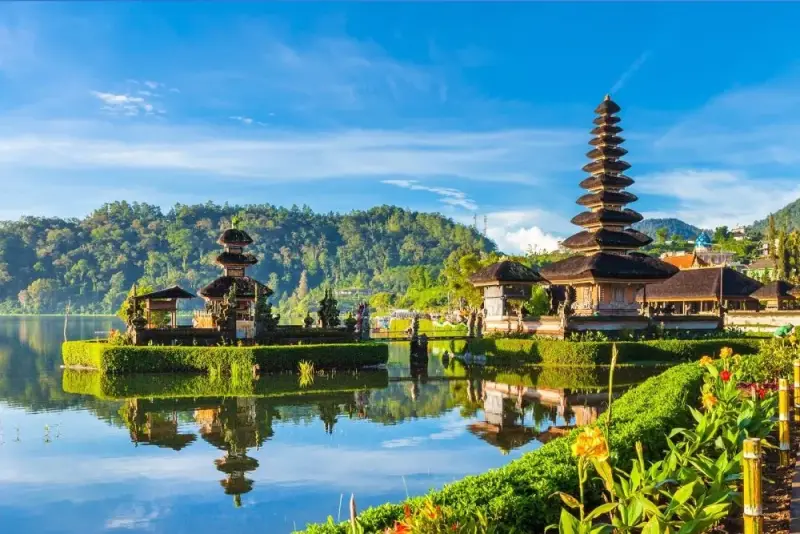
Kintamani is the highland district on the rim of the Batur caldera in Bangli Regency. From the viewpoint at Penelokan (the name roughly means "place to look") you see Mount Batur, at 1,717 metres, rising from black lava fields, with Lake Batur filling the eastern side of the caldera. Batur is active: its largest recorded eruption, in 1926, buried the old village of Batur, and the last small eruption came in 2000. The dark lava flows you can still trace from the rim are a reminder of that history.
The famous activity is the Batur sunrise trek. Most operators collect you between midnight and 3 am, start walking around 3:30 to 4 am, and reach the summit before sunrise, around 6 am. The climb takes about two hours on loose volcanic gravel and is steep near the top; reasonably fit beginners manage it. Local guide associations organise treks, and you should go with a licensed guide.
If you would rather not hike, drive up for breakfast at one of the caldera-view restaurants, then descend to the lake shore, where hot spring pools look across the water. The temperature can be 10 degrees lower than on the coast, so take a fleece.
Kintamani is about an hour from Ubud and 2 to 2.5 hours from the south coast. A visit takes half a day, the sunrise trek a full night and morning. Hikers and landscape photographers come for the views; everyone else comes for the cooler air.
07. Jimbaran Bay: seafood dinners at sunset
Jimbaran Bay, just south of the airport, is Bali's classic place for a seafood dinner on the beach. Rows of cafes set tables directly on the sand in the late afternoon; you pick fish, prawns, squid or lobster from ice displays, pay by weight, and it comes back grilled over coconut husks with rice, water spinach and sambal. Kedonganan, at the northern end beside the fish market, has the most cafes and the busiest scene; the southern Muaya stretch is calmer.
Confirm the price per 100 grams and check the weight before cooking, because overcharging on weight is the most common complaint here. Roaming musicians will play at your table and expect a tip. Arrive by 5:30 pm to see the sun go down over the water, and expect planes on their final approach to land just to the north, which some diners enjoy and others do not. For a high-end alternative with the same view, several resorts on the Jimbaran headland run their own beach grills.
The bay is 15 minutes from the airport and 30 to 45 minutes from Seminyak, which makes it a good last night for anyone on a short stopover. Dinner takes 2 to 3 hours.
08. Kuta, Legian and Seminyak: the beach strip
Kuta, Legian and Seminyak run together along one long west-facing beach north of the airport, and together they hold most of Bali's mainstream nightlife and many of its mid-range hotels. Each has its own character. Kuta is the busiest and cheapest, with surf schools on a beach whose gentle sandy breaks suit beginners, plus malls and late bars. Legian is a slightly calmer middle ground. Seminyak is more polished, with boutique shops, restaurants and the large beach clubs where people gather for sunset.
Swim only between the red and yellow flags, as rip currents on this coast are strong, especially in the dry-season swell. Traffic on the single main roads is heavy from late afternoon, so walking along the beach is often faster than driving. For a detailed breakdown of clubs, beach clubs and evening shows by area, see our guide to things to do in Bali at night.
From the airport it is 15 minutes to Kuta and 30 to 45 minutes to Seminyak. As a base for 2 to 4 nights, the strip suits first-time visitors and groups of friends.
09. Barong and Kris dance in Batubulan
In the Barong and Kris dance, villagers act out the struggle between Barong, a lion-like protector spirit, and Rangda, the widow-witch who embodies destructive power. Neither side wins outright; the point is balance. The climax gives the dance its name, as entranced followers turn their kris daggers on themselves and are protected by Barong's power. A gamelan orchestra plays throughout, and the performers are local villagers.
Batubulan, on the main road between Denpasar and Ubud in Gianyar Regency, is known for its stone carvers and for its daily morning performances at several stages, usually around 9:30 am and lasting about an hour. That timing makes it easy to combine with a day trip to Ubud. Shows here are staged for visitors, which purists dislike, but the dancing and music are performed by skilled local troupes. For evening dance, Ubud Palace and the Kecak fire dance at Uluwatu are the main alternatives.
Batubulan is in Sukawati district, about 20 to 30 minutes from Sanur. Children enjoy the costumes.
10. Bunut Bolong: the road through a banyan tree
Bunut Bolong is a huge sacred banyan (bunut) tree in Manggissari village, Pekutatan district, in Jembrana Regency on Bali's far west side. Its aerial roots have grown into a natural arch over the road, wide enough for cars to drive through. Accounts differ on whether the opening began as a footpath that was widened in the Dutch colonial period or whether the road was simply cut through because the tree was too large to go around. Small shrines stand at both ends.
Local belief holds that certain processions, such as funerals and wedding parties, should not pass under the tree, which is why a separate road loops around it. The setting is green and quiet, surrounded by clove and coffee gardens, and few tourists come this far. It suits a road trip toward Medewi's surf beach, the West Bali National Park or the ferry port of Gilimanuk for Java.
Seminyak is about 2.5 to 3 hours away by car, so treat it as a 30-minute stop on a West Bali drive. Repeat visitors avoiding crowds will like it most.
11. Ubud Art Market
Ubud Art Market (Pasar Seni Ubud) sits on Jalan Raya Ubud directly across from Puri Saren, the Ubud Royal Palace. Stalls sell sarongs, silk scarves, rattan bags, wood carvings, paintings and silver, much of it made in nearby craft villages such as Pengosekan, Tegallalang, Payangan and Peliatan. The market appeared in the 2010 film Eat Pray Love, which raised its profile further.
Bargaining is expected. A friendly opening offer of around half the first price is normal, and walking away politely often brings the price down. The best time is early morning, when the traditional produce market operates at the back and stallholders are keen to make their first sale. For better quality carvings or silver, go straight to the workshops in Mas and Celuk.
You can walk here from anywhere in central Ubud, and an hour is enough for souvenir shoppers on a budget.
 Plan your trip with AI
Bali attractions compared: time, area and best season
Pair places that sit close together, as below, and you cut the driving considerably.
Bali highlights by area
| Place | Area | Time needed | Best time of day |
|---|---|---|---|
| Tanah Lot | Tabanan (west) | 2 hours | late afternoon to sunset |
| Besakih | Karangasem (east) | 2 to 3 hours | early morning |
| Ubud Monkey Forest | Ubud | 1 to 1.5 hours | opening time |
| Tegallalang | North of Ubud | 1 to 2 hours | before 8 am |
| Bali Safari Park | Gianyar | half to full day | morning |
| Kintamani and Batur | Bangli (highlands) | half day | sunrise |
| Jimbaran Bay | South, near airport | 2 to 3 hours | sunset dinner |
| Kuta, Legian, Seminyak | South-west coast | base for 2 to 4 nights | evening |
| Barong dance, Batubulan | Gianyar | 1 hour | morning show |
| Bunut Bolong | Jembrana (far west) | 30 minutes | any time on a road trip |
| Ubud Art Market | Ubud | 1 hour | early morning |
Road distances look short on a map, but Bali's roads are narrow and busy, so plan by travel time. Seminyak to Ubud is roughly 30 to 40 km, which takes anywhere from 45 minutes to 1.5 hours depending on traffic, and the airport to Ubud is usually about 1.5 hours. Tanah Lot is around 15 to 20 km from Seminyak, about 30 to 45 minutes. Ubud is the best base for the highlands: Kintamani is about 34 km away, under an hour by car, while Besakih and Batur from the south coast mean a 2-hour drive each way. Grouping the table by area therefore saves the most time: Tanah Lot with the south, the Monkey Forest, Art Market, Tegallalang and Batubulan with Ubud, and Batur and Besakih on one early-start day. Bunut Bolong only makes sense on the way to or from the far west. Navigation apps give a fair estimate, but add time for temple ceremonies and processions, which can close a road without notice.
Seven-day Bali itinerary covering these places
7 days: south coast, Ubud and the volcano
- Day 1, Arrive and settle in Seminyak: Recover from the flight, walk the beach at sunset and keep the evening simple.
- Day 2, Tanah Lot and Canggu: Lunch in Canggu, then drive to Tanah Lot for 4:30 pm and stay for sunset.
- Day 3, Jimbaran and Uluwatu: Beach time on the Bukit peninsula, Uluwatu temple in the afternoon, and seafood at Jimbaran.
- Day 4, Transfer to Ubud via Batubulan: Morning Barong dance in Batubulan, then check into Ubud; evening at the Art Market area and palace.
- Day 5, Monkey Forest and Tegallalang: Monkey Forest at opening, Tegallalang in late afternoon light or the following sunrise.
- Day 6, Batur sunrise and Besakih: Pre-dawn trek on Batur, hot springs by the lake, then Besakih on the way back if energy allows. Tour pickups from Ubud are usually around 2 to 2.30 am, the climb to the summit takes about 2 hours, and the whole trip lasts about 8 hours, so plan a quiet evening and an early night.
- Day 7, Departure: Leave plenty of time for the airport run; south Bali traffic is unpredictable. From Ubud allow at least 1.5 hours to the airport, more at busy times, and keep the morning for a last market visit or a slow breakfast.
Where to stay in Bali for sightseeing
Choose your base by the kind of trip you want. Ubud puts temples, rice terraces and the volcano within reach and has the best choice of villas with private pools. Seminyak and Canggu suit travelers who want restaurants, shopping and the beach. Nusa Dua and Jimbaran are calmer resort areas close to the airport, with gentle water for children. Sanur on the east coast is quiet, flat and good for families and older travelers, and it is the departure point for fast boats to Nusa Penida and Nusa Lembongan.
Bali's room stock ranges from simple family-run guesthouses (homestays) set around a Balinese compound, through large resorts with shared pools and kids' clubs, to private villas with staff and their own pool. Villas with a kitchen suit longer stays and families, while resorts make sense when you want everything on site. Whatever you book, check how far it is from the main road: a villa "near Ubud" can be a 20-minute drive out of town. You can compare options on our hotel booking page.
Budget
Homestays and guesthouses keep costs lowest: think Ubud homestays inside family compounds, Kuta and Legian guesthouses near the beach, or the surf hostels of Canggu.
Mid-range
In the middle bracket you are choosing between resorts and boutique hotels. Seminyak has boutique places a walk from the beach, Sanur has beachfront resorts, and Ubud has hotels with rice-field views.
Luxury
At the top end, private villas and five-star resorts take over, from Ubud valley villas above the Ayung River to the beach resorts of Nusa Dua and Jimbaran and the clifftop villas of Uluwatu.
 Exclusive holiday package offers
Food in Bali: what to eat and where
Eating like a local is the easiest way to save money in Bali. A warung (small family eatery) serves a plate of nasi campur, rice with a selection of vegetables, meat, egg, tempeh and sambal, for a fraction of what a tourist restaurant charges. Look for babi guling (spit-roast suckling pig) around Ubud and Gianyar, bebek betutu (duck slow-cooked in spice paste and banana leaves), sate lilit (minced fish or chicken pressed onto lemongrass), and lawar, a mix of vegetables, coconut and spice.
Vegetarians and vegans eat well here: tempeh and tofu with peanut sauce, gado-gado and plant-based cafes are common in Ubud and Canggu. Seafood is best on the coast, at Jimbaran or the morning fish market in Kedonganan. Drink bottled or filtered water, and treat ice in tourist areas as generally safe because it is made commercially. Most Balinese are Hindu, so pork is common, but halal food is easy to find around Kuta and Denpasar.
Practical tips for visiting Bali's attractions
- Sort entry and levy before you fly. Check whether your passport qualifies for the visa on arrival or e-VOA, and pay the IDR 150,000 tourist levy on the official Love Bali site. Keep the QR code on your phone, as spot checks happen at major attractions.
- Dress for temples. Every temple requires a sarong and sash, with shoulders covered. Many sites lend them at the gate; carrying your own saves time. Women who are menstruating are asked not to enter temples.
- Hire a driver for day trips. A private driver for 8 to 10 hours is the most efficient way to link places like Besakih, Kintamani and Tegallalang, and it costs far less than in most countries. Agree the price, hours and fuel in advance.
- Scooters need a valid licence. Police check riders in tourist areas. You need a licence valid for motorcycles plus an International Driving Permit, and travel insurance often refuses claims without them.
- Plan around the weather. In the wet season, schedule hikes and terraces for the morning, temples for the afternoon, and keep a flexible day in case the volcano is clouded in.
- Respect offerings. Small palm-leaf offerings (canang sari) appear on pavements and steps every morning. Step around them, and never climb on shrines or temple walls for photos.
Compare flights to Denpasar from major hubs and find a hotel in Ubud, Seminyak or Nusa Dua. Search flights
Planning a trip to Indonesia? Read our Indonesia travel guide, compare hotels in Indonesia or search flights.








{{item.get_author.first_name}} {{item.get_author.last_name}}
{{item.comment_txt}}
{{item_reply.get_author.first_name}} {{item_reply.get_author.last_name}}
@ {{item_reply.reply_to}}, {{item_reply.reply_txt}}