

The Grand Egyptian Museum opened on November 1, 2025, next to the Pyramids of Giza, and it changed the order most people should see Cairo in. It holds the complete Tutankhamun collection, more than 5,000 pieces shown together for the first time since the tomb was discovered in 1922, and tickets now run through online booking only since the on-site counter closed in December 2025.
This guide covers 14 places worth your time in Egypt, with the entrance fee, the hours, and how to get there for each one. Prices change here more often than in most countries, the visa fee alone went up in March 2026, so every figure below states the date it was last checked.
The 14 Places, in Detail:Prices checked against official sources as of June 2026
01 — Opened November 1, 2025, the world's largest museum built around one civilizationGrand Egyptian Museum, Giza:
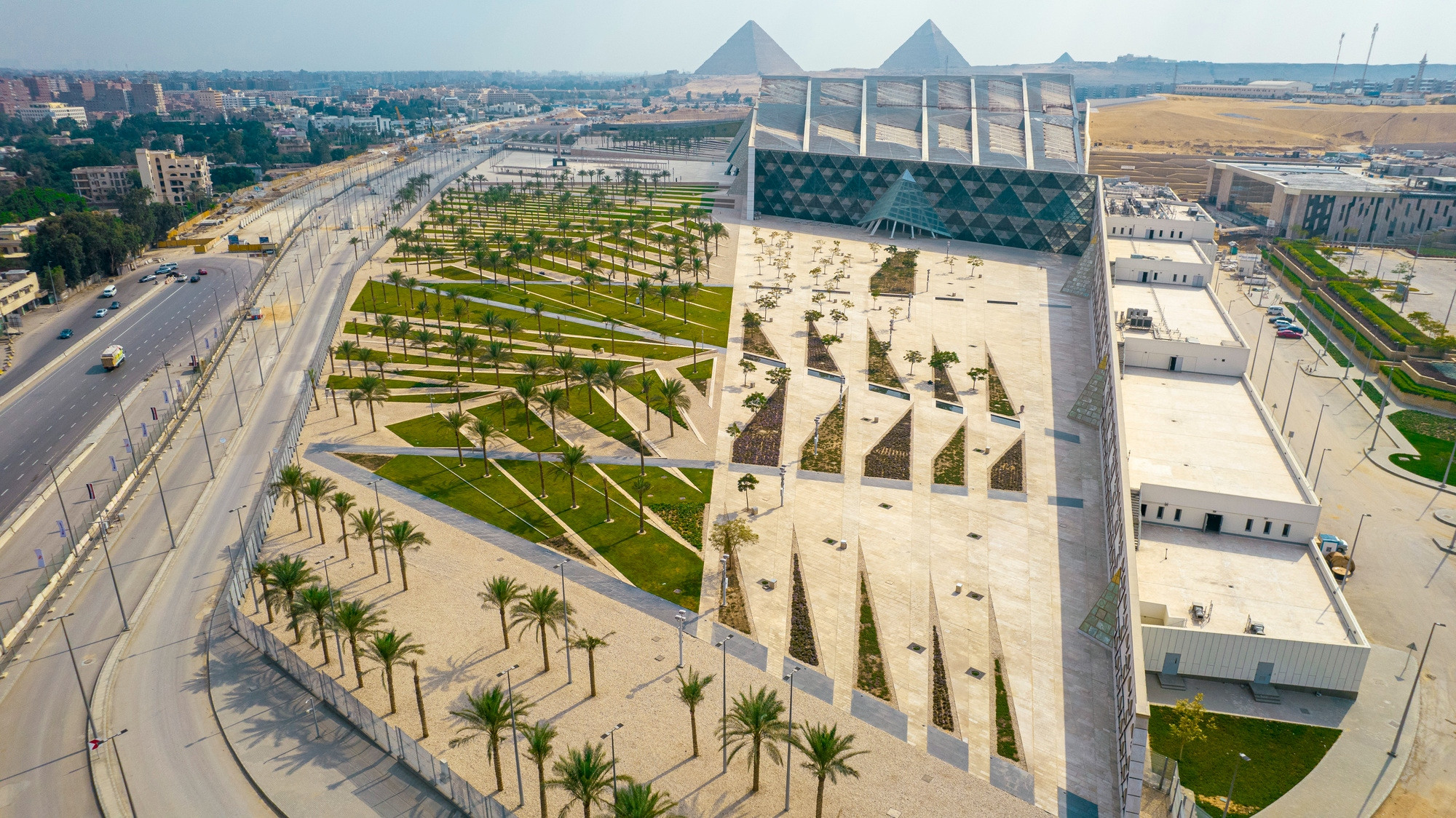
The GEM sits 1.2 miles from the Pyramids, spread across 5.2 million square feet, and holds more than 100,000 artifacts. Its centerpiece is the complete Tutankhamun collection, 5,398 objects shown together for the first time since Howard Carter's 1922 excavation, including the golden death mask, the nested coffins, and the chariots buried with the boy king. A central staircase divides the museum: 12 chronological galleries on one side, the Tutankhamun exhibition on the other.
Booking changed in December 2025. The on-site ticket office closed, and entry now runs through six daily 2-hour slots (9am, 11am, 1pm, 3pm, 5pm, 7pm) booked at visit-gem.com. The 9am slot gets the calmest atmosphere and the best light on the Grand Staircase. Standard foreign-adult admission is EGP 1,450, roughly $29 to $30 at current exchange rates.
- Stand beneath the 83-ton, 11-meter statue of Ramses II at the entrance atrium
- Spend at least 90 minutes in the two Tutankhamun halls alone
- View the Khufu Solar Boat in its dedicated hall
- Walk the Grand Staircase for a framed view of the Pyramids through the glass facade
02 — The last of the Seven Wonders of the Ancient World still standingPyramids of Giza and the Sphinx:
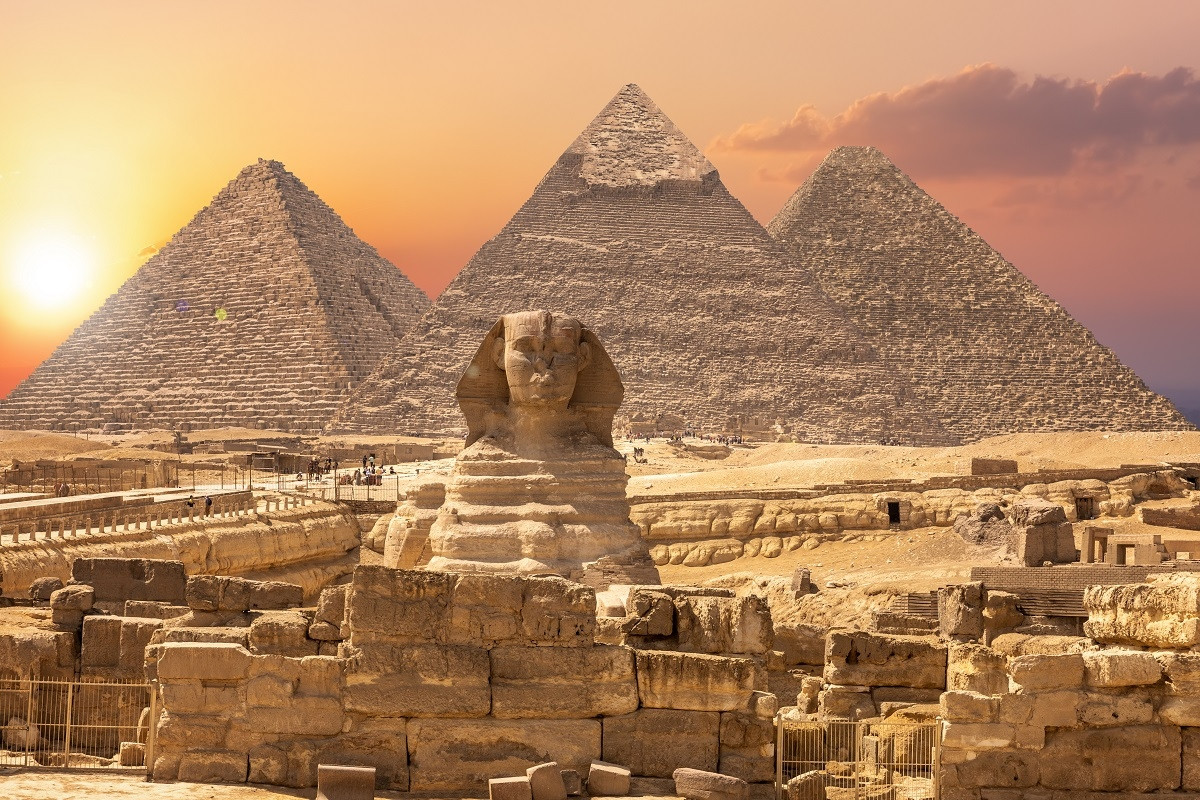
The Great Pyramid of Khufu rises 138 meters and took an estimated 20 years to build around 2560 BC. General admission to the plateau covers the exterior of all three pyramids (Khufu, Khafre, Menkaure), the Sphinx, and the Valley Temple, though published prices for this ticket vary across sources between roughly EGP 700 and 1,200 depending on when each source last updated, so confirm the same-day rate at egymonuments.com before you go.
Entering the Great Pyramid's interior costs extra and is capped at 300 tickets a day, split into two batches of 150 (8am and 1pm). The walk inside is steep, narrow, and undecorated. It's a real physical effort, not a scenic stop. Cars are banned inside the complex since 2025; a free shuttle bus runs four routes between the main sites.
- Photograph all three pyramids together from the Panorama Viewpoint
- Decide in advance whether the Khufu interior ticket is worth the steep, hot climb
- Visit the Sphinx up close, included in the base ticket
- Take the free shuttle to skip walking between stops in the heat
03 — The original Cairo museum, still home to the Royal Mummies HallEgyptian Museum, Tahrir Square:
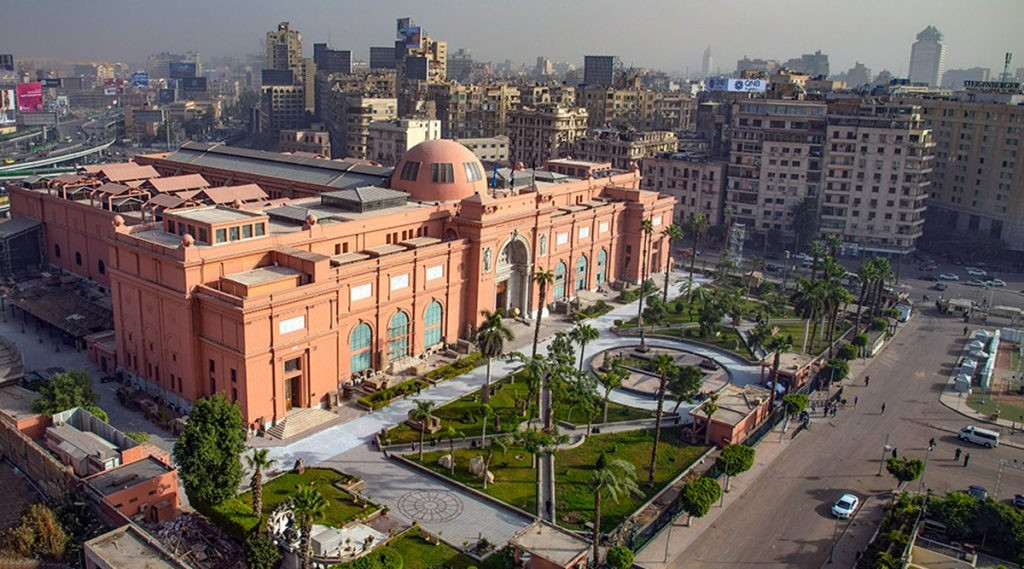
This is the museum most people picture when they think of Egyptian antiquities, and it remains worth a visit even after the GEM opened. The Royal Mummies Hall holds the actual preserved bodies of kings and queens whose temples line the Nile further south, a more visceral experience than the artifact displays elsewhere in the building. Some of Tutankhamun's pieces moved to the GEM, but the museum still holds a vast general collection spanning the Pharaonic, Greco-Roman, and Islamic eras.
04 — Medieval mosques and a market that's run continuously since 1382Islamic Cairo and Khan El Khalili:
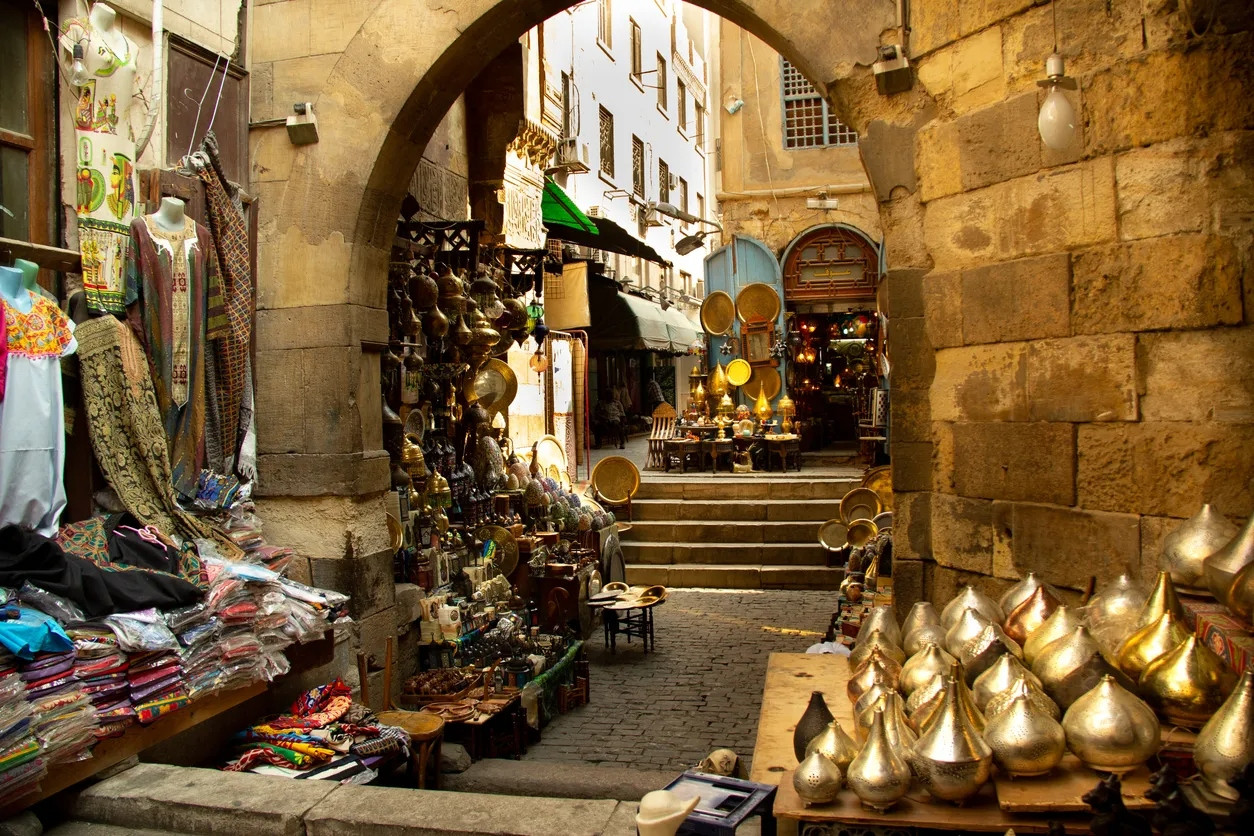
The Citadel of Saladin overlooks Islamic Cairo's skyline of minarets, built across multiple dynasties from the 9th century onward. Walking the district costs nothing beyond what you choose to spend. Khan El Khalili, the market at its center, has operated since the Mamluk era and still sells the spices, textiles, and silverwork it's known for, alongside the souvenir stalls aimed at tourists. Coptic Cairo, a separate older district nearby, brings three religious traditions into a few blocks: churches, a synagogue, and a mosque sitting close together.
05 — Home to the Step Pyramid of Djoser, the oldest pyramid on EarthSaqqara and the Step Pyramid:
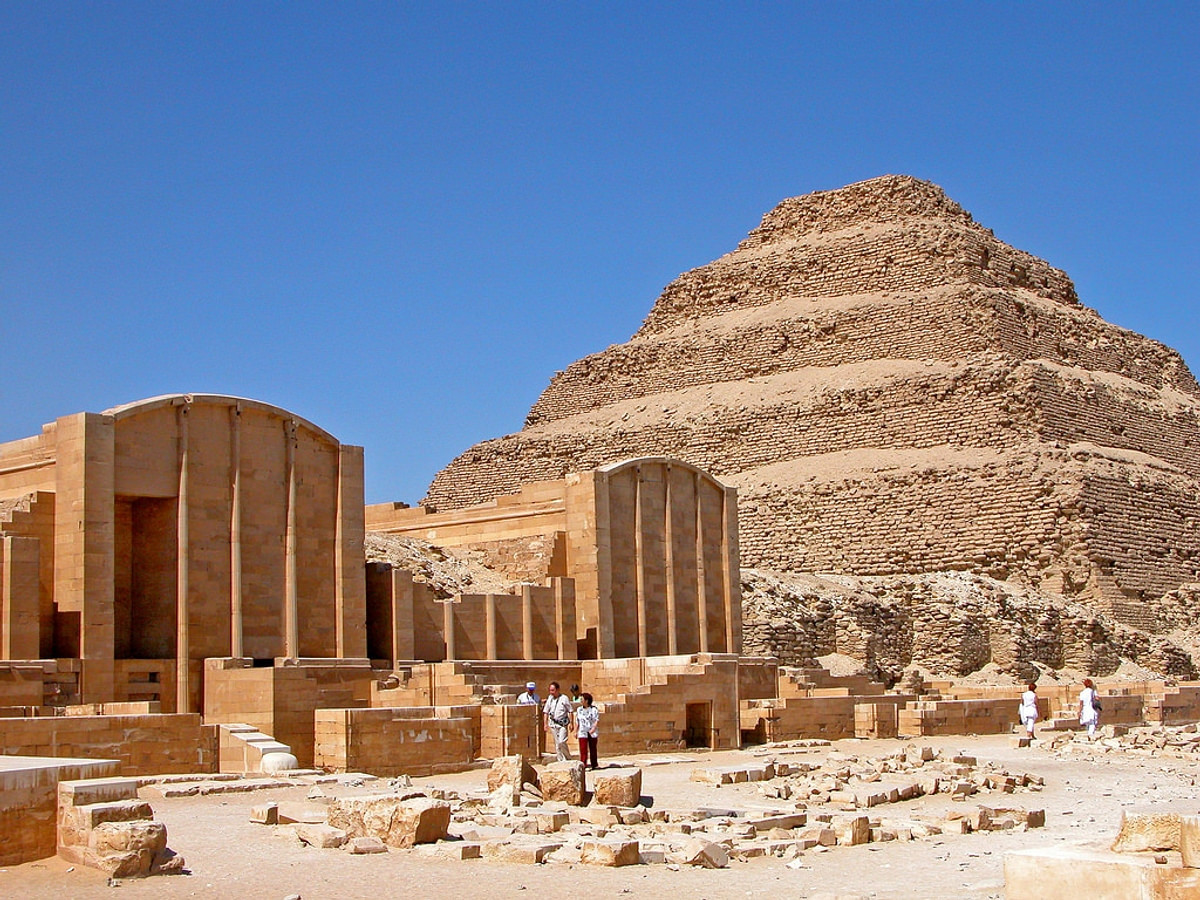
Saqqara predates Giza. The Step Pyramid of Djoser, built around 2670 BC for Egypt's Third Dynasty, came roughly a century before Khufu's smooth-sided pyramid and represents the architectural transition from flat mastaba tombs to true pyramids. Recent restoration work, including earthquake repair, reopened the underground burial chambers to visitors. The Imhotep Museum on-site adds context on how the structure was actually built, useful background before or after the Giza visit.
06 — 134 columns in a single hall, Egypt's second most-visited siteKarnak and Luxor Temples:
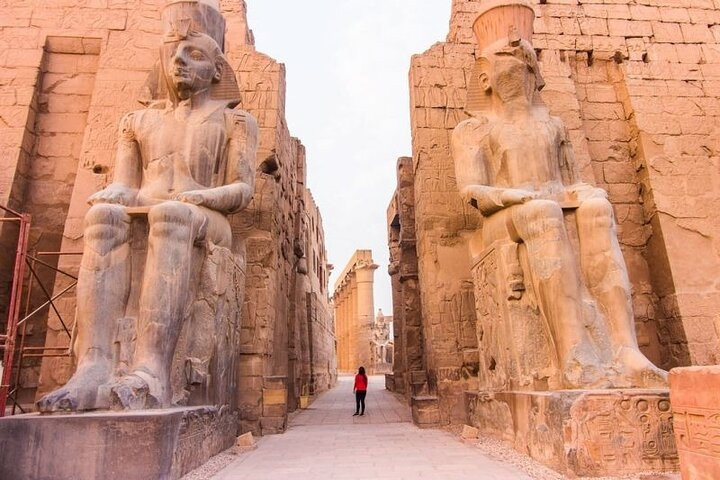
Karnak Temple Complex covers 100 hectares and took roughly 2,000 years of continuous construction and expansion under successive pharaohs. The Great Hypostyle Hall alone holds 134 massive columns, several over 20 meters tall, covered in carved hieroglyphics that have kept their color for millennia. Luxor Temple, a short distance away, connects to Karnak by the Avenue of Sphinxes, a 2.7-kilometer processional road lined with 1,350 sphinx statues, dating to 380 BC.
Visit Karnak in the morning to avoid both heat and tour bus crowds, then return to Luxor Temple in the evening. It's lit at night and the atmosphere shifts entirely once the floodlights come on.
- Walk the full length of the Great Hypostyle Hall at Karnak
- Return to Luxor Temple after dark for the illuminated columns
- Walk a section of the Avenue of Sphinxes connecting the two sites
- Visit the small on-site Karnak Open Air Museum
07 — Over 63 tombs cut into the West Bank, including Tutankhamun'sValley of the Kings, Luxor:
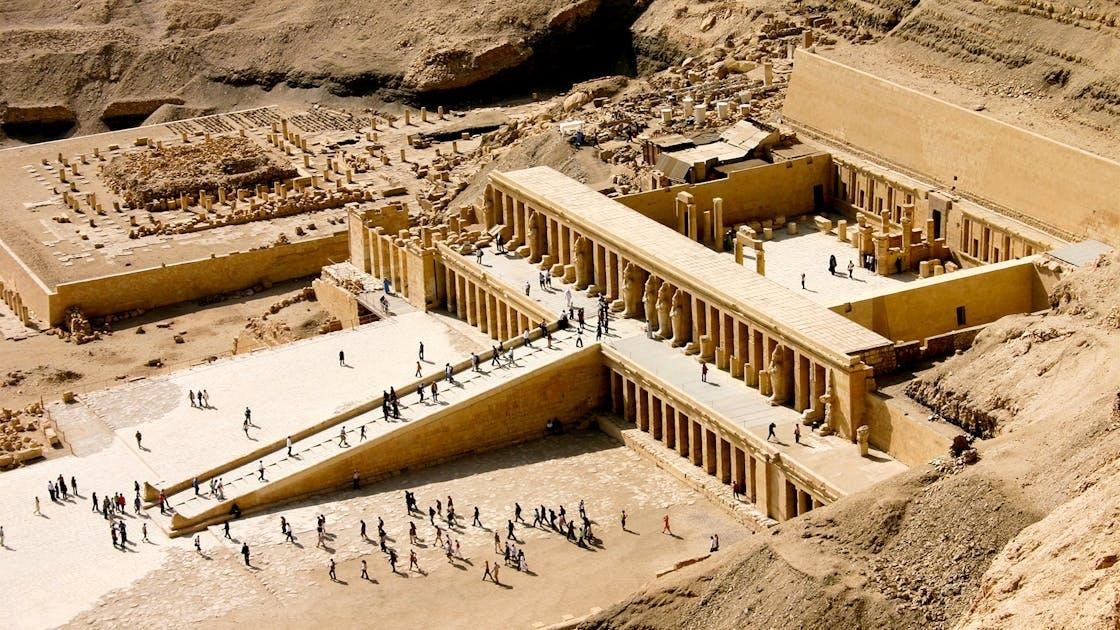
This was the primary royal burial ground for roughly 500 years, from the 16th to the 11th century BC. The standard ticket grants entry to three tombs of your choosing among those open that day; Tutankhamun's tomb, smaller and less elaborately decorated than several others, requires a separate ticket. The colors inside many tombs have survived over 3,000 years largely intact, protected from sunlight by the surrounding rock.
08 — Home to Egypt's Nubian community and 20 river islandsAswan and the Nubian Villages:
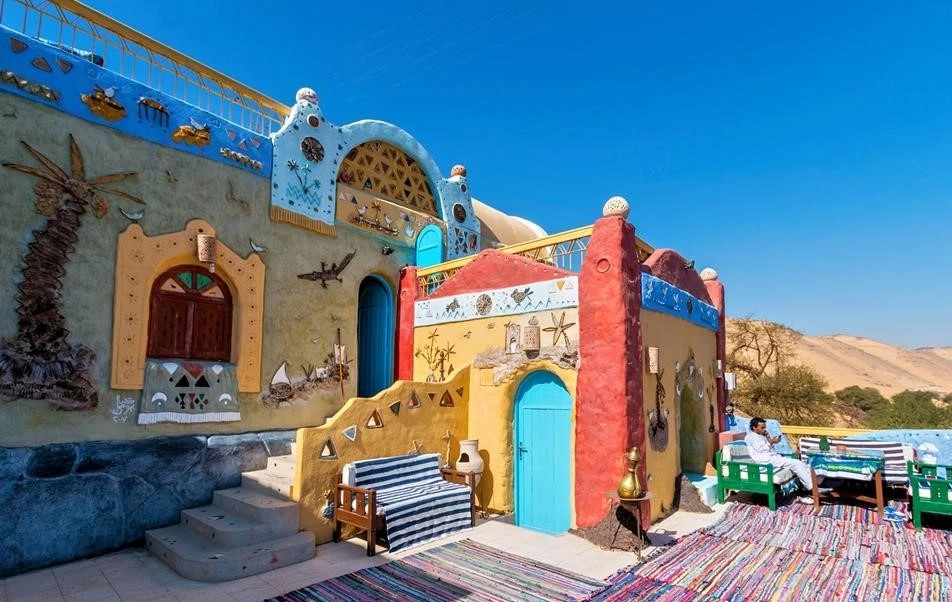
Aswan runs at a noticeably slower pace than Cairo or Luxor. A felucca, the traditional wooden sailboat used on the Nile for centuries, takes you to any of the 20 accessible river islands, including Gharb Soheil's Nubian Village, where colorfully painted homes and small cafes reflect a culture distinct from the rest of Egypt. The Aswan High Dam, completed in 1970, displaced roughly 100,000 Nubians, whose descendants largely resettled on the west bank here.
Sunset from the water, or from the terrace at the Sofitel Legend Old Cataract (where Agatha Christie wrote parts of Death on the Nile), is one of the more memorable evenings in Egypt without costing anything beyond a felucca ride.
09 — Carved into a cliff, then moved block by block to escape a rising lakeAbu Simbel:
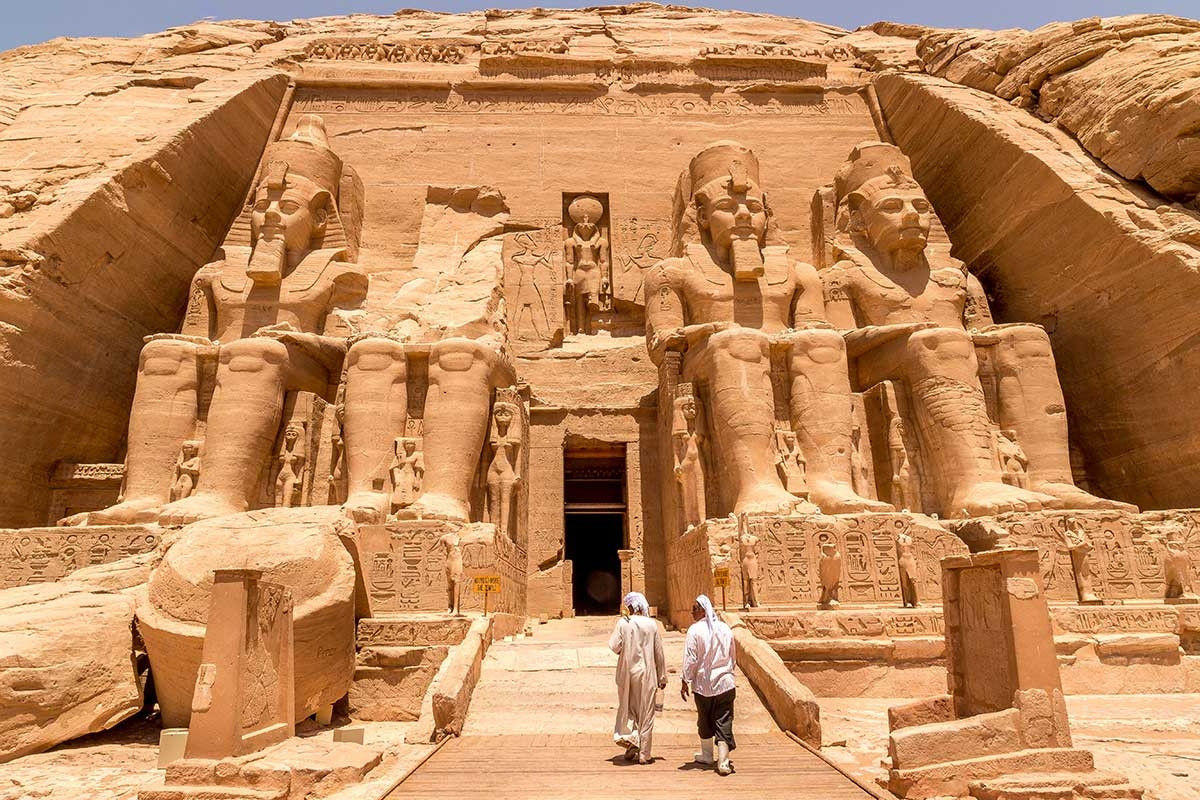
Ramses II ordered two temples carved directly into a sandstone cliff roughly 3,200 years ago: the Great Temple, fronted by four 20-meter colossal statues of himself, and a smaller temple dedicated to his wife, Nefertari. When the Aswan High Dam's construction threatened to submerge the site under Lake Nasser in the 1960s, engineers cut the entire complex into blocks and reassembled it on higher ground, an engineering effort almost as remarkable as the original carving.
Most visitors go from Aswan, either a 3 to 4 hour drive each way by private car or group convoy, or a roughly 45-minute domestic flight. The Sun Festival, when sunlight aligns directly with the inner sanctuary statues, happens twice a year, around February 22 and October 22.
10 — Three to four days, stopping at temples most road itineraries skipNile River Cruise, Luxor to Aswan:
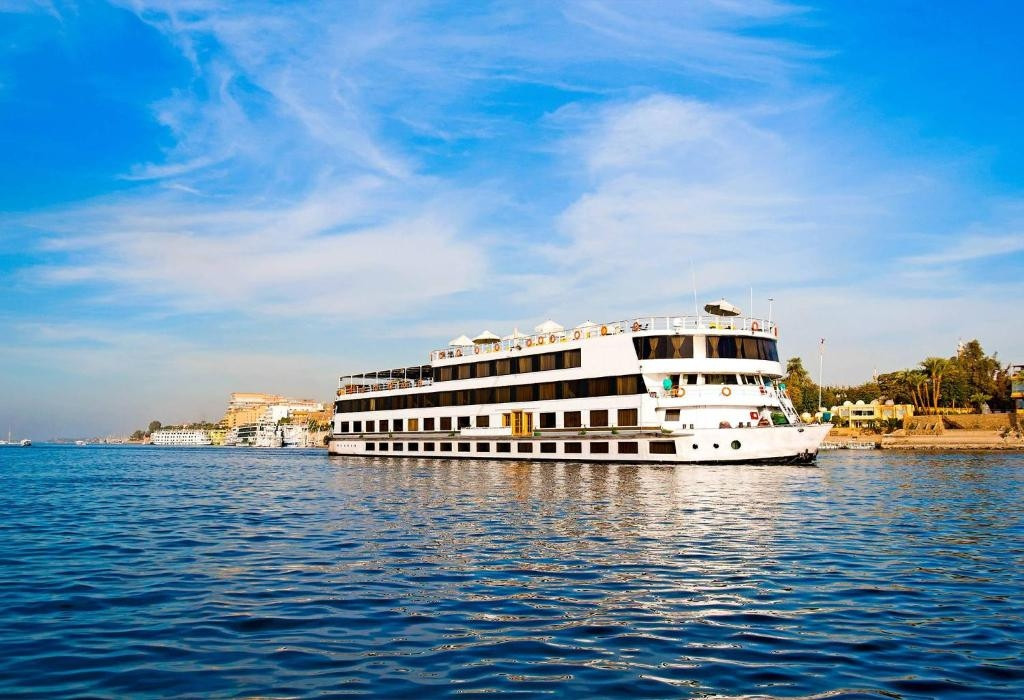
A standard Nile cruise covers the 200-odd kilometers between Luxor and Aswan over 3 to 4 days, with stops at Edfu's Temple of Horus and Kom Ombo's twin-god temple along the way. Edfu is one of the most architecturally complete ancient Egyptian temples still standing, since it sat buried in sand for centuries, which protected it from the weathering that affected more exposed sites. Kom Ombo is dedicated to two gods, Sobek and Horus, and its symmetrical layout duplicates most major features on each side of the building.
An alternative for travelers short on time: the overnight sleeper train between Cairo and Luxor or Aswan runs 10 to 12 hours with dinner and breakfast included, priced around $60 to $120 depending on cabin class.
11 — Vintage European-style architecture on Egypt's Mediterranean coastAlexandria:
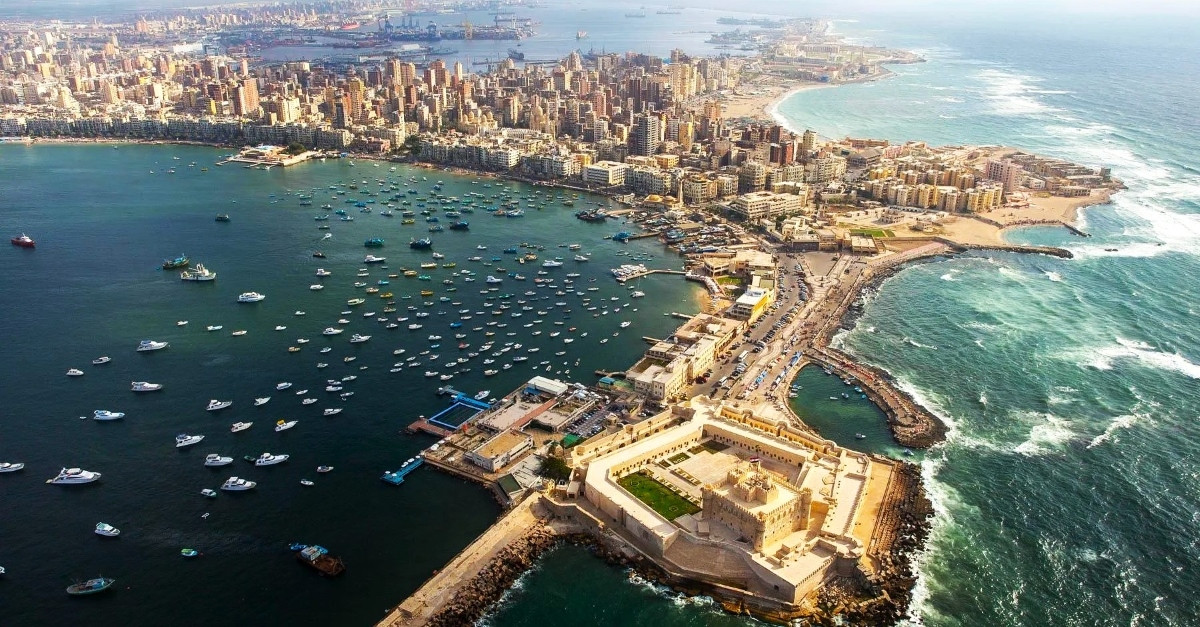
Alexandria runs on a different rhythm than the rest of Egypt: a coastal city with Corniche promenades, faded grand hotels, and a history tied more to Alexander the Great and the Ptolemaic dynasty than to the pharaonic sites further south. The Bibliotheca Alexandrina, a modern library built near the site of the ancient Library of Alexandria, and the underwater ruins visible near the Eastern Harbor both draw on that classical-era reputation.
12 — Where Alexander the Great consulted an oracle, surrounded by Berber-speaking localsSiwa Oasis:
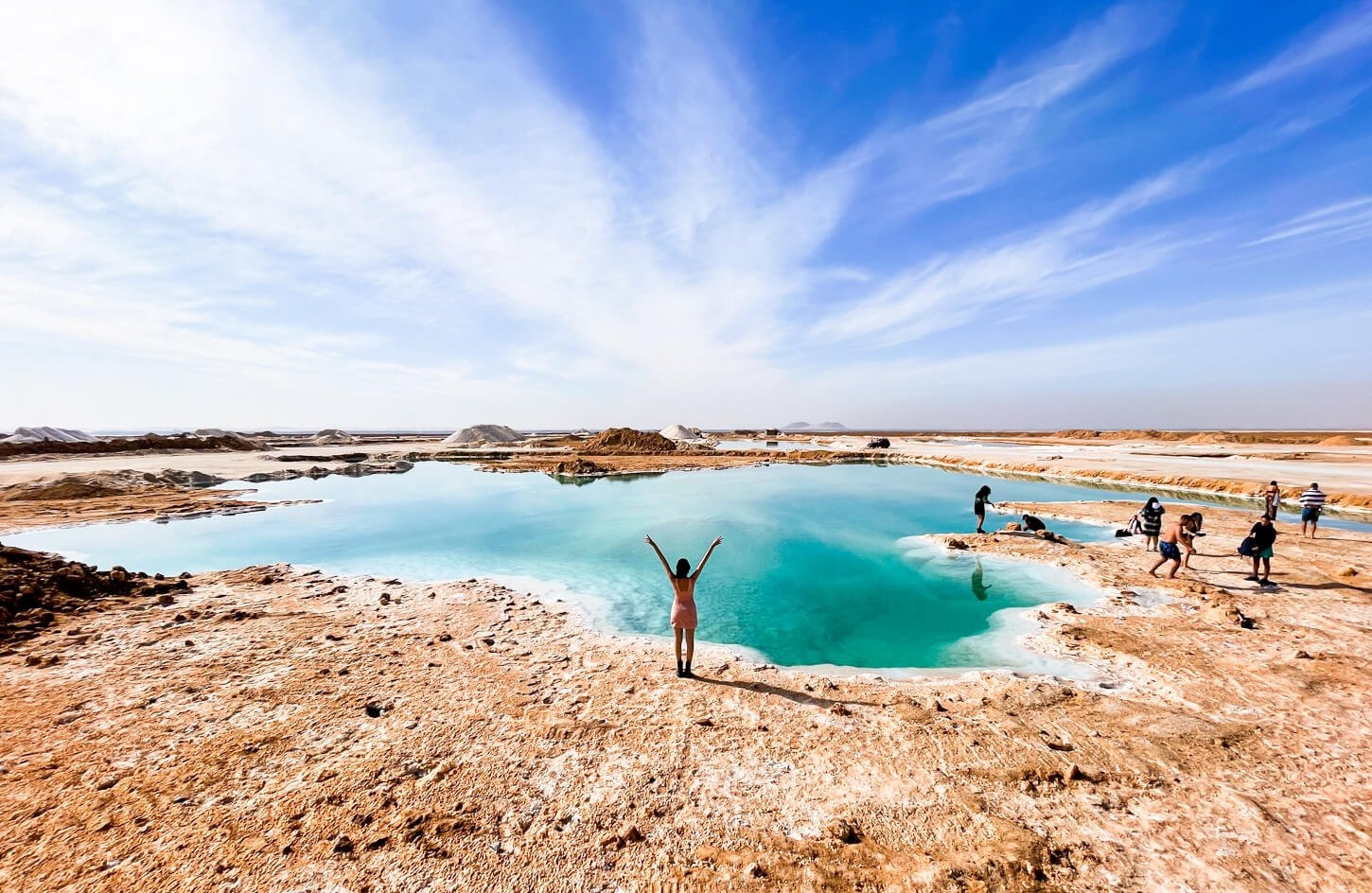
Siwa sits isolated enough that its people developed Siwi, their own Berber dialect, distinct from Arabic spoken elsewhere in Egypt. The Temple of the Oracle of Amun, built around the 6th or 7th century BC, drew Alexander the Great here personally to seek its guidance, a detail that still surprises most first-time visitors to this remote corner of the Western Desert. Cleopatra's Bath, a stone pool fed by one of the oasis's natural springs, remains a popular swimming spot, and palm groves and mud-built fortress ruins fill the town itself.
13 — Chalk-white rock formations that look nothing like the rest of EgyptWhite Desert, Bahariya:
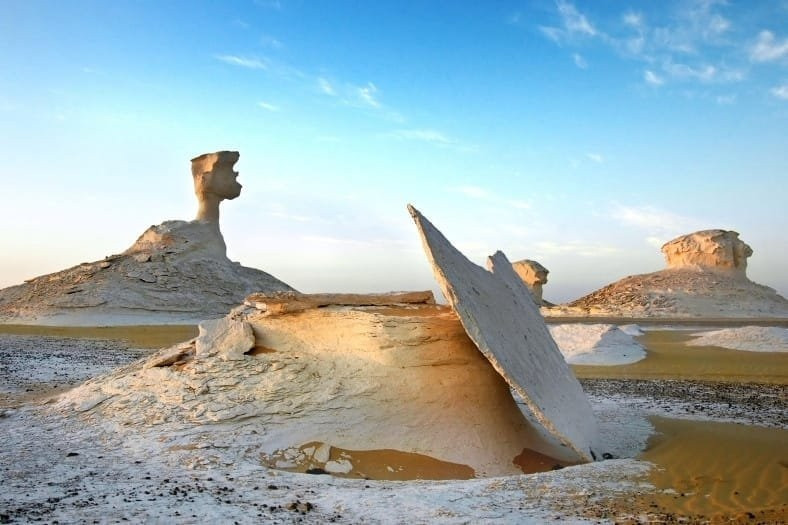
The White Desert's chalk formations, ranging from snow-white to cream depending on the light, sit alongside the Great Sand Sea's dunes and the cliffs of the Farafra Depression. Most visitors reach it via Bahariya Oasis on an organized overnight camping trip, since the formations are most striking at sunrise and sunset, and there's little reason to rush through during the flat midday light.
14 — Elphinstone Reef and dolphins, with a national park most beach-goers skipMarsa Alam and the Red Sea Coast:
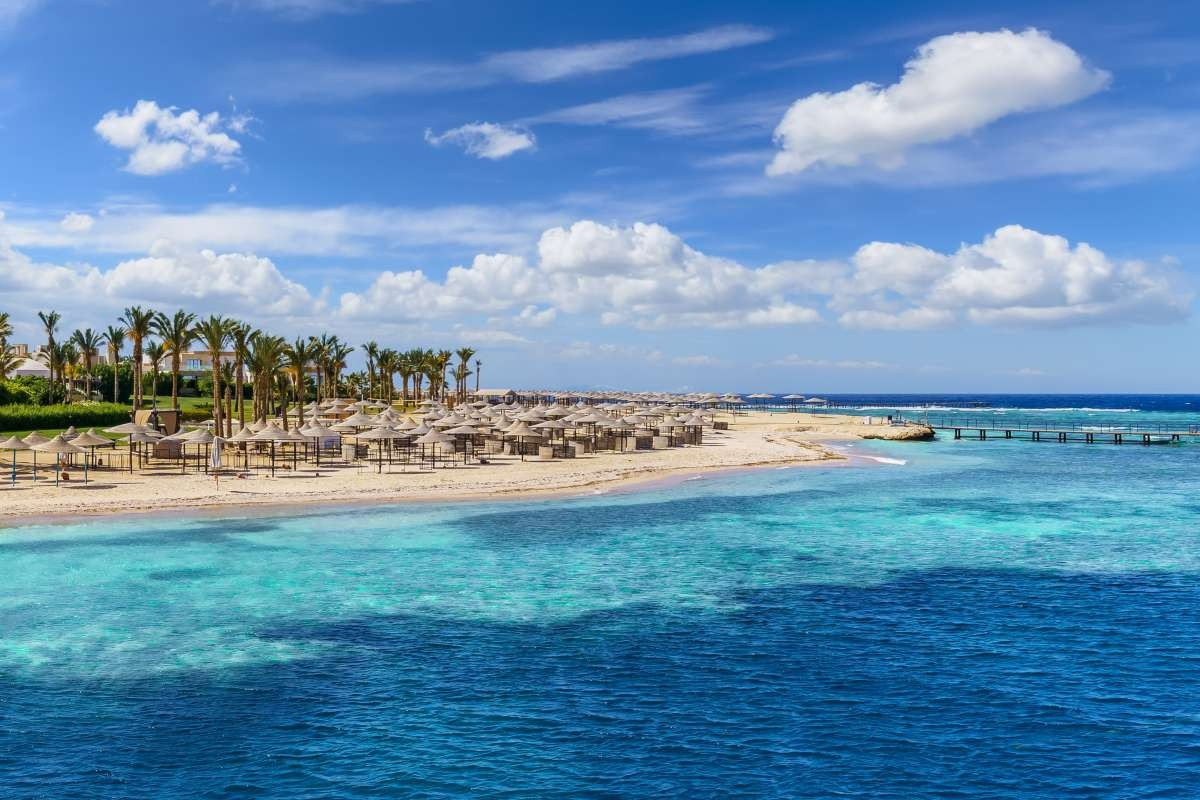
Marsa Alam runs quieter than Sharm El Sheikh or Hurghada, and the diving reflects that. Elphinstone Reef and Abu Dabbab rank among the better-known dive and snorkel sites here, with regular sightings of dolphins, dugongs, and sea turtles. Wadi el Gemal National Park, inland from the coast, adds hiking and 4x4 routes through mountainous desert terrain for travelers who want more than beach time, with camel sightings common around Sharm El Luli Beach.
How the Main Regions Compare:
Practical Information for 2026:
Visa:
$30 single-entry e-visa or visa on arrival, both raised from $25 in 2026. Multiple-entry e-visa costs $65. Free visa entry applies at Luxor and Aswan airports for arrivals between May and October through 2027.
Best time to Go:
October through April for the Nile Valley and Cairo, when daytime temperatures stay manageable for walking through open-air sites. The Red Sea coast works comfortably nearly year-round.
Currency:
Egyptian Pound (EGP). Most attractions now require card payment, not cash, and online ticket portals frequently quote both EGP and an approximate USD conversion.
Getting Between Cities:
Domestic flights connect Cairo, Luxor, Aswan, and the Red Sea resorts quickly. Overnight trains run Cairo to Luxor and Aswan at a lower cost but take considerably longer.
Visa, Budget, and Weather:What changed in 2026, and what stayed the same
Visa Cost and Process:
Both the e-visa and the visa on arrival cost $30 for a single entry as of March 1, 2026 (up from $25). A multiple-entry e-visa runs $65. Most nationalities, including the US, UK, EU, Canada, and Australia, qualify for either option. The e-visa processes in 24 to 72 hours; apply at least a week ahead.
Free Visa Exception:
Travelers flying directly into Luxor or Aswan airports between May and October, through 2027, get a free tourist visa under a seasonal incentive designed to boost low-season travel. This does not apply if you fly into Cairo first.
Daily Budget:
Budget travelers can manage on $40 to $60 a day covering hostels, local food, and public transport. Mid-range travel with hotels and private transport runs $80 to $150 a day. A 7-day trip covering Cairo, Luxor, and Aswan averages around $1,000 to $1,600 per person excluding international flights.
When to Go:
October through April brings daytime temperatures of 20 to 28°C (68 to 82°F), comfortable for walking around outdoor sites. May through September pushes past 40°C (104°F) in Luxor and Aswan, brutal for midday sightseeing, but hotel prices drop 30 to 40% and crowds thin out significantly.
Payment Methods:
Most major sites now accept card payment only at the gate; cash is increasingly rare even for entrance fees. Carry a card with international payments enabled, and keep some EGP cash for tips, taxis, and small vendors who still prefer it.
Safety Status:
Tourist areas across Cairo, Luxor, Aswan, and the main Red Sea resorts maintain a visible security presence and a low crime rate for visitors. The Sinai Peninsula outside the main resort towns carries separate travel advisories; check current guidance before planning routes there.
Frequently Asked Questions (FAQ's):
Q. What is the best time of year to visit Egypt?
October through April. Daytime temperatures sit between 20-28°C across Cairo, Luxor, and Aswan, which makes walking through open-air temple sites manageable. May through September pushes past 40°C in Upper Egypt, though the Red Sea coast stays comfortable year-round since sea breeze moderates the heat.
Q. How much does a tourist visa to Egypt cost in 2026?
$30 USD for a single-entry visa, whether bought online as an e-visa or on arrival at the airport bank counter. Both fees rose from $25 as of March 2026. A multiple-entry e-visa costs $65. Travelers flying into Luxor or Aswan between May and October 2026 get the visa fee waived entirely under a government tourism incentive.
Q. How many days do you need to see the main places to visit in Egypt?
10 to 12 days covers Cairo, Luxor, Aswan, and a few nights on the Red Sea without rushing. A tighter 7-day trip works by flying between Cairo and Luxor, skipping the overnight train, and leaving out Abu Simbel or the Red Sea extension.
Q. Is it safe to travel around Egypt right now?
Cairo, Luxor, Aswan, the Nile Valley, and the Red Sea resort towns see millions of tourists yearly without incident, and tourist police are stationed at every major site. The main restricted areas are parts of the Sinai Peninsula outside Sharm El Sheikh and Dahab, and the Western Desert near the Libyan border, where travel requires official permits.
Q. Do you need a guide to visit the Pyramids of Giza?
No. General admission tickets are sold at the gate and online, and a free shuttle bus now connects the main viewpoints inside the complex. A licensed guide adds historical context and can be useful for first-time visitors, but isn't required to enter or move around the plateau.
Q. What is the most cost-effective way to see Luxor and Aswan together?
A 3 to 5 night Nile cruise between the two cities. It bundles transport, accommodation, and entry logistics into one price, and stops at Edfu and Kom Ombo along the way, which would otherwise need separate arrangements. Overnight trains or short domestic flights are cheaper but cover the same distance without the included sightseeing.







{{item.get_author.first_name}} {{item.get_author.last_name}}
Level 7
5 Photos
36 Reviews
{{item.comment_txt}}
{{item_reply.get_author.first_name}} {{item_reply.get_author.last_name}}
@ {{item_reply.reply_to}}, {{item_reply.reply_txt}}