
 Holiday offers
In short: For winter warmth go to Madeira, for sunshine and quiet beaches go to the Algarve, and for culture at low prices go to Lisbon and Porto. Between December and February you can also add things summer visitors never see: a Christmas village inside the walls of Óbidos, skiing in the Serra da Estrela, and giant waves breaking off Nazaré.
Facts, prices and rules were checked against official sources in November 2026. For month-by-month temperatures and rainfall across the mainland and the islands, see our guide to the best time to visit Portugal; this article is about where to go and what to do once you have chosen winter.

Is Portugal worth visiting in winter?
Yes, if you go for towns, food, walking and scenery rather than a swimming holiday. Winter is the low season on the mainland, so hotels that are fully booked in August have rooms to spare, queues at the big sights shrink, and restaurants have time for you. The trade-off is shorter days and real rain in the north and center, which falls in spells of a few days rather than every day.
The one thing that catches visitors out is indoor cold. Many Portuguese homes, older guesthouses and rental apartments have no central heating, and stone buildings hold the damp. When booking between December and February, check that the room has heating or reverse-cycle air conditioning, and look at recent reviews that mention winter stays.
Where to go in Portugal in winter
Madeira for winter warmth
Madeira is the obvious choice if you want to sit outside in a T-shirt in January. Funchal, on the sheltered south coast, has the mildest winter nights of any Portuguese city, and the island's gardens keep flowering through the season; the Madeira Botanical Garden and Palheiro Gardens are both worth a morning.
The festive season is the island's busiest winter period. The official Visit Madeira events calendar runs the Christmas illuminations from 1 December 2026 to 10 January 2027, with the Funchal Marathon in mid-January 2027. Our New Year's Eve in Portugal guide covers the fireworks over the bay in detail.
For walking, winter is a mixed season. The levadas along the irrigation channels at lower levels are usually open, while high routes such as Pico do Arieiro can be closed by rain, wind or ice, and the summits are far colder than the coast. Check the regional trail status before setting out, and keep the cable car up to Monte for a clear day.
The Algarve for sunshine and empty beaches
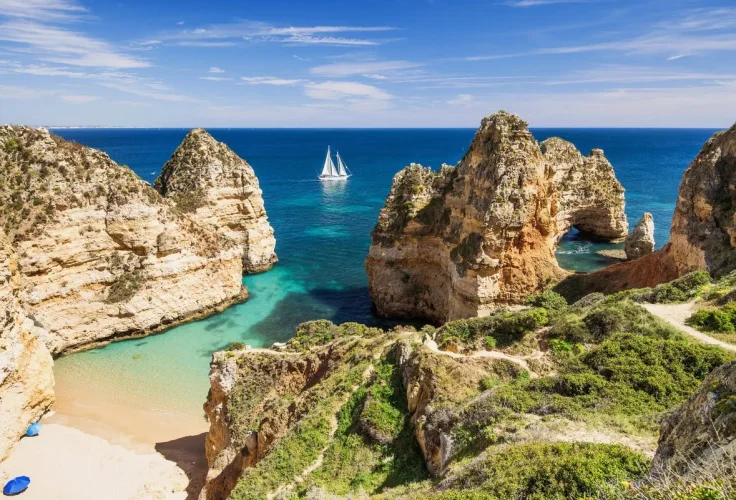
The Algarve is the sunniest part of the mainland in winter and the driest, which makes it the best region for long coastal walks. The cliff paths around Lagos and the Seven Hanging Valleys trail near Carvoeiro are far more comfortable in January than in the July heat. Beaches are quiet enough to have a cove to yourself, though most beach bars and some seasonal restaurants close until spring, and Albufeira and Praia da Rocha feel shuttered outside the New Year week.
Loulé, inland from the coast, also holds a Carnival parade in February. Our Algarve beaches guide notes which towns keep a year-round feel.
Lisbon and Sintra without the queues
Lisbon is the easiest winter city break in Portugal. Most of the big sights are indoors or open-air on short visits, and winter cuts the waiting time at places like Jerónimos Monastery and the Fado Museum. December brings the Christmas lights, the Wonderland fair in Parque Eduardo VII and the river fireworks on New Year's Eve; all are covered with dates in our New Year's Eve guide.
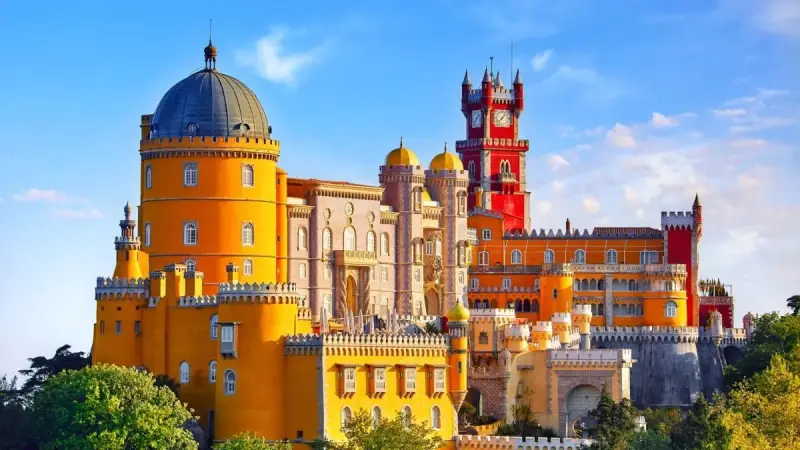
Sintra is the winter day trip that improves most. The palace grounds can be misty, but the crowds that make summer visits a slog are gone, and the trains from Rossio station run all year. Read our Sintra day trip guide for the route and ticketing, and our Lisbon day trips by train article for Cascais and other options.
Porto and the Douro for port and rainy-day comfort
Porto is the wettest big city in Portugal, and winter is when that shows. It is also the city most suited to bad weather: the port wine lodges across the river in Vila Nova de Gaia are cellars built for tastings, and long lunches of francesinha or tripas à moda do Porto are part of the local winter routine. Our guide to things to do in Porto lists the indoor options.
The Douro valley is quiet after the harvest. The terraces are bare and some estates cut back their visitor hours or close to the public until spring, so book any quinta visit or river cruise directly and confirm it runs on your date.
Óbidos for a Christmas village
The walled town of Óbidos, about an hour north of Lisbon, turns into Óbidos Vila Natal every December, with a Christmas village, rides and an ice rink inside the medieval walls. The 2026/27 edition runs from 27 November 2026 to 3 January 2027, according to the RFM guide to Christmas markets in Portugal, which notes that the organizers may update times and program. Tickets are sold in advance on the event's own site. Leave time to walk the town walls and visit Óbidos Castle.
Serra da Estrela for snow
Mainland Portugal's only ski area is in the Serra da Estrela, around the summit of Torre, the highest point on the mainland at close to 2,000 meters. The ski station has announced an opening on 26 December 2026 and a closing date of 29 March 2027, as listed by Skiinfo, while the forecasting site Snow2Day projects 2 January 2027. Both depend on snowfall, which varies a lot from one winter to the next.
It is a small resort better suited to a first day on skis or a snowball fight than to a ski holiday. The mountain villages of Manteigas and Seia, the sheep's cheese (queijo Serra da Estrela) and the Serra da Estrela interpretation center make a winter road trip worthwhile even without snow. Roads to the summit can close in snow and ice, so check conditions on the day.
Nazaré for big-wave season
Winter is when the giant waves at Praia do Norte draw crowds to the lighthouse fort on the headland. The World Surf League has set the 2026/27 window for its Nazaré tow-in contest from 1 November 2026 to 31 March 2027, and the event runs on a single day called at short notice when a large swell lines up. Swell sizes change by the day, so watch the forecast and keep a flexible base within reach. The São Miguel Arcanjo fort and the clifftop Sítio are the viewing points; stay well back from the cliff edge and the wet rocks.
The Azores for a quiet, green winter
The Azores are not a sun destination in winter, but they suit travelers who like walking in green landscapes without other people around. São Miguel, the largest island, is the practical base. Visit Azores is the official source for trail and park information. Fewer flights and boats link the smaller islands in winter, and fog and wind can delay inter-island connections, so build spare days into any island-hopping plan.
Choosing between the two Atlantic archipelagos? Our Madeira vs Azores comparison sets out the differences.
Winter events in Portugal, December 2026 to February 2027
These are the dated events we could confirm in November 2026. Programs are often published only a few weeks ahead, so check each organizer's site before you travel.
| Dates | Event | Where |
|---|---|---|
| 27 Nov 2026 to 3 Jan 2027 | Óbidos Vila Natal | Óbidos |
| 29 Nov 2026 | Lisbon Christmas lights switch-on | Terreiro do Paço, Lisbon |
| 1 Dec 2026 to 10 Jan 2027 | Christmas illuminations | Funchal, Madeira |
| 26 Dec 2026 (planned) | Ski season opens | Serra da Estrela |
| 31 Dec 2026 | New Year's Eve fireworks and concerts | Funchal, Lisbon, Porto, Algarve |
| Mid-January 2027 | Funchal Marathon | Madeira |
| Early to mid February 2027 | Carnival parades | Funchal, Loulé, Torres Vedras |
The exact 2027 Carnival dates, including Funchal's main parades, are in our best time to visit Portugal guide. Public holidays also shape the season: 8 December and 25 December close many shops and museums, and 1 January is the quietest day of the year in most towns.

Planning a winter trip: transport, packing and closures
Trains and intercity buses run normally through winter, and the Lisbon to Porto rail line is the simplest way to combine the two cities. A rental car makes the most sense for the Algarve, the Serra da Estrela and the Alentejo, and winter rates are among the lowest of the year. Mountain roads in the center and north can see snow and ice, so ask the rental company about chains if you plan to drive up to Torre.
Pack a waterproof jacket, a warm layer for evenings and shoes with a good grip; the polished limestone pavements (calçada) in Lisbon and Porto are slippery when wet. An umbrella is less useful than it sounds on the windy Atlantic coast.
Seasonal closures are the other planning point. Beach clubs, some island boat trips, and a share of Algarve restaurants close from November to March. Museums keep winter hours, often closing earlier in the afternoon and on Mondays, and many close on Christmas Day and New Year's Day. Check opening hours before building a day around one sight. For the costs side, our Portugal trip cost guide breaks down daily budgets, and the Portugal travel guide covers entry rules and getting around.
 AI trip planner











{{item.get_author.first_name}} {{item.get_author.last_name}}
{{item.comment_txt}}
{{item_reply.get_author.first_name}} {{item_reply.get_author.last_name}}
@ {{item_reply.reply_to}}, {{item_reply.reply_txt}}