


Portugal travel guide
Atlantic light and old-world charm.
Historic cities, wine, seafood, beaches and mild weather come at reasonable prices in Portugal. Visit from April to June or September to October. A week covers Lisbon and Porto; add the Algarve or the islands with more time. EU and many other passports enter visa-free under Schengen rules for up to 90 days.
Portugal occupies the western edge of the Iberian Peninsula, with a long Atlantic coastline and the island groups of Madeira and the Azores. Lisbon spreads over hills above the Tagus estuary, with yellow trams, tiled façades, the Belém monuments of the Age of Discovery and nearby Sintra's romantic palaces. Porto, in the north, is the home of port wine and the gateway to the terraced vineyards of the Douro Valley.
The Algarve in the south is known for golden cliffs, sea caves and sandy coves, while the Alentejo offers cork-oak plains, whitewashed towns and the Roman temple of Évora. Madeira and the Azores draw hikers and nature lovers. Portugal is compact, relatively affordable for western Europe and pleasant for much of the year.
Best experiences in Portugal
Find your kind of trip: 24 travel themes, each with the packages in Portugal.
 Ayurveda Tours
 Seasonal/Event
 Adventure
Wildlife & Safaris
 Pilgrimage
Eco/Nature
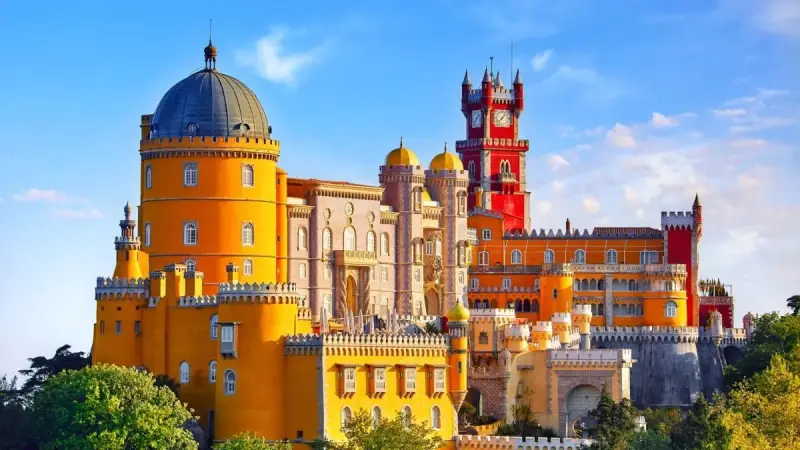 Culture & History
 Honeymoon
 Romantic Getaway
 Cruise
 Water Activities
 Backpacking
 Luxury
 Photography
 City Slickers
 Heritage
 Beach & Relaxation
 Sports & Recreation
 Food & Wine
Train & River Journeys
Skiing
 Overland
Portugal at a glance
Rental cars need a toll transponder for the motorways; entry, money and plugs are covered below.
Top destinations in Portugal
Pick a place by travel style: beaches, nature, cities, heritage, islands.
 LisbonPortugal's hilly river capital
FaroThe Algarve's capital
FunchalMadeira's year-round capital
LagoaThe Algarve's cliff coast
OdemiraPortugal's wild Atlantic edge
PortoPort wine city on the Douro
SintraPalaces in the Lisbon hills
TomarThe Templars' town
Viana do CasteloThe Minho's river-mouth city
ÁguedaThe umbrella town of Bairrada
AlbufeiraThe Algarve's biggest resort
AlmadaLisbon's south bank
AmadoraBudget base near Lisbon
AveiroPortugal's canal city
BarcelosHome of the Portuguese rooster
BragaPortugal's city of archbishops
CascaisLisbon's seaside escape
CoimbraPortugal's university city
GondomarPortugal's goldsmith town
GuimarãesWhere Portugal was born
LagosCliffs and coves of the west Algarve
LeiriaCastle city of the Centre
LouresWine country next to Lisbon
MaiaPorto's airport municipality
MatosinhosPorto's seafood suburb
NazaréThe town of giant waves
OdivelasLisbon's yellow-line suburb
OeirasStop on the Cascais line
Peso da RéguaGateway to the Douro vineyards
Ponta DelgadaGateway to São Miguel
PortimãoSardine port turned beach town
Santa Maria da FeiraCastle town south of Porto
SeixalOn the Tagus bay
SetúbalFishing port on the Sado
TaviraThe eastern Algarve's old town
ValongoPorto's green eastern edge
Vila Franca de XiraRibatejo town on the Tagus
Vila Nova de FamalicãoMuseum town of the lower Minho
Vila Nova de GaiaAcross the river from Porto
ViseuCapital of Dão wine country
ÉvoraThe Alentejo's walled capital
ÓbidosThe walled town of queens
Nothing in that category yet.
Top things to do in Portugal
Lisbon's trams and azulejos, the palaces of Sintra, port lodges in Porto and wine tours on the Douro.

Sintra
Pena Palace
Pena Palace crowns a hilltop in the Sintra Mountains above the town of Sintra, about 25 kilometres west of Lisbon. On clear days it can be seen from Lisbon. It...

Lisbon
Jerónimos Monastery (Mosteiro dos Jerónimos)
The Jerónimos Monastery stands in Belém, on the western side of Lisbon near the River Tagus, close to the old port of Restelo from which Portuguese ships set ou...
Best time to visit Portugal
Summer packs the Algarve while the Atlantic stays cool; the Douro grape harvest runs from mid-September.
Warm, sunny and less crowded; good for cities and coastal walks.
Hot and dry inland, busy beaches; the Atlantic stays cool.
Mild but rainy, with low prices; Madeira stays spring-like.
Douro Valley grape harvest runs from mid-September to early October; book quintas early if you want to join the harvest.
Packages in Demand
A Journey to Remember
Tours, activities and day trips in and around this destination, with the details you need before booking.
No packages in Portugal are listed yet. Browse all packages
Create Your Custom-Made Trip to Portugal
Traveling to Portugal? Chat with a Local Travel Specialist in Portugal Who Can Help Organize Your Trip.
START HERE
Our Travel Experts are Recommended by



Portugal travel tips
Short boxes on entry, airports, money, health, safety, where to stay, transport, SIM cards and manners.
Visas and entry
Schengen area rules
Portugal's entry rules are the Schengen area's. Citizens of the EU and of many other countries, including the US, UK, Canada and Australia, can visit visa-free for up to 90 days in any 180-day period; other nationalities need a Schengen visa. The EU's Entry/Exit System (EES) records non-EU travelers' fingerprints and a photo at the border.
- Visa-free stay
- Up to 90 days in any 180 days, for eligible passports
- Passport
- Issued in the last 10 years, valid 3 months beyond departure
- ETIAS
- Planned online travel authorisation; not yet required
- Confirm with
- travel-europe.europa.eu or an embassy of Portugal
Getting there
Lisbon, Porto, Faro
Lisbon is TAP Air Portugal's hub, with flights across Europe, Africa and the Americas. Porto and Faro have many European routes, and Madeira and the Azores have their own airports. From Lisbon Humberto Delgado Airport (LIS), the metro red line reaches the centre in about 20 minutes, and buses and trains arrive overland from Spain.
- Main airport
- Lisbon Humberto Delgado (LIS)
- Other airports
- Porto (OPO), Faro (FAO), Funchal (FNC), Ponta Delgada (PDL)
- LIS to Lisbon
- Metro red line to the center in about 20 minutes
- Overland
- Buses and trains from Spain
Money and costs
Moderate destination
By western European standards Portugal is affordable, though Lisbon and the Algarve have grown pricier. Cards work almost everywhere. The lunchtime prato do dia is good value, and tipping means rounding up or leaving 5 to 10%.
- Tipping
- Round up or leave 5 to 10%
- Couvert
- Bread and olives on the table are charged if eaten
- Use Multibanco bank ATMs, not Euronet machines with high fees.
- Rent cars with a toll transponder for motorways.
Health and vaccines
Insurance, pharmacies
Routine vaccines are enough for Portugal. Health care is of a high standard. EU travelers should carry a European Health Insurance Card (EHIC); everyone else needs travel insurance with medical cover.
- Drinking water
- Tap water is safe to drink
- Pharmacies
- Marked with a green cross; one on duty at night in most towns
- Ambulance
- Call 112
- EU visitors
- EHIC gives access to state health care
- Buy travel insurance that covers medical treatment and evacuation.
Staying safe
Very safe
Portugal is one of Europe's safest countries, and pickpocketing on Lisbon's tram 28 and in crowded tourist areas such as Baixa is the main risk. Strong Atlantic waves and currents make lifeguarded beaches the safe choice, and wildfires are a summer risk inland. Call 112 for police, fire or ambulance.
- Emergency number
- Call 112 (police, fire, ambulance)
- Sea
- Strong Atlantic waves and currents; obey beach flags
- Summer
- Wildfire risk inland
- Before you go
- Read your government's current travel advisory for Portugal
- Watch your bag on tram 28 and in Baixa.
- Wear grippy shoes on Lisbon's slippery cobbles.
Where to stay
Best areas to stay
Base yourself in Lisbon and Porto for the cities, and in a coastal town for the Algarve. In Lisbon, Baixa, Chiado and Alfama put you close to the sights, and in Porto, Ribeira or the streets near Aliados work best.
- Lisbon
- Baixa, Chiado or Alfama
- Porto
- Ribeira or near Aliados
- Algarve
- Lagos, Tavira or Albufeira
- Douro Valley
- Wine estates near Pinhão
Getting around
Trains, buses, car
Fast Alfa Pendular trains link Lisbon and Porto in about 3 hours, slower Intercidades trains head inland, and Rede Expressos and FlixBus coaches reach most towns. Lisbon has a metro, trams, buses and ferries. A car is the best way to explore the Algarve, the Alentejo and the Douro.
- Trains
- CP Alfa Pendular and Intercidades
- Lisbon
- Metro, trams, buses and ferries
- Buses
- Rede Expressos and FlixBus
- Islands
- Fly to Madeira and the Azores
- Alfa Pendular trains run at up to 220 km/h; advance tickets on the CP website are far cheaper.
- Slower Intercidades trains reach inland towns such as Évora and Guarda.
- TAP flies to Madeira and the Azores from Lisbon and Porto; SATA Air Açores and Azores Airlines link the islands.
- Bolt and Uber work in Lisbon, though cover is patchy in rural areas.
- Motorway tolls are electronic, so check that your rental car has a transponder.
- Avoid driving in central Lisbon and Porto at rush hour (08:00 to 09:30, 17:00 to 19:30).
- Satnav can send you down village lanes too narrow for a car.
SIM and internet
Local SIM or eSIM
Roaming on an EU SIM in Portugal is billed at home rates. Everyone else can buy a prepaid SIM at the airport or at a carrier shop, showing a passport. The three networks are MEO, Vodafone and NOS, and coverage is good across the mainland.
- Networks
- MEO, Vodafone, NOS
- You need
- Passport
- Coverage
- Good across the mainland
Culture and etiquette
Customs and etiquette
The Portuguese are courteous and relaxed, and a few words of Portuguese are appreciated; Spanish is a different language, and people notice. Say obrigado (men) or obrigada (women) for thank you.
- Music
- Fado, listed by UNESCO as intangible heritage
- Meals
- Dinner from about 20:00
- Say 'obrigado' (men) or 'obrigada' (women) for thank you
- Try a pastel de nata
- Dress modestly in churches
- Speaking Spanish and assuming it's the same
- Eating the table snacks if you don't want to pay for them
- Rushing meals
Things to know before visiting Portugal
The Atlantic stays cool even in August, one of several things visitors don't expect.
Why travelers love it
- Lisbon, with hilltop viewpoints, trams and the Belém monuments.
- Porto and the Douro Valley, home of port wine.
- The Algarve's cliffs, sea caves and beaches.
- Seafood and pastéis de nata at fair prices.
- Madeira and the Azores, for hiking and dramatic nature.
Good to know
- The Atlantic is cool, even in summer.
- Summer brings crowds to the Algarve and wildfire risk inland.
- Motorway tolls are electronic; check your rental car has a transponder.
Trip fit
BookingMentor editorial ratings out of 5, based on a first-time visitor's experience.
Lisbon weather by month
Lisbon has hot, dry summers and mild, wet winters. The Algarve is sunnier, the north wetter.
Monthly averages for Lisbon from the climate table of its Wikipedia article (Lisbon (Instituto Geofísico D. Luís) (1991–2020 normals, extremes 1854–present)), compiled from the national weather service. The Algarve is a little warmer and drier; the north is wetter in winter.
Lisbon to Porto, north to south, in one or ten days
Mainland Portugal is a narrow strip running down the Atlantic, so the best routes are simply north to south or the reverse. Fly into Lisbon and out of Porto (or the other way round) to avoid backtracking.
- One week: three days in Lisbon, keeping one of them for the palaces of Sintra. Then take the train north to Porto and give a full day to the Douro Valley.
- Ten days: break the Lisbon to Porto run with a night in Coimbra, the old university town. Add Évora, the Alentejo capital with its Roman temple, as a side trip east of Lisbon.
- Two weeks: after the north, turn south for the Algarve. Lagos is the base for cliffs and sea caves; Tavira is the calmer choice at the eastern end.
- Adding an island: Madeira or São Miguel in the Azores means a flight. Allow four or five days.
Book early. Alfa Pendular seats sell out on busy days, and tickets bought at least five days ahead are much cheaper. Quintas in the Douro book up for the grape harvest from mid-September to early October. Algarve beds fill in July and August. Pousadas de Portugal run hotels inside old castles and palaces.
From Lisbon, river ferries cross the Tagus to Almada. If you drive, take full cover on your rental car.
Atlantic weather, São João night and summer wildfire risk
The Atlantic sets the rules. The sea stays cool even in summer.
Most trips work best from May to June or in the weeks after the summer holidays end. Beaches are quieter and city sightseeing is comfortable. Porto's São João festival takes over the night of 23 June with sardines, fireworks and plastic hammers.
July and August bake the Alentejo and the Douro. Inland, wildfires are a real summer risk. The Algarve is packed and at peak prices.
Winter (November to March) is the cheap season. It is mild but wet, especially in the north. Madeira is the winter escape, with spring-like weather all year, while the Azores hover around an 18 °C average.
Caldo verde, bacalhau and Alentejo black pork
Meals usually open with soup, most often caldo verde from the Minho: kale and potato with slices of smoked sausage. Then comes the fish. Bacalhau, dried salt cod, appears on every menu in dozens of forms. Grilled sardines are the summer classic, and cataplana stews are standard on the coast.
Meat has regional homes. The Alentejo cooks black pork, including carne de porco à alentejana with clams. Mealhada, just north of Coimbra, is the place for leitão, roast suckling pig with the local sparkling wine. Porto's contribution is the francesinha, a sandwich drowned in cheese and sauce. The custard tart pastel de nata goes with morning coffee.
For the cheapest good meal, look for the prato do dia (dish of the day) at lunch in a neighbourhood tasca. Dinner starts late, from about 20:00.
Wine is the everyday drink. Try crisp vinho verde from the north with seafood, Douro and Alentejo reds with meat, and port from the lodges of Vila Nova de Gaia across the river from Porto. In Lisbon's Alfama and Mouraria districts, small houses stage evenings of fado, the mournful song style listed by UNESCO.
Say bom dia for good morning, and keep your voice down in churches.
Travelers are asking
The metro red line reaches the center in about 20 minutes, with a change for Baixa. You can also pre-book a car with driver on bookingMentor.
Lisbon has more sights and day trips; Porto is smaller, cheaper and close to the Douro Valley wineries.
The Atlantic stays cool, around 18 to 22°C in summer in the Algarve and cooler further north.
Our travel desk answers questions about Portugal
How We Research This Guide
Visit Portugal, the IPMA weather service and the UK Foreign Office's Portugal advice are what we check this guide against; the climate table uses Lisbon's 1991–2020 normals.
Last updated . Spotted something out of date? Tell us.
Checked against trusted sources:
Visit PortugalIPMA, Portuguese weather serviceUK Foreign Office travel advice

Before You Go...
Discover Trips & Info
A Travel Network Connection Travelers and locals
Incredible Event & Festival, Don't Miss!
Most Popular Event & Festival of Portugal
Festivals and events in this destination, with dates, venues and ticket details where available.

Mar, 2026
Arts Festivals, Exhibition
Lagoa, Portugal
18 photos

Feb, 2027
Cultural Events, Carnivals, Parade
Funchal, Portugal
18 photos

Jun, 2027
Musical Events, Social Festivals, Community Events
Lisbon, Portugal
8 photos
Memorable Experiences
Where to Go (& NOT Go) In Portugal!
Roaming the World one Adventure at a Time: Travel Tales, Tips, and Inspiration for wanderlusters.


Subscriber
Popular car hire destinations
Explore more options to hire a car for cheap

Frequently Asked Questions (FAQs)
Trains, the Algarve, Madeira, costs and splitting a week between Lisbon and Porto are the usual Portugal questions.
Timing & weather
April to June and September to October are the best months to visit Portugal. Summer is best for beaches but busy, and winter is mild and rainy.
August is the warmest month in Portugal, with average highs of 29°C, and January the coolest, with lows of 9°C. November is the wettest month, at about 134 mm of rain; July is the driest. Lisbon has hot, dry summers and mild, wet winters.
Health & safety
Portugal is one of Europe's safest countries. Watch for pickpockets in Lisbon and respect beach flags on the Atlantic. Call 112 in an emergency.
Yes. Tap water is safe to drink throughout Portugal.
Call 112 for police, fire or an ambulance anywhere in Portugal.
Visa & documents
Probably not. Portugal is a Schengen country, where many passports allow 90 visa-free days in any 180; the rest need a Schengen visa.
Booking
A week covers Lisbon, Sintra and Porto. With 10 to 14 days, add the Algarve or Madeira.
General
Top places include Lisbon, Sintra, Porto, the Douro Valley, the Algarve, Évora, Coimbra, Óbidos, Madeira and the Azores.
Portuguese is the official language. English is widely spoken in tourist areas.
Portugal is on 230 V, 50 Hz with standard European C and F sockets.
Fast Alfa Pendular trains link Lisbon and Porto in about 3 hours, slower Intercidades trains head inland, and Rede Expressos and FlixBus coaches reach most towns. Lisbon has a metro, trams, buses and ferries. A car is the best way to explore the Algarve, the Alentejo and the Douro.
Portugal is best known for:
- Lisbon, with hilltop viewpoints, trams and the Belém monuments
- Porto and the Douro Valley, home of port wine
- The Algarve's cliffs, sea caves and beaches
- Seafood and pastéis de nata at fair prices
- Madeira and the Azores, for hiking and dramatic nature
Prices & payment
You pay in euros in Portugal. Cards are accepted almost everywhere, and Multibanco ATMs are common.
Daily travel costs in Portugal are moderate. Costs are moderate by international standards.
Getting there
Lisbon is TAP Air Portugal's hub, with flights across Europe, Africa and the Americas. Porto and Faro have many European routes, and Madeira and the Azores have their own airports. From Lisbon Humberto Delgado Airport (LIS), the metro red line reaches the centre in about 20 minutes, and buses and trains arrive overland from Spain.

 Exclusive holiday package offers