
River tourism in Bangladesh means traveling the country by launch, steamer and boat. The Padma, Jamuna and Meghna carry the Ganges, Brahmaputra and Meghna systems to the Bay of Bengal, forming one of the largest river deltas on earth, and Banglapedia puts the country's inland waterway network at around 24,000 km. For a traveler, that translates into overnight launches from Dhaka to Barisal, wooden boats through the Sundarbans mangroves, floating guava markets in the canals of Pirojpur, and char islands that appear and vanish with each flood season.
You will find the bigger picture in our guide to the best places to visit in Bangladesh.
This guide covers the main rivers and river trips, how to book them, when to go and how to stay safe on the water. Rivers run through Bangladeshi song, poetry and folklore, from boatmen's bhatiali songs to village fairs on the banks, and a trip on them is the best way to understand ordinary life here. Start your planning on our Bangladesh destination page.
The best season is October to March, when the weather is dry and the water calmer; much of that 24,000 km network is far less navigable in the dry months, though. Almost every long trip starts at the Sadarghat launch terminal in Dhaka. The headline journey is the Sundarbans, a World Heritage Site since 1997 (UNESCO). Visa rules depend on your passport, so check the official e-visa portal. Bangla is the language on the water, and tour operators commonly speak English.
Best rivers and river trips in Bangladesh
Each river below offers a different kind of trip, from a short boat ride in Dhaka to a three-day forest cruise.
Sundarbans mangrove forest
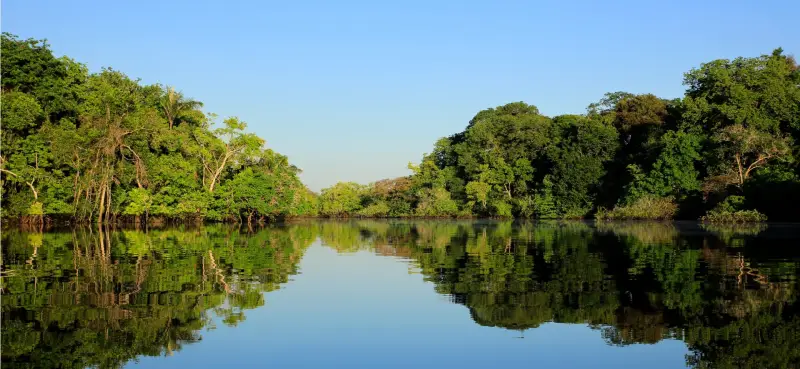
The Sundarbans is the country's signature river trip, a multi-day wildlife cruise out of Khulna: a maze of tidal channels through one of the world's largest mangrove forests, about 140,000 hectares on the Bangladesh side, inscribed by UNESCO in 1997. Most visitors join a tour boat from Khulna or Mongla for two or three days, sleeping on board and taking smaller boats into narrow creeks at dawn. Spotted deer, rhesus macaques, kingfishers and crocodiles are common sightings; the Royal Bengal tiger lives here but is rarely seen.
November to February is the best window, and wildlife photographers get the most from it. Forest entry requires permits that tour operators arrange. For a full planning guide, read our Sundarban travel guide.
Pick an operator that provides life jackets and a forest guide for shore walks.
Buriganga river, Dhaka
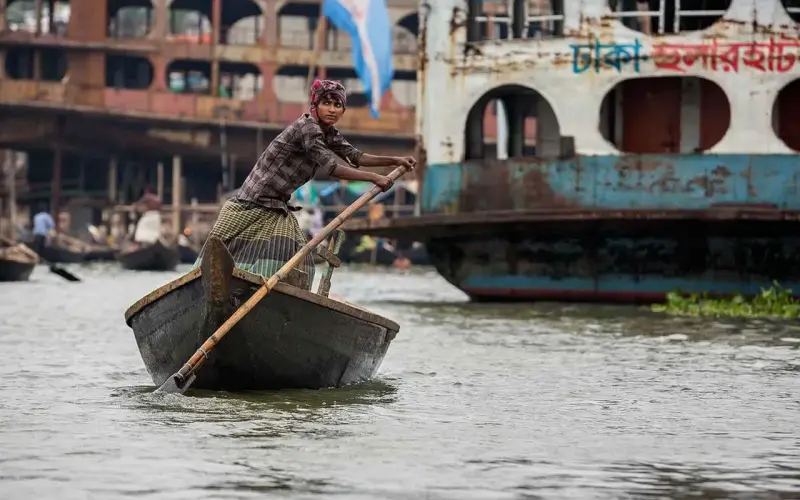
Old Dhaka's waterfront is the Buriganga, the busiest river scene in the country and an easy half-day outing. At Sadarghat, multi-deck launches load passengers for the south while small wooden boats ferry people across the river. A hired boat for one or two hours shows the riverbank warehouses, shipyards and the pink facade of Ahsan Manzil from the water, and Lalbagh Fort is close by on land.
The river is heavily polluted, so the reason to come is the street life and history. Photographers and first-time visitors find plenty to shoot. Keep valuables close in the Sadarghat crowds.
Go early in the morning for softer light and calmer crowds; agree the boat fare before boarding.
Dhaka to Barisal overnight launch

Ask Bangladeshis about classic journeys and many will name the overnight launch from Sadarghat to Barisal. Large launches leave Dhaka in the evening, around 8 pm on many services, and reach Barisal in the early hours. Cabins range from simple to air-conditioned VIP rooms with private bathrooms; deck passengers sleep on mats. The evening departure past Dhaka's riverfront and the dawn arrival through the delta are the highlights.
The Padma Bridge, which opened in 2022, made road travel to the south faster, but slow travelers and couples still choose the launch. Book cabins in advance for weekends and holidays.
Book a cabin with a private bathroom and bring a padlock for your door.
Barisal canals and floating guava market

This one is seasonal. From Barisal, travelers continue by road and boat to the canals around Bhimruli, Atghar and Kuriana in Pirojpur's Swarupkathi area, where farmers sell guavas from boats on the Kirtipasha canal. The market runs mainly from July to September, with August the best month, and midday is the busiest time at Bhimruli.
Outside guava season, the canals and guava orchards are still pretty but the market is quiet. Photographers and anyone curious about rural life should time a visit for August.
Hire a small local boat for an hour to move among the market boats.
Padma river
Once the Ganges crosses into Bangladesh, it becomes the Padma. Boat trips near Rajshahi show fishing communities, sandbanks and riverside villages, and Rajshahi itself is known for silk and mangoes. Further downstream at Mawa, the 6.15 km Padma Bridge, opened in 2022, is a striking sight from the water.
The river is wide and can be rough in the monsoon, so take short trips between October and March. Sunsets over the sandbanks are the reward.
Hire boats only from established ghats and confirm life jackets are on board.
Jamuna river and its chars
Sirajganj is the base for the Jamuna, the main channel of the Brahmaputra in Bangladesh, which is braided with chars, sand islands where communities farm and fish and rebuild after floods. Boat trips visit char villages and pass the 4.8 km Jamuna (Bangabandhu) Bridge, which opened in 1998 and links the east and west of the country by road and rail.
Char communities are not tourist sites. Cultural travelers should go with a local guide and be respectful.
Ask your guide to introduce you to char families before photographing.
Meghna river

Few rivers in Bangladesh are wider than the Meghna, a commercial artery for launches and cargo boats. Chandpur, where the Padma and Meghna meet, is famous for hilsa fish. Further south, launches cross to Bhola, the country's largest island.
The confluence can be rough; travel in daylight between October and March. Food lovers and island hoppers get the most out of this stretch.
Try fresh hilsa near the Chandpur ghat.
Old Brahmaputra river
Past Mymensingh, the Old Brahmaputra flows quietly by sandbanks, boats and riverside parks. It is a calmer, less commercial river, good for short evening boat rides and winter birdwatching.
Facilities are limited, so treat it as a gentle day trip for slow travelers.
Combine with a visit to Mymensingh town and its riverside park.
River cruises and launches you can book: routes, schedules and prices
River trips in Bangladesh fall into three groups: government paddle steamers, private overnight launches and organised Sundarbans cruises. Each is booked differently, and prices move with the season and the cabin class, so use the details below as a planning guide as of October 2026 and confirm fares when you book.
| Trip | Operator | Schedule | What you pay for | How to book |
|---|---|---|---|---|
| Paddle steamer, Dhaka to Barishal | Bangladesh Inland Water Transport Corporation (BIWTC) | PS Mahsud, a century-old paddle steamer relaunched as a pleasure cruise in November 2025: Sadarghat 8 am every Friday, arriving in Barishal at night; returns every Saturday | First class, second class or deck; daytime sailing means you see the whole route in daylight | BIWTC counters at Sadarghat and Barishal; check the current timetable before traveling |
| Overnight launch, Dhaka to Barishal and other southern towns | Private launch companies from Sadarghat | Evening departures, early-morning arrival | Deck space, single or double cabins, and VIP cabins with private bathroom and air conditioning | Company counters at Sadarghat or by phone; book cabins ahead of weekends and Eid |
| Sundarbans cruise, 3 days and 2 nights | Tour boats registered with the Forest Department, leaving from Khulna or Mongla | Mainly September to March; departures most weeks in winter | Packages listed on the Forest Department's eco-tourism booking site mostly ranged from about Tk 10,000 to Tk 22,000 per person for Bangladeshi guests, with peak prices from December to February | Through the operator or the Forest Department's Sundarban tourism portal |
Foreign visitors pay more on Sundarbans cruises because forest revenue for foreigners is far higher than for Bangladeshi citizens: one operator listing on the Forest Department portal adds about Tk 3,666 per day per foreign guest for revenue, VAT and service charge. The Sundarban travel guide explains permits, tour styles and what a package includes.
The Dhaka paddle-steamer service has a long history of timetable changes, suspensions and route cuts, and passenger numbers on southern launch routes fell sharply after the Padma Bridge opened. Confirm that your sailing is running a few days before you travel, and keep a bus or flight to Barishal as a back-up.
Hidden waterways beyond the big rivers
Tanguar Haor in Sunamganj is a vast wetland where houseboat trips have become popular in the monsoon. Nijhum Dwip (Hatiya, Noakhali) and Char Kukri Mukri (Charfasson, Bhola) offer island forest and deer.
Tanguar Haor spans Tahirpur and Madhyanagar upazilas in Sunamganj and was declared a Ramsar wetland of international importance in 2000. From June to October it becomes an inland sea fed by streams from the Meghalaya hills, and most trips start at Tahirpur, reached by road from Sunamganj town. Houseboats range from simple wooden boats with shared cabins to air-conditioned boats with private bathrooms, and most run one-night or two-night trips that include meals, the Watch Tower swamp-forest area and the Niladri Lake and Barikka Tila side near the Indian border. The district administration has limited houseboat movement in core zones such as the watchtower area, so routes change from season to season. In winter the water drops, boats become small, and the haor turns into a birdwatching site for migratory ducks.
Nijhum Dwip, a national park since 2001, is a mangrove island at the south of Hatiya where spotted deer graze at dusk on the mudflats. Getting there takes a launch or sea truck from Dhaka or Noakhali to Hatiya, then road and a short boat crossing, so allow two days each way in practice. Char Kukri Mukri, reached by boat from Charfasson, is quieter still, with forest, fishing villages and very basic lodging. Both are best from November to February, when the Bay of Bengal is calmer.

When is the best time for river tourism in Bangladesh
October to March is the best season for most river trips: rivers are calmer, skies clearer and the Sundarbans is most comfortable. The monsoon (roughly June to September) brings high water, which suits haor houseboat trips and the guava market, but storms make big-river crossings riskier. Avoid traveling during cyclone warnings.
Each region has its own peak. December to February suits the Sundarbans, with cool days, low humidity and the best chance of calm water on the Passur and Shibsa rivers. The floating guava markets at Bhimruli in Jhalokati peak in July and August, while Tanguar Haor houseboats run mainly from June to October, when the water is high. Cyclone seasons around April to May and October to November bring the biggest risk on the coast, so keep plans flexible and watch the Bangladesh Meteorological Department signal numbers before any coastal crossing. Avoid the days just before and after the two Eids too: millions travel home by launch, cabins sell out and terminals like Sadarghat become extremely crowded.
Read this before boarding any boat: Overcrowding and bad weather cause most river accidents in Bangladesh. Do not board an overloaded launch, check that life jackets are available, avoid night trips on small boats, and follow weather warnings from the Bangladesh Meteorological Department. On launches, keep valuables locked in your cabin.
Safety on river launches: monsoon season and life jackets
Most river trips in Bangladesh pass without incident, but the accidents that do happen follow a familiar pattern: overloaded vessels, sudden storms on wide rivers and small boats crossing at night. A few habits remove most of the risk.
- Watch the weather signals. The Bangladesh Meteorological Department issues river port warning signals for inland vessels. Small craft are expected to stop when lower signals are raised, and higher signals stop larger launches too. If the ghat staff say a crossing is suspended, do not look for a private boat that will go anyway.
- Know the risky months. Nor'westers (kalbaishakhi storms) hit from about March to May, often in the late afternoon, and the monsoon from June to September brings fast currents and high water. Cyclones are most likely in April to May and October to November. Plan big-river crossings for the morning in these months.
- Find the life jackets before departure. Ask where they are stored as soon as you board and choose a cabin near an exit. On small boats and speedboats, wear a life jacket for the whole trip; if the operator has none, choose another boat.
- Avoid overloaded vessels. On Eid and holiday departures, launches can carry far more people than they should. Travel a day earlier or later, or take a different mode of transport. Never board a launch with passengers crowding the decks.
- Keep to daylight on small boats. Engine trawlers and speedboats often lack lights, and collisions with larger vessels at night are a known cause of accidents.
- Protect against fire and theft. Cooking fires and electrical faults on older launches are rare but serious. Lock your cabin, keep a torch to hand and know the route to the open deck.
Before a Sundarbans trip, check that your travel insurance covers boat travel and medical evacuation, since hospitals are hours away from the forest channels.
 Get the bookingMentor app
Tips for river travel in Bangladesh
- Book cabins early. Launch cabins sell out before holidays; book through the launch company or a trusted agent.
- Ask about life jackets. Choose operators that provide them and show you where they are.
- Dress modestly. Cover shoulders and knees in villages and at religious sites.
- Leave no trace. Do not throw plastic into the rivers or feed wildlife.
- Learn a few words. Simple Bangla greetings go a long way with boatmen and villagers.
- Carry cash. Ghats, boats and village tea stalls rarely take cards.
Most overnight trips start at Sadarghat on the Buriganga in Old Dhaka, the busiest passenger port in the country, where hundreds of launches leave mainly for the southern districts. It gets chaotic in the hour before evening departures, so arrive early, find your vessel by its name (not the porter's word), and keep your cabin key and valuables with you. Agree porter fees before handing over bags. Deck class is cheapest but crowded and exposed to rain; a single or double cabin gives a lockable door and a bunk for the night. In the monsoon and around cyclone warnings, check the weather bulletin and accept that sailings may be suspended at short notice.
Plan the rest of your trip with our Dhaka guide, tours and visa information.
Planning a trip to Bangladesh? Read our Bangladesh travel guide, compare hotels in Bangladesh, browse tours or search flights.
River tourism around the world, and where Bangladesh fits
River tourism is travel in which a river is the main attraction or the main road: cruises, ferry journeys, boat safaris and stays in the towns along the banks. The international river cruise trade runs on a few famous waterways. In Europe, ships sail the Danube through Austria and Hungary and the Rhine from Switzerland through Germany to the Netherlands. In Egypt, cruise boats link Luxor and Aswan and stop at the temples along the Nile. In Southeast Asia, the Mekong carries boats from Laos through Cambodia to the delta in southern Vietnam.
Bangladesh is different because its rivers are working highways, not a product designed for visitors. The launches, country boats and steamers described above carry commuters, traders and families, and a traveler rides among them. The experience is cheaper and far less polished than a Danube or Nile cruise, and much closer to daily life. For comparison trips, see our guides to places to visit in Egypt, Luxor, Budapest and Vienna.








{{item.get_author.first_name}} {{item.get_author.last_name}}
{{item.comment_txt}}
{{item_reply.get_author.first_name}} {{item_reply.get_author.last_name}}
@ {{item_reply.reply_to}}, {{item_reply.reply_txt}}