


The gateways
Study the carved toranas of the Great Stupa, which show the Buddha through symbols.

The Great Stupa at Sanchi, about 46 km north-east of Bhopal in Madhya Pradesh, was begun by Emperor Ashoka in the 3rd century BCE and is famous for its four carved gateways; the site is UNESCO-listed. An ASI ticket applies, with separate Indian and foreign fees and free entry under 15. Listed hours vary between sunrise to sunset and 8:00 to 18:30. Allow two to three hours.
The Sanchi Stupa is the Great Stupa at the centre of the Buddhist Monuments at Sanchi, a hilltop complex in Raisen district, Madhya Pradesh, about 46 km north-east of Bhopal near the town of Vidisha. Begun under the Mauryan emperor Ashoka in the 3rd century BCE and inscribed by UNESCO in 1989, it suits travellers interested in early Buddhist art and India's oldest stone monuments.
Ashoka, who turned to Buddhism after the Kalinga war, ordered the first stupa here as a hemispherical brick mound over relics of the Buddha. His wife Devi was the daughter of a merchant of Vidisha, which may explain the choice of site. Under the Shunga dynasty in the 2nd century BCE the dome was roughly doubled in size and encased in stone, with a raised terrace, a stairway and a stone railing. The four toranas, or gateways, followed from about the 1st century BCE under the Satavahanas. Monks kept building on the hill for more than a thousand years, adding monasteries, temples and smaller stupas, with monuments up to about the 12th century CE.
After centuries of neglect, the hill came to wide attention in the colonial period, when Sir Alexander Cunningham studied its remains in the 19th century. It suffered from careless digging before the Archaeological Survey of India repaired it.
The dome of the Great Stupa, Stupa 1, measures about 36.6 m across and 16.5 m high, topped by a square railing and a triple umbrella. The gateways are covered in reliefs from the life of the Buddha and the Jataka tales. The Buddha never appears in human form; he is shown through symbols such as footprints, a wheel, a throne, a riderless horse or a canopy over the Bodhi tree. Figures of yakshas stand among the carvings. Walk slowly round each gateway, since every face tells a different story. The Great Stupa appears on the reverse of India's ₹200 note.
Stupa 3 once held relics of the Buddha's disciples Sariputra and Mahamoggallana, and Stupa 2 stands lower on the slope. Temples and monasteries from the Gupta period and later surround the main platform, along with a large stone bowl, and the base of an Ashokan pillar remains beside the southern gateway. The Sanchi Archaeological Museum, about 500 m away, holds the pillar's lion capital and sculptures from the site.
Checked against trusted sources:
Incredible India, Buddhist monuments at Sanchi
Study the carved toranas of the Great Stupa, which show the Buddha through symbols.
See the Ashokan lion capital (closed Fridays).
Combine with the Gupta-era rock-cut caves nearby.
The hilltop is reached by road; paths around the stupas are mostly level.
No minimum age. The hilltop is reached by road and the paths around the stupas are mostly level, so the site is manageable with young children; bring hats and water.
Water, hat
Comfortable shoes; remove shoes where requested
Climbing on stupas, damaging carvings
Ticket counter, museum
Sanchi is about 46 km northeast of Bhopal, roughly 1.5 hours by road.
Most visitors come by taxi from Bhopal, whose airport is the nearest. Sanchi has a small railway station; Vidisha, about 10 km away, a larger one.
The Buddhist monuments stand on a hill above Sanchi in Raisen district. The Udayagiri Caves are about 13 km away and fill out a full day.
No special events on record for Sanchi Stupa.
Early morning light on the gateways.
Any day except Friday if you want the museum.
October to March.
Others of this kind you opened on this device, so you can get back to them quickly.
Usually not. On a Friday, see the stupas and plan to return another day if you want the lion capital.
Our team answers questions here
Find your kind of trip: 20 travel themes, from Heritage, UNESCO World Heritage, Landmarks.
More around Bhopal.
Rajasthan
Ranthambore National Park lies in Sawai Madhopur district of eastern Rajasthan, about 13 kilometres from Sawai Madhopur town and around 180 kilometres south eas...

India
Gwalior Fort crowns a long sandstone ridge called Gopachal, which rises roughly 90 to 100 metres above the city of Gwalior in Madhya Pradesh. The fort may date...
Rajasthan
Chittorgarh Fort stands on a hill about 180 metres high above the plains of the Berach River, next to the town of Chittorgarh in southern Rajasthan. It covers a...
India
The Ajanta Caves are cut into a horseshoe-shaped cliff above the Waghur River in Maharashtra, western India, about 100 kilometres north of the city of Aurangaba...
India
Fatehpur Sikri is the abandoned red-sandstone capital that the Mughal emperor Akbar built on a rocky ridge about 36 to 40 km west of Agra in Uttar Pradesh. Foun...

India
The Taj Mahal is the white marble tomb that Mughal emperor Shah Jahan built for his wife Mumtaz Mahal on the south bank of the Yamuna River in Agra, Uttar Prade...
 Most Visited
India
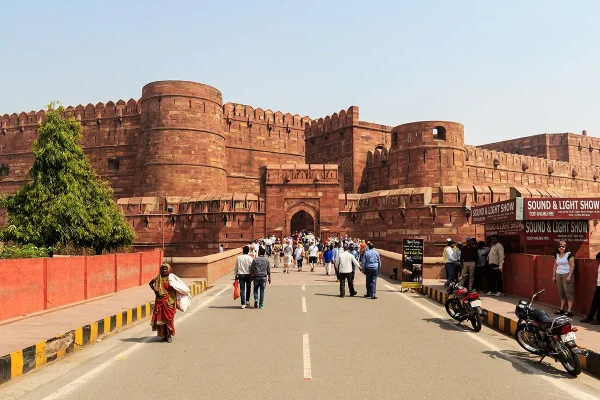
Agra Fort is a Mughal fortress of red sandstone and white marble on the bank of the Yamuna River in Agra, Uttar Pradesh, a short way upstream of the Taj Mahal....
Agra
Mehtab Bagh, the Moonlight Garden, lies on the north bank of the Yamuna River in Agra, Uttar Pradesh, exactly across the water from the Taj Mahal. It was laid o...
Agra
The Tomb of Itimad-ud-Daulah stands in a walled garden on the eastern bank of the Yamuna River in Agra, across the river from the main city. Empress Nur Jahan,...
Tell us where and when you want to go, and local travel experts send you offers for your trip.
What to know about Sanchi.
General
Ashoka began it in the 3rd century BCE, the Shungas enlarged and stone-clad it, and the Satavahanas added the carved gateways.
Yes. The Buddhist Monuments at Sanchi were inscribed in 1989.
The dome is about 36.6 m across and 16.5 m high.
Scenes from the Buddha's life and the Jataka tales, with the Buddha shown only through symbols such as footprints, a wheel or a tree.
Sir Alexander Cunningham studied the site in the 19th century.
Yes, on the reverse of India's ₹200 note.
The Sanchi Archaeological Museum, Vidisha about 10 km away and the Udayagiri Caves about 13 km.
Sanchi Stupa is in India. The street address and directions are under How to get there on this page.
Getting there
About 46 km, close enough for a half-day or day trip by taxi.
You can reach Sanchi Stupa by public transport or by car. Both routes are described under How to get there on this page.
Timing & weather
Incredible India lists 08:00 to 18:30. Check before visiting, as listings differ.
It is usually closed on Fridays.
Most visitors spend 2–3 hours at Sanchi Stupa.
The best months to visit Sanchi Stupa are October to March. The best days and times of day are covered under When to visit on this page.
Prices & payment
An ASI ticket, cheaper for Indian, SAARC and BIMSTEC visitors; under-15s are free. The museum is ticketed separately.
We use necessary cookies to make this site work. With your permission we would also like to remember your preferences, measure how the site is used, and show relevant ads and partner offers. You can change your mind at any time under "Cookie settings" on our Privacy policy page.





 Exclusive holiday package offers