
The FIFA World Cup teams with the sexiest football fans are Brazil, France, Argentina, Spain, Germany, England, the Netherlands, Belgium, Denmark and Portugal. In the sense that matters to anyone who has stood in a stadium, they are the teams whose supporters bring the most style, colour, music and charisma: painted faces, carnival costumes, a wall of orange or a thousand Danish horned helmets. This list ranks ten national teams whose fans have become part of the tournament's image, and explains how to join them if you travel to a match.

The most recent tournament, the 48-team 2026 World Cup across the United States, Canada and Mexico, ended on 19 July 2026 with Spain beating Argentina 1–0 after extra time at MetLife Stadium in New Jersey. That final brought together two of the fan bases below. For background on the competition itself, read our FIFA World Cup guide.
How we ranked the fans: We looked at style and atmosphere: costumes and colours, songs and drums, how fans behave toward rival supporters, and how strongly the traveling crowd shapes the look of a tournament. This is a celebration of fan culture with no ranking of anyone's looks. Tournament results are given as of October 2026.
World Cup fan cultures compared
A quick look at each fan base's colours, signature style and the thing that makes them stand out.
| # | Team | Colours | Signature style | What they are known for |
|---|---|---|---|---|
| 1 | Brazil | Yellow, green, blue | Samba drums, carnival costumes | Party atmosphere at every match |
| 2 | France | Blue, white, red | Painted tricolour faces, Gallic roosters | La Marseillaise sung in full |
| 3 | Argentina | Sky blue and white | Non-stop chanting, giant flags | Intensity and devotion |
| 4 | Spain | Red and yellow | Bullfighter and flamenco outfits | Festive, family crowds |
| 5 | Germany | Black, red, gold | Flag colours and organised support | Huge, well-travelled following |
| 6 | England | White and red | St George crosses, knights | The band and loud singing |
| 7 | Netherlands | Orange | Total orange: wigs, suits, hats | The Oranje "orange wave" |
| 8 | Belgium | Red, black, yellow | Red Devils horns and capes | Humour and creative chants |
| 9 | Denmark | Red and white | Viking helmets, painted faces | The friendly "roligans" |
| 10 | Portugal | Red and green | Flags, scarves, Ronaldo shirts | Warmth toward rival fans |
The 10 World Cup teams with the most stylish and charismatic fans
Brazil

No fan base defines the look of a World Cup like Brazil's. The yellow shirt is instantly recognisable, and supporters add green and blue face paint, feathered carnival headdresses, flag capes and enormous inflatable trophies. Samba drums start before kick-off and rarely stop. Brazil has won the World Cup five times (1958, 1962, 1970, 1994 and 2002), more than any other nation, and the confidence of that history shows in the stands.
Brazilian supporters are also famously sociable. Groups of fans dance in squares, invite strangers to join and turn railway stations into street parties. At home, the classic places to feel this energy are the fan zones and bars of São Paulo and Rio de Janeiro, where public screenings of national team matches fill the streets.


That puts Brazil at number one for style. Whistles join the samba drums, and anyone who wants a match to feel like a carnival should learn a few Portuguese chants; you will be welcomed into the group.
France
French fans bring a polished, theatrical style: blue, white and red face paint, berets, inflatable Gallic roosters and huge tricolour flags. The moment to watch is the anthem, when thousands of supporters sing La Marseillaise with real force. France won the World Cup in 1998 and 2018, and reached the semi-finals in 2026, where they lost 2–0 to Spain.
Off the pitch, French supporters gather in bars and fan zones with a strong food-and-wine culture around matches, which makes their gatherings feel relaxed and social. In France itself, big screens in public squares in Paris, Lyon and Marseille draw large crowds on match nights. For quieter corners of the country, see our off-the-beaten-path destinations in France.
Les Bleus have the most elegant following on the list, and the atmosphere is stylish and social. Sing the anthem with them, because it is the emotional peak of every France match.
Argentina
Argentina's supporters are the loudest on this list. Sky blue and white stripes fill whole stands, giant banners pass over the crowd, and the chanting is continuous for ninety minutes. Many songs come from Argentina's club culture, where fan groups compose new lyrics for every tournament. Argentina are three-time world champions (1978, 1986 and 2022) and reached the 2026 final, losing to Spain after extra time.
The devotion is personal: shirts printed with the names of Maradona and Messi, rosaries, family photographs pinned to flags. Rival fans who show respect are often welcomed into songs and photos after the match. In Buenos Aires, the fan scene around big games is concentrated in bars and public screens across the city.
No following here is more passionate than that of La Albiceleste, and the appeal is pure intensity. Expect to stand and sing for the whole match if you sit in the Argentina end.
Spain
Spain's fans arrive dressed for a fiesta: red and yellow wigs, flamenco dresses, matador costumes and big bass drums that set the rhythm in the stands. The crowd is mixed, with many families and children, and the mood is festive and friendly. Spain won their first World Cup in 2010 and their second in 2026, beating Argentina 1–0 after extra time in the final.
Celebrations after the 2026 final filled squares across the country. Spanish supporters are known for blending football with food and late nights, so post-match gatherings often run well past midnight.
La Roja are the reigning world champions, and their crowd, drumming along to "Viva España", is as festive and family-friendly as they come. Join the post-match celebrations in the nearest town square.
Germany
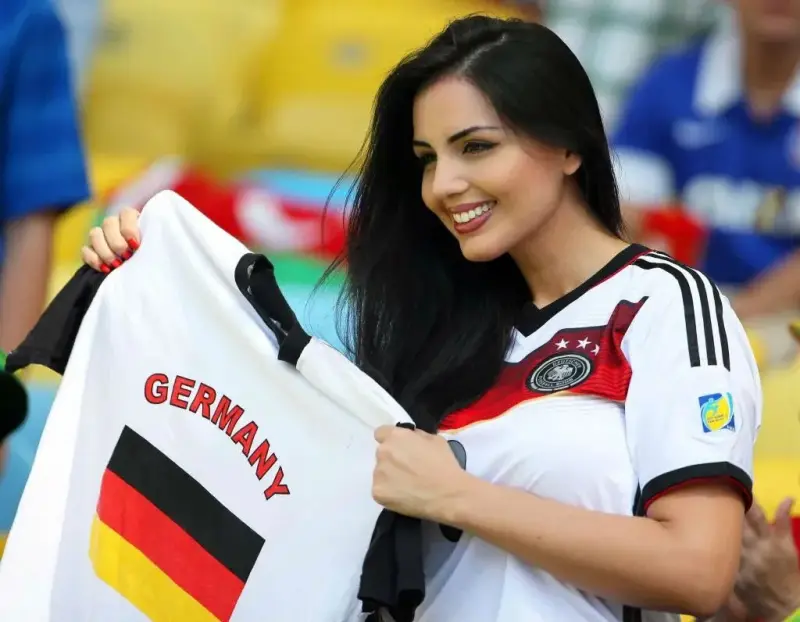
German fans travel in large numbers and support with precision: black, red and gold flags, painted cheeks, flower garlands and coordinated songs. Supporters' clubs organise trips, tickets and meeting points, which gives German sections a strong, unified look. Germany has won the World Cup four times (1954, 1974, 1990 and 2014).
The 2026 tournament was a disappointment, with Germany knocked out on penalties by Paraguay in the round of 32. That did not dent the scale of the traveling support, which is one of the biggest at any tournament. At home, big-screen viewing in city squares and beer gardens is a summer tradition during major tournaments.
Die Mannschaft draws the most organised support of the ten, which means well-run fan zones. Look for the official supporters' club meeting point before matches.
England
England supporters are recognisable by the white flag with the red cross of St George, often with a home town written across it and hung around the stadium. Some dress as crusader knights or lions. A brass band has followed the team for decades, playing tunes such as the theme from The Great Escape, and "Football's Coming Home" is sung at every tournament.
England's only World Cup title came in 1966. In 2026 they reached the semi-finals, losing to Argentina, and then won the third-place play-off. Fans gather in huge numbers in pubs and city squares across England for big matches, and the atmosphere in a packed pub during a penalty shoot-out is an experience of its own.
The Three Lions have the loudest traveling band of any team here, and between the brass, the "Three Lions" song and pub culture, this is a crowd for singers. Book accommodation early; England fans travel in very large numbers.
Netherlands
Nobody owns a colour like the Dutch. Supporters arrive dressed head to toe in orange: wigs, suits, lion costumes, inflatable crowns and even orange buses that turn into mobile parties. The Oranje fan march through a host city before a match is one of the best sights of any tournament, with brass bands, dancing and very few signs of trouble.
On the pitch, the Netherlands have been one of the great nearly-teams, reaching the World Cup final in 1974, 1978 and 2010 and losing all three. They are also 1988 European champions. In 2026 they went out on penalties to Morocco in the round of 32.
Oranje fans are the most colourful on this list and a visual spectacle in any host city. Wear anything orange and you will be welcomed into the march.
Belgium
Belgian supporters lean into the team's nickname with red devil horns, capes and tridents, mixed with the black, yellow and red of the flag. Their chants are often humorous and self-mocking, and the crowd is known for a friendly, light-hearted style. Belgium's best World Cup finish is third place, earned in 2018.
In 2026 the Red Devils gave their fans plenty to sing about, coming back from 2–0 down to beat Senegal after extra time and then beating the United States 4–1 before losing in the quarter-finals. At home, fans gather in squares in Brussels and Antwerp for public screenings.
The Red Devils' crowd is the most playful of the ten: fun, relaxed and easy to join. Bring devil horns; they are the unofficial uniform.
Denmark

Danish supporters are known as "roligans", a word coined by the Danish newspaper B.T. in 1985 from the Danish word for calm and the English word hooligan. It describes fans who are the opposite of violent: cheerful, sociable and keen to party with everyone. Viking helmets, red and white face paint and huge flags are the standard kit.
The image goes back to the "Danish Dynamite" team of the 1980s, when traveling fans won admiration across Europe for their good humour. Denmark's greatest triumph is the 1992 European Championship. Danish fan groups abroad still organise friendly matches and meet-ups with rival supporters before games.
Supporters of Danish Dynamite are the friendliest fans on the list, singing and blowing Viking horns in an easy-going atmosphere. They happily swap scarves and photos with rivals.
Portugal

Portuguese fans fill stands with red and green, waving flags and scarves and singing the national anthem, A Portuguesa, with great pride. Their support is warm and inclusive, and they are known for their friendliness toward opposing fans. For two decades the Ronaldo number 7 shirt has been everywhere in the Portugal end.
2026 marked the end of an era: Portugal lost 1–0 to Spain in the round of 16, a match widely reported as Cristiano Ronaldo's final World Cup appearance. Portugal's biggest titles are Euro 2016 and the UEFA Nations League. For a trip to the country itself, see our guide to the best places to visit in Portugal.
The Seleção's fans give the warmest welcome of the ten, a fitting mood for the close of the Ronaldo era. Lisbon and Porto both host lively public screenings during major tournaments.
 Exclusive holiday package offers
More scenes from World Cup stands


How to travel to a World Cup match as a fan
Following a team abroad is easier when you plan around the fan culture. Tickets for World Cup matches are sold through FIFA's official ticketing platform in phases, and buying from unofficial resellers carries a real risk of fake or cancelled tickets. Many national associations also allocate tickets to registered supporters' clubs.
- Buy only from official channels. Use FIFA's ticket platform or your national association. Tickets from street sellers or unofficial sites are often invalid.
- Book beds early. Hotels near stadiums fill months ahead once the schedule is known. Look at nearby towns with good rail links.
- Check entry rules. Visa and travel authorisation rules depend on your passport and on the host country. Apply well before the tournament.
- Find the fan march. Many fan groups meet in a square before matches and walk to the stadium together. It is the best way to join the atmosphere.
- Respect rival fans. The best fan cultures on this list are known for friendliness. Swapping scarves and photos is part of the fun.
- Know stadium rules. Large flags, drums, flares and some costumes may be banned. Check the stadium code of conduct before you pack.
Planning ahead for the next tournament? Start with our flight search and hotels near host cities.
Planning a trip to Argentina? Read our Argentina travel guide or search flights.
Club football's most striking supporters
World Cup crowds gather once every four years, but the songs, colours and choreography are built week after week at club grounds. Borussia Dortmund's Südtribüne, known as the Yellow Wall, is the largest standing terrace in European football, with room for about 25,000 people in one steep block of yellow and black. At La Bombonera in Buenos Aires, Boca Juniors fans jump in such numbers that the stands visibly shake on big nights, and the club's blue and gold covers the walls of the La Boca neighbourhood around the stadium.
Istanbul's three big clubs, Galatasaray, Fenerbahçe and Beşiktaş, are famous for flares, giant banners and derby atmospheres that fill the city for days. Celtic supporters in Glasgow sing "You'll Never Walk Alone" before big European nights, as Liverpool fans do at Anfield before every home game. If you plan a trip around a match, our guides to Istanbul, Scotland and Germany cover the rest of the stay.










{{item.get_author.first_name}} {{item.get_author.last_name}}
{{item.comment_txt}}
{{item_reply.get_author.first_name}} {{item_reply.get_author.last_name}}
@ {{item_reply.reply_to}}, {{item_reply.reply_txt}}