Book a slot
Reserve through the reserve's WeChat account; places are limited each day.
Futian Mangrove Nature Reserve protects mangrove forest and mudflats on the Shenzhen side of Shenzhen Bay, with the city's towers directly behind, and nearly 100,000 migratory waterbirds, including black-faced spoonbills, pass through each year. Entry is free but only by advance booking on the reserve's WeChat account, which also gives visiting times. Birdwatchers usually spend two to three hours.
Futian Mangrove Nature Reserve is a protected mangrove wetland on the northern shore of Shenzhen Bay in Futian District, Shenzhen, China, with the city's towers directly behind it. Close to 100,000 migratory waterbirds winter here or rest on passage each year. Entry is free by advance booking only, and the reserve suits birdwatchers, nature lovers and school groups, above all from November to March.
The reserve is the mainland half of the Guangdong Neilingding Futian National Nature Reserve, which also covers Neilingding Island at the mouth of the Pearl River. It was raised to national status in 1988. Shenzhen government sources call it the smallest national nature reserve in China, and one of very few where an intact mangrove forest survives inside a city centre. Hong Kong's Mai Po marshes lie across the same bay, and together they form one connected wetland.
The wider Futian mangrove wetland, including the neighbouring Futian Mangrove Ecological Park, covers about 367.6 hectares in a strip about 9 km long. Land reclamation for roads and housing has pressed in on it since the 1980s, which explains its long, narrow shape. The wetland was listed as a Wetland of International Importance under the Ramsar Convention in 2022, with the listing announced in February 2023.
About 20 mangrove plant species grow here, rooted in soft mud that floods and drains twice a day with the tide. When the water drops, the exposed flats become a feeding ground for waders working the mud for crabs, worms and small fish. Mammals use the wetland too: a Eurasian otter was seen in the ecological park in October 2020 after a decade's absence, and leopard cats have been photographed in the mangroves.
The reserve lies on the East Asian–Australasian Flyway, the migration route between Siberia and Australia. Around 250 to 275 bird species have been recorded. Herons, cormorants, black-headed gulls, avocets and redshanks are regular, and the endangered black-faced spoonbill feeds on the bay; a 2024 census counted 375 of them in Shenzhen Bay. A nature education centre opened in 2014 to explain the wetland to visitors.
Checked against trusted sources:
Eyeshenzhen, Mangroves sustain biodiversity
Reserve through the reserve's WeChat account; places are limited each day.
Bring binoculars and aim for a rising tide, when the waders feed closer to the shore.
View the mangrove edge from Shenzhen Bay coastal park or the Futian Mangrove Ecological Park.
Ask the reserve about accessible routes when booking. Ask about accessible routes when booking.
None
Binoculars, water, passport/ID for reservation
Neutral colours, walking shoes
Entering without reservation, disturbing birds, drones
Nature education centre
Parking near Shenzhen Bay parks; the metro is easier.
Metro Line 1 to Zhuzilin, Exit B1, then about 1.6 km on foot to the entrance near Hongshulin Road and Baishi Road.
Entrance south-west of the Baishi Road – Hongshulin Road junction on Shenzhen Bay. If no slot is free, the Futian Mangrove Ecological Park (about 1 km) and Shenzhen Bay Park give views over the mangrove edge.
Winter (about November to March) is the main season for migratory birds.
The hour or two around a rising tide, when birds come nearest the shore; check tide times.
Book weekdays for better availability.
November to March.
Others of this kind you opened on this device, so you can get back to them quickly.
No questions yet about Futian Mangrove Nature Reserve, Shenzhen. Ask the community or our travel team, and the answer will show here once it is published.
Our team answers questions here
Find your kind of trip: 18 travel themes, from UNESCO World Heritage, Entertainment Parks, Heritage.
More of Shenzhen Bay.
Shenzhen
Splendid China Folk Village is a 30-hectare theme park in the Overseas Chinese Town district of Nanshan, Shenzhen, China, near Shenzhen Bay. It combines more th...
Shenzhen
Overseas Chinese Town (OCT) is a tourism, culture and residential district in Nanshan, western Shenzhen, China, home to the Window of the World, Splendid China...
Shenzhen
Happy Valley Shenzhen is a theme park of 350,000 square metres in Overseas Chinese Town, Nanshan District, Shenzhen, China, opened in 1998 as the first Happy Va...
Shenzhen
Window of the World is a theme park of about 130 scale reproductions of world landmarks in the Overseas Chinese Town district of Nanshan, Shenzhen, China. Its s...
Shenzhen
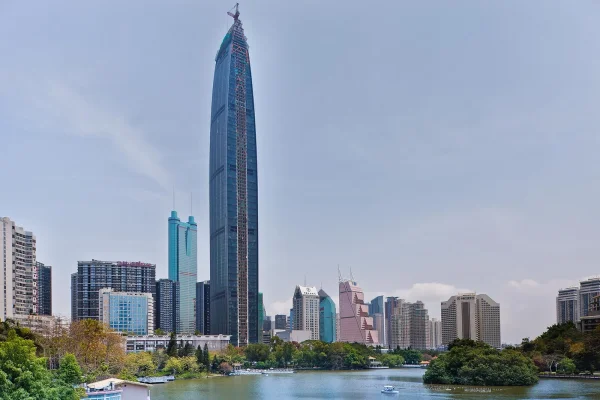
KK100, also called Kingkey 100, is a 442-metre, 100-storey skyscraper at 5016 Shennan East Road in Luohu District, Shenzhen, China, completed in 2011. It holds...
Shenzhen
Fairy Lake Botanical Garden, called Xianhu in Chinese, is a 546-hectare botanical garden in Liantang, Luohu District, Shenzhen, China, between Wutong Mountain a...
Shenzhen
Wutong Mountain is the highest peak in Shenzhen, China, rising to 943.7 metres on the border of Luohu and Yantian districts. It sits inside Wutongshan National...

China
The Historic Centre of Macao is the old core of the Macau Peninsula, where Chinese temples and mansions stand alongside Catholic churches, Portuguese civic buil...
 Most Visited
China
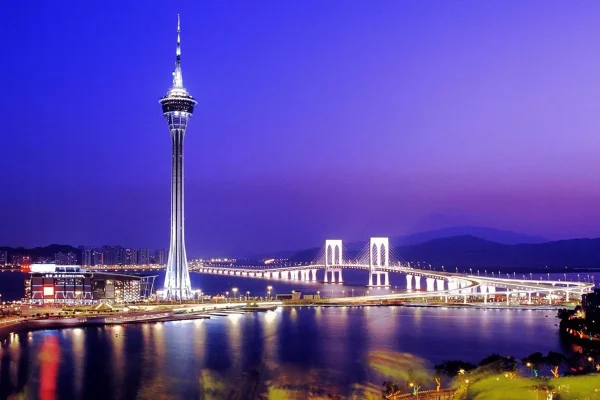
Macau Tower is a 338-metre telecommunications and observation tower on the southern waterfront of the Macau Peninsula, opened on 19 December 2001. It suits visi...
Tell us where and when you want to go, and local travel experts send you offers for your trip.
What to know about the Futian mangroves.
Booking
Yes, visits must be booked in advance through the reserve's official WeChat account, and only a limited number of visitors are admitted each day.
No, Mai Po is on the Hong Kong side of the bay and Futian on the Shenzhen side. Both are part of one connected wetland used by migratory birds.
Yes, entry is free, but you must reserve a slot in advance.
Yes, the Futian mangrove wetland was listed as a Wetland of International Importance under the Ramsar Convention in 2022.
Close to 100,000 migratory waterbirds winter at the reserve or rest there on passage each year.
Visit the neighbouring Futian Mangrove Ecological Park or Shenzhen Bay Park, which give views over the mangrove edge.
Yes, entry to Futian Mangrove Nature Reserve, Shenzhen is free.
Futian Mangrove Nature Reserve, Shenzhen is in Shenzhen, China. The street address and directions are under How to get there on this page.
Most visitors spend 2–3 hours at Futian Mangrove Nature Reserve, Shenzhen.
Bags: Carry light.
Not allowed.
General
Around 250 to 275 bird species have been recorded. Winter brings black-faced spoonbills, herons, cormorants, gulls, avocets and redshanks.
Take Line 1 to Zhuzilin station, Exit B1, then walk about 1.6 km to the entrance near Baishi Road and Hongshulin Road.
The wetland, including the ecological park, covers about 367.6 hectares along about 9 km of Shenzhen Bay.
Timing & weather
Migratory birds are present mainly from November to March. Birds gather closest to the shore as the tide rises.
We use necessary cookies to make this site work. With your permission we would also like to remember your preferences, measure how the site is used, and show relevant ads and partner offers. You can change your mind at any time under "Cookie settings" on our Privacy policy page.