
Incense coils
Look up at the hanging incense coils and carved altars.
This Tin Hau temple complex on Public Square Street in Yau Ma Tei, Kowloon, is a row of late 19th-century temples and halls dedicated to the sea goddess, now a declared monument. Entry is free. Sources give opening as 8:00 with closing at 17:00 or 18:00, so check with Tung Wah. Thirty to 45 minutes makes a good stop before the Temple Street night market next door.
The Tin Hau Temple in Yau Ma Tei is a 19th-century temple complex on Public Square Street in Kowloon, Hong Kong, dedicated to Tin Hau, goddess of the sea. Its five linked buildings are a declared monument, entry is free, and Temple Street Night Market sets up beside it each evening, so it suits visitors who want a short heritage stop before the market.
Yau Ma Tei was a waterfront community of boat people and villagers when its Tin Hau temple was built. The first small temple stood near the old Kwun Chung market, and the community moved it to the present site, probably in 1864. The temple then faced the harbour. Land reclamation has since pushed the shore almost three kilometres away. The temple gave its name to Temple Street.
A merchants' council ran the temple until the Tung Wah Group of Hospitals took over in 1914, a transfer made official in 1928. The temple became a Grade I historic building in 2000, and in May 2020 the government declared it and its adjoining buildings a monument, the highest level of legal protection in Hong Kong.
Five buildings stand side by side, separated by narrow lanes. Seen from the square, from left to right, they are the Kwun Yum Temple, the Shing Wong Temple, the Tin Hau Temple, the Kwun Yam Lau She Tan and the Hsu Yuen.
The Tin Hau Temple in the centre is the oldest and largest, with granite walls, a tiled roof crowned with ceramic figures and big incense coils hanging inside. The Shing Wong Temple, for the City God, dates from 1878. The Kwun Yum Temple, first called Fuk Tak Tsz, and the Kwun Yam Lau She Tan, a communal hall first dedicated to the earth god She Kung, followed in 1894. The Hsu Yuen study hall was added in 1897. Until 1955 the communal hall and study hall ran a free school for children of boat people and land dwellers. A Nine-Dragon Wall stands in the rest garden behind the complex.
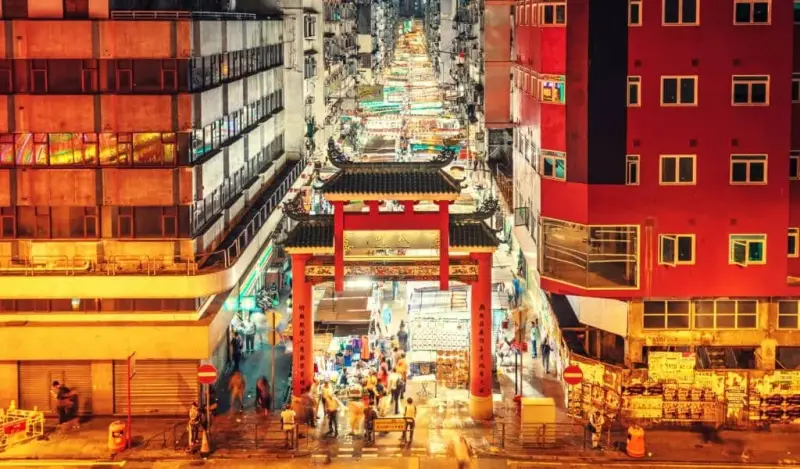
Yung Shue Tau, the square in front, is shaded by old banyan trees and has long been a meeting place for residents. Fortune tellers work from stalls in and around the compound. From the evening, Temple Street Night Market fills the streets on both sides with stalls selling clothes, gadgets and street food. Tin Hau's birthday, in the third lunar month, brings crowds of worshippers and offerings.
We check practical details such as entry rules, seasons and costs against official government and tourism sources.
Look up at the hanging incense coils and carved altars.
Sit in Yung Shue Tau, the shaded square used by residents.
Stay as Temple Street's stalls set up in the late afternoon.
Ground-level halls; thresholds and steps at doorways. Doorways have raised thresholds and steps.
None
Small change for donations
Modest clothing
Loud behaviour, touching altars; noise; photographing worshippers or fortune tellers without asking
Square with benches
Parking is limited; use the MTR.
Yau Ma Tei MTR station is about 400 m away; the Jade Market lies about the same distance south-west.
Tin Hau's birthday, in the third lunar month, brings worshippers and offerings.
Late afternoon: see the temple before it closes, then stay for the night market.
Any day.
October to March.
Others of this kind you opened on this device, so you can get back to them quickly.
Doors open in the morning, but published closing times differ, so plan to arrive by mid-afternoon if you want unhurried time inside.
Our team answers questions here
Find your kind of trip: 21 travel themes, from Landmarks, Heritage, Nightlife Districts.
More of Yau Ma Tei.
Hong Kong
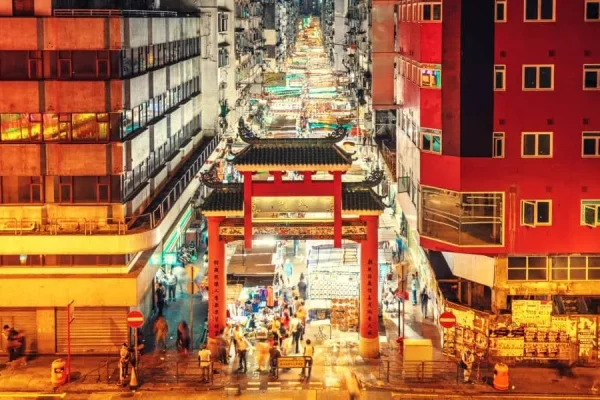
Temple Street Night Market runs along Temple Street in the Yau Ma Tei and Jordan areas of Kowloon in Hong Kong. The street takes its name from the Tin Hau Templ...
Hong Kong
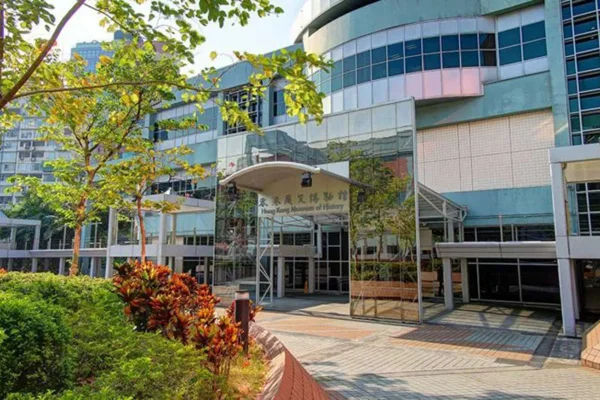
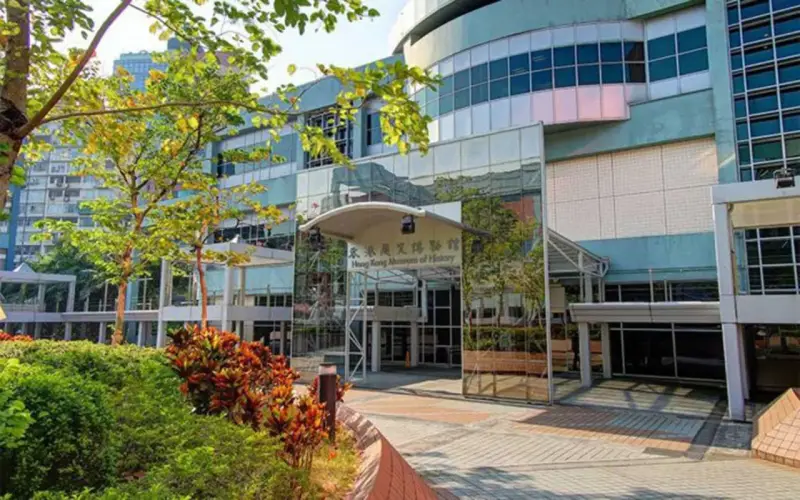
The Hong Kong Museum of History is the city's main history museum, on Chatham Road South in Tsim Sha Tsui East, Kowloon. Its core exhibition, The Hong Kong Stor...
Hong Kong
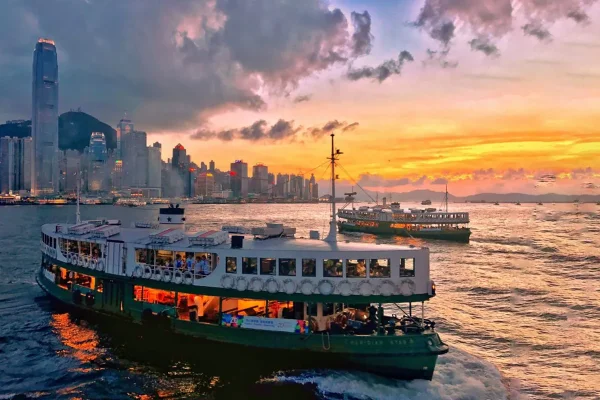
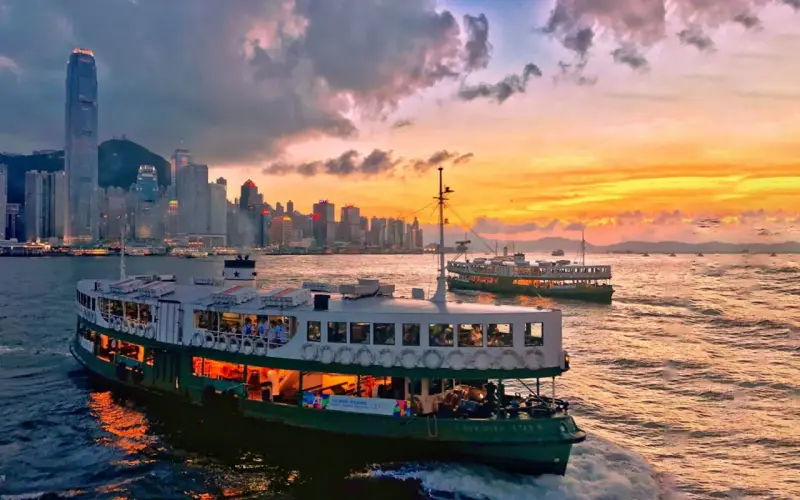
The Star Ferry is the passenger ferry across Victoria Harbour in Hong Kong, running since 1888 between Tsim Sha Tsui in Kowloon and Central or Wan Chai on Hong...
Hong Kong
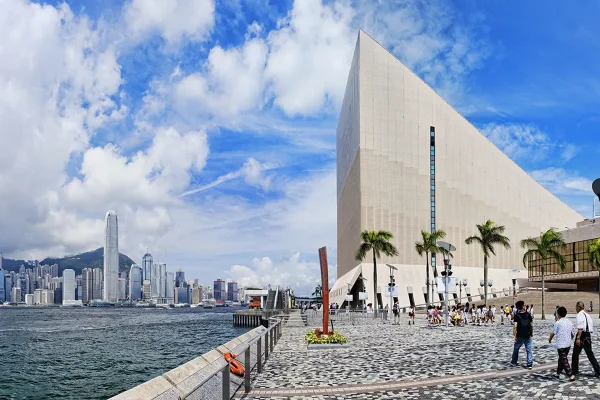
The Tsim Sha Tsui Promenade is the public waterfront walk along the southern tip of the Kowloon Peninsula in Hong Kong, facing the skyline of Hong Kong Island a...
Hong Kong
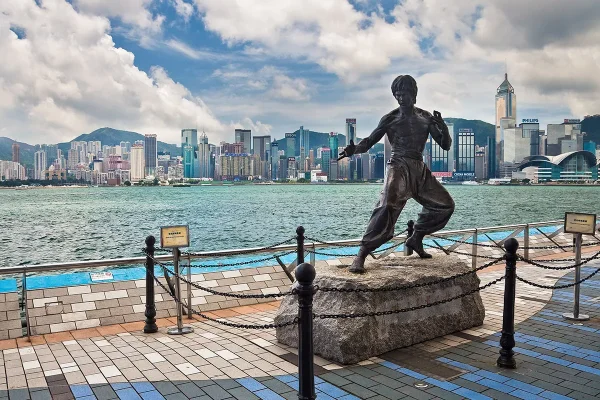
The Avenue of Stars is a free 440-metre waterfront promenade in Tsim Sha Tsui, Kowloon, that honours Hong Kong cinema with film stars' handprints, a bronze Bruc...
Hong Kong
Victoria Harbour separates Hong Kong Island from the Kowloon Peninsula. Its deep, sheltered water was the main reason the British settled Hong Kong in the 1840s...
Hong Kong
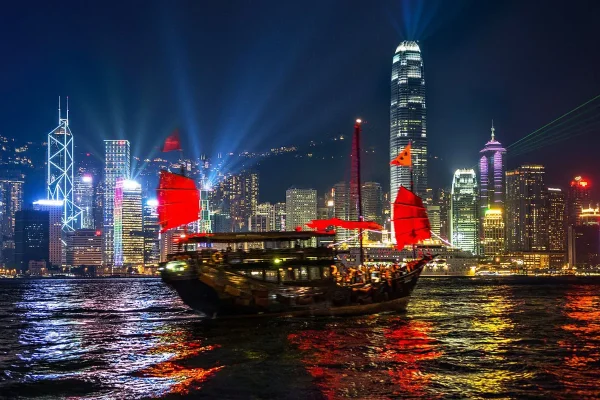
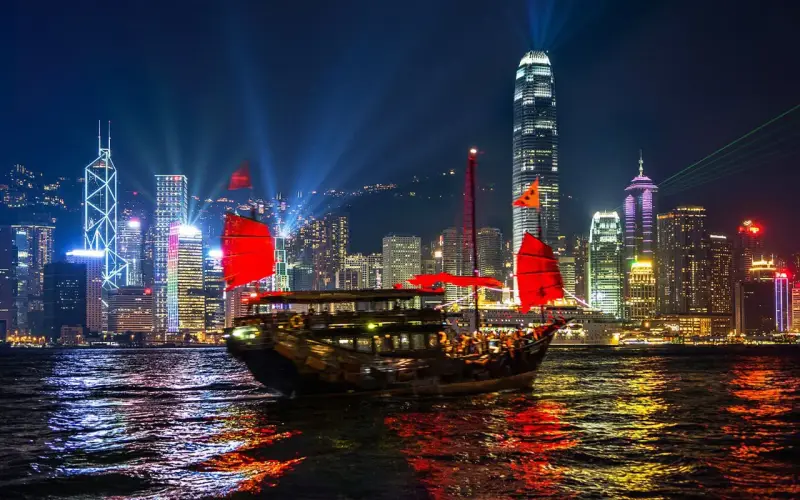
A Symphony of Lights is the free nightly light and sound show over Victoria Harbour in Hong Kong. At 20:00 every evening, about 40 buildings on both sides of th...
Hong Kong
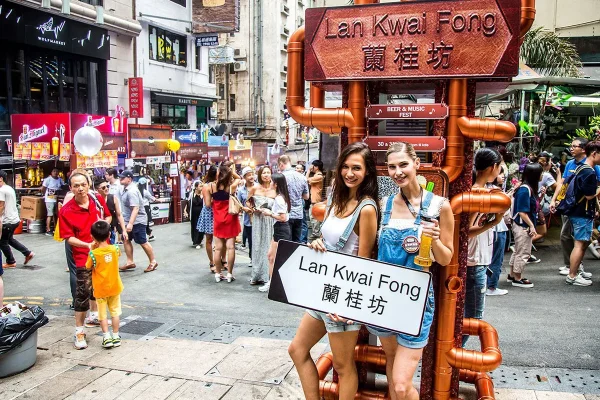
Lan Kwai Fong is Hong Kong's best-known nightlife district, a small block of steep streets in Central on Hong Kong Island, just uphill from Queen's Road Central...
Hong Kong
Aberdeen Country Park is a 423-hectare protected area of wooded hills and two reservoirs above Aberdeen, on the southern side of Hong Kong Island. Entry is free...
Tell us where and when you want to go, and local travel experts send you offers for your trip.
What to know about the Yau Ma Tei temples.
General
Yes, there is no admission fee. Visitors may make a donation or buy incense. Dress modestly and ask before photographing worshippers or fortune tellers.
The Tin Hau Temple was probably moved to its present site in 1864. The other buildings in the complex date from 1878 to 1897, and the complex was declared a monument in May 2020.
There are five: the Kwun Yum Temple, the Shing Wong Temple, the Tin Hau Temple, the Kwun Yam Lau She Tan communal hall and the Hsu Yuen study hall.
Yes, Temple Street was named after this temple, and the night market runs right beside it. Visit the temple in the late afternoon, then stay for the market.
The Tung Wah Group of Hospitals has managed the temple since 1914.
Yes, the temple originally faced the Yau Ma Tei waterfront. Land reclamation has since left it almost three kilometres from the shore.
The Nine-Dragon Wall is a decorative wall in the Public Square Street Rest Garden behind the temple complex.
Yes, entry to Tin Hau Temple, Yau Ma Tei is free.
Tin Hau Temple, Yau Ma Tei is in Hong Kong. The street address and directions are under How to get there on this page.
Bags: No restrictions.
Getting there
Take the MTR to Yau Ma Tei station and walk about 400 metres west to Public Square Street. The temple faces the square between Temple Street and Shanghai Street.
Timing & weather
The temple opens daily from about 8 am to 5 pm. Hours can change on festival days.
Tin Hau's birthday, on the 23rd day of the third lunar month, brings the most worshippers and offerings.
Most visitors spend 30–45 minutes for the complex at Tin Hau Temple, Yau Ma Tei.
The best months to visit Tin Hau Temple, Yau Ma Tei are October to March. The best days and times of day are covered under When to visit on this page.
We use necessary cookies to make this site work. With your permission we would also like to remember your preferences, measure how the site is used, and show relevant ads and partner offers. You can change your mind at any time under "Cookie settings" on our Privacy policy page.

 Plan your trip with AI