

Jean Nouvel won the Pritzker Prize in 2008, eleven years before Qatar opened the museum he designed around a desert rose crystal formation. That museum, I.M. Pei's Museum of Islamic Art, and the 211-meter Katara Towers in Lusail make Doha one of the densest concentrations of Pritzker Prize-winning and internationally recognized architecture built anywhere in the past 20 years.
This guide covers 12 landmarks, with the architect, the entry fee, a Doha vs Lusail comparison, and itineraries from 2 to 4 days, checked against Qatar Museums and primary architecture sources.
Qatar's 5 Must-See Architectural Landmarks:
These five earn their place through the weight of who designed them and what they represent, not just visual impact. Three carry Pritzker Prize architects; the other two anchor Qatar's World Cup legacy and its newest skyline icon.
National Museum of Qatar, Jean Nouvel's Desert Rose:
Built around a king's original palace, opened in 2019
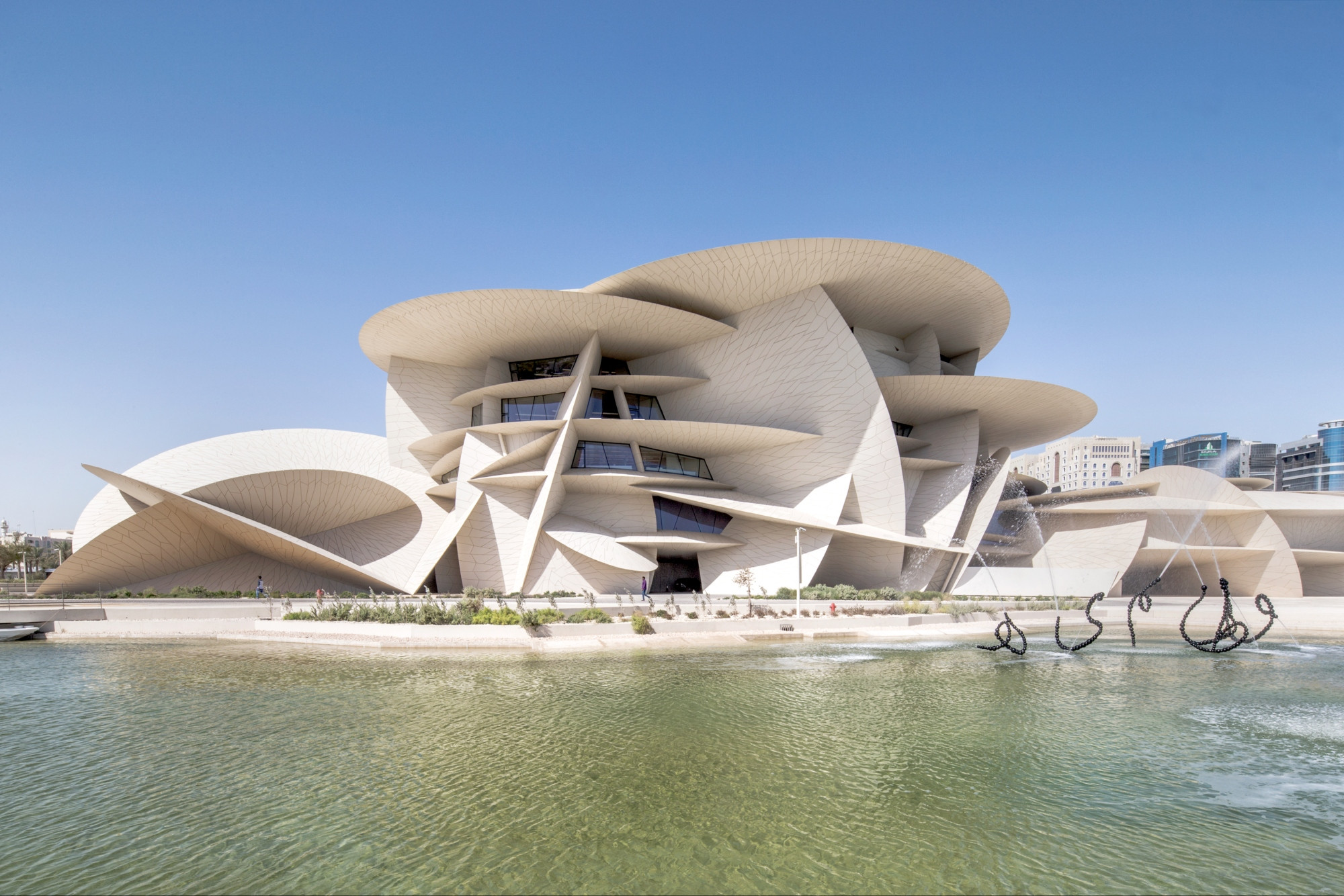
Jean Nouvel based the museum's design on the desert rose, a crystal formation that occurs naturally in Qatar's arid sand. The building's interlocking discs spread across roughly 40,000 square meters and wrap around the original palace of Sheikh Abdullah bin Jassim Al Thani, who founded modern Qatar and served as its ruler for 25 years. Nouvel won the Pritzker Prize in 2008, eleven years before this museum opened.
Eleven galleries inside trace Qatar's history from its Bedouin heritage through the pearling economy to the discovery of oil. The gift shop, designed separately by Koichi Takada, is built to resemble Dahl al Misfir, a known Qatari cave.
Museum of Islamic Art, I.M. Pei's Final Major Commission:
Designed at age 91, opened 2008, on its own purpose-built island
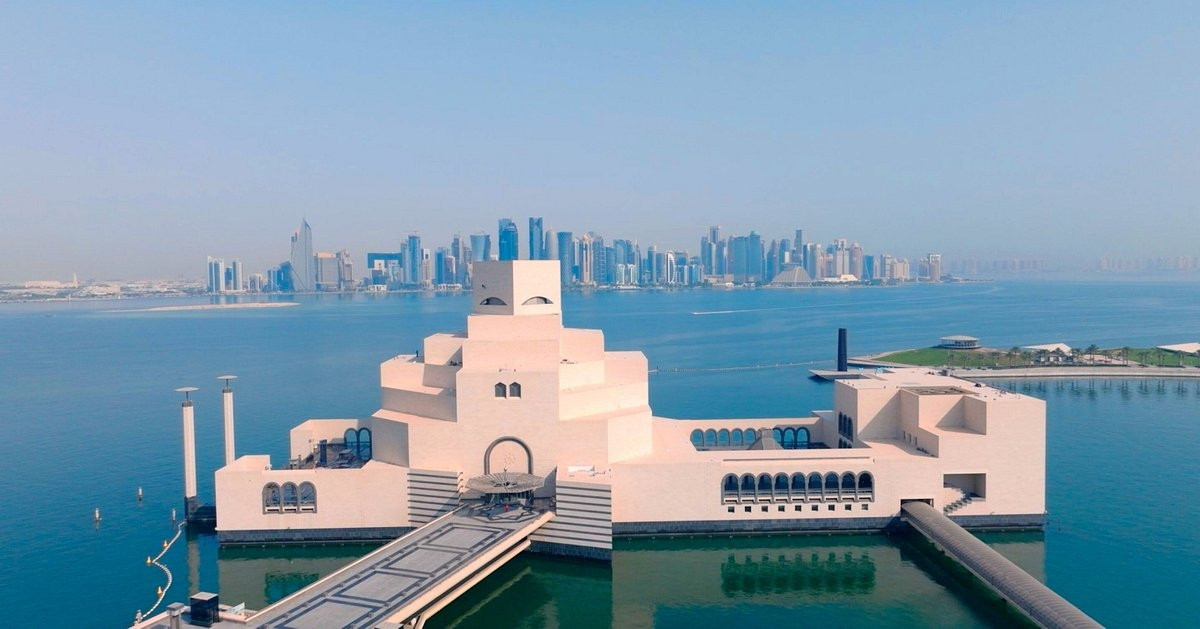
I.M. Pei, who also designed the Louvre's glass pyramid in Paris, took the commission for Doha's Museum of Islamic Art when he was 91 years old. He based the design on the Sabil, an ablution fountain at the 9th century Mosque of Ahmad Ibn Tulun in Cairo. The museum sits on its own purpose-built island off Doha's Corniche, a five-story main building connected to a two-story education wing through a courtyard.
The collection spans three continents and includes calligraphy, ceramics, manuscripts, and metalwork drawn from across the historic Muslim world.
Katara Towers, 211 Meters of Crossed Swords:
Two hotels, one structure, opened January 2023
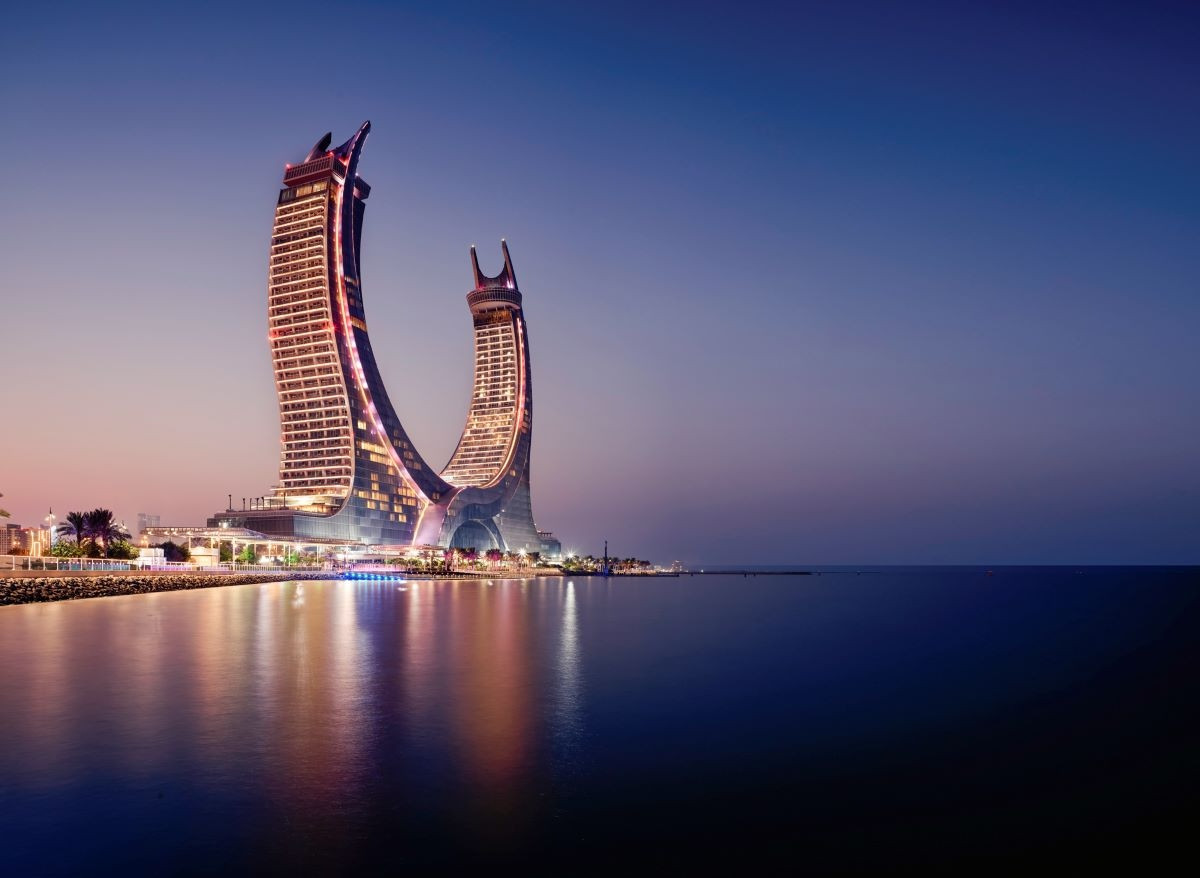
Katara Towers stands 211 meters tall across two 36-floor towers, designed by Kling Consult to resemble the crossed scimitar swords on Qatar's national emblem. The complex covers roughly 300,000 square meters in Lusail's Marina District and cost an estimated $600 million to build. Construction ran from 2018 to 2022, and the towers opened to the public in January 2023.
One tower houses Raffles Doha, an all-suite six-star property with 132 suites and a library stocked with rare books, including a first edition of Moby Dick. The other houses Fairmont Doha, a five-star hotel with 362 rooms. A rooftop bar called Acoustic occupies the 36th floor of the Fairmont side.
Lusail Stadium, where the 2022 World Cup ended:
80,000 seats, designed by Foster + Partners
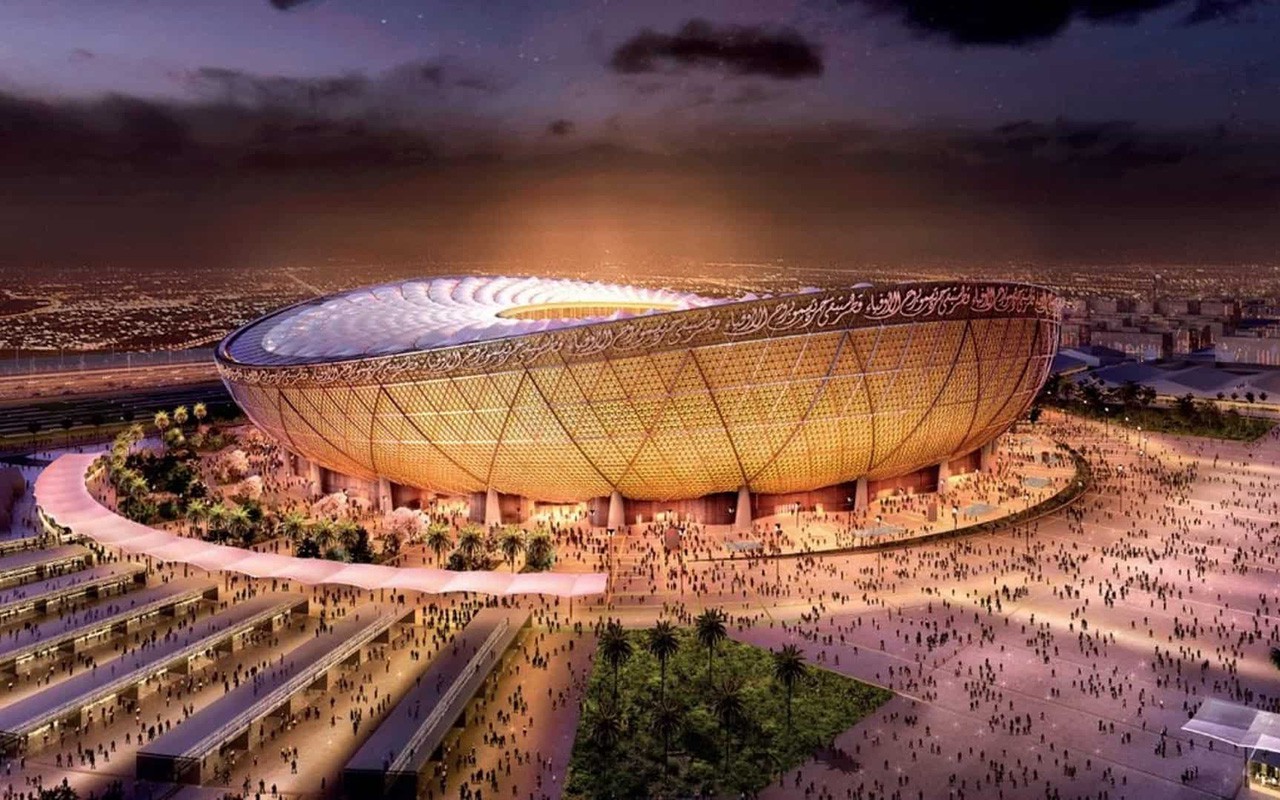
Lusail Stadium seats 80,000 and hosted the 2022 World Cup final between Argentina and France. British firm Foster + Partners conceived the design, with Populous serving as sports architect for the seating bowl and Arup as structural engineers. The design draws on light and shadow patterns from the fanar, a traditional Arabic lantern, and the facade carries motifs from early Arab and Islamic decorative art.
The stadium sits at the end of a grand boulevard in Lusail City, a planned development 15 kilometers north of Doha intended to house roughly 250,000 people once complete.
Al Bayt Stadium, Shaped like a Bedouin Tent:
Opened the 2022 World Cup, 35km from Doha
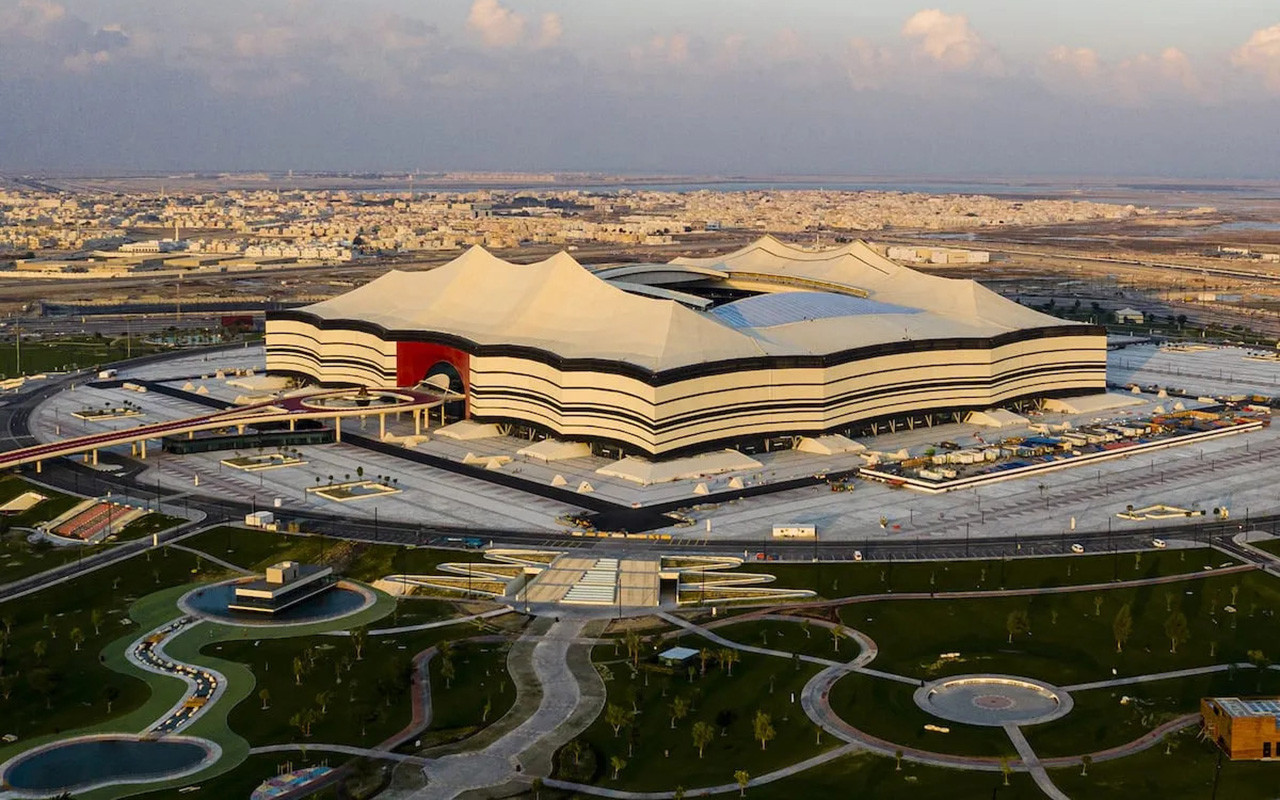
Al Bayt means "the house" in Arabic, and the stadium's design takes its form from bayt al sha'ar, the traditional tents used by nomadic peoples across Qatar and the wider Gulf. Lebanese firm Dar Al-Handasah designed the structure, located in Al Khor, making it the furthest World Cup venue from the capital. It hosted the opening match of the 2022 tournament, Qatar against Ecuador, on November 20, 2022.
The roof retracts, and the exterior membrane carries Qatar's traditional black, white, and red coloring. Post-tournament plans call for reducing capacity to roughly 32,000 and converting the freed space into a hotel and shopping mall.
Doha vs Lusail: Where Should you Base Yourself?
This is the most-searched logistics question for an architecture-focused Qatar trip, and the honest answer involves a real tradeoff between walkability and seeing the newest icons.
Best Qatar Architecture Itineraries: 2, 3 & 4 Days:
Qatar's landmarks split naturally into a Doha cluster, a Lusail half-day trip, and a northern day trip to the forts. These itineraries build from the essentials up to the full list.
⚡ 2-day itinerary, Doha essentials
🗓️ 3-day itinerary, Doha plus Lusail
🌟 4-day itinerary, full architectural circuit
7 More Landmarks Beyond the Headliners:
Most first-time visitors see the two big museums and stop. These seven cover everything from a Zaha Hadid stadium to 19th century watchtowers most guidebooks skip.
Al Janoub Stadium
Designed by Zaha Hadid Architects with AECOM, this 40,000-seat stadium draws its curved form from dhow boat sails. It was the first of Qatar's eight World Cup venues completed, opening in May 2019, three years before the tournament.
Doha Tower (Burj Doha)
Jean Nouvel's 238-meter, 46-floor office tower uses an exterior lattice of diagrid columns echoing Islamic mashrabiya screening. The pattern reduces solar heat gain and resists sand buildup. It lights up gold at night, switching to Qatar's flag colors on National Day.
Qatar National Convention Centre
Arata Isozaki designed the QNCC's facade around intertwined sidra tree branches, a structural and decorative motif at once. Ed Sheeran and OneRepublic have both performed in the 40,000-square-meter exhibition space since it opened in 2011.
Education City Mosque
Iraqi architect Taha Al-Hiti designed this mosque around five large supporting columns representing the five pillars of Islam. A spiral building plan connects it to the surrounding school, reflecting the idea that knowledge derives from faith.
Msheireb Downtown Doha
This regeneration project blends traditional Qatari design (beige stone, wind towers called barajeel) with modern sustainable building practices. Radwani House, a restored 1920s home, offers free entry into Doha's social history. It connects directly to Msheireb Metro Station.
Al Zubarah Fort and Archaeological Site
Once a major pearling and trading port, Al Zubarah was inscribed as Qatar's first UNESCO World Heritage Site in 2013. The site sits roughly 65 miles from Doha and preserves the historic settlement layout alongside its restored fort.
Barzan Towers
These late 19th century watchtowers, over 52 feet tall and built from coral rock and limestone, guarded rainwater and doubled as moon-observation points for marking the start of Ramadan. Free to visit, 9 miles north of Doha.
Essential Qatar Architecture Tips for 2026:
Get a Qatar Museums Culture Pass
If visiting more than two or three museums on this list, the Culture Pass covers entry across the network and pays for itself quickly compared to single tickets.
Use the metro for the Doha cluster
Msheireb and National Museum stations put you within walking distance of most central landmarks. Save taxis for Lusail and the northern forts, which sit outside metro coverage.
Dress modestly at religious sites
Shoulders and knees covered at Education City Mosque and similar sites. Museums and hotels run a more relaxed smart-casual standard.
Avoid midday in summer
Outdoor sites like Al Zubarah and Barzan Towers offer little shade. Visit in the early morning or late afternoon between May and September, when temperatures push past 40°C.
Check stadium event calendars first
Stadium interiors generally require an event ticket. Check the current schedule before planning a Lusail Stadium or Al Bayt Stadium visit, or you may only see the exterior.
Photograph exteriors freely, ask before interiors
Exterior photography is fine at every landmark on this list. Some museum galleries restrict interior photography; check signage or ask staff first.
Where to Stay for an Architecture-Focused Qatar Trip:
Staying near the Corniche puts you closest to the Doha cluster; staying in Lusail puts you inside one of the landmarks itself.
- Raffles Doha (inside Katara Towers, Lusail)
- Fairmont Doha (inside Katara Towers, Lusail)
- Mandarin Oriental Doha (West Bay)
- Four Seasons Hotel Doha (Corniche)
- Souq Waqif Boutique Hotels (Old Doha)
- Crowne Plaza Doha (West Bay)
- Msheireb hotels (Downtown Doha)
- Budget chain hotels near Doha International Airport
- Serviced apartments in Al Sadd
Frequently Asked Questions (FAQ's):
Verified for June 2026.






{{item.get_author.first_name}} {{item.get_author.last_name}}
Level 7
5 Photos
36 Reviews
{{item.comment_txt}}
{{item_reply.get_author.first_name}} {{item_reply.get_author.last_name}}
@ {{item_reply.reply_to}}, {{item_reply.reply_txt}}