

I've been lucky enough to travel Indonesia multiple times — trekking Ijen Crater at 2am in the dark, diving Raja Ampat's reefs, sitting in silence at Borobudur for sunrise, and getting hopelessly lost down Yogyakarta's back-street batik markets. Every visit reveals something Indonesia has been hiding from the world.
Spread across more than 17,000 islands between the Indian and Pacific Oceans, Indonesia is one of the most biodiverse, culturally complex, and visually stunning countries on earth. It is home to 4 UNESCO World Heritage Sites, the world's largest Buddhist temple, and the richest marine ecosystem ever mapped. And yet it remains, for much of the world, criminally underexplored beyond Bali.
This guide covers the 20 best tourist attractions in Indonesia for 2026 — from the iconic to the little-known, with honest visiting tips, verified 2026 entry fees, and the insider knowledge that separates a good Indonesia trip from an extraordinary one.
Why Do Tourists Visit Indonesia?
Indonesia targets 16 to 17 million foreign tourists in 2026 as part of its strategy to boost the tourism sector's recovery, with a focus on experience-based travel, cultural immersion, and eco-tourism. Here is what draws travellers from every corner of the world:
- Unmatched natural diversity: Active volcanoes, ancient rainforests, coral reefs with the highest biodiversity on Earth, pink-sand beaches, and three-coloured volcanic lakes — Indonesia has natural wonders that exist nowhere else.
- Cultural depth: 300+ ethnic groups, 700+ languages, and distinct traditions that vary dramatically from island to island. A week in Java feels nothing like a week in Bali, which feels nothing like a week in Sulawesi.
- Wildlife found nowhere else: Komodo dragons, orangutans, pygmy seahorses, Sumatran tigers, and Birds of Paradise are all endemic to Indonesia.
- Affordability: Outside the luxury end of the market, Indonesia remains one of the world's best-value destinations. A comfortable mid-range trip costs $100–$150/day per couple.
- Food: Nasi goreng, satay, rendang, gado-gado — Indonesian food is one of the world's great cuisines and you will eat extraordinarily well for almost nothing.
20 Best Tourist Attractions in Indonesia (2026)
01. Borobudur Temple, Central Java — The World's Largest Buddhist Monument:
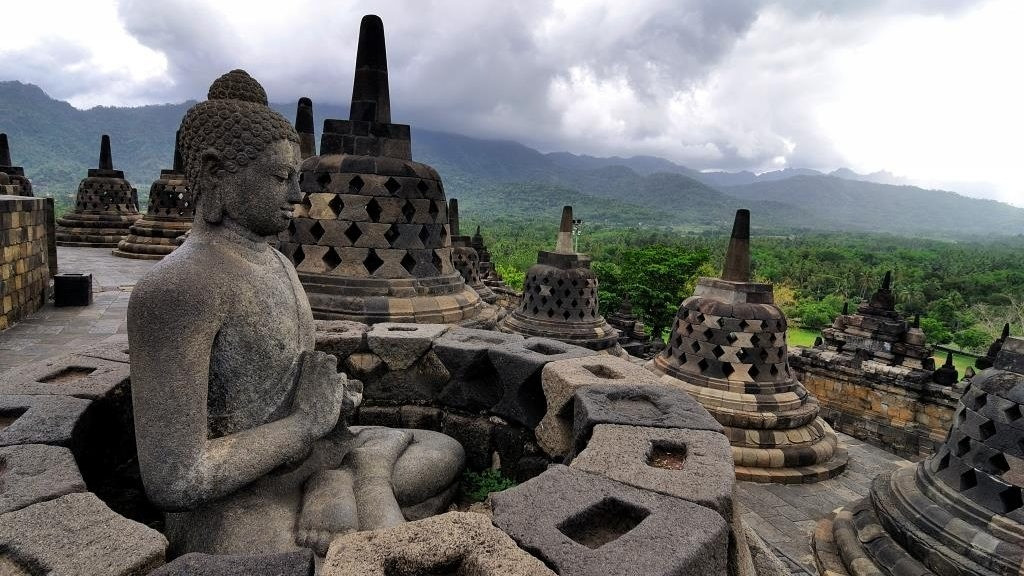
There is nothing quite like watching the sun rise over Borobudur from the upper terrace as the mist burns off the surrounding volcanic landscape. This 9th-century Mahayana Buddhist temple is the largest Buddhist structure ever built — a UNESCO World Heritage Site with 2,672 relief panels, 504 Buddha statues, and a mandala-like structure that took decades to construct. Standing at the top as dawn breaks, you understand immediately why this is Indonesia's single most extraordinary monument.
Unlike most ancient temples, Borobudur was buried for centuries under volcanic ash and jungle, only rediscovered in 1814. The astronomical alignment of the stupas means the main spire casts no shadow during the equinox — a feat of 9th-century engineering that still baffles architects.
- Expert tip: Book the "Manohara Sunrise" package (IDR 450,000/person) to enter at 4:30am before general admission — you'll have the entire upper terrace to yourself as the sun rises. The standard entry time of 6:30am brings tour buses immediately. One morning visit is enough; save the afternoon for nearby Prambanan.
| Practical Info | Details |
|---|---|
| Entry fee (2026) | IDR 480,000 (~$30) for foreigners |
| Opening hours | 6:00am – 5:00pm daily |
| Sunrise package | IDR 450,000 (4:30am entry, book via borobudurpark.com) |
| Best time to visit | May–October (dry season) |
| How to reach | 45 min from Yogyakarta by taxi (~IDR 150,000) or organised tour |
| Recommended duration | 2–3 hours |
02. Raja Ampat, West Papua — Earth's Richest Marine Ecosystem:
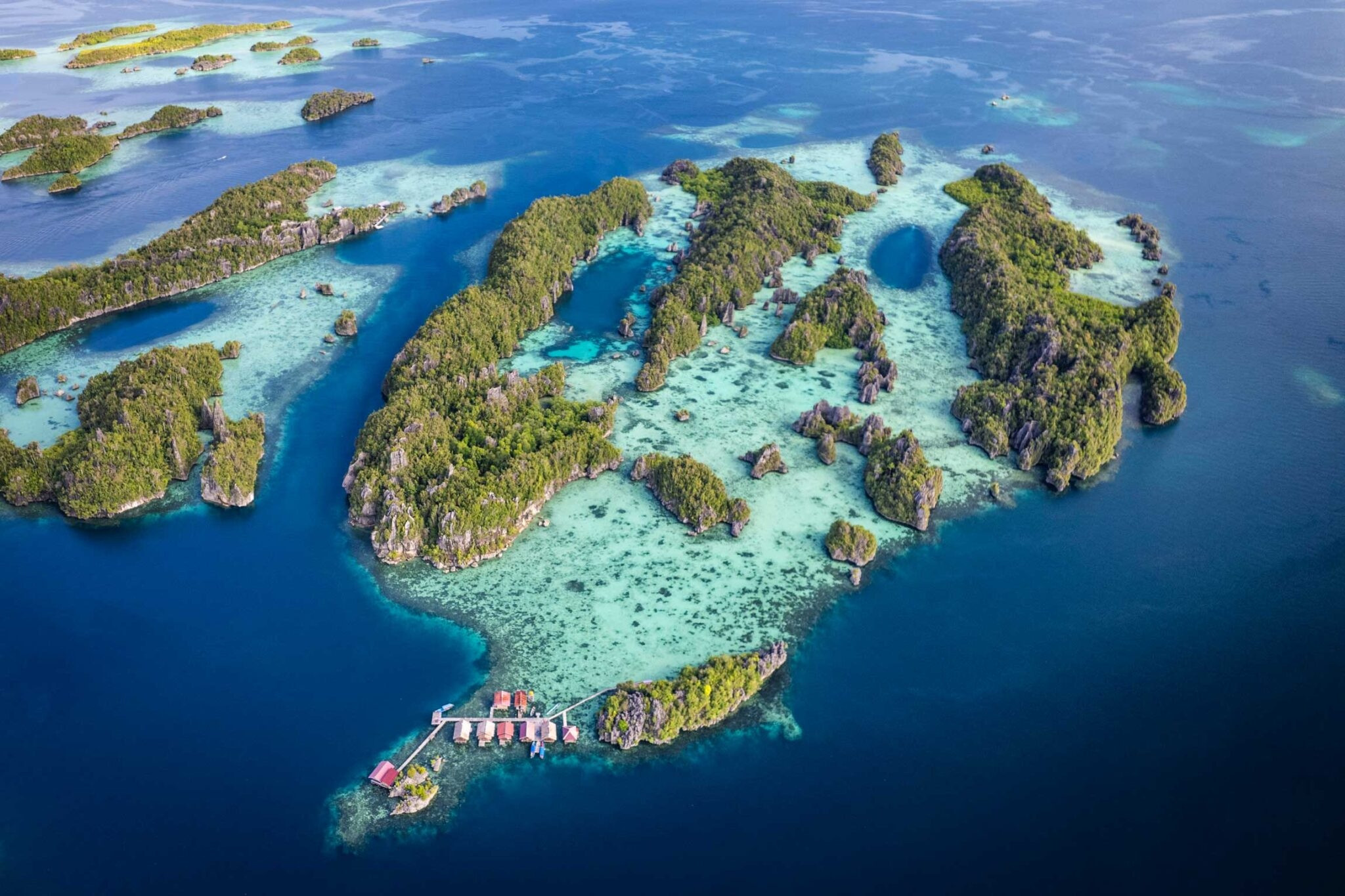
Raja Ampat is a dream come true for divers and nature lovers. This archipelago of over 1,500 islands boasts the richest marine biodiversity on the planet. More fish species have been recorded in Raja Ampat's waters than anywhere else on Earth — over 1,500 fish species, 700 mollusc species, and coral coverage that has to be seen to be believed. If you dive anywhere in your life, dive here.
Raja Ampat sits at the heart of the Coral Triangle — the global centre of marine biodiversity. The manta ray population, in particular, is extraordinary. Manta Ridge and Manta Sandy are considered among the best manta ray dive sites in the world. Above water, the limestone karst islands rising from turquoise lagoons are among the most photogenic landscapes in Southeast Asia.
- Expert tip: The best diving season is October to April when visibility is highest. Visit in June–August for calmer seas and easier island-hopping. Overnight on a liveaboard to reach the most remote sites — and to escape the increasingly crowded Waisai town area. New in 2024: overnight camping on uninhabited islands is now restricted to protect nesting seabirds. Check current regulations before planning.
| Practical Info | Details |
|---|---|
| Entry fee (2026) | Raja Ampat Marine Park fee: IDR 1,000,000 (~$63) valid 1 year |
| Best diving season | October–April |
| How to reach | Fly to Sorong (SOQ) from Jakarta or Makassar, then ferry to Waisai |
| Base town | Waisai, Waigeo Island |
| Recommended duration | Minimum 5–7 days (7–10 days for divers) |
| Liveaboard cost | $200–$500/day (budget to luxury) |
03. Komodo National Park, East Nusa Tenggara — Jurassic World:
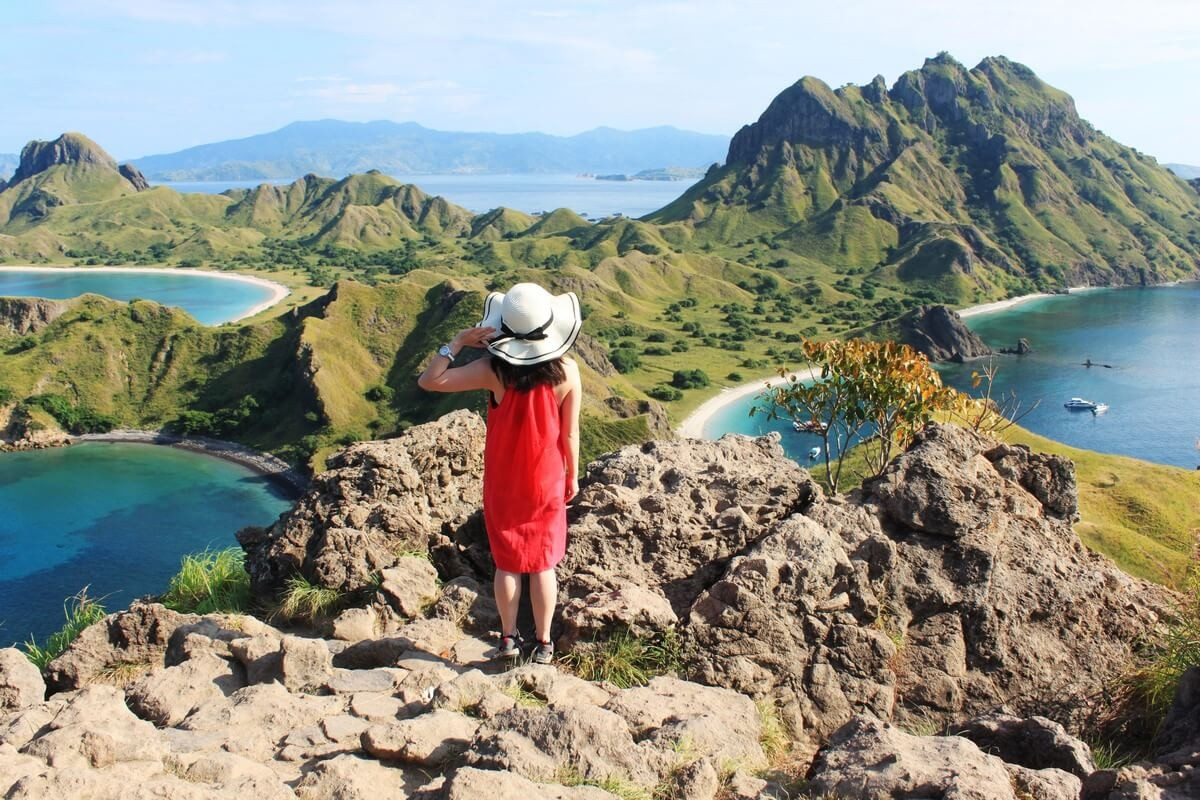
Watching a 3-metre Komodo dragon stalk through the scrub on Rinca Island — its forked tongue flicking the air — is one of the most viscerally thrilling wildlife experiences available anywhere on earth. The world's largest lizard is only found in this corner of Indonesia, and the national park that protects them also happens to contain Pink Beach (rose-coloured sand from crushed red coral), world-class diving, and some of the most dramatic island landscapes in Southeast Asia.
Komodo National Park offers a combination of rugged landscapes, exotic wildlife, and unique beaches. Pink Beach stands out with its striking rose-coloured sand, a result of crushed red coral mixing with white sand. The park is a UNESCO World Heritage Site and a living fossil — the Komodo dragon's lineage stretches back 4 million years.
- Expert tip: Rinca Island offers better Komodo dragon encounters than Komodo Island — more open terrain means better sightings. Always use the mandatory ranger escort. The park fee increased significantly in 2023 as a conservation measure; check the latest rates before booking. Most visitors access the park via a 2–3 day boat tour from Labuan Bajo.
| Practical Info | Details |
|---|---|
| Entry fee (2026) | IDR 3,750,000 (~$230) per person for foreigners (includes ranger) |
| How to reach | Fly to Labuan Bajo (LBJ), then boat tour (2–3 day packages available) |
| Best boat tour cost | $150–$400/person (2–3 days) |
| Best season | April–November |
| Recommended duration | 2–3 days including boat tour |
04. Tanah Lot Temple, Bali — The Temple on the Sea:
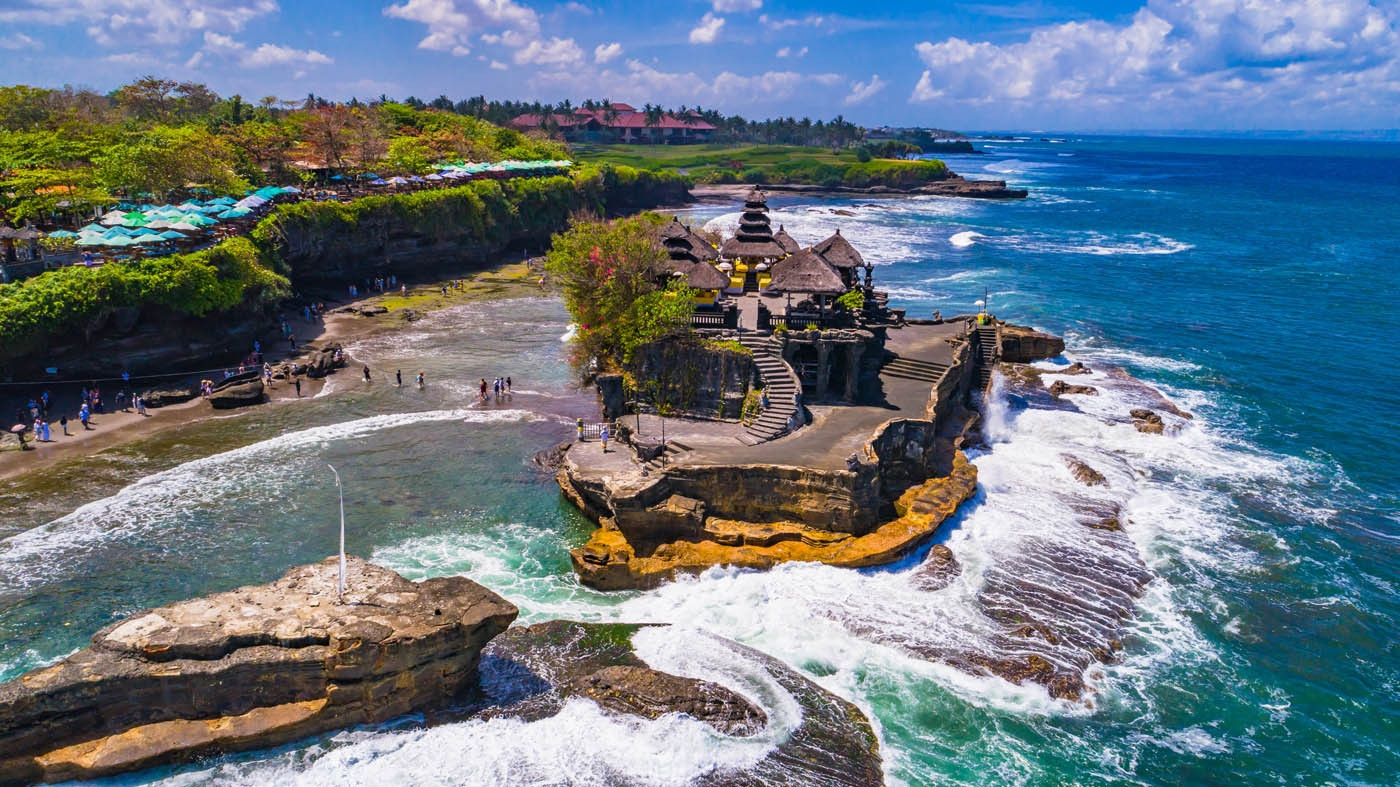
Tanah Lot Temple is one of Indonesia's most popular religious attractions. Incredible ocean views, clear mountain air, and a deep spiritual connection draw visitors to this unique sight. Built on a black-rock sea stack that is separated from the mainland at high tide, Tanah Lot is genuinely one of the most dramatic temple settings in the world. At sunset, when the silhouette of the multi-tiered pagoda turns black against an orange sky, the scene is utterly iconic.
- Expert tip: Arrive 45 minutes before sunset for the best light and a manageable crowd. The temple itself is only accessible at low tide (and only to Hindu worshippers) — most visitors photograph it from the clifftop path. Entry includes access to the wider complex with sea views from multiple angles. Wear a sarong (available for hire at the entrance) as a mark of respect even if you don't enter the temple.
| Practical Info | Details |
|---|---|
| Entry fee (2026) | IDR 75,000 (~$5) adult |
| Opening hours | 7:00am – 7:00pm daily |
| Best time to visit | 1 hour before sunset (roughly 5:00–6:30pm) |
| How to reach | 45 min from Seminyak / 1 hour from Ubud by car |
| Recommended duration | 1.5–2 hours |
05. Mount Bromo, East Java — Sunrise Over the Sea of Sand:
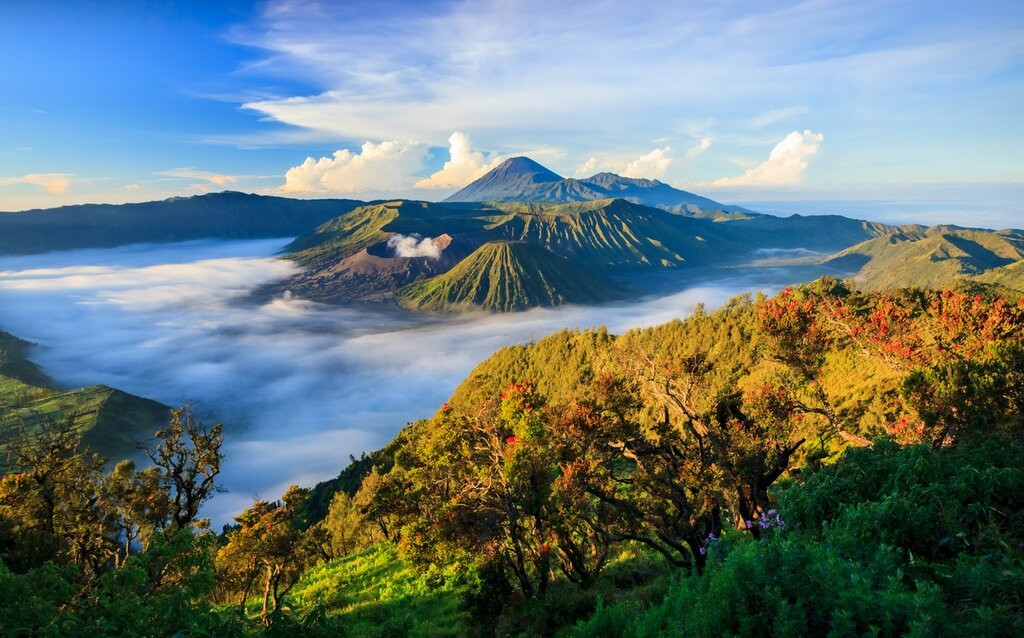
Waking at 3am to drive across a sea of volcanic sand by jeep, then watching the sun explode over the rim of an active volcano as it billows white smoke into the dawn sky — this is one of the most spectacular natural spectacles in all of Southeast Asia. Mount Bromo (2,329m) is not Indonesia's tallest volcano, but its accessibility and the eerie lunar landscape of the Tengger Caldera make it arguably the country's most atmospheric.
- Expert tip: Book accommodation in Cemoro Lawang village for easy 3am jeep access. The Penanjakan 1 viewpoint offers the classic panoramic shot. For something different, hike to the crater rim (45 minutes from the base) just after sunrise when most jeep tours have left — you'll have the smoking rim almost to yourself. Avoid July–August when it's extremely crowded and prices spike.
| Practical Info | Details |
|---|---|
| Entry fee (2026) | IDR 220,000 (~$14) weekdays / IDR 320,000 (~$20) weekends + holidays |
| Jeep hire | IDR 600,000–900,000 per jeep (seats 4–6) for sunrise tour |
| Best time to visit | April–October (dry season); avoid July–August crowds |
| How to reach | 2-hour drive from Malang / 4 hours from Surabaya |
| Recommended duration | Overnight + sunrise (minimum 2 days) |
06. Ubud, Bali — Cultural Capital of the Island of the Gods:
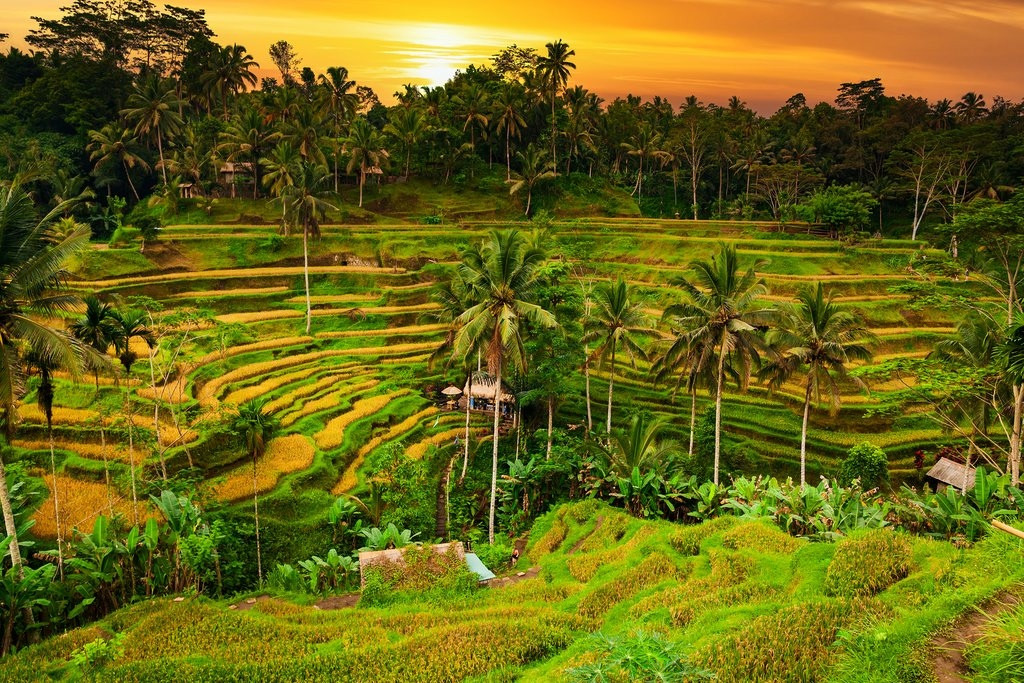
The stunning Tegalalang Rice Terrace, part of the Cultural Landscape of Bali Province UNESCO World Heritage Site, comprises cascading emerald-green fields worked by local rice farmers. Just outside Ubud, it has become a destination for travelers making their way between Bali's sandy beaches, towering mountains, and steaming volcanoes. But Ubud is far more than its famous rice terraces — it is the artistic soul of Bali, home to traditional dance performances, wood carvers, painters, silversmiths, and one of the finest collections of Balinese art in the world.
- Expert tip: Walk the Campuhan Ridge Walk at 6am before the heat and the Instagram crowds arrive. Visit the Sacred Monkey Forest in the late afternoon. Watch the Kecak Fire Dance at Pura Uluwatu (not Ubud) for the most dramatic setting, and see the Legong at Ubud Palace for the most refined performance.
| Practical Info | Details |
|---|---|
| Tegalalang Rice Terrace entry | IDR 50,000 (~$3) |
| Sacred Monkey Forest | IDR 80,000 (~$5) |
| Kecak Dance (Uluwatu) | IDR 150,000 (~$10) |
| How to reach | 1.5 hours from Kuta/Seminyak by car |
| Recommended duration | 3–5 days (Ubud base) |
07. Nusa Penida, Bali — The Dramatic Cliff Island:
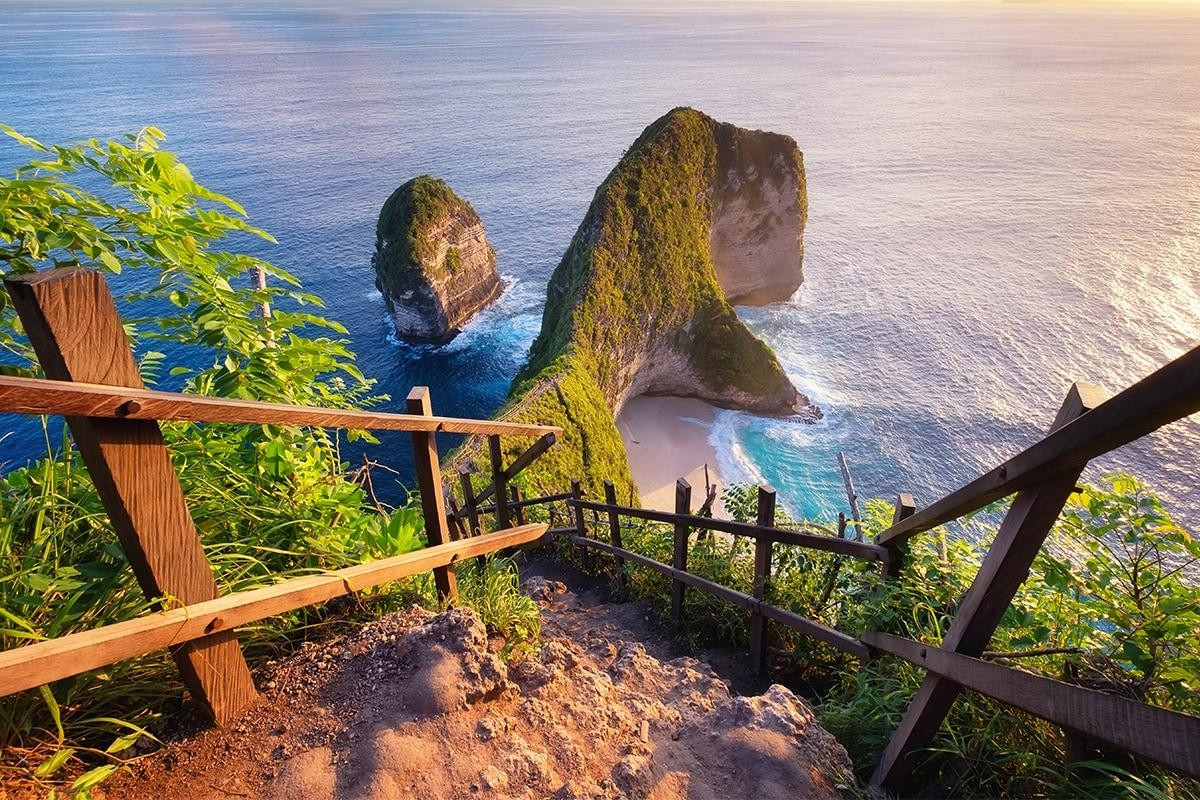
Just a 45-minute fast boat from Bali, Nusa Penida feels like a different world. Kelingking Beach — a T-rex-shaped cliff of white limestone dropping to turquoise water — is one of the most photographed landscapes in all of Indonesia. Angel's Billabong and Broken Beach offer natural swimming pools carved into the clifftops. Below the surface, Nusa Penida's dive sites are famous for Mola Mola (ocean sunfish) sightings and regular encounters with manta rays.
- Expert tip: Hire a scooter and driver for the day (~IDR 250,000) to reach the key sights efficiently — the roads are rough and some are steep. Kelingking viewpoint requires a steep hike down to the beach (not for vertigo sufferers). Visit Crystal Bay in the afternoon for the best light. Book your fast boat from Sanur Beach (IDR 150,000 each way) at least a day ahead in peak season.
| Practical Info | Details |
|---|---|
| Fast boat (Sanur–Nusa Penida) | IDR 150,000–200,000 each way (~$10–13) |
| Day scooter + driver | IDR 250,000 (~$16) |
| No general entry fee | Some viewpoints charge IDR 10,000–30,000 |
| Best time to visit | May–October |
| Recommended duration | 1–2 days |
08. Prambanan Temple, Central Java — Hindu Masterpiece of Java:
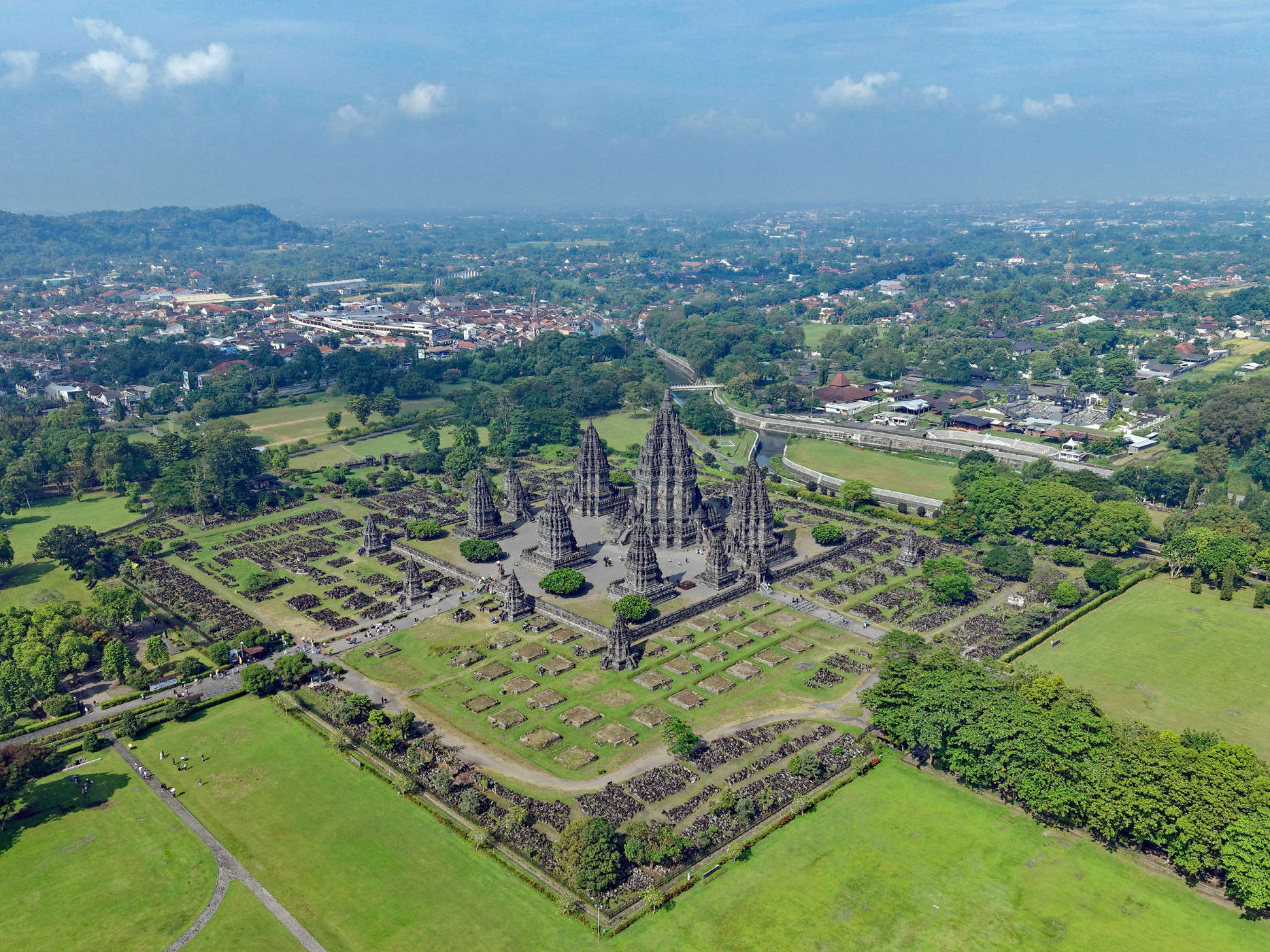
Built in the 9th century and dedicated to the Trimurti (Brahma, Vishnu, and Shiva), Prambanan is the largest Hindu temple complex in Southeast Asia and one of the most architecturally breathtaking sites in all of Indonesia. The main Shiva temple rises 47 metres — a soaring pyramid of carved andesite stone decorated with intricate reliefs depicting the Ramayana epic. A UNESCO World Heritage Site located just 17km from Yogyakarta, it's an easy half-day from Borobudur and the combination of these two temples in one trip is one of the greatest itinerary moves in Southeast Asian travel.
- Expert tip: Visit in the early morning when the light is soft and crowds are thin. Attend the Ramayana Ballet performance (held at Trimurti Open Air Theatre) — an extraordinary outdoor theatrical performance with the temple lit up behind the dancers. Performances run May–October on full-moon nights and selected other dates; book tickets in advance at Rp 350,000–450,000/person.
| Practical Info | Details |
|---|---|
| Entry fee (2026) | IDR 350,000 (~$22) foreigners (combo ticket with Borobudur available) |
| Opening hours | 8:00am – 5:00pm daily |
| Ramayana Ballet | IDR 350,000–450,000 (~$22–28) |
| How to reach | 17km from Yogyakarta by taxi (IDR 100,000) or Trans-Jogja bus |
| Recommended duration | 2–3 hours |
09. Lake Toba, North Sumatra — Supervolcano, Inland Sea:
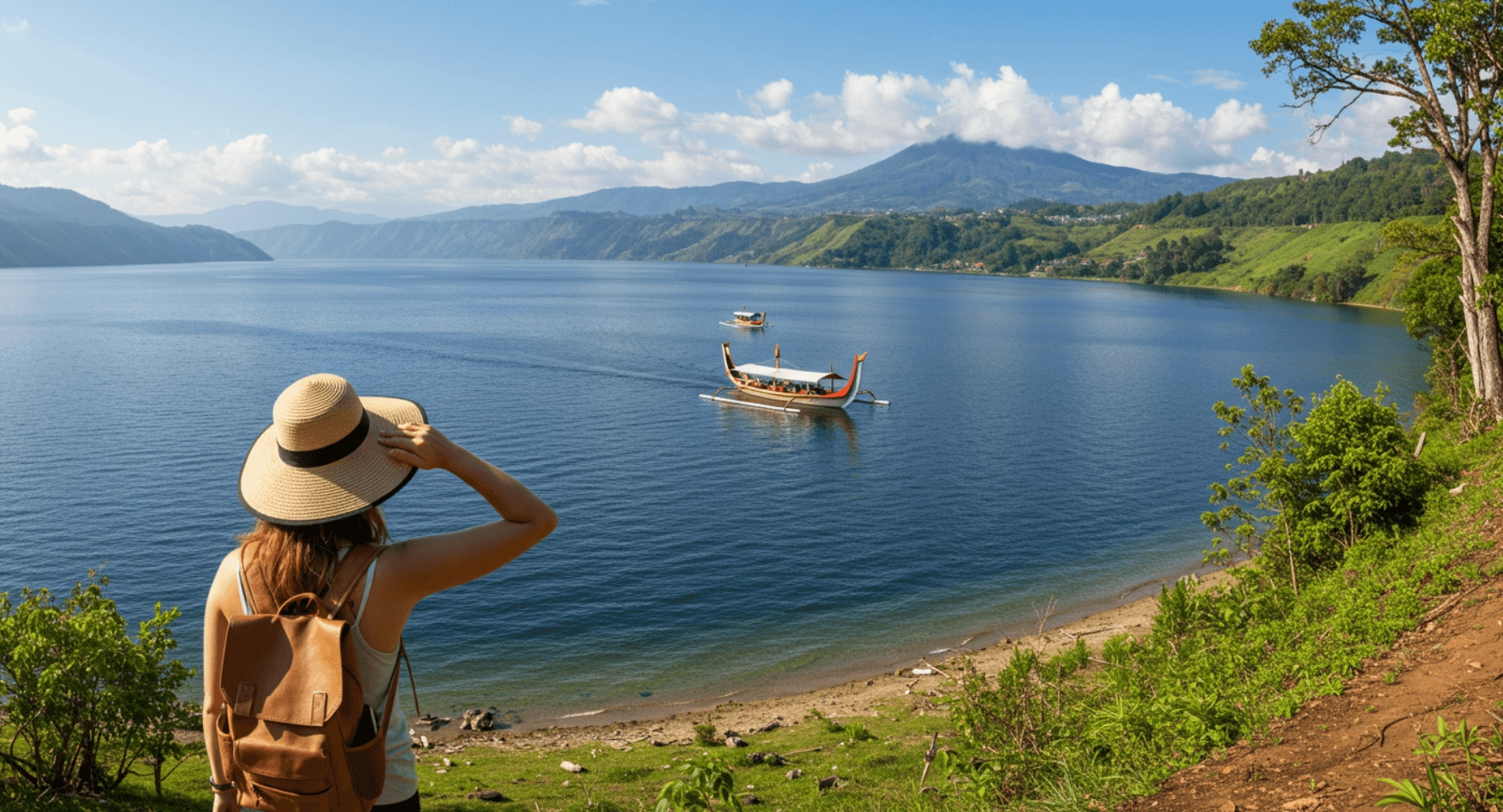
Lake Toba is not just a lake — it is the caldera of the largest supervolcanic eruption in the last 2 million years, filled with water over millennia to create a body of water 100km long, 30km wide, and 505m deep. The island of Samosir sits in its centre, and the Batak people who live there have maintained one of the most distinctive cultures in all of Indonesia — traditional clan houses, elaborate funeral ceremonies, and a warmth toward visitors that is entirely genuine.
- Expert tip: Stay on Samosir Island (ferry from Parapat) for 2–3 nights rather than treating it as a day trip. The village of Tuktuk is the most visitor-friendly. Hire a motorbike and circumnavigate the island. Visit a traditional Batak ceremony if one is happening during your stay — locals are often delighted to have interested foreign observers.
| Practical Info | Details |
|---|---|
| Ferry to Samosir | IDR 15,000–20,000 (~$1) from Parapat (multiple daily) |
| Guesthouses on Samosir | IDR 150,000–400,000/night (~$10–25) |
| How to reach | Fly to Silangit (DTB) or Medan, then 4 hours by road to Parapat |
| Best time to visit | May–September |
| Recommended duration | 2–3 days |
10. Ijen Crater, East Java — The Blue Fire Volcano:
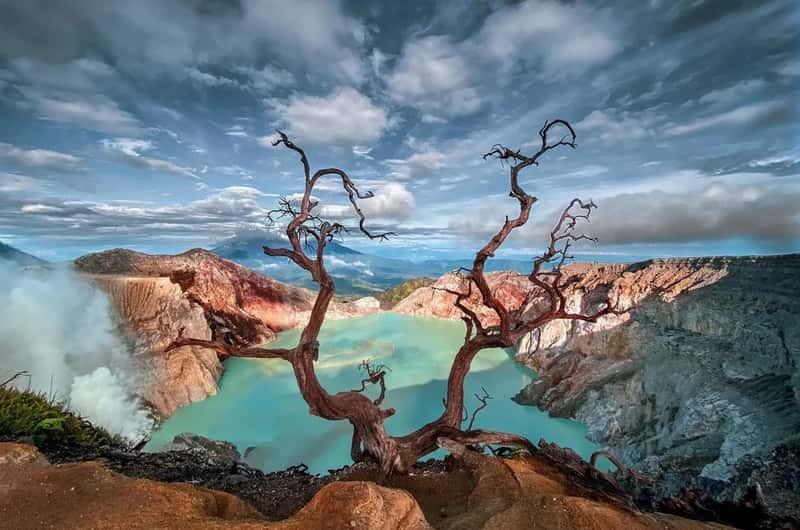
Ijen is one of the most surreal natural experiences on earth. The electric-blue flames — a phenomenon caused by combusting sulphuric gases — are only visible in darkness, which means trekking 3km up the crater at 2am by torchlight to reach the rim just as the blue fire burns below you. The crater lake is a vivid turquoise, the largest acidic volcanic lake in the world. By daylight, the whole landscape of yellow sulphur deposits and volcanic steam is equally otherworldly.
- Expert tip: The blue fire is only visible in complete darkness — start your trek no later than 1am for optimal timing. Bring a gas mask (available for hire near the crater entrance — IDR 50,000); the sulphur fumes are strong and can be overwhelming without protection. The trek up takes 1.5–2 hours. The last section on loose scree is steep — wear proper trekking shoes.
| Practical Info | Details |
|---|---|
| Entry fee (2026) | IDR 150,000 weekdays / IDR 225,000 weekends |
| Trek start time for blue fire | 12:00am–1:00am |
| Gas mask hire | IDR 50,000 |
| How to reach | 2 hours from Banyuwangi; guided tours recommended |
| Recommended duration | Overnight in Banyuwangi + 1 full night at Ijen |
11. Tana Toraja, South Sulawesi — The Land of Heavenly Kings:
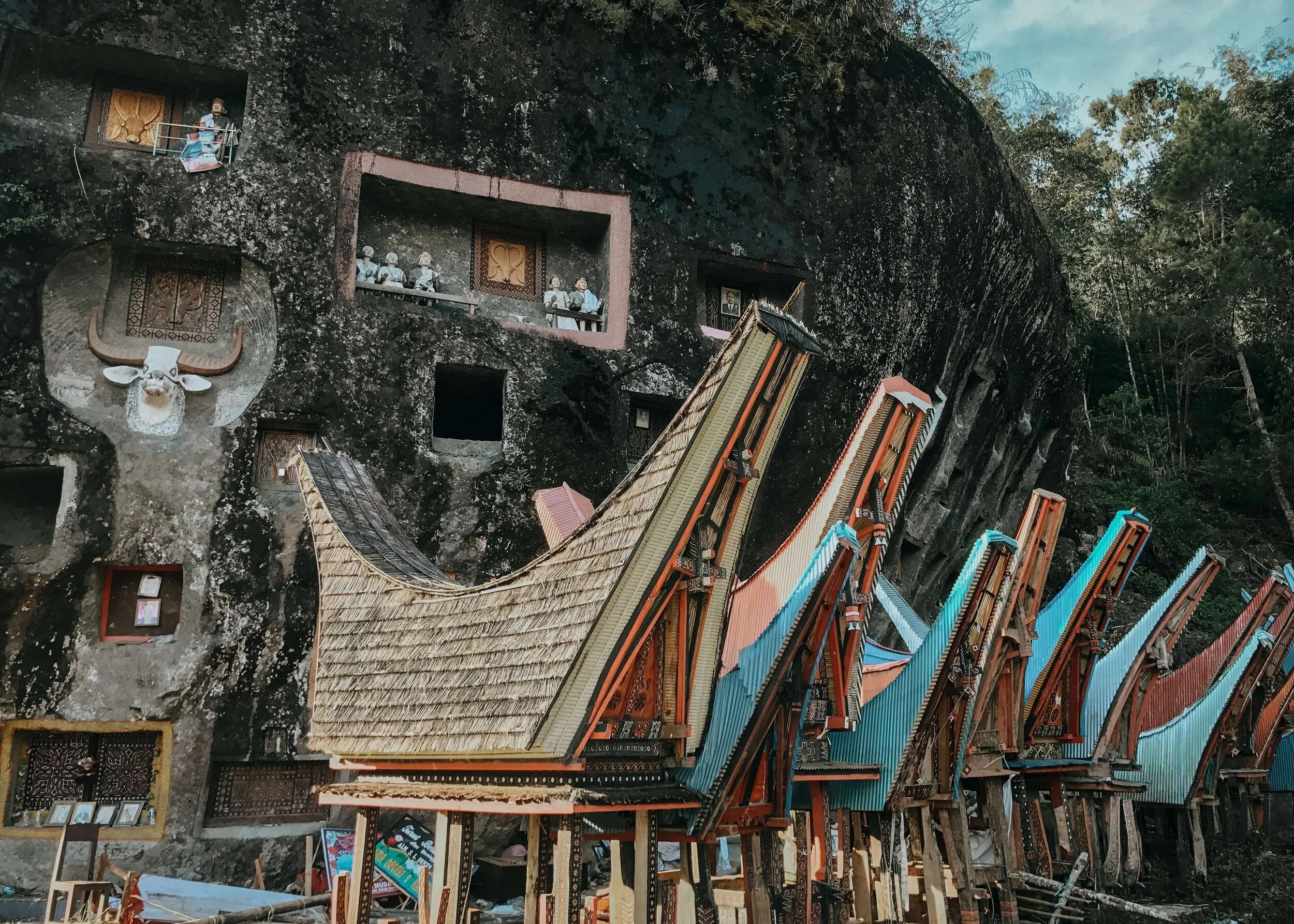
Tana Toraja offers a window into one of the most fascinating and complex cultures in Southeast Asia. The Torajan people are known for their extraordinary funeral ceremonies — multi-day events that can involve the slaughter of dozens of water buffalo and hundreds of guests — as well as their distinctive "tongkonan" clan houses with boat-shaped roofs, and their practice of placing coffins in cliff-face caves. The landscape of green hills, rice paddies, and bamboo forests is strikingly beautiful.
- Expert tip: Check the Toraja calendar for upcoming funeral ceremonies (rambu solo) — these are public events and respectful attendance is welcomed. The best time to visit is between June and August when ceremonies are most frequent and the weather is dry. Stay 3–4 days minimum to properly experience the region beyond Rantepao town.
| Practical Info | Details |
|---|---|
| How to reach | Fly to Makassar, then 8–10 hour overland to Rantepao (or domestic flight to Toraja) |
| Best season | June–August |
| Recommended duration | 3–5 days |
12. Gunung Rinjani, Lombok — The Sacred Volcano:
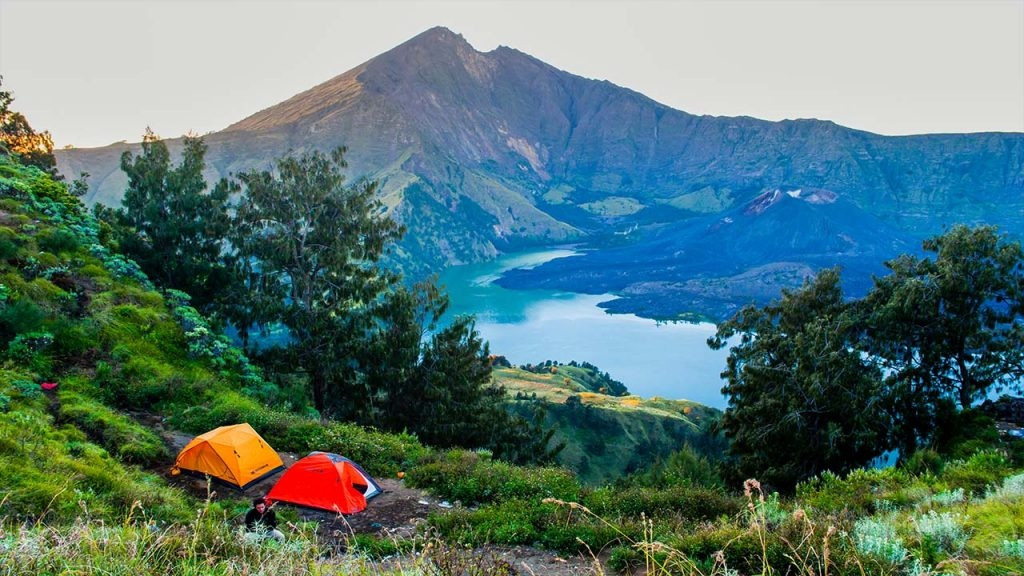
Gunung Rinjani (3,726m) is Indonesia's second highest volcano and one of the most rewarding — and demanding — trekking destinations in Southeast Asia. The 3–4 day summit trek passes through stunning alpine forest, a crater lake (Danau Segara Anak) at 2,008m with a small active volcanic cone rising from its centre, and a summit viewpoint with a panorama extending to Bali and Sumbawa on clear days. The mountain is sacred to the Sasak and Balinese Hindu communities.
- Expert tip: Trek from Senaru trailhead in the northwest (most popular) or Sembalun in the east (more gradual ascent to the crater rim). Hire a registered guide and porter — don't attempt solo. Post-earthquake trail improvements mean conditions are better than pre-2018, but some sections remain steep and exposed. Bring warm layers for above-treeline nights (temperatures drop to 5–10°C).
| Practical Info | Details |
|---|---|
| Trek fee (2026) | IDR 150,000/day (National Park entry) |
| Guide cost | IDR 400,000–600,000/day (mandatory for summit) |
| Porter cost | IDR 200,000–350,000/day (highly recommended) |
| How to reach | Fly to Lombok (LOP), then 2–3 hours to Senaru or Sembalun by car |
| Recommended duration | 3–4 days for summit trek |
13. Gili Islands, Lombok — The No-Motor Paradise:
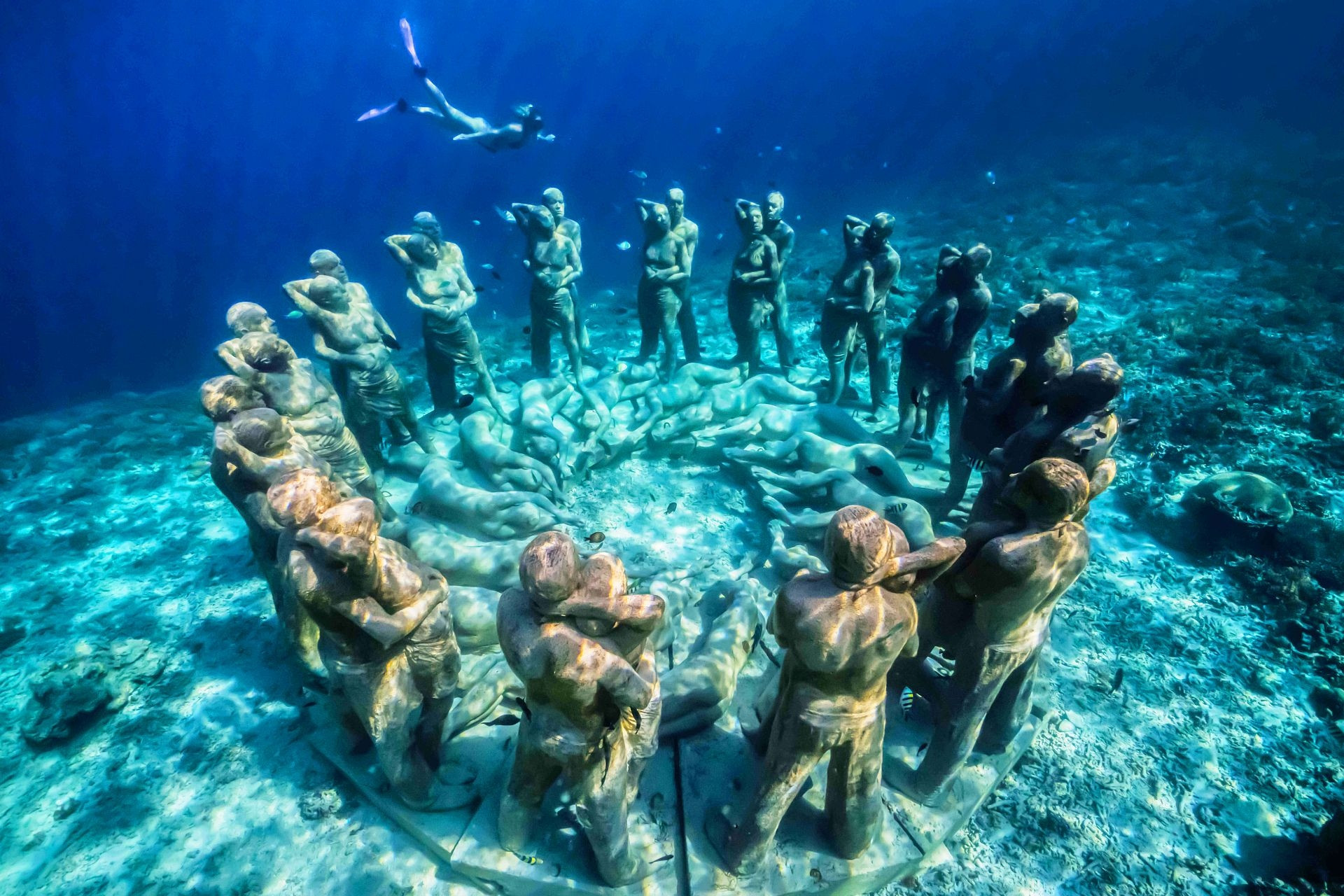
The three Gili Islands (Trawangan, Meno, Air) are Indonesia's most beloved beach destination for good reason: no motorbikes allowed (only bicycles and horse carts), vibrant coral reefs within snorkelling distance of the shore, and a pace of life that melts stress on contact. Gili Trawangan ("Gili T") is the liveliest. Gili Meno is the most romantic. Gili Air strikes a balance. All three have thriving sea turtle populations — snorkelling with turtles is virtually guaranteed.
- Expert tip: Snorkel the channel between Gili T and Gili Meno early morning (7–9am) for the best turtle encounters. For diving, the underwater statue garden near Gili T's northwest corner is a unique and haunting site. Fast boats from Bali take 1.5–2 hours and land directly on the island.
| Practical Info | Details |
|---|---|
| Fast boat from Bali | IDR 350,000–700,000 ($22–44) one way |
| Ferry from Bangsal (Lombok) | IDR 20,000 (~$1.30) |
| Dive courses | Around $350–$400 for PADI Open Water |
| Recommended duration | 3–5 days |
14. Yogyakarta, Central Java — Heart of Javanese Culture:
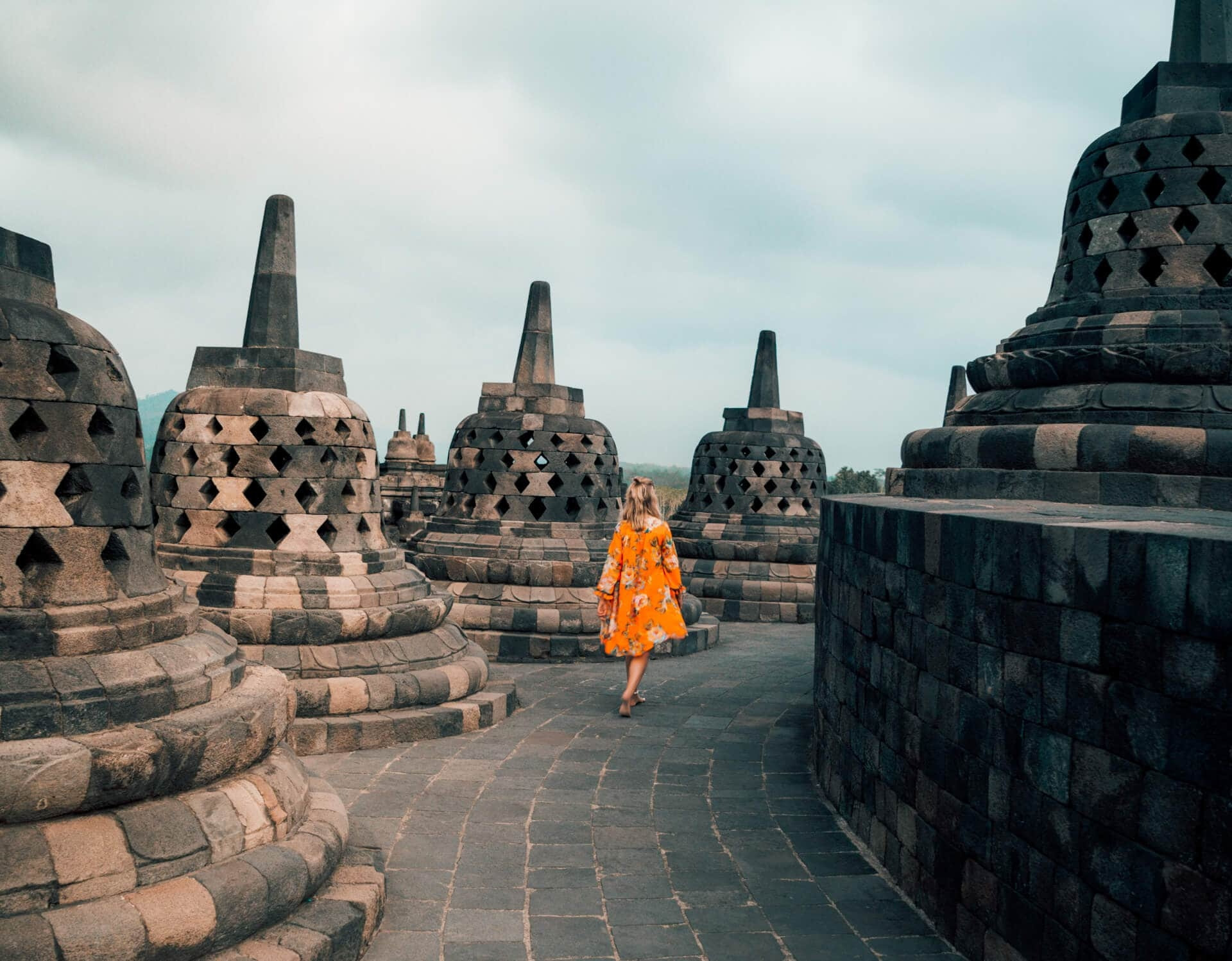
Yogyakarta (Jogja) is the cultural heartland of Java — the base for Borobudur and Prambanan visits and a destination worth exploring on its own for its royal palace (Kraton), batik workshops, silver craft villages, vibrant street food scene, and the nearby active volcano, Mount Merapi. It remains one of Indonesia's most genuinely authentic travel experiences — a city that has resisted the homogenisation that has affected Bali.
- Expert tip: Spend a morning at the Kraton palace complex (IDR 20,000/person), an afternoon cycling through the batik district of Kotagede, and an evening at Alun-Alun Kidul to try the "blindfold tree" tradition. The Gudeg Yu Djum warung near the Kraton is famous for its traditional jackfruit stew — a must-try Jogja dish.
| Practical Info | Details |
|---|---|
| Kraton entry fee | IDR 20,000 (~$1.30) |
| How to reach | Fly to Yogyakarta (JOG) or 8 hours by overnight train from Jakarta |
| Recommended duration | 2–4 days |
15. Wakatobi National Park, Southeast Sulawesi — Untouched Coral Kingdom:
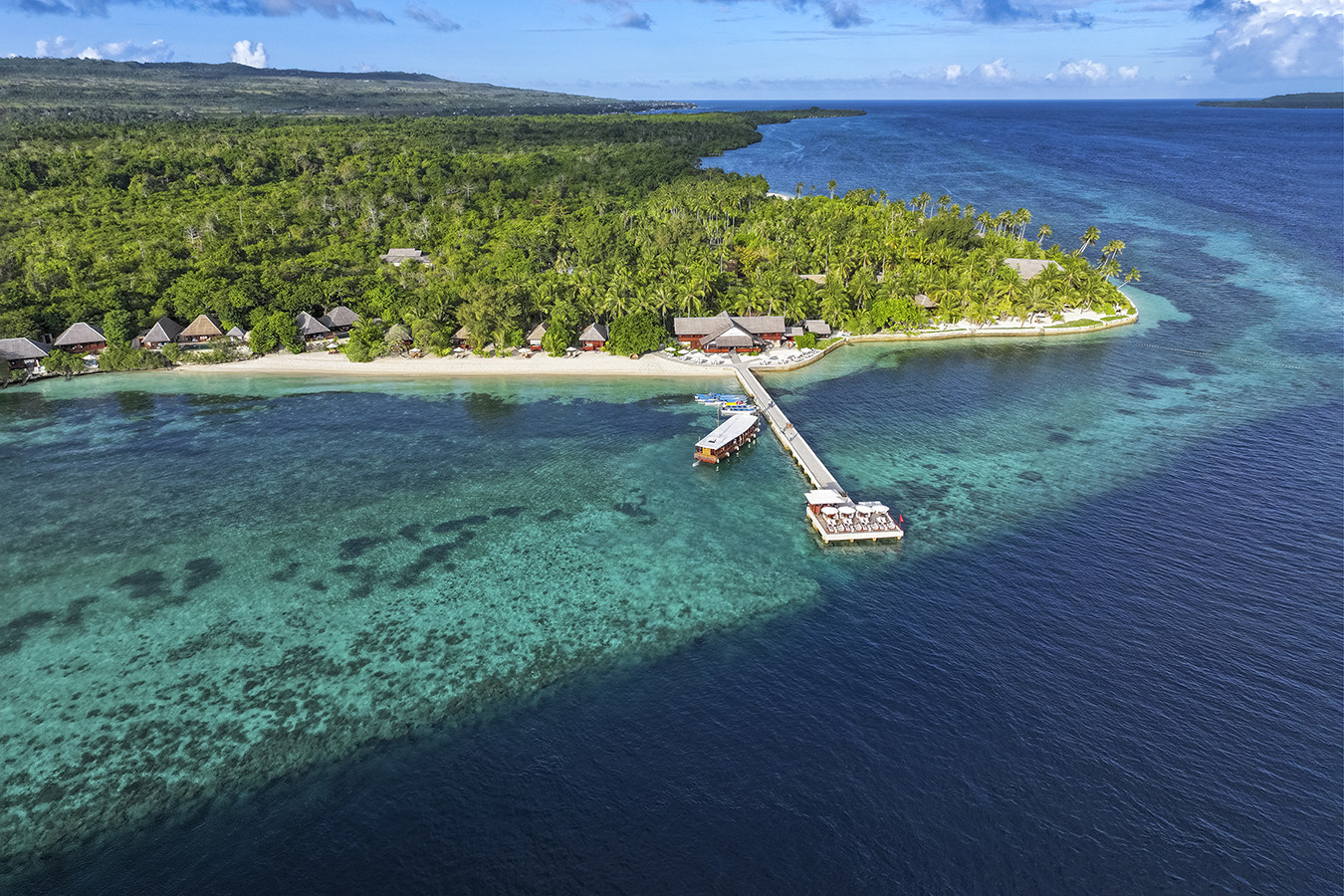
Wakatobi is considered by many marine biologists to be the finest diving in the world after Raja Ampat — and significantly less crowded. The park covers 1.39 million hectares of coral reef and is home to more than 750 coral species and 942 fish species. The name is an acronym of its four main islands: Wangi-Wangi, Kaledupa, Tomia, and Binongko.
- Expert tip: Most visitors fly directly to Wangi-Wangi (WNI) from Makassar on a charter service. The premium Wakatobi Dive Resort is world-famous but extremely expensive; independently booked dive operators on Wangi-Wangi and Tomia offer excellent value. Plan this as a dedicated dive trip rather than a passing stop.
| Practical Info | Details |
|---|---|
| How to reach | Fly to Wangi-Wangi (WNI) from Makassar (Sulawesi Air charter) |
| Recommended duration | 5–7 days minimum |
| Best dive season | October–May |
16. Flores & Kelimutu — The Three-Coloured Lakes:
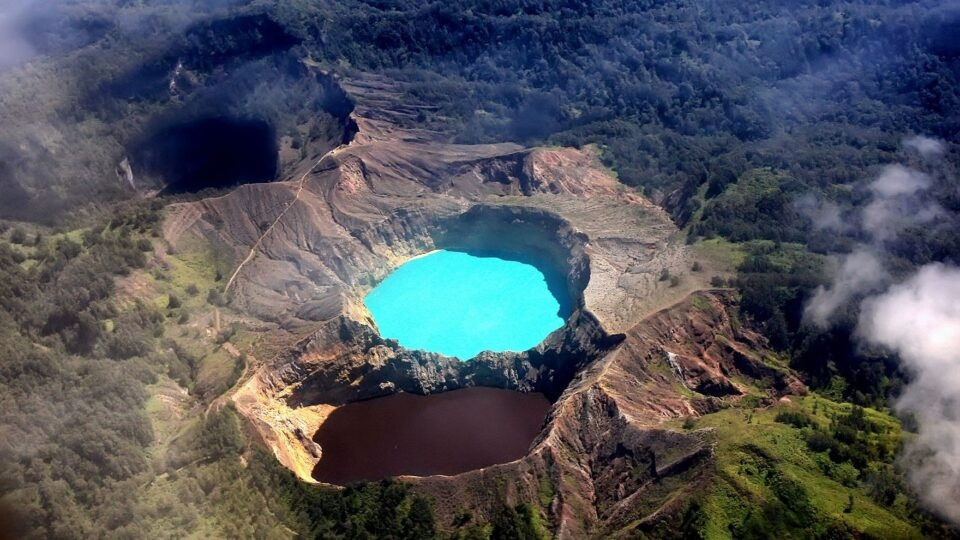
Kelimutu's three volcanic crater lakes — each a different colour due to varying mineral content — are one of the most genuinely unusual natural phenomena in the world. The lakes change colour over time: they have been white, blue, green, red, and black within living memory. Flores island itself has become one of Indonesia's most exciting emerging destinations, with Labuan Bajo (gateway to Komodo) at one end and the traditional villages of Bajawa and the Manggarai highlands in the middle.
- Expert tip: Drive to the Kelimutu crater viewpoint by 5:30am for sunrise — the colour contrast between the lakes is most vivid in early morning light. Allow 2–3 days to explore Flores beyond Komodo access: the traditional Ngada villages near Bajawa, the dramatic Cunca Wulang canyon, and the Riung 17 Islands marine park are all excellent.
| Practical Info | Details |
|---|---|
| Kelimutu entry | IDR 30,000 (~$2) per person |
| How to reach | Fly to Ende (ENE) for Kelimutu, or Labuan Bajo (LBJ) for Komodo |
| Recommended duration | 3–4 days for Flores overall |
17. Baliem Valley, Papua — Ancient Highland Culture:
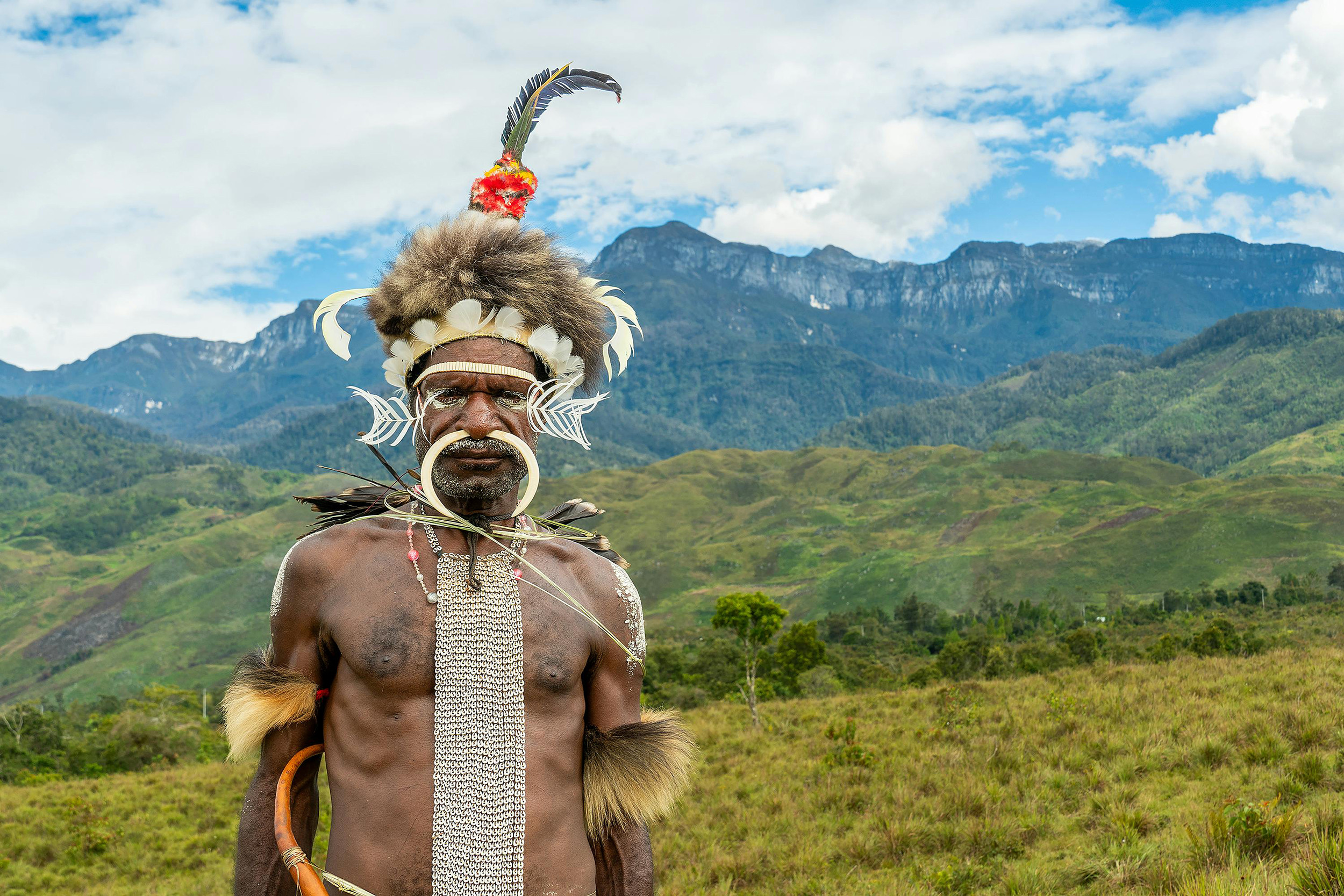
The Baliem Valley in the Papua Highlands is one of the most remote and extraordinary destinations in all of Indonesia. The Dani people, who lived here with minimal outside contact until the 1930s, maintain a tradition of dress, agriculture, and ceremony that is unlike anything else in the Indonesian archipelago. The valley itself — a fertile green bowl at 1,600m surrounded by mountains — is stunning.
- Expert tip: Fly to Wamena from Jayapura (a remote Papua city accessible from Jakarta). Hire a local guide immediately — navigation and cultural context require local knowledge. The annual Baliem Valley Festival (usually August) showcases traditional warrior competitions, pig feasts, and traditional dress, and is worth planning your trip around.
| Practical Info | Details |
|---|---|
| How to reach | Jayapura (DJJ) from Jakarta, then charter/Twin Otter flight to Wamena |
| Best time (festival) | August |
| Recommended duration | 5–7 days |
18. Ujung Kulon National Park, West Java:
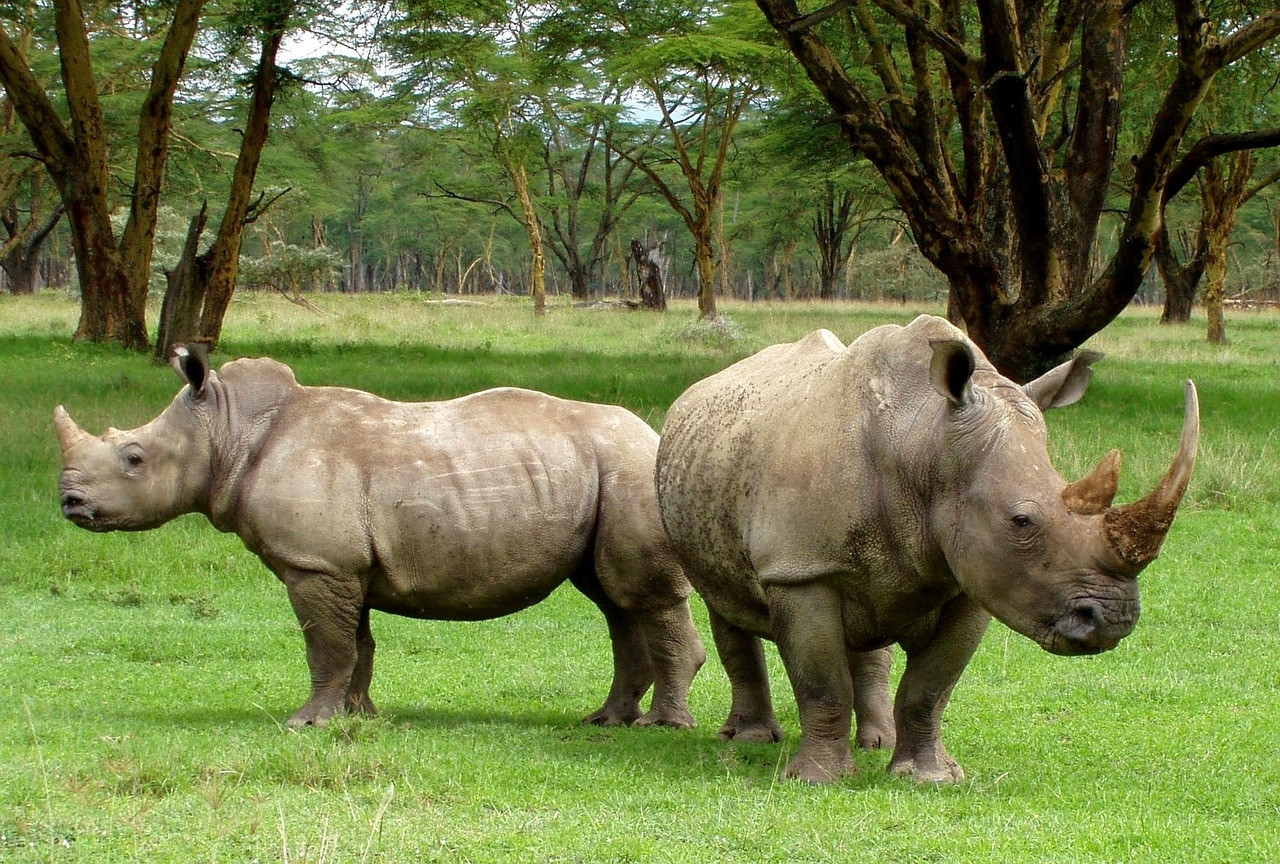
The last refuge of the Javan rhinoceros — one of the rarest large mammals on earth, with fewer than 80 individuals remaining — Ujung Kulon is a UNESCO World Heritage Site of global conservation significance. The park protects the last significant lowland rainforest in Java and also offers stunning beaches, the Krakatoa volcano visible on the horizon, and jungle trekking through terrain that feels entirely primeval.
- Expert tip: Access requires a multi-day organised trek (no independent entry). Book through a certified operator in Jakarta or Serang. Don't expect to see a Javan rhino — they are genuinely critically endangered and extremely rare to spot — but the park experience of pristine jungle, wildlife, and isolation is extraordinary regardless.
| Practical Info | Details |
|---|---|
| How to reach | Carita, West Java; boat to park entrance (3 hours) |
| Recommended duration | 3–5 days |
19. Kerinci Seblat National Park, West Sumatra:
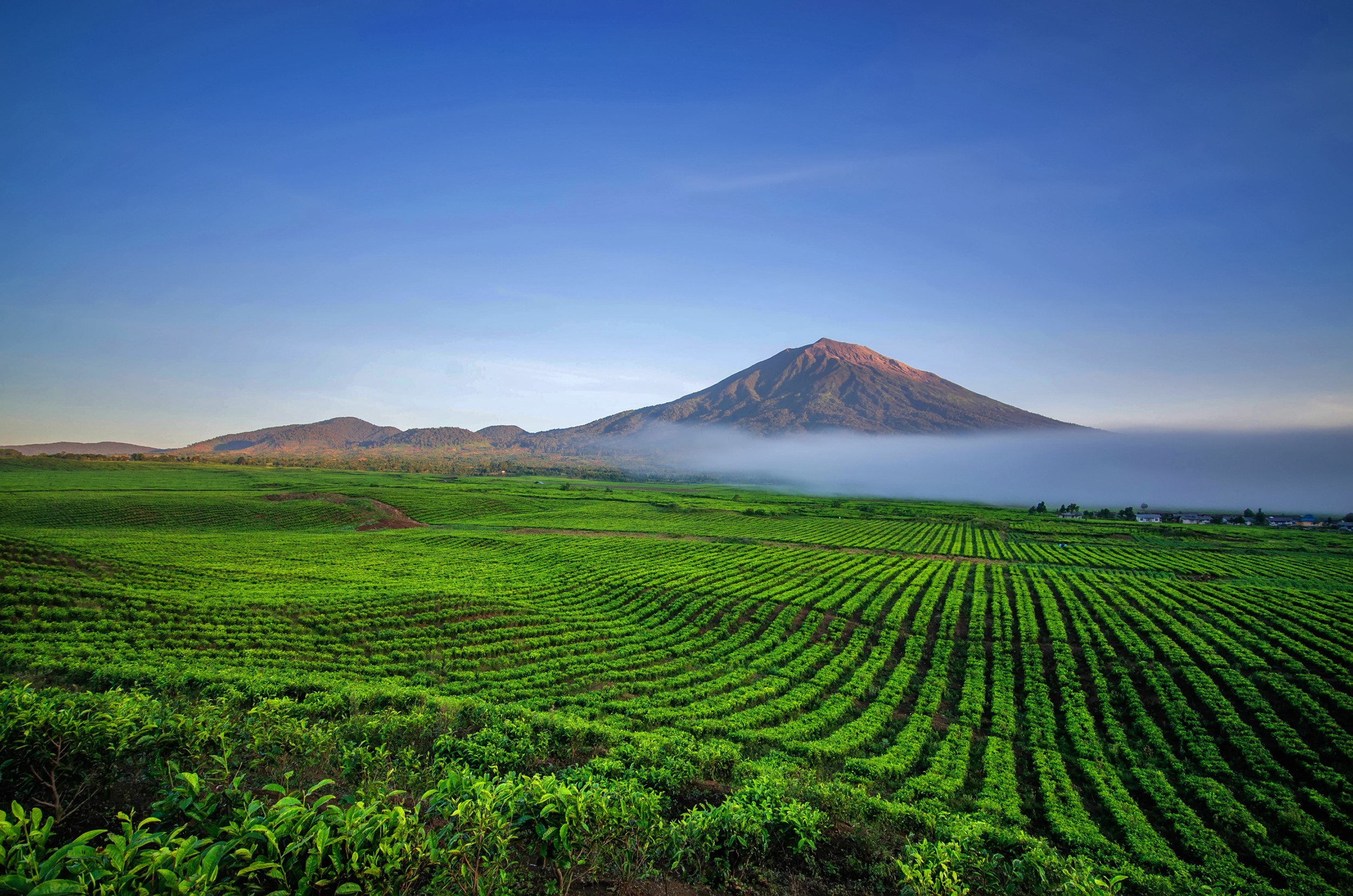
Indonesia's largest national park covers 13,750 km² and is the last great refuge of the Sumatran tiger, Sumatran rhinoceros, and Sumatran elephant. The park centres on Mount Kerinci (3,805m) — the highest volcano in Indonesia and second highest peak in Southeast Asia. Trekking here means rainforest, hornbills, gibbons, and the remote, wild feeling that much of Indonesia has lost.
| Practical Info | Details |
|---|---|
| How to reach | Fly to Padang (PDG), then 5–6 hours to Kersik Tuo (trailhead) |
| Park entry fee | IDR 150,000 per person |
| Recommended duration | 4–6 days for summit trek |
20. Bali — The Island of the Gods:

Bali is ranked #1 travel destination for 2026 in Tripadvisor's Travellers' Choice Awards. No list of Indonesia's attractions is complete without Bali — the island that introduced Indonesia to the world and continues to justify its reputation as one of the greatest travel destinations on earth. But Bali rewards depth: beyond Kuta's beach clubs and Seminyak's restaurants lie Ubud's rice terraces, the spiritual complexity of hundreds of active temples, the surf breaks of Uluwatu and Canggu, the hill station cool of Munduk and Bedugul, and the extraordinary underwater world around Nusa Lembongan and Nusa Penida.
- Expert tip: Bali is big enough that your experience is entirely determined by where you base yourself. Canggu/Seminyak for nightlife and surfing. Ubud for culture and rice terraces. Uluwatu for cliff temples and world-class surf. Amed for diving and a relaxed east-Bali pace. Don't make the mistake of spending your whole trip in Kuta — it is the least representative part of the island.
| Practical Info | Details |
|---|---|
| Visa | e-VOA: $35, 30 days, extendable once |
| Airport | Ngurah Rai International (DPS), Denpasar |
| Best time to visit | May–June, September–October |
| Daily budget (mid-range) | $80–$150/day per couple |
Indonesia Travel Planning Guide (2026):
Best Time to Visit Indonesia:
| Season | Months | Conditions | Recommended Regions |
|---|---|---|---|
| Dry season | May–September | Clear skies, minimal rain, peak crowds Jul–Aug | Bali, Java, Lombok, Komodo, Flores |
| Shoulder season | April, October | Excellent — warm, fewer crowds, good value | All regions |
| Wet season | November–March | Rain (afternoon showers), lush scenery, low prices | Bali (still fine), avoid Komodo/Flores |
| Diving season (Raja Ampat) | October–April | Best visibility, calm seas | Raja Ampat, Wakatobi |
Our recommendation: May–June and September–October offer the best balance of dry weather, manageable crowds, and competitive hotel rates. July–August is excellent but bring maximum advance bookings and a higher budget.
How to Get to Indonesia:
By air: Jakarta's Soekarno-Hatta International Airport (CGK) is the main hub, with direct flights from most major Asian cities, the Middle East, Europe, and Australia. Bali's Ngurah Rai Airport (DPS) offers direct flights from Australia, Singapore, Kuala Lumpur, Tokyo, and Seoul.
Domestic travel: Indonesia's domestic aviation network is extensive. Lion Air, Citilink, and Batik Air connect all major islands. Book early for best prices — routes to Raja Ampat, Labuan Bajo, and Wamena sell out weeks ahead in peak season.
Visa Information (2026):
Citizens of 102 countries can obtain an e-Visa on Arrival (e-VOA):
- Cost: USD $35 (paid online at molina.imigrasi.go.id)
- Duration: 30 days, extendable once for additional 30 days
- Requirement: Passport valid for 6+ months from arrival date
- Citizens of some countries receive visa-free entry for up to 30 days — check the official list at imigrasi.go.id
Prices and rules verified May 2026. Always confirm current requirements before travel.
Daily Budget Breakdown (2026):
| Category | Budget | Mid-Range | Luxury |
|---|---|---|---|
| Accommodation | $15–30 | $50–120 | $200–500+ |
| Food | $8–15 | $25–50 | $60–150+ |
| Local transport | $5–10 | $15–30 | $40–100 |
| Activities | $10–20 | $30–70 | $80–200+ |
| Daily total (couple) | $76–150 | $240–540 | $760–1,900+ |
Is Indonesia Safe for Tourists?
Indonesia is generally safe for tourists in 2026. The main things to be aware of:
- Petty theft: Common in crowded tourist areas in Bali (Kuta, Seminyak, Ubud markets). Keep bags close and use hotel safes.
- Volcanic activity: Indonesia has 127 active volcanoes. Check PVMBG (Badan Geologi) alert levels before trekking active volcanoes. Mount Merapi and Krakatoa have alert level systems that are regularly updated.
- Traffic: Indonesia's roads, especially in Bali, are congested and accident rates are high. Ride motorbikes only if experienced; hire a driver for longer journeys.
- Water: Do not drink tap water. Bottled water is cheap and universally available.
- Health: Consult a travel medicine clinic before travel for vaccinations (typhoid, hepatitis A, rabies for rural areas) and malaria prophylaxis for remote areas like Raja Ampat and Papua.
Suggested Indonesia Itineraries:
2 Weeks: Classic Indonesia
- Days 1–5: Bali (Ubud 3 nights, Seminyak/Uluwatu 2 nights)
- Days 6–8: Yogyakarta + Borobudur + Prambanan
- Days 9–12: Flores + Komodo (Labuan Bajo base, 2-day boat tour)
- Days 13–14: Return to Bali for departure
10 Days: Bali + Komodo
- Days 1–5: Bali (Ubud + Seminyak + Nusa Penida day trip)
- Days 6–10: Labuan Bajo + Komodo National Park boat tour
2 Weeks: Diver's Indonesia
- Days 1–2: Bali (transit, Nusa Penida dive day)
- Days 3–9: Raja Ampat (liveaboard or resort)
- Days 10–14: Wakatobi (fly via Makassar)
FAQ: Indonesia Tourist Attractions
Q. What is Indonesia most famous for?
Indonesia is most famous for Bali's rice terraces and temples, Borobudur (the world's largest Buddhist temple), Komodo dragons, Raja Ampat's unmatched marine biodiversity, and over 17,000 islands spanning a distance wider than the United States.
Q. What is the best time to visit Indonesia?
May to September is the dry season and the best overall time to visit. For Bali and Java, April–June and September–October offer excellent weather with fewer tourists than peak season. Raja Ampat's diving season runs October to April.
Q. Do I need a visa for Indonesia?
Citizens of 102 countries can obtain an e-Visa on Arrival (e-VOA) at $35 for 30 days, extendable once. Check imigrasi.go.id for current country eligibility. Information current as of May 2026.
Q. How many days do I need to see Indonesia?
10–14 days covers one region well. 3–4 weeks lets you combine two or three regions meaningfully. Indonesia rewards time — don't try to see everything in one trip.
Q. What is the best island in Indonesia?
Bali is the best all-round island for first-time visitors. Lombok is a quieter Bali alternative with excellent trekking. Raja Ampat is the best for divers and nature lovers. Komodo is the best for wildlife.
Q. Is Indonesia safe for tourists in 2026?
Generally yes. The main risks are petty theft in tourist areas, traffic accidents (especially on motorbikes), and volcanic activity near active volcanoes. Always purchase travel insurance and check volcano alert levels before trekking.
Q. How much does it cost to visit Komodo National Park in 2026?
Entry costs IDR 3,750,000 (~$230) per person for foreigners, including a mandatory ranger guide. Most visitors access the park via a 2–3 day boat tour from Labuan Bajo costing $150–$400/person.
Q. What is the cheapest way to travel between Indonesia's islands?
Book domestic flights in advance with Lion Air, Citilink, or Batik Air — inter-island routes can be as low as $30–$60 when booked weeks ahead. Ferries are cheaper but take much longer.






{{item.get_author.first_name}} {{item.get_author.last_name}}
Level 7
5 Photos
36 Reviews
{{item.comment_txt}}
{{item_reply.get_author.first_name}} {{item_reply.get_author.last_name}}
@ {{item_reply.reply_to}}, {{item_reply.reply_txt}}