

Fasolada, a white bean soup, holds the informal title of Greece's national dish more consistently than any other food. Moussaka, souvlaki, and gyros are the 3 dishes most visitors try first. Street food (souvlaki, gyros, koulouri) runs 1 to 4 euros; a full taverna meal typically costs 12 to 18 euros per person. Athens' Varvakios Market, running since 1886, remains the best single stop for seeing Greek food culture up close.
Most Greek food lists repeat the same words next to every single dish: authentic, must-try, delicious. None of that tells you why moussaka has a béchamel layer and Turkish versions don't, or why kleftiko is cooked sealed in parchment paper, or which of these 30 dishes actually costs 2 euros versus which one runs closer to 15.
This guide covers all 30 with the specific facts that matter: real history where it exists, what each dish actually costs, and where in Greece you're most likely to find it done well. Organized by category, mains and one-pot dishes first, then street food, pies, dips, soups, seafood, salads, and finally desserts, closing with a real look at the markets where Greeks themselves shop for these ingredients.
Mains and One-Pot Dishes:
These 6 form the backbone of a Greek Sunday table, slow-cooked, meant for sharing, and rarely rushed.
Moussaka:

Moussaka layers fried eggplant, spiced ground beef in tomato sauce, and béchamel, baked until the top browns and sets. The béchamel layer is a specifically Greek addition, credited to chef Nikolaos Tselementes in the 1920s, who trained in French kitchens and folded the French technique into an older regional eggplant and meat dish that had existed across the Ottoman-influenced Mediterranean for centuries. Versions in Turkey, the Balkans, and the Levant generally skip béchamel entirely, relying instead on a simpler tomato-based eggplant and meat stew. Greek homes often add a layer of sliced potato beneath the eggplant to bulk out the dish and stretch it further across a large family gathering. Moussaka reheats well and is commonly made a day ahead, since the flavors settle and deepen overnight before serving.
Highlights
- Béchamel layer added in the 1920s by chef Nikolaos Tselementes
- Often includes a hidden potato layer under the eggplant
- Tastes better the next day, commonly made ahead
Cost
9-13 euros at a sit-down taverna; home versions cost considerably less to make given the ingredients.
Where to eat
Nearly every taverna in Greece serves a version; look for one advertising it as a daily special (piato tis imeras), not a pre-made display dish sitting under a heat lamp.
Pastitsio:

Pastitsio bakes tube-shaped pasta between a layer of spiced ground beef in tomato sauce and a thick béchamel top, similar in structure to moussaka but built on pasta, not eggplant. Greeks sometimes call it "Greek lasagna," though the specific bucatini-style pasta and the single thick béchamel layer, not alternating sheets, set it apart from an Italian lasagna's construction. The dish shares moussaka's béchamel history, both dishes picked up the topping around the same period in the early 20th century as French culinary technique spread through Athens' restaurant kitchens. Pastitsio holds its shape well when sliced, making it a common choice for buffet-style gatherings and church festivals where large trays need to serve dozens of people at once.
Highlights
- Uses tube-shaped bucatini-style pasta, not lasagna sheets
- Shares moussaka's early-20th-century béchamel history
- Common at large gatherings and church festivals for its clean slicing
Cost
8-12 euros at a taverna.
Where to eat
Family-run tavernas and neighborhood magiria (casual canteen-style restaurants) typically make a better version than tourist-focused restaurants near major sights.
Giouvetsi:

Giouvetsi simmers beef, lamb, or chicken with orzo in tomato sauce inside a clay pot, called a giouvetsi, which gives the dish its name, until the orzo absorbs the meat's juices and turns deep red. Kefalotyri or Parmesan gets grated over the top just before serving, melting slightly into the hot orzo. It's a genuine one-pot meal, common at Sunday family lunches, not tavernas built for tourists, since the clay pot needs real oven time and doesn't suit a fast-turnover kitchen. Lamb giouvetsi specifically tends to appear around Easter, when lamb is the centerpiece of the holiday table across Greece, though beef and chicken versions are eaten year-round without any seasonal association.
Highlights
- Named directly after the clay pot it's cooked in
- Lamb version associated with Easter specifically
- Orzo absorbs the meat's juices, not served plain
Cost
10-14 euros.
Where to eat
Home-style tavernas that cook to order, not pre-plate dishes, since giouvetsi needs real oven time to develop properly.
Kleftiko:
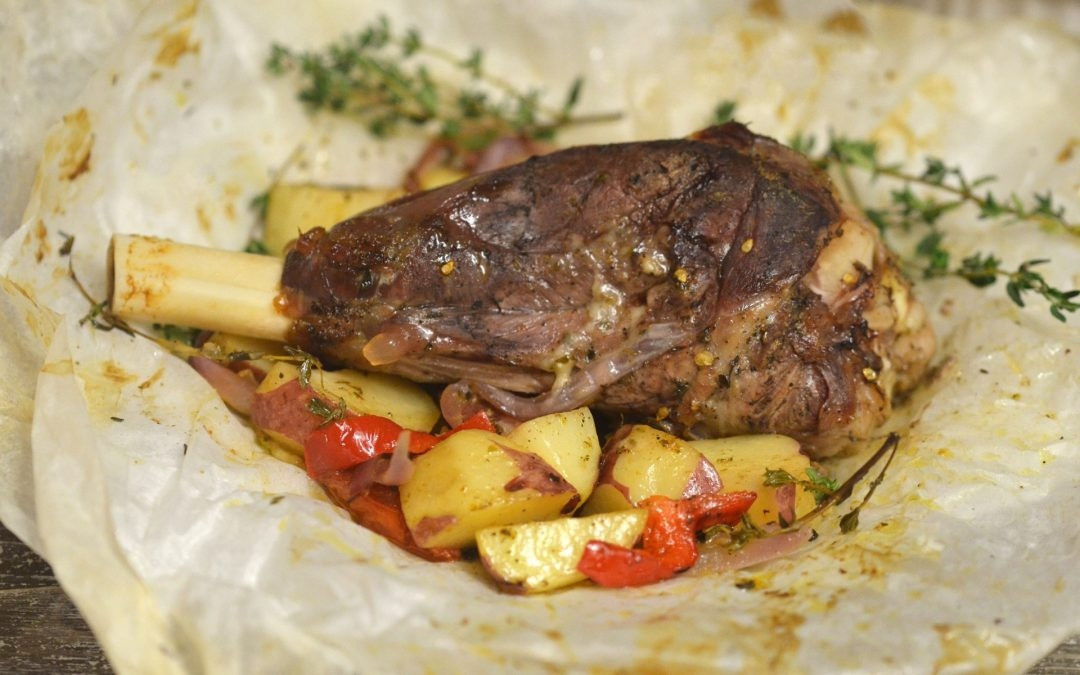
Kleftiko traces to the klephtes, armed Greek fighters who resisted Ottoman rule from the mountains before and during the 1821 War of Independence. Cooking lamb sealed inside an underground pit kept smoke and smell from giving away their position to Ottoman patrols searching the hillsides. The modern version replaces the pit with sealed parchment paper or a covered clay pot, but the sealed, slow-cook principle is unchanged, trapping steam and juices around the lamb for hours until the meat falls apart at a fork's touch. It's also called exochiko, meaning "from the countryside," a name used more often in regions like the Peloponnese and Crete where the dish's rural, resistance-era origins carry the strongest local pride.
Highlights
- Named after klephtes, real Ottoman-era resistance fighters
- Sealed cooking method traces directly to hiding smoke from patrols
- Also called exochiko ("from the countryside") in rural regions
Cost
13-18 euros, among the pricier mains on this list given the lamb and cooking time involved.
Where to eat
Grillhouses (psistaries) and rural tavernas in the Peloponnese and Crete tend to take the sealed-cooking method most seriously.
Yemista:
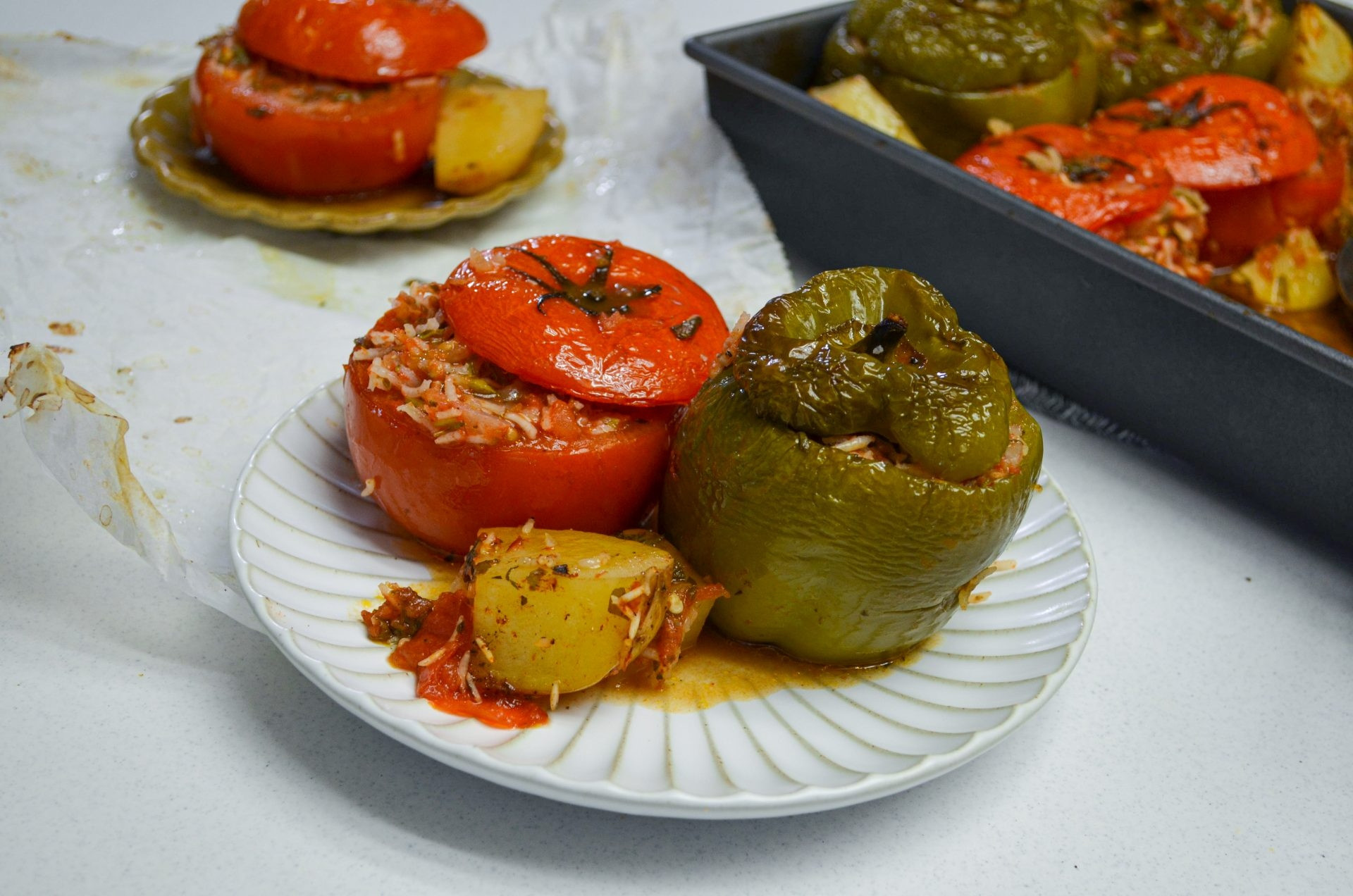
Yemista hollows out tomatoes, peppers, zucchini, or eggplant and fills them with rice, herbs, and sometimes ground meat, then bakes them slowly until the vegetables soften and lightly brown on top. The vegetarian, rice-only version is common during Orthodox fasting periods, when meat is set aside for weeks at a time across the Greek calendar, particularly the 40 days before Easter. Every Greek household seems to have its own specific herb blend, dill and mint are common, though some regions favor parsley or a touch of cinnamon in the rice filling for warmth. Leftover yemista, if any survives a family meal, is often eaten cold the next day, a texture many Greeks genuinely prefer to the freshly baked version.
Highlights
- Meat-free version tied directly to Orthodox fasting periods
- Herb blend varies significantly by household and region
- Often preferred cold the next day over fresh from the oven
Cost
8-11 euros.
Where to eat
Magiria (casual home-style canteens) and tavernas offering a daily-changing menu, since yemista needs long oven time and rarely appears on a fixed a la carte menu.
Ladera:
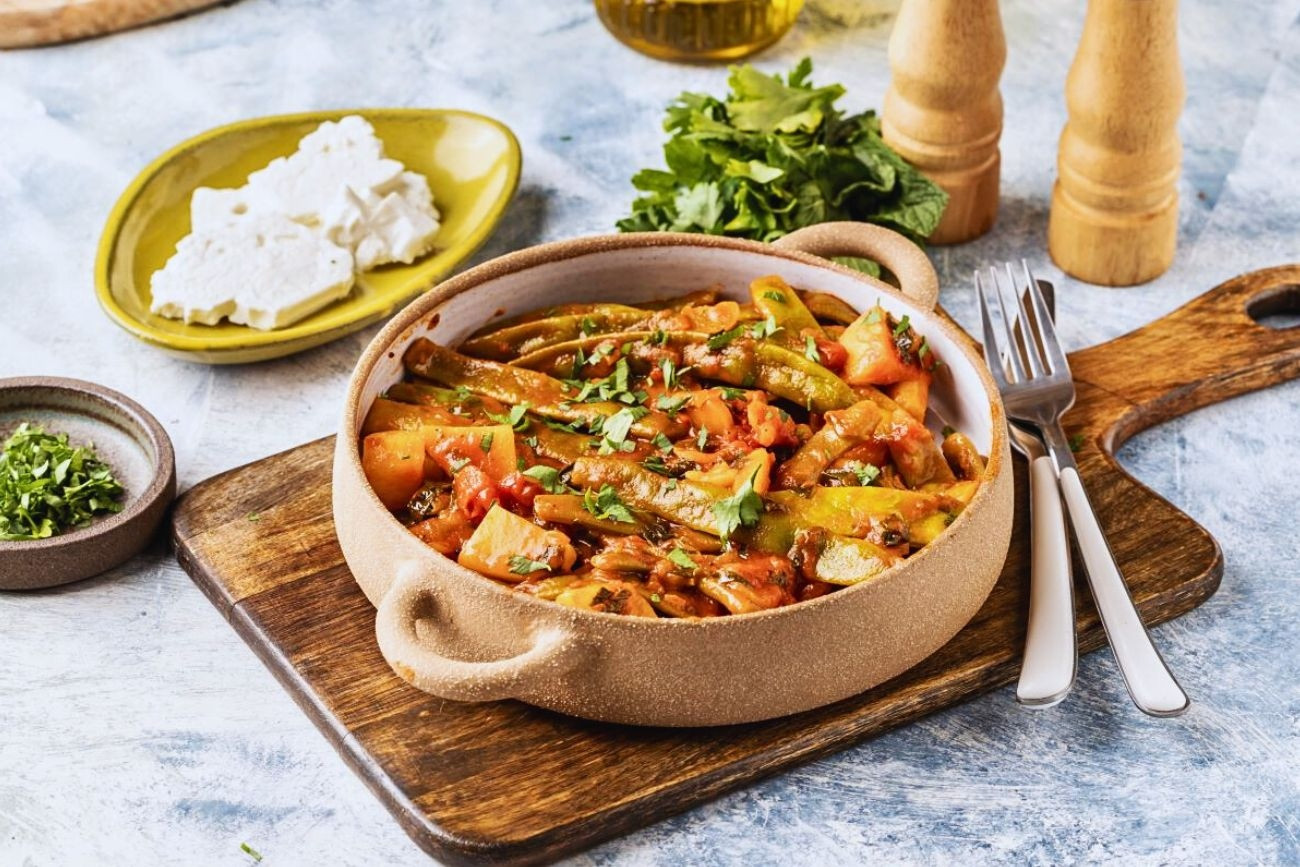
Ladera isn't 1 dish but a whole category, vegetables like green beans, okra, zucchini, and eggplant slow-cooked in a generous amount of olive oil with tomato, onion, and garlic until soft and deeply infused with the oil itself. The name comes directly from ladi, the Greek word for oil, a fitting label given how central the ingredient is to the cooking method, not just the flavor. Nearly every ladera dish is naturally vegan, no substitution required, since it was built that way from the start to satisfy Orthodox fasting rules that stretch across large parts of the calendar year. Fasolakia (green beans) and bamies (okra) are the 2 most commonly ordered ladera dishes at a typical taverna.
Highlights
- Name derives from ladi, Greek for "oil"
- Naturally vegan without any recipe adjustment
- Fasolakia (green beans) and bamies (okra) are the most common orders
Cost
7-10 euros.
Where to eat
Any taverna's daily specials board, since ladera dishes are typically cooked in bulk each morning and served at room temperature through the day.
Street Food and Quick Bites:
Greece's fastest, cheapest, and arguably most-eaten foods, sold from carts, souvlaki shops, and bakery windows, not sit-down tavernas.
Souvlaki:
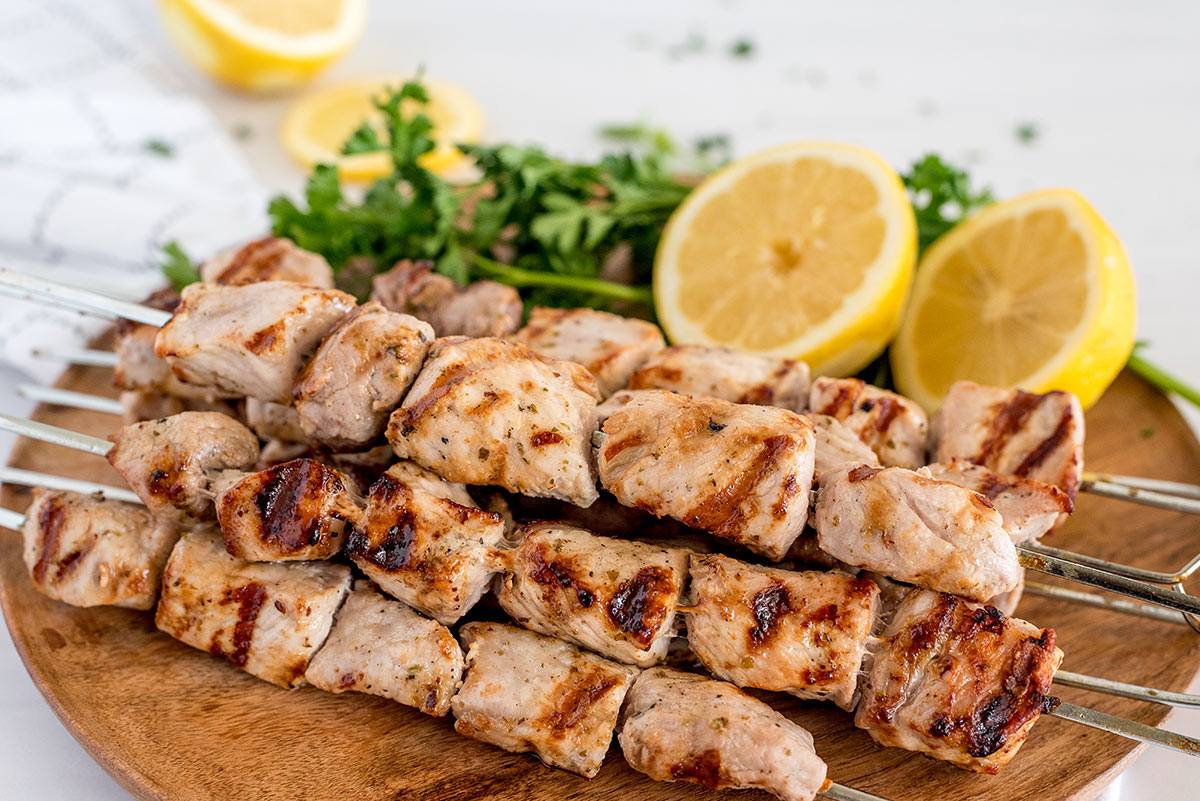
Souvlaki means "little skewer" in Greek, cubed pork or chicken grilled on a stick and typically wrapped in pita with tzatziki, tomato, onion, and fries. It's sold at dedicated souvlaki shops (souvlatzidika) found on nearly every commercial street in Greece, often with a handful of plastic stools out front, not a full seating area. Locals sometimes use "souvlaki" loosely to cover any pita-wrapped grilled meat, which is part of why visitors confuse it with gyros, though the actual skewer, still visible if you order it unwrapped as a plate, not a wrap, is the giveaway. A souvlaki plate (without pita, served with fries and salad on the side) costs a few euros more than the wrapped version and suits a sit-down meal better than a quick bite.
Highlights
- Skewered, not spit-roasted (see gyros for the distinction)
- Plate version (no pita) costs more than the wrap
- Sold at dedicated souvlatzidika on nearly every commercial street
Cost
2.50-4 euros per wrap; 8-12 euros for a full plate.
Where to eat
Any busy souvlatzidiko with a line of locals, not tourists, out front, generally the most reliable sign of quality and turnover.
Gyros:
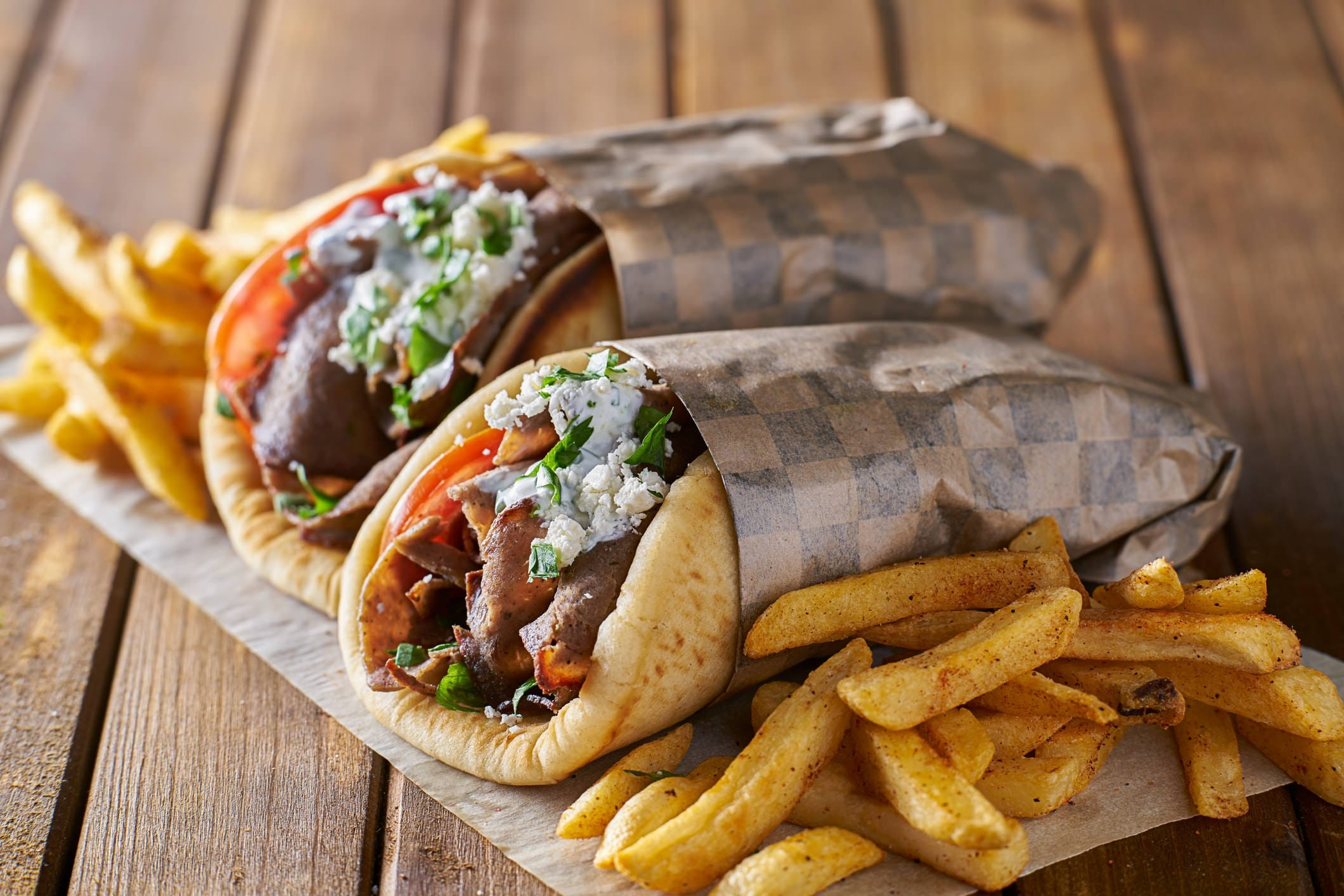
Gyros means "turn" in Greek, describing meat, usually pork, sometimes chicken, stacked and roasted vertically on a rotating spit, then sliced into thin strips as the outer layer cooks and caramelizes. It's served the same way as souvlaki, in pita with tzatziki, tomato, onion, and fries, which is the source of the frequent mix-up between the 2 despite the different cooking method. The vertical spit itself is usually visible through the shop window, turning slowly all day as the outer layer gets shaved off in real time for each order. A well-run gyros shop rebuilds its spit fresh each morning. Running the same meat cone for multiple days is a real warning sign, a genuine quality signal worth watching for.
Highlights
- Spit-roasted and sliced thin, distinct from souvlaki's skewer method
- Spit is usually visible turning in the shop window
- Fresh daily spit-building is a real quality signal
Cost
2.50-4 euros per wrap.
Where to eat
Shops with a visibly full, freshly stacked spit, not a thin, well-worn one late in the day.
Koulouri:

Koulouri is a ring-shaped bread coated in toasted sesame seeds, sold from carts and small kiosks across Greek cities, especially thick around Athens during the early morning commute when office workers grab one alongside a coffee. It's the closest thing Greece has to a grab-and-go breakfast, usually eaten plain, though some vendors now sell versions filled with cheese or chocolate spread aimed more at tourists than the traditional plain recipe. Athens alone is estimated to have hundreds of koulouri carts operating daily, most run by the same families and same corner locations for decades, part of what makes the bread feel like a genuine city institution, not a novelty snack.
Highlights
- Athens' standard morning commute snack
- Same family-run carts often hold the same corner for decades
- Filled versions (cheese, chocolate) exist but skip the traditional plain recipe
Cost
1-1.50 euros.
Where to eat
Any street cart near a metro station in central Athens; freshness matters more than the specific vendor.
Bougatsa:
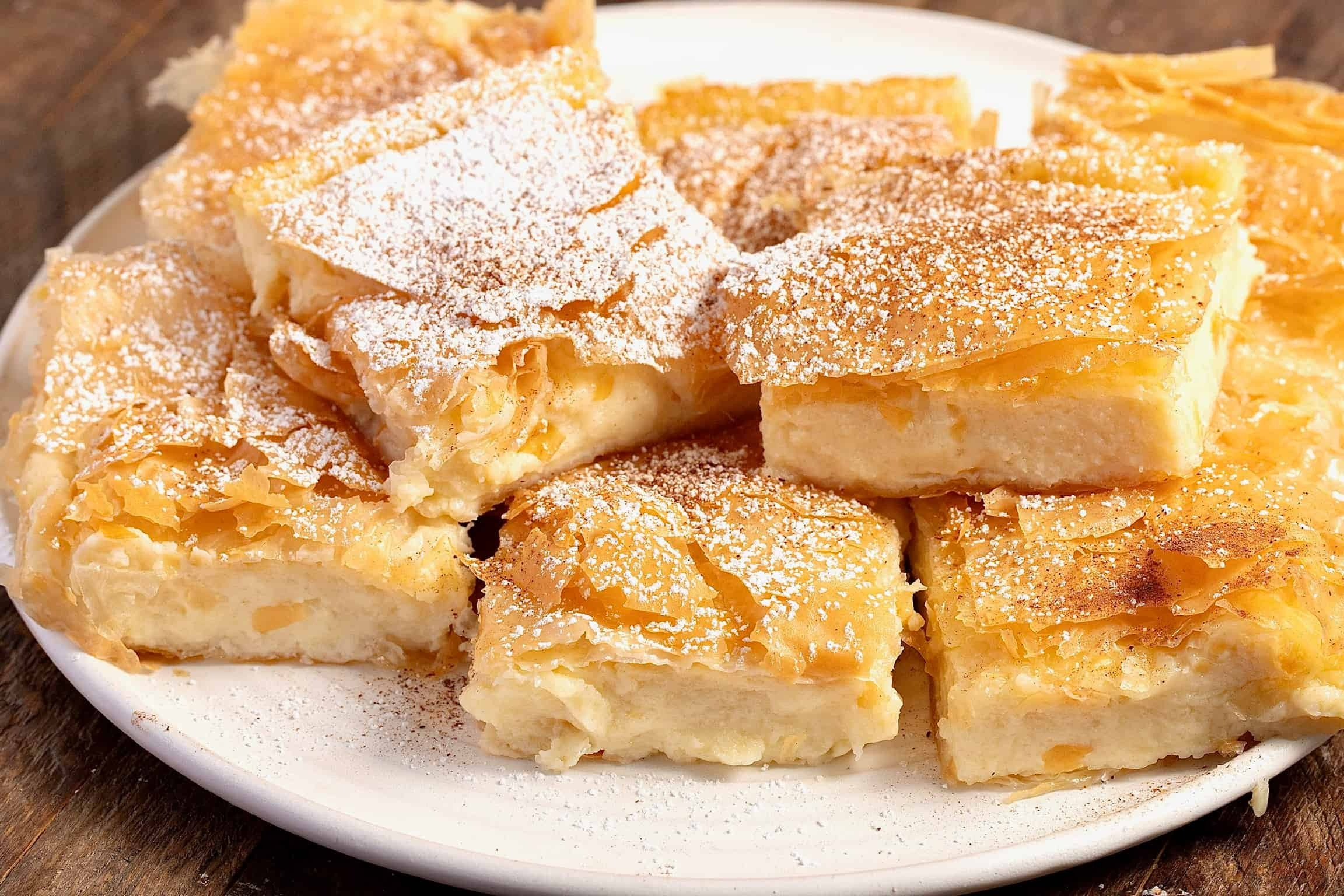
Bougatsa layers phyllo around a semolina custard filling, less sweet than a Western custard pastry, and gets dusted with powdered sugar and cinnamon after baking. Thessaloniki, in northern Greece, is generally credited as the dish's stronghold, sold hot from specialist bougatsa shops open from early morning through the entire day, some running since the early 20th century under the same family name. Savory versions filled with cheese or minced meat also exist and are treated as a completely separate order from the sweet custard version, worth specifying clearly when ordering since the 2 look similar from outside the pastry case. Bougatsa is traditionally eaten with a fork and knife despite looking like a handheld pastry, since the hot custard filling runs if picked up too early.
Highlights
- Thessaloniki's signature morning pastry
- Savory cheese or meat versions exist as a separate order
- Eaten with fork and knife, not by hand, while hot
Cost
2.50-4 euros.
Where to eat
A dedicated bougatsa shop in Thessaloniki, not a general bakery, since the custard-to-phyllo ratio varies significantly by specialist.
Savory Pies:
Phyllo-wrapped pies sold in bakeries, tavernas, and home kitchens throughout the day, not tied to any single meal.
Spanakopita:
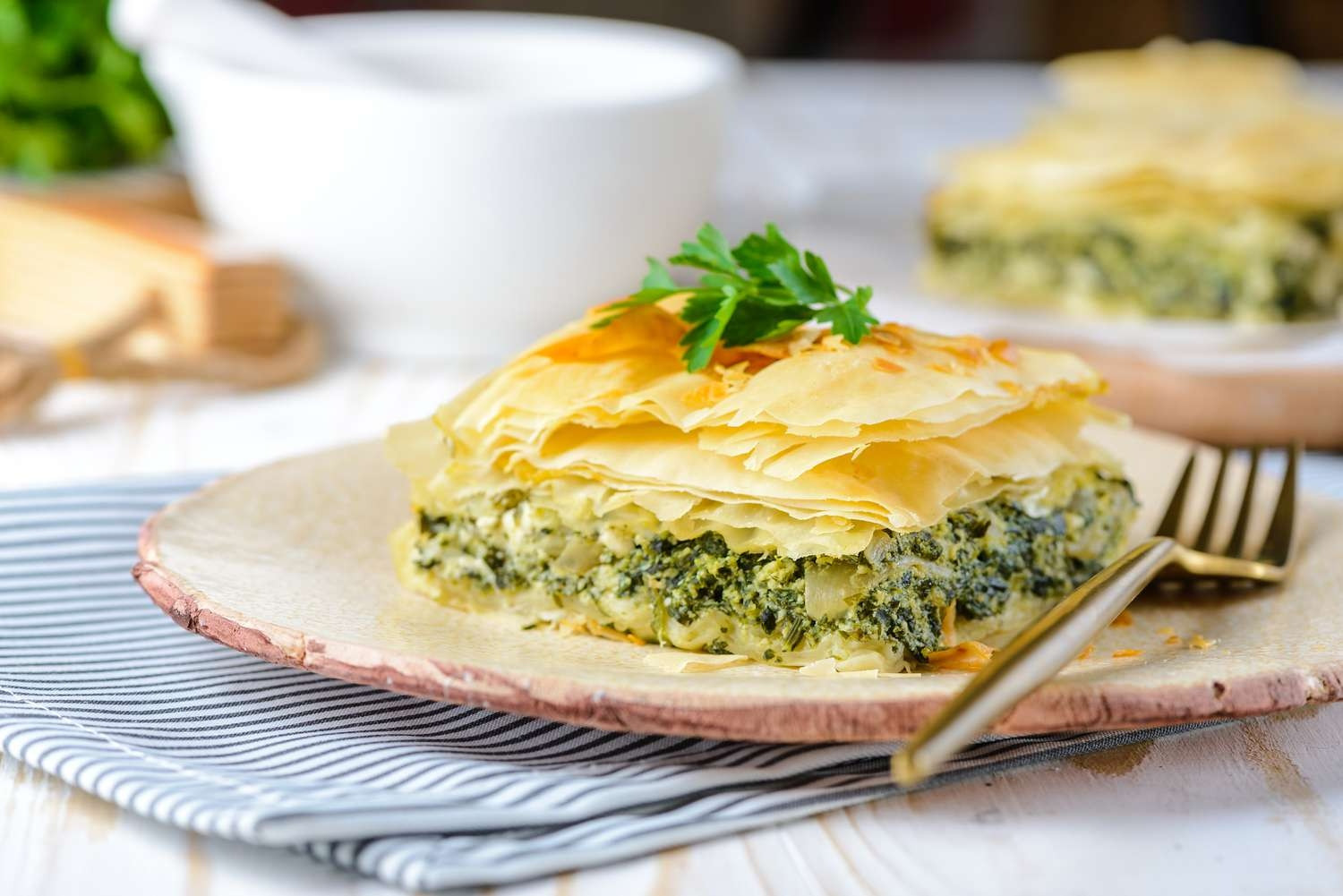
Spanakopita layers crisp phyllo around spinach, feta, onion, and herbs like dill, baked until golden and set in the middle. It's sold whole for a family meal or in single triangle-folded portions at bakeries for a quick snack, and both formats are equally common depending on whether it's headed for a dinner table or a lunch break. The ratio of spinach to phyllo varies noticeably by region, some versions run nearly all greens with just enough phyllo to hold it together, while others lean heavier on the pastry itself. Homemade versions often use hand-rolled phyllo, considerably thicker and chewier than the paper-thin store-bought sheets used in most bakeries and tavernas.
Highlights
- Sold whole or in single triangle-folded portions
- Spinach-to-phyllo ratio varies noticeably by region
- Homemade versions use thicker, hand-rolled phyllo
Cost
3-6 euros for a bakery portion; 7-10 euros for a full taverna serving.
Where to eat
Neighborhood bakeries (fournos), not tourist-area cafes, for a fresher, less oily version.
Tiropita:

Tiropita follows the same phyllo construction as spanakopita, dropping the spinach for a straight feta and egg filling, sometimes blended with ricotta or kefalotyri for a milder, creamier center. It's a standard breakfast item at Greek bakeries, often bought alongside a coffee on the way to work, and tends to sell out earlier in the morning than spanakopita at most fournos. Regional versions swap in different cheeses depending on what's locally produced, Cretan tiropita sometimes uses mizithra, a soft whey cheese, giving it a noticeably milder flavor than the sharper feta-based version found in Athens. Many bakeries sell tiropita and spanakopita side by side in the same display case, distinguished mainly by shape, a rounded or square fold for cheese versus a triangle for spinach, a visual shorthand regular customers learn quickly without needing to ask.
Highlights
- Feta and egg filling, no spinach
- Often sells out earlier in the morning than spanakopita
- Crete's mizithra-cheese version is noticeably milder than Athens' feta version
Cost
2.50-4 euros.
Where to eat
Any neighborhood bakery early in the morning, before the day's batch sells through.
Dips and Mezze:
Shared small plates meant for bread, ouzo, and a slow table, the backbone of any real Greek mezze spread.
Tzatziki:
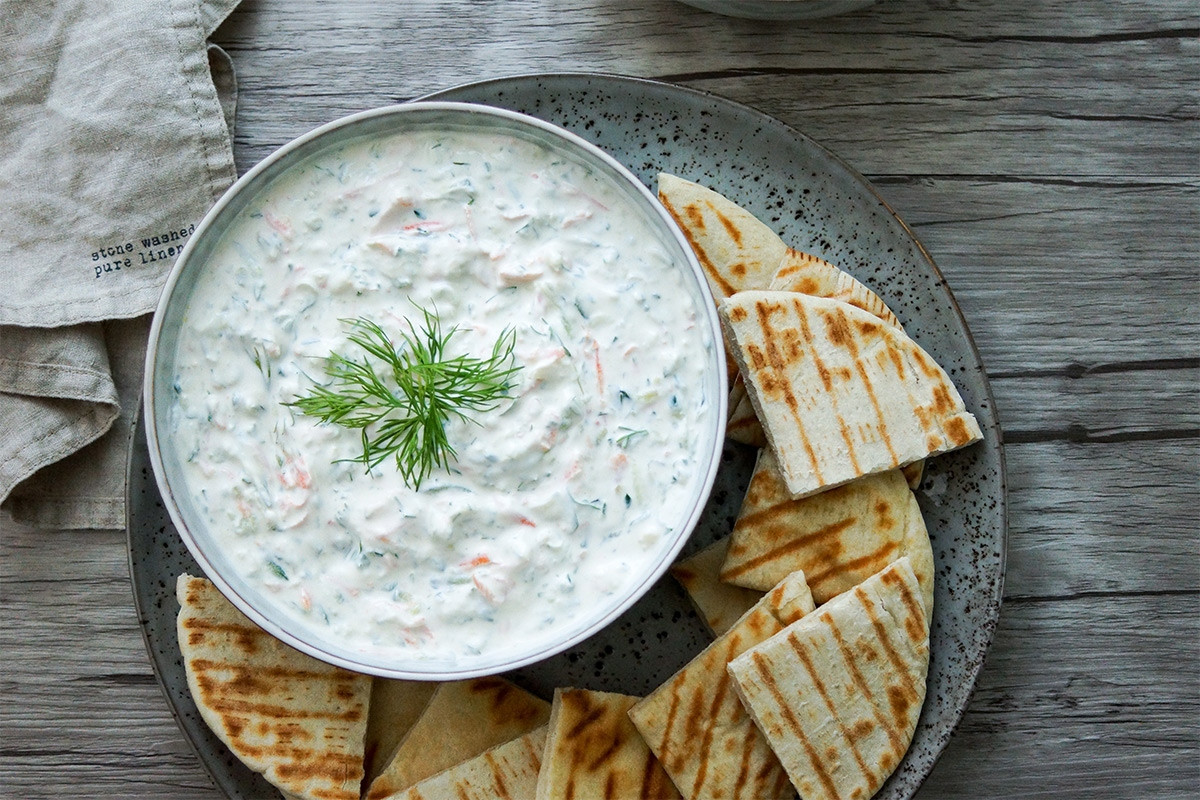
Tzatziki blends thick strained Greek yogurt with grated cucumber, garlic, olive oil, and a splash of vinegar or lemon, finished with dill or mint. It functions as both a dip for bread and a cooling counterpart to grilled meat, cutting through the richness of souvlaki or gyros in a way plain yogurt alone couldn't manage. Straining the yogurt is the step that separates a good tzatziki from a watery one, removing excess whey so the final dip holds its shape on a spoon. A watery tzatziki has skipped this step. Some regions add a touch more garlic than others; Cretan tzatziki, in particular, tends to run noticeably sharper than the milder versions common in Athens tavernas.
Highlights
- Made from strained (not regular) Greek yogurt
- Straining removes whey so the dip holds its shape
- Crete's version runs noticeably more garlic-forward than Athens'
Cost
2-3 euros as a side order.
Where to eat
Comes standard with most souvlaki and gyros orders; as a standalone mezze, any taverna serving a full mezze spread.
Melitzanosalata:
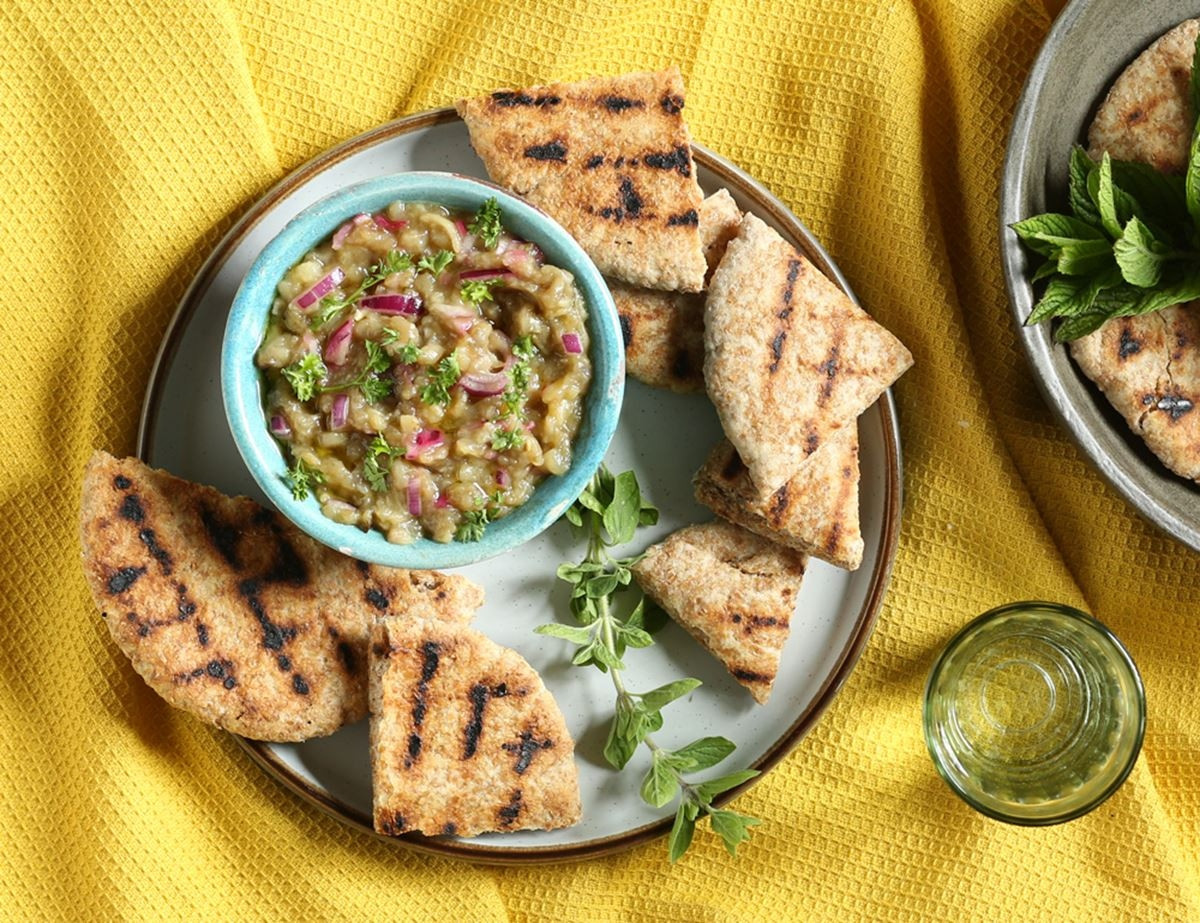
Melitzanosalata purees roasted eggplant with olive oil, garlic, and lemon juice or vinegar into a smoky dip, the smokiness coming directly from charring the eggplant's skin over an open flame or grill before peeling it. Its name, melitzana, traces back to a real historical mistranslation: Italian mela insana ("mad apple"), reflecting old European fears that eggplant, a nightshade relative, caused insanity. That belief died out centuries ago; the name simply stuck across both Italian and Greek. A well-known regional variant from Mount Athos, agioritiki, adds smoked Florina peppers and walnuts, giving it a noticeably different texture and a deeper, sweeter smokiness than the standard Athens version.
Highlights
- Name traces to a documented "mad apple" mistranslation
- Smokiness comes from charring the eggplant's skin directly over flame
- Mount Athos's agioritiki variant adds smoked peppers and walnuts
Cost
3-5 euros as a mezze.
Where to eat
Tavernas that char the eggplant over an open flame, not roast it in an oven; ask directly if unsure, the flavor difference is real.
Fava:
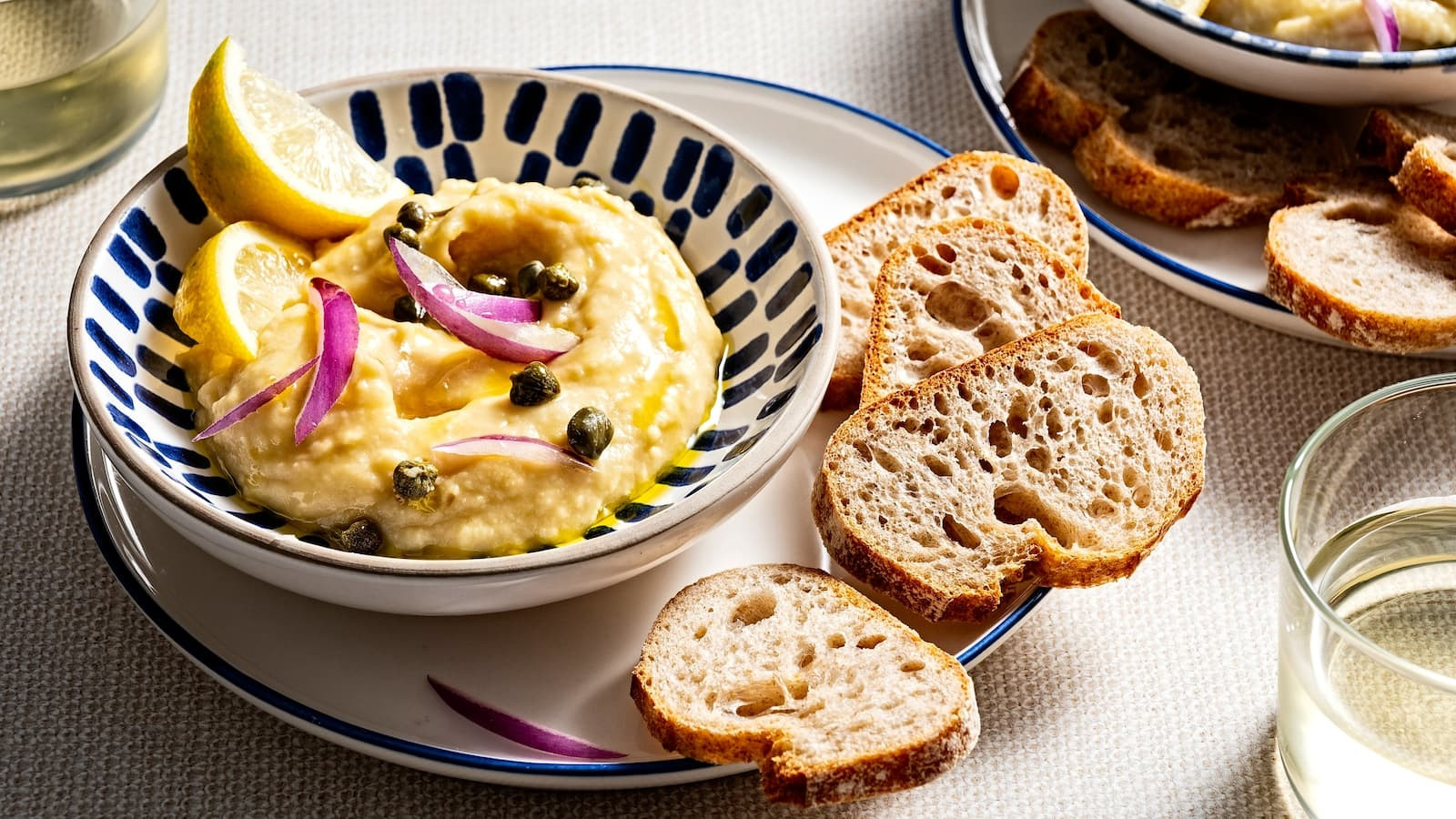
Fava purees yellow split peas, not fava beans despite the name, into a smooth dip, seasoned with olive oil, lemon, onion, and dill. Santorini is widely regarded as producing the best version, thanks to the island's specific volcanic soil, which locals credit for a sweeter, denser split pea grown almost nowhere else in Greece at the same quality. Santorini fava even carries a Protected Designation of Origin status within the EU, a legal recognition tying the crop specifically to that island's soil and growing conditions. Outside Santorini, fava is still widely available and made with split peas sourced from other regions, a perfectly good dip, just without the specific terroir claim.
Highlights
- Made from split peas, not fava beans, despite the name
- Santorini fava holds EU Protected Designation of Origin status
- Volcanic soil is credited for the island's denser, sweeter split pea
Cost
4-6 euros.
Where to eat
Santorini specifically, for the PDO version; elsewhere, any taverna's mezze menu.
Gigantes Plaki:

Gigantes plaki bakes giant butter beans in a tomato sauce with garlic, onion, and oregano until the beans turn creamy and the sauce thickens into something closer to a rich stew than a soup. It works equally as a mezze plate or a full vegetarian main, and stays naturally vegan without any recipe adjustment, a direct product of its roots in Orthodox fasting-day cooking. The beans themselves are a specific large variety grown mainly in the Prespes Lakes region of northern Greece, considerably bigger than the butter beans found in most Western supermarkets, and the size genuinely changes the dish's texture, giving each bite a meatier bite than a standard-sized bean could offer.
Highlights
- Naturally vegan, rooted in fasting-day cooking traditions
- Uses giant beans grown mainly around northern Greece's Prespes Lakes
- Bean size noticeably changes the dish's texture versus standard butter beans
Cost
5-8 euros.
Where to eat
Any taverna's vegetarian mezze section; northern Greek tavernas near the Prespes Lakes region for the most authentic beans.
Saganaki:
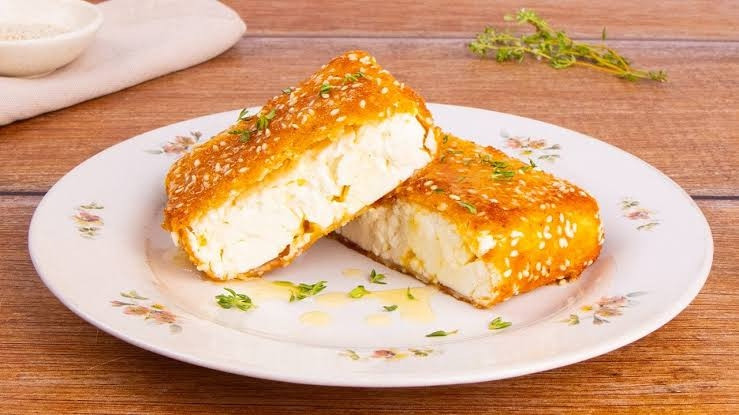
Saganaki fries a thick slice of firm cheese, commonly kefalotyri, halloumi, or graviera, until the outside browns and crisps while the inside stays soft and just short of melting. A squeeze of lemon at the table cuts the richness before the first bite. The name refers to the small 2-handled pan (sagani) it's traditionally cooked and served in, not the cheese itself, a detail that surprises many first-time visitors expecting "saganaki" to be a specific cheese variety, not a cookware reference. A flaming tableside version, sometimes called saganaki flambe, gets doused in brandy and lit at the table for a showier presentation, though it's more common in tourist-facing restaurants than everyday Greek tavernas.
Highlights
- Named for the pan (sagani), not the cheese itself
- Kefalotyri, halloumi, or graviera all work as the cheese
- Flaming tableside version is more common in tourist restaurants than everyday tavernas
Cost
6-9 euros.
Where to eat
Standard mezze menus everywhere; skip the flaming tableside version if you want the more authentic everyday preparation.
Dolmades:
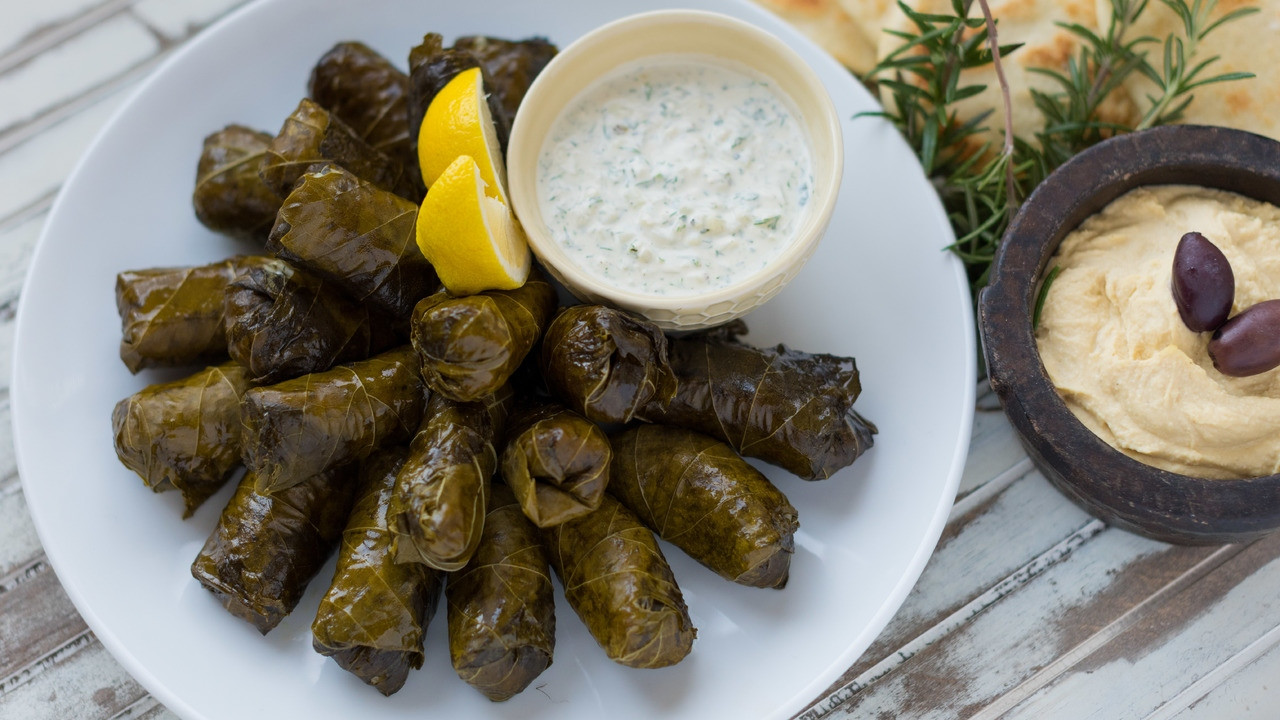
Dolmades roll grape leaves around a filling of rice, herbs, and often ground lamb or beef, served with a lemon wedge on the side for brightness. A meat-free version, just rice and herbs, is equally traditional and common during Orthodox fasting periods. The smaller-sized version served as an appetizer is called dolmadakia, a name that only reflects size, not a separate recipe, though home cooks sometimes debate which size actually rolls and cooks better. Grape leaves are traditionally harvested in spring when young and tender, then brined for use throughout the rest of the year, which is why jarred grape leaves are a genuine pantry staple in most Greek households, not a shortcut ingredient.
Highlights
- Dolmadakia = same dish, smaller size, not a different recipe
- Grape leaves harvested young in spring, then brined for year-round use
- Meat-free version common during Orthodox fasting periods
Cost
5-8 euros for a plate.
Where to eat
Any traditional taverna's mezze menu; homemade versions from a family-run establishment generally beat mass-produced jarred ones served at tourist restaurants.
Soups and Stews:
The dishes Greeks actually eat at home more often than any taverna menu suggests.
Fasolada:

Fasolada simmers white beans with tomato, carrot, celery, onion, and a generous pour of olive oil into Greece's most consistently cited "national dish," a title that reflects everyday habit more than any official designation. It's a working-class staple, usually served with bread, olives, or feta on the side, not a dish built for special occasions or festive tables. The soup's simplicity is part of its staying power: it uses ingredients available cheaply year-round across Greece, and versions of it appear in historical records stretching back centuries, long before tomatoes even arrived in Europe, meaning the earliest fasolada recipes would have looked notably different from the tomato-based version eaten today.
Highlights
- Greece's most commonly cited national dish, an informal title
- Built from ingredients available cheaply year-round
- Predates tomatoes' arrival in Europe; early versions looked different
Cost
6-9 euros.
Where to eat
Magiria (casual home-style canteens), not upscale tavernas, since fasolada is treated as everyday food, not a menu showpiece.
Avgolemono Soup:

Avgolemono means "egg-lemon" in Greek, describing the technique of whisking eggs and lemon juice into hot chicken broth until it turns silky and pale yellow, usually with rice or orzo and shredded chicken added. The same egg-lemon technique also appears as a sauce in other Greek dishes, poured over stuffed cabbage rolls or meatballs, not just this soup, making avgolemono as much a cooking method as it is a specific recipe. Getting the technique right requires tempering, slowly adding hot broth to the whisked eggs before combining everything, since adding eggs directly to the hot pot curdles them, not the smooth, custardy texture the dish depends on.
Highlights
- Name literally means "egg-lemon"
- Same technique appears as a sauce on other dishes, not just this soup
- Requires tempering the eggs to avoid curdling
Cost
7-10 euros.
Where to eat
Home-style tavernas and magiria, especially during cooler months when it appears more often on daily specials boards.
Revithada:

Revithada slow-bakes chickpeas with olive oil, onion, garlic, rosemary, and bay leaf, traditionally in a clay pot left in a wood-fired oven for hours until the chickpeas turn creamy and the broth reduces to something thick and almost sauce-like. Sifnos, a small Cycladic island, is particularly known for its version, often baked overnight in a communal village oven and eaten specifically on Sunday, a genuine weekly tradition, not an occasional treat. Some Sifnos households still bring their clay pot to a shared bakery oven the night before, a practice that traces back to when few homes had ovens large or hot enough to cook the dish properly themselves.
Highlights
- Sifnos island's signature Sunday dish, baked overnight
- Some households still use shared village bakery ovens
- Broth reduces to a thick, sauce-like consistency over hours
Cost
6-9 euros.
Where to eat
Sifnos specifically for the most authentic version; elsewhere, tavernas with a wood-fired oven and a genuine Sunday specials tradition.
Seafood:
Coastal Greece's contribution, built around simple preparation and a squeeze of lemon, not heavy sauces.
Kalamarakia Tiganita:
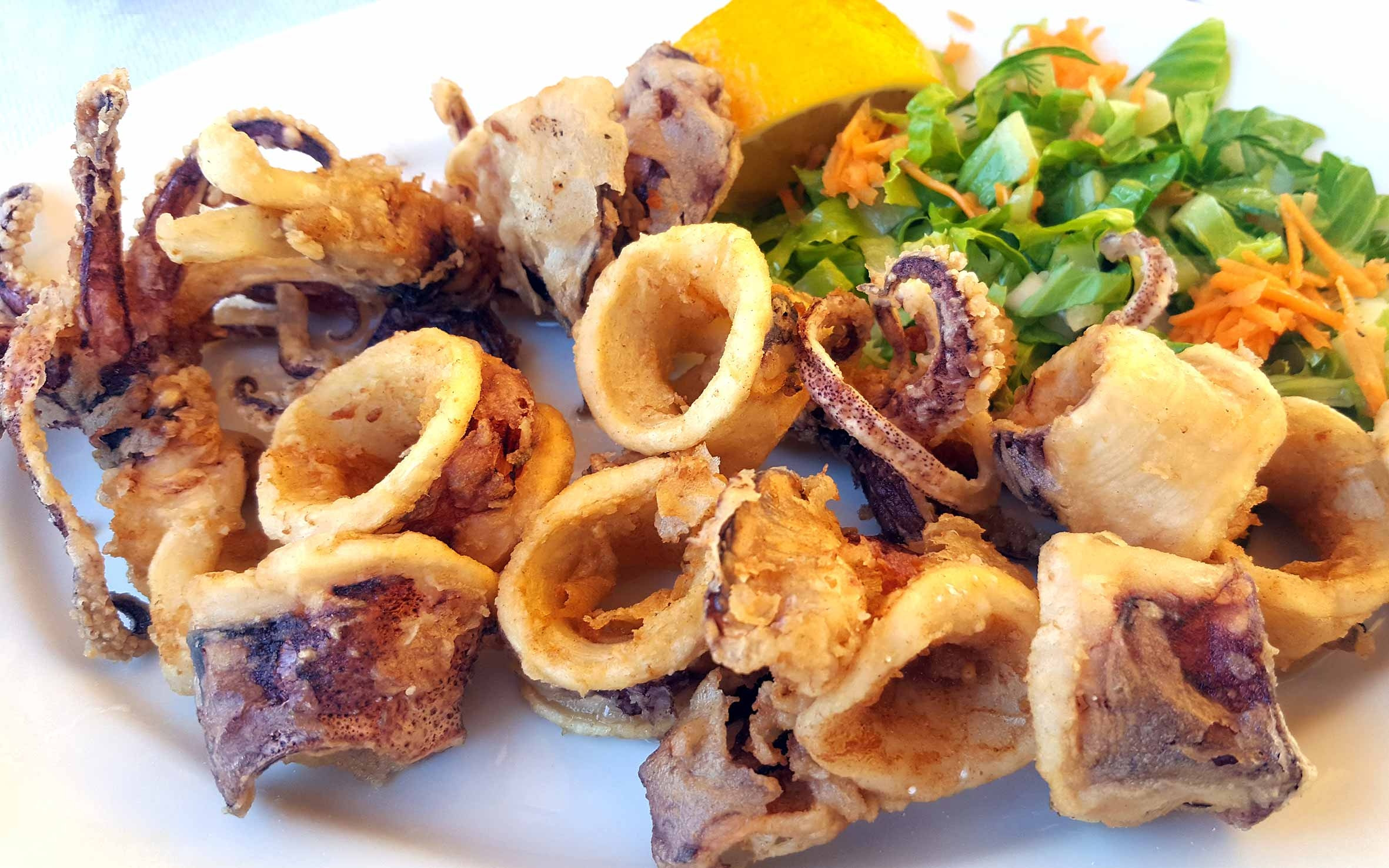
Kalamarakia tiganita lightly flours calamari rings and fries them briefly until golden and crisp outside, still tender inside. It's served with a lemon wedge and often a side of tzatziki, standard at nearly every seaside taverna in Greece regardless of region. Getting the texture right depends almost entirely on frying time, a few seconds too long turns calamari genuinely rubbery, which is why the best versions come from tavernas frying to order, not holding a pre-fried batch under a heat lamp for later orders. Fresh, never-frozen calamari makes a real, noticeable difference here, worth asking about directly at a seaside restaurant.
Highlights
- Served with tzatziki, not marinara, unlike most Western fried calamari
- Frying time is critical; a few extra seconds makes it rubbery
- Fresh, never-frozen calamari makes a genuinely noticeable difference
Cost
8-12 euros.
Where to eat
Seaside tavernas that fry to order; ask if the calamari is fresh or frozen before ordering.
Octopus in Vinegar:
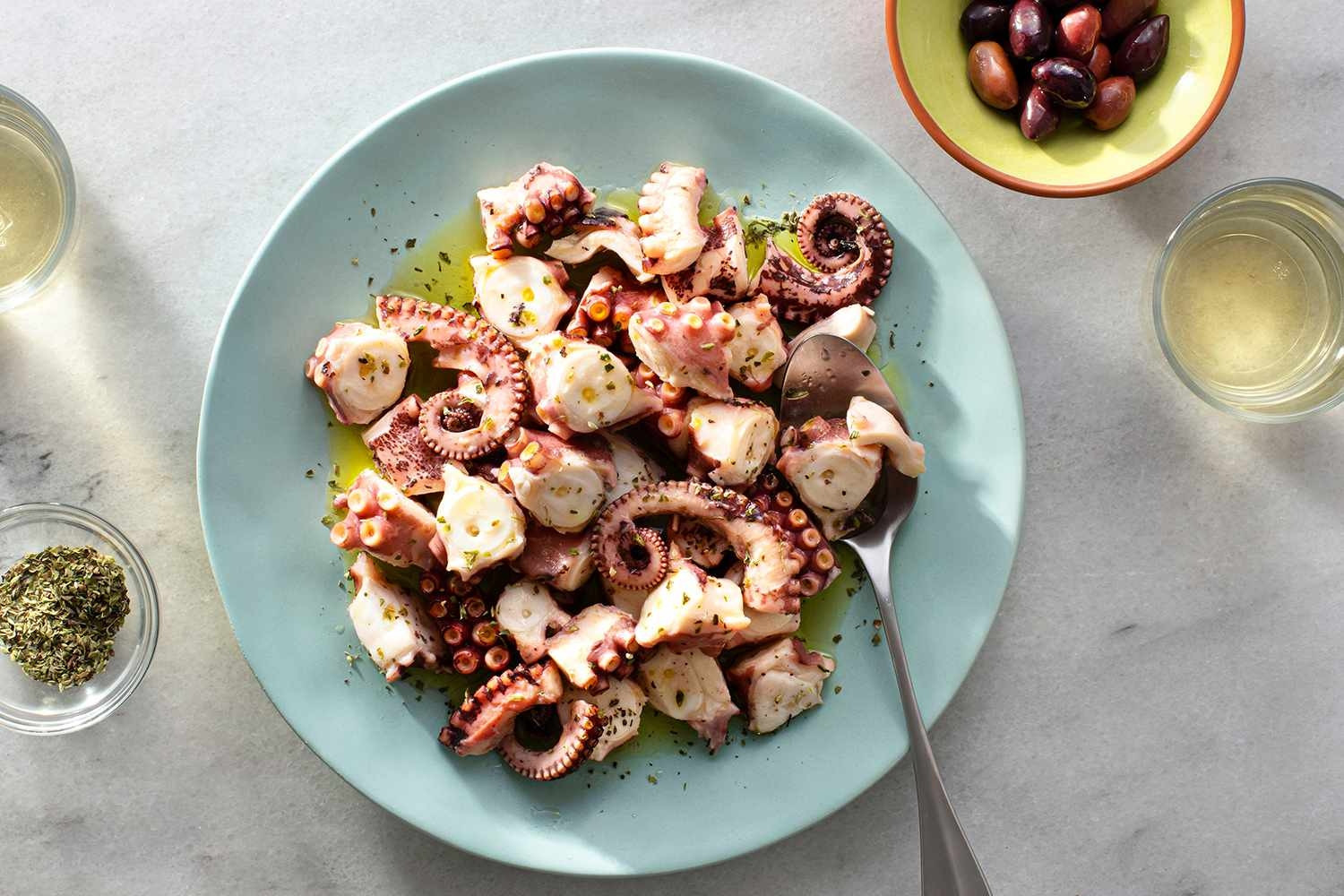
Octopus is boiled until tender, then marinated in vinegar, olive oil, garlic, and oregano, and served cold, usually as part of a mezze spread, not a standalone main course. The vinegar marinade is what separates this dish from grilled octopus, another common taverna preparation that skips the marinating step entirely and relies on char and olive oil alone for flavor. Getting octopus properly tender before marinating traditionally involves beating it against rocks at the harbor, a method still practiced in some fishing villages, though most restaurants today use a slow simmer or a brief freeze-thaw cycle to achieve the same tenderizing effect.
Highlights
- Served cold, distinct from grilled octopus (no marinade)
- Traditional tenderizing method involves beating the octopus against rocks
- Freeze-thaw cycling is a common modern substitute for that method
Cost
9-13 euros.
Where to eat
Harbor-front tavernas in fishing villages, where the octopus is most likely to be genuinely local and freshly caught.
Salads and Vegetables:
Simple, olive-oil-forward dishes that appear at nearly every Greek meal, not reserved for a starter course.
Greek Salad (Horiatiki):
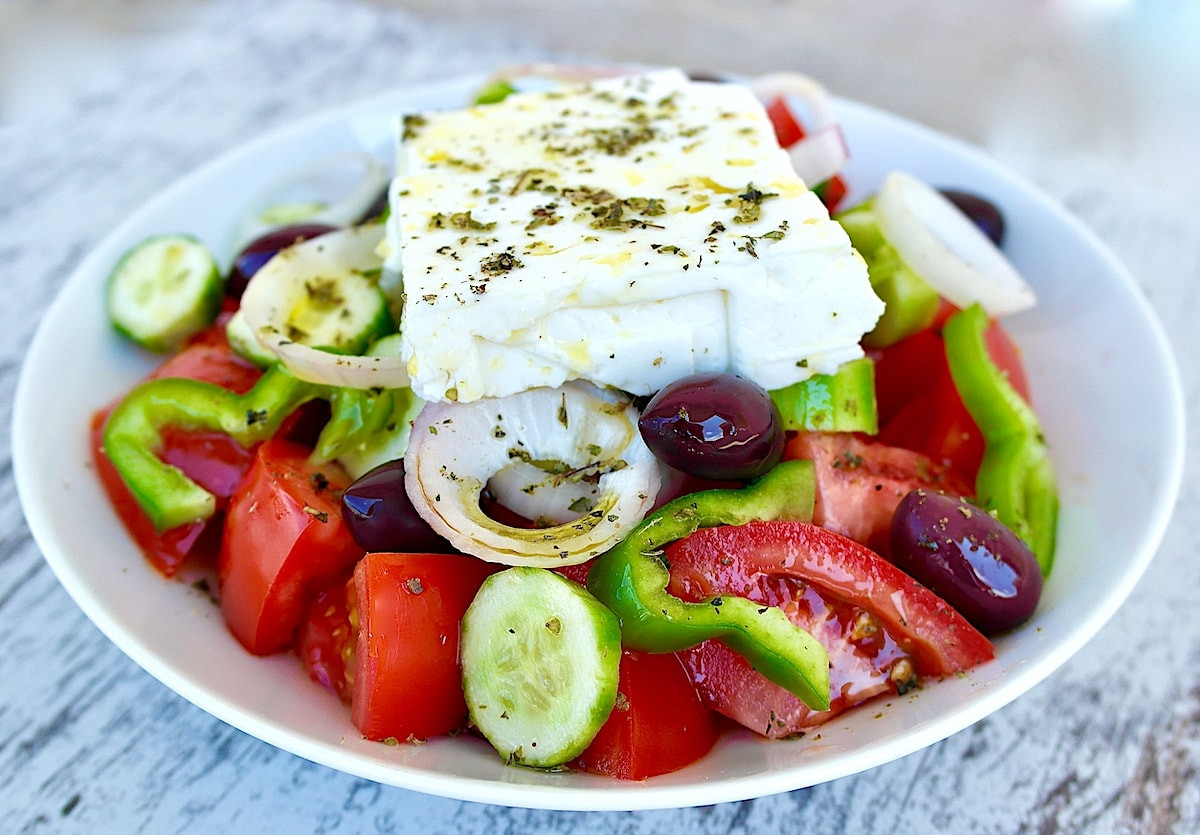
Horiatiki, literally "village salad," combines tomato, cucumber, Kalamata olives, and a thick uncut slab of feta, traditionally served without any dressing already mixed in. Diners add their own olive oil, vinegar, salt, and pepper at the table, which is why an authentic horiatiki never arrives pre-dressed or with the feta crumbled into small pieces. The dish deliberately skips lettuce entirely, a detail many visitors find surprising given how central lettuce is to a "salad" concept elsewhere, but the tomato and cucumber alone were considered sufficient in the dish's original village form. Quality depends heavily on the tomatoes specifically, in-season summer tomatoes make a genuinely different salad than the pale, out-of-season versions served in winter.
Highlights
- Feta served whole, never crumbled, in an authentic version
- Deliberately contains no lettuce
- Quality depends heavily on in-season, summer tomatoes
Cost
6-9 euros.
Where to eat
Any taverna in summer, when tomatoes are actually in season; be more cautious ordering it in winter months.
Spanakorizo:
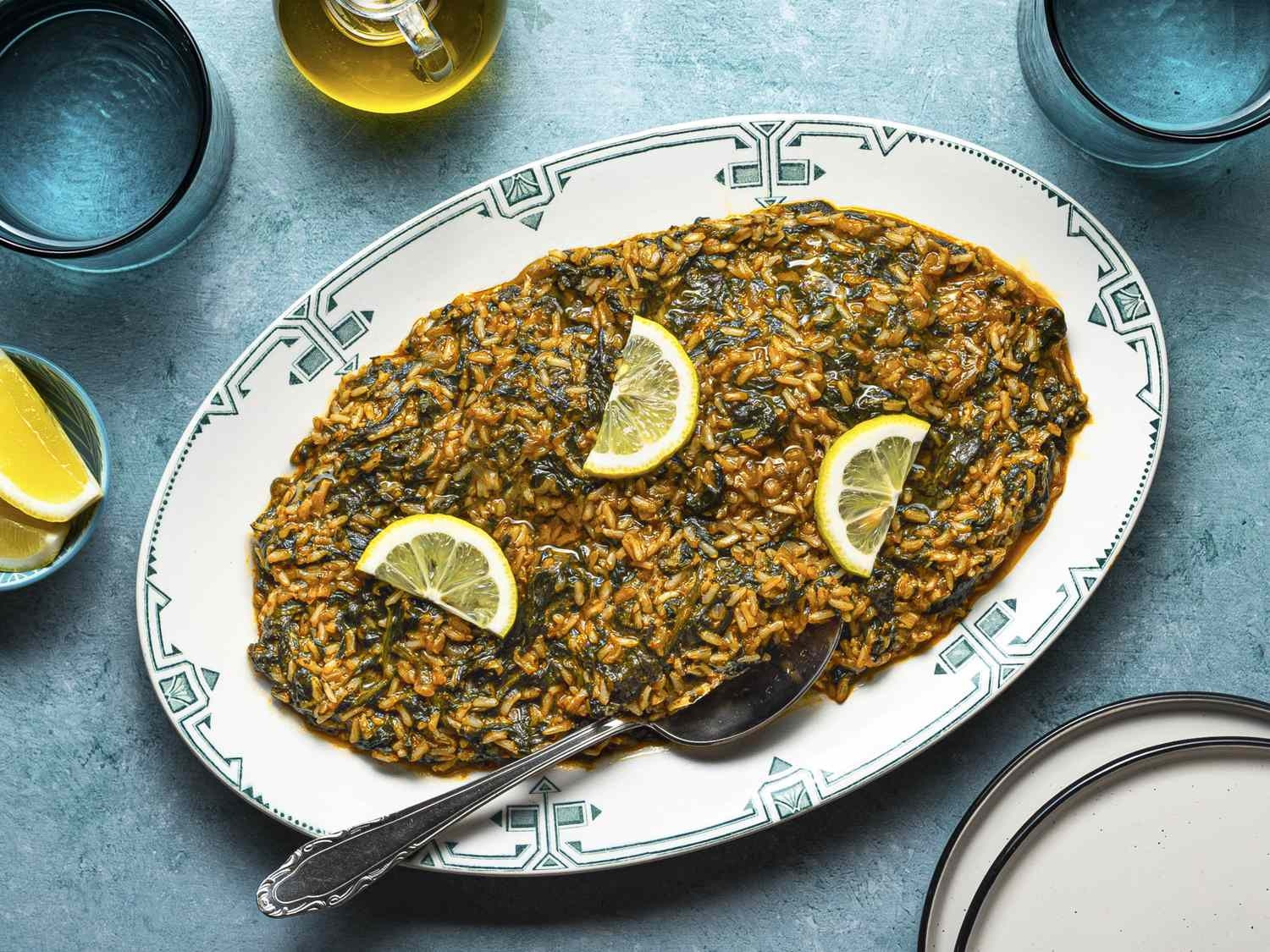
Spanakorizo cooks spinach and rice together in olive oil with onion and dill, finished with a splash of lemon juice for brightness at the very end of cooking. It works as a light main or a side, and stays a genuine everyday staple in Greek homes, not something reserved for tavernas, which is part of why it appears less often on restaurant menus than dishes like moussaka or souvlaki that read better to visitors. Some versions add a small amount of tomato for color and a slightly different flavor profile, though the plain lemon-and-dill version remains the more traditional, widely made recipe across most Greek households.
Highlights
- Common home dish, less common on restaurant menus
- Lemon juice added at the very end of cooking, not earlier
- Tomato-added version exists but plain lemon-dill remains more traditional
Cost
6-8 euros.
Where to eat
Magiria and home-style tavernas; less likely to appear at restaurants aimed primarily at visitors.
Cured and Grilled Meat:
Loukaniko:
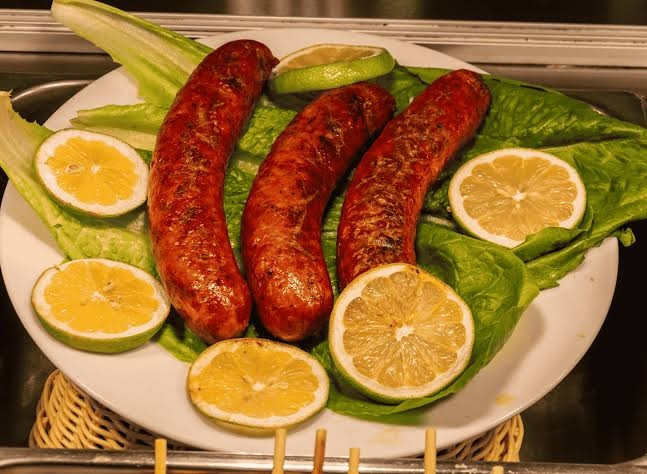
Loukaniko is a pork sausage seasoned with orange zest, fennel seed, and garlic, giving it a distinctly citrusy profile compared to most European sausages that lean on smoke or straightforward spice instead. It's usually grilled or smoked and served as part of a mezze spread with bread and cheese, rarely as a standalone main course the way a sausage might headline a plate elsewhere. Regional variations exist across Greece, some areas add leeks or extra chili for heat, and the specific orange-and-fennel combination is considered the more traditional, widely recognized version associated with the dish nationally. Loukaniko keeps well when cured and smoked properly, which historically made it a practical way for rural households to preserve pork through winter months before refrigeration existed, a detail that explains why the sausage remains such a fixture of Greek mezze culture today.
Highlights
- Seasoned with orange zest and fennel, unusual for a European sausage
- Rarely served as a standalone main course
- Regional versions add leeks or extra chili
Cost
6-9 euros.
Where to eat
Grillhouses (psistaries) and mezze-focused tavernas, not restaurants built around a single main-course dish.
Desserts:
Phyllo, syrup, and honey define Greek sweets more than chocolate ever does.
Loukoumades:
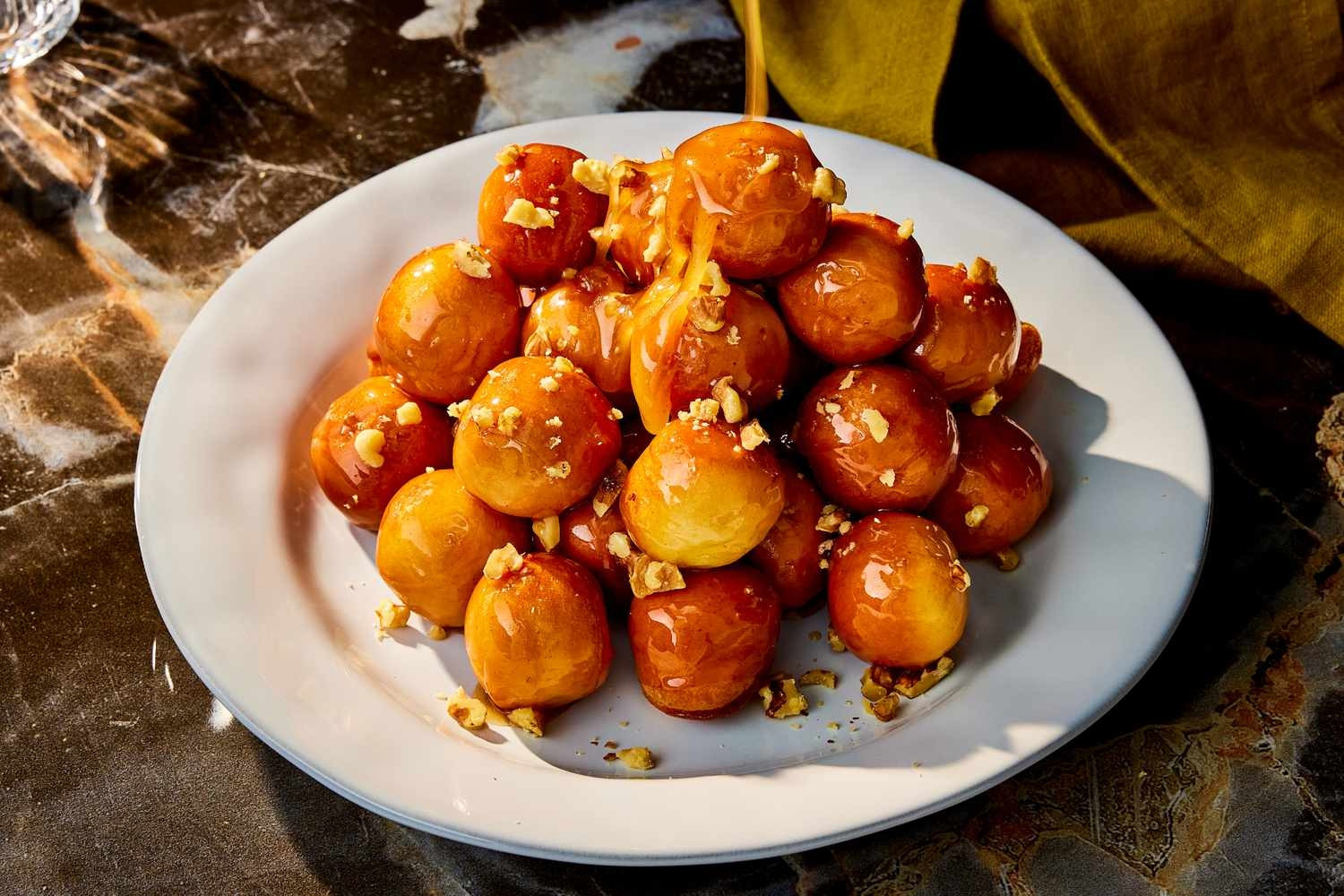
Loukoumades are deep-fried dough balls, crisp outside and soft inside, drenched in honey syrup and topped with crushed walnuts and cinnamon. They're sold hot at festivals and dedicated loukoumades shops, meant to be eaten immediately. It doesn't keep well, since the crisp exterior softens quickly once the honey syrup soaks fully through the dough. Some historians trace the dish back to ancient Greece, where fried honey-soaked dough was reportedly given to winners at early athletic games, though the specific link to the modern recipe is more folklore than documented history at this point. Modern variations top loukoumades with chocolate sauce or ice cream, a genuine departure from the honey-and-walnut original.
Highlights
- Served hot; the honey syrup softens the crisp shell quickly
- Ancient-games connection is more folklore than documented history
- Modern versions add chocolate sauce or ice cream
Cost
4-6 euros per portion.
Where to eat
Dedicated loukoumades shops that fry to order, not bakeries selling a pre-made batch from earlier in the day.
Baklava:
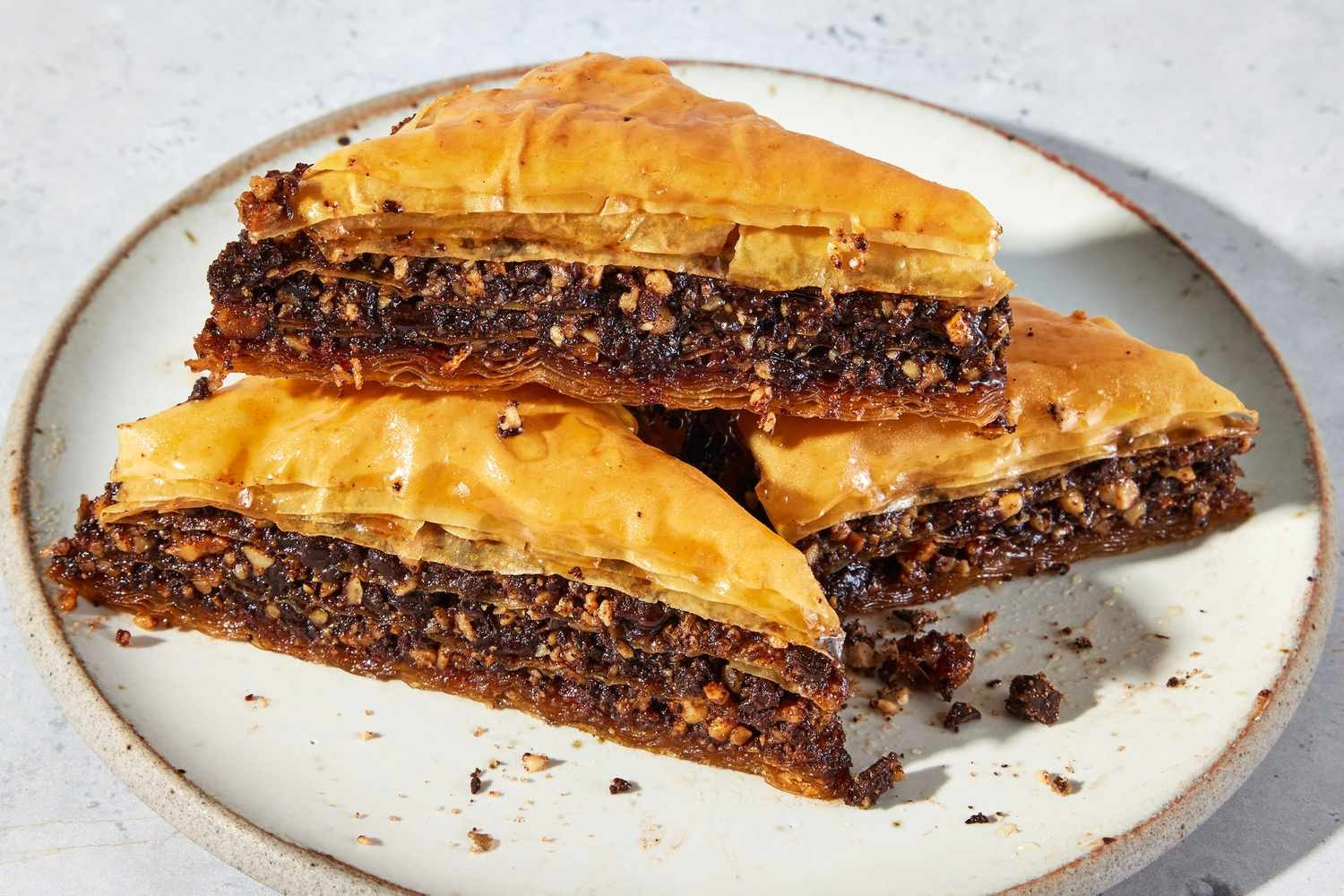
Baklava layers phyllo with chopped walnuts or pistachios and butter, baked and then soaked in a honey-sugar syrup while still warm so the syrup absorbs fully into every layer. The dish developed across the former Ottoman Empire, which once spanned Greece, Turkey, and the Balkans, so multiple countries hold genuine historical claims to it, not just a single origin story any one country can fully own. The Greek version typically leans on walnuts and a heavier honey syrup, while Turkish versions more often use pistachio and a lighter sugar syrup, a real, tasteable difference between the 2 traditions, not a marketing distinction. The number of phyllo layers used varies by region, with some bakeries taking real pride in stacking as many as 30 or 40 paper-thin sheets.
Highlights
- Walnut and honey syrup (versus Turkish pistachio and lighter sugar syrup)
- Shared Ottoman-era origin across multiple countries
- Some bakeries stack 30-40 phyllo layers as a point of pride
Cost
3-5 euros per slice.
Where to eat
Dedicated Greek sweets shops (zaharoplasteia), not a general bakery, for a fresher, less syrup-heavy version.
Koulourakia:
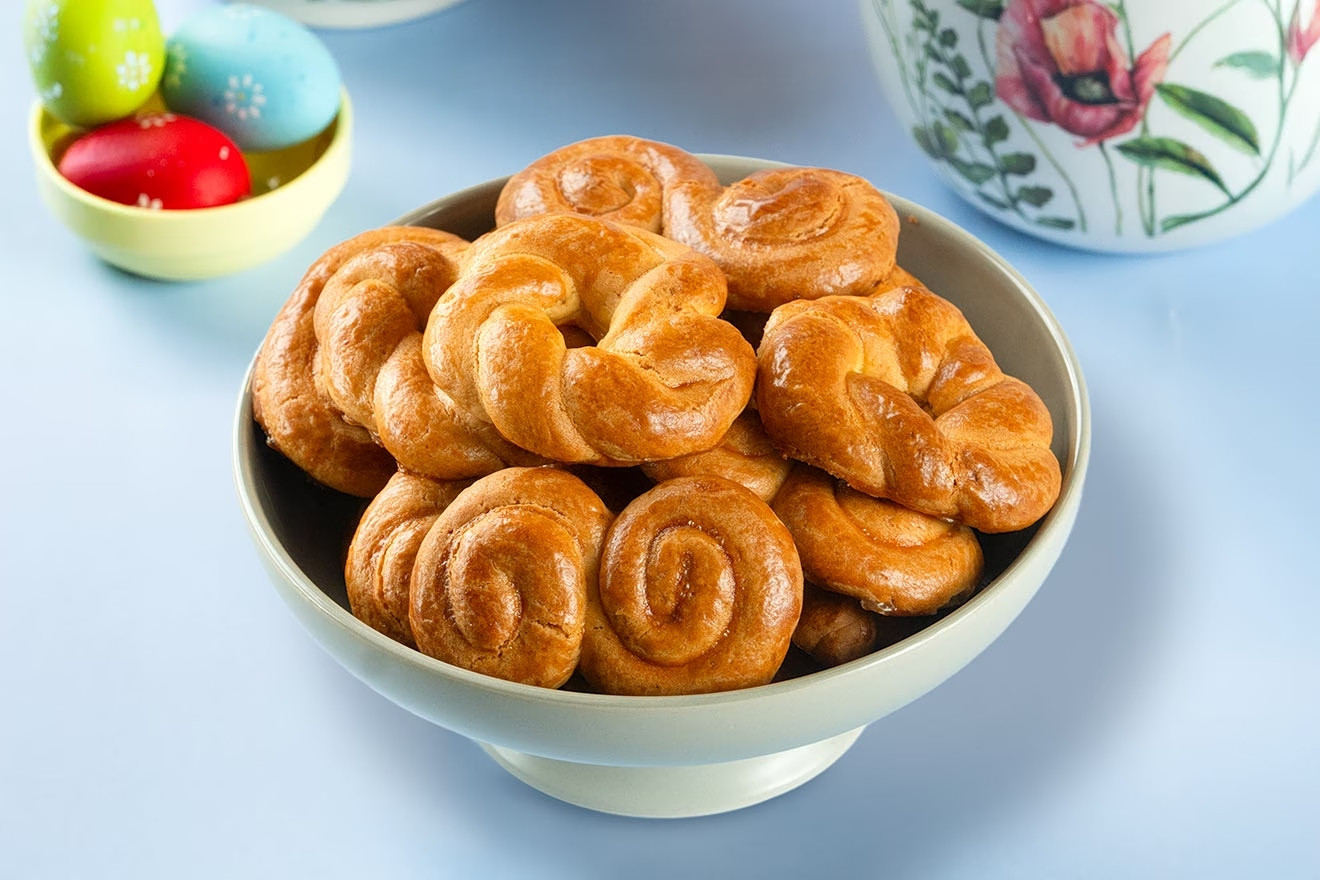
Koulourakia are butter cookies twisted into braids or rings, flavored with orange zest or vanilla, traditionally baked for Easter to symbolize continuity and the unbroken thread of family tradition. They've since become a year-round bakery staple, not restricted to the Easter season the way they once were, though many households still bake a dedicated Easter batch as part of the holiday's broader food traditions alongside dishes like tsoureki, the sweet braided Easter bread. The shaping itself carries meaning beyond decoration, a simple braid or twist requires practiced hands, and older generations often teach the technique to children specifically around the holiday as a hands-on family activity.
Highlights
- Originally Easter-only, now sold year-round at bakeries
- Shaping technique often taught to children during the holiday
- Traditionally baked alongside tsoureki, Easter's braided bread
Cost
5-8 euros per box.
Where to eat
Any Greek bakery year-round; expect a wider, fresher selection specifically around Easter.
Galaktoboureko:
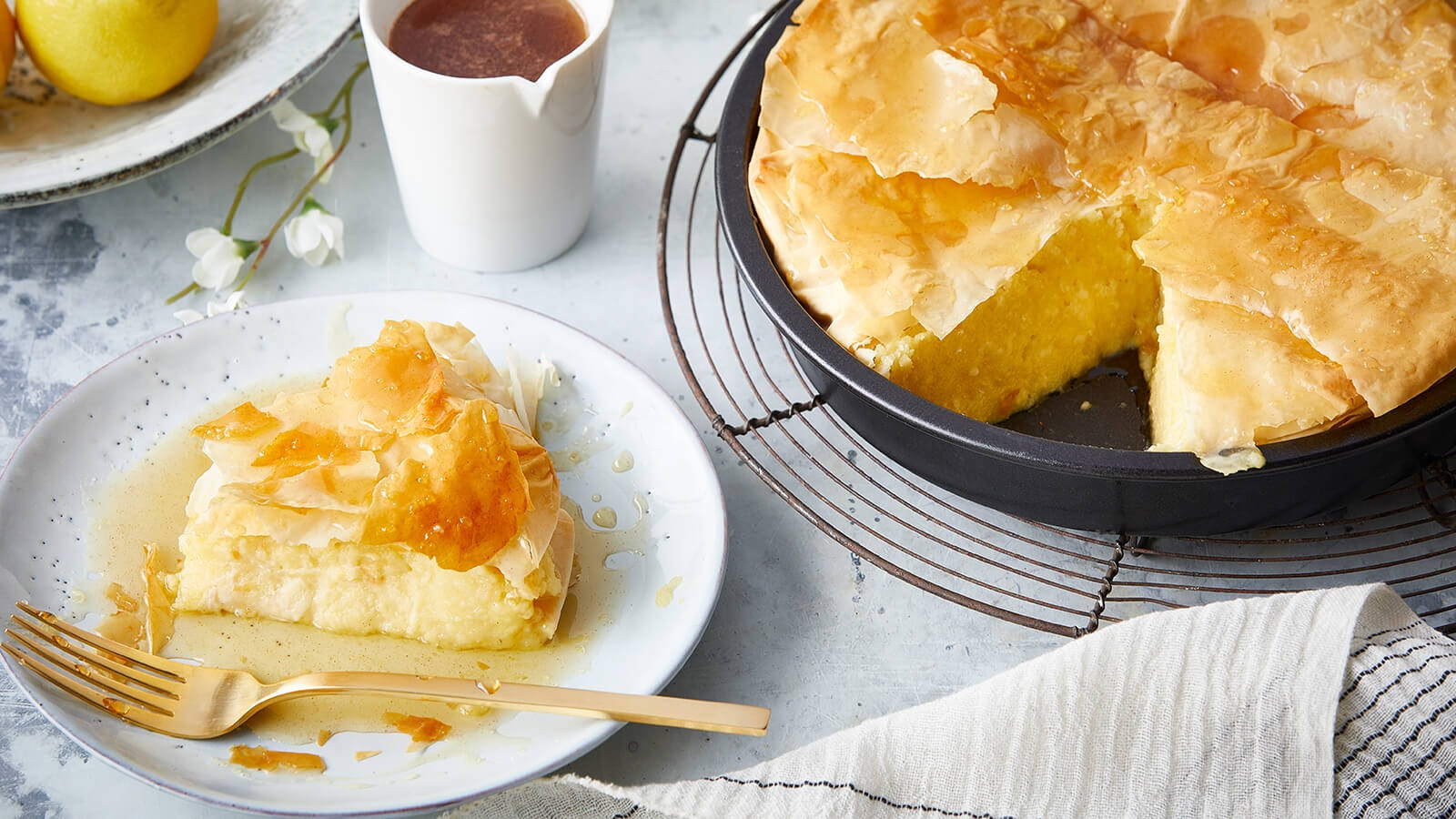
Galaktoboureko wraps a semolina custard in phyllo, bakes it until the top crisps, then soaks it in a lemon or orange-blossom syrup while still hot from the oven. The combination of a crisp exterior against a soft custard center is the dish's defining feature, distinguishing it from other syrup-soaked Greek pastries that rely on nuts, not custard, for their filling. Getting the ratio right between custard and phyllo takes real skill, too much custard and the pastry turns soggy before the syrup even gets added, too little and the dish loses the creamy contrast that makes it distinct from baklava or other nut-based sweets on the same dessert menu.
Highlights
- Semolina custard filling, not nut-based like baklava
- Syrup added while the pastry is still hot from the oven
- Custard-to-phyllo ratio is a genuine skill marker of quality
Cost
3-5 euros per slice.
Where to eat
Zaharoplasteia (dedicated sweets shops) that make their own custard fresh daily, not a pre-made filling.
Greek Food Markets, the Heart of Greek Cuisine:
Every dish on this list starts somewhere, and in Greece, that somewhere is usually a covered market that's been running for well over a century.
Varvakios Market, Athens:
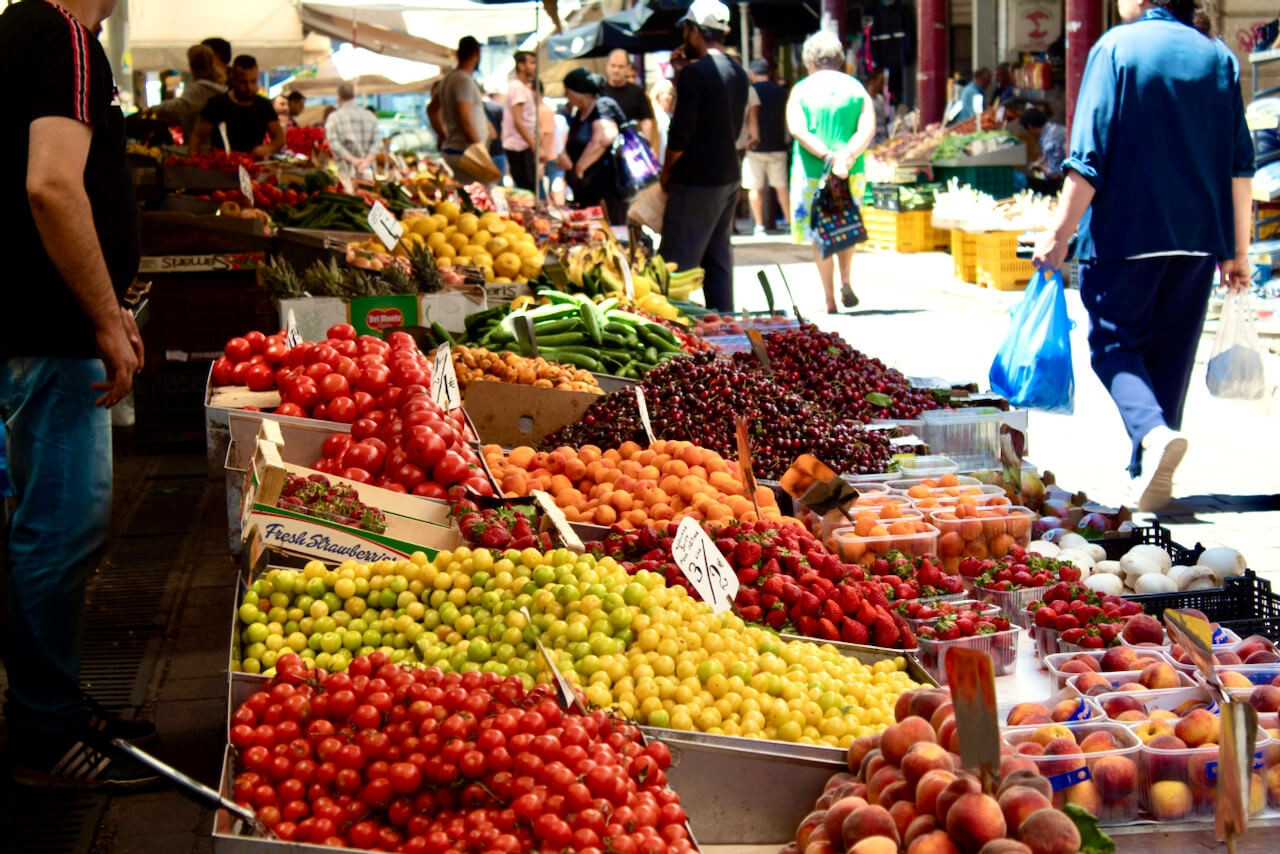
Athens' central covered food market has operated on Athinas Street, between Monastiraki and Omonia Square, since 1886, named after benefactor Ioannis Varvakis, a former pirate turned Greek national hero who made his fortune exporting caviar and later funded public institutions across the city. The market holds over 100 butcher stalls, roughly 80 fruit and vegetable stands, and more than 150 seafood stalls, with 5 to 10 tons of fresh fish arriving daily from islands including Naxos, Paros, Skyros, Kalymnos, and Symi. Inside the market, Epirus, a working-class canteen (magirio) specializing in patsas (tripe soup), has drawn visits from chefs including Anthony Bourdain and stays open 24 hours on Friday and Saturday nights from October through Easter, feeding market workers coming off overnight shifts.
Modiano Market, Thessaloniki:
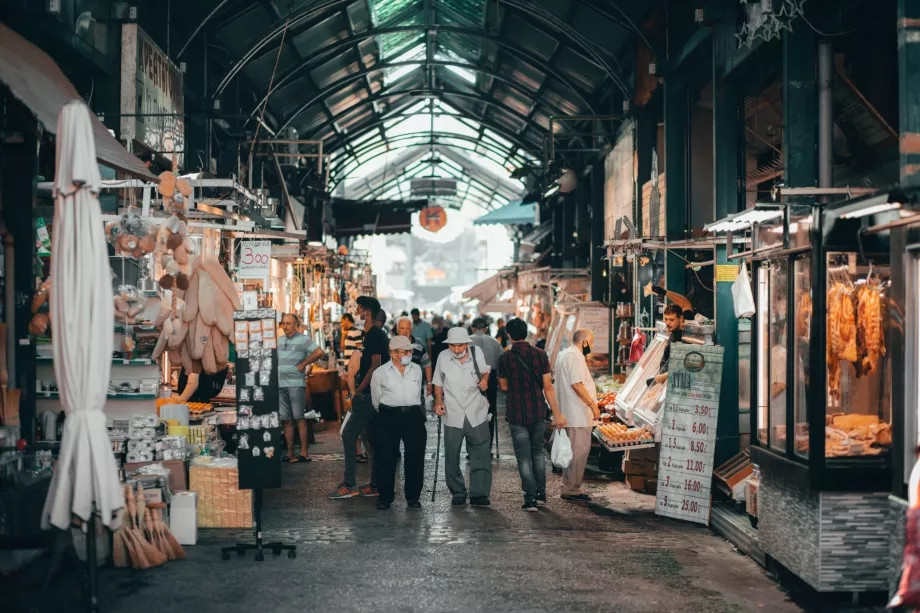
Built after a devastating 1917 fire forced the reorganization of Thessaloniki's commercial district, the covered Modiano market opened in 1922 and takes its name from architect Eli Modiano, who designed its distinctive cross-shaped arcade in a style borrowed from French covered markets. The market has housed more than 150 shops continuously since opening, representing the city's genuinely multicultural food history, including a strong historical Jewish commercial presence that shaped much of Thessaloniki's early 20th-century trade. Today it holds a mix of butchers, grocers, bars, and small restaurants along the streets surrounding Aristotelos Square, still functioning as a working market, not a preserved tourist attraction.
Laiki markets, Nationwide:
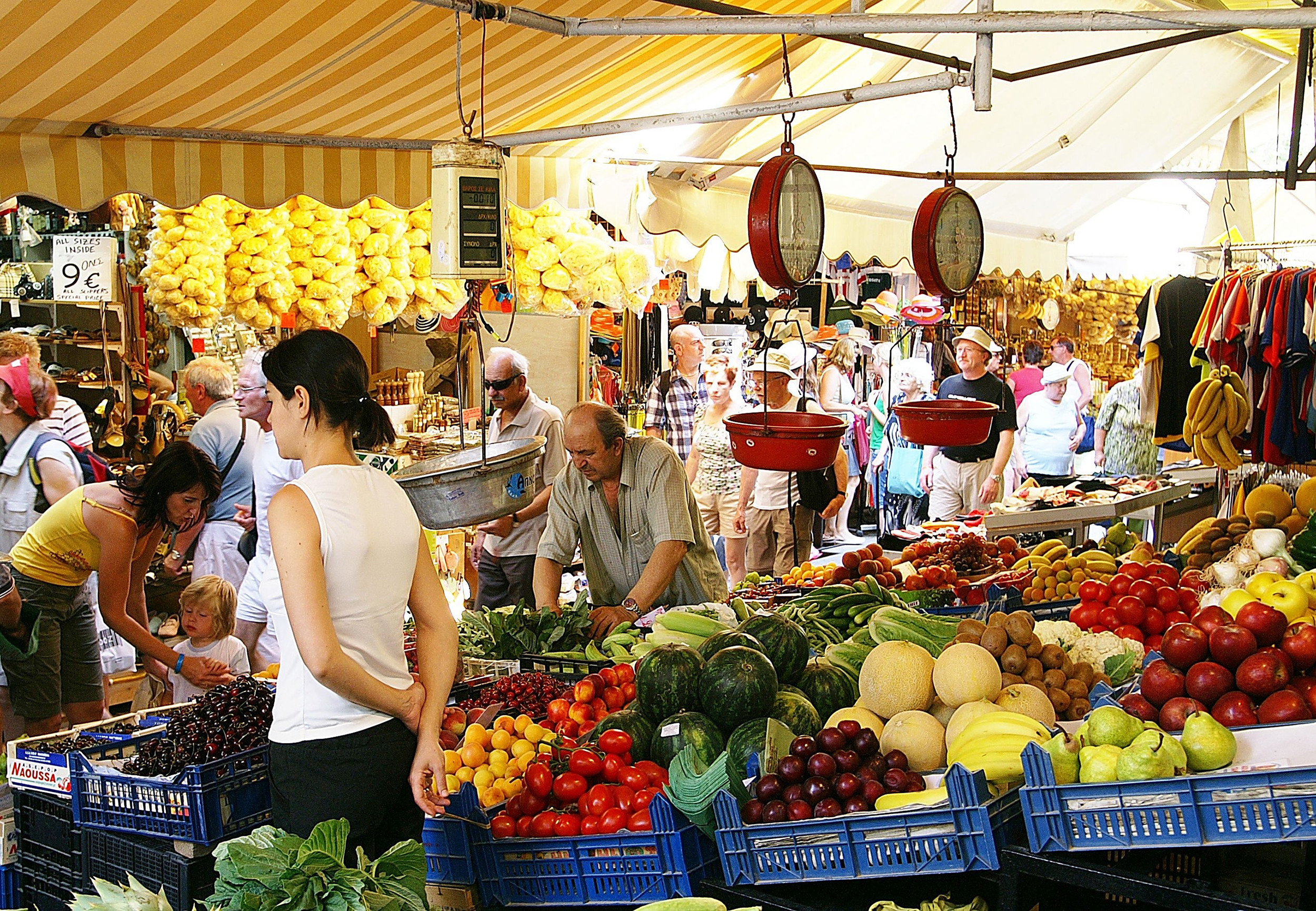
Beyond Athens and Thessaloniki's permanent covered markets, nearly every Greek town and neighborhood runs a weekly open-air laiki (literally "people's market"), a rotating street market where local farmers sell produce directly, usually 1 fixed morning each week, not daily. Prices at a laiki typically run below supermarket rates for genuinely local, in-season produce, and the sellers themselves are often the actual growers, not resellers, making it the most direct connection between a Greek meal and the farm it came from. Ask any local which day their neighborhood's laiki runs, it's genuinely one of the best ways to see how Greeks themselves shop, away from any restaurant or tourist-facing food experience entirely.







{{item.get_author.first_name}} {{item.get_author.last_name}}
Level 7
5 Photos
36 Reviews
{{item.comment_txt}}
{{item_reply.get_author.first_name}} {{item_reply.get_author.last_name}}
@ {{item_reply.reply_to}}, {{item_reply.reply_txt}}