

Every child needs their own passport and visa entering Vietnam, a parent's visa doesn't cover them. US, Canadian, Australian, and New Zealand citizens (including kids) all need an e-visa, since none of these countries qualify for Vietnam's roughly 24-country visa exemption list. 1 real exception: all nationalities get 30 days visa-free flying directly into Phu Quoc Island and staying there. Tap water isn't safe to drink anywhere in the country, bottled or filtered water only.
Most "Vietnam with kids" guides bury the visa section under 10 destinations and 25 activities, most of which repeat each other. The visa rules matter more than any single destination, and they're specific enough to get wrong: kids need their own visa, not a spot on a parent's application, and citizens of the US, Canada, Australia, and New Zealand all need to apply for one before departure, no visa-on-arrival option exists for these passports.
This guide covers the entry requirements first, then 8 real destinations with the actual kid-friendly activities folded directly into each one, not repeated in a separate list. Health precautions, transport logistics, and packing all get their own section grounded in specific facts, not generic reassurance.
Visa and Entry Requirements for 2026:
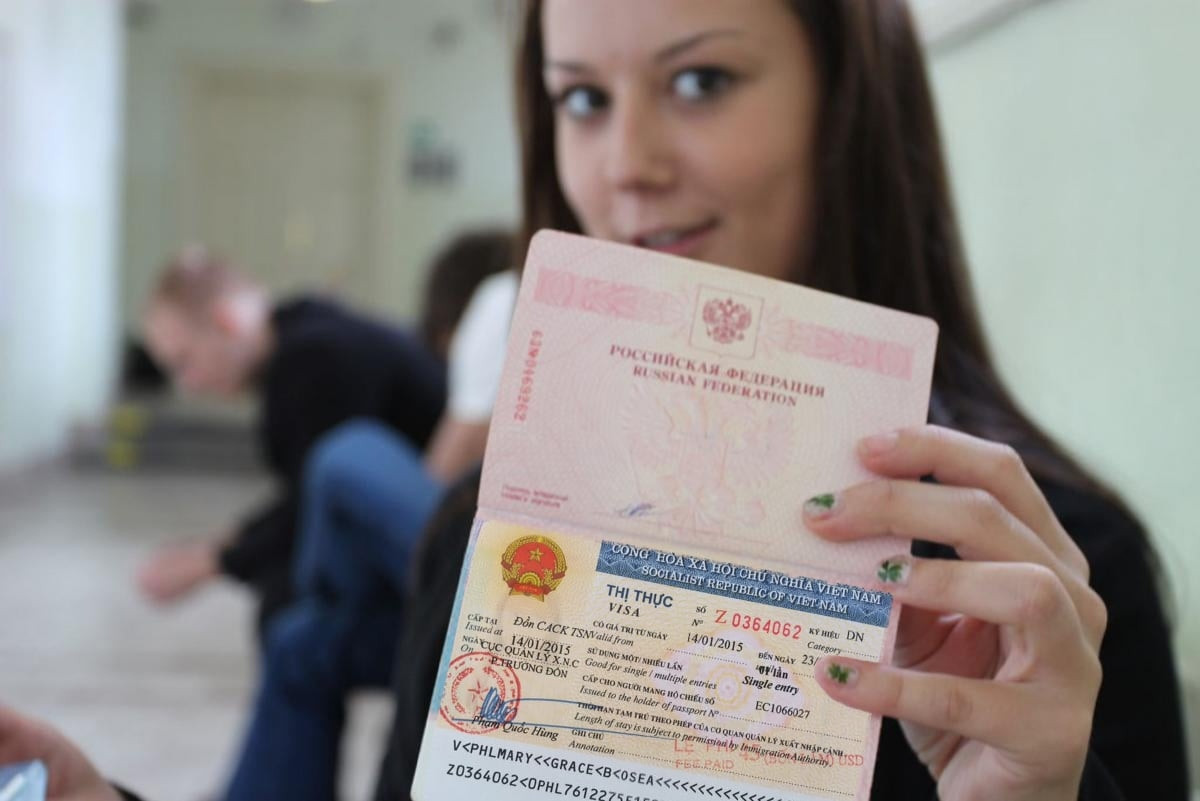
Vietnam's visa-free list covers roughly 24 countries, weighted heavily toward Europe: Germany, France, Italy, Spain, the UK, Denmark, Sweden, Finland, and Norway all get a 45-day exemption, alongside Japan and South Korea in Asia. The US, Canada, Australia, and New Zealand are not on that list. Citizens of those countries, including children, need a visa before arrival.
The e-visa is the standard option for families: valid for up to 90 days, single or multiple entry, costing roughly $25-50 and taking 3-5 business days to process. It's accepted at 83 entry points nationwide, 13 airports, 33 land borders, and 37 sea ports, though the specific entry point has to be selected during the application, so confirm your arrival airport matches before submitting. Every child needs their own passport and their own visa application, a genuinely common mistake for first-time family travelers who assume a parent's visa covers the whole group.
No in-country extensions exist for the e-visa. Overstaying brings fines of roughly $10-50 per day and possible detention, and the standard workaround for a longer stay is a "visa run," briefly exiting to a neighboring country (a short flight to Bangkok or Siem Reap) and re-entering on a fresh 90-day e-visa.
The Best Times to visit Vietnam with Kids:
Vietnam splits into 3 distinct weather regions, north, central, and south, so "the best time to visit" genuinely depends on which part of the country the trip covers. 1 general window works best across the widest range of destinations, but it isn't the only workable option.
Best overall
October through April:
Drier weather and comfortable temperatures, roughly 68-86°F (20-30°C), make this window suitable for the broadest mix of activities, sightseeing in Hanoi, Ha Long Bay cruising, beach time in the south, all without extreme heat working against a family's patience. December through February counts as peak season specifically, so book flights and family-friendly hotel rooms early and expect real crowds at the most popular sights, not an empty Old Quarter.
Good for beaches, hot everywhere else
May through August:
Central and northern beaches run genuinely appealing during this stretch, but temperatures climb to 86-104°F (30-40°C) with heavy humidity, especially punishing in Hanoi and Ho Chi Minh City. Sudden, heavy downpours are a real feature of this season, not an occasional inconvenience, worth planning indoor backup activities around. Outdoor plans alone aren't a safe bet.
Worth avoiding if possible
September through early October:
Heavy rain and storms hit central Vietnam hardest during this window, Hoi An, Hue, and Da Nang all see genuine flooding risk, and Ha Long Bay cruises get canceled outright when conditions turn. Hanoi carries its own flooding risk during this period too. If travel dates are fixed to this window, southern Vietnam (Ho Chi Minh City, the Mekong Delta, Phu Quoc) sees considerably less rain than the center or north.
Health and Safety:
Talk to a travel medicine provider or pediatrician 4-6 weeks before departure, since specific vaccine recommendations depend on your child's age, existing immunizations, and the specific regions on your itinerary. Mosquito-borne illness is a genuine regional risk, dengue fever nationally and Japanese encephalitis in some rural areas, which makes insect repellent and lightweight long sleeves at dusk a practical daily habit, not an optional packing item.
Tap water isn't safe to drink anywhere in the country, for adults or kids. Stick to bottled or filtered water, including for brushing teeth, and be specifically cautious with ice at street food stalls, where quality varies considerably more than at an established restaurant. Vietnam is generally a safe country for travelers, though standard precautions apply in crowded areas: keep a hand on young kids in markets and busy streets, and stay alert for pickpockets in tourist-heavy zones.
Which part of Vietnam to Visit with Kids?
Hanoi:
Hanoi's Old Quarter runs narrow lanes packed with street food stalls and shops selling local handicrafts, walkable enough for a family to cover in a morning without a fixed plan. The Thang Long Water Puppet Theater performs traditional folklore on a water stage accompanied by live music, genuinely effective for younger kids since the visual spectacle needs no language comprehension to hold attention. Hoan Kiem Lake sits at the Old Quarter's center, with the red Huc Bridge leading to Ngoc Son Temple, and the Vietnam Museum of Ethnology gives older kids a hands-on look at the country's ethnic diversity through recreated traditional houses.
Best time: November through April for mild, dry weather; expect occasional showers even in this window.
- Thang Long Water Puppet Theater, traditional folklore performed on a water stage, no language comprehension needed.
- Hoan Kiem Lake and the red Huc Bridge, leading to Ngoc Son Temple at the Old Quarter's center.
- Vietnam Museum of Ethnology, with recreated traditional houses kids can walk through.
- A cyclo ride through the Old Quarter, a slow-paced way to cover the narrow lanes without tired legs.
- Day trip to Cuc Phuong National Park (about 2 hours away), for langurs, turtles, and butterflies along child-friendly jungle trails.
Ha Long Bay:

Ha Long Bay's limestone karsts rise directly from emerald water, and family cruises typically run 1-2 nights on a traditional junk boat, with kayaking, cave exploration, and swimming stops built into the itinerary. Overnight cruises specifically let families see sunset and a genuinely dark, star-visible sky over the water, a real contrast to city light pollution. External food and alcohol aren't permitted onboard most cruises, though the boat's own bar and kitchen handle both at reasonable prices, worth knowing before packing snacks you can't bring aboard.
Best time: October through April for calmer seas; expect higher humidity and rain risk May through September.
- Kayaking among the limestone karsts, calm enough water for kids old enough to paddle or ride along.
- Cave exploration, most cruises stop at 1 or more of the bay's illuminated limestone caves.
- Swimming stops at quiet bays away from the main boat traffic.
- A floating fishing village visit, a direct look at a genuine way of life on the water.
- Sunset dinner on deck, part of most overnight cruise itineraries, some tours add night squid fishing as well.
Hoi An:
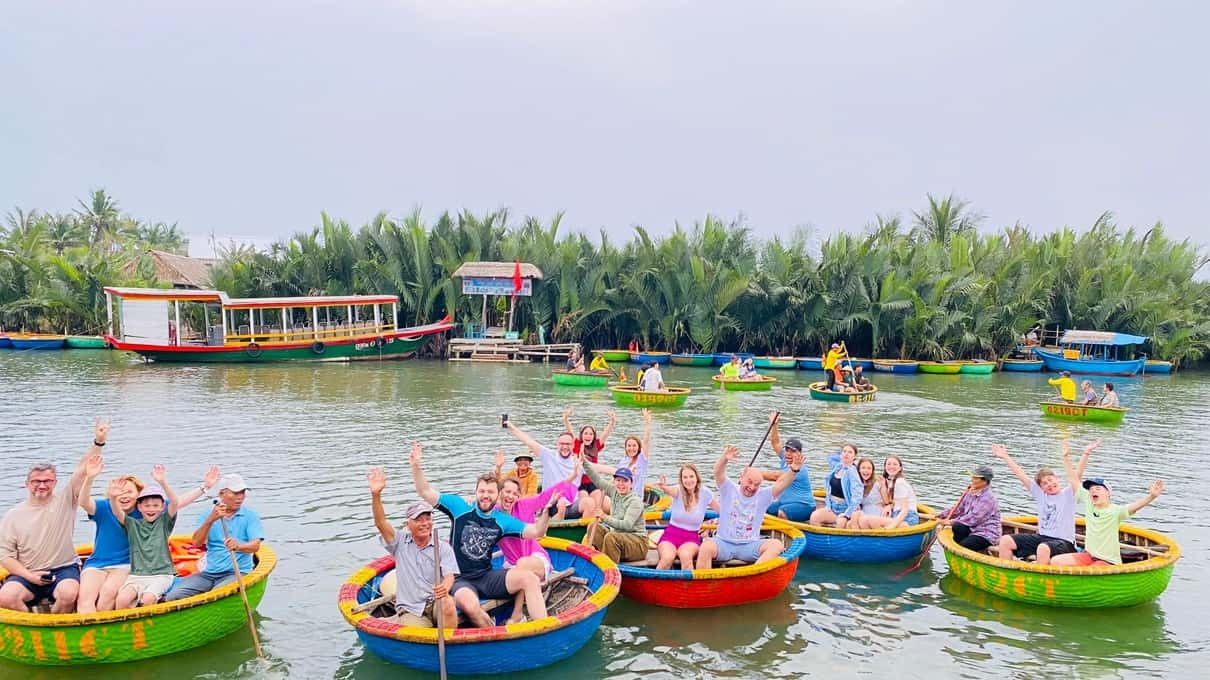
Hoi An's Old Town runs car-free through its historic core, and lantern-making workshops let kids build a paper lantern to take home, a genuinely hands-on activity, not passive sightseeing. The town transforms after dark when hundreds of lanterns light the streets and reflect on the Thu Bon River, and a boat ride along the river at that hour gives a different vantage point than walking. Nearby beaches (An Bang, Cua Dai) add a relaxed half-day option, and the town's tailor shops can turn around custom clothing for the whole family within 24-48 hours.
Best time: February through April for mild weather; the town floods periodically during the October-November rainy season.
- A lantern-making workshop, hands-on and kid-directed, and they keep what they make.
- A dusk boat ride on the Thu Bon River, when hundreds of lanterns light the streets and reflect on the water.
- The Japanese Covered Bridge, a genuine 400-year-old structure at the heart of the Old Town.
- A family cooking class, learning dishes like spring rolls or banh xeo together.
- An Bang Beach, a relaxed half-day swim stop a short ride from the Old Town.
Ho Chi Minh City:

The Cu Chi Tunnels, roughly 1.5 hours outside the city, preserve part of a genuine Vietnam War-era guerrilla tunnel network, some sections widened for tourist access, and a shooting range on-site lets visitors fire war-era weapon replicas for a separate fee, a detail worth deciding in advance whether to include. The War Remnants Museum covers the war's history directly, intense in places, worth previewing before bringing younger kids. For lighter options, Suoi Tien Theme Park runs water slides and cultural exhibits together, and the Saigon Zoo and Botanical Gardens gives a straightforward animal-viewing morning without a long transfer.
Best time: December through April, the dry season; expect heat and humidity year-round regardless of rainfall.
- Cu Chi Tunnels, a genuine Vietnam War-era guerrilla network, best suited to school-age kids and older.
- Suoi Tien Theme Park, water slides, rides, and cultural exhibits combined in 1 park.
- Saigon Zoo and Botanical Gardens, a straightforward animal-viewing morning without a long transfer.
- Ben Thanh Market, a covered market for street food and souvenir shopping.
- War Remnants Museum, worth previewing the more intense exhibits before bringing younger kids.
Nha Trang:

Nha Trang's beachfront runs long and swimmable, with clear water suited to snorkeling trips out to nearby islands. Vinpearl Land, reached by a cable car ride across the bay, combines an amusement park, water park, and aquarium in a single admission, a genuine full-day option for a family wanting rides and marine life in one stop, not 2 separate outings. The city's seafood restaurants along the beachfront cater to a wide range of tastes, a practical detail for a family with picky eaters.
Best time: January through August for the driest conditions; the wet season (September-December) brings the highest rainfall of any region in this guide.
- Vinpearl Land, reached by cable car, combining an amusement park, water park, and aquarium in 1 admission.
- Swimming and lifeguard-monitored beaches, a genuine advantage for families over less-supervised stretches elsewhere.
- Island-hopping boat trips, with snorkeling stops for kids old enough to swim confidently.
- VinWonders water park, wave pools and slides as a break from beach time.
- Beachfront seafood restaurants, casual enough for a family meal without a formal sit-down expectation.
Phu Quoc Island:
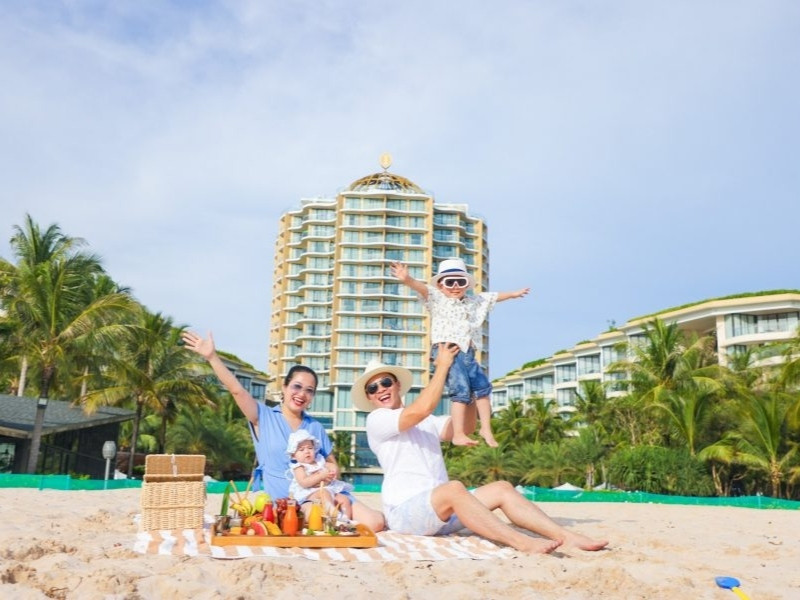
Phu Quoc's 30-day visa-free entry for all nationalities (covered above) makes it a genuinely simpler starting point for a family without visa lead time to spare. Vinpearl Safari runs as an open-range park where animals including elephants and giraffes roam more freely than a standard zoo enclosure, and the island's beaches stay calmer and less developed than Nha Trang's. A night market in Duong Dong town adds an evening food-and-souvenir stop without needing a car.
Best time: November through April, the dry season; the island's wet season runs considerably wetter than the mainland's equivalent months.
- Vinpearl Safari, an open-range park where elephants and giraffes roam more freely than a standard zoo enclosure.
- Sao Beach, calm, shallow water and soft white sand suited to the youngest swimmers.
- The cable car to Hon Thom island, among the longest over-sea cable car routes anywhere, a genuine novelty ride on its own.
- Snorkeling trips to nearby reefs, calmer water than Nha Trang's more exposed coastline.
- Duong Dong night market, an evening food and souvenir stop within walking distance of most beach resorts.
Da Nang:

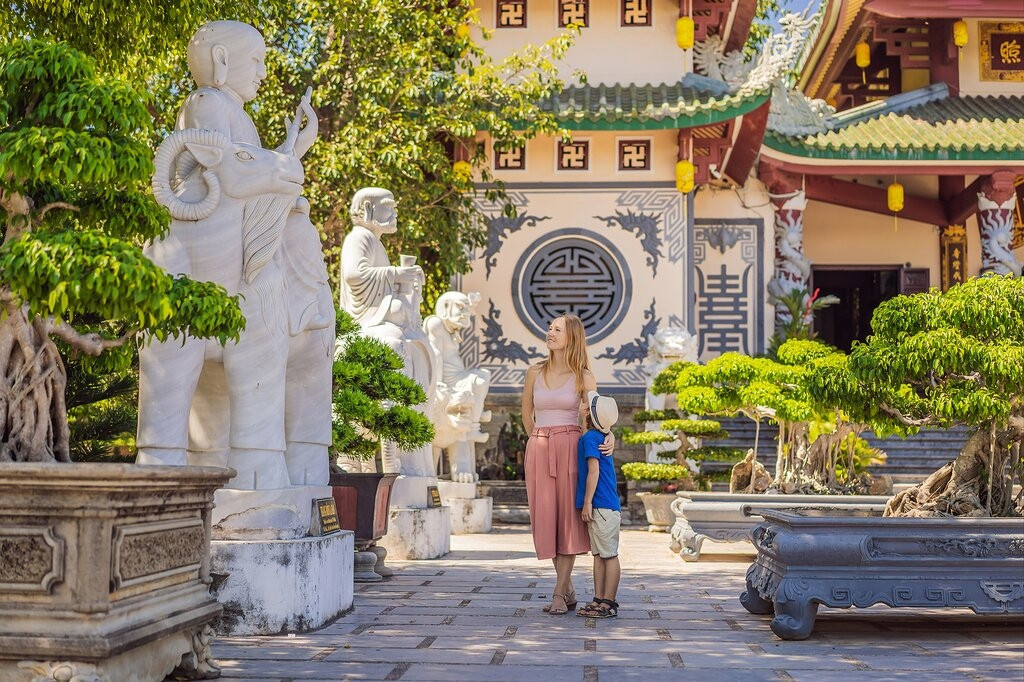
Ba Na Hills, reached by a cable car holding several world-length records at various points since opening, leads to the Golden Bridge, held up by 2 giant stone hands, and Fantasy Park's indoor rides give a rain-day backup regardless of weather. My Khe Beach runs long and family-swimmable in the city itself, and the Son Tra Peninsula's Linh Ung Pagoda, topped by a tall statue of the Lady Buddha, adds a scenic half-day stop with genuine ocean views from the hillside.
Best time: February through May for warm, dry conditions before peak summer heat and the autumn typhoon season.
- Ba Na Hills cable car and the Golden Bridge, held up by 2 giant stone hands, a genuine architectural spectacle.
- Fantasy Park, indoor rides at the top of Ba Na Hills, a reliable rain-day backup.
- My Khe Beach, long and family-swimmable, directly in the city itself.
- Marble Mountains, a cluster of marble and limestone hills with caves and pagodas built into the rock, a short drive from the city.
- Son Tra Peninsula and the Lady Buddha statue, a scenic half-day stop with genuine ocean views from the hillside.
Sapa:
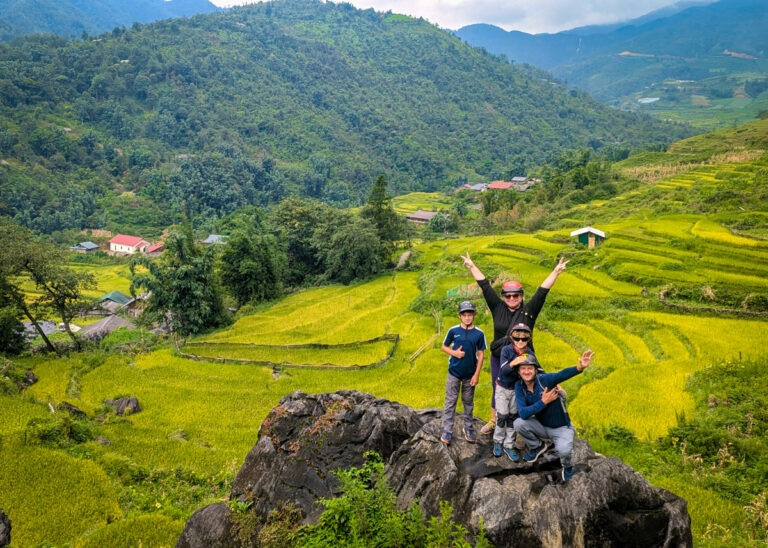
Sapa's terraced rice fields step down steep mountainsides near Fansipan, at 3,147 meters the highest peak in Indochina, reachable by a cable car for families not attempting the multi-day trek to the summit. Treks through nearby ethnic minority villages (Cat Cat, Ta Van) work best for school-age kids and older, given the walking distances and elevation change involved, and the overnight train from Hanoi to the gateway town of Lao Cai doubles as a genuine novelty for kids old enough to enjoy a sleeper cabin.
Best time: September through November for clear mountain views and the rice harvest; March through May for spring color, avoiding the coldest and wettest months.
- Fansipan cable car, reaching Indochina's highest peak without the multi-day trek.
- Cat Cat Village trek, a shorter, easier walk through a Hmong ethnic minority village, suited to younger kids than the longer routes.
- Ta Van Village trek, a longer walk through terraced rice fields, better suited to school-age kids and older.
- Sapa Market, handicrafts, textiles, and local food in the town center.
- Muong Hoa Valley viewpoints, some reachable by a short walk, for the terraced rice field views without a full trek.
Getting Around with Kids:
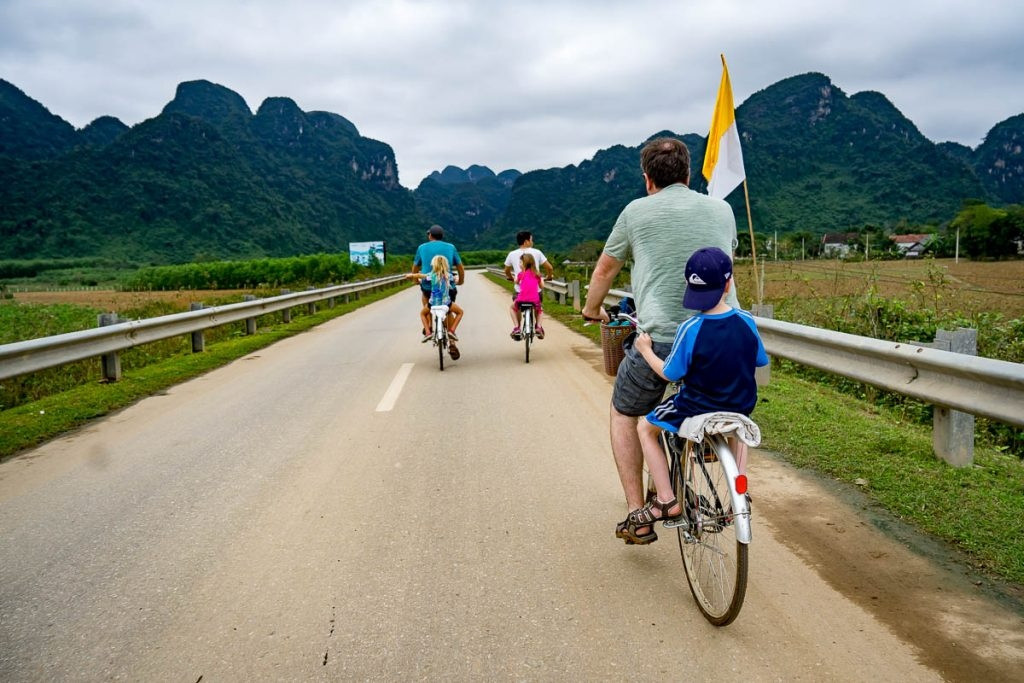
Vietnam stretches over 1,600 km north to south, and covering that distance with kids in tow means planning transport as carefully as the destinations themselves. Domestic flights, trains, buses, and private cars all suit different legs of a trip, rarely the same one.
Domestic flights:
The fastest option for the country's longer distances, and genuinely necessary for a multi-region trip. Useful routes: Hanoi to Da Nang (1 hour 20 minutes), Da Nang to Ho Chi Minh City (1 hour 30 minutes), Ho Chi Minh City to Phu Quoc (1 hour), and Hanoi to Nha Trang (1 hour 50 minutes). Book ahead, since seats on popular routes sell out and prices climb closer to departure.
Trains:
The Reunification Express runs the full Hanoi to Ho Chi Minh City line, stopping in Hue, Da Nang, Nha Trang, and other cities along the way, scenic but genuinely long and slow for families with young kids. The Hanoi to Sapa overnight route (via Lao Cai) takes 8-9 hours and suits families well; the Hanoi to Da Nang route runs a full 16 hours, scenic through the Hai Van Pass but a real endurance test with young kids. Book a "soft sleeper" cabin (a private 4-bed room) for any overnight route, and bring snacks, baby wipes, hand sanitizer, and offline entertainment regardless of which train.
Buses:
Vietnam's long-distance bus network runs affordable and extensive, but the ride quality suits shorter routes better than an 8+ hour haul with young kids restless in a fixed seat.
Private Car with Driver:
The most comfortable option for families with toddlers, strollers, or heavy luggage, and worth arranging for specific day trips (Hue to Hoi An, Hanoi to Ninh Binh) or for exploring rural regions like the Mekong Delta, where public transport options thin out considerably.
Walking:
Best for compact, pedestrian-friendly areas: Hanoi's Old Quarter, Hoi An's Ancient Town (which closes several streets to vehicle traffic entirely), and Ho Chi Minh City's District 1. Hold kids' hands tightly at all times in busy areas and when crossing streets, since motorbikes don't reliably stop for pedestrians, and use a pedestrian bridge wherever one exists, not the street level crossing.
Grab (Vietnam's ride-hailing app)
Available in all major cities, with a fixed fare shown before booking, removing the negotiation and overcharging risk that comes with hailing a taxi on the street.
Taxis
Stick to reputable companies specifically, Mai Linh (green cars) and Vinasun (white cars) both have real reputations worth trusting, since some unaffiliated taxis do overcharge tourists. Insist the meter is running before the ride starts, carry small bills since some drivers claim not to have change, and ask your hotel to call a taxi directly, not flag one down on the street.
Bike Rental:
A genuine option in Hoi An's rice-field surroundings and in Ninh Binh, both calm enough for family cycling. Skip this in Hanoi or Ho Chi Minh City, where traffic density makes cycling with kids a real risk, not a relaxed activity.
Cyclo Rides:
A slow, three-wheeled bicycle taxi, well-suited to a leisurely pass through Hue's Imperial City or Hanoi's Old Quarter. Agree on the price before getting in, or book through a hotel to avoid mid-ride price disputes.
Cultural Etiquette Worth Teaching Kids:
Vietnamese uses age-based terms of address, not a flat "you," and teaching kids to use "anh" (older brother) or "chi" (older sister) for people older than them shows a real, noticed effort at respect. Shoes come off before entering homes and many religious sites, worth practicing before the trip so it becomes automatic, not a reminder every single time. At meals, using chopsticks correctly and saying "cam on" (thank you) after eating both register as genuine gestures of respect, not empty formality.
What to Pack:
Vietnam's 3 regions run genuinely different climates, so a single packing list for the whole country misses real regional variation. What follows is grouped by category, and by region where it actually matters.
Clothing, by region:
- North (Hanoi, Sapa): winters run considerably cooler here than the rest of the country, pack real layers, not just a light jacket, if traveling November through February.
- Central (Hoi An, Da Nang, Hue): warm and sunny most of the year, lightweight breathable clothing and generous sunscreen matter more here than layers.
- South (Ho Chi Minh City, Mekong Delta, Phu Quoc): hot and humid year-round; pack a rain poncho and quick-dry fabrics for sudden downpours even outside the official rainy season.
Health and medical:
- Mosquito repellent (DEET or Picaridin), given dengue fever's presence nationally.
- Sunscreen, SPF 50+, applied generously on beach days and outdoor sightseeing alike.
- Prescription medications and a basic first aid kit, packed in a carry-on, not checked luggage.
- Oral rehydration salts, genuinely useful if anyone in the family gets a food-related stomach issue.
- Travel insurance documentation, including confirmation that medical evacuation is covered, not just treatment costs.
For babies and toddlers specifically:
- Diapers, wipes, and formula or food pouches, since smaller towns can run short on specific baby supplies.
- A baby carrier, not just a stroller; even a lightweight stroller becomes a real hassle on Hoi An's or Hanoi Old Quarter's narrow, uneven streets.
- Tissues and hand sanitizer, since public restrooms aren't always well-stocked, and squat toilets are common in rural areas, worth a practice run before departure if your toddler hasn't used one.
Documents and money:
- Each child's own passport and visa printout, confirmed separately, not assumed to be covered under a parent's visa.
- A passport valid 6+ months beyond your exit date, with at least 2 blank visa pages.
- Small VND bills, since street vendors and some taxi drivers claim not to have change for larger notes.
Comfort and entertainment:
- Offline-downloaded shows, movies, or games, for train and car stretches without reliable wifi.
- A small portable fan, genuinely useful for keeping younger kids cool during peak heat, not just a novelty item.
- Reusable water bottles, refillable from purified sources, not single-use plastic bought at every stop.
- A few familiar snacks, to bridge the gap on days when local food doesn't appeal to a picky eater.
- A travel journal for kids old enough to write or draw, a genuine way to keep them engaged with what they're seeing, not just entertained during downtime.
What Works at Each Age:
Generic "Vietnam with kids" advice treats a 2-year-old and a 14-year-old as interchangeable. They aren't, and what actually works changes considerably across that range.
Infants and toddlers (0-2)
Keep the itinerary light and the destinations few:
Skip the multi-city hop entirely. Pick 2 destinations at most (Hoi An and Phu Quoc work well together) and let naps dictate the schedule. Forcing the reverse rarely works at this age. Vietnam's heat and humidity hit this age group hardest, and the CDC generally advises against combined DEET and sunscreen products for infants under 2 months, worth checking current pediatric guidance on repellent choice before departure.
Preschool (3-5)
Hands-on beats historical:
Lantern-making in Hoi An and the water puppet show in Hanoi both work well at this age precisely because they need no reading or extended attention span. War history sites (Cu Chi Tunnels, the War Remnants Museum) generally land better with older kids; this age group gets more out of Vinpearl Land's animals and rides than a museum walkthrough.
School age (6-11)
Real independence and real history both start working:
Kids this age can genuinely help navigate a market stall or order their own bowl of pho, and the Cu Chi Tunnels' physical crawl-through sections tend to land as an adventure, not something frightening. This is also a good age to start the war history conversation directly, with a parent previewing the War Remnants Museum's more intense exhibits first.
Tweens and teens (12+)
Real trekking and real history both open up:
Sapa's multi-hour village treks and Fansipan's more demanding trails suit this age far better than younger kids, and teens can engage with the Vietnam War's history in a way a museum visit for a 6-year-old can't really support. Cooking classes in Hoi An or Ho Chi Minh City also work better here, since following a recipe and using real kitchen tools requires a level of focus younger kids don't yet have.
A Realistic 10-Day Itinerary:
10 days covers a genuine introduction without the constant repacking a full north-to-south trip requires. This route sticks to 3 regions, not all 8 destinations above.
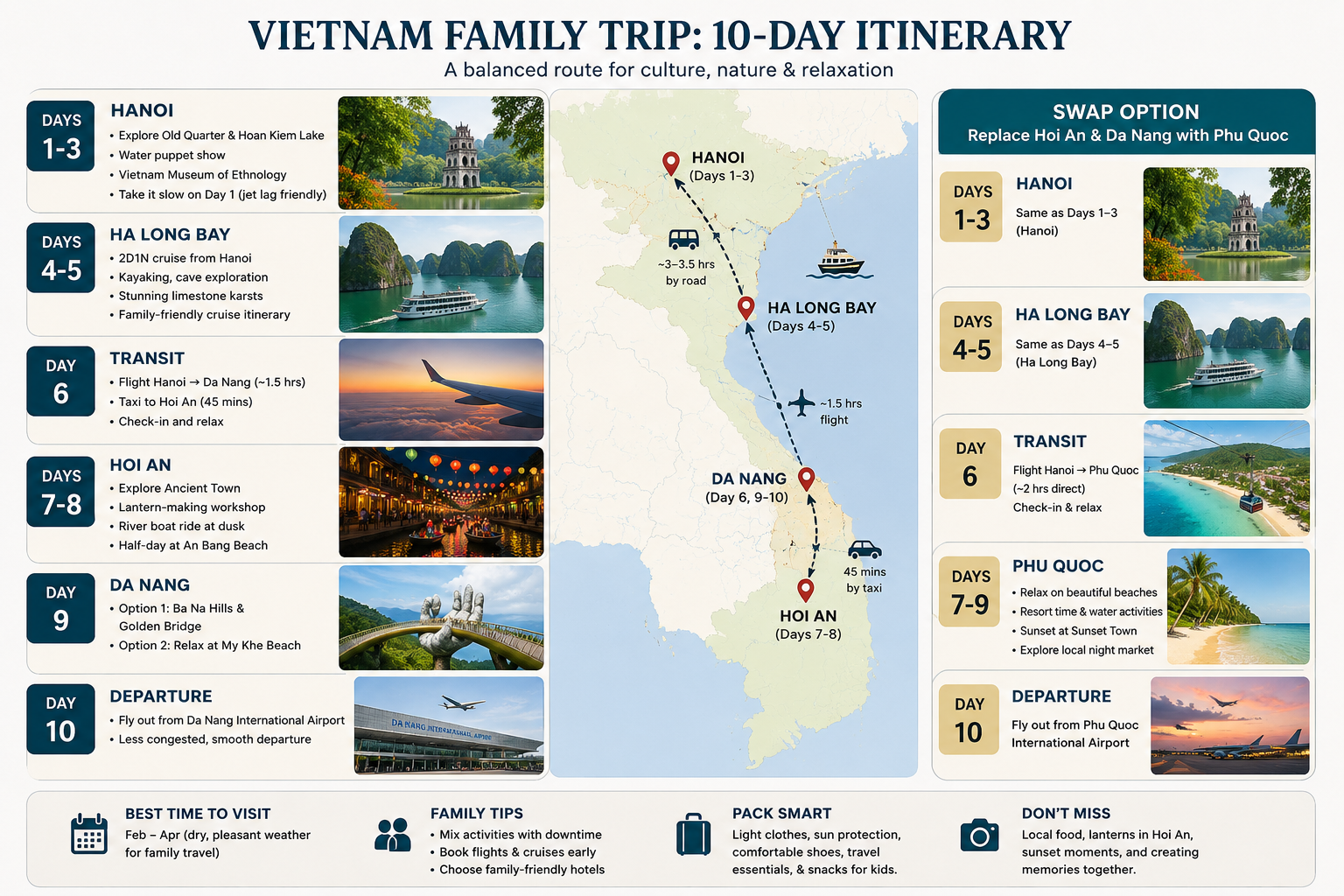
Arrive, adjust to the time zone, and spend 2 full days in the Old Quarter, Hoan Kiem Lake, the water puppet show, and the Vietnam Museum of Ethnology. Keep the first day genuinely light given jet lag with young kids.
A 2-day, 1-night cruise from Hanoi (roughly 3-3.5 hours each way by road), with kayaking and cave exploration built into the standard family cruise itinerary.
Domestic flight from Hanoi to Da Nang (about 1.5 hours), connecting onward to Hoi An by taxi (45 minutes).
Old Town exploration, a lantern-making workshop, a river boat ride at dusk, and a half-day at An Bang Beach.
Day trip to Ba Na Hills and the Golden Bridge, or a relaxed day at My Khe Beach if the pace has been heavy so far.
Fly out of Da Nang International Airport, which runs considerably less congested than Hanoi's or Ho Chi Minh City's main airports for a final-day departure.
Money, Costs, and Budgeting:
The Vietnamese Dong (VND) comes in large denominations that trip up first-time visitors, a 100,000 VND note (roughly $4) looks similar in color to a 500,000 VND note (roughly $20) to an unfamiliar eye, worth a careful look before handing over cash. ATMs are widely available in cities and tourist areas, though withdrawal limits per transaction run lower than in the US or Europe, expect multiple withdrawals for a larger cash need. Credit cards work at hotels and larger restaurants; smaller street vendors and markets are cash-only.
Tipping isn't mandatory but is genuinely appreciated for guides and drivers, roughly $1-5 per day depending on service length, handed over directly. It's not added to a bill. Bargaining is standard practice at markets and with street vendors, not at fixed-price stores or restaurants, and a friendly, unhurried negotiation generally lands a better price than a rushed one.
Emergency Contacts and Medical Care:
Vietnam's national emergency numbers are 113 for police, 114 for fire, and 115 for ambulance, though English-language response varies and a hotel front desk or tour guide can usually communicate faster in a genuine emergency. For anything beyond minor issues, international-standard hospitals in the 2 largest cities are worth knowing before you need them, not after.
Vinmec International Hospital, Hanoi and Ho Chi Minh City:
A private hospital network with English-speaking staff and pediatric departments, generally the first call for a family needing more than a pharmacy visit.
Family Medical Practice, Hanoi, Ho Chi Minh City, and Da Nang:
An international clinic network specifically set up for expats and travelers, with locations across the country's most-visited cities and direct billing arrangements for many international insurance plans.





{{item.get_author.first_name}} {{item.get_author.last_name}}
Level 7
5 Photos
36 Reviews
{{item.comment_txt}}
{{item_reply.get_author.first_name}} {{item_reply.get_author.last_name}}
@ {{item_reply.reply_to}}, {{item_reply.reply_txt}}