
 Get the app
The world's most beautiful national parks include Yellowstone and Yosemite in the United States, Banff in Canada, Plitvice in Croatia, the Serengeti in Tanzania, Torres del Paine in Chile and Fiordland in New Zealand, and these names appear on almost every shortlist. What makes a trip work is the detail behind the name: which month the waterfalls run, which entry gate to use, which permits sell out and what the park now charges foreign visitors.
This guide covers 25 national parks across five continents, grouped by region. Each card explains what makes the park special, when to go, the nearest gateway and the entry rules worth knowing as of October 2026. Use it to shortlist, then fix your travel dates around each park's best season. For wider regional ideas, see the Africa travel guide and the top attractions in Indonesia.
How this list was chosen: Parks were selected for landscape variety (geysers, glaciers, waterfalls, savannah, reef and rainforest), visitor infrastructure and how practical they are for an international traveler. Entry rules and fees that changed in 2025 and 2026 were checked in October 2026, including the new surcharge for non-US residents at 11 US parks. Fees change often, so confirm on the official park or ticketing site before traveling.
- National parks: 25
- Continents: 5
- Yellowstone founded: 1872
- US non-resident surcharge: $100
Quick comparison of the world's most beautiful national parks
Shortlist by region and season, then read the full card for entry rules and gateways.
| # | National park | Country | Best time to visit |
|---|---|---|---|
| 1 | Yellowstone National Park, USA | USA (Wyoming, Montana, Idaho) | Late May to September for open roads; winter by snowcoach |
| 2 | Yosemite National Park, USA | USA (California) | May and June for waterfalls; September for fewer crowds |
| 3 | Banff National Park, Canada | Canada (Alberta) | June to September; late September for larches |
| 4 | Jasper National Park, Canada | Canada (Alberta) | June to September; winter for skiing and dark skies |
| 5 | Grand Canyon National Park, USA | USA (Arizona) | March to May and September to November |
| 6 | Plitvice Lakes National Park, Croatia | Croatia | April to June and September to October |
| 7 | Swiss National Park, Switzerland | Switzerland (Graubünden) | June to October |
| 8 | Vatnajökull National Park, Iceland | Iceland | June to August for hiking; November to March for ice caves |
| 9 | Dolomiti Bellunesi National Park, Italy | Italy (Veneto) | Mid-June to September |
| 10 | Cairngorms National Park, Scotland | United Kingdom (Scotland) | May to September |
| 11 | Jiuzhaigou National Park, China | China (Sichuan) | September to November |
| 12 | Komodo National Park, Indonesia | Indonesia (East Nusa Tenggara) | April to December, dry season |
| 13 | Khao Sok National Park, Thailand | Thailand (Surat Thani) | December to April |
| 14 | Sagarmatha National Park, Nepal | Nepal (Solukhumbu) | March to May and October to November |
| 15 | Bromo Tengger Semeru National Park, Indonesia | Indonesia (East Java) | May to October, dry season |
| 16 | Serengeti National Park, Tanzania | Tanzania | June to October; January to March for calving |
| 17 | Kruger National Park, South Africa | South Africa | May to September |
| 18 | Masai Mara National Reserve, Kenya | Kenya (Narok County) | July to October |
| 19 | Etosha National Park, Namibia | Namibia | June to October |
| 20 | Ngorongoro Conservation Area, Tanzania | Tanzania | All year; June to October driest |
| 21 | Torres del Paine National Park, Chile | Chile (Magallanes) | November to March |
| 22 | Iguazu National Park, Argentina and Brazil | Argentina and Brazil | March to May and August to November |
| 23 | Los Glaciares National Park, Argentina | Argentina (Santa Cruz) | November to March |
| 24 | Fiordland National Park, New Zealand | New Zealand (Southland) | November to April |
| 25 | Kakadu National Park, Australia | Australia (Northern Territory) | May to October |
Most beautiful national parks in North America
North America's most beautiful national parks are Yellowstone, Yosemite and the Grand Canyon in the United States, and Banff and Jasper in the Canadian Rockies. Yellowstone, created on 1 March 1872, is widely recognised as the world's first national park, and from January 2026 non-US residents pay a $100 surcharge at popular US parks.
Yellowstone National Park, USA

Created by the US Congress on 1 March 1872, Yellowstone is widely recognised as the world's first national park. It sits mostly in Wyoming, over a volcanic hotspot that powers more geysers and hot springs than anywhere else on earth, including Old Faithful and the rainbow-coloured Grand Prismatic Spring.
Wildlife is the second draw: bison herds in the Lamar and Hayden valleys, elk, and wolves for those who start at dawn with binoculars. Stay on boardwalks in thermal areas, where the crust can be thin over scalding water, and keep the distance rangers ask for from bison and bears.
- Country: USA (Wyoming, Montana, Idaho)
- Best time: Late May to September for open roads; winter by snowcoach
- Gateway: Bozeman, Jackson or Cody airports
- Entry: Vehicle fee plus a $100 per-person surcharge for non-US residents aged 16+ in 2026 (Sierra News Online)
Geysers and wildlife are the reasons to come. Book in-park lodges many months ahead for July and August.
Yosemite National Park, USA

Yosemite, California's granite showpiece, became a national park on 1 October 1890. Its valley is framed by El Capitan and Half Dome, with Yosemite Falls and Bridalveil Fall at their strongest in late spring, when snowmelt peaks.
The National Park Service confirmed that no timed vehicle reservation is required in 2026, but Half Dome's cables still need a permit through a preseason lottery in March and a daily lottery two days ahead. Summer weekends are crowded; arrive before 8 am or use the shuttle inside the valley.
- Country: USA (California)
- Best time: May and June for waterfalls; September for fewer crowds
- Gateway: San Francisco, Fresno or Sacramento
- Entry: No 2026 vehicle reservation; $100 non-resident surcharge applies
Come for big-wall scenery and day hikes, and enter the Half Dome lottery early.
Banff National Park, Canada

Established in 1885, Banff is Canada's oldest national park, covering the Alberta Rockies west of Calgary. Lake Louise and Moraine Lake owe their milky turquoise colour to glacial rock flour suspended in the water.
Private vehicles can no longer drive to Moraine Lake, so plan on the Parks Canada shuttle or a licensed bus. Summer is busy and accommodation in Banff town fills early; September brings golden larches and fewer cars. Bears and elk are common, so carry bear spray on trails.
- Country: Canada (Alberta)
- Best time: June to September; late September for larches
- Gateway: Calgary International Airport
- Entry: Parks Canada daily or annual Discovery Pass
Lake views and road trips suit Banff well; pair it with Jasper on the Icefields Parkway.
Jasper National Park, Canada

Created in 1907, Jasper is the largest national park in the Canadian Rockies of Alberta and much quieter than Banff. Maligne Lake, Athabasca Falls and the Columbia Icefield along the Icefields Parkway are the headline stops.
Jasper is a designated dark-sky preserve, so autumn and winter nights are excellent for stargazing. Parts of the park and town were damaged by wildfire in 2024; check current trail and facility status before planning hikes.
- Country: Canada (Alberta)
- Best time: June to September; winter for skiing and dark skies
- Gateway: Edmonton or Calgary, then road or VIA Rail
- Entry: Parks Canada pass, same as Banff
This is the quieter side of the Rockies, good for wildlife. Drive the Icefields Parkway in daylight.
Grand Canyon National Park, USA
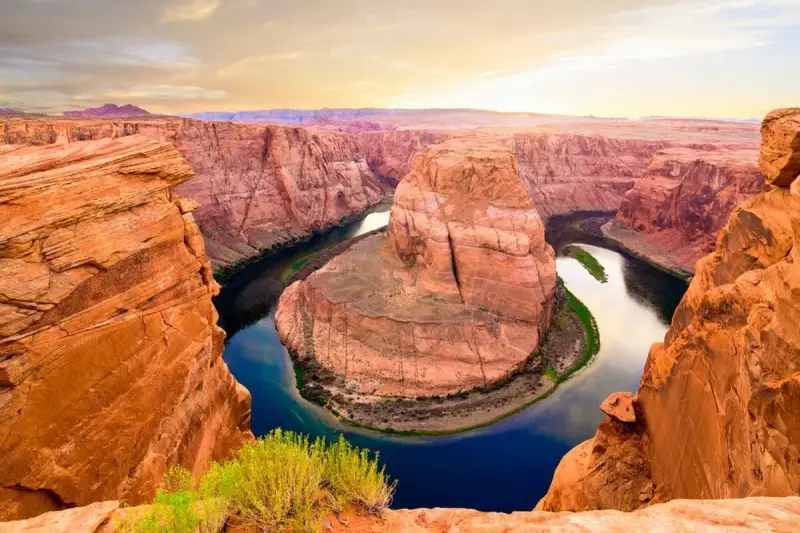
A national monument from 1908 and a national park since 26 February 1919, the Grand Canyon in Arizona is carved by the Colorado River through about two billion years of exposed rock. Most visitors see the South Rim, open all year; the higher North Rim opens only in the warmer months.
Summer temperatures inside the canyon are dangerous for unprepared hikers. Rangers advise against hiking to the river and back in one day. Sunrise and sunset at Mather Point or Hopi Point show the layered colours best.
- Country: USA (Arizona)
- Best time: March to May and September to November
- Gateway: Phoenix or Las Vegas, then road
- Entry: Vehicle fee plus $100 non-resident surcharge in 2026
Viewpoints and rim walks reward most visitors. Carry more water than you think you need.
Most beautiful national parks in Europe
Europe's five picks are Plitvice Lakes in Croatia, the Swiss National Park, Vatnajökull in Iceland, Dolomiti Bellunesi in Italy and the Cairngorms in Scotland. Plitvice, a chain of 16 terraced lakes joined by waterfalls, is the most visited, and in summer its tickets are sold by timed entry slot with daily caps.
Plitvice Lakes National Park, Croatia

Founded in 1949 and listed by UNESCO in 1979, Plitvice is a chain of 16 terraced lakes joined by waterfalls, set in beech and fir forest between Zagreb and Zadar. Wooden boardwalks run right over the water.
In summer, tickets are sold by timed entry slot and daily numbers are capped, so buy online through the official park site in advance. The ticket includes the electric boat across Lake Kozjak and the panoramic train. Swimming is banned.
- Country: Croatia
- Best time: April to June and September to October
- Gateway: Zagreb or Zadar, about two hours by road
- Entry: Timed online ticket; peak-season price highest
The waterfall walks are the whole point here. Arrive at opening time to beat tour coaches.
Swiss National Park, Switzerland

The Swiss National Park in the Lower Engadine near Zernez is the oldest national park in the Alps and one of the most strictly protected. Visitors must stay on marked trails, and there is no camping or off-trail walking.
The reward is wildlife that is used to people keeping their distance: red deer, chamois, ibex and marmots. The visitor centre in Zernez is the place to start, and Swiss trains and PostBus routes reach the trailheads.
- Country: Switzerland (Graubünden)
- Best time: June to October
- Gateway: Zurich, then train to Zernez
- Entry: Free entry; strict trail rules
Good for Alpine wildlife and travel without a car. Bring binoculars.
Vatnajökull National Park, Iceland
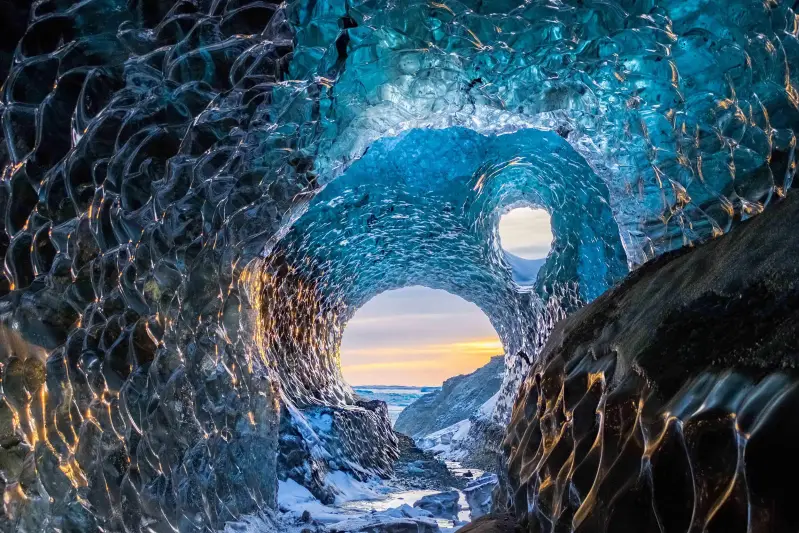
Vatnajökull National Park covers Europe's largest glacier outside the Arctic and the volcanic land around it, including Skaftafell and the Jökulsárlón glacier lagoon. It is a UNESCO World Heritage site for the interaction of ice and volcanoes.
Ice caves under the glacier can be visited only with licensed guides, usually from November to March. In summer, Skaftafell's trails to Svartifoss and the glacier viewpoints are the easiest walks. Weather changes fast on the south coast, so check road conditions daily.
- Country: Iceland
- Best time: June to August for hiking; November to March for ice caves
- Gateway: Reykjavík, then Route 1
- Entry: Parking fees at main sites; guided tours for ice
Glaciers and lagoons lead the list of sights. Book ice-cave tours early.
Dolomiti Bellunesi National Park, Italy

Dolomiti Bellunesi covers the southern Dolomites near Belluno in the Veneto, part of the UNESCO-listed Dolomites. It sees a fraction of the crowds that fill the Val Gardena and Cortina side.
Trekkers use its network of rifugi (mountain huts) for multi-day routes, including sections of the Alta Via 1 and Alta Via 2. Huts open from about mid-June to mid-September; reserve beds ahead.
- Country: Italy (Veneto)
- Best time: Mid-June to September
- Gateway: Venice or Treviso, then Belluno
- Entry: Free entry; rifugi booked separately
Hut-to-hut hikers get the most from it. Carry cash for mountain huts.
Cairngorms National Park, Scotland

The Cairngorms is the UK's largest national park, covering Highland mountains, Caledonian pine forest and lochs around Aviemore and Braemar. Britain's only free-roaming reindeer herd lives here.
Scotland's right to roam allows responsible walking almost everywhere. Summer has long daylight; winter brings snow sports at Cairngorm Mountain. Midges are a nuisance from June to August, so pack repellent.
- Country: United Kingdom (Scotland)
- Best time: May to September
- Gateway: Inverness or Edinburgh, train to Aviemore
- Entry: Free entry
Walkers and wildlife watchers do well here. Visit the reindeer centre near Glenmore.
Most beautiful national parks in Asia
Asia's most beautiful national parks on this list are Jiuzhaigou in China, Komodo and Bromo Tengger Semeru in Indonesia, Khao Sok in Thailand and Sagarmatha in Nepal. Jiuzhaigou, a UNESCO site in northern Sichuan known for its turquoise lakes, needs a real-name reservation in advance and peaks with autumn colours in October.
Jiuzhaigou National Park, China
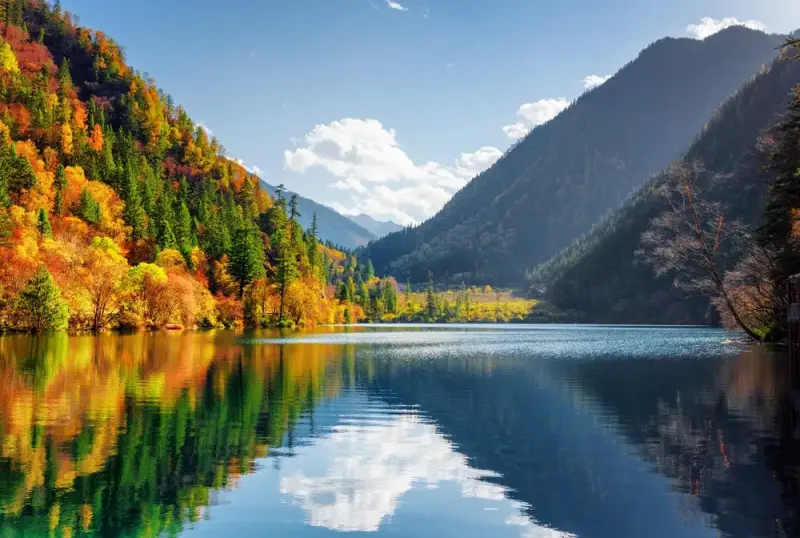
Jiuzhaigou in northern Sichuan is a UNESCO site famous for blue, green and turquoise lakes and travertine waterfalls in Tibetan-populated valleys.
Entry requires a real-name reservation in advance, with daily caps reported at about 41,000 from April to mid-November and lower in winter. A mandatory park bus links the valleys. Autumn colours in October are the peak.
- Country: China (Sichuan)
- Best time: September to November
- Gateway: Chengdu, then flight to Jiuzhai Huanglong Airport
- Entry: Advance reservation with passport; bus ticket extra
Autumn colour is the peak attraction. Book as soon as reservations open for October.
Komodo National Park, Indonesia

Komodo National Park in eastern Indonesia protects the Komodo dragon, the world's largest lizard, on Komodo and Rinca islands, together with some of Southeast Asia's richest coral reefs.
Trips leave from Labuan Bajo on Flores by day boat or liveaboard. Fee structures and visitor quotas have changed several times, and sources disagree on the current figures, so confirm the total before booking. Ranger guides accompany every dragon walk.
- Country: Indonesia (East Nusa Tenggara)
- Best time: April to December, dry season
- Gateway: Labuan Bajo (Komodo Airport)
- Entry: Park fees plus island levies; quotas apply
Dragons, the Padar viewpoint and diving fill most itineraries. Choose licensed boat operators.
Khao Sok National Park, Thailand

Khao Sok, in Surat Thani province in southern Thailand, protects old evergreen rainforest and limestone karsts around Cheow Lan Lake, a reservoir where guests sleep in floating raft houses.
Most visitors combine a jungle walk with a lake night and a cave trip. It fits easily between Phuket, Krabi and Khao Lak. See our Thailand honeymoon guide for pairing it with the islands.
- Country: Thailand (Surat Thani)
- Best time: December to April
- Gateway: Surat Thani, Phuket or Krabi
- Entry: National park fee for foreigners
Go for the jungle and a night on the lake. Pack leech socks in the wet season.
Sagarmatha National Park, Nepal
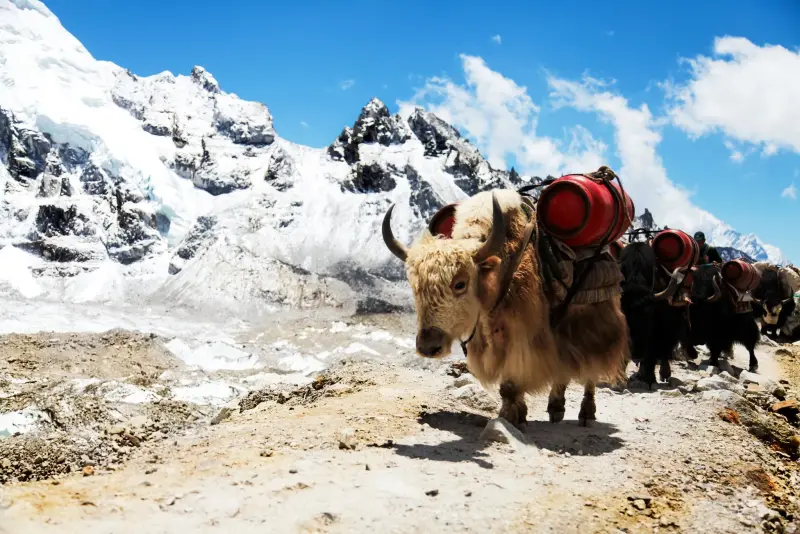
Sagarmatha National Park protects the Khumbu region around Mount Everest and is a UNESCO World Heritage site. Most visitors trek to Everest Base Camp or Gokyo from Lukla over about 12 to 14 days.
Foreign visitors pay a park entry fee of NPR 3,000 plus 13 percent VAT, and the local rural municipality charges a separate permit. Acclimatisation days at Namche Bazaar and Dingboche are essential. Lukla flights are weather-dependent, so build in spare days.
- Country: Nepal (Solukhumbu)
- Best time: March to May and October to November
- Gateway: Kathmandu, then flight to Lukla
- Entry: NPR 3,000 + VAT park fee; municipal permit
High-altitude trekking is what draws people. Buy insurance that covers helicopter evacuation.
Bromo Tengger Semeru National Park, Indonesia

In East Java, the Tengger caldera holds the smoking cone of Mount Bromo in a sea of volcanic sand, with Semeru, Java's highest volcano, behind it.
The classic trip is a pre-dawn jeep ride to Penanjakan viewpoint for sunrise, then a walk across the sand sea to Bromo's crater rim. Volcanic activity can close access, so check status with the park before travel.
- Country: Indonesia (East Java)
- Best time: May to October, dry season
- Gateway: Surabaya or Malang
- Entry: Park fee; jeep hire extra
Sunrise over the volcanoes is the moment to aim for. Bring a warm jacket for the cold dawn.
Best national parks in Africa for safari
The best African parks for a safari are the Serengeti and Ngorongoro in Tanzania, the Masai Mara in Kenya, Kruger in South Africa and Etosha in Namibia. The Serengeti and Masai Mara host the Great Migration, with river crossings from about July to October, while Kruger suits self-drive Big Five safaris.
Serengeti National Park, Tanzania

The Serengeti is the stage for the Great Migration, the annual circuit of wildebeest and zebra between Tanzania and Kenya's Masai Mara. Its open plains also support lions, cheetahs and leopards.
Where the herds are depends on the month: calving in the southern Serengeti around January to March, river crossings in the north from about July to October. Book with a licensed operator and confirm current Tanzania National Parks fees, which are charged per person per 24 hours.
- Country: Tanzania
- Best time: June to October; January to March for calving
- Gateway: Kilimanjaro or Arusha, then road or bush flight
- Entry: TANAPA park fees per 24 hours
Big cats and the migration are the headline. Match your camp location to the season.
Kruger National Park, South Africa

Kruger, in Mpumalanga, is South Africa's flagship park and one of the easiest places in Africa to see the Big Five on a self-drive safari. Tarred and gravel roads link a network of rest camps.
The dry winter months concentrate animals around water. Gate times are strict, so plan drives to reach camp before closing. A conservation fee is charged per person per day; SANParks Wild Cards suit longer stays.
- Country: South Africa
- Best time: May to September
- Gateway: Johannesburg, Skukuza or Kruger Mpumalanga airports
- Entry: Daily conservation fee per person
Independent safari travelers find it easy. Book rest-camp huts early for school holidays.
Masai Mara National Reserve, Kenya
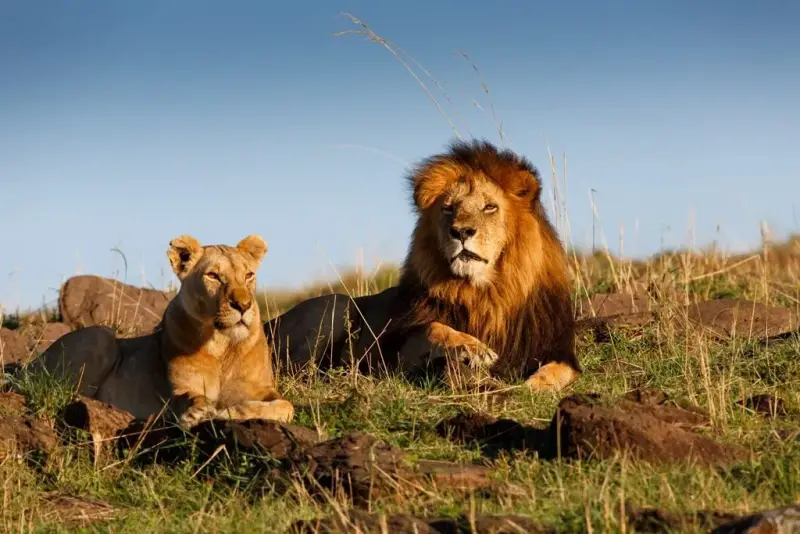
The Masai Mara in south-west Kenya is the northern end of the Great Migration, with dramatic Mara River crossings from about July to October and high predator numbers all year.
Fees rose sharply in 2026: non-resident adults pay USD 100 per day from January to June and USD 200 per day from July to December. Private conservancies on the reserve's border offer quieter game drives and walking safaris.
- Country: Kenya (Narok County)
- Best time: July to October
- Gateway: Nairobi, then flight or road
- Entry: USD 100 per day Jan–Jun, USD 200 Jul–Dec (2026)
River crossings are the big draw. Factor the higher July fees into your budget.
Etosha National Park, Namibia

Etosha surrounds a vast white salt pan in northern Namibia. In the dry season, elephants, rhinos, lions and antelope gather at floodlit waterholes beside the rest camps.
It is a straightforward self-drive park on good gravel roads. Okaukuejo's waterhole is famous for night viewing. Carry fuel and water between camps.
- Country: Namibia
- Best time: June to October
- Gateway: Windhoek, then road
- Entry: Daily park fee per person and vehicle
Self-drivers spend their evenings at the waterholes. Book Okaukuejo for night viewing.
Ngorongoro Conservation Area, Tanzania

Listed by UNESCO in 1979, Ngorongoro's collapsed volcanic crater is often described as the world's largest unbroken caldera. Its floor holds one of Africa's densest concentrations of wildlife, including black rhino.
Crater descents are time-limited and charged per vehicle, so most visits are a single long morning. It sits on the route between Arusha and the Serengeti, which makes it easy to combine.
- Country: Tanzania
- Best time: All year; June to October driest
- Gateway: Arusha or Kilimanjaro, then road
- Entry: Conservation fee plus crater service fee
Rhino and dense game make the descent worthwhile. Start early to reach the crater floor first.
 Exclusive holiday package offers
Most beautiful national parks in South America and Oceania
The five picks here are Torres del Paine in Chile, Iguazu on the Argentina and Brazil border, Los Glaciares in Argentina, Fiordland in New Zealand and Kakadu in Australia. For Torres del Paine's 2026 to 2027 season, every campsite must be booked in advance and the park entry pass is bought separately.
Torres del Paine National Park, Chile

Torres del Paine in Chilean Patagonia is named for its three granite towers. The W trek of four to five days and the longer O circuit are among the world's best-known hikes.
For the 2026 to 2027 season, all campsites, including free ones, must be booked in advance through CONAF, Fantástico Sur or Vértice Patagonia, and the park entry pass is bought separately on the government Pases Parques portal. Wind can be extreme at any time of year.
- Country: Chile (Magallanes)
- Best time: November to March
- Gateway: Punta Arenas or Puerto Natales
- Entry: Park pass online; campsites pre-booked
Multi-day trekkers should reserve campsites months ahead.
Iguazu National Park, Argentina and Brazil

Iguazu Falls on the Argentina and Brazil border is a system of about 275 waterfalls, with the Devil's Throat as the most powerful section. Both countries protect the falls in national parks listed by UNESCO.
The Argentine side has more walkways close to the water; the Brazilian side has the best panoramic views. Allow at least one full day for each. Check entry rules for your passport before crossing the border.
- Country: Argentina and Brazil
- Best time: March to May and August to November
- Gateway: Puerto Iguazú or Foz do Iguaçu
- Entry: Separate park tickets on each side
Walkways along the falls fill the days. Expect to get wet on the boat trips.
Los Glaciares National Park, Argentina
Los Glaciares in Argentine Patagonia contains the Perito Moreno Glacier, which visitors watch calving from walkways near El Calafate, and the trekking hub of El Chaltén below Mount Fitz Roy.
Boat trips and guided ice walks run on and around the glaciers. El Chaltén's trails to Laguna de los Tres and Laguna Torre are free to walk.
- Country: Argentina (Santa Cruz)
- Best time: November to March
- Gateway: El Calafate
- Entry: Entry ticket for the Perito Moreno sector
Glaciers and the Fitz Roy hikes share top billing. Book ice walks before you arrive.
Fiordland National Park, New Zealand

Fiordland, on the South Island, is New Zealand's largest national park and part of the Te Wāhipounamu UNESCO site. Milford Sound and Doubtful Sound are its best-known fiords, and the Milford Track is one of the country's Great Walks.
Rain falls on most days, which feeds hundreds of waterfalls down the fiord walls. The Milford Road from Te Anau can close after storms or avalanches, so build in a spare day. Great Walk huts must be booked through the Department of Conservation.
- Country: New Zealand (Southland)
- Best time: November to April
- Gateway: Queenstown, then Te Anau
- Entry: Free entry; Great Walk huts booked
Fiord cruises and the Great Walks lead most plans. Book Milford Track huts on release day.
Kakadu National Park, Australia

Established in stages from 1979, Kakadu is Australia's largest national park and is jointly managed with its Aboriginal traditional owners. Rock art galleries at Ubirr and Nourlangie record thousands of years of culture.
The wet season floods the wetlands and closes many roads; the dry season from about May to October opens waterfalls such as Gunlom and Maguk. Saltwater crocodiles live in many waterways, so swim only where signs allow.
- Country: Australia (Northern Territory)
- Best time: May to October
- Gateway: Darwin, then road
- Entry: Park pass required
Rock art and wetland cruises are the highlights. Take the Yellow Water boat trip at sunrise.
Entry fees and permits that changed in 2026
Three changes matter most for international visitors this year. From January 2026, non-US residents aged 16 and over pay a $100 per-person surcharge on top of the normal entry fee at 11 of the most visited US parks, including Yellowstone, Yosemite, Grand Canyon, Zion, Glacier and Rocky Mountain. A nonresident annual pass priced at $250 replaces the per-visit charge for those who plan several parks.
In Kenya, the Masai Mara reserve fee for non-resident adults is now USD 100 per day from January to June and USD 200 per day from July to December. In Chile, every campsite in Torres del Paine must be reserved in advance for the 2026 to 2027 season, and the park pass is bought separately online.
Before you book: Fees, quotas and reservation systems at popular parks change often. Check the official park or government ticketing site within a month of travel, and buy travel insurance that covers hiking and, in the Himalaya, helicopter evacuation.
Tips for visiting national parks around the world
Book permits before flights, because Half Dome, Plitvice time slots, Torres del Paine campsites and Fiordland Great Walk huts sell out. Choose each park by the month you can travel, since waterfalls, wildlife and road openings depend on the season, and keep the ranger distance rules around bison, bears, elephants and crocodiles.
- Plan around the season. Waterfalls, wildlife and road openings depend on the month. Pick a park that is in season during the weeks you can travel.
- Book permits first. Half Dome, Plitvice time slots, Torres del Paine campsites and Fiordland Great Walk huts sell out. Book these before flights.
- Keep your distance. Bison, bears, elephants and crocodiles injure visitors every year. Follow ranger distance rules and never feed wildlife.
- Stay on marked trails. Thermal ground, cliff edges and fragile alpine plants are the reason. Some parks, such as the Swiss National Park, fine visitors who leave trails.
- Carry water and layers. Mountain and desert weather changes fast. Bring more water than expected, a warm layer and rain gear even on clear mornings.
- Check entry rules for your passport. Border parks such as Iguazu and safari circuits in East Africa may need visas or permits that depend on nationality. Check official portals before travel.
Ready to plan? Compare international flights to the gateways above, or browse guided tours and safaris on BookingMentor.
Planning a trip to Canada? Read our Canada travel guide or search flights.
 Umrah packages











{{item.get_author.first_name}} {{item.get_author.last_name}}
{{item.comment_txt}}
{{item_reply.get_author.first_name}} {{item_reply.get_author.last_name}}
@ {{item_reply.reply_to}}, {{item_reply.reply_txt}}