

Venue
Shifen, Pingxi District, New Taipei City, Taiwan
Pingxi Sky Lantern Festival guide
The Pingxi festival suits travellers who want to see paper lanterns released in waves above a small railway village in northern Taiwan. It is usually held around the Lantern Festival, which in 2027 falls on Saturday 20 February, with New Taipei City confirming the programme in January. Stay in Taipei and arrive by mid-afternoon.
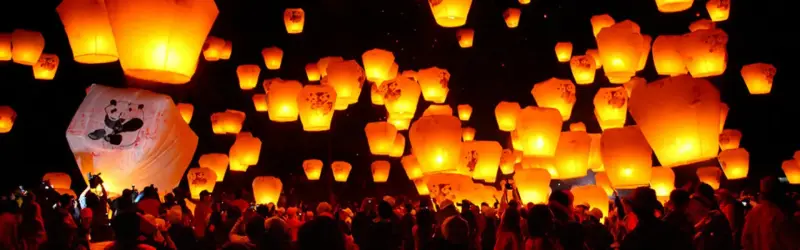
Once a year, paper sky lanterns lift off in waves above Shifen, a small railway village in the hills of northern Taiwan. Each one has wishes painted on its sides, and each wave climbs slowly into the dark until it is no more than a drift of orange points over the ridges.
Pingxi District, old coal-mining country, is the one part of Taiwan where flying sky lanterns is allowed at all. The festival takes a year-round local habit and turns it into a single, organised night shared by visitors from all over the island and abroad.
Shifen, Pingxi District, New Taipei City, Taiwan
Hotels near the venue fill up around the event dates.
Temperatures in Pingxi drop quickly after dark, and rain is common at this time of year. Most people underestimate it.
A camera is worth carrying even if you rarely use one. Phones struggle with small lights against a black sky, so brace against a wall or railing for sharper shots.
Release lanterns only where staff tell you to, on festival night and on ordinary days alike. The rule applies to everyone, children included.
Every lantern comes down somewhere. Spent wire frames and paper land in the surrounding hills as litter and endanger wildlife. After the 2025 festival more than a hundred volunteers cleared over 650 kg of rubbish from trails such as Xiaozishan and Guanyinyan, and in 2026 the organisers tested more sustainable lanterns with Shifen Elementary School. If a stall offers an eco-friendly lantern, choose it, and pick up any frame you see on the paths.
The best standing room goes to people who arrive early and stay put. Agree a meeting point with your group before the light goes, since finding each other in a dark, packed square is hard.
Keep bags closed and in front of you, and watch children near the release area. When the last wave lifts, do not rush the platform. Everyone leaves at the same moment, and pushing only makes a slow queue more dangerous.
Daylight for the walk to Shifen Waterfall and time to eat on Old Street.
Find your place near Shifen Square before the first release.
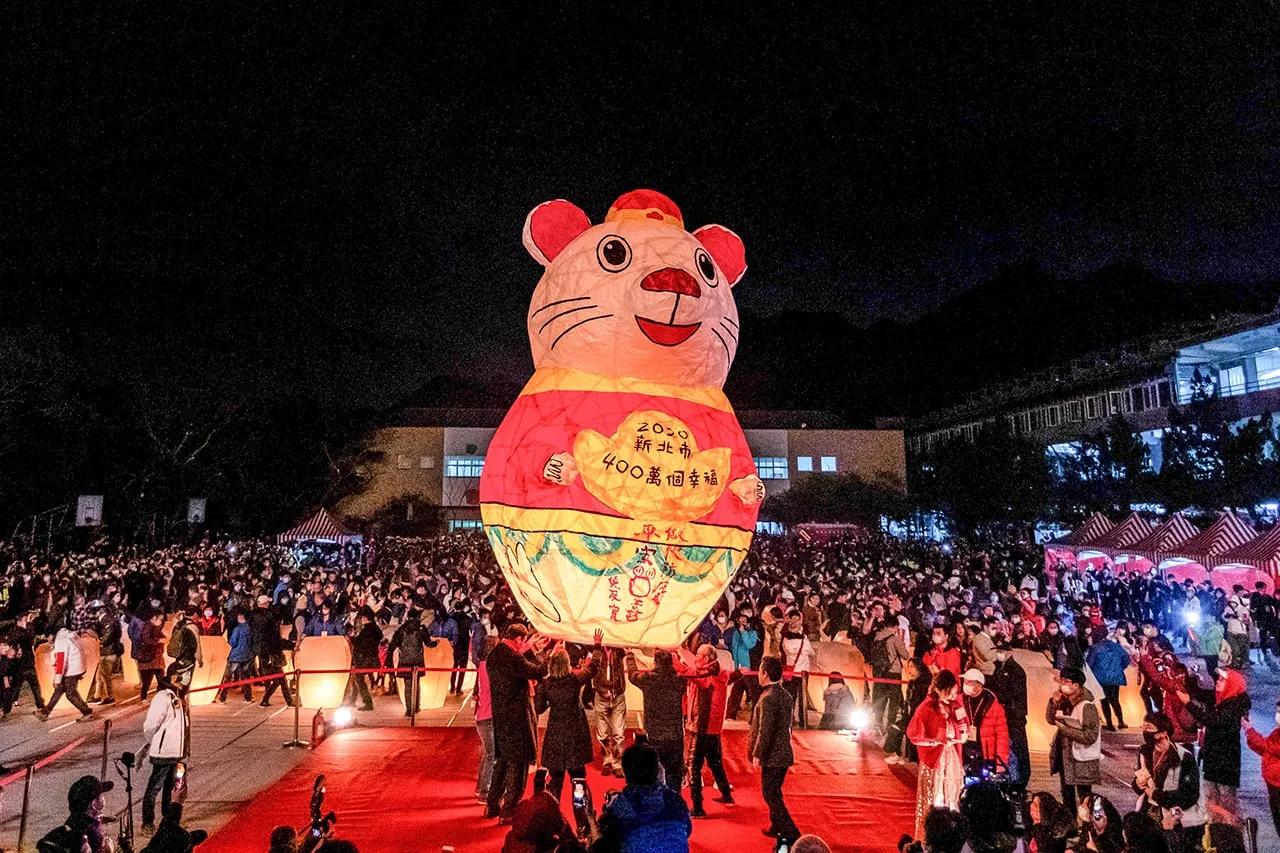
The lanterns go up a group at a time; in 2026 lasers were projected across the valley between waves.
Everyone leaves at once. Slip away early, or wait an hour for the train queue to thin.
Treat the day as a full outing. Reach Shifen by mid-afternoon and you have daylight for the walk to the waterfall, time to eat on Old Street and a chance to claim a spot near Shifen Square before the first release. The expected 2027 night falls on a Saturday, and weekends draw the heaviest crowds of all.
Decide your exit before you arrive. Everyone leaves at once when the last wave has gone up, and the queue for the train back is long. Either slip away a little early or settle in, buy something hot and wait an hour for it to thin. If the main night clashes with your trip, you can still launch a lantern on any ordinary day. Our Taiwan travel guide covers the rest of the island.
The story goes back to the early 19th century, when Qing rule reached these valleys only faintly. Bandits raided after the harvest, so families withdrew into the mountains for the winter, and a few men stayed behind to watch the village. When the danger had passed they sent lanterns into the sky. That was the sign for everyone to come home.
Over the generations the all-clear became a night for wishes. People now paint their hopes on the paper sides before letting go, and locals believe a lantern carries good luck with it. By the 1980s the custom was fading, and the Taiwan Tourism Bureau helped gather the lanterns into one place to bring visitors back. New Taipei City has run it as an organised festival since 1999.
The setting explains a lot. Pingxi is old coal country, and the railway that brings the crowds was laid to carry coal out of these hills. Jingtong, at the end of the line, still has its mining museum and dormitories from the Japanese era. Watching a lantern lift off from a platform built for coal wagons is part of what makes the night feel local.
From Taoyuan International, the Airport MRT express reaches Taipei Main Station every 15 minutes in 35 to 37 minutes. From the region, see Bangkok to Taipei flights or Chiang Mai to Taipei flights.
Northbound trains take about 30 minutes on an express, 50 on a local.
Most services start at Ruifang, some at Houtong or Badu. The 12.9 km single-track branch has seven stations; get off at Shifen, where the platform opens onto Old Street.
Trains are full both ways and you will probably stand to Ruifang. The organisers ask everyone to use public transport.
Book your bed in Taipei. The Pingxi Line villages have very few rooms, and a hotel near Taipei Main Station makes the train journey simplest.
Wait for New Taipei City's January announcement before you lock in flights, and choose a cancellable rate until then.
February in northern Taiwan is cool and damp. Taipei averages a high of 20.3°C and a low of 14.4°C, with about 102 mm of rain over twelve days (1991-2020 normals). Pingxi, in the hills, is usually cooler and wetter than the city.
The wait in the dark is the cold part; dress in layers.
Met at arrivals at Taiwan Taoyuan International Airport (TPE) and driven door to door to Shifen Square.
Others of this kind you opened on this device, so you can get back to them quickly.
No questions yet about Pingxi Sky Lantern Festival. Ask the community or our travel team, and the answer will show here once it is published.
Our team answers questions here
Festivals held in the same weeks, if you want to plan more than one.
Cultural Events, National Day, Social Festivals
Vietnam
2 photos
Cultural Events, Carnivals, Parade
Singapore City, Singapore
Cultural Events, Religious Festivals, Parade
Singkawang, Indonesia
Tell us where and when you want to go, and local travel experts send you offers for your trip.
General
Yes. Shifen Old Street, where the railway runs between the shopfronts, is set up for it any day of the year. You write your wishes on the paper and send it up from the street, which is how most visitors meet the custom.
Yes. Lanterns go up in Jingtong, Pingxi and Shifen, all on the same branch line. The big organised release is held in Shifen, though, and the two smaller villages make calmer places to try it yourself.
It is. The falls drop about 20 metres into a pool and often throw a rainbow on a bright afternoon. The smaller Eyeglass Waterfall is close by. Go in daylight, while there is still something to see.
Pingxi Old Street hides a rock shrine to Guanyin, a wartime air-raid shelter and the bell that once sounded the alarm. The Taiwan Coal Mine Museum, Yen Jing Dong Waterfall and Wufen Mountain are other reasons to break the journey.
Yes. Houtong sits near the start of the branch, and some Pingxi Line trains begin there. The whole village is cat-themed and you will meet plenty of cats, so an hour there fits neatly into the afternoon before you ride on to Shifen.
It was the Year of the Horse. The five main lanterns took the animal's shape, and the design won gold in the cultural heritage category at the 2026 Tokyo Design Awards.
Yes. Lantern releases are permitted only in Pingxi District, where the hills close in around the villages. For another mass release in Asia, look at Chiang Mai's Yi Peng Lantern Festival in Thailand later in the year.
About NT$80 in 2023. It allows unlimited rides on the branch for the day, which pays off quickly if you stop at Houtong, Shifen and Jingtong. On festival night, a pass also saves queuing for single tickets.
Booking
Not as of mid-October 2026; New Taipei City usually publishes the programme in January. Check its tourism website before booking anything you cannot change.
Getting there
The organisers ask everyone to use public transport on festival nights, and the narrow mountain roads jam badly. Even on a normal day the drive from Taipei can take hours depending on traffic and weather. The train is the sensible choice.
We use necessary cookies to make this site work. With your permission we would also like to remember your preferences, measure how the site is used, and show relevant ads and partner offers. You can change your mind at any time under "Cookie settings" on our Privacy policy page.

 Plan your trip with AI