

Venue
Ivrea, Metropolitan City of Turin, Piedmont, Italy

Battle of Oranges guide
The Battle of the Oranges suits travellers who can handle a rough food fight re-enacting a medieval uprising. It runs on the Sunday, Monday and Tuesday before Ash Wednesday, so it moves with Easter; check the official programme in early winter. Ivrea is small and overrun, so book early or base yourself in Turin.
The Battle of the Oranges is the climax of Ivrea's Historic Carnival, a food fight on a scale few towns would tolerate. For three winter afternoons, teams on foot pelt horse-drawn carts with oranges in the old squares of this Piedmont town north of Turin, re-enacting a medieval uprising against a tyrant.
For Ivrea it is a story of liberty, told every year with real force. The carnival has its own heroine, its own general and a set of rituals that run for weeks. The battle is rough. Fruit flies hard at close range, the cart crews wear protective masks for good reason, and by the end the cobbles are slick with juice and peel. Spectators who keep to the rules see something no other carnival in Italy offers.
Ivrea, Metropolitan City of Turin, Piedmont, Italy
Hotels near the venue fill up around the event dates.
Buy a red Phrygian cap, the berretto frigio, as soon as you arrive and wear it all afternoon. It marks you as a supporter of the revolt who is not fighting, and the throwers are not supposed to aim at anyone wearing one.
Treat it as a courtesy, not armour. Oranges go astray, and a cap does nothing for you if you wander close to a cart in the middle of an exchange.
You will stand still for long stretches, so wear warm layers under the old jacket.
The main battle area is fenced and ticketed. For Carnival Sunday in 2026, entry cost €15 plus booking fees, sold through TicketOne or at six gates on the day. Children under 12, Ivrea residents and people with disabilities went in free. Prices and sales for 2027 will appear on the carnival's official site, so check there before you travel.
Tall nets are strung around the main squares to protect spectators. Stay behind them, and keep children well back from the front where the oranges hit hardest.
Pipers and drummers gather in Piazza di Città at 08:30.
The General leads his mounted procession through town in the afternoon.
She steps out on the town hall balcony for the first time. Get into the square early.
Nine teams on foot fight the cart crews through the old squares.
Team prizes are announced and each district burns its scarli, poles bundled with dried heather.
Ceremonies close the season, with free polenta handed out from 11:00.
Ivrea is a small town, and for the three battle afternoons it is overrun. Book a room there early if you want to walk back to bed with orange pulp on your boots. Turin is the practical alternative. It has far more hotels at every price and an hourly direct train, so a single battle can be done as a day trip.
The real question is how much of carnival you want. One afternoon shows you the fighting. Arriving on the Saturday and leaving on Ash Wednesday adds the Mugnaia's first appearance, the Tuesday bonfires and the closing ceremonies, and it leaves you a quiet morning between battles for the town itself. Ivrea's 20th-century factories and offices, built by the Olivetti company, deserve that morning.
Watch the carnival's official site from early winter. The final programme and the ticket sale for the 2027 battle area are both published there, and the details can shift from year to year. Pack one set of clothes you never want to see again, and a sealed bag to carry it home in.
The story behind the battle is a revenge tale. Violetta, a miller's daughter, was claimed by the local tyrant for her wedding night and killed him instead. The town rose behind her, attacked his castle and put it to the torch. Every year Ivrea chooses a woman from the town to play her, under the title of the Mugnaia, and her balcony appearance is one of the most awaited moments of the season.
The battle restages that revolt with fruit. Nine teams of aranceri, the orange throwers, fight on foot for the people, each in its own colours. Riding the carts are masked crews playing the tyrant's guards, and the two sides trade oranges at close range through the old squares until the cobbles shine.
One figure belongs to a later century. Under Napoleonic rule the French administration merged the town's separate carnival celebrations into one in 1808, and the General, a rider in French uniform, dates from then. He opens proceedings on horseback and he has the last word at the end. Between them, the Mugnaia and the General turn a food fight into civic theatre, with roles handed down and filled anew each winter.
Turin airport is the nearest major gateway.
Regional trains from Torino Porta Susa reach Ivrea in about 45 minutes, every hour. By road the town is about 53 km from Turin.
Piazza di Città, Piazza Ottinetti and Piazza Freguglia, then the Borghetto and the Lungo Dora. Walk the circuit before 14:00 and note where the nets are strung.
Every visitor heads for the station at once after the last throw, so a later train is often the calmer choice.
Rooms in Ivrea are few for the battle afternoons. Book early to stay in town, or base yourself in Turin and take the train.
February in the Piedmont foothills is cold and mostly dry. The 1991–2020 normals at Torino Caselle give an average high of 10.2°C and a low of −0.3°C, with 47.1 mm of precipitation on about four days.
Met at arrivals at Milan Malpensa Airport (MXP) and driven door to door to Piazza di Città and surrounding squares.
Places to eat in Italy before or after the celebrations.
Sestiere San Polo 429, 30125 Venice, Italy
Cuisine:VenetianCicchetti
Via Cesare Sersale 1/7, 80139 Naples, Italy
Cuisine:Neapolitan pizzaPizzeria
Via dei Giubbonari 21, 00186 Rome, Italy
Cuisine:RomanItalian
Others of this kind you opened on this device, so you can get back to them quickly.
No questions yet about Battle of Oranges. Ask the community or our travel team, and the answer will show here once it is published.
Our team answers questions here
Festivals held in the same weeks, if you want to plan more than one.

Cultural Events, Carnivals, Parade
Cologne, Germany
2 photos
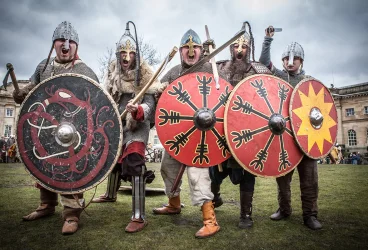
Cultural Events, Community Events, Parade
York, United Kingdom
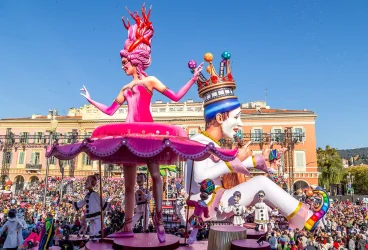
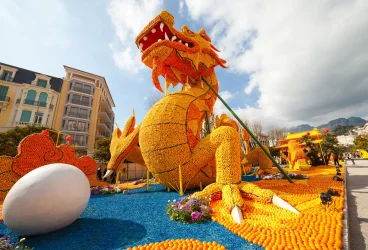
Cultural Events, Carnivals, Parade
Menton, France
1 photo
Festivals and events across Italy, with dates, venues and ticket details where available.

Cultural Events, Community Events, Fair
Milan, Italy
1 photo

Sporting Events, Cultural Events, Folk Festival
Pisa, Italy
1 photo

Sporting Events, Cultural Events, Folk Festival
Siena, Italy
1 photo
Tell us where and when you want to go, and local travel experts send you offers for your trip.
General
The fruit stands in for the stones thrown in the medieval uprising. Beans were the first missiles, apples came next, and oranges took over only in the 19th century.
Not from Piedmont. Oranges cannot grow in the Alpine foothills, so they are brought up from Sicily, mostly fruit left over from the southern winter crop.
Each of the nine teams on foot has its own name and colours. Among them are Asso di Picche, Morte, Diavoli, Scacchi and Pantera Nera, and their supporters follow them from square to square.
A woman from Ivrea is chosen each year to play the Mugnaia, the miller's daughter of the legend. Separately, a young girl is picked to play Violetta, so the heroine appears twice in the carnival.
The story never names him with certainty. Historians link him to the rulers of Ivrea in the 12th and 13th centuries. The legend itself gives him no reliable identity.
At the close of the final silent march he takes his leave in local dialect with a phrase promising to meet again on Thursday at one, a nod to the next carnival.
It can be if you ignore the rules. The oranges are thrown with real violence, which is why the cart crews wear masks. Spectators who stay behind the nets and wear the red cap keep themselves out of the worst of it.
The town's modernist industrial architecture. UNESCO listed Ivrea as a World Heritage Site in 2018 as a 20th-century industrial city shaped by Olivetti, and the factory and office buildings can be seen on foot between battles.
Yes. Venice holds its carnival over the same weeks of the year, and the two make an easy pairing on one trip through northern Italy. If food fights are the draw, Spain's La Tomatina is the other famous one.
Booking
Enormous quantities. One count from 1994 put the delivery at about 265,000 kg of oranges, all of it trucked north for the three afternoons.
We use necessary cookies to make this site work. With your permission we would also like to remember your preferences, measure how the site is used, and show relevant ads and partner offers. You can change your mind at any time under "Cookie settings" on our Privacy policy page.

 Plan your trip with AI