
 Holiday offers
Expat life in Thailand draws remote workers, retirees, teachers, families and company transferees for the same core reasons: a lower day-to-day cost than most Western countries, private hospitals with an international reputation, a large and settled foreign community, and a choice of very different places to live, from central Bangkok to the beaches of Phuket and the cooler hills around Chiang Mai. Moving to Thailand as an expat is very doable, but it runs on rules that newcomers often underestimate: you cannot own land, your visa determines almost everything else, and immigration expects regular address reports.
Comparing other destinations? Start with our guide to moving abroad in 2026.
This guide covers the settling-in side of the move: choosing a city and neighbourhood, renting or buying a home, healthcare, schools, taxes, culture and etiquette, safety, relationships and family life. For the detailed visa paperwork, job market and cost-of-living numbers, read our companion guide to working and living in Thailand; the two are written to be used together.
Expat life in Thailand: essential facts at a glance
- Visa: long stays need a non-tourist visa; options depend on work, age, family and passport
- Property: foreigners cannot own land; condos are allowed within a 49% foreign quota
- Reporting: long-stay visa holders confirm their address every 90 days
- Tax residence: 180 days or more in a calendar year
- Seasons: hot (March to May), rainy (about May to October), cool (November to February)
- Currency: Thai baht (THB)
- Language: Thai; English is common in Bangkok business districts and tourist areas
- Emergency: police 191, ambulance 1669, tourist police 1155
Is moving to Thailand as an expat right for you?
Thailand suits people who want an affordable, comfortable daily life with good private services and are willing to live within the visa system. It suits people less well if they need permanent security of residence quickly, want to own a house on its own land, or expect to work freely in any job.
Pros and cons of expat life in Thailand
| What works well | What to weigh carefully |
|---|---|
| Daily costs (food, transport, rent outside prime areas) are lower than in most Western cities | Imported goods, international schools and private insurance can cost as much as at home |
| Private hospitals in Bangkok and the big resort cities treat international patients every day | Private care is paid out of pocket or by insurance; cover gets harder to buy as you age |
| Large expat communities in Bangkok, Chiang Mai, Phuket, Pattaya and the islands | Visas must be renewed or extended, and 90-day reports never stop |
| Modern condos and a deep rental market | Foreigners cannot own land; houses are usually leased |
| Good domestic flights, BTS and MRT rail in Bangkok | Road safety is poor, and air quality in the north drops in the burning season |
| Warm climate all year | Heat from March to May and heavy rain in the wet season take time to get used to |
One more honest point: parts of Bangkok and Pattaya have well-known nightlife and red-light districts. They are easy to avoid, and most expats live far from them, but they shape how some outsiders see the country.
Visa routes for moving to Thailand as an expat
Your visa decides where you can work, how long you can stay and how often you must deal with immigration. Rules depend on your passport and change often, so always confirm the current requirements on the official Thai e-Visa portal or with the Royal Thai Embassy that handles your application.

- Non-Immigrant B visa and work permit. The standard route for anyone hired by a Thai employer. The employer supports the visa and the separate work permit from the Ministry of Labour; you may only do the job the permit describes. This is how teachers, company hires and transferees usually come in.
- Destination Thailand Visa (DTV). A five-year multiple-entry visa allowing stays of up to 180 days per entry, for remote workers, freelancers and people on courses such as Muay Thai or Thai cooking. Applicants show funds of at least 500,000 baht and apply from outside Thailand. Document rules changed on 31 August 2026, so check your embassy's checklist. Digital nomads paid from abroad are the main users.
- Non-Immigrant O and O-A. Retirement visas for applicants aged 50 and over who meet financial and insurance requirements, plus O visas for spouses and parents of Thai nationals. Extensions are usually yearly at the local immigration office, which makes this the usual path for retirees and people married to a Thai.
- LTR visa and Thailand Privilege. The Long-Term Resident visa targets high earners, wealthy pensioners and skilled professionals; Thailand Privilege is a paid membership that comes with a long-stay visa. Both cost more but cut down on renewals, a trade higher-income movers who value stability often accept.
Whatever the visa, two rules apply to almost everyone on a long stay. First, you must report your address to immigration every 90 days; reports can be filed from 15 days before to 7 days after the due date without a fine, and the count restarts each time you re-enter Thailand. Second, your landlord or hotel must register your address with immigration when you move in, so keep a copy of that notification for extensions.
 Umrah packages from Dhaka
Best places to live in Thailand as an expat
Most expats live in Bangkok, Chiang Mai, Pattaya, Phuket or on islands such as Koh Samui and Koh Tao. Each attracts a different crowd, and the choice affects your costs, social life and visa options more than most people expect.
Bangkok: the capital for careers and city living

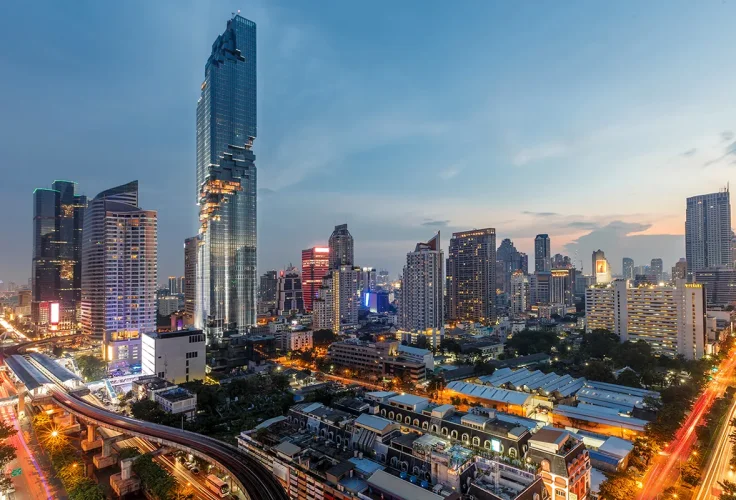
Bangkok is where most foreign professionals work and where the widest choice of housing, schools and hospitals sits. Expats cluster along the BTS Skytrain and MRT lines, which save hours a week in a city known for traffic. Sukhumvit, with Thong Lo and Ekkamai further east, has the densest mix of condos, restaurants and international supermarkets. Silom and Sathorn are the business districts, close to offices and embassies. Ari, north of the centre, is quieter and popular with younger residents, and the area around Victory Monument is a cheaper, more local transport hub.
The trade-offs are heat, traffic and a higher cost than elsewhere in the country. Choose your neighbourhood by commute: living near a station on the same line as your office or your children's school matters more than the condo itself.
- Expat areas: Sukhumvit, Thong Lo, Ekkamai, Silom, Sathorn, Ari
- Suits: professionals and families
- Getting around: BTS, MRT, taxis and ride-hailing apps
- Watch for: traffic, heat and seasonal smog
Chiang Mai: the northern base for remote workers and retirees

Chiang Mai combines an old walled city full of temples with modern districts such as Nimman, which is packed with cafés and co-working spaces. Rents are generally lower than in Bangkok, and the cool season from November to February is the most comfortable weather in the country. It has an established retiree community and a large population of remote workers.
The serious drawback is the burning season, roughly February to April, when agricultural fires push air pollution to unhealthy levels for weeks. Many residents leave the north during those months, and anyone with breathing problems should plan for it.
- Popular areas: Nimman, the Old City, Santitham
- Who lives here: remote workers and retirees
- Getting there: short domestic flight from Bangkok
- Watch for: smoke season from about February to April
Phuket and Pattaya: beach living with full services

Phuket is Thailand's largest island and has its own international airport, private hospitals and international schools, which makes it one of the few beach areas where families can settle without regular trips to Bangkok. Living costs are higher than in most of the country, and areas around the busiest beaches get crowded in high season. Pattaya, on the east coast about two hours by road from Bangkok, has a long-established expat and retiree community, condos at many price levels and easy access to the capital. Its nightlife reputation is real, but residential areas such as Jomtien are calmer.
- Popular areas: Rawai, Kathu, Chalong (Phuket); Jomtien (Pattaya)
- Typical residents: families (Phuket), retirees (Pattaya)
- Getting around: you will need a car or scooter
- Watch for: high-season prices and road safety
Koh Samui and Koh Tao: island life on the Gulf

Koh Samui has an airport, private hospitals and a sizeable foreign community, many working in hospitality, diving or running small businesses. Koh Tao is much smaller and centred on the diving industry. Island life suits people who work remotely or in tourism and are happy with a small social circle. Specialist healthcare, wider schooling choices and bigger shops mean trips to the mainland or Bangkok, and ferry schedules depend on the weather.
- Main industries: tourism, diving, wellness
- Draws: remote workers, divers, small-business owners
- Getting there: flights to Samui; ferries from the mainland
- Watch for: limited specialist care and schools
Cost of living in Thailand: a monthly budget for one person
How much you need depends far more on where you live and how you live than on Thailand as a whole. Bangkok is the most expensive place for expats, Phuket and the islands are close behind because of tourist pricing, and Chiang Mai and smaller cities are noticeably cheaper. The ranges below are for one person, including rent, and are drawn from 2026 expat cost surveys; they assume a modern condo (a Thai-style room costs less), and a mix of local and international food.
| Item per month | Bangkok | Chiang Mai |
|---|---|---|
| One-bedroom condo | About THB 15,000 to 30,000 in central areas | About THB 8,000 to 15,000 |
| Electricity, water and internet | Higher in Bangkok because of constant air conditioning | Lower outside the hot season |
| Total for one person, modest lifestyle | About THB 30,000 to 65,000 | About THB 20,000 to 42,000 |
The biggest swing factors are rent, air conditioning (electricity is billed by the condo and some charge above the state rate), imported food and wine, and private health insurance, which becomes expensive after 60. Eating at Thai street stalls and markets keeps food costs very low, while a Western-style diet can double the grocery bill. International school fees for children, covered later in this guide, can outweigh every other cost. Build a cushion for visa costs and an annual trip home.
Banking, SIM cards and opening a Thai bank account
A Thai bank account makes daily life much easier: rent, bills and most local apps run on bank transfers and PromptPay QR codes, and some long-stay visas require funds to be held in a Thai account. It has, however, become harder for foreigners to open one. Since early 2025, most large Thai banks have tightened their rules as part of anti-fraud and anti-money-laundering checks, and as of October 2026 they generally do not open accounts for people on tourist entry or the Destination Thailand Visa.
- What banks usually ask for: your passport with a long-stay non-immigrant visa (such as a retirement, marriage, Elite or work visa), a Thai address, often a work permit or a letter from your employer, embassy or school, and a Thai phone number.
- Branch matters. Rules vary between Bangkok Bank, Kasikornbank, SCB and Krungsri, and even between branches of the same bank, so call ahead or ask your employer or visa agent which branch is used to foreign customers.
- No online opening for non-residents. Accounts are opened in person; the bank app is activated at the counter.
- Until then: a multi-currency card from a home bank or a money transfer service covers the first weeks; Thai ATMs charge foreign cards a fixed fee on each withdrawal.
A Thai SIM is the easier step. AIS and True (which merged with dtac in 2023) sell tourist and monthly plans at the airport and in shopping malls. Every SIM must be registered to your passport, and staff take a photo at the counter, so buy it in person at an official shop. Keep the same number once you have your bank account, because the bank app and one-time passwords are tied to it.
 Plan your trip with AI
Renting and buying a home in Thailand as a foreigner
Renting is the normal first step, and most expats keep renting. Thailand has a large rental market of condos, serviced apartments and houses, with leases typically signed for a year and a deposit of one or two months' rent. Condos are the usual choice for newcomers: they come with security, maintenance, a pool or gym, and often furniture, and they are easier to find near public transport than houses. Property portals such as Thailand Property, FazWaz and Siam Real Estate list rentals and sales across the country, and local agents usually take their fee from the landlord.
Buying is far more restricted than many sales pitches suggest. Foreigners generally cannot own land. They can own a condominium unit freehold, but foreign ownership in each building is capped at 49% of the total sellable floor area, and the purchase money must be brought into Thailand in foreign currency, with the bank paperwork to prove it. As of 2026, proposals to raise the quota have been discussed but the 49% limit remains law. Houses are normally held through a long lease on the land, and arrangements that use Thai nominees to hold land for a foreigner are illegal. Take advice from an independent Thai lawyer before paying any deposit.
Healthcare and insurance for expats in Thailand
Thailand's private hospitals are the main reason many retirees feel comfortable moving. Large private groups in Bangkok, Phuket, Pattaya and Chiang Mai have English-speaking staff, international patient departments and modern diagnostic equipment, and women's health centres in Bangkok cover everything from pregnancy and delivery to menopause care and cancer screening. Public hospitals are cheaper and clinically capable but busier, with less English spoken.

Private care is paid by you or your insurer, so health insurance is the single most important expense to plan. Some visas, including certain retirement visas, require proof of cover. Employees in formal jobs are enrolled in the Social Security system through payroll, which gives access to treatment at a registered hospital. Since 7 December 2025, employed women are entitled to 120 days of maternity leave, with the employer paying wages for up to 60 days and Social Security covering eligible employees for part of the rest. Our guide to medical treatment in Thailand explains how hospital visits and costs work in practice.
Taxes for expats living in Thailand
You become a Thai tax resident if you spend 180 days or more in Thailand in a calendar year, whatever your visa. Residents pay tax on Thai-source income and on foreign income brought into Thailand; under rules in force since 1 January 2024, foreign income earned from that date is taxable when it is remitted. Double tax treaties can reduce the bill. This area is still being clarified, so speak to a Thai tax adviser before transferring large sums.
Thai personal income tax rates (net annual income, THB)
| Taxable income band | Rate |
|---|---|
| 0 to 150,000 | Exempt |
| 150,001 to 300,000 | 5% |
| 300,001 to 500,000 | 10% |
| 500,001 to 750,000 | 15% |
| 750,001 to 1,000,000 | 20% |
| 1,000,001 to 2,000,000 | 25% |
| 2,000,001 to 5,000,000 | 30% |
| Over 5,000,000 | 35% |
The rates apply to income after allowances and deductions are taken off your gross salary. Employers deduct tax monthly; others file an annual return with the Revenue Department.
The annual return covers the calendar year and is due by 31 March of the following year on paper, with a short extension for online filing (8 April in recent years; check the Revenue Department's notice each spring). Form PND 91 is for people whose only income is salary; PND 90 is for anyone with other income, such as rent, dividends or remitted foreign earnings. You need a Thai tax identification number before filing. Tax still owing after the deadline attracts a surcharge of 1.5% per month, so late filing gets expensive quickly.
Schools and education for expat children in Thailand
Thai public schools teach in Thai and are mainly attended by Thai children, so most expat families choose an international school or a private school with an English Programme. International schools follow British, American, International Baccalaureate or other curricula; the largest choice is in Bangkok, with smaller selections in Chiang Mai, Phuket and Pattaya. English Programme schools teach part of the Thai curriculum in English and usually cost less. Some families homeschool or use tutors, and a few schools offer special-needs support, though places are limited outside Bangkok. Fees and waiting lists vary widely, so visit schools before committing to a neighbourhood. As a rough guide as of October 2026, published fee surveys put Bangkok international school tuition at anywhere from about THB 200,000 a year at smaller community schools to more than THB 1,000,000 for senior years at premium British or IB schools, before registration fees, capital levies, school buses and lunches. Check that a school holds external accreditation from a body such as WASC, CIS or NEASC; membership of the International Schools Association of Thailand is an association status, not an inspection. Families traveling before the move will find ideas in our guide to Thailand with kids.
Thai culture and etiquette every expat should know
Thai culture blends Theravada Buddhism with Indian and Chinese influences, and politeness, calm and respect for hierarchy shape daily life. Learning a few rules early saves embarrassment and makes neighbours and colleagues more welcoming.
- Respect the monarchy. Criticism of the royal family is a serious criminal offence. Stand when the royal anthem plays before films in cinemas.
- Head and feet. Do not touch anyone's head, point with your feet or put your feet up on furniture. Point with an open hand.
- Shoes off indoors. Take off your shoes when entering homes, temples and many small shops; look for shoes at the door.
- Dress modestly. Cover shoulders and knees at temples and government offices. Topless sunbathing is against Thai custom even on tourist beaches.
- Keep your cool. Raising your voice causes loss of face on both sides and rarely gets results. Patience works better with landlords and officials alike.
- Protect against mosquitoes. Dengue is present across the country, especially in the rainy season. Use repellent and screens, and empty standing water around the home.
The climate follows three seasons: hot from March to May, rainy from about May to October as the southwest monsoon arrives, and cool and dry from November to February. The Gulf coast islands, including Koh Samui, have a different pattern, with their heaviest rain later in the year.
Safety in Thailand for expats, including women
Most expats find daily life in Thailand safe. Violent crime against foreigners is uncommon; the more common risks are traffic accidents, petty theft in crowded areas, scams aimed at newcomers and disputes that start in bars. Road safety deserves real attention: motorbike crashes are a leading cause of injury, so wear a helmet and hold the correct licence, which insurers often require before paying a claim.
Women living alone in Thailand generally report feeling safe in cities and expat areas, with the usual precautions at night: use registered taxis or ride-hailing apps, watch your drink, and choose condos with staffed security. There is no special dress code for foreign women, but modest clothing is expected at temples and official buildings. In an emergency, call police on 191, the ambulance service on 1669, or the Tourist Police on 1155, which has English-speaking operators.
The road figures explain why traffic tops the list. The World Health Organization put Thailand's road death rate at 25.4 per 100,000 people in 2021, among the highest in Asia, and motorcycle riders and passengers make up roughly three quarters of those killed. If you ride, buy a proper full-face helmet, avoid riding after drinks, and take extra care in the rainy season, when roads are slick and visibility drops.
Relationships and marriage for expats in Thailand
Many expats meet partners in Thailand through work, friends, community groups or dating apps, and mixed Thai-foreign couples are common in every city. Take the usual care with online contacts: romance scams that end in requests for money do target foreigners.
A marriage is legally valid in Thailand only once it is registered at a district office (amphoe, or khet in Bangkok). Foreign nationals usually need a document from their own embassy confirming they are free to marry, which is then translated into Thai and legalised by the Thai Ministry of Foreign Affairs before registration. Requirements differ by nationality, so check with your embassy first. A registered marriage to a Thai national opens the Non-Immigrant O visa route mentioned above.
Property is the area where foreign spouses most often get caught out. Marriage does not lift the rule that foreigners generally cannot own land, and land bought during the marriage is normally registered to the Thai spouse alone. If you want a prenuptial agreement, it must be signed and registered at the district office at the same time as the marriage; one made afterwards has no force. Take advice from a Thai family lawyer before registering, especially if either partner has assets abroad.
Life for young expats and families in Thailand
Young expats tend to start in Bangkok or Chiang Mai, where jobs, co-working spaces and social life are easiest to find, and many teach English or work remotely in their first year. Families usually settle near their school of choice in Bangkok or Phuket, where healthcare, parks, malls and family-friendly condos are concentrated. Domestic help is affordable compared with Western countries, which changes daily routines for many families. Retirees, meanwhile, lean toward Chiang Mai, Hua Hin, Pattaya and the islands for a slower pace.
Families moving with an employer should sort out dependants' visas early. A spouse and unmarried children under 20 of someone working in Thailand can apply for a Non-Immigrant O visa as dependants, each with their own application, and stays can then be extended a year at a time while the main visa holder keeps their status. Dependants cannot work on this visa; a spouse who wants a job needs their own work permit.
Spend a few weeks in your shortlisted city before signing a lease. Compare flights to Bangkok, Chiang Mai and Phuket. Search flights
Planning a trip to Thailand? Read our Thailand travel guide, compare hotels in Thailand, browse tours or search flights.













{{item.get_author.first_name}} {{item.get_author.last_name}}
{{item.comment_txt}}
{{item_reply.get_author.first_name}} {{item_reply.get_author.last_name}}
@ {{item_reply.reply_to}}, {{item_reply.reply_txt}}