
The Statue of Liberty heads America's famous landmarks, with the Golden Gate Bridge, Mount Rushmore and the Grand Canyon region, and this guide adds one famous landmark for every other state too. The United States is too big to see in one trip, so it picks one famous landmark in each of the 50 states, arranged in the order the states joined the Union, from Delaware in 1787 to Hawaii in 1959, so the list reads like a short history of the country: Revolutionary sites on the East Coast, civil rights landmarks in the South, frontier towns on the plains, and the volcanic and glacial scenery of the West, Alaska and the Pacific.
Each entry gives the practical details you need to plan a visit in 2027: where it is, whether it costs anything to enter, the best time to go, how long to allow, and one tip or caveat. Prices and access rules change, so the entry column simply says "paid" without quoting a fee unless the figure has been confirmed for 2026. For more history-focused sites, see our list of historic landmarks in the USA, and for regional food stops along the way, the guide to traditional American dishes and where to eat them.
How these landmarks were chosen: one site per state that is nationally recognised, open to visitors and tells part of that state's story, mixing history, engineering and natural wonders. Facts, opening status and access rules were checked against official park, museum and tourism sources in October 2026. Several sites have changed recently: the Salt Lake Temple reopens with a public open house in 2027, Denali's park road is reopening in phases after a landslide, and Havasupai permits are now sold directly by the Tribe.
- States, one landmark each: 50
- Delaware, first state: 1787
- Hawaii, last state: 1959
- UNESCO World Heritage sites: 6
Quick comparison table of 50 famous US landmarks
Browse by region or season and click through to the full entry.
| # | State | Landmark | Type | Entry | Best time |
|---|---|---|---|---|---|
| 01 | Delaware | Caesar Rodney Statue | Revolutionary history | Free, outdoors | Any season; spring for the square |
| 02 | Pennsylvania | Liberty Bell | Independence National Historical Park | Free | Early morning, autumn or spring |
| 03 | New Jersey | Atlantic City Boardwalk | Seaside icon | Free to walk | June to September for the beach |
| 04 | Georgia | Ebenezer Baptist Church | Civil rights history | Free | Year-round; January around MLK Day is busiest |
| 05 | Connecticut | Mystic Seaport Museum | Maritime museum | Paid admission (check official site) | May to October |
| 06 | Massachusetts | Plymouth Rock | Pilgrim history | Free | Late spring to autumn |
| 07 | Maryland | Fort McHenry | National monument | Fee for the star fort (check NPS) | Spring and autumn |
| 08 | South Carolina | Fort Sumter | Civil War site | Free park; paid ferry | March to May, October |
| 09 | New Hampshire | Mount Washington Cog Railway | Historic railway | Paid ticket (book online) | Late June to mid-October |
| 10 | Virginia | Monticello | UNESCO World Heritage Site | Timed paid tickets | April to June, October |
| 11 | New York | Statue of Liberty | National monument | Paid ferry ticket | Spring and autumn mornings |
| 12 | North Carolina | Wright Brothers National Memorial | Birthplace of flight | Entrance fee (check NPS) | April to June, September to October |
| 13 | Rhode Island | The Breakers | Gilded Age mansion | Paid ticket (Preservation Society) | May to October; December for holiday décor |
| 14 | Vermont | Camel's Hump | Mountain and state park | Free | Late June to mid-October |
| 15 | Kentucky | Kentucky Derby at Churchill Downs | Sporting landmark | Paid tickets; museum paid | First Saturday of May (May 1, 2027) |
| 16 | Tennessee | Ryman Auditorium | Music venue | Paid tours and concerts | Year-round; book shows early |
| 17 | Ohio | Rock and Roll Hall of Fame | Music museum | Paid admission | Year-round |
| 18 | Louisiana | Oak Alley Plantation | Historic plantation | Paid admission | October to April (milder weather) |
| 19 | Indiana | Indianapolis Motor Speedway | Racing landmark | Paid museum and tours | May for the Indy 500 |
| 20 | Mississippi | Mississippi Blues Trail | Music heritage route | Markers free; museums paid | Spring and autumn; April festivals |
| 21 | Illinois | Willis Tower | Skyscraper | Paid Skydeck tickets | Clear days, any season |
| 22 | Alabama | Edmund Pettus Bridge | Civil rights landmark | Free | Year-round; early March anniversary events |
| 23 | Maine | Portland Head Light | Lighthouse | Free park; paid parking | May to October |
| 24 | Missouri | Gateway Arch | National park | Free grounds; paid tram | Spring and autumn |
| 25 | Arkansas | Buffalo National River | National river | Free; camping fees | March to May for floating |
| 26 | Michigan | The Henry Ford Museum | History museum | Paid admission per venue | May to October for Greenfield Village |
| 27 | Florida | Kennedy Space Center Visitor Complex | Space exploration | Paid admission | October to April (cooler) |
| 28 | Texas | The Alamo | Texas history | Free church entry; paid tours | October to April |
| 29 | Iowa | High Trestle Trail Bridge | Trail bridge | Free | May to October; evenings |
| 30 | Wisconsin | Taliesin | UNESCO architecture | Guided tours only (paid) | May to October |
| 31 | California | Golden Gate Bridge | Engineering icon | Free to walk; toll southbound | September and October (least fog) |
| 32 | Minnesota | Headwaters of the Mississippi at Lake Itasca | State park | Vehicle permit required | June to September |
| 33 | Oregon | Crater Lake | National park | Park entrance fee | July to September |
| 34 | Kansas | Dodge City | Wild West town | Paid museum | June to August |
| 35 | West Virginia | New River Gorge Bridge | National park and bridge | Free viewpoints; paid BridgeWalk | May to October; Bridge Day in October |
| 36 | Nevada | Las Vegas Strip | Entertainment district | Free to walk; shows paid | March to May, October to November |
| 37 | Nebraska | Chimney Rock | Oregon Trail landmark | Small fee for visitor centre | May to October |
| 38 | Colorado | Colorado National Monument | Canyon country | Park entrance fee | April to June, September to October |
| 39 | North Dakota | Painted Canyon Overlook, Theodore Roosevelt National Park | Badlands | Park entrance fee | May to September |
| 40 | South Dakota | Mount Rushmore National Memorial | National memorial | Free; parking fee | May to September |
| 41 | Montana | Wild Goose Island, Glacier National Park | Mountain lake | Park entrance fee | July to mid-September |
| 42 | Washington | Space Needle | Observation tower | Paid timed tickets | July to September (clearest) |
| 43 | Idaho | Middle Fork of the Salmon River | Wilderness river | Permit or outfitter trip | June to September |
| 44 | Wyoming | Old Faithful, Yellowstone National Park | Geyser | Park entrance fee | May to October |
| 45 | Utah | Salt Lake Temple and Temple Square | Religious landmark | Free (open house tickets 2027) | April to October 2027 open house |
| 46 | Oklahoma | Oklahoma City National Memorial | Memorial and museum | Free outdoors; paid museum | Year-round; evenings for the lit chairs |
| 47 | New Mexico | Chaco Culture National Historical Park | UNESCO ancestral Puebloan site | Park entrance fee | April to May, September to October |
| 48 | Arizona | Havasupai Falls | Waterfalls on tribal land | Tribal permit required | March to May, September to October |
| 49 | Alaska | Denali (Mount McKinley) | Highest peak in North America | Park entrance fee; bus tickets | Late May to early September |
| 50 | Hawaii | USS Arizona Memorial, Pearl Harbor | WWII memorial | Free program; $1 booking fee | Year-round; book early |
50 states, 50 landmarks: the full state-by-state guide
Delaware: Caesar Rodney Statue

The bronze equestrian statue in Rodney Square, downtown Wilmington, honours the Delaware delegate whose overnight ride changed the vote on independence. On the night of July 1 to 2, 1776, Caesar Rodney rode from Dover to Philadelphia through a thunderstorm to break a tie in Delaware's delegation, so the colony could vote for independence on July 2. The same ride appears on Delaware's state quarter. The statue takes ten minutes to see, so pair it with the Wilmington riverfront, the Delaware History Museum, or the old State House in Dover, where Delaware's colonial assembly met. Delaware ratified the Constitution first, on December 7, 1787, which is why it opens this list.
- Location: Rodney Square, Wilmington
- Entry: Free, outdoors
- Best time: Any season; spring for the square
- Time needed: 15 minutes
It makes an easy leg-stretch for anyone driving I-95 between Philadelphia and Baltimore.
Pennsylvania: Liberty Bell
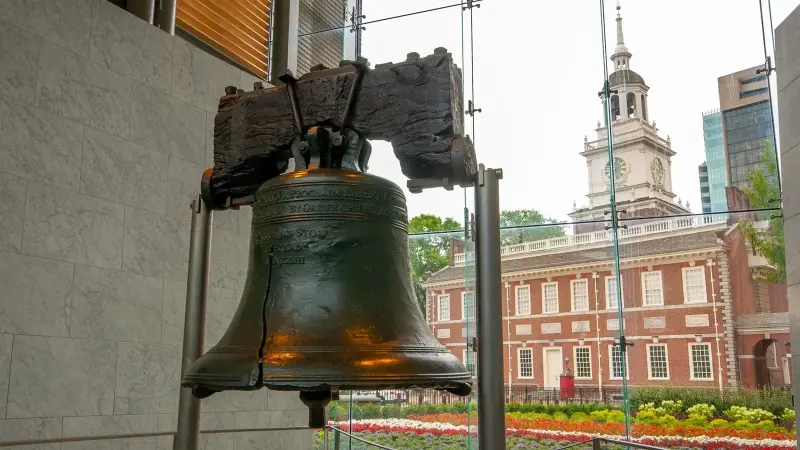
The Liberty Bell hangs in the Liberty Bell Center on Market Street, across from Independence Hall in Philadelphia. Cast in the 1750s for the Pennsylvania State House, the bronze bell carries the inscription "Proclaim liberty throughout all the land unto all the inhabitants thereof", and abolitionists later adopted it as a symbol, which is how it got its name. Tradition links it to the first public reading of the Declaration of Independence on July 8, 1776, although historians debate whether it rang that day. The famous crack ended its use as a working bell in the 19th century. Entry to the Liberty Bell Center is free and first come, first served; expect a security line in summer. Independence Hall next door needs a timed ticket for much of the year.
- Location: Market St, Philadelphia
- Entry: Free
- Best time: Early morning, autumn or spring
- Time needed: 30 to 45 minutes
Insider tip: join the line at opening, then book an Independence Hall slot for later the same day.
New Jersey: Atlantic City Boardwalk

Atlantic City opened America's first boardwalk in June 1870, originally to stop beachgoers tracking sand into hotel lobbies and railway carriages. Today it runs for miles along the Atlantic past casino resorts, piers, arcades and saltwater taffy shops, and walking or renting a bike at sunrise is the best way to see it. Summer brings the beach crowds and concerts; out of season the boardwalk is windswept and quiet, and hotel rates fall sharply. Rolling chairs, the wicker pushcarts that date back to the 19th century, still carry visitors along the boards. The city is about 2.5 hours by bus or train from New York and around 1.5 hours from Philadelphia.
- Location: Atlantic City, New Jersey
- Entry: Free to walk
- Best time: June to September for the beach
- Time needed: Half a day
From New York or Philadelphia, it works as a beach-and-boardwalk weekend.
Georgia: Ebenezer Baptist Church

Ebenezer Baptist Church on Auburn Avenue in Atlanta is where Martin Luther King Jr. was baptised and later served as co-pastor alongside his father. The restored Heritage Sanctuary is part of the Martin Luther King Jr. National Historical Park, which also includes his birth home a short walk up the street, the visitor centre and the King Center, where Dr. King and Coretta Scott King are buried. Recordings of his sermons play inside the old sanctuary, and many visitors sit for a while to listen. Admission to the church and visitor centre is free; tours of the birth home are limited, so check the park website for current arrangements.
- Location: Auburn Ave, Atlanta
- Entry: Free
- Best time: Year-round; January around MLK Day is busiest
- Time needed: 2 to 3 hours for the district
Few places explain the civil rights movement as directly as this street.
Connecticut: Mystic Seaport Museum

Mystic Seaport Museum, founded in 1929, is one of America's first living history museums: a recreated 19th-century coastal village on about 19 acres beside the Mystic River, with more than 60 historic buildings and working shipwrights, coopers and printers. Its fleet includes four vessels that are National Historic Landmarks, among them the Charles W. Morgan of 1841, the last wooden whaling ship in the world. Allow most of a day if you want to board the ships and see the shipyard. Mystic village, with its drawbridge and pizza made famous by the film Mystic Pizza, is a short walk away, and the town sits roughly midway between New York and Boston on I-95.
- Location: Mystic, Connecticut
- Entry: Paid admission (check official site)
- Best time: May to October
- Time needed: 4 to 6 hours
Families and anyone curious about New England's whaling past get the most from it.
Massachusetts: Plymouth Rock

Plymouth Rock sits under a granite portico built in 1921 on the waterfront of Pilgrim Memorial State Park in Plymouth. Tradition holds that the Mayflower passengers stepped onto it in 1620, although the earliest written claim dates from more than a century later. The rock itself is smaller than most visitors expect (it was broken and moved several times), so treat it as a short stop and spend the day in Plymouth: the Mayflower II replica in the harbour and the living history village at Plimoth Patuxet Museums give the fuller story, including that of the Wampanoag people who lived here first. Plymouth is about an hour south of Boston.
- Location: Water St, Plymouth
- Entry: Free
- Best time: Late spring to autumn
- Time needed: 20 minutes (plus museums)
A combination ticket covers both the Mayflower II and Plimoth Patuxet.
Maryland: Fort McHenry

The star-shaped Fort McHenry guarded Baltimore Harbor in September 1814, when British ships bombarded it for about 25 hours. The fort held, and the sight of the large American flag flying the next morning inspired Francis Scott Key to write the poem that became "The Star-Spangled Banner", the national anthem. Today the Fort McHenry National Monument and Historic Shrine has a visitor centre film, restored barracks and ramparts with harbour views. Rangers raise and lower a replica flag on many days. A seasonal water taxi from Baltimore's Inner Harbor makes the trip part of the fun.
- Location: Locust Point, Baltimore
- Entry: Fee for the star fort (check NPS)
- Best time: Spring and autumn
- Time needed: 2 hours
Pair it with an afternoon on Baltimore's Inner Harbor.
South Carolina: Fort Sumter

The Civil War began here on April 12, 1861, when Confederate batteries opened fire on the Union garrison of Fort Sumter at the mouth of Charleston Harbor. After about 34 hours the fort surrendered. Fort Sumter is reachable only by boat: the authorised concession ferry leaves from Liberty Square in downtown Charleston and from Patriots Point in Mount Pleasant, and the round trip with an hour on the island takes about two and a quarter hours. The ferry ride gives fine views of Charleston's waterfront. Book ahead in spring and summer, when boats sell out, and visit Fort Moultrie on Sullivan's Island for the other side of the story.
- Location: Charleston Harbor, South Carolina
- Entry: Free park; paid ferry
- Best time: March to May, October
- Time needed: About 2.5 hours
The first morning ferry is cooler and less crowded.
New Hampshire: Mount Washington Cog Railway

Sylvester Marsh conceived a railway up Mount Washington in the 1850s, patented his cog mechanism in 1861, and the first train reached the summit on July 3, 1869, making it the world's first mountain-climbing cog railway. It is still the second-steepest rack railway on Earth after Switzerland's Pilatus line, with a maximum grade of about 37 percent on the trestle known as Jacob's Ladder. Trains climb to the 6,288-foot summit of the highest peak in the northeastern US, known for some of the world's most extreme weather. Bring warm layers even in July, and book in advance for summer and autumn foliage weekends.
- Location: Bretton Woods, White Mountains
- Entry: Paid ticket (book online)
- Best time: Late June to mid-October
- Time needed: 3 hours round trip
You get summit views without hiking a step.
Virginia: Monticello

Monticello, Thomas Jefferson's hilltop home outside Charlottesville, is the only presidential home in the US on the UNESCO World Heritage List (together with Jefferson's University of Virginia). Jefferson designed and redesigned the house over 40 years, drawing on Palladian and French neoclassical ideas, and filled it with his own inventions. Guided house tours run on timed tickets, and the plantation tours explain the lives of the hundreds of enslaved people who worked the estate, including the Hemings family. The gardens and views over the Piedmont are best in late spring. Charlottesville is about two hours from Washington, D.C.
- Location: Charlottesville, Virginia
- Entry: Timed paid tickets
- Best time: April to June, October
- Time needed: 3 to 4 hours
Insider tip: add the Behind-the-Scenes or Hemings family tours if available.
New York: Statue of Liberty
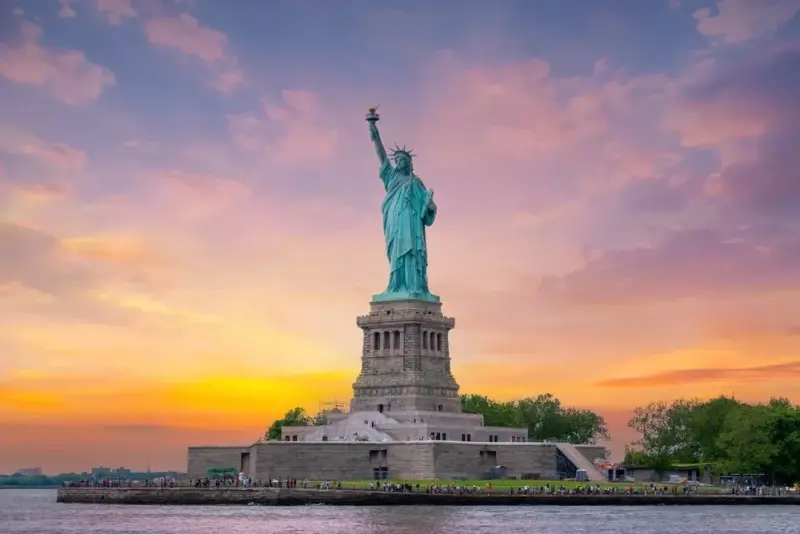
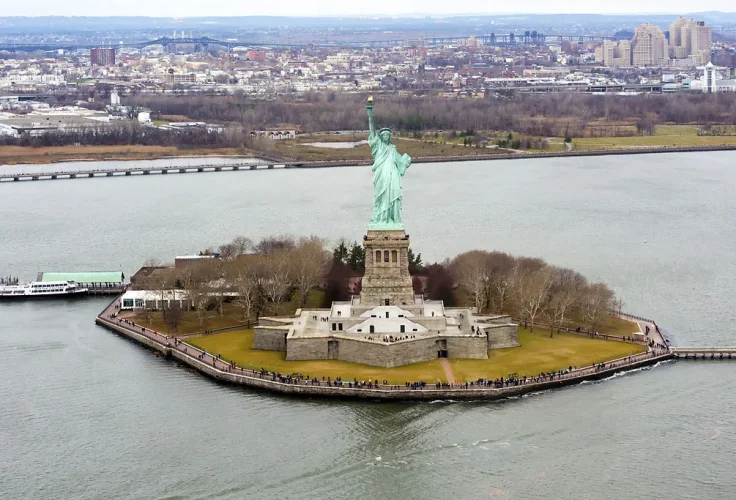
A gift from France, the Statue of Liberty was dedicated on October 28, 1886 on what is now Liberty Island in New York Harbor. Her tablet carries the date of the Declaration of Independence, July IV MDCCLXXVI, and for millions of immigrants arriving at nearby Ellis Island she was the first sight of America. Statue City Cruises is the only authorised ticket seller and ferry operator, with departures from Battery Park in Manhattan and Liberty State Park in New Jersey; the same ferry stops at Ellis Island. Pedestal and crown access is limited and must be reserved in advance; the crown climb is 162 steps with no lift. Allow a full morning for both islands.
- Location: Liberty Island, New York Harbor
- Entry: Paid ferry ticket
- Best time: Spring and autumn mornings
- Time needed: 4 to 5 hours with Ellis Island
Insider tip: buy only from the official seller and book crown tickets weeks ahead.
North Carolina: Wright Brothers National Memorial

On December 17, 1903, at Kill Devil Hills on North Carolina's Outer Banks, Wilbur and Orville Wright made the first controlled, powered, sustained flights in a heavier-than-air machine, after three years of glider tests in the steady coastal winds. The Wright Brothers National Memorial marks the spot with a granite monument on Big Kill Devil Hill, markers for the first four flights, reconstructed 1903 camp buildings and a visitor centre with a full-size reproduction of the Flyer. Walking the flight line and climbing the hill to the monument takes about an hour. The Outer Banks beaches and Cape Hatteras lighthouse make it an easy addition to a coastal road trip.
- Location: Kill Devil Hills, Outer Banks
- Entry: Entrance fee (check NPS)
- Best time: April to June, September to October
- Time needed: 1.5 to 2 hours
Aviation fans can fold it into an Outer Banks beach week.
Rhode Island: The Breakers
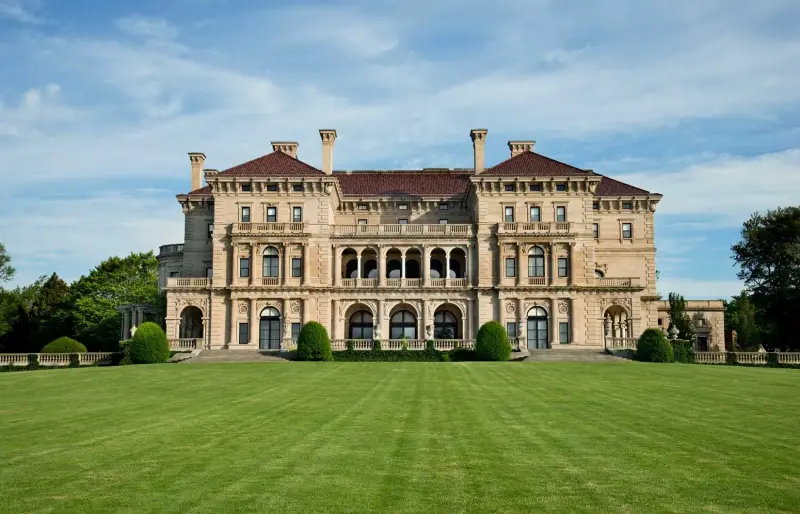
The Breakers is the grandest of the Newport mansions, a 70-room Italian Renaissance-style "summer cottage" built between 1893 and 1895 for Cornelius Vanderbilt II, designed by Richard Morris Hunt and facing the Atlantic on Ochre Point. Its rooms are lined with marble, gilt and mosaic, and the Great Hall rises 45 feet. The house is run by the Preservation Society of Newport County, whose tickets also cover other mansions such as Marble House and The Elms. Walk the Cliff Walk, the public path that runs between the mansions and the ocean, for the best outside views. Newport is about 1.5 hours from Boston and Providence.
- Location: Ochre Point Ave, Newport
- Entry: Paid ticket (Preservation Society)
- Best time: May to October; December for holiday décor
- Time needed: 1.5 hours plus Cliff Walk
Arrive at opening, before the tour buses.
Vermont: Camel's Hump

Camel's Hump, at about 4,083 feet, is tied for Vermont's third-highest peak and is the highest undeveloped summit in the state, with no ski lifts or roads to the top. Its double-humped outline appears on Vermont's state quarter. The usual routes climb from the Burrows Trail on the west side or the Monroe Trail on the east, roughly 5 to 7 miles round trip with steep rock near the top and an open alpine summit with views to Lake Champlain and the Adirondacks. The fragile alpine plants are protected, so stay on the rock. Trails are closed during mud season in spring.
- Location: Camel's Hump State Park, near Waterbury
- Entry: Free
- Best time: Late June to mid-October
- Time needed: 4 to 6 hours hiking
Caveat: trails close in spring mud season, typically into late May.
Kentucky: Kentucky Derby at Churchill Downs

The Kentucky Derby is run at Churchill Downs in Louisville on the first Saturday of May. First held on May 17, 1875, it is the longest continuously held major sporting event in the US, a 1¼-mile race for three-year-old thoroughbreds known as "the most exciting two minutes in sports". The 153rd Kentucky Derby is scheduled for Saturday, May 1, 2027, with the Kentucky Oaks the day before. Tickets range from general admission in the infield to reserved seats; book as early as possible. Outside Derby week, the Kentucky Derby Museum at the track runs tours, and Louisville's Bourbon Trail distilleries are nearby.
- Location: Churchill Downs, Louisville
- Entry: Paid tickets; museum paid
- Best time: First Saturday of May (May 1, 2027)
- Time needed: A full day
Insider tip: hotel rates in Louisville rise sharply on Derby weekend; book months ahead.
Tennessee: Ryman Auditorium

Built as the Union Gospel Tabernacle and opened in 1892, the Ryman Auditorium in downtown Nashville became the "Mother Church of Country Music" as the home of the Grand Ole Opry broadcasts from 1943 to 1974. After the Opry moved out, the hall sat largely unused until a 1991 Emmylou Harris concert series helped revive interest, and it was restored and reopened in 1994. It seats about 2,362 and still hosts concerts most nights, plus winter Opry shows. Daytime self-guided and backstage tours explain the history. It is a short walk from the honky-tonks of Lower Broadway.
- Location: 116 Rep. John Lewis Way N, Nashville
- Entry: Paid tours and concerts
- Best time: Year-round; book shows early
- Time needed: 1 hour tour or an evening
Seeing a concert from the old church pews is the real draw.
Ohio: Rock and Roll Hall of Fame

The Rock and Roll Hall of Fame sits on the shore of Lake Erie in downtown Cleveland, in a glass pyramid designed by I.M. Pei. Its galleries display stage costumes, handwritten lyrics, guitars and recordings of inductees from Elvis Presley and Chuck Berry to the Beatles, Aretha Franklin and hip-hop artists, along with exhibits on how the genre grew. Interactive studios let visitors play instruments. Plan at least three hours, and check the calendar for induction-related exhibits. Cleveland's waterfront also has the Great Lakes Science Center next door.
- Location: North Coast Harbor, Cleveland
- Entry: Paid admission
- Best time: Year-round
- Time needed: 3 to 4 hours
Music lovers of every generation will find their favourite acts in the galleries.
Louisiana: Oak Alley Plantation

Oak Alley Plantation on the west bank of the Mississippi in Vacherie is famous for its quarter-mile avenue of 28 live oaks, planted in the early 1700s, which frames a Greek Revival mansion completed in 1839 for sugar planter Jacques Roman. The house tour shows how the planter family lived, and the site gives equal weight to the people enslaved on the plantation, with reconstructed slave quarters and exhibits naming individuals who lived and worked there. That context is essential to understanding the place. It is about an hour west of New Orleans by car, and many visitors combine it with the nearby Whitney Plantation, which focuses entirely on slavery.
- Location: Vacherie, River Road, Louisiana
- Entry: Paid admission
- Best time: October to April (milder weather)
- Time needed: 2 to 3 hours
Caveat: summer heat and humidity are intense; go early in the day.
Indiana: Indianapolis Motor Speedway

Carl Fisher and partners built the Indianapolis Motor Speedway in 1909 as a testing ground for the young car industry. The 2.5-mile oval, nicknamed the Brickyard for its original brick surface (a strip of bricks survives at the start-finish line), hosts the Indianapolis 500 each May on Memorial Day weekend, one of the largest single-day sporting events in the world, plus NASCAR and other races. On non-race days the Indianapolis Motor Speedway Museum displays winning cars, and grounds tours take visitors around the track and to "kiss the bricks". The track is in Speedway, a town inside Indianapolis.
- Location: Speedway, Indianapolis
- Entry: Paid museum and tours
- Best time: May for the Indy 500
- Time needed: 2 to 3 hours (non-race day)
Insider tip: book the grounds tour to kiss the bricks at the finish line.
Mississippi: Mississippi Blues Trail

The Mississippi Blues Trail is a statewide network of more than 200 roadside markers, launched in 2006, that tell the stories of the musicians, juke joints and towns that shaped the blues. The densest stretch runs through the Delta along Highway 61, from Clarksdale (with the Delta Blues Museum and live music at Ground Zero) to Indianola, home of the B.B. King Museum. Other markers sit beyond the state line in places connected to Mississippi artists. Tupelo, in the northeast, is the birthplace of Elvis Presley, and his two-room birth home is open to visitors. Drive it over two or three days and time your stop in Clarksdale for a weekend night.
- Location: Statewide, mainly the Delta
- Entry: Markers free; museums paid
- Best time: Spring and autumn; April festivals
- Time needed: 2 to 3 days by car
Road trippers come for live blues played where it started.
Illinois: Willis Tower

Completed in 1973 as the Sears Tower, the 108-storey Willis Tower in Chicago was the tallest building in the world for about 25 years, until 1998. Its roof stands at 1,451 feet, and it is now the third-tallest building in the US, after New York's One World Trade Center and Central Park Tower. The Skydeck observation level offers views across four states on a clear day, and The Ledge, glass boxes that project from the side of the building, lets visitors stand over the street far below. Lines are long on summer weekends, so book a timed ticket and aim for weekday mornings or late evening.
- Location: S Wacker Dr, Chicago Loop
- Entry: Paid Skydeck tickets
- Best time: Clear days, any season
- Time needed: 1 to 2 hours
Insider tip: check visibility before you buy; cloud can hide the view completely.
Alabama: Edmund Pettus Bridge

The Edmund Pettus Bridge in Selma, opened in 1940, became a defining image of the civil rights era on March 7, 1965, "Bloody Sunday", when state troopers and a sheriff's posse attacked about 600 marchers heading for Montgomery to demand voting rights. Televised footage of the violence helped push Congress to pass the Voting Rights Act that year. The bridge is a National Historic Landmark and the start of the Selma to Montgomery National Historic Trail; walking across it is free and open at any time. The interpretive centres in Selma and along the route explain the 54-mile march. Montgomery, about 50 miles east, adds the Legacy Museum and the National Memorial for Peace and Justice.
- Location: Selma, Alabama
- Entry: Free
- Best time: Year-round; early March anniversary events
- Time needed: 1 to 2 hours
Start a Selma to Montgomery civil rights drive here.
Maine: Portland Head Light

Portland Head Light, first lit on January 10, 1791, is Maine's oldest lighthouse, commissioned under George Washington and in continuous use since. The white tower stands at the mouth of Portland Harbor in Cape Elizabeth inside Fort Williams Park, a 90-acre town park with lawns, cliffs and old military ruins. The light itself is maintained by the US Coast Guard; the former keepers' house is now a museum with lenses and displays, open seasonally. The park has no entry fee, though the main parking lots near the lighthouse are pay-and-display. It is about 15 minutes by car from downtown Portland.
- Location: Fort Williams Park, Cape Elizabeth
- Entry: Free park; paid parking
- Best time: May to October
- Time needed: 1 to 2 hours
Insider tip: come at sunrise for soft light and an empty lawn.
Missouri: Gateway Arch

The 630-foot stainless steel Gateway Arch on the St. Louis riverfront, completed in 1965, is the tallest human-made monument in the US and the centrepiece of Gateway Arch National Park, which commemorates westward expansion. Entry to the grounds and the underground museum is free; the small tram capsules that carry visitors to the observation room at the top are ticketed, and the ride takes about four minutes each way. Book tram tickets ahead in summer, and note that the capsules are cramped, which some visitors find claustrophobic. A riverboat cruise on the Mississippi leaves from the levee below the Arch.
- Location: Riverfront, St. Louis
- Entry: Free grounds; paid tram
- Best time: Spring and autumn
- Time needed: 2 to 3 hours
Caveat: tram capsules are small; check hours, which are seasonal.
Arkansas: Buffalo National River

The Buffalo became America's first national river on March 1, 1972, which ended plans to dam it. About 135 miles of it flow freely under National Park Service protection through the Ozarks, past limestone bluffs that rise hundreds of feet above the water. Spring, when water levels are higher, is best for floating the upper river from Ponca and Steel Creek; summer suits the lower river. Hikers come for the Lost Valley Trail and Hemmed-In Hollow, one of the tallest waterfalls between the Rockies and the Appalachians, and elk graze around Boxley Valley. Outfitters in Ponca and Jasper rent canoes and run shuttles.
- Location: Northern Arkansas Ozarks
- Entry: Free; camping fees
- Best time: March to May for floating
- Time needed: 1 to 3 days
Bring a canoe, boots and a tent if you can.
Michigan: The Henry Ford Museum

Henry Ford dedicated his museum complex in Dearborn on October 21, 1929, on the 50th anniversary of Thomas Edison's light bulb, and moved Edison's Menlo Park laboratory into the neighbouring Greenfield Village. Today The Henry Ford Museum of American Innovation displays the bus on which Rosa Parks refused to give up her seat, the limousine in which President Kennedy was assassinated, early aircraft and a huge collection of cars and machines. Greenfield Village, an open-air museum of historic buildings, is open seasonally, and the Ford Rouge Factory Tour shows a working truck plant. Plan a full day for two of the three.
- Location: Dearborn, near Detroit
- Entry: Paid admission per venue
- Best time: May to October for Greenfield Village
- Time needed: 4 hours to a full day
Seeing more than one venue? A combination ticket saves money.
Florida: Kennedy Space Center Visitor Complex

Kennedy Space Center on Merritt Island, on Florida's Space Coast roughly midway between Miami and Jacksonville, has launched Apollo missions to the Moon, the Space Shuttle and today's commercial crew flights. The Visitor Complex displays the Space Shuttle Atlantis, a Saturn V rocket in the Apollo/Saturn V Center and the Shuttle Launch Experience ride, and bus tours visit areas around the launch pads. Launches from Kennedy and neighbouring Cape Canaveral are frequent; check the launch schedule and buy launch-viewing tickets if one falls during your trip. It is about an hour east of Orlando.
- Location: Merritt Island, Space Coast
- Entry: Paid admission
- Best time: October to April (cooler)
- Time needed: A full day
Insider tip: time your visit to a scheduled rocket launch.
Texas: The Alamo

The Alamo began as the Mission San Antonio de Valero, founded in the 18th century, and became the site of the 13-day siege in 1836 in which Mexican forces under Santa Anna overran Texan defenders, including Jim Bowie and Davy Crockett. "Remember the Alamo" became the rallying cry when Texan forces won independence at San Jacinto on April 21, 1836. The old church sits on Alamo Plaza in downtown San Antonio, a few minutes' walk from the River Walk; entry to the church is free (check whether a timed reservation is needed), with paid guided tours and exhibits. The plaza is undergoing a long redevelopment, so some areas may be closed.
- Location: Alamo Plaza, San Antonio
- Entry: Free church entry; paid tours
- Best time: October to April
- Time needed: 1 to 2 hours
Add the River Walk and the four other Spanish missions to the same day.
Iowa: High Trestle Trail Bridge

The High Trestle Trail is a 25-mile paved rail trail between Ankeny and Woodward in central Iowa, and its centrepiece is a half-mile bridge 13 storeys above the Des Moines River valley near Madrid. A steel frame sculpture, inspired by the timber supports of old coal mines, wraps the deck, and after dark blue LED lights turn the walk into something unexpected in the Midwest. It is free and open to walkers and cyclists. Come at sunset and stay for the lights, and rent bikes in Ankeny or Madrid to ride a longer stretch. Des Moines is about 30 minutes away.
- Location: Near Madrid, Iowa
- Entry: Free
- Best time: May to October; evenings
- Time needed: 1 to 3 hours
After dark, when the blue lights come on, is the time to walk it.
Wisconsin: Taliesin

Taliesin, near Spring Green in southwestern Wisconsin, was Frank Lloyd Wright's home, studio and 800-acre estate from 1911 until his death, and it is one of eight Wright buildings inscribed together as a UNESCO World Heritage Site in 2019. Wright and his apprentices designed many famous works here, including Fallingwater. The house was rebuilt twice after fires and shows his ideas about building in harmony with the land. Visits are by guided tour only, run by the Taliesin Preservation, from spring to autumn, and range from short highlight tours to full estate tours. The American Players Theatre and House on the Rock are nearby.
- Location: Spring Green, Wisconsin
- Entry: Guided tours only (paid)
- Best time: May to October
- Time needed: 2 to 4 hours
Architecture fans often link it with Wisconsin's other Wright buildings.
California: Golden Gate Bridge

Opened in 1937, the Golden Gate Bridge spans the strait that connects San Francisco Bay to the Pacific; "Golden Gate" is the name of the strait itself. Its colour, International Orange, was chosen partly so the bridge stands out in fog. Walking or cycling across the east sidewalk is free (check posted hours), and the 1.7-mile crossing takes about 40 minutes on foot. The best viewpoints are Battery Spencer and Vista Point on the Marin side, Fort Point beneath the southern end and Baker Beach. Southbound drivers pay an electronic toll; rental cars usually bill it later.
- Location: San Francisco to Marin County
- Entry: Free to walk; toll southbound
- Best time: September and October (least fog)
- Time needed: 1 to 3 hours
Caveat: summer fog often hides the towers; mornings and autumn are clearer.
Minnesota: Headwaters of the Mississippi at Lake Itasca

At the north end of Lake Itasca, in Itasca State Park, the Mississippi River begins as a shallow stream you can cross on stepping stones, before it starts its long journey to the Gulf of Mexico. A marker post records the spot. Itasca, established in 1891, is Minnesota's oldest state park, with old-growth red and white pines, lakes for paddling, a lodge built in the early 20th century and the Wilderness Drive. A state park vehicle permit is required. The park is about 3.5 to 4 hours northwest of Minneapolis, near Park Rapids and Bemidji.
- Location: Itasca State Park, northern Minnesota
- Entry: Vehicle permit required
- Best time: June to September
- Time needed: Half a day or more
Plan it as a summer road trip with a night or two in a lake cabin.
Oregon: Crater Lake

Crater Lake fills the caldera left when the volcano Mount Mazama erupted and collapsed about 7,700 years ago. With a depth of about 1,943 feet, it is the deepest lake in the US, and with no rivers flowing in or out, its rain- and snow-fed water is famously clear and intensely blue. The 33-mile Rim Drive circles the lake, but the area gets heavy snow: the full road usually opens only in July and closes by November. In summer, the Cleetwood Cove Trail is the only legal access to the shore and to boat tours to Wizard Island. Medford is the nearest major airport.
- Location: Southern Oregon Cascades
- Entry: Park entrance fee
- Best time: July to September
- Time needed: A full day
Caveat: much of the park is snowbound from autumn to early summer.
Kansas: Dodge City

"Get out of Dodge" owes its origin to this cattle town on the Santa Fe Trail. Dodge City was founded in 1872, just ahead of the Santa Fe railroad, and boomed on buffalo hides and then Texas cattle drives. Lawmen including Wyatt Earp, who served as an assistant marshal in the late 1870s, and Bat Masterson built its reputation. The Boot Hill Museum, beside the site of the original cemetery, recreates Front Street and holds more than 60,000 objects and documents. In summer it stages gunfight re-enactments and a Long Branch Saloon variety show. Dodge City Days in late July is the big annual festival.
- Location: Dodge City, southwest Kansas
- Entry: Paid museum
- Best time: June to August
- Time needed: 3 to 4 hours
Families who enjoy living-history shows get a full afternoon out of it.
West Virginia: New River Gorge Bridge
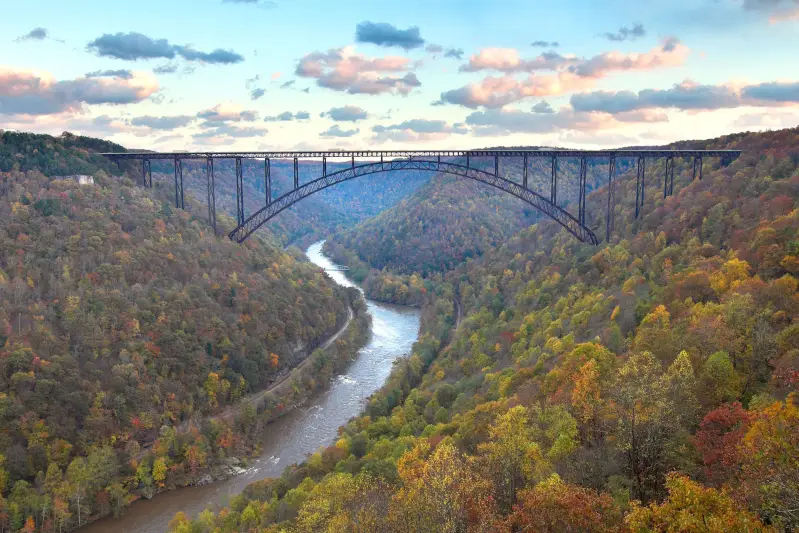
The New River Gorge Bridge near Fayetteville opened on October 22, 1977. Its steel arch carries US-19 876 feet above the river, among the highest vehicular bridges in the US, and cut a 40-minute drive through the gorge to under a minute. It sits in New River Gorge National Park and Preserve, designated in December 2020. The Canyon Rim Visitor Center has the classic viewpoint, the old Fayette Station Road switchbacks down to the river beneath the bridge, and guided BridgeWalk tours lead along a catwalk under the deck. On Bridge Day, the third Saturday of October, the bridge opens to pedestrians and BASE jumpers.
- Location: Near Fayetteville, West Virginia
- Entry: Free viewpoints; paid BridgeWalk
- Best time: May to October; Bridge Day in October
- Time needed: Half a day
Rafters and climbers use the gorge, and autumn brings the leaf colour.
Nevada: Las Vegas Strip

The Strip is the roughly 4.2-mile stretch of Las Vegas Boulevard lined with the city's megaresorts and casinos, from the Sahara in the north to Mandalay Bay in the south. Many of its best sights cost nothing: the Bellagio fountains and conservatory, the indoor canals of the Venetian and the neon of the resorts after dark. The Mirage, with its famous volcano, closed in 2024 for redevelopment. Shows, the Sphere and observation wheels are ticketed. Distances are bigger than they look, so use the Monorail, trams between linked resorts or rideshares. Summer daytime heat regularly exceeds 40°C, so plan outdoor walks for evening.
- Location: Las Vegas Blvd, Las Vegas
- Entry: Free to walk; shows paid
- Best time: March to May, October to November
- Time needed: One or two evenings
Caveat: resort fees and parking charges add a lot to hotel bills.
Nebraska: Chimney Rock

Chimney Rock rises about 300 feet above the North Platte River valley in western Nebraska, its spire reaching about 4,226 feet above sea level. For emigrants on the Oregon, California and Mormon trails it was the most-mentioned landmark in their diaries, a sign that the plains were ending and the mountains were near. It is a National Historic Site, and the visitor centre run by History Nebraska explains the trail years, and the viewpoints around it give the classic profile of the spire. Scotts Bluff National Monument, about 25 miles west, makes a natural second stop.
- Location: Near Bayard, western Nebraska
- Entry: Small fee for visitor centre
- Best time: May to October
- Time needed: 1 hour
Combine it with Scotts Bluff on an Oregon Trail drive.
Colorado: Colorado National Monument

Colorado National Monument protects about 20,500 acres of red sandstone canyons and monoliths on the edge of the Colorado Plateau, rising above Grand Junction and Fruita. The 23-mile Rim Rock Drive, built in the 1930s, climbs through tunnels and along cliffs with overlooks such as Independence Monument and Grand View. Short trails like Canyon Rim and Otto's Trail suit a half-day; longer hikes drop into the canyons. Bighorn sheep, golden eagles and red-tailed hawks are regular sightings. It is an easy detour off I-70, about four hours from Denver.
- Location: Grand Junction and Fruita
- Entry: Park entrance fee
- Best time: April to June, September to October
- Time needed: Half a day
Insider tip: drive Rim Rock Drive late afternoon for the best light on the rock.
North Dakota: Painted Canyon Overlook, Theodore Roosevelt National Park

Theodore Roosevelt arrived in the North Dakota badlands in September 1883 to hunt bison, and the years he spent ranching here shaped his later conservation work as president. Painted Canyon Overlook, right off I-94 in the South Unit of Theodore Roosevelt National Park, is many travelers' first view of the badlands: layered bands of clay, sandstone and lignite coal in red, grey and tan. A seasonal visitor centre stands at the overlook. From there, Medora is the gateway to the South Unit scenic drive, where bison, wild horses and prairie dog towns are common, and to Roosevelt's Maltese Cross Cabin.
- Location: I-94 near Medora
- Entry: Park entrance fee
- Best time: May to September
- Time needed: Half to a full day
Drive the scenic loop slowly if you want to spot wildlife.
South Dakota: Mount Rushmore National Memorial

South Dakota historian Doane Robinson proposed a mountain carving in the Black Hills in 1923, and sculptor Gutzon Borglum led the work from 1927 to 1941, with almost 400 workers carving the 60-foot faces of George Washington, Thomas Jefferson, Theodore Roosevelt and Abraham Lincoln. Entry to the memorial is free, but there is a parking fee. The Presidential Trail brings you closer to the base of the sculpture, and the evening lighting ceremony runs in summer. Crazy Horse Memorial, Custer State Park and Badlands National Park are all within a day's drive, and Rapid City is the nearest airport.
- Location: Keystone, Black Hills
- Entry: Free; parking fee
- Best time: May to September
- Time needed: 2 hours
Early morning brings soft light on the faces and thinner crowds.
Montana: Wild Goose Island, Glacier National Park

Wild Goose Island is a tiny tree-topped islet in St. Mary Lake, on the east side of Glacier National Park, framed by steep peaks. The roadside Wild Goose Island Overlook on the Going-to-the-Sun Road gives one of the most photographed views in the national park system. A Blackfeet legend tells of two young lovers from rival bands turned into geese so they could stay together, and the island is said to be their home. The road usually opens fully only in summer, and the park has used vehicle reservation systems in peak season, so check the NPS website before you go.
- Location: Going-to-the-Sun Road, Glacier NP
- Entry: Park entrance fee
- Best time: July to mid-September
- Time needed: 30 minutes at the overlook
Insider tip: shoot at sunrise, when the lake is calmest.
Washington: Space Needle

Seattle's Space Needle was built for the 1962 World's Fair and rises 605 feet over Seattle Center. The observation level at 520 feet has open-air glass walls and benches, and the level below has The Loupe, the world's first rotating glass floor, which replaced the old revolving restaurant after a 2017 to 2018 renovation. On clear days the view takes in Mount Rainier, Puget Sound and the Olympic Mountains. Timed tickets are cheaper online, and combination passes include the Chihuly Garden and Glass museum next door. The monorail from downtown, also built for the 1962 fair, runs here in two minutes.
- Location: Seattle Center, Seattle
- Entry: Paid timed tickets
- Best time: July to September (clearest)
- Time needed: 1 to 1.5 hours
Book a sunset slot and stay on as the city lights come up.
Idaho: Middle Fork of the Salmon River

The Middle Fork of the Salmon flows about 104 miles through the Frank Church-River of No Return Wilderness, one of the largest wilderness areas in the lower 48 states, with roughly 100 named rapids rated mostly Class III to IV, riverside hot springs, ancient pictographs and excellent fly fishing. There are no roads along the river, so trips are multi-day rafting expeditions of about six days. Private boaters need a permit through the competitive Four Rivers Lottery on Recreation.gov; everyone else books a licensed outfitter, often a year ahead. Trips launch near Stanley or fly in to the backcountry airstrips.
- Location: Central Idaho wilderness
- Entry: Permit or outfitter trip
- Best time: June to September
- Time needed: 5 to 6 days
Caveat: private permits are very competitive; outfitters are the realistic option.
Wyoming: Old Faithful, Yellowstone National Park

Old Faithful in Yellowstone's Upper Geyser Basin is the most famous geyser in the world because it is so predictable: eruptions last about 1.5 to 5 minutes and, according to the National Park Service, come on average about every 90 minutes, ranging from roughly 50 to 127 minutes. Rangers post the next predicted eruption time at the visitor education centre and on the NPS app. The surrounding basin holds one of the densest concentrations of geysers on Earth, and the boardwalk loop to Morning Glory Pool takes in dozens more. Stay on the boardwalks; the ground is thin and the water scalding.
- Location: Upper Geyser Basin, Yellowstone
- Entry: Park entrance fee
- Best time: May to October
- Time needed: 2 to 4 hours
Insider tip: watch an eruption from Observation Point for a quieter view above the crowds.
Utah: Salt Lake Temple and Temple Square

The granite Salt Lake Temple, the headquarters temple of The Church of Jesus Christ of Latter-day Saints, took 40 years to build, from 1853 to 1893, after Brigham Young selected the site soon after the pioneers arrived in the Salt Lake Valley. It has been closed for a major seismic and structural renovation since 2019. The church has announced a public open house from April to October 2027, the only time non-members can tour the interior, after which it will be rededicated. Temple Square's gardens and the Tabernacle, home of the Tabernacle Choir, remain highlights nearby; some areas may still be under construction.
- Location: Temple Square, Salt Lake City
- Entry: Free (open house tickets 2027)
- Best time: April to October 2027 open house
- Time needed: 1 to 2 hours
Insider tip: reserve free open-house tickets as soon as they are released.
Oklahoma: Oklahoma City National Memorial

The Oklahoma City National Memorial stands on the site of the Alfred P. Murrah Federal Building, destroyed in the bombing of April 19, 1995, which killed 168 people. The outdoor memorial is designed around the moment of the attack: two bronze Gates of Time mark 9:01 and 9:03, the minutes before and after, framing a reflecting pool and the Field of Empty Chairs, one chair for each person killed, with smaller chairs for the 19 children. The Survivor Tree, an elm that lived through the blast, still stands on the site. The outdoor memorial is free and open around the clock; the museum charges admission.
- Location: Downtown Oklahoma City
- Entry: Free outdoors; paid museum
- Best time: Year-round; evenings for the lit chairs
- Time needed: 2 to 3 hours
Go without a rush, and leave time for the museum.
New Mexico: Chaco Culture National Historical Park

Chaco Canyon was the centre of Ancestral Puebloan culture between about AD 850 and 1150, and its "great houses", such as the multi-storey Pueblo Bonito, are among the largest and best-preserved ancient structures north of Mexico. It is a UNESCO World Heritage Site and a certified International Dark Sky Park. Getting there is part of the experience: the final miles of road are rough dirt that becomes difficult after rain, and there is no fuel, food or lodging in the park beyond the campground. Bring water, check road conditions, and allow a full day for the loop drive and short trails.
- Location: Northwestern New Mexico
- Entry: Park entrance fee
- Best time: April to May, September to October
- Time needed: A full day
Caveat: the access road is rough; check conditions after rain.
Arizona: Havasupai Falls

Havasu Falls and its neighbouring waterfalls pour turquoise water, coloured by dissolved minerals, over red rock in a side canyon of the Grand Canyon, on the Havasupai Indian Reservation. There is no day hiking: every visitor needs a reservation bought directly from the Havasupai Tribe, and the hike in from Hualapai Hilltop is about 10 miles each way. For 2026 the Tribe sold permits directly (no lottery), with a three-night campground stay costing $455 per person; permits are non-transferable. Summer brings extreme heat and flash-flood risk, so spring and autumn are the best times.
- Location: Havasupai Reservation, Arizona
- Entry: Tribal permit required
- Best time: March to May, September to October
- Time needed: 3 nights (permit length)
Caveat: no permit, no entry; book only through the Tribe's official site.
Alaska: Denali (Mount McKinley)

At about 20,310 feet, North America's highest peak rises from Denali National Park and Preserve in interior Alaska. The mountain was officially named Denali in 2015, and the federal government restored the name Mount McKinley in January 2025; the park keeps the name Denali, and most Alaskans still use it. Most visitors see the mountain from the single park road, on which private cars are limited beyond mile 15. A 2021 landslide at Pretty Rocks closed the western road for years; a new bridge was completed in 2026 and bus access deeper into the park is set to resume in phases from 2027. Clouds hide the summit on most days, so give yourself two or three days.
- Location: Denali National Park, Alaska
- Entry: Park entrance fee; bus tickets
- Best time: Late May to early September
- Time needed: 2 to 3 days
Insider tip: flightseeing from Talkeetna gives the best chance of seeing the summit.
Hawaii: USS Arizona Memorial, Pearl Harbor
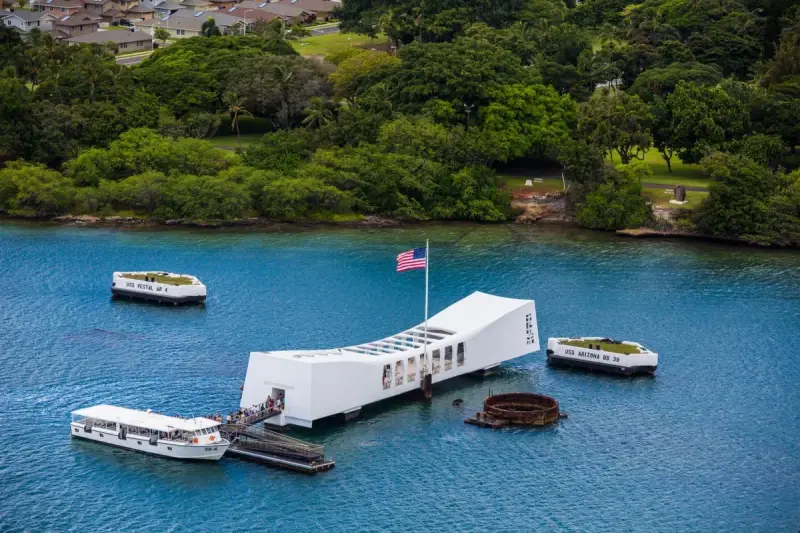
The USS Arizona Memorial spans the sunken hull of the battleship Arizona, which was destroyed in the Japanese attack on Pearl Harbor on December 7, 1941. The attack brought the United States into the Second World War, and the ship remains the resting place of many of her crew. The memorial is part of Pearl Harbor National Memorial; the program, which includes a short film and a Navy-operated boat ride to the memorial, is free, but tickets must be reserved on Recreation.gov, with a $1 non-refundable reservation fee per ticket. Bags are not allowed, so use the storage facility. Allow time for the museums and the nearby USS Missouri.
- Location: Pearl Harbor, Honolulu, Oahu
- Entry: Free program; $1 booking fee
- Best time: Year-round; book early
- Time needed: Half a day
Insider tip: tickets release in advance on Recreation.gov; book as soon as dates are fixed.
How to plan a US landmarks road trip by region
Few travelers will see all 50, so group them by region. The Northeast packs the most landmarks into the shortest drives: Philadelphia, Wilmington, Baltimore, New York, Mystic, Plymouth, Newport and Portland are all on or near the I-95 corridor and connected by Amtrak, so a 10 to 14 day trip can cover eight or nine states without a car for much of it. The Southeast civil rights route links Atlanta, Selma and Montgomery in about four days, and adds Nashville's Ryman and the Mississippi Blues Trail with another four or five.
In the West, distances grow and national parks dominate. A classic loop from Denver or Salt Lake City reaches Colorado National Monument, Old Faithful and Mount Rushmore, but plan around seasonal road openings: Crater Lake's Rim Drive and Glacier's Going-to-the-Sun Road are usually fully open only from July, and much of Yellowstone's interior road network closes to regular traffic in winter. Alaska and Hawaii are separate trips, each worth at least a week. International visitors usually fly into New York, Chicago, Atlanta, Dallas, Los Angeles or San Francisco and connect from there; compare flights early for summer travel.
If you plan to visit several national park sites in a year, the America the Beautiful annual pass covers entrance fees at national parks and many other federal sites; check current pricing for US residents and international visitors on the official NPS website before you buy. Memorials such as Mount Rushmore and the Oklahoma City outdoor memorial have no entrance fee, though parking or museums may be charged.
Tips for visiting famous landmarks in the USA
Buy tickets only from official sellers and arrive in the first hour after opening. Statue of Liberty ferries are sold by Statue City Cruises, Havasupai permits by the Tribe and USS Arizona tickets on Recreation.gov, and high-elevation sites such as Crater Lake, Glacier and Denali open only for short summer seasons.
- Buy from official sellers only. For the Statue of Liberty that means Statue City Cruises; for Havasupai, the Tribe's own reservation site; for the USS Arizona, Recreation.gov. Resellers often charge more for the same access.
- Check seasonal openings. High-elevation and northern sites (Crater Lake, Glacier, Mount Washington, Denali) have short summer seasons. Confirm road and facility dates for your travel month.
- Go early. At the busiest landmarks, the first hour after opening is the calmest and coolest. Timed tickets for the Skydeck, Space Needle and Gateway Arch tram sell out on summer weekends.
- Rent a car for the West. Amtrak and city transit work well on the East Coast, but western parks, the Blues Trail and the Great Plains sites need a car. Factor in long distances between stops.
- Sort entry paperwork first. Visitors to the US need either a visa or ESTA approval, depending on nationality. Apply through the official US government portals well before booking non-refundable trips.
- Respect the climate. Summer heat in Louisiana, Texas, Arizona and Nevada can be dangerous. Carry water, plan outdoor sightseeing for mornings, and keep winter sites like Mount Washington for summer months.
Planning a trip to United States? Read our United States travel guide, compare hotels in United States or search flights.
More USA travel guides
Cities and city breaks
- 12 Top Tourist Attractions in Chicago, Grouped by Area: Art Institute, Science and Industry, Field Museum.
- 15 Best Shopping Malls in Florida, From Miami to Orlando: Miami, Orlando outlets, Tampa, Naples and Jacksonville, plus sales tax, tax-free holiday and transport tips.
- 15 Best Things to do in Las Vegas in 2026 (Expert Travel Guide): Strip resorts and shows, Fremont Street, museums.
- 22 Best Things to Do in Honolulu, Hawaii: 22 best things to do in Honolulu, Hawaii.
- 25 Best Hotels Near Atlanta Airport (ATL): 25 hotels near Hartsfield-Jackson Atlanta airport compared by link and type.
- 6 Major Airports in Las Vegas: Six Las Vegas airports compared, from Harry Reid International near the Strip to private.
- Islands of the New York City: Liberty, Ellis, Governors, Roosevelt, City and Staten Island.
- Places to Visit in Miami: South Beach Art Deco, Vizcaya, Wynwood, Little Havana and the Everglades: 12 places to visit in Miami with 2026 costs, best times and how to get there.
- Places to Visit in San Francisco: Golden Gate Bridge, Alcatraz, cable cars.
- Things to Do in Columbus, Ohio: German Village, North Market, the Short North Gallery Hop.
- Things to Do in Dallas, Texas: Sixth Floor Museum, Arts District, Reunion Tower.
- Things to Do in Downtown Chicago, Illinois: River cruise, Skydeck, Millennium Park, free concerts.
- Things to Do in Nashville, TN: The Grand Ole Opry, the Ryman, Broadway honky-tonks.
- Things to Do in NYC on a Weekend: Broadway, the Statue of Liberty, the Brooklyn Bridge.
- Things to do in Salt Lake City, Utah: Temple Square, the Great Salt Lake at Antelope Island.
- Things to Do in Tampa, Florida: The Riverwalk, Ybor City, Busch Gardens, winter manatees and Gulf beaches: 12 best things to do in Tampa.
- Top 10 Best Tourist Attractions to Visit in New York, USA: The top 10 tourist attractions in New York.
- Travel Guide to USA's Best Historical Cities to Visit in 2026/2027: Ten of the best historical cities in the USA, from St.
Beaches, parks and the outdoors
- 10+ Best Panama City Beaches: St. Andrews, Shell Island, Pier Park, quiet dune beaches, dog beach rules, flags, fees and timing.
- Best Beaches in Virginia: Sandbridge, Virginia Beach, Assateague, Cape Charles.
- Extreme Adventure Vacations in the USA to Try Before You Die 2026/2027: 20 extreme adventure vacations in the USA.
- Hiking in the USA: 25 of the best hiking trails in the USA with distance, elevation, permits and the best season.
- Longest Hiking Trails in the US: The 10 longest hiking trails in the US, from the Long Trail to the American Discovery Trail: lengths.
- Mountains in America: Permits, 2026 reservations and the new $100 park fee for international visitors.
- National Parks in the USA: Yellowstone, Yosemite, Grand Canyon, Zion and more.
- Surfing Destinations: The 15 best places to surf in the USA, from California and Hawaii to Oregon and the Outer Banks.
- Top 10 Most Dangerous Camping Destinations in the US: The 10 most dangerous US camping destinations.
- Top 10+ Best Beaches in Long Beach, California: Mother's Beach, Belmont Shore, Rosie's Dog Beach.
- Top 15 Most Incredible Wildlife in the USA and Where to See Them: Where to see bison, bears, manatees, flamingos.
- Top 25 Most Scenic Places to Go Camping in the United States (USA): 25 scenic US campgrounds from Alaska to Maine with site counts.
- Top-Rated 20 Awesome Photography Locations in the USA: 20 photography locations with best viewpoints, light, seasons and 2026 permit and reservation rules for each.
- Top-Rated 25 Greatest Places for Rock Climbing in the USA in 2026: 25 top US rock climbing areas with rock type, season, base town and permit rules.
- Top-Rated 25 Most Beautiful Places to Go Beach Camping in the USA: 25 beach camping spots in the USA, from Cape Lookout and Padre Island to the Nāpali Coast: camping type.
- Top-Rated 30 Best Beaches in the USA to Visit this Summer: From Siesta Key's quartz sand to Oregon's Haystack Rock and Hawaii's Hapuna: 30 US beaches with parking fees, best times and how to get there.
Landmarks, culture and festivals
- 10 Most Popular Tourist Destinations in USA: How many days, where to stay, best months and airports for the 10 most popular US destinations.
- 15 Popular Festivals & Events in US That You Need to Attend in 2027: 2027 dates for Coachella, SXSW, Mardi Gras.
- 25 Best Shopping Malls in the USA: 25 of the best US shopping malls with locations, transit tips, what each does best and the catch.
- 25 Top-Rated Tourist Attractions in the USA and How to Get In: 25 top-rated US attractions, from Antelope Canyon to Mackinac Island.
- Best 10+ Incredible Night Markets in the USA: Queens, 626, Portland, SAUCED and more, with 2026 venues, entry prices, hours and tips for planning a visit.
- Top 10+ Most Famous & Incredibly Beautiful Temples in USA: 12 famous temples in the USA, from BAPS Akshardham in New Jersey to Wat Thai in Los Angeles.
- Top 20 Awesome Things to Do in USA That You Shouldn't Miss: Broadway, Fenway, Texas brisket, the California Zephyr and Alaska's aurora: 20 things to do in the USA with seasons, costs and booking tips.
- Top 20 Most Visited Museums in USA: The most visited US museums with 2026 prices, free entry tips, hours and what to see first.
- Top 25 Best Nightlife Cities in the USA: From New York's 4am last call to Nashville honky-tonks and New Orleans jazz: 25 US nightlife cities.
- Top 25 Best Places to Celebrate Christmas in USA with the Family: Rockefeller Center, Christkindlmarket, Dollywood.
- Top 25 Most Beautiful & Biggest/Largest Mosques in USA: 25 beautiful US mosques with history, addresses and tips for respectful visits.
- Top-Rated 20 Most Beautiful Castles in the United States (USA): 20 beautiful castles in the USA, from Hearst Castle to Boldt Castle.
- Top-Rated 25 Best Theme Parks in the United States (USA): The 25 best theme parks in the USA, from Cedar Point and Magic Mountain to Disney.
Trip styles: solo, romantic, family and budget
- 25 Best Road Trips in the USA: 25 of the best road trips in the USA, from the Pacific Coast Highway to Route 66 and the Blue Ridge Parkway, with distances, days needed and the best season.
- Backpacking in United States: 10 top trails from the Appalachian to the Wonderland Trail.
- Best 35+ Stunning Places to Visit in Summer in the USA: Cool cities, national parks, road trips, beaches and lakes, with 2027 dates, permits and the best time to go.
- Solo Female Travel in the USA: 15 US destinations for women traveling solo in 2026.
- Solo Female Travel USA Tips: Is the USA safe for solo female travelers? 2026 tips on ESTA and visas.
- Solo Travel in USA: 42 of the best places to travel alone in the USA.
- The Ultimate Guide to Planning a Holiday Cruise Vacation from USA: Best ports, which week to sail, real costs beyond the fare, documents and booking tips.
- Top 30+ Best U.S. Destinations for Winter Vacations: 31 warm and mild winter getaways in the USA.
- Top Honeymoon Hotspots: 20 honeymoon destinations in the USA, from Hawaii and Napa Valley to Key West and the national parks.
- Top-Rated 25 Best All-Inclusive Resorts in the USA (United States): 25 all-inclusive resorts in the USA, from Miraval and Blackberry Farm to dude ranches.
- Top-Rated 50+ Most Romantic Getaways in the USA for Couples: 51 romantic getaways in the USA, one in every state plus D.C..
- United States (USA) Budget Travel Guide: ESTA and park fees for 2026, cheapest regions.
- Volunteer and Service Travel Opportunities in the USA: Habitat, national parks, trail crews and disaster relief.
Planning, visas and practical help
- 10 Best Tour Operators and Travel Agencies in USA: Ten trusted companies for guided USA trips, compared by style, price level and who they suit.
- Emergency Numbers and Services in USA: 911 reaches police, fire and ambulance anywhere in the USA.
- Expat Life in USA: The main work visas, your first 90 days, renting with no credit history.
- Foreign Embassies and Consulates in the USA: Where foreign embassies are in Washington.
- How to Book Cheap Flights from USA: Flexible dates, nearby airports, price tracking.
- Must Know: Traveler's 10 Most Curious Questions about USA: Tipping, sales tax, driving, health costs.
- Must Read US Travel Tips: The best regions and cities, 7 to 14 day itineraries.
- Top 25 Hospitals in the USA 2026: The top 25 US hospitals from the US News Honor Roll.
- Traveling in the US: Official border apps, rides, trains, national parks, food, money and safety, with what each one is for.
- Ultimate 2026-2027 Travel Packing List for USA: Luggage, clothes by season, TSA liquids rule.
- US Travel Insurance: Who needs it, J-1 minimums, fixed vs comprehensive plans, pre-existing conditions, pregnancy and how to buy.
- Visa Policy of USA: Visa Waiver Program and ESTA, B-1/B-2 visitor visa steps.









{{item.get_author.first_name}} {{item.get_author.last_name}}
{{item.comment_txt}}
{{item_reply.get_author.first_name}} {{item_reply.get_author.last_name}}
@ {{item_reply.reply_to}}, {{item_reply.reply_txt}}