

Venue
Panchavati, Nashik, Maharashtra, India; Kushavarta Tirtha, Trimbakeshwar, Nashik district

Kumbh Mela guide
The next full Kumbh Mela is the Simhastha in Nashik and Trimbakeshwar, where officials expect 150 to 200 million devotees. It suits travelers prepared for immense crowds and ritual bathing. Dates are fixed by astrology, so check them closely and, for safety, pick a quieter bathing day and avoid the royal baths.
The Kumbh Mela is a ritual bath on a vast scale, a gathering of pilgrims at a sacred river that rotates between four Indian sites on a cycle of about 12 years. The next full Kumbh is the Simhastha in Nashik and Trimbakeshwar, in Maharashtra, where pilgrims bathe in the Godavari.
Officials expect 15 to 20 crore devotees, or 150 to 200 million people, over the course of the Nashik festival. Few events anywhere bring so many people to one place for the same purpose.
Panchavati, Nashik, Maharashtra, India; Kushavarta Tirtha, Trimbakeshwar, Nashik district
Hotels near the venue fill up around the event dates.
Crushes are the real danger at the Kumbh, and a few habits reduce the risk.
August and September are monsoon months in Maharashtra. Bring rain gear you can carry easily, and a dry bag for your phone and documents.
The ghat steps get slippery, so wear sandals with good grip that you can also bathe in. A change of clothes and a small towel in a waterproof bag make a dip far more comfortable.
Dress modestly, follow the instructions of police and volunteers, and ask before photographing ascetics or anyone bathing.
The main cities where the festival is celebrated.
Get to Nashik the day before your chosen bathing day.
Go to the ghats early; bathing starts in the dark.
On royal bath days the orders of ascetics process to the water first, in a fixed order, with the public kept back until they have bathed.
Nashik has 44 auspicious bathing days and Trimbakeshwar 53. The ghats are full and the rituals in full swing, with space to breathe.
Cover shoulders and knees around the ghats and temples. Bring a change of clothes if you plan to bathe.
Ask before photographing sadhus or bathers, and never photograph people changing at the water's edge.
Follow police routes and one-way systems without exception. If a crowd starts to press, move to the side.
Leave shoes at the temple entrance or at the stands near the ghats.
Start with safety, because the numbers are hard to picture and crushes still happen. A crush at Prayagraj in January 2025 left at least 30 dead. Everything else about planning this trip follows from that.
The single most useful decision is the day you choose. The three Amrit Snan draw the largest crowds and the grand processions. Unless those processions are the reason you are going, pick another date. There are 44 auspicious bathing days at Nashik and 53 at Trimbakeshwar, and Maharashtra's chief minister has personally asked the faithful to spread themselves across them. On those days you still see the ghats full and the rituals in full swing, with room to breathe and to watch.
Every Kumbh town has its holy river. At Prayagraj it is the point where the Yamuna joins the Ganga; Haridwar has the Ganga too, Ujjain the Shipra, and Nashik shares its turn with Trimbakeshwar on the Godavari. Pilgrims enter the water on days set by the positions of the planets, and a full Kumbh returns to each site roughly every 12 years.
Nashik is unusual in splitting the bathing between two places. Vaishnava ascetics bathe at Ramkund, in the Panchavati area of the city. The Shaiva orders go to Kushavarta in Trimbakeshwar, some 30 km off and close to where the Godavari rises. The arrangement dates from 1789, when violent clashes between the sects led the Peshwa to move the Vaishnava ghat, and it has held ever since.
The ascetics are central to the whole event. Their orders lead the processions on the royal bath days, and their leaders, the mahants, help set the calendar alongside the state. For almost everyone else, the point is simpler: a dip in the river at the right moment. Watch quietly, and ask before photographing anyone bathing.
Most international travelers come through Mumbai. Check entry rules for your passport before you book.
Nashik is about 165 km north-east of Mumbai by expressway.
The main stop is Nashik Road. The daily Panchavati Express leaves Mumbai CSMT at 18:15 and arrives at 21:32.
Ozar airport has domestic routes to cities including Delhi, Goa, Hyderabad and Bengaluru, but seats near the bathing days go quickly.
From Nashik Road, take a taxi or auto-rickshaw to Panchavati and Ramkund. On bathing days expect police diversions and a last stretch on foot, so travel light.
About 30 km from Nashik. Both sites in one day is possible on an ordinary bathing day but not on a royal bath day, when traffic between them crawls.
Book rooms and transport early, whatever the date. Nashik sells out around every bathing day, and the closer you get to an Amrit Snan the faster it goes.
If the city is full, stay in Mumbai or elsewhere along the expressway and come in for the day, trading a long journey for a bed.
The 2027 bathing season falls in the south-west monsoon, and Nashik gets most of its year's rain between June and September. Expect warm, humid days, heavy showers on and off, and slippery ghats.
Met at arrivals at Chhatrapati Shivaji Maharaj International Airport (BOM) and driven door to door to Ramkund.
Places to eat in India before or after the celebrations.
Level 2, Jaleb Chowk, Amer Palace, near Sheela Mata Temple, Amer, Jaipur 302002, India
Cuisine:RajasthaniMughlai
Vivanta Bengaluru Residency Road (formerly The Gateway Hotel), 66 Residency Road, Ashok Nagar, Bengaluru 560025, India
Cuisine:South Indian coastalKerala
Gali Kababian, near Jama Masjid, Old Delhi, Delhi 110006, India
Cuisine:MughlaiNorth Indian
The Lodhi, Lodhi Road, New Delhi 110003, India
Cuisine:Modern IndianTasting menu
Others of this kind you opened on this device, so you can get back to them quickly.
No questions yet about Kumbh Mela. Ask the community or our travel team, and the answer will show here once it is published.
Our team answers questions here
Festivals held in the same weeks, if you want to plan more than one.
Cultural Events, Religious Festivals
Jaffna, Sri Lanka

Cultural Events, Religious Festivals, Parade
Kandy, Sri Lanka
10 photos

Festivals and events across India, with dates, venues and ticket details where available.


Tell us where and when you want to go, and local travel experts send you offers for your trip.
General
Strictly, no. It is an Ardh, or half, Kumbh, held about six years after a full one, though Uttarakhand is marketing it as Kumbh 2027. It runs from 14 January to 20 April 2027.
Of its ten bathing dates, the largest crowds are expected on Makar Sankranti (14 January), Mauni Amavasya (6 February) and Mahashivratri (6 March). Chaitra Purnima on 20 April closes it.
One of the royal bathing days, when the orders of ascetics lead grand processions to the river. Nashik has three, and they draw the largest crowds of the whole festival.
A procession around the city that comes just before the first royal bath. In 2027 it takes place on 29 July, four days before the first Amrit Snan.
The bathing days follow planetary positions, and the full schedule was agreed in June 2025 by sadhus and mahants at a meeting chaired by Maharashtra's Chief Minister, Devendra Fadnavis.
Yes. In 2003 a stampede at the Nashik Kumbh killed 39 pilgrims. It is the main reason to avoid the peak days if you are visiting as an observer.
They are days of the lunar month: Ekadashi is the 11th day, Purnima the full moon and Amavasya the new moon. Most of the lesser bathing days at Nashik and Trimbakeshwar fall on one of them.
Yes. UNESCO added it to its list of the intangible cultural heritage of humanity in 2017, a recognition that covers all four of its river towns.
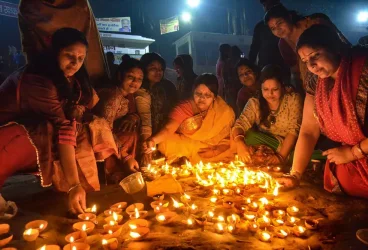
Dev Deepawali in Varanasi fills the Ganga ghats with lamps each autumn. It is a very different, more intimate evening, and makes a good second pilgrimage-season trip.
Booking
Nearly 30 million devotees attended in 2015. The 2027 estimates are several times higher, which is why the authorities are pushing pilgrims towards the quieter bathing days.
We use necessary cookies to make this site work. With your permission we would also like to remember your preferences, measure how the site is used, and show relevant ads and partner offers. You can change your mind at any time under "Cookie settings" on our Privacy policy page.
