


Venue
Not confirmed yet. Please check with the organiser before you go.

Laba Festival (Rice Porridge Festival) guide
Laba falls on the 8th day of the 12th lunar month, in January, when kitchens and monasteries cook a thick porridge of grains, beans, nuts and dried fruit. There are no parades or public holiday, so the appeal is access: Buddhist temples share congee with visitors. It suits travelers in China in midwinter who like food and quiet custom.
Laba is the day China starts counting down to the new year. On the eighth day of the last lunar month, kitchens and monasteries simmer a thick congee of grains, beans, nuts and dried fruit, share it with family and neighbours, and quietly begin the run of preparations that ends with the Spring Festival.
It is a modest occasion by Chinese standards, with no parades or public holiday. What it offers a traveler is access. Buddhist temples serve the porridge to anyone who turns up, and in Beijing that means a bowl from the monks of the Lama Temple, eaten in a courtyard full of incense and breath clouds.
The festival also carries some of the country's oldest food lore, from offerings to the ancestors to the jars of garlic that turn green by New Year's Eve.
Not confirmed yet. Please check with the organiser before you go.
Hotels near the venue fill up around the event dates.
The porridge line forms outdoors, in the dark, in the coldest weeks of the Beijing winter, when night temperatures sit below freezing. Dress as if you will be standing still for a couple of hours, because you will.
Agree a meeting point with your group before you join. Once the serving starts, the line moves in surges and people get separated.
The Lama Temple is an active monastery, and on Laba most people in the courtyards are there to pray. Cover shoulders and knees, keep voices low and walk round worshippers kneeling at the cushions, behind them.
Follow the queue exactly as the temple staff arrange it and take one bowl. If there is a donation box, a small offering is a polite thank-you, but nobody will ask. Finish your porridge where you are told to eat it and return the bowl if it is reusable.
Inside the halls, look for signs before raising a camera, and never point a lens at a monk without asking first.
Laba is a normal working day, so banks, shops and museums keep regular hours. The pressure comes from what follows. Chinese New Year is about three weeks away, and from mid-January the country's heaviest travel season starts to build.
In 2014 many people were outside the temple by five. Bring patience and something hot to drink.
Bowls are handed out along Yonghegong Street.
Five halls on a 480-metre axis lead from Zhaotai Gate to the Wanfu Pavilion and its 18-metre white sandalwood Maitreya.
Walk west for the Temple of Confucius (1302) and the Imperial College (1306), both quiet in January.
Families simmer their own congee, and in northern homes jars of Laba garlic are sealed for New Year.
Laba has no headline venue. Families cook it at home and monasteries across the country stir their own pots, so a visitor has to choose where to see it. Beijing makes the strongest case. On the festival morning Yonghegong Lama Temple ladles out congee free to anyone who joins the line, and the scale is real: in 2014 the monks emptied 99 pots for more than 4,500 pilgrims and tourists. It still happens: photographs from January 2024 show the queue snaking along and bowls being handed out.
Give the trip three or four days. One morning goes to the porridge, another to the halls once the crowd has thinned, and the rest to the city in winter. Our China travel guide can help fill the remaining days.
The pot at the heart of the day is often called eight-treasure congee. Ba, the second half of the festival's name, means eight, and in antiquity it also pointed to the eight gods who received sacrifices at the close of the year. Buddhism later folded the Buddha's enlightenment into the date. One legend credits Song dynasty monasteries with first handing the porridge to ordinary people, which is the same gesture you see on Yonghegong Street today.
The temple itself has a layered past. In 1694 builders started a mansion here for a Qing prince who later became the Yongzheng Emperor. His son, the Qianlong Emperor, handed the buildings to the lamas and saw them consecrated in 1745, and through the Qing dynasty it hosted formal Laba ceremonies. After decades closed to the public it reopened in 1981.
Laba customs vary beyond Beijing. In Xinhua, in Hunan province, people still beat drums on the day to chase away illness. The north has its green garlic. And every kitchen guards a slightly different mix of grains, beans and nuts, so the congee you are handed at a temple will taste unlike the one sold at a breakfast stall around the corner.
The Capital Airport Express leaves PEK Terminals 2 and 3 for Sanyuanqiao, Dongzhimen and Beixinqiao. A single is RMB 25, with no free transfer. At Beixinqiao change to Line 5 for one stop to Yonghegong Lama Temple, also on Line 2.
The Daxing Airport Express runs from PKX to Caoqiao, where Lines 10 and 19 take over. A taxi is simpler with luggage.
Do not rely on the first trains, which put you behind the early queue. Walk from a nearby guesthouse or take a taxi to 12 Yonghegong Street.
Sleep close. The temple stands in Dongcheng, inside the north-east bend of the Second Ring Road, and the serious queuers are in place before the subway is running.
A guesthouse in the lanes around Guozijian Street lets you walk over in the dark and back for a nap afterwards.
Beijing
Shanghai
Hangzhou
Guangzhou
Xi'an
Mid-January is the depth of Beijing's winter: cold, sunny and very dry. Average highs are about 2°C and lows around -7°C, with almost no precipitation. An hour in a pre-dawn queue is colder still.
Met at arrivals and driven door to door to China.
Places to eat in China before or after the celebrations.
1F, 20 Dishifu Road, Liwan District, Guangzhou, Guangdong, China
Cuisine:CantoneseDim sum
No. 10-12, 10 Qinghua Road, Qingyang District, Chengdu, China
Cuisine:SichuanChinese
85 Yuyuan Road, City God Temple, Huangpu District, Shanghai, China
Cuisine:ShanghaineseDumplings
30 Qianmen Street, Dongcheng District, Beijing 100051, China
Cuisine:Peking duckBeijing
Others of this kind you opened on this device, so you can get back to them quickly.
No questions yet about Laba Festival (Rice Porridge Festival). Ask the community or our travel team, and the answer will show here once it is published.
Our team answers questions here
Sights within easy reach of the festival.
 Most Visited
Beijing
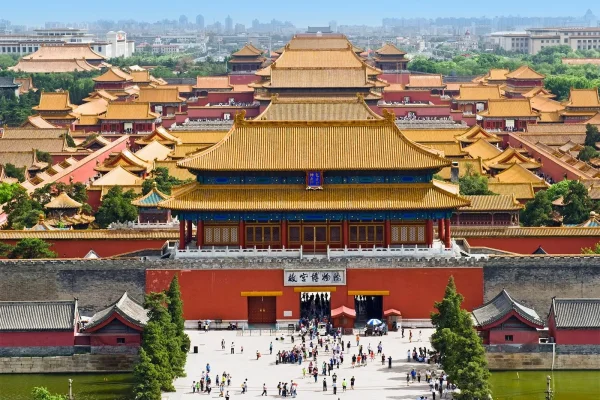
The Forbidden City is the imperial palace of the Ming and Qing emperors in the centre of Beijing, directly north of Tiananmen Square, and today it houses the Pa...
 Most Visited
China
The Great Wall of China is a chain of fortifications across northern China, and this page covers Mutianyu, a restored Ming section in Huairou District about 70...
Festivals held in the same weeks, if you want to plan more than one.
Cultural Events, Arts Festivals, Fair
Chiang Mai, Thailand
Sporting Events, Cultural Events, Folk Festival
Izmir, Turkey
1 photo
Cultural Events, Religious Festivals
Kuala Lumpur, Malaysia
Festivals and events across China, with dates, venues and ticket details where available.


Cultural Events, Social Festivals
China
3 photos

Food Festivals, Cultural Events, Social Festivals
China
2 photos

Tell us where and when you want to go, and local travel experts send you offers for your trip.
General
Yes. The temple hands it out at no charge to whoever queues on the festival morning, pilgrims and tourists alike. A small donation is welcome but not expected.
Aim to be there well before dawn. Reports from past years describe crowds already waiting at five o'clock, and the line only lengthens after that.
Friday 15 January 2027, the eighth day of the twelfth lunar month. The Gregorian date shifts every year because it follows the lunar calendar.
They count by the lunar year. The Laba of 4 January 2028 belongs to the lunar year that starts in February 2027, so it gets the 2027 label. For travel this winter, the date that matters is 15 January.
Yes. Laba is a traditional observance and not a statutory holiday, so the subway, intercity trains, banks and museums all keep their ordinary hours and nothing needs rearranging.
Usually not. Most pots are built from rice, millet, beans, nuts, lotus seeds and dried fruit, but a few family recipes do add tofu or meat. Ask if you are vegetarian and eating outside a temple.
If you can handle the cold, yes. Courtyards and museums are quieter than in spring or autumn, and the New Year travel peak has not yet hit, though trains get busier with every week that follows Laba.
La is the old name of the twelfth lunar month and ba means eight, giving the festival its date. In ancient times the eight also stood for the gods honoured at the end of the year.
Yes. It is calmer to walk the full length of the temple to the great Maitreya statue once the porridge crowd has dispersed in late morning.
Timing & weather
Peeled garlic cloves are sealed in vinegar on Laba and left until New Year's Eve. By then they have turned a jade-green colour and are eaten with dumplings. It is mostly a northern habit.
About three weeks. In 2027 Laba falls on 15 January and the new year on 6 February, which is why many families treat Laba as the start of their holiday preparations.
We use necessary cookies to make this site work. With your permission we would also like to remember your preferences, measure how the site is used, and show relevant ads and partner offers. You can change your mind at any time under "Cookie settings" on our Privacy policy page.

 Get the bookingMentor app