

Venue
283 Soi Phuthorn, Ranong Road, Talat Nuea, Mueang Phuket District, Phuket 83000, Thailand

Phuket Vegetarian Festival - The Nine Emperor Gods Festival! guide
The Vegetarian Festival suits travelers ready for meat-free food, white clothing and confronting processions of mediums in trance. It usually falls in late September or October, the first nine days of the ninth Chinese lunar month; the 2026 edition has already run and 2027 dates come months ahead. Stay in Phuket Town.
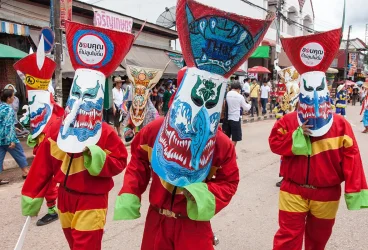
Phuket's Vegetarian Festival, Jia Chai to the island's Thai-Chinese community, is nine days of meat-free eating, white clothes and shrine rituals in honour of the Nine Emperor Gods. It is also one of the strangest sights in Thailand, as mediums in trance walk the Old Town streets with skewers through their cheeks.
For devotees it is a time of cleansing, a vow kept by families for generations and taken seriously. For everyone else it is the one week when the heart of Phuket moves from the beaches to the old shophouse streets of Phuket Town, wrapped in firecracker smoke and the smell of incense.
283 Soi Phuthorn, Ranong Road, Talat Nuea, Mueang Phuket District, Phuket 83000, Thailand
Hotels near the venue fill up around the event dates.
Visitors are welcome at the shrines and along the routes, as long as they keep to the festival's rules.
The firecrackers are the part nobody warns you about properly. Strings of them are thrown at the processions as the gods pass, and they are deafening at close range and leave the streets thick with smoke.
Food is the gentle side of the festival, and you do not need to be a devotee to join in. Stalls and restaurants all over Phuket Town switch to jay cooking for the nine days, and a yellow flag with the character for jay written in red marks every place that serves it.
Jay is stricter than everyday vegetarian food. It leaves out meat, seafood, eggs and dairy, and also fish sauce, garlic and strong spices, so expect gentler flavours and plenty of tofu and gluten standing in for meat. This is the week to try meat-free versions of southern Thai dishes. Eat early in the day, when the stalls are freshest and before the morning procession crowds arrive.
The pole goes up to welcome the Nine Emperor Gods. In 2026 this was at 17:09 on 9 October.
Shrines across the island and many Phuket Town stalls switch to jay food.
A procession leaves one shrine or another, usually along Yaowarat, Thalang and Phuket roads, around the clock tower at Surin Circle, ending by the sea at Saphan Hin.
Chanting and offerings in the shrine yards, with fire-walking and blade-ladder climbs on some nights.
The final procession carries the gods to the water; the main fire-walking is usually held this evening.
Devotees dress in white from head to foot, and visitors who do the same are welcomed into the shrine yards as part of the crowd.
Firecrackers are thrown close to the palanquins. Stand on a corner where you can step back, and protect your ears.Food
Shape each day around the shrines. Mornings belong to the processions, which are over before the worst of the heat. Afternoons are free, and that is the time to head for a beach or sleep. Evenings bring ceremonies back at the shrine yards, with chanting, offerings and, on some nights, the fire-walking and blade-ladder climbs.
Nothing is printed in one place. Each shrine sets its own timetable, so check with the shrine itself or your hotel desk the evening before which processions leave the next morning and from where. Jui Tui, the busiest of the town shrines, is the easiest place to start asking. Three or four nights catch the rhythm of the festival without exhausting you. For the rest of the island, our Phuket page covers the beaches and the towns beyond the Old Town.
Local tradition traces the festival back more than two centuries, to a traveling Chinese opera troupe that fell ill on Phuket. Its members turned to the Nine Emperor Gods, held to a strict diet and got well. The island's Thai-Chinese community has kept the vow ever since, with rites at more than 40 Chinese shrines, and the Taoist calendar still runs Phuket Town for these nine days.
Devotees give up meat and stimulants to purify body and mind. The white they wear is part of that, and so is the noise: firecrackers drive off bad spirits and announce the gods as they pass. The gods travel in palanquins carried by teams of devotees, who rock and spin them as if the passengers had a will of their own.
The Ma Song are the figures most visitors remember. These mediums walk in trance with skewers, and sometimes far stranger objects, pushed through their cheeks. The piercing is read as proof that a god has entered the body and the medium feels nothing. Some shrines add fire-walking over hot coals or climbs up ladders of blades. To devotees none of this is a show. It is the gods at work among their people, in plain sight.
Phuket International (HKT) is in the north of the island. From Bangkok see Bangkok to Phuket flights; there are direct services from around the region, including Singapore and Kuala Lumpur. Check entry rules on our Thailand visa page.
Taxis, minibuses and the airport bus run south to Phuket Town. Allow extra time on procession mornings, when roads near the shrines close.
Long-distance buses from Bangkok run to Phuket Town's bus terminal.
Walk. Kathu's ceremonies need a taxi or hired car. If you drive, park well away from the route.
Base yourself in Phuket Town: processions leave at dawn, and sleeping near the Old Town spares you a drive in from Patong or Kata.
Hotels across Mueang Phuket District were forecast at about 80% occupancy in 2026, with over 140,000 visitors expected, so book once the dates are announced.
The festival falls in the wettest stretch of Phuket's year. October averages a high of 31.8°C and a low of 24.9°C, with about 336 mm of rain on 19 days (WMO 1991-2020 normals).
Mornings are usually the driest part of the day; afternoon downpours are common.
Met at arrivals at Phuket International Airport (HKT) and driven door to door to Jui Tui Shrine.
Places to eat in Thailand before or after the celebrations.
24th floor, Park Ventures Ecoplex, 57 Wireless Road, Bangkok 10330
Cuisine:KaisekiEdomae sushi
61st Floor, Banyan Tree Bangkok, 21/100 South Sathorn Road, Thung Maha Mek, Sathon, Bangkok 10120, Thailand
Cuisine:GrillInternational
29/1 Ratchaphruek Road, Chang Phueak, Mueang Chiang Mai, Chiang Mai 50300, Thailand
Cuisine:Northern ThaiNoodles
48/1 Dibuk Road, Talat Yai, Mueang Phuket District, Phuket 83000, Thailand
Cuisine:Southern ThaiPhuket
56 Soi Sukhumvit 26, Khlong Tan, Khlong Toei, Bangkok 10110, Thailand
Cuisine:Southern ThaiFine dining
327 Maha Chai Road, Samran Rat, Phra Nakhon, Bangkok 10200, Thailand
Cuisine:ThaiStreet food
Others of this kind you opened on this device, so you can get back to them quickly.
No questions yet about Phuket Vegetarian Festival - The Nine Emperor Gods Festival!. Ask the community or our travel team, and the answer will show here once it is published.
Our team answers questions here
Festivals held in the same weeks, if you want to plan more than one.

Food Festivals, Cultural Events, Religious Festivals
Phuket, Thailand

Cultural Events, Folk Festival, Religious Festivals
Nong Khai, Thailand
1 photo
Cultural Events, Religious Festivals
Thailand
Festivals and events across Thailand, with dates, venues and ticket details where available.
Cultural Events, Community Events, Parade
Trang, Thailand
Sporting Events, Leisure Events
Koh Samui, Thailand
Cultural Events, Folk Festival, Religious Festivals
Loei, Thailand
1 photo
Cultural Events, Religious Festivals, Parade
Surat Thani, Thailand
Tell us where and when you want to go, and local travel experts send you offers for your trip.
General
No. Meat is still sold away from the shrines and in the beach resorts, though in Phuket Town many favourite stalls go meat-free for the nine days.
White stands for purity, which is what the nine days are about.
The shrine at Kathu, founded in the early 1800s, is regarded as the birthplace of Nine Emperor Gods worship in the region. It sits inland from the town and still holds its own ceremonies during the festival.
Across Thailand it is thetsakan kin che, the festival of eating jay. In the south it is often called thetsakan kin phak, the vegetable-eating festival, while the Thai-Chinese community in Phuket uses Jia Chai.
As well as meat, seafood, eggs and dairy, strict observers avoid alcohol, sex and stimulants, and keep their thoughts pure. The white clothes worn for the whole nine days are part of the same discipline.
At number 283 on Soi Phuthorn, in the Talat Nuea quarter. It is a short walk from the Old Town's main streets, and it is the natural place to start your festival.
With the send-off of the gods on the ninth day, the climax of the whole festival, so keep your last evening free.
Timing & weather
It will again cover the first nine days of the ninth lunar month, which in recent years has meant October. Official dates come from the Thai authorities and the shrines, usually a few months before, so hold off on fixed bookings until they appear.
The main fire-walking is usually held on the evening of the ninth day, at the end of the festival, though some shrines stage their own on other nights. Ask at the shrine for the time and arrive early, as the yards fill quickly.
Families & accessibility
Many local families do, but think about it first. The firecrackers are extremely loud and the piercings can be upsetting. If you bring older children, give them ear defenders and watch from a doorway well back from the front.
We use necessary cookies to make this site work. With your permission we would also like to remember your preferences, measure how the site is used, and show relevant ads and partner offers. You can change your mind at any time under "Cookie settings" on our Privacy policy page.
