
Qatar's prettiest scenery is at Khor Al Adaid (the Inland Sea), where giant dunes run down to a tidal lagoon on the Saudi border, the Zekreet peninsula with its wind-carved limestone and Richard Serra's desert sculpture, and the Al Thakira mangroves near Al Khor. In Doha, the most photogenic spots are the Museum of Islamic Art and its park, Souq Waqif at dusk, the National Museum of Qatar and the canals of The Pearl.
This guide picks 20 scenic places across the country and tells you exactly how to photograph them: the best time of day, how far each spot is from Doha, whether you need a 4x4 and what entry costs. Qatar is small, so almost everything here is within a 90-minute drive of the capital. Plan desert and coastal trips between November and March, when temperatures are comfortable and the light stays soft for longer. For beaches chosen for swimming rather than scenery, see our separate guide to the best beaches in Qatar.
Most beautiful places in Qatar at a glance
Qatar's 20 most beautiful places split into three groups: desert and west-coast landscapes such as Khor Al Adaid and Zekreet, heritage sites and beaches on the northern coast such as Al Zubarah Fort and the Al Thakira mangroves, and photogenic Doha landmarks such as the Museum of Islamic Art and Souq Waqif. Distances and drive times are approximate and depend on traffic and your starting point.
20 scenic spots, distance and best photo time
| Place | Area | From central Doha | 4x4? | Best photo time | Entry (2026) |
|---|---|---|---|---|---|
| Khor Al Adaid (Inland Sea) | Southeast | About 80 km, then sand | Yes | Late afternoon to sunset | Free (tours extra) |
| Sealine dunes | Mesaieed | About 40 km, 45 min | For the dunes | Sunset | Free |
| East-West/West-East | Brouq, west coast | About 70 km | Recommended | Early morning, sunset | Free |
| Zekreet limestone formations | West coast | About 80 to 90 km | Recommended | Golden hour | Free |
| Film City | Zekreet | About 90 km | Recommended | Late afternoon | Free |
| Dukhan beach | West coast | About 80 km, 1 hr+ | No | Sunset | Free |
| Al Zubarah Fort | Northwest | About 105 km | No | Late afternoon | Free |
| Fuwairit beach | Northeast | About 80 to 90 km | No | Early morning | Free (seasonal closures) |
| Al Thakira mangroves | Al Khor | About 64 km | No | Late afternoon, low tide | Free (kayak tours extra) |
| Purple Island | Al Khor | About 60 km | No | Sunset, low tide | Free |
| MIA and MIA Park | Corniche | In the city | No | Sunset, blue hour | Park free; museum ticketed |
| Souq Waqif | Old Doha | In the city | No | Dusk and evening | Free |
| National Museum of Qatar | Doha | In the city | No | Morning, blue hour | Ticketed |
| Msheireb Downtown | Doha | In the city | No | Evening | Free |
| Katara Cultural Village | Doha | About 15 km | No | Late afternoon | Free |
| The Pearl, Qanat Quartier | Doha | About 20 km | No | Morning, sunset | Free |
| Lusail Boulevard | Lusail | About 25 km | No | Night | Free |
| Place Vendome | Lusail | About 25 km | No | Evening fountain shows | Free |
| Al Wakrah old souq and beach | Al Wakrah | About 20 km | No | Sunset | Free |
| Banana Island | Off the Corniche | Boat from Doha | No | Late afternoon | Day pass |
Desert and coastal landscapes in Qatar
Qatar's most dramatic scenery sits outside Doha, where the land is flat limestone desert broken by dune fields, sabkha (salt flats) and long, shallow beaches. These are the places that make a small country feel big on camera.
1. Khor Al Adaid (the Inland Sea)
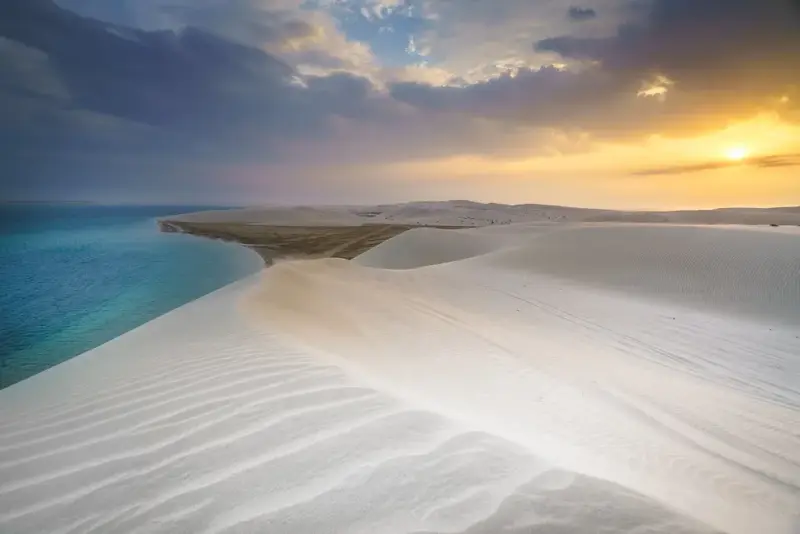
Khor Al Adaid is the most beautiful natural place in Qatar. A tidal inlet from the Gulf pushes deep into the desert near the Saudi border, so tall sand dunes drop straight into turquoise water. It became a protected nature reserve in 2007 and sits on UNESCO's World Heritage Tentative List. There is no paved road. You reach it by 4x4 from the Sealine area in Mesaieed, with the final stretch on soft sand.
The best photos come in the last two hours of daylight, when the dune ridges throw long shadows and the water turns deep blue. A wide lens from a dune crest gives you sand, lagoon and the Saudi shore in one frame. Most visitors join a desert safari with dune bashing, a swim and sandboarding, and many stay for an overnight camp, which adds sunrise to the shot list. Self-driving is only for experienced dune drivers traveling with a second vehicle. You can compare desert safari tours from Doha on BookingMentor.
- From Doha: About 80 km to Sealine, then sand
- 4x4: Yes, with an experienced driver
- Best light: Last two hours before sunset
- Entry: Free; tours priced by operator
2. Sealine dunes, Mesaieed

Sealine is where the big dunes start, and it is the quickest way to photograph Qatar's sand sea without a full-day trip. The beach sits about 40 km south of Doha, roughly 45 minutes by car on paved roads, with high dunes rising behind the shoreline. The beach is reachable in any car, but driving onto the dunes needs a 4x4, or you can join a quad bike or camel ride from the operators near the beach.
Sunset gives the warmest colour on the sand, and the ripples on the dune faces read best with low side-light. Weekends are crowded with families and quad bikes, so a weekday visit gives cleaner foregrounds.
- From Doha: About 40 km, 45 minutes
- 4x4: Only for the dunes
- Best light: Sunset
- Entry: Free
3. East-West/West-East by Richard Serra
East-West/West-East is Qatar's most photographed piece of land art. The American sculptor Richard Serra installed four steel plates, each more than 14 metres tall, in a straight line across a gypsum plateau in the Brouq Nature Reserve in 2014. The line runs for more than a kilometre between two rocky outcrops, so the plates look like a row of rust-red monoliths in an empty valley.
The site is about 70 km west of Doha, near Zekreet. The last stretch is an unmarked desert track, and a 4x4 is recommended. Visit at sunrise or in the hour before sunset, when the plates glow orange and the shadows stretch out. A telephoto lens from one end compresses all four plates into a single frame. There is no shade or water on site, so bring both.
- From Doha: About 70 km
- 4x4: Recommended
- Best light: Sunrise or the hour before sunset
- Entry: Free
4. Zekreet limestone formations
The Zekreet peninsula on the west coast has Qatar's strangest landscape: flat-topped limestone outcrops and mushroom-shaped rocks shaped by wind, scattered across pale desert above the sea. It lies about 80 to 90 km from central Doha. There is no public transport, and a 4x4 is the best way to explore the tracks between the rocks.
Golden hour is the time to come. Low sun brings out the layers and textures in the stone, and the formations make strong silhouettes against the sky after sunset. Zekreet beach nearby is a popular weekend camping spot, so you can stay for night photography of the rocks under the stars.
- From Doha: About 80 to 90 km
- 4x4: Recommended
- Best light: Golden hour and after sunset
- Entry: Free
5. Film City
Film City is a replica village built in the Zekreet desert as a film set, with stone houses and narrow lanes surrounded by open sand and limestone. It is about 90 km west of Doha and reached by unpaved track, so a 4x4 is recommended. The empty buildings photograph best in late-afternoon light, when the walls turn honey-coloured. The site has no facilities, so carry water and snacks, and combine it with the Serra sculpture and the Zekreet rocks in one trip.
- From Doha: About 90 km
- 4x4: Recommended
- Best light: Late afternoon
- Entry: Free
6. Dukhan beach
Dukhan beach is the place to watch the sun set over the sea on Qatar's west coast. It lies about 80 km west of Doha, a little over an hour on the Dukhan Highway, and is known for clear, calm water that is good for swimming and spotting marine life. The beach is reachable by regular car. Facilities are limited, so bring your own shade, water and food. Parts of the coast near the town belong to industrial sites, so stick to the signed public beach areas.
- From Doha: About 80 km, a little over 1 hour
- 4x4: No
- Best light: Sunset
- Entry: Free
 Plan your trip with AI
Heritage sites and the northern coast of Qatar
The highlights of northern Qatar are Al Zubarah Fort at the country's only UNESCO World Heritage Site, Fuwairit beach with its hawksbill turtle nests, the Al Thakira mangroves near Al Khor and neighbouring Purple Island. Northern Qatar mixes history with some of the country's quietest coastline. The drive up the North Road from Doha is easy, and you can fit two or three of these stops into one day.
7. Al Zubarah Fort

Al Zubarah Fort is the centrepiece of Qatar's only UNESCO World Heritage Site. The square fort with its round corner towers was built in 1938 and stands near the ruins of Al Zubarah, a pearl-trading town abandoned in the early 20th century, whose archaeological remains were inscribed by UNESCO in 2013. The site is about 105 km northwest of Doha and easy to reach by regular car.
The fort's pale walls photograph beautifully in the late afternoon, when the light turns warm and the desert around it goes golden. Entry to Qatar Museums heritage sites, including Al Zubarah, is free. Opening hours are limited and change with the season, so check before you drive out.
- From Doha: About 105 km
- 4x4: No
- Best light: Late afternoon
- Entry: Free
8. Fuwairit beach
Fuwairit is one of the prettiest beaches in Qatar: a wide sandy bay backed by low cliffs and unusual rock shapes, about 80 to 90 km north of Doha. It is also one of the country's main nesting beaches for the endangered hawksbill turtle. The Ministry of Environment and Climate Change has closed the beach to visitors during the nesting season, which starts in April, in past years until around August, so check for closures before you go.
Come early in the morning for calm water and soft light. The beach is reachable in a regular car, although the last approach is sandy. Keep away from marked nesting areas and never use lights near them at night.
- From Doha: About 80 to 90 km
- 4x4: No
- Best light: Early morning
- Entry: Free (seasonal closure)
9. Al Thakira mangroves
The Al Thakira mangroves are the greenest place in Qatar. Grey mangroves line shallow tidal channels near Al Khor, about 64 km north of Doha (45 to 60 minutes by car), and the reserve draws herons, flamingos and other wading birds in winter. Entry to the shoreline is free.
The best way to see the mangroves is by kayak. Guided tours of about 90 minutes to two hours run through the calm channels, and sunset sessions are the most popular, so book winter weekends ahead. Low tide exposes more roots and mudflats, which is better for photos from the shore, while kayaking works best on a rising or high tide. Check a tide table for Al Khor before you set off.
- From Doha: About 64 km, 45 to 60 minutes
- 4x4: No
- Best light: Late afternoon
- Entry: Free; kayak tours extra
10. Purple Island (Jazirat Bin Ghanim)
Purple Island sits right next to the Al Thakira mangroves, a low island of sand, mangroves and shallow lagoons. Its name comes from the purple dye once produced here from murex sea snails, and archaeologists have found traces of that dye industry on the island. You can walk out to it from the shore, and the walking is easiest at low tide.
Come in the late afternoon and stay for sunset, when the mangroves turn into silhouettes and the water reflects the sky. The island has no facilities, so bring water and wear shoes you can get wet.
- From Doha: About 60 km
- 4x4: No
- Best light: Sunset at low tide
- Entry: Free
Most beautiful places in Doha to photograph
Doha has become one of the Gulf's most photogenic cities, with landmark museums, a seafront Corniche and carefully restored old quarters. Most of these spots are linked by the Doha Metro or short taxi rides.
11. Museum of Islamic Art and MIA Park

The Museum of Islamic Art is Doha's signature building. Designed by I. M. Pei and opened in 2008, it rises from its own artificial island at the southern end of the Corniche, with clean geometric lines inspired by Islamic architecture. MIA Park, beside it, is free and gives the best view in the city: the West Bay skyline across the water, framed by palm trees and the curved park promenade.
Arrive about an hour before sunset and stay for blue hour, when the West Bay towers light up. Museum tickets for non-resident adults cost QAR 50 (2026); entry is free for Qatar residents and children aged 16 and under. The museum and park are a short walk from Souq Waqif.
- From Doha: In the city
- 4x4: No
- Best light: Sunset and blue hour
- Entry: Park free; museum QAR 50 non-resident adults
12. Souq Waqif

Souq Waqif is Doha's most atmospheric place to photograph. The market was rebuilt in the 2000s in traditional style, with mud-rendered walls, exposed wooden beams and narrow alleys of spice shops, textile stalls and cafés. It is free to enter and sits in central old Doha, close to the Corniche.
The best time is from late afternoon into the evening, when the lanterns come on and the main pedestrian street fills with people. Look for the Falcon Souq, the Arabian horse stables and the camel pens near the edge of the market. Ask before you photograph people, especially women and families.
- From Doha: In the city (Souq Waqif metro)
- 4x4: No
- Best light: Dusk and evening
- Entry: Free
13. National Museum of Qatar

The National Museum of Qatar looks like no other building in the region. French architect Jean Nouvel based its design on the desert rose, a crystal formation found in Qatar's salt flats, and the result is a cluster of huge interlocking discs. It opened in 2019 and wraps around the restored palace of Sheikh Abdullah bin Jassim Al Thani.
Photograph the exterior in the morning, when the discs throw sharp shadows, or at blue hour when the building is lit. The museum is closed on Tuesdays and charges non-resident adults for entry, so check the current Qatar Museums price before you go. Take the Doha Metro Gold Line to National Museum station.
- From Doha: In the city (Gold Line)
- 4x4: No
- Best light: Morning or blue hour
- Entry: Ticketed for non-residents
14. Msheireb Downtown Doha

Msheireb is Doha's newest old quarter: a rebuilt district of pale stone buildings, shaded lanes and courtyards that reinterprets traditional Qatari architecture in a modern way. It sits next to Souq Waqif and has its own metro station, Msheireb, where all Doha Metro lines meet. The four restored heritage houses of the Msheireb Museums are inside the district. Evenings are the best time to wander, when the streets are lit and cafés spill onto the plazas. Many lanes are shaded and pedestrian-only, which suits slow street photography.
- From Doha: In the city (Msheireb metro)
- 4x4: No
- Best light: Evening
- Entry: Free
15. Katara Cultural Village

Katara Cultural Village is a seaside cultural district on the coast north of West Bay, about 15 km from central Doha. Its most photogenic features are close together: a 5,000-seat amphitheatre facing the sea, the Katara Mosque covered in blue and turquoise tiles, a smaller golden mosque, and tall mud-brick pigeon towers. Katara Beach runs along the waterfront.
Come in the late afternoon, when the low sun lights the amphitheatre and the mosques, then walk to the beach for sunset. The district is free to enter.
- From Doha: About 15 km
- 4x4: No
- Best light: Late afternoon
- Entry: Free (beach charges entry)
16. The Pearl and Qanat Quartier
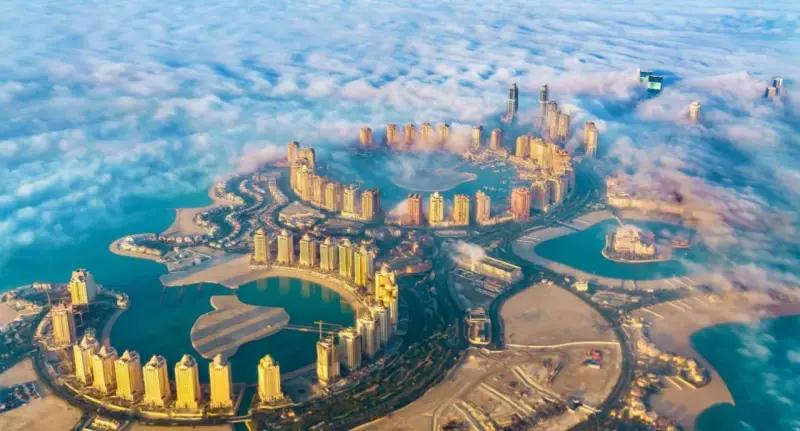
The Pearl is an artificial island off Doha's northern coast, about 20 km from the city centre, and its most photogenic corner is Qanat Quartier. Canals, arched bridges and pastel-coloured buildings give this neighbourhood a Venetian look that photographs well from the footbridges. Visit early in the morning for empty streets or at sunset for warm light on the facades. Entry is free. Parking is easiest in the Qanat Quartier car parks, and the marina promenade at Porto Arabia, with its yachts and towers, makes a good second stop on the same visit.
- From Doha: About 20 km
- 4x4: No
- Best light: Early morning or sunset
- Entry: Free
17. Lusail Boulevard

Lusail Boulevard is the showpiece avenue of Lusail City, the planned city about 25 km north of central Doha that hosted the 2022 FIFA World Cup final. The boulevard runs between new skyscrapers to the waterfront, with the crescent-shaped Katara Towers on the Lusail Marina skyline. It looks best at night, when the towers and street lights come on and the boulevard hosts festivals and events. Reach it by Doha Metro and Lusail Tram, or by taxi in about 30 minutes from West Bay. Weekday evenings are quieter than Thursday to Saturday nights.
- From Doha: About 25 km
- 4x4: No
- Best light: Night
- Entry: Free
18. Place Vendome
Place Vendome is a large mall in Lusail styled on classic French architecture, with a canal running through its interior and exterior. Most photographers come for its grand facade and the dancing fountains, which run evening shows that are free to watch. To get there, take the Metro to Legtaifiya, then the Lusail Tram to Lusail Central. Check the mall's current show times on arrival, since they change with season and events. A wide lens helps, as the facade is long and the plaza is often busy.
- From Doha: About 25 km
- 4x4: No
- Best light: Evening fountain shows
- Entry: Free
19. Al Wakrah old souq and beach

Al Wakrah is a coastal town about 20 km south of Doha, and its restored old souq sits right on the sea. The low sand-coloured buildings, wooden boats pulled up on the shore and seafood restaurants along the waterfront make it a relaxed alternative to Souq Waqif. Al Wakrah beach, south of the town, is a family beach with mangroves and shallow water. Sunset is the best time to visit. Take the Doha Metro Red Line to Al Wakrah station, then a short taxi ride to the souq.
- From Doha: About 20 km
- 4x4: No
- Best light: Sunset
- Entry: Free
20. Banana Island
Banana Island is a crescent-shaped island off the Doha Corniche, home to the Anantara resort. From the island you get a clear view back to the West Bay skyline, and the white beaches and turquoise lagoons make it one of the easiest beach escapes from the city. Day visitors need a day pass, which includes the return boat transfer, beach and pool access and a dining credit. As of 2026 the resort lists its standard pass at QAR 350 per adult on weekdays and QAR 500 at weekends and public holidays, with other packages around QAR 395. Book ahead and confirm the departure point when you reserve.
- From Doha: Boat from Doha
- 4x4: No
- Best light: Late afternoon
- Entry: Day pass from QAR 350 (weekday)
Read this before a desert or coastal photo trip: Never take a regular car onto dunes or sabkha. Salt flats look solid but trap vehicles, and recovery in remote areas is slow and costly. For Khor Al Adaid, go with a licensed operator or a convoy of experienced drivers.
Carry at least three litres of water per person, sun protection and a charged phone with offline maps. Most free beaches have no lifeguards. Drones need a permit, and photographing military, government, oil and gas sites is prohibited.
Qatar photo itineraries: desert, north coast and Doha
Three days cover every place in this guide. Start early on the out-of-town days so you are in position for the best light. The desert and north-coast days need a car or a booked tour, since public transport does not reach those spots. From November to March the light is softer and the heat allows midday walking; in summer, keep outdoor shooting to the first and last hours of daylight.
Three days of scenic Qatar
- Day 1, Desert and the Inland Sea: Leave Doha around noon with a safari operator, stop at the Sealine dunes, cross to Khor Al Adaid for the last two hours of light, and camp overnight or return after dark.
- Day 2, West coast and the north: Sunrise at East-West/West-East, then Zekreet rocks and Film City. Drive north to Al Zubarah Fort for late afternoon, and finish at Purple Island or Al Thakira for sunset (or swap to Dukhan beach for a sea sunset).
- Day 3, Doha from morning to night: National Museum of Qatar in the morning, Msheireb and Souq Waqif at lunch, The Pearl or Katara in the afternoon, MIA Park for sunset and blue hour, then Lusail Boulevard at night.
Tips for visiting and photographing Qatar
For the best photographs in Qatar, visit from November to March, shoot at dawn and after sunset, check a tide table before the mangroves, Purple Island or Fuwairit, and rent a car or book a tour for the desert and coasts. Ask before photographing people, especially women and families, and cover shoulders and knees at heritage sites.
- Best time to visit. November to March is best for sightseeing and photography. From June to September temperatures regularly pass 40°C, so shoot at dawn and after sunset.
- Getting around. The Doha Metro covers most city sights and the Lusail Tram serves Lusail. For the desert, north and west coast, rent a car or book a tour. Read the latest travel rules for Qatar, including licence rules for visitors.
- Photography etiquette. Ask before photographing people, especially women and families. Dress modestly at heritage sites and mosques, covering shoulders and knees.
- Visas and planning. Entry rules depend on your passport: some nationalities enter visa-free, others apply ahead. Check our Qatar visa guide and the Qatar travel guide.
- Tides matter. Mangroves, Purple Island and Fuwairit change completely between low and high tide. Check a tide table the night before.
- Pack for glare. Midday light is harsh and flat. A polariser helps with water and sky, and a lens hood cuts flare on the Corniche.
For museums, malls and other sights to add to your trip, see our list of the top 20 tourist attractions in Qatar and our ideas for things to do in Qatar.
Most of Qatar's scenic spots are free, and the main cost is getting to the ones outside Doha. Base yourself in Doha, plan one desert day and one northern coast day, and save your evenings for the Corniche and Souq Waqif. Compare hotels in Doha on BookingMentor and pick a base near a metro station to make the city sights easy to reach.
Planning a trip to Qatar? Read our Qatar travel guide, compare hotels in Qatar or search flights.










{{item.get_author.first_name}} {{item.get_author.last_name}}
{{item.comment_txt}}
{{item_reply.get_author.first_name}} {{item_reply.get_author.last_name}}
@ {{item_reply.reply_to}}, {{item_reply.reply_txt}}