Venue
Not confirmed yet. Please check with the organizer before you go.

Qingming Festival guide
Qingming always falls on 4, 5 or 6 April, with family grave visits spread over the days either side. Across mainland China, Hong Kong, Macau and Taiwan, families tidy ancestral plots and remember their dead. It suits curious, discreet travelers interested in ordinary family ritual; expect busy roads and transport as people head to cemeteries.
Qingming, or Tomb Sweeping Day, is when Chinese families go back to their ancestors' graves to tidy the plots and remember the dead. It is kept across mainland China, Hong Kong, Macau and Taiwan, and by Chinese communities throughout East and Southeast Asia, which makes it one of the most widely shared days in the Chinese calendar.
For a visitor the interest lies in how ordinary it is. The rituals happen on hillsides and in suburban cemeteries, and the same family that kneels at a headstone in the morning may spend the afternoon walking in the spring countryside. It is the quietest of China's great holidays, and one of the most revealing.
Not confirmed yet. Please check with the organizer before you go.
Hotels near the venue fill up around the event dates.
Do not wish anyone a happy festival. Qingming is for remembrance, and the polite form is to wish people good health and safety. Avoid calling on friends at home on the day itself, which is kept for family and ancestors.
If a Chinese family invites you to join their grave visit, wear modest clothes in muted colours, follow their lead at the grave and keep your camera in your bag. In any cemetery, leave mourners and their offerings alone.
Families start tending graves on the weekends either side of the festival, so roads to suburban cemeteries stay busy for two weekends.
Rail traffic peaks at the start of the holiday, as people travel to their home towns first.
Relatives pull weeds, wipe the headstone and lay out food and drink, then burn incense and paper offerings. Many aim to finish by early afternoon.
The mood lifts. Parks and riverbanks fill with walkers, picnics and kites.
Trains and expressways fill again as families head back to the cities.
Qingming is a family occasion first, so there is no single place to go. The real decision is how to handle the travel surge around it. In 2027 the festival falls on Monday 5 April, and a three-day break from Saturday 3 April is expected, though the State Council normally confirms the schedule only around November of the year before. Over that weekend people go back to their home towns for the graves, then turn the rest of the break into a spring trip.
That leaves three sensible approaches. Stay in one big city and watch the day happen around you, in its parks and on the roads out to the suburban cemeteries. Travel before or after the break, when the scenery is the same and the crowds are not. Or head for a place where Qingming has a public face, such as the Mausoleum of the Yellow Emperor in Shaanxi, which holds a state ancestor ceremony every year.
Whichever you choose, book trains as soon as sales open. For the wider route, start with our China travel pages.
The date is set by the sun, not the moon. Qingming comes fifth among the 24 solar terms, starting 15 days after the spring equinox, so it always lands on 4, 5 or 6 April. That makes it one of the few Chinese festivals you can plan years ahead.
Families seldom confine themselves to the day. Grave visits spread over the ten days on either side, so roads to the cemeteries stay busy for two weekends. The day itself has a clear rhythm. Mornings are for the graves. Relatives pull weeds, wipe the headstone and lay out food and drink, then burn incense and paper offerings. After that the mood lifts. The afternoon belongs to taqing, the spring walk, and in parks and along riverbanks the kites go up.
Rail traffic peaks at the start of the break, since people travel home first. In Shaanxi, the state ceremony for the Yellow Emperor is held on the morning of the festival at his mausoleum in Huangling County.
The festival grew out of an older one, the Cold Food Festival, kept in memory of Jie Zitui, a nobleman of Jin remembered for his loyalty, who lived in the Spring and Autumn era. The Tang emperor Xuanzong, in AD 732, confined lavish ancestral rites to this single date, and from then on Qingming was the main day for honouring the dead. Beneath it lies Confucian filial piety, the debt owed to parents and forebears, which does not end at death. Mainland China made it a public holiday in 2008.
Small customs carry the meaning. In some homes a sprig of willow goes up over the door, meant to turn wandering spirits away. Kite flyers sometimes cut the string and let the kite drift off, taking bad luck away with it. The greeting matters too, since this is a day of remembrance.
The food is seasonal. Qingtuan, soft green rice balls coloured with vegetable juice and usually filled with sweet bean paste, fill bakery counters as the festival approaches. The other traditional bite is fried and crunchy, a snack of rice or wheat dough, easy to carry on a walk in the hills.
Beijing is served by Beijing Capital (PEK) and Beijing Daxing (PKX); see also Bangkok to Beijing and Bangkok to Shanghai flights.
Rail carries most Qingming travel. In 2026 the busiest corridors were Xi'an to Chengdu, Beijing to Nanjing and Shanghai, Jinan to Beijing, Changsha to Wuhan and Guangzhou to Hong Kong. Operators add services once presale figures are in, so check again if a train shows as sold out.
Tolls are waived for passenger cars with seven seats or fewer over the holiday, based on the time you leave the expressway. Use the same kind of lane at both ends: enter through a manual lane and try to exit through ETC, and the barrier will not lift.
Base yourself in Xi'an and use the chartered train that runs to the mausoleum from 1 to 4 April. Visit in the days before the festival or later on the day itself, since the hill shuts during the national ceremony.
The hotels that fill first are those beside the best-known scenic spots, and city hotels empty out a little as residents leave for their home towns. A city base with a spare night either side of the break is the safest plan.
Beijing
Shanghai
Xi'an
Hangzhou
Guangzhou
Early April is mild spring weather in northern China. Beijing's 1991–2020 normals for April give an average high of 21.0 °C and a low of 9.0 °C, with about 22 mm of rain in the month. Xi'an is similar: 22.1 °C by day and 9.2 °C at night (Chang'an District, 1991–2020), with about 50 mm of rain.
Mornings at hillside cemeteries can be chilly, and spring dust and wind are common in the north.
Met at arrivals and driven door to door to China.
Places to eat in China before or after the celebrations.
1F, 20 Dishifu Road, Liwan District, Guangzhou, Guangdong, China
Cuisine:CantoneseDim sum
No. 10-12, 10 Qinghua Road, Qingyang District, Chengdu, China
Cuisine:SichuanChinese
85 Yuyuan Road, City God Temple, Huangpu District, Shanghai, China
Cuisine:ShanghaineseDumplings
30 Qianmen Street, Dongcheng District, Beijing 100051, China
Cuisine:Peking duckBeijing
Others of this kind you opened on this device, so you can get back to them quickly.
No questions yet about Qingming Festival. Ask the community or our travel team, and the answer will show here once it is published.
Our team answers questions here
Sights within easy reach of the festival.
 Most Visited
Beijing
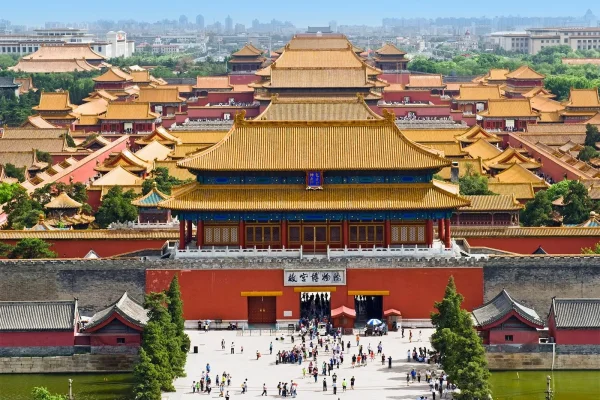
The Forbidden City lies on Beijing's north-south axis and today houses the Palace Museum. The Yongle Emperor of the Ming dynasty, who moved the capital from Nan...
 Most Visited
China
Of the stretches open around Beijing, this page covers Mutianyu, a good pick for families and first-time visitors who want a cable car and English signage. The...
Festivals held in the same weeks, if you want to plan more than one.

Cultural Events, Religious Festivals, National Day
Việt Trì, Vietnam
2 photos

Cultural Events, Religious Festivals, Social Festivals
Thailand
17 photos
Leisure Events, Exhibition
Shanghai, China
39 photos
Festivals and events across China, with dates, venues and ticket details where available.
Food Festivals, Cultural Events, Religious Festivals
China
2 photos


Cultural Events, Social Festivals
China
3 photos

Food Festivals, Cultural Events, Social Festivals
China
2 photos

Tell us where and when you want to go, and local travel experts send you offers for your trip.
Families & accessibility
Many people hold that graves should not be swept after 3 pm, so families aim to finish by early afternoon. In practice that makes cemeteries busiest in the morning and fairly quiet later in the day.
General
Extremely. On 4 April 2026 alone, 22.123 million people rode China's railways, the highest figure ever recorded for one day of this holiday. Expect full carriages on every major line.
Partly. In 2026 the first day of the break was the busiest by far, while the railways expected about 14.7 million passengers on the festival day. Booking for the festival day is still wise, but your odds are better.
Some railway bureaus run them. In 2026 Nanchang added flower-viewing trains to scenic areas such as Wuyishan and Gutian, and Guangzhou added 163 short and medium-distance services to nearby areas.
Yes. Supermarkets stock them in the weeks around the festival, and in 2026 trains out of Shanghai sold qingtuan from the dining car alongside other spring dishes.
A standard ticket costs 75 yuan between March and November. Children under 1.2 m and visitors aged 70 or over go free, and full-time students, people aged 65 to 69 and children between 1.2 and 1.4 m pay half.
Yes. The site is open all year from 8:00 to 19:00 and is a pleasant visit in any season, with the ancient cypress forest at its best when the crowds have gone.
Not entirely. The morning at the grave is respectful and quiet, but the festival also falls in the first mild weeks of spring, and many families make a day out of it. Picnics, walks and kite flying are as much part of it as the incense.
Yes, public cemeteries are open, and nobody will stop you. Keep to the paths, do not photograph families at graves, and avoid the hours when the crowds are thickest, usually the mornings of the holiday weekend.
Timing & weather
Yes, for the public holiday days. In 2026 the break also overlapped with spring holidays at some schools, which added family trips and study tours to the usual flow of people going home to the graves.
We use necessary cookies to make this site work. With your permission we would also like to remember your preferences, measure how the site is used, and show relevant ads and partner offers. You can change your mind at any time under "Cookie settings" on our Privacy policy page.