

Venue
Not confirmed yet. Please check with the organiser before you go.

Raksha Bandhan guide
Raksha Bandhan suits travellers with Indian friends or family, since it happens in homes. It falls on Shravana Purnima, which in 2027 is 17 August, with panchangs publishing the exact hour closer to the day. Without an invitation, the rakhi bazaars in the days before offer the best view.
Raksha Bandhan is the day Hindu sisters tie a rakhi, a decorated thread or charm, around their brothers' wrists, and brothers answer with a gift and a promise to stand by them. The name means roughly the bond of protection. The ritual lasts minutes, yet families plan the whole day around it.
It is above all a home festival, with no stage, procession or venue. What a visitor sees is the build-up in the markets and, with luck, the moment itself in someone's living room.
Not confirmed yet. Please check with the organiser before you go.
Hotels near the venue fill up around the event dates.
A new friend, a host or a shopkeeper's daughter may offer to tie a rakhi on you. It is a gesture of friendship and goodwill, not a sales pitch. Accept it with thanks.
Arrive with sweets from a good local shop, boxed. That is the standard gift and nobody will think it dull. Take your shoes off at the door if the family does.
Let the family lead the ritual and do not hurry it, since the timing may be set by the almanac. If food is offered, take a little of everything. Expect a long meal after the thread is tied, and do not plan to rush off to another appointment.
If a family invites you to sit in, arrive on time for the auspicious hour and take a box of sweets as a small gift.
Take your shoes off at the door and follow your hosts' lead on where to sit.
It is a private family moment. Ask before taking photographs, and keep them few.
Modest clothing that covers shoulders and knees is the safe choice in someone's home.
Nobody sells tickets to Raksha Bandhan. It happens in living rooms and courtyards, so the way in is through people. If you have Indian friends, colleagues or a homestay host, mention that you will be around and ask if you might sit in when the thread is tied. Families are usually pleased to be asked, and an invitation turns a quiet holiday into the best day of the trip.
Without one, go to the markets. Through the week before, any Indian city bazaar fills with stalls stacked with rakhis, from a plain twist of cotton to factory-made pieces with beads, cartoon heroes or silver, and children head straight for the cartoon ones. Sweet shops work late into the night and boxes pile up on the counters.
Then sort out the travel, because that is where the trouble lies. Half the country seems to be heading home for the day. Indian Railways opens reserved seats 60 days ahead, so in a year like 2027 the booking window for the festival falls in mid-June. Our India travel pages help with the wider itinerary.
The festival is kept on Shravana Purnima, the full moon that closes the month of Shravana, and that usually comes in August. In 2027 it falls on Tuesday 17 August, eleven days earlier than in 2026, when it was 28 August.
Families care about the hour as much as the date. Tradition prefers the afternoon for tying the thread and avoids Bhadra, a stretch of time thought inauspicious. When Bhadra swallows the afternoon, the ritual moves into the evening, and in some years to the next day. Panchangs, the Hindu almanacs, publish the exact 2027 muhurat closer to the festival. The window shifts a little from city to city, so two households in different states may tie their rakhis at different times.
Morning is for travel and cooking. Brothers and married sisters arrive, the kitchen fills, and the plates are laid out. The ritual itself takes minutes once the hour comes, and a long family meal follows. Out in the streets the day is quiet compared with the frantic week before, apart from people hurrying between houses with sweet boxes. By nightfall most families are back home and full.
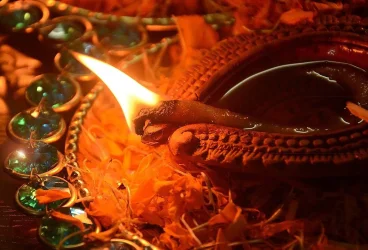
The ritual is short and almost the same everywhere. A sister prepares a small plate with the rakhi, a few sweets and an oil lamp. She says a brief prayer, ties the thread around her brother's wrist and pops a sweet into his mouth. He gives her a present, traditionally coins or cash, and promises to look out for her. Many married women go back to the house they grew up in for this, which makes the day a reunion as much as a rite.
Older forms survive in the villages. In 1955 the anthropologist Marriott recorded Saluno, in which sisters placed barley shoots on their brothers' heads, alongside a more priestly charm-tying ceremony. Rakhi entered Hindustani verse long before that. The poet Nazeer Akbarabadi, who lived from 1735 to 1830, wrote one of the first nazms about it.
The thread itself changed in the twentieth century. Factory-made charms appeared in the middle of the century, light enough to travel, and the custom adapted to families scattered across a fast-growing country. That is why the modern rakhi is as likely to be glittering plastic as hand-twisted cotton.
Delhi is the usual gateway to north India, with direct flights from across the region, including Dhaka and Bangkok.
If you miss the advance booking window, the Tatkal quota releases a limited batch of seats on some trains the day before they run, at a premium.
Mid-August is deep in the monsoon across much of India. Leave a spare day in any plan that relies on roads or flights.
We have no hotels listed in India yet. The ones below are in Jaipur and Delhi, so treat them as a base for the wider trip. The next date is 17 August 2027. Book as soon as your dates are fixed, since rooms close to the festival are the first to go.
Jaipur
Delhi
Mumbai
Agra
Kerala
Raksha Bandhan falls in the monsoon. In Delhi, August averages a daytime high of about 34°C and a night-time low near 27°C, with around 230 mm of rain over ten wet days (1991-2020 normals, Safdarjung).
Expect humid heat broken by heavy downpours, and flooded streets after the worst of them.
Met at arrivals and driven door to door to India.
Places to eat in India before or after the celebrations.
Level 2, Jaleb Chowk, Amer Palace, near Sheela Mata Temple, Amer, Jaipur 302002, India
Cuisine:RajasthaniMughlai
Vivanta Bengaluru Residency Road (formerly The Gateway Hotel), 66 Residency Road, Ashok Nagar, Bengaluru 560025, India
Cuisine:South Indian coastalKerala
Gali Kababian, near Jama Masjid, Old Delhi, Delhi 110006, India
Cuisine:MughlaiNorth Indian
The Lodhi, Lodhi Road, New Delhi 110003, India
Cuisine:Modern IndianTasting menu
Others of this kind you opened on this device, so you can get back to them quickly.
No questions yet about Raksha Bandhan. Ask the community or our travel team, and the answer will show here once it is published.
Our team answers questions here
Festivals held in the same weeks, if you want to plan more than one.

Cultural Events, Religious Festivals
Tinos, Greece

Cultural Events, Religious Festivals
Vietnam
2 photos
National Day, Community Events
Jakarta, Indonesia
Live Events, Cultural Events, Arts Festivals
Singapore City, Singapore
Festivals and events across India, with dates, venues and ticket details where available.
Cultural Events, Religious Festivals
Jaipur, India
13 photos
Tell us where and when you want to go, and local travel experts send you offers for your trip.
Yes. It comes from the Sanskrit rakshika, linked to protection. The word first turns up in English in 1829, in a work by James Tod.
The story says she sent one in 1535 when her kingdom was in danger, and that Humayun set out to help but arrived too late. Writers of the time do not mention it, and the historian Satish Chandra doubts it happened.
North India is the heartland, with central and western India close behind. It is also kept in Nepal and by overseas Indian communities, including those in Fiji.
As Janai Purnima, also called Rishitarpani. Hindus and Buddhists both observe it, and Hindu men change the sacred thread they wear across the body, alongside the tying of rakhis.
Yes, and many sisters do. Lightweight rakhis made to travel by post are produced in huge numbers for siblings who live apart. Send it a couple of weeks early so it arrives before the full moon.
In north India, August kite flying belongs to the season of Raksha Bandhan and Janmashtami. Look up from any rooftop neighbourhood in late summer and you will usually spot a few.
In the 1941 film Sikandar, Roxane learns of the custom and ties a rakhi on King Porus, though historians find no ancient source for it. In Jai Santoshi Maa from 1975, Ganesha's sons long for a sister, and the goddess Santoshi Maa is created.
India's central government lists it as a restricted holiday, so its staff may choose to take it off, but it is not a closed holiday nationally.
Yes. Bhai Dooj, the last day of Diwali, comes later in the year and plays a similar role. It falls in the autumn, so a long stay in India can take in both.
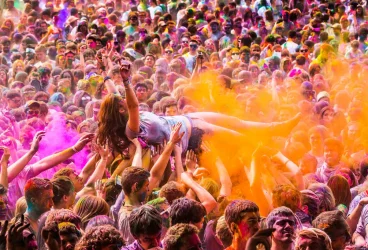
They are opposites. Holi is a spring free-for-all on the streets, open to anyone with old clothes and a sense of humour. Raksha Bandhan is quiet and private, and you take part only when invited.
We use necessary cookies to make this site work. With your permission we would also like to remember your preferences, measure how the site is used, and show relevant ads and partner offers. You can change your mind at any time under "Cookie settings" on our Privacy policy page.



 Umrah packages from Dhaka