
Venue
Bada Danda (Grand Road), Puri, Odisha, India

Rath Yatra guide
Rath Yatra suits travellers prepared for crowds of hundreds of thousands as devotees haul the deities' wooden chariots by rope. It usually falls in June or July, on the second day of the bright fortnight of Ashadha. Puri is small and pilgrims fill hotels and dharamshalas, so book as soon as you know you are going.
Every summer Puri, a temple town on the Odisha coast, builds three towering wooden chariots from scratch, and devotees haul Lord Jagannath, his brother Balabhadra and his sister Subhadra down the town's Grand Road by rope. Nothing else in Puri's year comes close, and the crowds run to hundreds of thousands.
It is a rare moment when the deities leave their sanctum and come out among the people. Inside the temple only Hindus may see them. On the road, anyone can.
For pilgrims the pull itself is the point. A hand on the rope, even for a few seconds, is an act of devotion, and the slow, swaying progress of the chariots is the whole spectacle.
Bada Danda (Grand Road), Puri, Odisha, India
Hotels near the venue fill up around the event dates.
Non-Hindus and foreigners may not enter the Jagannath Temple. Jains, Sikhs and Buddhists are the exceptions. The rule is centuries old and still debated, but it is enforced, so do not try your luck at the gate.
The procession is on a public road and anyone may watch. Out there:
Crowd control is the real danger. On 29 June 2025 a sudden surge near the Gundicha Temple killed three people and put 15 in hospital.
If the crowd starts to push, move sideways out of it.
Rath Yatra falls in the monsoon. Expect heavy, humid heat broken by sudden downpours, and long hours on your feet with little shade.
Carry plenty of water and drink before you feel thirsty. A hat, sunscreen and a compact umbrella or light rain jacket all earn their place. Shoes will get wet and muddy; sandals dry faster than trainers. Eat something before you head out, because leaving your spot to find food means losing it.
The three wooden deities are carried out of the temple and swayed, step by step, up to their chariots.
The Gajapati king of Puri climbs each chariot in turn and sweeps its deck with a gold-handled broom.
In 2025 the pulling began at about 4 pm: Balabhadra's chariot first, then Subhadra's, then Jagannath's.
Each chariot moves only as fast as the thousands on its ropes can manage, towards the Gundicha Temple.
Only Hindus are admitted to the Jagannath Temple. Everyone can watch Rath Yatra, which happens in the street; the Raghunandan Library roof opposite the temple is a traditional viewpoint for others.
Leather items, including belts and bags, are not allowed inside the temple. Wear modest clothing that covers shoulders and knees.
Touching or pulling the ropes is considered a blessing, but the crowd surges hard. Join only on the outer stretches and never with children.
Book as soon as you know you are going. Puri is a small town, and for Rath Yatra pilgrims fill the hotels and dharamshalas months in advance. A bed in Puri itself, along the sea front or in the lanes behind the temple, means you can walk to the Bada Danda at first light. Bhubaneswar is cheaper and has far more rooms. It also puts a long, slow drive between you and the procession on the busiest morning of the year.
Think about how many days you want. The chariot procession is the headline, but the festival runs for well over a week, and the return ride and the golden dressing of the deities that follow draw crowds almost as large. Two or three nights give you a slack day either side of the main pull, which matters when roads and trains are this full.
Pick your viewing stretch before the day. Walk the Grand Road the evening before and choose a place near the edge of the road with a side lane behind it. For the wider trip around Odisha and beyond, our India travel pages are a good place to start.
Nothing from last year's chariots rolls again. Carpenters build all three from scratch over about two months. Jagannath's Nandighosha is the tallest, at about 44 feet on 16 wheels. His brother Balabhadra rides Taladhwaja, 14 wheels and around 43 feet. Their sister Subhadra sits in Darpadalana, on 12 wheels and about 42 feet high.
For believers, hauling a chariot is worship. Taking the rope counts as seva, service offered to the god, and people wait for hours for a turn. The king's broom carries its own message. A ruler sweeping the floor before the deities shows himself as Jagannath's first servant, and rank counts for nothing on that platform.
The story does not end at the Gundicha Temple, about 3 km down the road, where the deities rest for roughly a week. The return ride is called the Bahuda Yatra, and it pauses at the Mausi Maa Temple so offerings can be made. Then comes the Suna Besha outside the main temple, when the three deities appear decked in about 208 kg of gold. In 2014 the crowd for it was put at nearly 900,000.
Biju Patnaik International Airport in Bhubaneswar is about 60 km north of Puri. Taxis wait outside arrivals and buses run along National Highway 203; allow 1.5 to 2 hours, longer on the eve, when pilgrim coaches clog the road.
Direct trains link Puri with New Delhi and with Kolkata, 499 km away. Festival-week berths sell out early, so book as soon as reservations open.
Police close the streets around the Grand Road, so walk. The middle section gives the best mix of view and breathing room; leave before the chariots reach the Gundicha end, where the crowd packs tightest.
The next date is 5 July 2027. Book your room as soon as your dates are fixed, since rooms close to the festival are the first to go.
Rath Yatra falls in the south-west monsoon. Bhubaneswar, the nearest long-running station, averages about 32°C by day and 26°C at night in July, with around 360 mm of rain in the month (1991-2020 normals).
Heavy showers can break over the procession at any time, and the humidity in the crowd is intense.
Met at arrivals and driven door to door to Shree Jagannath Temple.
Places to eat in India before or after the celebrations.
Level 2, Jaleb Chowk, Amer Palace, near Sheela Mata Temple, Amer, Jaipur 302002, India
Cuisine:RajasthaniMughlai
Vivanta Bengaluru Residency Road (formerly The Gateway Hotel), 66 Residency Road, Ashok Nagar, Bengaluru 560025, India
Cuisine:South Indian coastalKerala
Gali Kababian, near Jama Masjid, Old Delhi, Delhi 110006, India
Cuisine:MughlaiNorth Indian
The Lodhi, Lodhi Road, New Delhi 110003, India
Cuisine:Modern IndianTasting menu
Others of this kind you opened on this device, so you can get back to them quickly.
No questions yet about Rath Yatra. Ask the community or our travel team, and the answer will show here once it is published.
Our team answers questions here
Festivals held in the same weeks, if you want to plan more than one.
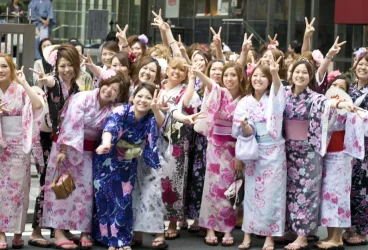
Cultural Events, Religious Festivals, Parade
Kyoto, Japan

Cultural Events, Religious Festivals, Parade
Kataragama, Sri Lanka
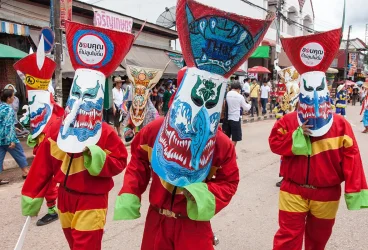
Cultural Events, Folk Festival, Religious Festivals
Loei, Thailand
1 photo

Live Events, Leisure Events, Social Festivals
Germany
1 photo
Festivals and events across India, with dates, venues and ticket details where available.

Tell us where and when you want to go, and local travel experts send you offers for your trip.
General
Literally the chariot festival, or car festival. In Odisha it also goes by Ghosha Yatra, and English speakers sometimes call it the Puri Car Festival after the three wheeled chariots at its centre.
After the Snana Yatra on the full moon of Jyeshtha, when they are bathed with 108 pots of water, the deities are said to fall ill. They rest out of sight for about two weeks, the Anasara period, and devotees pray before three painted panels on a bamboo screen instead.
Mainly phassi and dhausa timber from the old princely state of Dasapalla. The logs are floated as rafts down the Mahanadi river, landed near Puri and brought the rest of the way by road.
By the colours of their canopies. Jagannath's Nandighosha wears red and yellow. Balabhadra's Taladhwaja is red and bluish green, and Subhadra's Darpadalana is red and black.
A ritual on the fifth day of the bright fortnight of Ashadha, while the deities are at the Gundicha Temple. Goddess Lakshmi, left behind at the main temple, goes to Gundicha in anger at her husband Jagannath. A gold image of the goddess now stands in for her.
Tradition credits King Kapilendra Deva, who is said to have begun it in 1460. More than five centuries on, it still takes place at the main temple once the chariots are back.
India's central government lists it as a restricted holiday, which means staff may choose to take it off. Odisha treats it as a major festival, and in Puri the procession takes over the centre of town.
From Jagannath and his massive chariots at Puri. English borrowed the name, and over time the word came to mean any huge force that nothing can stop.
Booking
Jagannath's chariot is assembled from 832 wooden pieces, Balabhadra's from 763 and Subhadra's from 593. Every one of those pieces is new each year, since no chariot is ever reused.
Timing & weather
On Akshaya Tritiya, the third day of the bright fortnight of Vaisakha, a couple of months before the procession. The day opens with ritual fire worship before the carpenters start shaping the timber.
We use necessary cookies to make this site work. With your permission we would also like to remember your preferences, measure how the site is used, and show relevant ads and partner offers. You can change your mind at any time under "Cookie settings" on our Privacy policy page.

 Umrah packages from Dhaka