
In short: Sajek Valley and Rangamati's Kaptai Lake both sit in the Chittagong Hill Tracts, the one part of Bangladesh where foreigners face formal entry rules. Plan on getting permission from the district administration and notifying the Ministry of Home Affairs before you go, ideally through a licensed tour operator. In October 2026 Sajek was closed for four days over a road blockade, and the blockade resumed later that month, so check the latest notice from the Rangamati district administration the week you travel. Rangamati town and the lake are reached by a separate road and were busy with visitors while Sajek was shut.
Facts, prices and rules were checked against official sources and dated news reports in November 2026.

Where Sajek and Rangamati are
The Chittagong Hill Tracts (CHT) are three districts in the southeast of Bangladesh: Rangamati, Khagrachhari and Bandarban. They are hilly and forested, and home to Indigenous peoples including the Chakma, Marma and Tripura. They also have a long history of conflict, which explains the permission system and the army's visible presence.
Sajek is a ridge-top settlement in Baghaichhari upazila. It belongs to Rangamati district on paper, yet almost every visitor reaches it from the Khagrachhari side through Dighinala. Rangamati town lies on Kaptai Lake on a different road. Treat them as two separate trips that happen to share a permission process.
Foreigner permission: what the rules say
The current framework dates from March 2015. After a short-lived circular that February required foreigners to obtain Home Ministry approval, the ministry reversed course. The Daily Star reported on 23 March 2015 that foreign tourists would need only permission from the district administrations, while informing the Home Ministry ahead of time so security could be arranged. Foreign researchers still had to apply to the ministry at least 20 days before a visit.
The UK government's Foreign, Commonwealth and Development Office states that travelers to the CHT must give the Bangladesh authorities 10 days' notice. It also advises against all but essential travel to Rangamati, Khagrachhari and Bandarban. The US State Department keeps a separate, stricter regional warning for the Hill Tracts; read its current wording before booking.
How it works in practice
Most foreign visitors do not file paperwork themselves. A licensed Bangladeshi tour operator collects passport and visa copies, a day-by-day itinerary and accommodation details, then submits them to the relevant district office and notifies the ministry. Allow at least 10 days before your entry date, matching the FCDO guidance, and keep printed copies of the approval.
Expect army and police checkpoints on the approach roads, where foreigners should be ready to show passports and permission letters. Answer questions plainly and keep your guide close. If your plan changes on the ground, ask the guide to inform the authorities rather than improvising a new route.
Choosing an operator
Because the permission rests on paperwork filed in your name, the operator matters more here than anywhere else in Bangladesh. A good one will ask for your documents early, tell you which districts the letter covers, and explain what happens if the district suspends tourism after you arrive.
- Ask to see a copy of the permission letter before you travel, with your passport numbers and dates on it.
- Confirm that both Khagrachhari and Rangamati districts are listed if you plan to visit Sajek and the lake.
- Ask who will travel with you from Khagrachhari and whether that person speaks English.
- Get the refund terms in writing for closures caused by blockades, landslides or official bans.
- Check that the quoted price covers the chander gari, resort nights, meals and boat hire, so that cash needs on the road are small.
Researchers, journalists and NGO workers fall under different rules. If your trip involves interviews, surveys or filming for publication, assume the 20-day ministry process applies and plan accordingly.
 Get the bookingMentor app
Sajek closures since 2024
Sajek is a small place on a single access road, and it closes when that road is unsafe. This timeline, drawn from news reports, shows how often that happens and why.
| Date | What happened | Outcome for visitors |
|---|---|---|
| Late September 2024 | Unrest in Khagrachhari, Dighinala and Rangamati; 72-hour strike | About 1,400 stranded visitors returned to Khagrachhari with army help; advisory extended to 30 September |
| 24 February 2025 | Fire destroyed 94 resorts, cottages, homes, shops and restaurants | Tourism restricted briefly, then reopened |
| 7 to 10 July 2026 | Heavy rain and landslides cut the road | District suspended tourism; army escorted 561 stranded visitors out in convoys |
| 11 to 16 October 2026 | Indefinite road blockade by local groups on the Sajek to Dighinala road | Rangamati district banned tourist visits; lifted after four days |
| From 22 October 2026 | Blockade resumed over unmet demands | Visitors urged to leave before it began |
The 2024 evacuation was reported by Prothom Alo and the extended advisory by TBS News. Prothom Alo gave the fire damage breakdown from the owners' association. The July 2026 convoys were reported by the Daily Observer. The October ban came from the Financial Express, the reopening from Dhaka Tribune, and the renewed blockade call also from Dhaka Tribune.
We could not confirm whether the late-October blockade had ended by mid-November 2026. Before you commit to dates, ask your operator to confirm with the Baghaichhari upazila office, and buy flexible tickets for the Dhaka to Khagrachhari leg.
The road to Sajek
The usual route is Dhaka to Khagrachhari by overnight bus, then onward by hired vehicle through Dighinala and Baghaihat to the ridge. According to Wikipedia's summary of local sources, the road was built by the Bangladesh Army and Sajek lies about 70 km from Khagrachhari. The last part climbs steeply, with sharp bends.
Most groups share a chander gari, an open-backed four-wheel-drive jeep with bench seats that carries a group and its bags. Hire it in Khagrachhari for the full trip, including the wait at Sajek and the return, and agree on the price in writing.
Security escorts
Vehicles bound for Sajek pass through army checkpoints, and the Baghaihat army zone has organized escorted convoys when conditions require, as during the July 2026 evacuation. Timetables are not published by any official source we could find, and reports in October 2026 suggested convoy frequency was cut during the blockade. Your driver and guide will know the day's arrangement, and you should follow it exactly. Do not drive the road after dark.
Staying in Sajek
Sajek's appeal is simple. You watch clouds settle in the valleys below the ridge at dawn. The two main settlements are Ruilui Para, where most resorts stand, and Konglak Para, a short walk higher on Konglak Hill. Sajek is commonly described as sitting about 1,800 feet above sea level.
Accommodation is a strip of small resorts and cottages built mostly of wood and bamboo. bdnews24 reported 98 resorts and cottages fully booked over the June 2025 Eid holidays. Because Sajek fills to capacity on holiday weekends and the February 2025 fire showed how quickly timber buildings burn, choose a property with clear exits, ask about fire extinguishers, and never smoke indoors.

Water and power are limited on the ridge. Take short showers, carry a power bank and a headlamp, and expect simple meals.
Best time for Sajek
Cloud views are best from late monsoon into early winter, when moisture fills the valleys and mornings are clear on the ridge. Winter is the main domestic season, so weekdays are calmer. In the monsoon, landslide risk rises, as July 2026 showed. Our best time to visit Bangladesh guide explains the national seasons.
 Umrah packages from Dhaka
Rangamati and Kaptai Lake
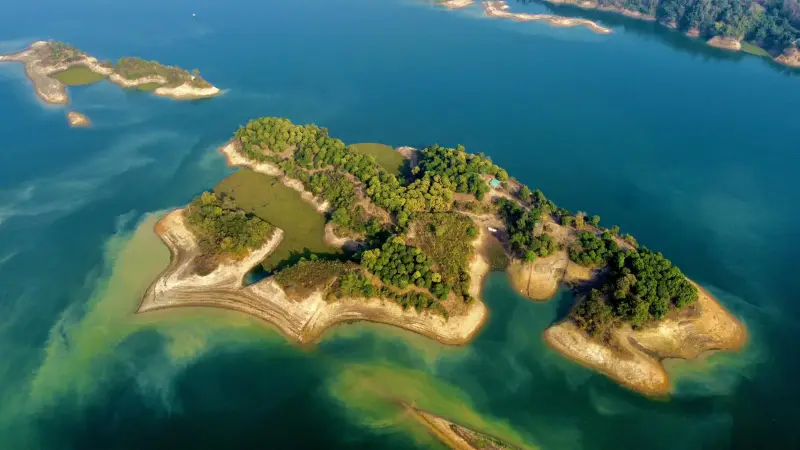
Rangamati town wraps around the arms of Kaptai Lake, a reservoir formed when the Karnaphuli River was dammed at Kaptai. UNB described it as Bangladesh's largest freshwater lake, at about 688 square kilometers. The lake flooded the old town when it filled in the early 1960s.
The story under the water
Construction of the Kaptai Dam began in 1957, when the region was part of Pakistan, with financing from the United States through USAID, according to International Rivers. The same account says the reservoir submerged about 220 square kilometers of farmland, around 40 percent of the cultivable land in the area, and displaced some 100,000 people, about 70 percent of them Chakma.
The old Chakma royal palace was among the buildings lost. Knowing this history makes a boat ride on the lake read differently: the calm water covers villages and fields that families still remember.
Sajek or Rangamati: which suits you
Many visitors have time for only one. The comparison below is our own summary of the two trips.
| Factor | Sajek Valley | Rangamati and Kaptai Lake |
|---|---|---|
| Main experience | Ridge-top views and morning clouds | Boat days on a large lake, town sights |
| Access | One hill road via Dighinala with checkpoints | Road from Chattogram, then boats |
| Closure risk | High: blockades, landslides, unrest | Lower, though the same district rules apply |
| Accommodation | Small timber resorts, basic utilities | Town hotels and lakeside complexes |
| Good for | Travelers with flexible dates | Families, shorter trips, fallback plans |
What visitors do in Rangamati
Most visits revolve around hiring a boat at the tourist boat terminal and spending half a day on the lake. A toll collector told bdnews24 that 20 to 30 boats were being rented each day over the June 2025 Eid holiday. Stops usually include the hanging bridge, island restaurants, and the Shuvolong area where the lake narrows into the Karnaphuli.
On land, the same bdnews24 report listed the DC Bungalow, Polwel Park and the Chakma Rajbari among the places that drew crowds. The Rangamati Tourism Holiday Complex is one of the main places to stay, and it was 80 percent booked over that holiday.
Waterfalls around Kaptai upazila, such as Dhuppani and Muppochora, are seasonal and require walking on slippery trails. Our waterfalls in Bangladesh roundup covers them alongside other falls.

Getting to Rangamati
Rangamati is most easily reached from Chattogram, the port city that also has the nearest major airport and the main rail link from Dhaka. Many travelers fly or take the train to Chattogram, then continue by road into the hills, which keeps the long overnight bus out of the plan. Hire a car with driver through your operator so the vehicle and the permission paperwork match.
Inside Rangamati, the lake is the road. Shared and private boats link the town with island restaurants and villages, and settling the fare before boarding avoids most disputes.
Health, money and safety on the road
Hill roads in the CHT are narrow and steep, and motion sickness is common in the back of a jeep. Take medication before the climb if you are prone to it, and sit facing forward where possible.
Cash is essential. Use ATMs in Khagrachhari or Rangamati town rather than counting on finding one at Sajek, and expect resorts and drivers to want taka. Withdraw what you need for the whole hill section before you leave town.
Mosquito protection matters in the forested hills, particularly in the wet months. Use repellent, cover arms and legs at dusk, and ask a travel clinic before you leave home about malaria advice for the region.
Above all, listen to your guide and the authorities. A checkpoint officer telling you to turn back, or a driver saying the convoy is not running today, is giving you the most current information available.
Rangamati when Sajek is closed
Rangamati is often the fallback. Prothom Alo has run a photo story on visitors turning to Rangamati instead. Because the permission letter covers districts rather than single sites, ask your operator to include both Rangamati and Khagrachhari, so a switch on short notice is legal.
A four-day plan that keeps your options open
Day 1: Dhaka to Khagrachhari
Take an overnight bus to arrive early, or a daytime bus and spend the evening in Khagrachhari. Meet your guide, check the permission papers and confirm the day's road status.
Day 2: up to Sajek
Leave Khagrachhari in the morning with your chander gari and follow the checkpoint routine at Dighinala and Baghaihat. Arrive in time for sunset from Konglak Para, then sleep at a resort in Ruilui Para.
Day 3: sunrise and down to Rangamati
Watch the clouds at dawn, leave with the morning departure, and continue by road to Rangamati, a long day on hill roads. Stay near the lake.
Day 4: Kaptai Lake and out
Spend the morning on a hired boat, then head to Chattogram by road for a train or flight back to Dhaka. If you are continuing to the coast, our guide to things to do in Cox's Bazar picks up from there.
If Sajek is shut, swap days 2 and 3 for two nights in Rangamati, or head instead to Bandarban; our page on Bandarban resorts and hotels covers where to stay. Bandarban falls under the same permission system.
Respect and photography in the hills
The Hill Tracts are not a theme park. Villages along the road and at Sajek are homes, and many residents have seen tourism arrive faster than any say in it, which is part of what the 2026 blockade was about. Ask before photographing people, especially women and children, and do not walk into houses or religious sites uninvited.
Dress conservatively, keep noise down at night, and carry rubbish back to Khagrachhari or Rangamati. Buying from local stalls rather than only from resorts puts some money into the village economy.
For a wider picture of travel in the country, see our Bangladesh travel guide for foreigners. For other nature trips without hill-tract paperwork, our Sylhet travel guide and Tanguar Haor guide cover the northeast.
 AI trip planner











{{item.get_author.first_name}} {{item.get_author.last_name}}
{{item.comment_txt}}
{{item_reply.get_author.first_name}} {{item_reply.get_author.last_name}}
@ {{item_reply.reply_to}}, {{item_reply.reply_txt}}