

Venue
Sutrapur, Narinda, Shankhari Bazar and Tanti Bazar areas), Dhaka, Bangladesh

Shakrain (সাকরাইন উৎসব) guide
Shakrain falls on 14 January every year, when families across Gendaria and Sutrapur fly kites on glass-coated string and try to cut down rivals. It suits travelers who enjoy neighbourhood festivals with no stage or tickets. The action is on private roofs, so the real plan is finding a host who will invite you up.
Shakrain, also spelt Sakrain and known locally as Ghuri Utsob, is the day Old Dhaka spends on its roofs. Across Gendaria and Sutrapur, families fly kites on glass-coated string and try to cut down their neighbours' kites, while the lanes below fill with children chasing every one that falls.
The day marks Poush Sankranti, when one Bengali month hands over to the next, and residents trace the custom to Mughal times. It is kept above all by the Dhakaiya, the old city's long-settled families, and it remains their festival more than anyone else's.
Rivalry and hospitality run side by side. Neighbours spend the afternoon trying to bring each other's kites down and the evening feeding one another, and the only seats worth having are on somebody's roof.
 “Shakrain Festival in Bangladesh: A Vibrant Celebration of Unity and Joy!”
Sutrapur, Narinda, Shankhari Bazar and Tanti Bazar areas), Dhaka, Bangladesh
Hotels near the venue fill up around the event dates.
The string used for fighting is coated in powdered glass, and after every cut a length of it drifts down into the lanes. It can open a cut on a hand or a neck before you notice it. Keep children close, look up as you walk beneath busy roofs, and never grab at a line as it falls.
Up top, many roofs have only a low wall at the edge and a crowd of flyers backing towards it with their eyes on the sky. Stand well clear of the parapet while people are flying, and wear closed shoes with grip.
For years the night ended with fireworks and fanush lanterns. Dhaka Metropolitan Police banned both for the 2026 festival because a fire in the tightly packed old buildings could spread fast, and set a cut-off time for sound systems. Similar rules are likely next time, so read the police notices in the days before.
Do not bring fireworks or lanterns, even if a neighbouring roof ignores the ban, and turn the music down when the cut-off comes. The roof belongs to your hosts, and so does any trouble that follows.
Kite sellers and food stalls in the old city deal almost entirely in cash, so carry small notes. January afternoons are mild, but an open roof turns cold after sunset, and a jacket or shawl makes the evening far more pleasant.
Charge your phone and save your host's address and number before you set out, because the lanes are a maze and everyone looks the same in a crowd. A small bag that zips shut is easier to manage than a backpack on narrow stairs.
The main cities where the festival is celebrated.
A handful climb while families are still carrying food up the stairs.
The air over Gendaria and Sutrapur is crowded with kites.
Almost every roof is occupied. Each cut line brings a roar from the winning roof, and boys race through the lanes after the loser.
Sound systems, DJs, laser lights and fire-breathers; dinner comes late. With only half a day, choose the afternoon and the first hour of the night.
There is no stage, no grandstand and no ticket. Shakrain happens on the flat roofs of Old Dhaka, and the good roofs belong to families who invite friends and relatives up for the day. Invitations travel by word of mouth. The surest route is a Dhaka friend with family in the old city, or a local guide who knows the mohallas and can make the introduction. Ask a few weeks ahead. Hosts cook for a set number of guests, and the kitchen work starts days before.
Base yourself in central Dhaka; beds in the old city are hard to find. A hotel near Motijheel or Shahbagh keeps you close to the metro, and the ride south on festival morning is short if you leave early. Rooms close to the old city go first, so book as soon as your host confirms.
Decide on your exit before you climb the stairs. If you are not staying the night with your hosts, agree a time to leave and how you will get back, because the parties run late and the lanes stay jammed long after dark. Our Dhaka travel pages cover the rest of a stay in the city.
Old Dhaka's families trace Shakrain back to Mughal times, and it still belongs to the Dhakaiya, the long-settled community of the old city. It is a neighbourhood festival in the oldest sense. Houses compete in the sky all afternoon and eat at each other's tables at night. Kite fighting is the whole point. Each string, the manja, is dressed with glue and ground glass so that it can cross a rival's line and saw through it. A cut kite is a small victory for everyone on the roof.
Kite making is a craft with its own vocabulary. Patterns such as Chokhdar and Pankhiraj take local makers months to prepare, though mass-produced kites have taken much of their trade. Kitchens matter as much as kites. Households try to outdo each other with the number of pitha they can lay out, and guests are usually fed kacchi biryani, the slow-cooked rice and meat dish of the old city.
The festival has its critics. In the run-up to the 2026 edition, leaflets in Gendaria and Sutrapur called it un-Islamic. Their authors objected to mixed parties and loud music. Some families cancelled. Two neighbouring streets can feel quite different on the day.
Hazrat Shahjalal International Airport is in Kurmitola, some 17 km north of central Dhaka, with direct flights from London, Dubai, Doha, Kolkata, Bangkok, Singapore and Kuala Lumpur.
Prepaid taxis are sold just past international arrivals, and Pathao and Uber pick up at the terminal. The Elevated Expressway carries cars to Farmgate above the worst traffic.
Metro Line 6 is the quickest way south, from Uttara North to its terminus at Motijheel via Karwan Bazar, Shahbag and Dhaka University.
From Motijheel take a rickshaw or CNG towards Sutrapur, and expect to finish on foot: once the crowds build, even rickshaws struggle in the lanes.
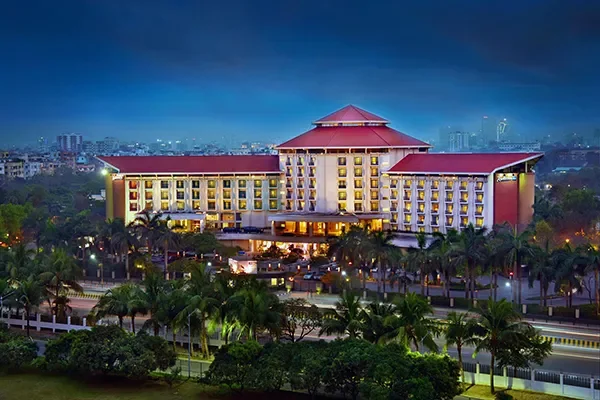
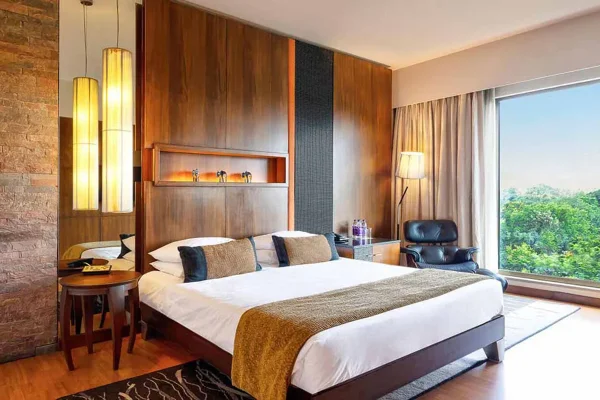
The hotels below are in Dhaka itself, the nearest ones we list to Shakrain (সাকরাইন উৎসব). The next date is 14 January 2027. Book as soon as your dates are fixed, since rooms close to the festival are the first to go.
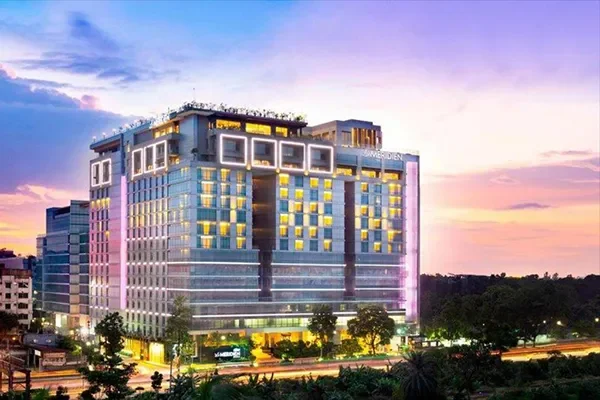 Top Rated
20 photos

Dhaka
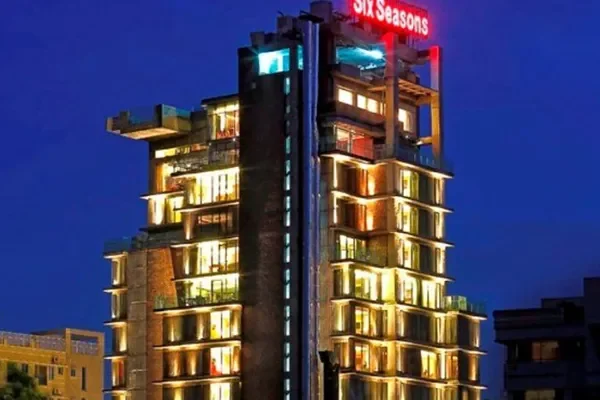 Top Rated
19 photos

Dhaka
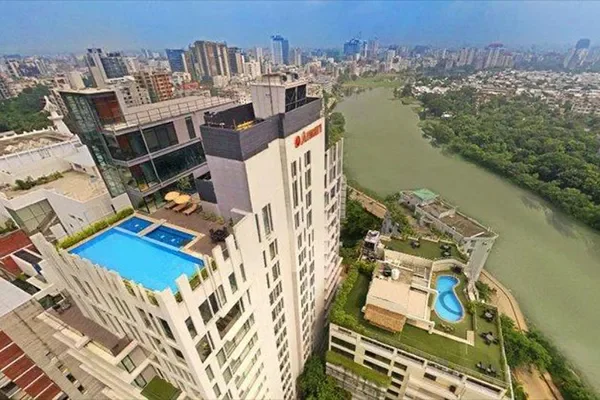 Top Rated
15 photos

Dhaka
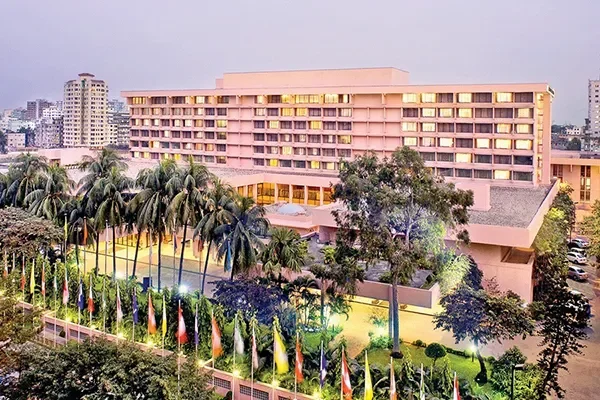 10 photos

Dhaka
Free cancellation
 Save 14%
5 photos

Dhaka
Free cancellation
 5 photos

Dhaka
Mid-January is the coolest, driest stretch of the Dhaka year. Average highs are about 25°C and lows about 13°C, with barely any rain (long-term averages).
Mornings are often hazy or foggy, which can delay the first kites, and evenings on the roofs turn chilly.
The busiest routes into Dhaka (DAC).
Door to door from Hazrat Shahjalal International Airport (DAC) to Old Dhaka, with stops where you like.
Places to eat in Dhaka before or after the celebrations.

House 16, Road 4, Block F. Banani Chairmanbari Moshjid Road. Beside Banani Police Station Dhaka, 1213
Cuisine:BengaliBangla-Chinese

15th Floor, Six Seasons Hotel, House 19, Road 96, Gulshan 2, Dhaka 1212, Bangladesh
Cuisine:InternationalBuffet

Level 12-13 & Rooftop, Rahman Regnum Center, 191/B Gulshan Link Road, Tejgaon, Dhaka 1208, Bangladesh
Cuisine:ContinentalChinese
Dasura Tower (2nd Floor), Mirpur Road, opposite Sher-e-Bangla National Cricket Stadium, Mirpur, Dhaka 1216
Cuisine:BangladeshiChinese

Khan Tower (Level 13-14), Plot 14 & 16, Sonargaon Janapath, Sector 11, Uttara, Dhaka 1230, Bangladesh
Cuisine:ThaiContinental

Road 11, Banani, Dhaka, Bangladesh
Cuisine:BengaliSteaks


Others of this kind you opened on this device, so you can get back to them quickly.
No questions yet about Shakrain (সাকরাইন উৎসব). Ask the community or our travel team, and the answer will show here once it is published.
Our team answers questions here
Sights within easy reach of the festival.
Dhaka
Ahsan Manzil, known as the Pink Palace, is the former palace of the Nawabs of Dhaka at Kumartoli in Old Dhaka, on the bank of the Buriganga River near Sadarghat...
Dhaka
Dhakeshwari Temple, officially Dhakeshwari Jatiya Mandir, is the National Temple of Bangladesh and the country's largest Hindu temple, on Dhakeshwari Road near...
Dhaka
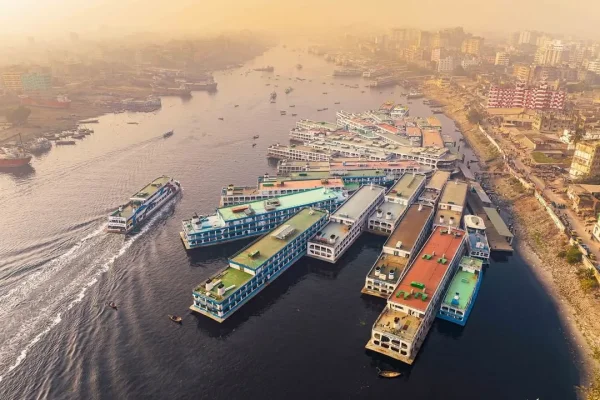
The terminal stretches along the Buriganga River in Old Dhaka and is described as the busiest passenger port in Bangladesh. For visitors it is less a building t...
Festivals held in the same weeks, if you want to plan more than one.
Trade Shows, Exhibition, Fair
Dhaka, Bangladesh
1 photo

Food Festivals, Cultural Events, Fair
Dhaka, Bangladesh
1 photo

Festivals and events across Bangladesh, with dates, venues and ticket details where available.
Tell us where and when you want to go, and local travel experts send you offers for your trip.
Hire someone who lives in Dhaka to plan the route, translate and get you to the best spots early.
General
The 14th. Older reckonings sometimes let the day slip to the 15th, but the revised calendar has fixed it, so it no longer moves. A few neighbourhoods simply keep flying the following day, and you may still see kites over the old city then.
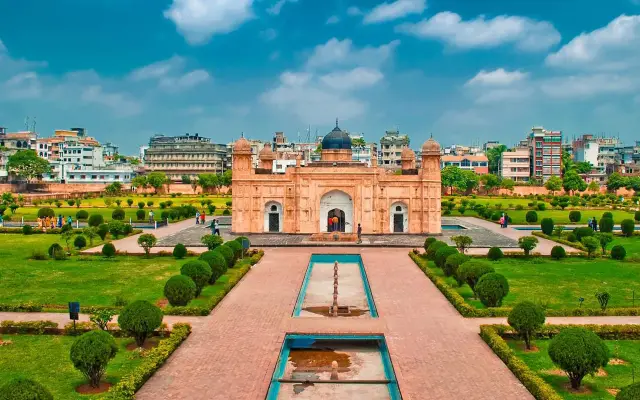
From the lanes. Shankhari Bazar, Wari and the streets around Lalbagh Fort all sit under heavy kite traffic, and the riverside along the Buriganga gives a wider view of the sky. You miss the food and the company, but you still see the duels and the falling kites.
Yes, kites and reels are sold in the old bazaars in the weeks before. Fighting well takes practice, though, and glass-coated string punishes careless fingers, so ask your host or one of the teenagers on the roof to help you launch before you try a duel.
A fanush is a paper lantern lifted into the night sky by the heat of a small flame inside it. They were part of Shakrain for years, but police stopped them, along with fireworks, for the 2026 festival.
The kites are long down by then. Where music is still allowed the party carries on, and in some homes families settle into games played like dice but with fruit. Most guests leave well before this, so ask your hosts whether a late night is expected.
Poush Sankranti is marked across Bengal, but the rooftop kite war is an Old Dhaka custom, kept by the Dhakaiya families of the southern part of the city. Elsewhere in the capital the day passes far more quietly.
Ask the sellers for Chokhdar or Pankhiraj, the old hand-made patterns. Printed factory kites now fill most stalls, so a well-made traditional one is worth carrying home even if it never flies.
They fall on the same day. Poush Sankranti is the calendar moment, the last day of Poush, while Shakrain is how Old Dhaka spends it: on the roofs, flying kites and cooking for guests.
Booking
No. Nothing is sold and nothing is staged. The streets are free to walk, and the roofs are private homes, so getting onto one depends on an invitation from the family.
Families & accessibility
Children love it, and Old Dhaka's own children run the lanes after cut kites all afternoon. Visiting families should keep little ones away from roof edges and loose string, and bring them down before the late music starts.
Timing & weather
Listen for Vo katta and Boro katta, the cries that go up as kites clash and one is sliced free. By late afternoon they come from every direction, a running score of the battle overhead.
We use necessary cookies to make this site work. With your permission we would also like to remember your preferences, measure how the site is used, and show relevant ads and partner offers. You can change your mind at any time under "Cookie settings" on our Privacy policy page.









 Umrah packages from Dhaka