

A UAE Cabinet resolution grants children under 18 traveling with a parent a completely free short-stay visa between July 15 and September 15 each year, a genuine summer family-tourism promotion. Roughly 90 nationalities (including the US, UK, most of the EU, Canada, and Australia) get visa-free entry for tourism regardless of season. UAE summer heat (June-August) regularly exceeds 45°C (113°F), worth planning around even during that free-visa window.
The UAE currently runs a genuine free child visa promotion. Children under 18 traveling with a parent get a free short-stay visa between July 15 and September 15 each year, under a Cabinet resolution aimed at summer family tourism. That's real, checkable, and worth building a trip around. It comes with an honest catch: July and August also bring the region's most extreme heat, so free entry for the kids means planning almost the entire visit indoors.
This guide starts with that entry situation, since it shapes when a family should actually go more than any single attraction does. From there, it covers 10 real destinations with kid-specific activities folded directly in, not bolted on as an afterthought, plus health, transport, packing, dining, accommodation, and budget sections built on specific, checkable facts. Not the generic reassurance most family travel content settles for.
Quick Summary: UAE with Kids
The full detail follows below. For anyone skimming, here's the shape of it.
Is there really a free kids' visa?
Yes, but only July 15 to September 15 each year. Outside that window, standard child visa fees apply, generally mirroring the accompanying parent's visa.
Do most families need a visa at all?
No advance visa for roughly 90 nationalities, including the US, UK, EU, Canada, and Australia, for standard tourism stays.
When's the best time to visit?
November through March for genuinely comfortable outdoor conditions. June-August brings extreme heat, even during the free-visa window.
Where should you go first?
Dubai or Abu Dhabi both suit a first trip: the deepest concentration of family infrastructure and indoor backup options for the heat.
What's easy to forget packing?
A lightweight layer covering shoulders and knees for mosque visits, and swimwear that stays modest for public beaches and pools.
Is it safe for kids?
Yes, genuinely so. The main real risks are heat, traffic, and sun exposure, not crime or health hazards common elsewhere in the region.
Visa and Entry Requirements for 2026:
Roughly 90 nationalities currently qualify for UAE visa-free tourist entry, including the US, UK, most of the EU, Canada, Australia, New Zealand, Japan, South Korea, and Singapore, with permitted stays generally running 30 to 90 days depending on the specific nationality. GCC nationals (Saudi Arabia, Kuwait, Bahrain, Oman, Qatar) face no visa restrictions or duration caps at all. Confirm your specific country's exact allowance using the UAE Ministry of Foreign Affairs' online visa-check tool before booking, since the permitted stay length genuinely varies by passport.
Indian passport holders face a distinct rule: a valid US, UK, EU, Canadian, Australian, Japanese, or Singaporean visa or residence permit (a US Green Card also qualifies) unlocks a 14-day visa on arrival for roughly AED 100 (about USD 27), extendable once for a similar fee. Without one of those qualifying documents, Indian citizens need to arrange a UAE visa in advance. Arrival processing isn't an option for them.
All travelers need a passport valid at least 6 months beyond the entry date. A practical, non-visa detail worth knowing before arrival: standard mobile networks restrict VoIP calls, including WhatsApp voice and video calls and FaceTime, so families planning to video call home should arrange a local SIM or eSIM with a licensed calling app, or use their hotel's business-traveler calling service.
The Best Times to Visit the UAE with Kids:
The UAE's desert climate runs 2 broad seasons, with a real gap between what's comfortable outdoors and what's merely survivable indoors.
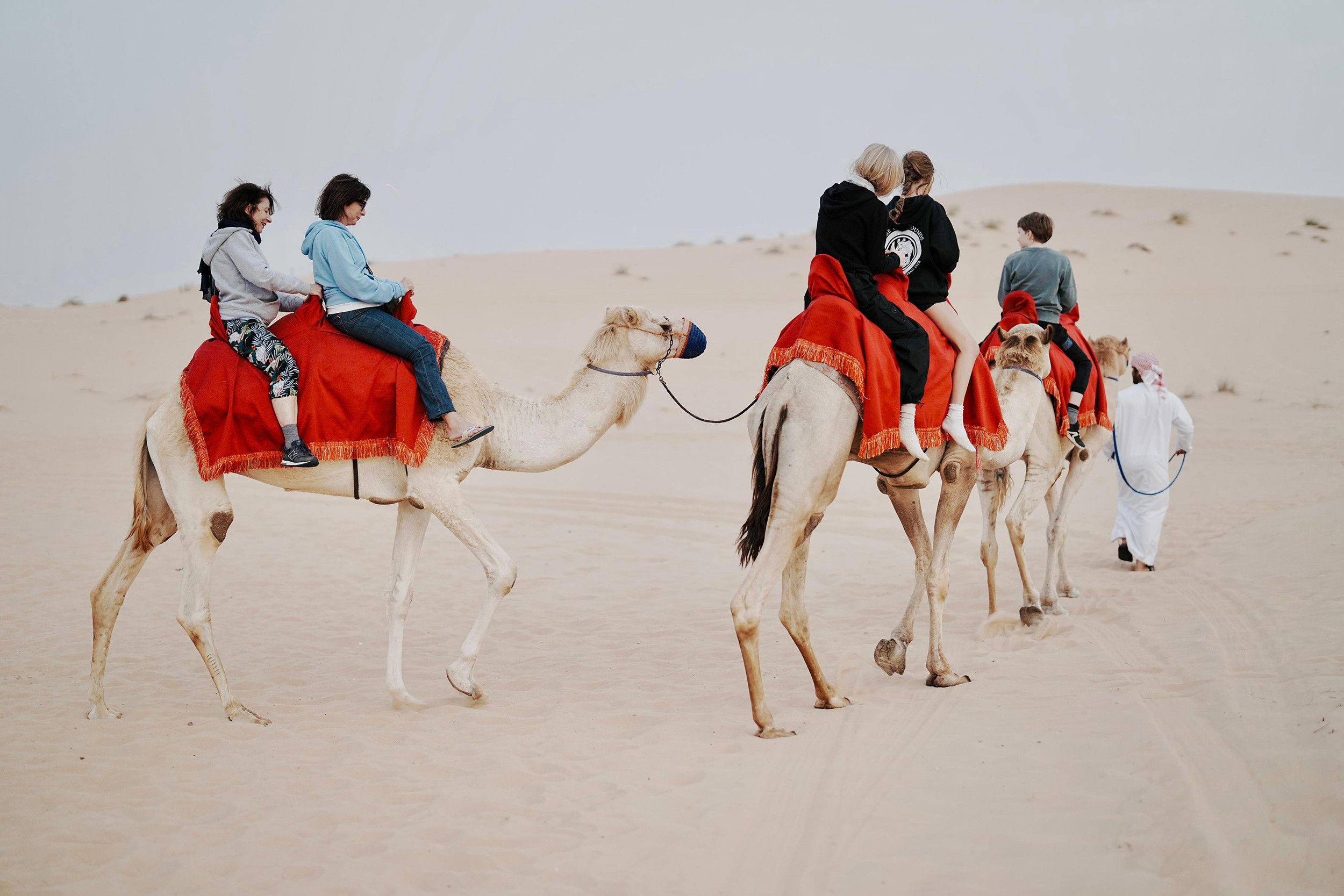
Best overall
November through March
Daytime temperatures generally stay in a genuinely comfortable range for outdoor sightseeing, beach time, and desert excursions alike. This also counts as peak tourist season, particularly around the December-January holiday window, worth booking family rooms and popular attractions well ahead.
Shoulder season
April, May, and October
Temperatures climb but stay manageable for morning or evening outdoor activity, with midday best reserved for indoor malls, aquariums, or theme parks. Genuinely fewer crowds than peak season, a real trade worth considering if flexible on dates.
Extreme heat
June through August
Daytime temperatures regularly exceed 45°C (113°F) with high humidity along the coast, making extended outdoor time with young kids genuinely impractical, not just uncomfortable. This window overlaps with the free child visa promotion (July 15-September 15), a real trade-off worth weighing: free entry for kids against a summer built almost entirely around indoor, air-conditioned activities.
Health and Safety:
The UAE carries considerably lower infectious disease risk than much of South and Southeast Asia, and no mandatory vaccinations apply for most travelers, though a pre-trip check with a travel medicine provider or pediatrician 4-6 weeks ahead is still worth doing, particularly if a desert safari or mountain excursion is planned. The country's real health risk is heat itself: sunscreen, hydration, and shade breaks matter more here than in most family-travel guides' generic advice, given how quickly a young child can overheat in direct UAE sun.
UAE tap water is treated to a high standard and generally considered safe, though most residents and hotels still default to bottled or filtered water for taste, not genuine safety concerns. For young kids, bottled water remains the simpler, more consistent choice regardless of the tap water's actual safety. The country ranks among the safest in the world for family travel by conventional crime statistics; the practical risks that matter are heat exposure, road traffic (particularly on fast highways between emirates), and sun, not crime.
Health and Safety:
Dubai:
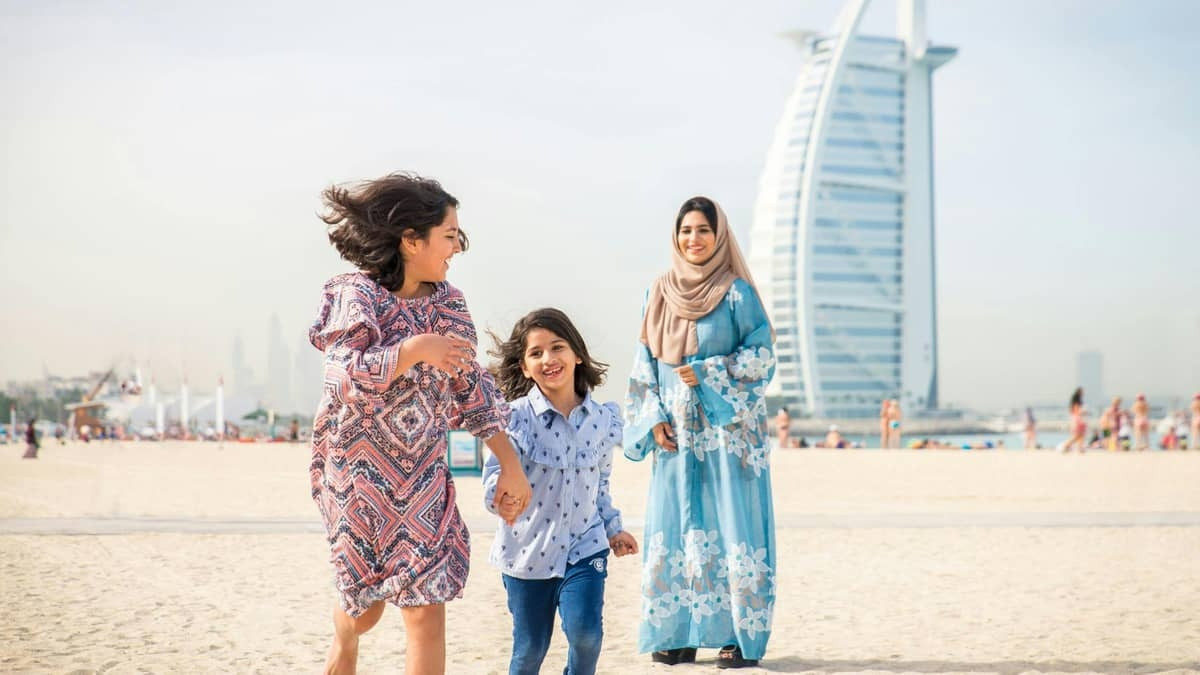
Dubai holds the country's densest concentration of indoor, air-conditioned family attractions, genuinely useful given the climate, alongside Burj Khalifa's "At the Top" observation deck and the Dubai Aquarium's underwater tunnel inside Dubai Mall. IMG Worlds of Adventure runs as one of the world's largest indoor theme parks, a real all-weather option regardless of outside temperature, and Global Village, running seasonally from October through April, combines pavilions from more than 90 countries with rides and nightly entertainment.
Best time: November through March for comfortable outdoor time between the city's indoor attractions.
- Burj Khalifa's At the Top, an observation deck partway up the world's tallest building.
- Dubai Aquarium & Underwater Zoo, inside Dubai Mall, including a walk-through tunnel.
- IMG Worlds of Adventure, a fully indoor theme park regardless of outside temperature.
- Dubai Miracle Garden, a seasonal flower display (roughly November-June) with genuinely large-scale floral sculptures.
- Kite Beach, a family-friendly public beach with calm, shallow water and nearby food trucks.
Abu Dhabi and Yas Island:
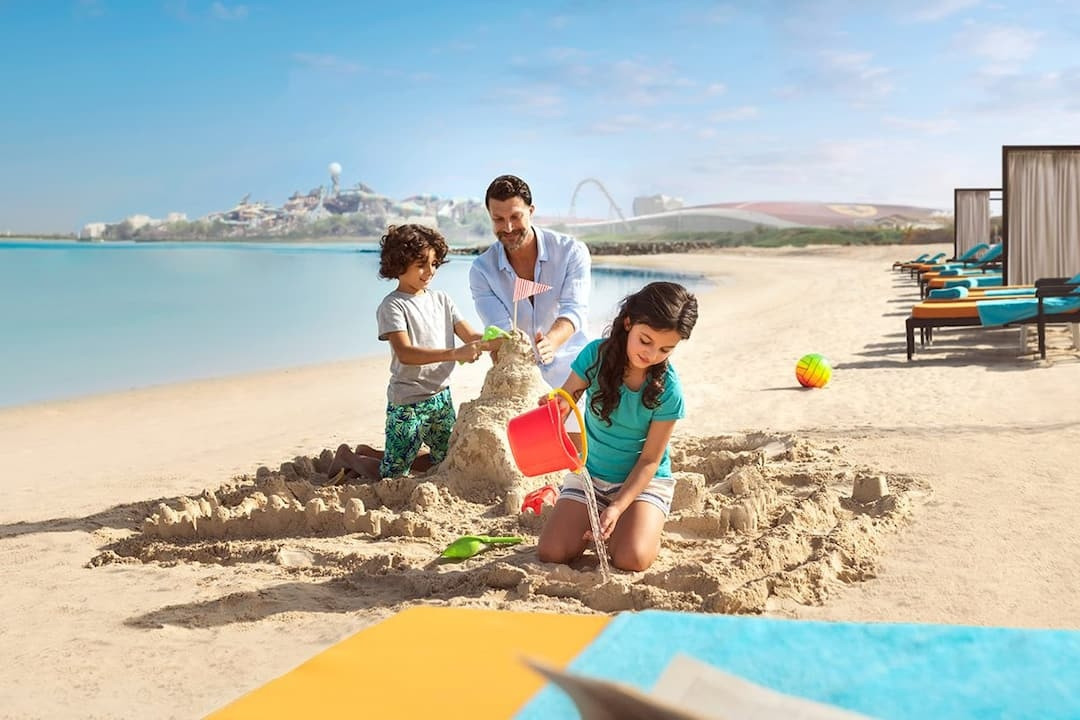
Yas Island, on Abu Dhabi's outskirts, holds the country's highest concentration of major theme parks in one place: Ferrari World, Warner Bros. World, Yas Waterworld, and SeaWorld Abu Dhabi, which opened in 2023 as the first SeaWorld outside the United States. The Sheikh Zayed Grand Mosque, one of the world's largest, welcomes non-Muslim visitors with free guided tours, and free abayas and headscarves are provided on-site for anyone arriving without modest-enough clothing for the visit.
Best time: November through March; Yas Island's outdoor water parks specifically suit the warmer shoulder months (October, April) well too.
- Ferrari World, home to the world's fastest roller coaster alongside gentler rides for younger kids.
- Warner Bros. World, an indoor theme park built around DC and Looney Tunes characters.
- SeaWorld Abu Dhabi, the first SeaWorld outside the US, opened 2023.
- Sheikh Zayed Grand Mosque, free guided tours, with abayas and scarves provided on-site if needed.
- The Corniche, a long waterfront promenade with a dedicated family beach area.
Sharjah:
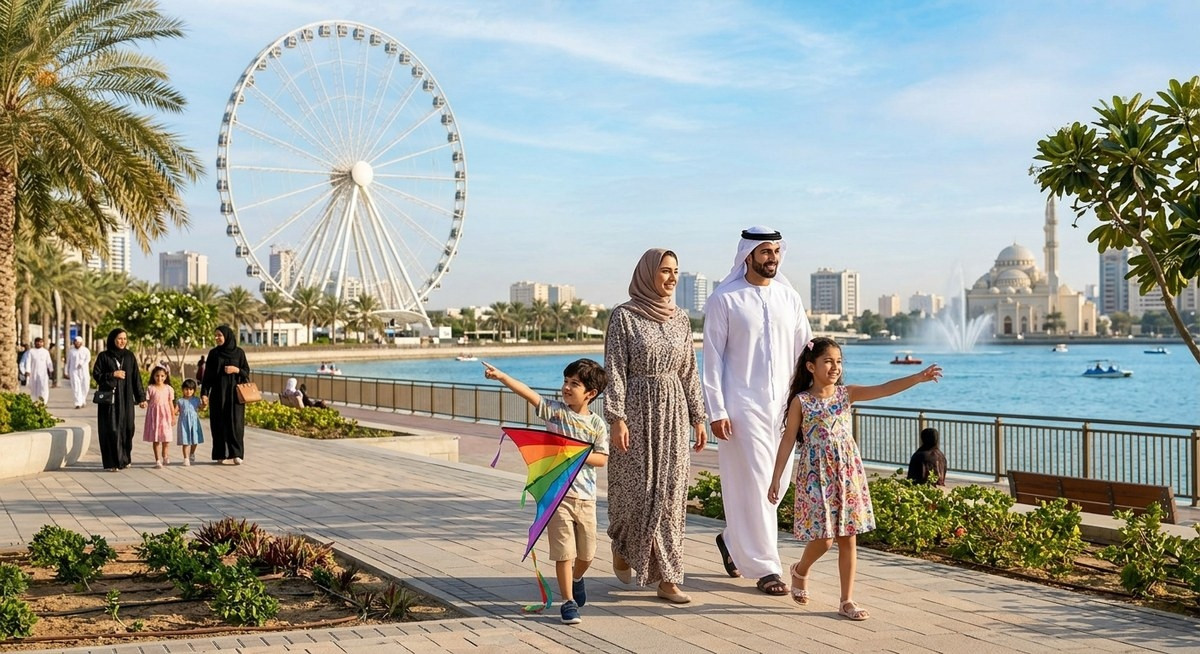
Sharjah runs as the UAE's only fully alcohol-free emirate, and it holds a genuinely different character from Dubai's more commercial tourism identity, built instead around museums and cultural sites, including UNESCO recognition as the Islamic Culture Capital in 2014. Al Noor Island combines a butterfly house with a calm public garden, and Al Montazah Parks runs both a water park and a family entertainment complex within the same grounds.
Best time: November through March, matching the rest of the UAE's comfortable outdoor window.
- Al Noor Island, a butterfly house set inside a calm public garden.
- Sharjah Aquarium, a manageable size for younger kids compared to Dubai's larger aquarium.
- Al Montazah Parks, combining a water park and family entertainment complex.
- Sharjah Museum of Islamic Civilization, genuinely accessible exhibits for school-age kids and older.
- Al Qasba, a waterfront canal area with a Ferris wheel and family dining.
Ras Al Khaimah:
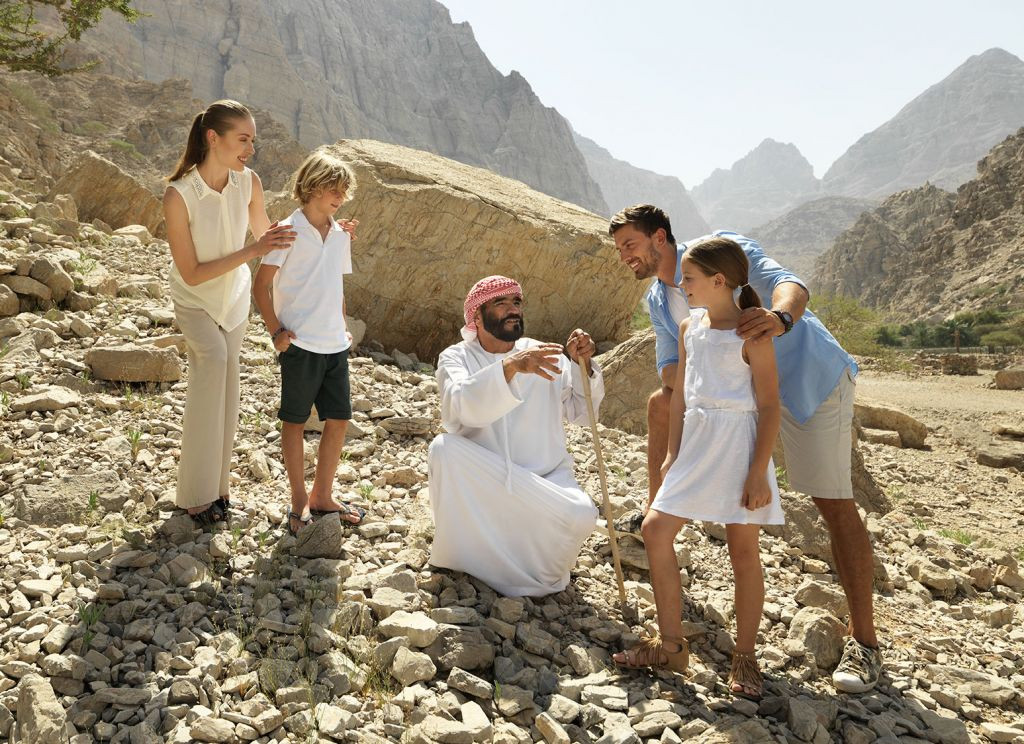
Ras Al Khaimah holds Jebel Jais, the UAE's highest peak, home to Jebel Jais Flight, among the world's longest zipline routes at roughly 2.83 km, opened in 2018 and generally requiring a minimum age and weight for riders. Iceland Water Park adds an indoor, climate-controlled snow and water attraction genuinely unusual for the region, and Al Marjan Island's beaches run considerably quieter than Dubai's more crowded stretches.
Best time: November through March; mountain temperatures at Jebel Jais run cooler than the coast year-round.
- Jebel Jais Flight, a real zipline for older kids and teens meeting the minimum age/weight requirement.
- Jebel Jais Sky Tour, a lower-intensity zipline circuit and via ferrata for younger family members.
- Iceland Water Park, an indoor snow and water attraction, a genuine climate escape.
- Al Marjan Island beaches, quieter than Dubai's more developed coastline.
- Al Rams fishing village, a direct look at traditional Emirati coastal life.
Fujairah:
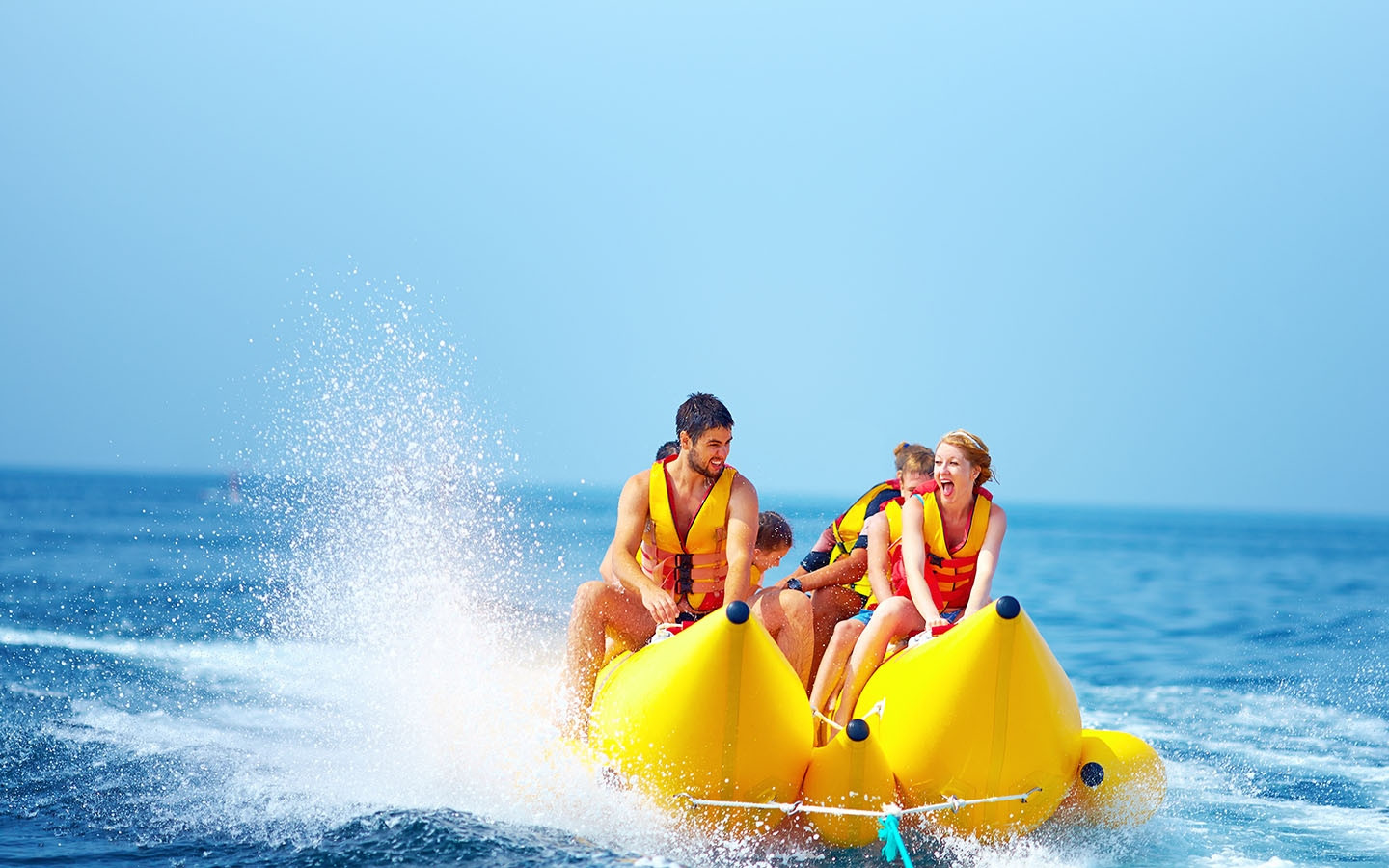
Fujairah sits on the Gulf of Oman, not the Persian Gulf, giving it clearer water and a genuinely different coastal character from the country's western emirates. Snoopy Island, just offshore, offers snorkeling suited to kids old enough to swim confidently, and Fujairah Fort, one of the oldest forts in the UAE, gives a direct, walkable look at pre-oil Emirati history.
Best time: November through March; the east coast runs slightly cooler and less humid than the western emirates even in shoulder months.
- Snoopy Island, snorkeling just offshore, suited to confident young swimmers.
- Fujairah Fort, one of the UAE's oldest forts, a direct look at pre-oil history.
- Al Bidyah Mosque, believed to be the oldest mosque in the UAE.
- Wadi Wurayah National Park, hiking and a genuine freshwater pool in the mountains.
- Fujairah's public beaches, considerably less crowded than the west coast's major resort beaches.
Al Ain:
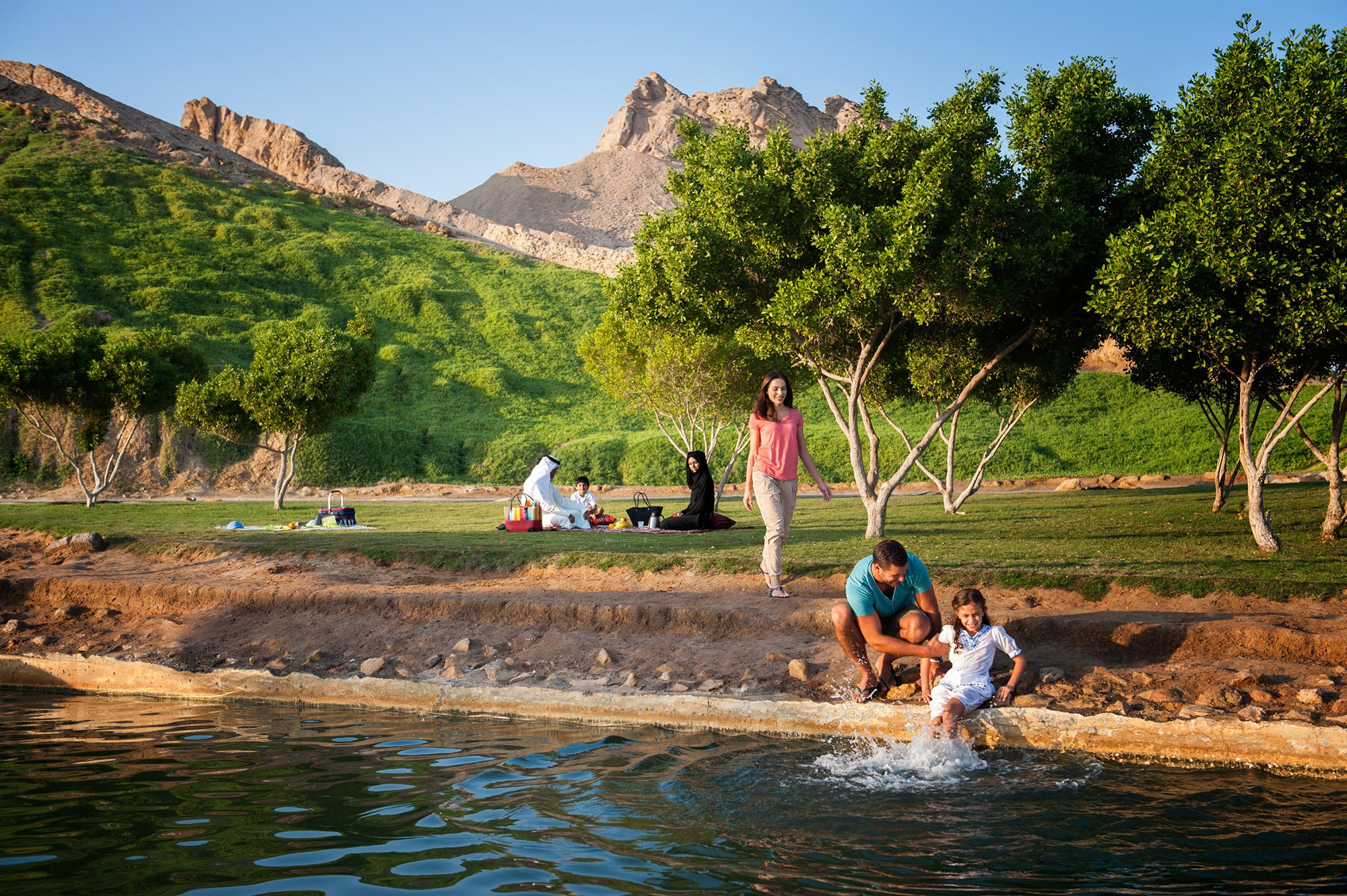
Al Ain holds the Al Ain Oasis, part of a UNESCO World Heritage listing since 2011, a genuine working palm oasis with walkable, shaded pathways considerably cooler than the open desert around it. Jebel Hafeet's mountain road, one of the world's longest and most scenic paved mountain drives, climbs to panoramic desert views, and Al Ain Zoo houses more than 4,000 animals across a genuinely large, walkable site.
- Al Ain Oasis, a walkable, shaded UNESCO-listed palm oasis.
- Al Ain Zoo, more than 4,000 animals across a large, walkable site.
- Jebel Hafeet mountain drive, a scenic paved road to panoramic desert views.
- Al Jahili Fort, a 19th-century fort with a small museum on explorer Wilfred Thesiger.
- Hili Archaeological Park, Bronze Age tombs alongside genuine playground space for younger kids.
Ajman:
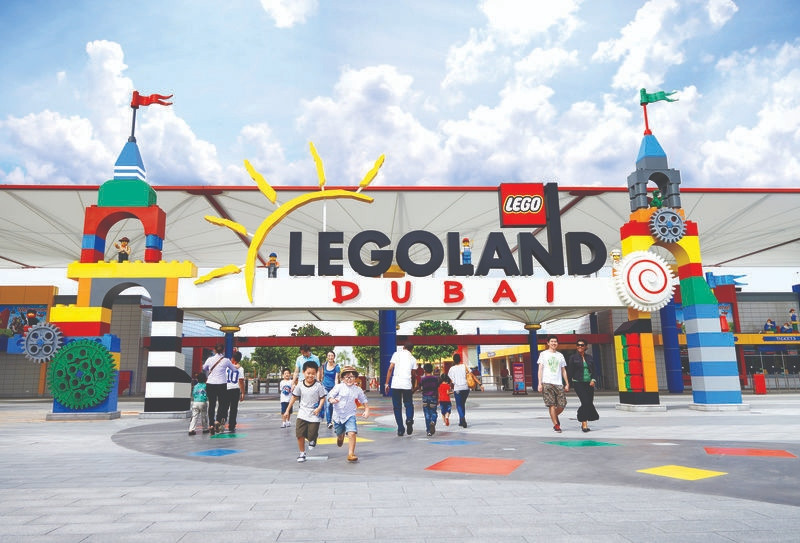
Ajman runs as the UAE's smallest emirate by land area, with a genuinely quieter beachfront than Dubai's or even Sharjah's more developed coastlines, a real advantage for families wanting beach time without the crowds. Ajman Museum, set inside a restored 18th-century fort, gives a compact, manageable history stop for younger kids not ready for a longer museum visit, and the Corniche adds a straightforward beachfront walk with nearby casual dining.
Best time: November through March, matching the rest of the UAE's comfortable window.
- Ajman Beach and Corniche, genuinely quieter than Dubai's or Sharjah's main beaches.
- Ajman Museum, set inside a restored 18th-century fort, a compact history stop.
- Al Zorah Nature Reserve, mangroves and birdwatching by kayak or paddleboard.
- Ajman China Mall, an indoor shopping and dining option for a heat break.
- Masfout, a small mountain exclave of Ajman, a genuine day-trip detour for older kids.
Palm Jumeirah:
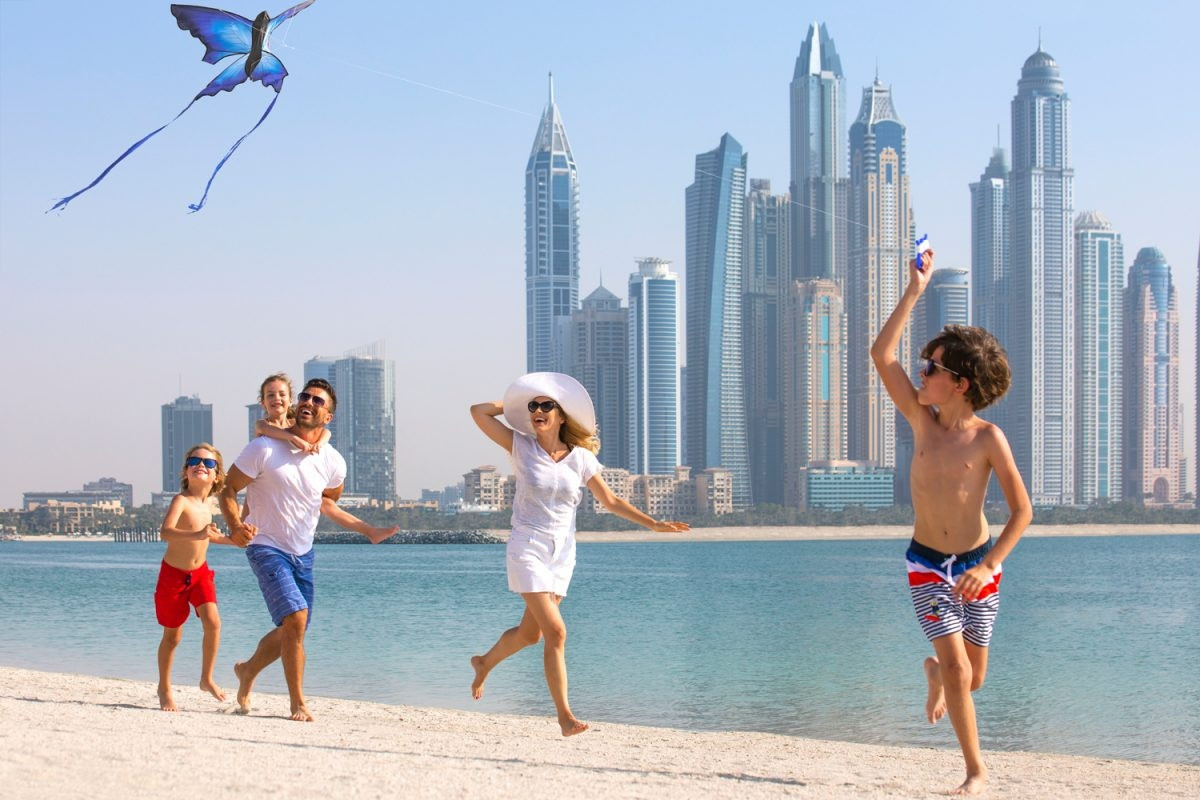
Palm Jumeirah is a genuinely man-made island shaped like a palm tree, visible from space, and Atlantis The Palm sits at its tip alongside Aquaventure Waterpark, one of the region's largest, with a real shark-filled lagoon slide as its signature attraction. The View at The Palm gives an observation-deck look back at the island's actual shape from above, something no ground-level photo can capture, and The Pointe adds a straightforward waterfront dining and fountain-show stop at the island's base.
Best time: November through March; Aquaventure itself runs enjoyably year-round given the pool and slide water temperatures.
- Aquaventure Waterpark, including a slide that runs directly through a shark lagoon.
- The View at The Palm, an observation deck showing the island's actual palm-tree shape from above.
- The Pointe, waterfront dining with a nightly fountain show visible from most seating.
- The Lost Chambers Aquarium, inside Atlantis, with a genuine underwater-ruins theme.
- Palm Jumeirah Boardwalk, a flat, stroller-friendly walk around part of the island's outer crescent.
Umm Al Quwain:
Umm Al Quwain gets a fraction of the visitors Dubai or Abu Dhabi see, and that genuinely shows in the pace: Dreamland Aqua Park runs considerably less crowded than Dubai's major water parks, and the emirate's mangrove channels give a real, quiet kayaking option distinct from anywhere else on this list. The old town's watchtowers and a small fort give a low-key historical stop for a family not wanting a full museum day.
Best time: November through March, matching the rest of the UAE's comfortable window.
- Dreamland Aqua Park, considerably less crowded than Dubai's major water parks.
- Mangrove kayaking, a genuinely quiet paddle through UAE's protected coastal mangroves.
- Umm Al Quwain Fort and watchtowers, a low-key historical stop in the old town.
- Al Sinniyah Island, a boat trip out for birdwatching and quiet beach time.
- Barracuda Beach Resort area, calmer public beach access than the west coast's busier stretches.
Liwa Oasis:
Liwa Oasis sits at the edge of the Rub' al Khali (the Empty Quarter), one of the world's largest continuous sand deserts, and Moreeb Dune nearby ranks among the tallest sand dunes in the region, a genuine draw for dune-bashing tours and the annual Liwa International Date Festival. This is the most remote destination on this list, considerably further from a major hospital than any coastal emirate, worth factoring into a family's risk tolerance for how far into the desert to go.
Best time: November through February specifically; Liwa's inland desert location runs hotter than the coast even by regional standards in summer.
- Moreeb Dune, among the region's tallest sand dunes, a genuine dune-bashing and photo stop.
- A desert safari with an overnight camp, camel rides and sandboarding for younger kids, dune bashing for older ones.
- Liwa International Date Festival (dates vary, typically July), if timing aligns with the visit.
- Qasr Al Sarab Desert Resort area, a genuine base for exploring without a long daily drive.
- Stargazing, the region's genuine lack of light pollution gives a night sky city-based emirates can't match.
Where We Stayed: UAE with Kids:
UAE accommodation splits cleanly into 3 price tiers, and rates track neighborhood prestige closely: Downtown Dubai and Palm Jumeirah sit at the top, while Al Barsha and Sharjah deliver genuinely solid value at a fraction of the cost.
- Premier Inn Dubai Al Barsha:A reliable budget chain in the family-friendly Al Barsha area, walking distance to Mall of the Emirates and Ski Dubai, with Dubai Metro red line access to the airport and the rest of the city.Area: Al Barsha, Dubai
- ibis Styles Dubai Deira:A solid-value option in Dubai's older trading district, considerably cheaper than the coastal family areas, though a longer taxi ride from the beach.Area: Deira, Dubai
- Holiday Inn Express Dubai Airport:A practical, no-frills choice for a first or last night close to the airport, useful for a family with an early flight or a late arrival.Area: Near Dubai International Airport
- InterContinental Dubai Marina:A 4-star property near JBR's beach and promenade, with pools and breakfast included, a genuine step up from budget without the flagship-resort price tag.Area: Dubai Marina / JBR
- Sheraton Abu Dhabi Hotel and Resort:Corniche-adjacent with private beach access, a solid mid-range base for exploring Abu Dhabi's waterfront and cultural sites.Area: Corniche, Abu Dhabi
- Ramada by Wyndham Downtown Dubai:A dependable 4-star option close to Downtown's major sights, without Downtown's flagship-hotel rates.Area: Downtown Dubai
- Atlantis The Palm:The family flagship of this list, with Aquaventure Waterpark and The Lost Chambers Aquarium included as on-property attractions, not separate admissions.Area: Palm Jumeirah
- Jumeirah at Etihad Towers:Abu Dhabi's skyline-and-beach luxury option, with panoramic views the mid-range Corniche hotels don't match.Area: Corniche, Abu Dhabi
- The Address Downtown Dubai:A flagship property with direct Burj Khalifa and Dubai Fountain views from many rooms, genuinely walkable to Dubai Mall.Area: Downtown Dubai
Family Dining:
UAE restaurants generally cater to families well by default: high chairs appear without being asked, kids' menus go beyond a generic chicken-nugget default, and staff don't visibly flinch at a messy toddler. Most restaurants stay open until 9-10pm for last orders, later than many families expect coming from home.
Mall food courts:
Dubai Mall and Yas Mall both pack international food options alongside supervised play areas where kids can run between courses, a genuinely practical combination for a family that needs both food and a burn-off break in one stop.
Beach club restaurants:
Shade, sand play areas, and a pool or ocean kids can splash in while adults eat, Barasti and Saadiyat Beach Club both work well for this format.
Hotel Friday brunches:
Hotels like Atlantis or Emirates Palace run Friday brunches with dedicated kids' corners, including face painting and food genuinely built for younger palates, not just a smaller portion of the adult menu.
Getting Around with kids:
The UAE's 7 emirates connect by well-maintained highways, and most family itineraries cover ground faster and more comfortably by road than any other method available.
Private car or rental:
Drive times between any 2 major cities run under 2 hours (Dubai to Abu Dhabi takes about 1.5 hours, Dubai to Ras Al Khaimah about 1 hour), making a rental car or private driver genuinely practical for a multi-emirate trip.
Ride-hailing (Careem and Uber):
Both operate widely across the UAE, with fixed fares shown before booking and the option to request a car seat in some areas, removing the need to negotiate or rent a car for shorter, single-city stays.
Domestic flights:
Rarely necessary given the country's compact size, most useful only for reaching the more remote parts of Abu Dhabi's desert interior on a tight schedule.
Dubai and Abu Dhabi Metro:
Air-conditioned and largely stroller-manageable within Dubai and Abu Dhabi specifically, though station elevator access varies and rush hour gets genuinely crowded on weekday mornings and evenings.
Taxis:
Widely available and metered by default in most emirates, a straightforward, reliable option distinct from destinations where meter use requires insisting on it.
Cultural Etiquette Worth Teaching Kids:
Malls, hotels, and tourist attractions apply a relaxed, broadly Western-normal dress code, but religious sites require more: the Sheikh Zayed Grand Mosque and other mosques expect covered shoulders, arms, and legs for everyone, plus a headscarf for women, though free abayas and scarves are provided on-site for visitors who arrive without them. Beachwear stays limited to beach and pool areas specifically, worth explaining to kids before a trip that swimsuits don't transfer to a mall or restaurant visit the way they might at home.
Public displays of affection stay genuinely more reserved than in much of the West, worth modeling for teens specifically, and alcohol consumption is restricted to licensed venues (hotels, specific restaurants), completely absent in Sharjah. During Ramadan, eating, drinking, and smoking in public during daylight hours is restricted for everyone, including non-Muslims and children old enough to eat solid meals, worth planning around if traveling during that period.
What to Pack:
The UAE's climate stays hot and dry most of the year, but specific packing priorities shift by activity and by the country's real cultural expectations.
Clothing and cultural considerations
- Lightweight, breathable clothing, worn year-round given the consistent heat.
- A lightweight layer covering shoulders and knees, needed for mosque visits even on an otherwise beach-focused trip.
- Modest swimwear for public beaches, especially relevant in Sharjah and more conservative areas.
- A light jacket for evenings, November through February, when desert nights turn genuinely cool.
Health and sun protection
- Sunscreen, SPF 50+, reapplied often given the region's intense, direct sun.
- Wide-brim hats and sunglasses, genuinely necessary, not optional, for young kids outdoors.
- Prescription medications and a basic first aid kit, packed in a carry-on, not checked luggage.
- Travel insurance confirming medical coverage, particularly for desert or mountain excursions further from major hospitals.
Documents and money
- A passport valid 6+ months beyond your exit date, for every traveler including kids.
- Confirmation of your specific nationality's visa requirement, checked directly against the UAE Ministry of Foreign Affairs' tool before departure.
- A local SIM or eSIM, needed for reliable video calling given standard network VoIP restrictions.
Comfort and entertainment
- Offline-downloaded shows, movies, or games, for longer highway drives between emirates.
- Reusable water bottles, genuinely important given how quickly kids dehydrate in the heat.
- A few familiar snacks, useful for long theme-park days when local food doesn't appeal to a picky eater.
- A travel journal for kids old enough to write or draw, a genuine way to keep them engaged between attractions.
What Works at Each Age:
Generic UAE advice treats a toddler and a teenager as interchangeable travelers. They aren't, and what actually works shifts considerably across that range, particularly given the region's heat constraints.
Infants and toddlers (0-2)
Indoor attractions and short outdoor windows:
Dubai and Abu Dhabi's indoor malls, aquariums, and family-friendly resorts with pool access suit this age best, given how little outdoor time is genuinely comfortable for an infant in UAE heat. Keep outdoor exposure to early morning or the hour before sunset, and confirm hotel cribs and high chairs when booking, not assuming they're standard everywhere.
Preschool (3-5)
Hands-on and animal encounters beat historical sites:
SeaWorld Abu Dhabi, Al Ain Zoo, and Dubai Aquarium all work well at this age precisely because they need no extended attention span or reading. Save the heavier cultural or historical sites (Sheikh Zayed Grand Mosque's more detailed exhibits, Fujairah Fort's full history) for when kids are old enough to actually engage with the context.
School age (6-11)
Real theme parks and manageable adventure both open up:
Ferrari World and Warner Bros. World's height-appropriate rides both suit this age well, and Jebel Jais's gentler Sky Tour zipline circuit works for confident kids at the lower end of the required age and weight range. This is also a reasonable age to start real cultural context, previewing the Sheikh Zayed Grand Mosque's history before visiting.
Tweens and teens (12+)
Full-intensity adventure and real independence both become options:
Jebel Jais Flight's full zipline experience, snorkeling at Snoopy Island, and Ferrari World's fastest rides all suit this age far better than younger kids. Teens can also handle more direct engagement with the region's culture and history, including Al Ain's Bronze Age archaeology and Fujairah's pre-oil heritage sites.
A Realistic 7-Day Itinerary:
7 days covers a genuine introduction across 3 emirates without the constant repacking a full-country tour requires.
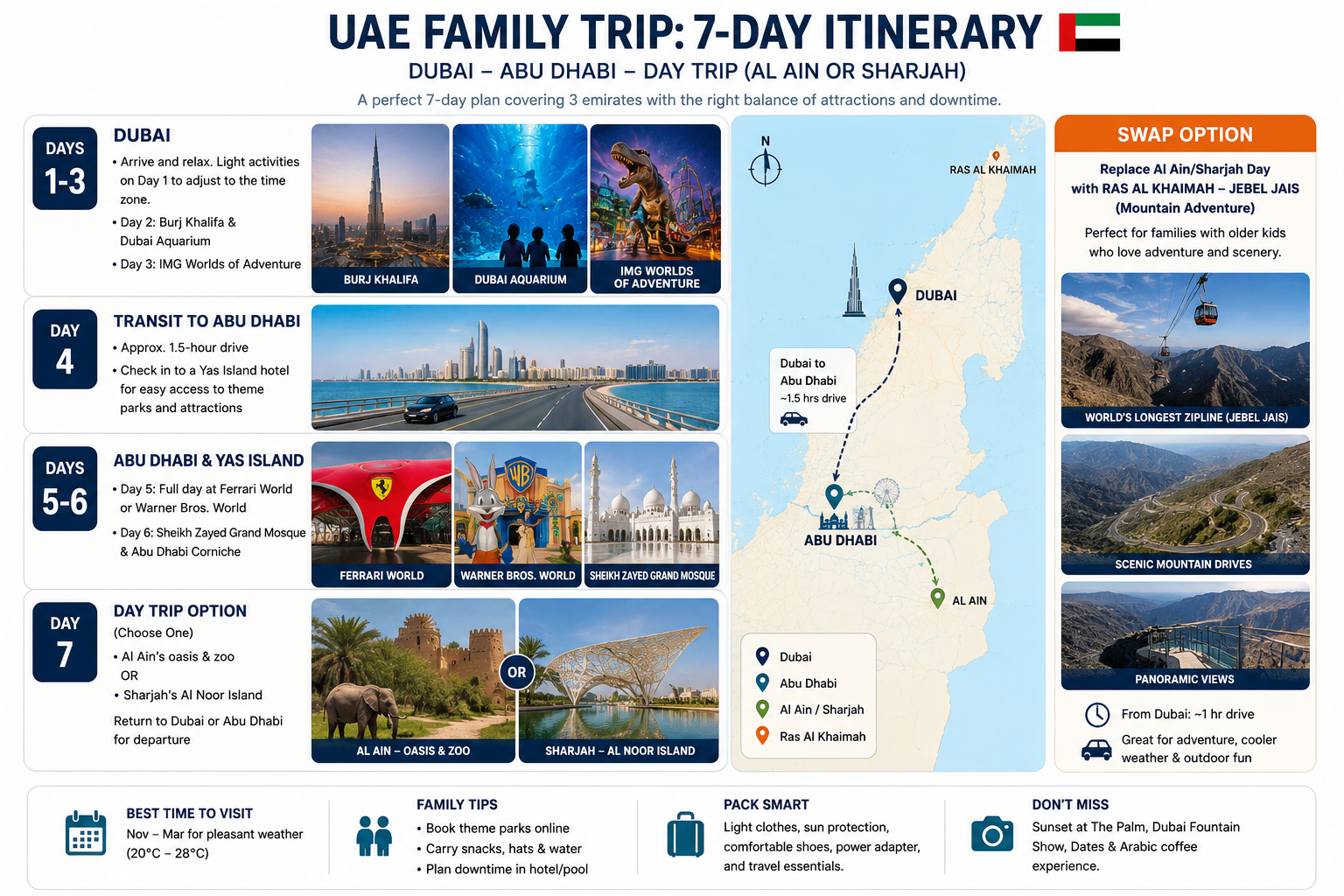
Arrive, adjust to the time zone with a light first day, then cover Burj Khalifa, Dubai Aquarium, and IMG Worlds of Adventure across the following 2 days.
A roughly 1.5-hour drive, checking into a Yas Island hotel for easy access to the theme park cluster.
A full day at Ferrari World or Warner Bros. World, then Sheikh Zayed Grand Mosque and the Corniche on the second day.
A final day trip (Al Ain's oasis and zoo, or Sharjah's Al Noor Island) before returning to Dubai or Abu Dhabi for departure.
Money, Costs, and Budgeting:
The UAE Dirham (AED) is pegged to the US dollar at roughly 3.67 AED per USD, a stable, predictable exchange rate that doesn't fluctuate the way floating currencies do. ATMs are widely available in cities, and credit cards work at nearly every hotel, restaurant, and mall; smaller stalls and older souks still run more cash-friendly.
Tipping isn't mandatory but is genuinely appreciated for guides, drivers, and hotel staff, roughly 10-15 AED per service or 10% at restaurants where a service charge isn't already included. Bargaining is standard practice at traditional souks specifically, not at malls, chain stores, or metered taxis.
Emergency Contacts and Medical Care:
The UAE's national emergency numbers are 999 for police, 998 or 997 for ambulance depending on the emirate, and 997 for fire in most areas. English is widely spoken by emergency responders in major cities, a genuine advantage over destinations where language adds a layer of difficulty during a crisis. For anything beyond minor issues, the UAE's private hospital network runs to a genuinely high international standard.
Cleveland Clinic Abu Dhabi
A branch of the US Cleveland Clinic network, with a dedicated pediatric department and English-speaking staff throughout.
American Hospital Dubai / Mediclinic (multiple locations)
Private hospital networks with branches across Dubai, Abu Dhabi, and Sharjah, generally the first call for a family needing more than a pharmacy visit outside major city centers.




{{item.get_author.first_name}} {{item.get_author.last_name}}
Level 7
5 Photos
36 Reviews
{{item.comment_txt}}
{{item_reply.get_author.first_name}} {{item_reply.get_author.last_name}}
@ {{item_reply.reply_to}}, {{item_reply.reply_txt}}