

Venue
1 Yanagawa, Aomori, Aomori Prefecture, Japan

Aomori Nebuta Matsuri guide
Aomori Nebuta Matsuri runs every year from 2 to 7 August, with the programme posted on nebuta.jp. It suits travelers who want to join in, as haneto dancers are welcome to leap around the giant lit floats. Watching from the kerb is free, while reserved seats guarantee a view; book a bed in Aomori or nearby.
Aomori Nebuta Matsuri is the August festival of Aomori, the port city at the northern tip of Honshu. Each night giant illuminated paper floats shaped as warriors, gods and kabuki heroes are wheeled through the streets, while crowds of haneto dancers leap around them to drums, flutes and cymbals.
It is one of the few great Japanese festivals where visitors are invited to join in: anyone in the proper haneto costume may dance. That openness, and the sheer scale of the floats, draws more than 3 million visitors over the week by the tourism board's count, a remarkable number for a city of its size.
1 Yanagawa, Aomori, Aomori Prefecture, Japan
Hotels near the venue fill up around the event dates.
You may dance, but only in the full haneto costume. Turning up in ordinary clothes and joining the jumping is not accepted. Rent or buy one before your night, and check the price, since the tourism board publishes a guide figure.
On the busiest nights the free kerbside spots go early, so be in place well before the floats set off. Arriving at 19:00 is too late for a good view in the centre.
Bring water, something to sit on and patience, because the best stretches of pavement fill well before dusk. Keep behind any rope or line marked by stewards, and never step out into the path of a float to take a photograph. They are heavy, hard to steer, and the crews pushing them cannot stop quickly.
August evenings in a packed crowd feel warm, even this far north. Dress light, carry a small towel, and bring a layer for the walk home if you are watching the sea parade by the water.
The drums are loud. Small children may want ear protection, and anyone sensitive to noise should pick a spot a little back from the kerb. Keep children close, as the crowd moves in surges when the floats turn.
Children's floats parade alongside the big ones, which makes these the best evenings for families. The parade is over by 21:00.
The busiest nights. The floats set off together around the route, so the action reaches you within minutes wherever you stand.
The floats roll in daylight, the best chance to see the paintwork without the glare of the lights.
The prize-winning floats go out on the harbour while fireworks burst overhead.
Next, choose how you want to watch. Standing at the kerb costs nothing. A reserved seat gives you a guaranteed view and somewhere to sit; in 2026 prices began at about 2,600 yen per person, with sales usually opening in late June. If you are in town for several nights, try both: a seat for one evening, the pavement for another.
Use your arrival day well. A few steps from the station, Nebuta Museum Wa Rasse has several full-size floats you can walk around, and seeing one in a quiet hall before the parade helps you appreciate the detail you will glimpse only briefly at night. If you plan to see more of Tohoku afterwards, compare rental cars across Japan for the drive south.
A nebuta is a lantern on a heroic scale. Each one is shaped as a warrior, a god or a hero from kabuki, built from paper stretched across a wire frame and lit from within by bulbs fed by generators and batteries. Earlier generations used bamboo and candles, and the floats went up in flames often enough to worry everyone. More than 20 of the large ones take part today. Each year the best of them wins a prize, and the float makers compete hard for it.
Many people in Aomori will tell you the festival began with Sakanoue no Tamuramaro, a celebrated general of old Japan. Historians treat that as legend, since he probably never fought this far north, but his name still hangs over the festival.
The noise comes from the people around the floats. Haneto dancers hop beside each one to the beat of drums, the call of flutes and the clash of cymbals, shouting rassera as they go. It is loud, sweaty and joyful. Aomori is not alone in this, either: more than 30 other towns and villages across the prefecture hold nebuta festivals of their own.
International flights land at Tokyo Narita and Tokyo Haneda. The Tohoku Shinkansen runs from Tokyo to Shin-Aomori, then a local train goes one stop to Aomori Station.
Aomori Airport has domestic flights and a bus to Aomori Station of around 35 minutes, which makes an evening arrival workable.
The parade route starts a short walk from Aomori Station, so once you are in the centre you need no other transport.
Check the last train home before the floats set off and give yourself a margin.
Aomori is a compact port city, and its central hotels are full months ahead for festival week. Plenty of visitors stay in a neighbouring city and take the train in each evening. That works better here than at most festivals, because the parade runs for only two hours a night.
Book as soon as you know your dates, and pick a rate you can cancel.
Early August is the warmest time of year in Aomori, but it is milder than Tokyo. The Japan Meteorological Agency's 1991-2020 normals give August an average high of 27.8°C and a low of 20.0°C, with 142 mm of rain and humidity around 78%.
Parade evenings are usually warm and sticky; a passing shower is always possible, so carry a light jacket.
Met at arrivals and driven door to door to City centre near JR Aomori Station.
Places to eat in Japan before or after the celebrations.
1F, 1-7-19 Otemachi, Naka-ku, Hiroshima, Japan
Cuisine:Hiroshima okonomiyaki
1-4-15 Dotonbori, Chuo-ku, Osaka 542-0071, Japan
Cuisine:OkonomiyakiOsaka
459 Shimokawara-cho, Higashiyama-ku, Kyoto 605-0825, Japan
Cuisine:Kyoto kaisekiJapanese
Minamiaoyama Garden Court, 2-6-15 Minami-Aoyama, Minato-ku, Tokyo 107-0062, Japan
Cuisine:InnovativeJapanese
Others of this kind you opened on this device, so you can get back to them quickly.
No questions yet about Aomori Nebuta Matsuri. Ask the community or our travel team, and the answer will show here once it is published.
Our team answers questions here
Festivals held in the same weeks, if you want to plan more than one.
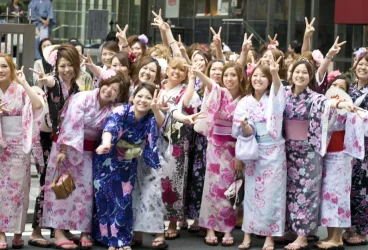
Cultural Events, Religious Festivals, Parade
Kyoto, Japan
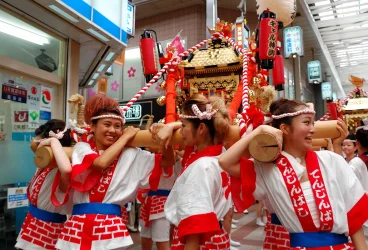
Cultural Events, Religious Festivals, Parade
Osaka, Japan

Cultural Events, Arts Festivals, Folk Festival
Sendai, Japan
Festivals and events across Japan, with dates, venues and ticket details where available.

Cultural Events, Arts Festivals, Winter Festivals
Sapporo, Japan

Cultural Events, Religious Festivals, Parade
Tokyo, Japan
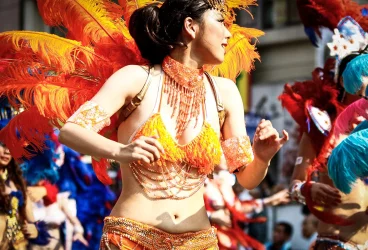
Musical Events, Carnivals, Parade
Tokyo, Japan
21 photos
Tell us where and when you want to go, and local travel experts send you offers for your trip.
Prices & payment
The tourism board listed rental at about 4,000 yen in 2026. Buying a full costume yourself costs around 5,000 yen, not counting the flower hat.
General
Yes. An eve festival runs from 18:00 to 21:00 on 1 August, a gentler warm-up before the large floats take over the following night.
On the final night, 7 August, the Aomori fireworks run from 19:15 to 21:00, timed to accompany the sea parade of floats in the harbour.
Because in 1996 the Ministry of the Environment chose the drums, flutes and shouts of the parade as one of the 100 Soundscapes of Japan, a list chosen to celebrate the sounds that define places in Japan.
The top award began in 1962 as the Tamuramaro Sho, named after the general of the festival's origin legend. It was renamed in 1995.
Yes. Nebuta Museum Wa Rasse, next to Aomori Station, opened in 2011 and has kept full-size floats on show all year round since then.
Every September since 2005, nebuta have been brought to Shibuya. Aomori floats also joined Hakodate's Ika Odori festival in 2007.
Several times. Nebuta paraded in Seoul in September 2005 and at Nisei Week in Los Angeles in 2007, 2009 and 2010.
Tokushima's Awa Dance Festival, a week after Nebuta, also lets visitors dance in the streets, so the two make a good pair for a summer trip.
Timing & weather
In 1980 Japan designated Aomori Nebuta Matsuri an Important Intangible Folk Cultural Property, recognising the festival as a living tradition worth protecting.
We use necessary cookies to make this site work. With your permission we would also like to remember your preferences, measure how the site is used, and show relevant ads and partner offers. You can change your mind at any time under "Cookie settings" on our Privacy policy page.
